
Reviewed · CYCLING AND E-BIKE TOURS
Half day Osaka Bay Area Cycling with E-Assist Bicycle Tour
Osaka reveals its working side on two wheels. This small-group e-bike tour takes you beyond the usual sights, from the ancient Sumiyoshi Taisha Shrine to local ferry crossings, factory roads, high bridges, and the Tempozan waterfront. I like the included bicycle and helmet, and I like the way guide Banri connects Osaka’s past with the neighborhoods you pass through.
The route covers roughly 26 to 30 kilometers, depending on the exact ride, so the electric assist matters. You also need to accept a real drawback: parts of the route run beside large trucks, and some bridge approaches are steep. This is not a gentle park ride, but it is a memorable way to see a side of Osaka that trains rarely reach.
In This Review
- Key points to know before you ride
- Why this ride shows you a different Osaka
- Sumiyoshi Taisha starts the morning with nearly 2,000 years of tradition
- Shinkizugawa Bridge brings the first serious cycling challenge
- Factory roads and the Funamachi ferry reveal working Osaka
- IKEA Tsuruhama gives you a practical food break
- Namihaya Bridge offers the broadest city views
- Tempozan combines major sights with a relaxed lunch stop
- The second ferry makes the ride feel local
- Sensai Bridge and Sembonmatsu Bridge finish with more bridges
- What the e-bike, group size, and timing mean for you
- How this tour compares with ordinary Osaka sightseeing
- Who should book the Osaka Bay e-bike ride
- Should you book it?
- FAQ
- How long does the Osaka Bay cycling tour last?
- Where does the tour begin and end?
- Is the bicycle included?
- Is lunch included?
- How many people can join the tour?
- What physical requirements apply?
- What happens if the weather is poor?
Key points to know before you ride
- A working Osaka route, not a standard sightseeing loop: You pass factories, local shopping arcades, playgrounds, bridges, and ferry terminals along with major sights.
- Two one-minute bicycle ferries: The Funamachi and Jinbei渡船場 crossings are practical local transport, not tourist boat rides.
- Banri leads a very small group: The maximum group size is three people, making it easier to receive help on steep bridge approaches.
- The electric bicycle saves your legs: The route can reach about 30 kilometers and includes bridges with demanding climbs.
- Views come from unusual angles: Shinkizugawa Bridge and Namihaya Bridge offer broad views toward Tennoji, the Ikoma Mountains, and Osaka city.
- Plan for road conditions: Traffic can be heavy, air quality may be unpleasant near trucks, and a mask and eye drops may be useful.
Why this ride shows you a different Osaka
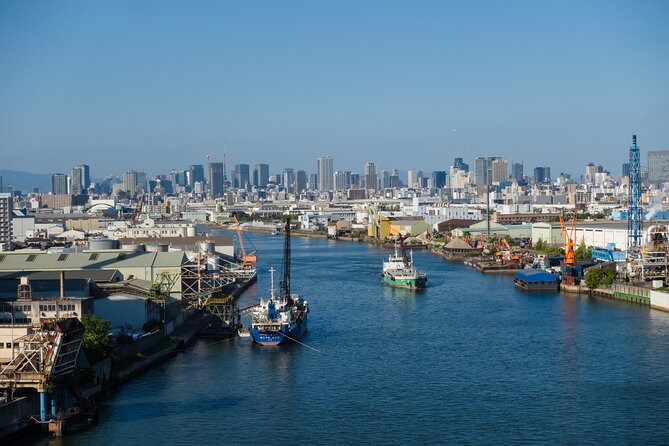
Osaka Bay is not only aquariums, ferris wheels, and waterfront promenades. It is also a working district of freight roads, canals, industrial buildings, small neighborhoods, and bridges built to keep ships and traffic moving.
That mix gives this ride its character. You may spend one part of the morning at a shrine with nearly 2,000 years of religious importance, then pedal through an industrial area associated with Ridley Scott’s film Black Rain. Soon after, you may be carrying your bicycle onto a tiny public ferry used by local people.
I like this contrast because it gives you a better sense of how Osaka functions. The tour does not simply take you from one famous photo stop to another. It shows you the spaces between them, including places most visitors would never reach without a guide and a bicycle.
The ride begins at 10:00 a.m. near Lawson Tamadenaka 2-chome in Nishinari Ward. It lasts around four to six hours, and the group is capped at three people. That small size is especially helpful here, since the route includes traffic, narrow access points, and steep sections where you may need a little extra guidance.
More Bike Tours in Osaka
- 5-Hour Osaka Bike Tour to the Neighborhood of Osaka Castle
★ 5.0 · 319 reviews - Eat, Drink & Cycle: Osaka Foodie Bike Tour
★ 5.0 · 224 reviews - Osaka E-Bike Tour with a Local Guide
★ 5.0 · 219 reviews
Sumiyoshi Taisha starts the morning with nearly 2,000 years of tradition
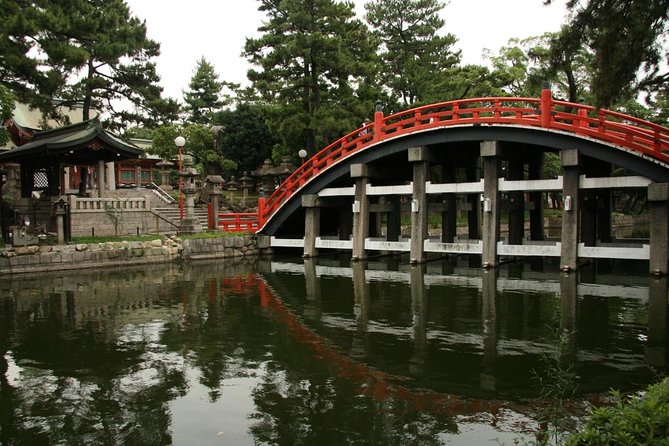
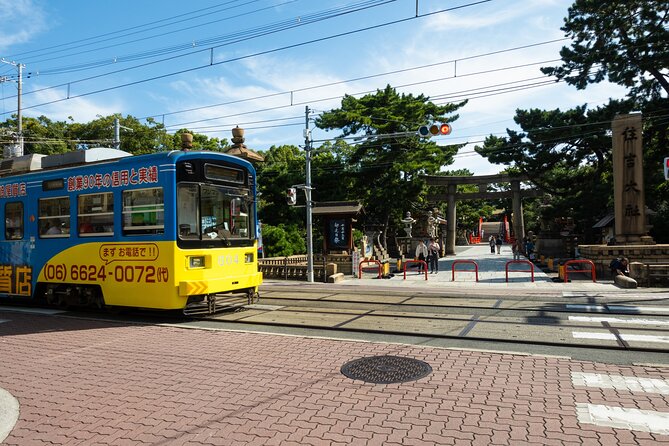
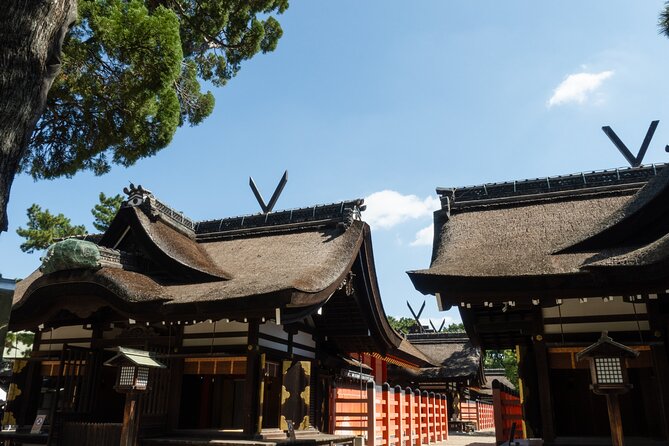
The first stop is Sumiyoshi Taisha, one of Japan’s oldest shrines. It is dedicated to three sea gods, a fitting beginning for a ride around Osaka Bay, and its buildings include a Japanese national treasure.
You get about 30 minutes here, with admission included. That is enough time to look around the grounds and take in the shrine’s distinctive architecture without turning the tour into a long temple visit.
This stop adds cultural weight to the day. Without it, the route might feel like a long urban bicycle outing. With it, you begin by seeing a place tied to Japan’s maritime traditions before heading toward the modern port and industrial districts.
You should still keep your expectations realistic. Thirty minutes is a short visit, so this is an introduction rather than an extensive shrine tour. The value comes from the contrast between Sumiyoshi Taisha and the working waterfront that follows.
Shinkizugawa Bridge brings the first serious cycling challenge
At Shinkizugawa Bridge, the ride shifts from quiet cultural sightseeing to Osaka’s large-scale infrastructure. The bridge offers views toward Tennoji, with the Ikoma Mountains visible in the background on a clear day.
The three-stage loop design is part of the appeal. You descend through the bridge structure, and the unusual shape gives you good photo opportunities. It also gives you a quick lesson in how Osaka’s roads cross canals and waterways without interrupting ship traffic.
This is one of the places where the e-assist bicycle earns its keep. Some bridge access points are steep, and one detailed account of the route specifically describes the bridge approaches as tricky. You need to be comfortable riding a bicycle and paying attention to the guide’s instructions.
The reward is not simply the view from the top. You also get the sensation of moving through the city’s engineering, rather than viewing Osaka from a train window or a fixed observation deck.
Factory roads and the Funamachi ferry reveal working Osaka
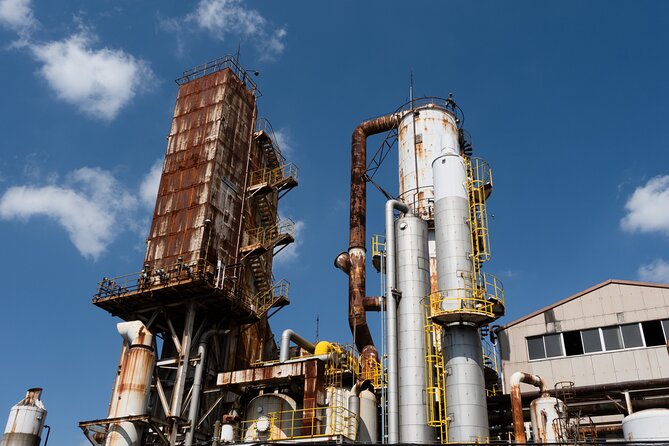
The route passes through a factory district used in Black Rain, which was filmed in Osaka and New York City. The area offers a cinematic detail, but its greater value is that it shows Osaka as a place of production and freight, not just food and nightlife.
The traffic is an important part of the experience, too. Large trucks use these roads, and the air may be unpleasant at times. If you are sensitive to dust or vehicle fumes, bring a mask and eye drops as suggested for the ride.
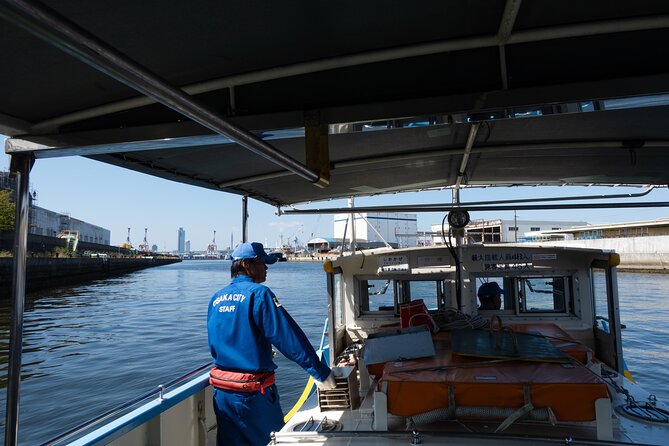
Next comes the Funamachi ferry facility. This Osaka City ferry carries bicycles and pedestrians across the water in about one minute. There is no ticket charge, and the short crossing is practical rather than scenic in the usual sightseeing sense.
That is exactly why I like it. You are not being placed on a special boat for visitors. You are using a small piece of the city’s everyday transport system, bicycle and all. It breaks up the ride and gives you a memorable way to cross the water.
A completely different kind of day out:
- Osaka Go Karting Tour with Funny Costume
★ 5.0 · 2,658 reviews - Osaka Castle: Museum and Tower Entry Ticket
★ 4.5 · 2,380 reviews - Osaka: Shinsekai Food Tour with 13-15 Dishes at 5 Eateries
★ 4.8 · 2,204 reviews - Osaka Food Tour: 13 Dishes at 5 Local Eateries
★ 5.0 · 2,149 reviews
IKEA Tsuruhama gives you a practical food break
The stop at IKEA Tsuruhama lasts about 15 minutes. It is primarily a rest stop, but it also helps solve the lunch question for people who prefer vegetarian food.
Vegetarian riders can eat at IKEA’s Sweden food market. Other riders continue to Tempozan for lunch at a Japanese diner. Lunch is not included in the tour price, so you should budget separately.
The short stop is useful after the early bridge and factory sections. Do not think of it as a major attraction or a long meal. It is a chance to pause, use the facilities, and choose a food option that suits you before continuing.
Namihaya Bridge offers the broadest city views
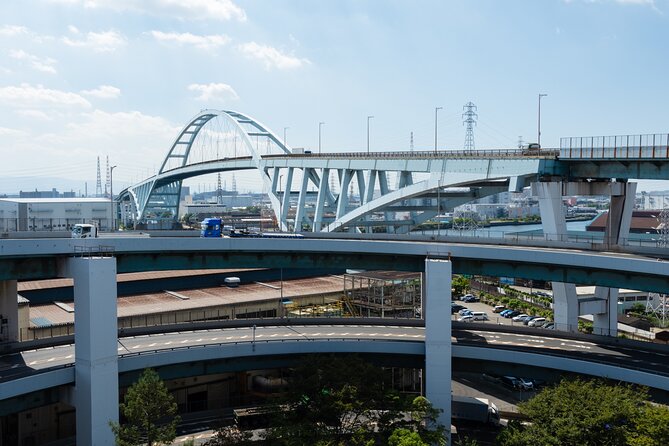
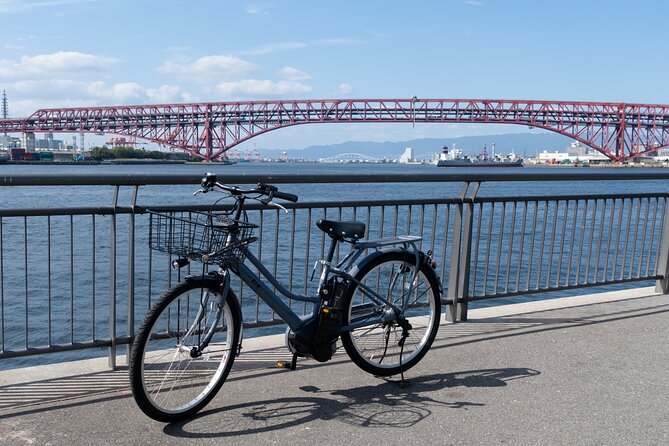
Namihaya Bridge sits near the middle of the bay area and provides a 360-degree view across Osaka. Its roadway rises about 47 meters above the water, allowing ships to pass beneath it.
This is one of the most rewarding photo stops on the route. From above, you can understand the shape of the bay area and see how the city spreads around its waterways. The bridge also makes the scale of Osaka easier to grasp than a street-level ride alone.
The climb is part of the deal. The electric assist helps, but it does not remove the need to pedal, steer, and manage the road. If you rarely ride a bicycle, this may be the point where the physical demands become clear.
For riders with moderate fitness, the bridge should be manageable with the e-bike and a steady pace. You should not book this expecting a flat cycle path. The route is active and urban, with real roads and real traffic.
Tempozan combines major sights with a relaxed lunch stop

At Mt. Tempozan, you pass the Kaiyukan Aquarium, the Ferris wheel, and architecture connected with Tadao Ando. The area is also known for cherry blossoms in spring.
You get about 40 minutes here, including time for lunch at a Japanese diner. Food is not included, so you pay for your own meal. This stop gives you a more familiar tourist setting after the less polished factory and ferry sections.
The mix works well. You can recognize some of Osaka’s best-known bay attractions, but you reach them as part of a longer local route rather than arriving only for an aquarium visit or Ferris wheel ride.
The tour also takes you near a visually striking junction where three expressways and subway tracks intersect. The layered piers and road structures create one of the most photogenic scenes on the ride. It may appeal to anyone who enjoys urban design, bridges, and the complicated machinery of a large city.
A traditional Japanese arcade shopping center appears later on the route. It is another small but useful detail, giving you a glimpse of older neighborhood commerce rather than only modern waterfront development.
The second ferry makes the ride feel local
The Jinbei渡船場, on the Taisho Ward Izoo side, provides another bicycle and pedestrian ferry crossing. Like the Funamachi ferry, it takes about one minute and is free.
Having two ferry crossings in one half-day is unusual for a standard Osaka tour. They also make the route easier to follow, since you do not need to make long detours around every waterway.
The ferries are not entertainment cruises. You may find the crossing quick and functional, but that is the point. You are seeing a small part of Osaka’s public transport network that most people miss.
This section is particularly good for people interested in daily city life. You see how residents, cyclists, and pedestrians use the bay’s waterways as part of normal movement around the city.
Sensai Bridge and Sembonmatsu Bridge finish with more bridges
Sensai Bridge includes a very steep bicycle road. The guide may offer the ferry as an alternative for crossing the river, which is a useful safety option rather than a failure to complete the route.
That detail matters. You are not forced to tackle every incline simply because it is on the planned path. If the slope feels unsafe, using the ferry can keep the ride enjoyable and sensible.
The final named stop is Sembonmatsu Bridge over the Kizu River, which connects toward Dotonbori. Locals nickname it Megane-bashi, or glasses bridge, because its shape resembles a pair of spectacles.
It is an excellent final photo stop because the bridge has a distinctive form, not just another straight span over water. By this point, you have seen Osaka’s bay from shrine grounds, roads, ferry decks, and elevated bridge approaches. The ride ends back at the original meeting point, so you do not have to arrange a separate return transfer.
What the e-bike, group size, and timing mean for you
The tour costs $78.38 per person. That is a fair price if you want a guided route through several disconnected areas and do not want to arrange a bicycle, helmet, navigation, and ferry crossings yourself.
The price includes the bicycle, helmet, and bottled water. It does not include lunch, and you should remember that the main value is access and guidance rather than paid admissions. The listed stops are free, so you are paying for the route planning, equipment, local knowledge, and help on the road.
A maximum of three people is a real advantage. Banri can give more direct support at bridge entrances, ferry points, and busy road crossings than a guide managing a large group. The guide has also used maps to explain how the area has changed over time, adding useful context to what might otherwise look like a series of unrelated roads.
You need to be at least 140 centimeters tall and weigh no more than 90 kilograms. The bicycle may feel too small if you are over 180 centimeters tall. You must already know how to ride a bicycle, and a moderate level of fitness is expected.
Wear clothing that lets you pedal and steer comfortably. The route is not suited to anyone looking for a short, flat, low-effort outing. The e-assist reduces the strain, but the distance, traffic, and bridge approaches still make this an active tour.
The tour normally requires good weather. It is canceled when the rain probability reaches 40 percent or more, with a different date or a full refund offered. For your own plans, avoid placing this ride on the final morning of a tightly scheduled Osaka visit.
How this tour compares with ordinary Osaka sightseeing
A train-based Osaka itinerary is faster and easier. You can move between major sights without traffic, steep ramps, or concern about weather. If your priority is the aquarium, shopping, or food, public transport will be more efficient.
This bicycle tour offers something different. It links famous bay attractions with industrial roads, local ferries, older shopping areas, and bridge views that are difficult to reach in one simple sightseeing trip.
I especially like the way the route changes pace. You begin with a shrine, move into factory country, cross water by ferry, stop for food, climb for city views, and finish with distinctive bridges. The day feels varied because the city keeps changing around you.
The main compromise is comfort. You are exposed to traffic, possible truck fumes, and weather. Some roads may feel less scenic than a waterfront promenade, and the steep bridge sections require care. A mask can help if air quality concerns you, but it cannot change the character of the route.
Who should book the Osaka Bay e-bike ride
I would choose this tour if you have already seen Osaka’s central sights and want a more local, physical way to understand the city. It is also a strong choice if you enjoy bridges, urban design, industrial areas, photography, and short cultural stops.
It suits confident bicycle riders who can manage several hours in the saddle. The electric assist makes the distance more approachable, but you still need to control the bicycle and cope with slopes.
You may want to skip it if you dislike traffic, have trouble riding uphill, or want a polished sightseeing experience with long stops at major attractions. It is also a poor match if you are taller than 180 centimeters and are concerned about bicycle size.
The tour has a 4.9 out of 5 rating from 15 ratings, with 100 percent recommending it. The praise focuses on the route’s non-touristy character, Banri’s patient guidance, the variety of neighborhoods and cultural sites, and the unusual bridge views. Those strengths match the actual shape of the day: this is a guided city ride, not a collection of famous landmarks.
Should you book it?
Book it if you want to see real Osaka through its waterways, factories, ferries, neighborhoods, and bridges, and if you are comfortable riding around 26 to 30 kilometers. Banri’s small group format, included equipment, and patient help add genuine value at $78.38.
Skip it if you need a flat route, dislike truck traffic, or want a relaxed half-day with little physical effort. For the right rider, this is one of the more distinctive ways to spend a morning in Osaka Bay.
FAQ
How long does the Osaka Bay cycling tour last?
The tour lasts approximately four to six hours and begins at 10:00 a.m.
Where does the tour begin and end?
It begins at Lawson Tamadenaka 2-chome, 2-chome-6-12 Tamadenaka, Nishinari Ward, Osaka. It ends back at the same meeting point.
Is the bicycle included?
Yes. Bicycle use, a helmet, and bottled water are included in the tour price.
Is lunch included?
No. Lunch is not included. You eat at a Japanese diner in Tempozan, while vegetarian riders can use the Sweden food market at IKEA Tsuruhama.
How many people can join the tour?
The maximum group size is three people.
What physical requirements apply?
You must be able to ride a bicycle and have moderate physical fitness. The minimum height is 140 centimeters, the maximum weight is 90 kilograms, and the bicycle may be too small for people over 180 centimeters tall.
What happens if the weather is poor?
The tour is canceled when the rain probability is 40 percent or higher. You are offered another date or a full refund. You can also cancel for a full refund if you do so at least 24 hours before the start time.
Just added in Osaka
- Osaka: 2-Hour Nightlife District Walking & Local Food Culture★ 5.0 · 199 reviews
- Osaka Japanese Cooking And Matcha Class near Osaka Castle★ 5.0 · 22 reviews
- Osaka Dotonbori Daytime Food Tour★ 5.0 · 24 reviews
- Osaka Dotonbori Wonder Cruise★ 4.0 · 28 reviews
- Osaka Food Walking Tour with Market Visit★ 4.5 · 14 reviews
- Cooking Ramen&Gyoza/KatsuCurry/Bento/Okonomiyaki+Store Tour@Osaka★ 5.0 · 138 reviews
- Osaka Private Pop Culture Tour: Historic Tenma to Dotonbori★ 4.5 · 13 reviews
- Osaka Cooking Class and Sake Tasting with Local Supermarket Visit★ 5.0 · 79 reviews
Cycling and E-Bike Tours, compared.
3h Tokyo E-Bike Tour: Hidden Gems, and Local Life with guide
Read our review →
Arashiyama Bamboo Forest & Hidden Gems Bike Tour (Early Bird)
Read our review →
5 Top Highlights of Kyoto Full Day Bike Tour (E-bike option)
Read our review →
Hiroshima 2hr Peace Cycling Tour with Local Guide
Read our review →Browse the lists this tour appears in