
Reviewed · HIROSHIMA TOURS
Hiroshima:Guided Virtual Tour/PEACE PARK TOUR VR
History feels different when the ground beneath you matters. This 80-minute walk pairs a local Hiroshima guide with VR scenes based on survivor testimonies and period photographs, showing the city before the atomic bombing, the ruined plain of August 6, and its long recovery. I especially like the small group of six or fewer and the chance to ask questions as you move between real sites. I also like that the VR is used outdoors at the places it helps explain, rather than replacing the park itself.
The strongest part is the human guide. Yoko Shimada has been praised for her warmth, while Kazuko connected the VR story to hibakusha Eizo Nomura, who was inside a building just 170 meters from the hypocenter. Hiroshi has also shared family and local experiences. The main drawback is the fixed pace: late arrivals may receive a shortened tour or be turned away, and heavy rain can reduce the VR portion to a five-minute indoor version.
In This Review
- Key points to know before booking
- Why VR works better here than in a room
- Starting at the Peace Memorial Park Rest House
- The Atomic Bomb Dome after the first VR sequence
- Aioi Bridge and the bomb’s geographic story
- Motoyasu Bridge and the city’s recovery
- The guides are more important than the headset
- Is $32 a fair price?
- Timing, weather, and the walking pace
- Who will appreciate this tour most
- FAQ
- Where does the Hiroshima VR tour begin?
- How long does the experience last?
- Which language is available?
- How many people can join the group?
- What locations does the walking route include?
- What happens if it rains heavily?
- What happens if I arrive late?
- Should you book the Hiroshima Peace Park VR Tour?
Key points to know before booking
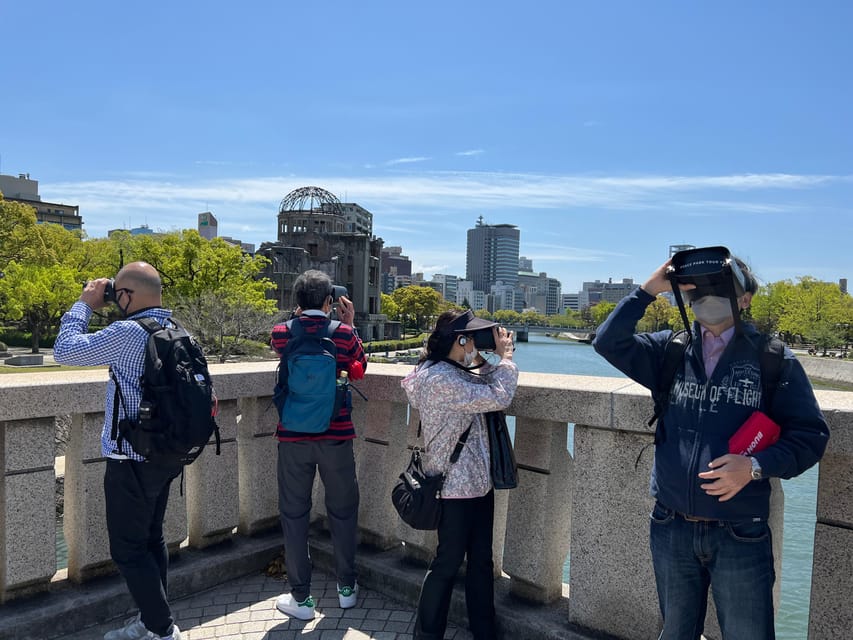
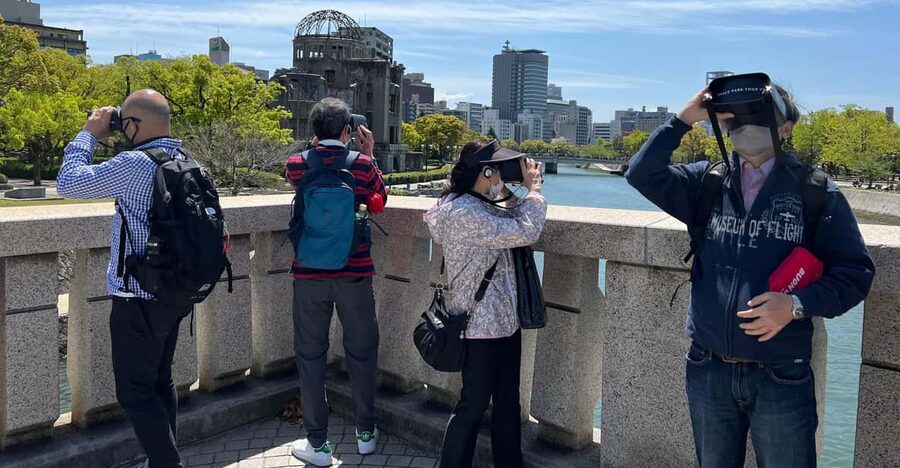
- The VR scenes are tied to real Peace Park locations: You view past versions of Hiroshima while standing near the Atomic Bomb Dome, Aioi Bridge, and Motoyasu Bridge.
- The story begins with survivor testimony: Eizo Nomura’s experience helps give the digital images a human scale.
- The guide is central to the experience: Yoko, Kazuko, and Hiroshi have each been praised for answering questions and adding personal or local context.
- The group is limited to six people: That makes conversation easier and keeps the walk more personal than a large bus tour.
- The tour costs $32 per person: That is fair if you value interpretation and discussion, not just a quick look around the park.
- Weather and punctuality matter: The tour runs in rain or shine, and you must arrive at least five minutes early.
Why VR works better here than in a room
Hiroshima Peace Park can be difficult to understand at first. The lawns are open, the paths are calm, and many of the buildings are memorials rather than ordinary city streets. Without help, you may see important monuments but struggle to picture the city that once occupied this space.
This tour uses VR to bridge that gap. At several points, you put on a headset and see a digital reconstruction based on survivor accounts and photographs from the period. The purpose is not entertainment. It is to help you compare the quiet park in front of you with Hiroshima before the bombing, the destruction after August 6, and the city’s recovery.
That comparison gives the walk its force. You are not only watching a historical scene on a screen. You are standing in the same broad area while the guide explains what you are seeing and answers questions. The technology provides the visual layer, but the conversation gives it meaning.
I also appreciate the restraint of the format. The VR is used in short sections along a walking route, rather than taking over the entire experience. You still see the park with your own eyes, listen to the guide, and have time to consider the places around you.
A few more options to weigh up in Hiroshima
- Peaceful Hiroshima & Miyajima UNESCO 1 Day Bus Tour
★ 5.0 · 5,309 reviews - Hiroshima Peace Memorial Museum Ticket
★ 4.8 · 2,727 reviews - Hiroshima: Hiroshima and Miyajima UNESCO Sites 1-Day Tour
★ 4.9 · 2,330 reviews
Starting at the Peace Memorial Park Rest House
The tour begins at the Hiroshima City Peace Memorial Park Rest House. Go to the tourist information counter on the first floor, where the guide will be waiting. You should arrive at least five minutes before your booked start time.
The Rest House is a useful meeting point because it places you inside the Peace Park from the beginning. It also gives the guide a clear place to gather the small group before the walk. Keep your luggage with you, though. The building cannot store bags, so this is not a good tour to join with large luggage in tow.
The first guided section lasts about 20 minutes. This opening time helps establish the setting and the human stories behind it before you reach the next major stops. The subject is serious from the first minute, so bring the right frame of mind. This is not a light sightseeing stroll with a digital novelty added on.
The guide’s role matters here. A local English-speaking guide can explain the park in a way that a headset alone cannot. Kazuko, for example, began with the experience of Eizo Nomura, a hibakusha who was in a building only 170 meters from the hypocenter. That kind of detail turns a vast historical event into one person’s lived experience.
The Atomic Bomb Dome after the first VR sequence
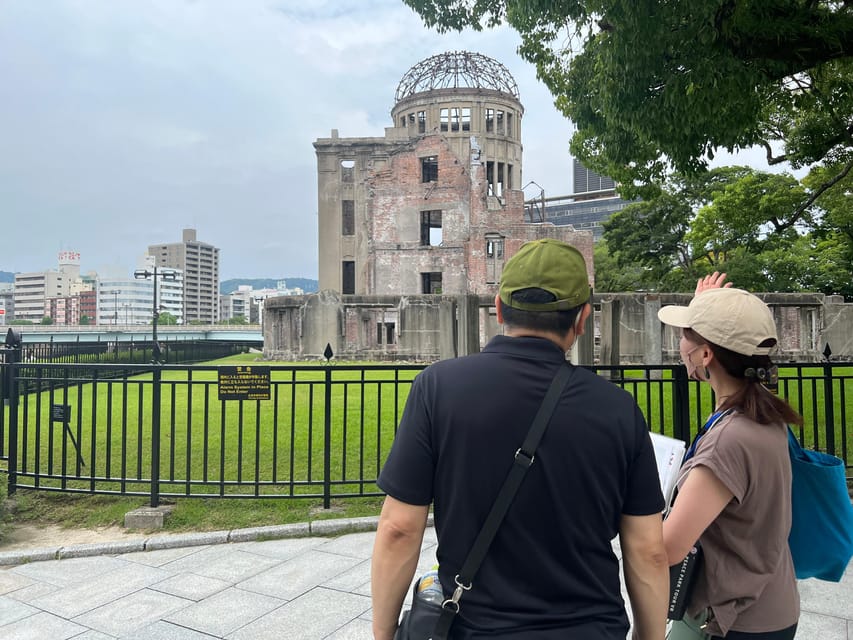
The walk continues to the Atomic Bomb Dome, with roughly 20 minutes devoted to guided sightseeing and walking. This is one of the most recognizable places in Hiroshima, but recognition is not the same as understanding.
The VR scenes can help you see how the area looked before the bombing and how quickly it changed. The contrast between the former city and the surviving structure is the point. The Dome is not simply an old building left standing by chance in a pleasant park. It is a physical reminder of the city that was there, the destruction that followed, and the decision to preserve a ruin.
At this stop, you should expect the guide to connect the digital images with the structure in front of you. That is where this tour has an advantage over watching a historical film elsewhere. The real site gives the VR images a fixed location, while the guide helps you understand what the images cannot explain on their own.
There is also a practical limitation. A 20-minute stop is enough for a clear introduction, but not for every detail of Hiroshima’s wartime story. If you want a full museum-style examination of the bombing, this tour should be paired with additional time at the Hiroshima Peace Memorial Museum.
Aioi Bridge and the bomb’s geographic story
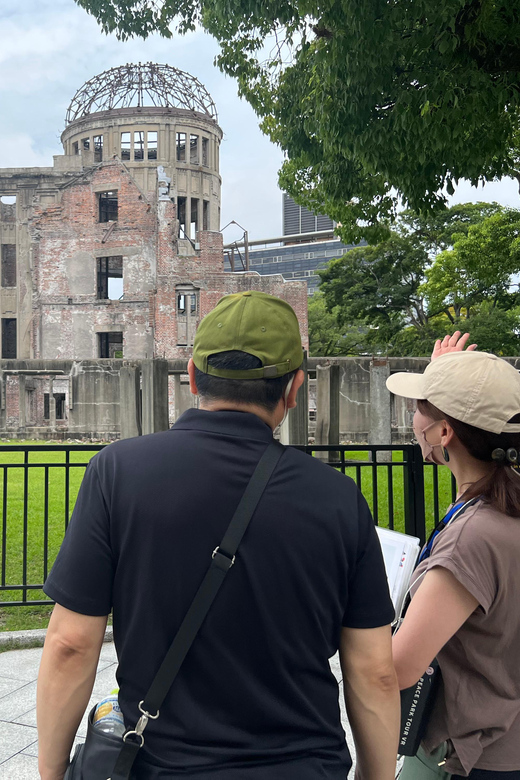
The next stop is Aioi Bridge, also called T-Bridge, with about 15 minutes for walking and guided sightseeing. The bridge is important to the tour’s geography. It helps you understand the area around the target and the way the bombing affected the city beyond a single building.
This is where the fieldwork idea becomes especially useful. You are moving through the park instead of receiving all the information from one stationary point. The guide can direct your attention to the bridge, the surrounding space, and the VR reconstruction, allowing you to make a physical connection between the historical account and the present-day setting.
The scene of the burnt plain is likely to be one of the hardest parts emotionally. The experience draws from survivor testimonies, so the destruction is not presented as a vague before-and-after effect. Eizo Nomura’s account gives the VR sequence a personal anchor, and that makes the visual change more sobering.
You may find this stop less comfortable than a standard sightseeing visit. That is not a flaw, but it is worth knowing before you book. The tour asks you to think about civilian suffering and the consequences of nuclear war. If you prefer to keep your holiday schedule strictly cheerful, choose another activity. If you want to understand Hiroshima rather than simply photograph it, this section is important.
A completely different kind of day out:
- Hiroshima Peace Memorial Museum Admission
★ 4.6 · 1,308 reviews - Hiroshima / Miyajima Full-day Private Tour with Government Licensed Guide
★ 5.0 · 1,298 reviews - Hiroshima Historical Walking Tour – Why A-Bomb was Dropped
★ 4.8 · 893 reviews - Hiroshima Peace (Heiwa) Walking Tour at World Heritage Sites
★ 5.0 · 872 reviews
Motoyasu Bridge and the city’s recovery
The final major stop is Motoyasu Bridge, reached after another approximately 15 minutes of walking and sightseeing. Here, the story moves beyond the moment of destruction. The VR experience also shows Hiroshima’s recovery, which gives the tour a wider shape than a single account of catastrophe.
That balance matters. A visit focused only on the blast can leave you with an image of Hiroshima frozen in August 1945. The recovery scenes remind you that the city did not remain a burnt plain. People rebuilt homes, streets, institutions, and daily life.
The guide can help you discuss what the images mean rather than simply showing them in sequence. At the end, the group talks about its reactions and thoughts. I like that closing conversation because it gives the experience a human finish. You are not rushed from the final image straight into the next attraction.
The discussion may be especially useful in a small group. With six or fewer participants, you have a better chance to ask about details that concern you, including the survivor accounts, the reconstruction, or Hiroshima’s message of peace. The guide can also respond to different levels of historical knowledge without having to address a large crowd.
The guides are more important than the headset
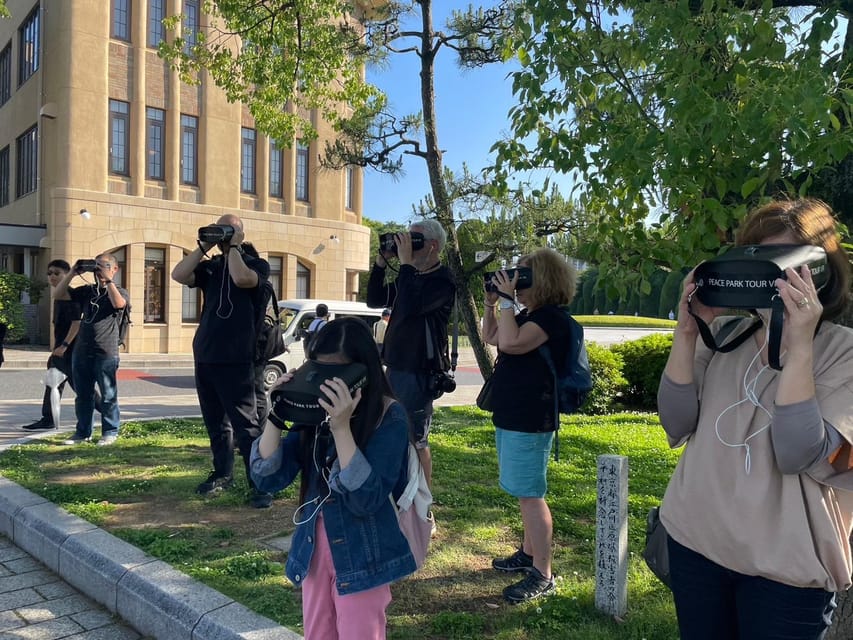
The VR is the feature that sells the tour, but the guides appear to be its greatest strength. Yoko Shimada has been praised for being warm, attentive, and willing to answer every question. Kazuko used Eizo Nomura’s story to build a clear emotional path through the experience. Hiroshi has brought family and local connections into his explanations, giving the past a more personal feel.
That variety is worth noting. You are not buying a fully automatic audio tour where every participant receives the same script and moves on at the same time. The English-speaking guide leads the walk, explains the sites, and facilitates conversation.
An English audio guide is also included, but the live guide remains the key part of the experience. If you have a question, ask it. The tour is designed for dialogue, and the limited group size makes that practical.
The guide cannot remove the sadness of the subject, nor should the tour try to. What a good guide can do is provide context, keep the story focused, and make space for a thoughtful response. That is why the praise for the guides matters more than praise for the technical equipment.
Is $32 a fair price?
At $32 per person, this is not the cheapest way to walk through Hiroshima Peace Park. You can enter the park on your own, see the bridges and the Atomic Bomb Dome, and read the memorial plaques without paying for a guided activity.
The value comes from the interpretation. The fee includes the VR goggles, their rental, and an English-speaking guide. You are paying for the preparation of the historical material, the equipment, the route, and the chance to ask questions in a group limited to six people.
I consider that a fair price for visitors who want help making sense of the park. The tour is less good value if you already know the area well, have studied the history in detail, or plan to spend much of the day with another guide. It also does not replace the Peace Memorial Museum, which provides a different and more extensive way to learn.
For a first visit, though, the combination of location, survivor testimony, and live discussion gives the fee a clear purpose. The VR is not there as a gimmick. It helps you see what is no longer visible, while the guide keeps the focus on people and place.
Timing, weather, and the walking pace
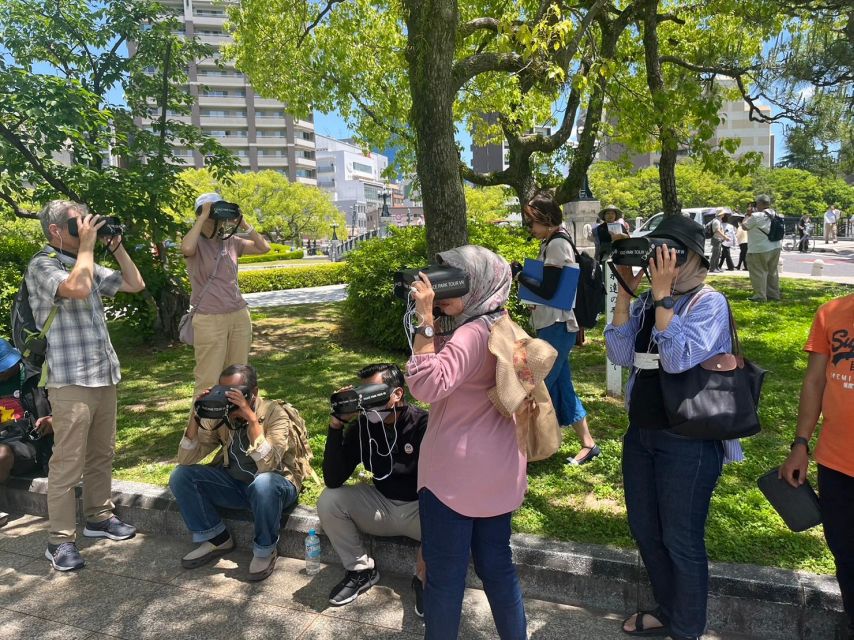
The total duration is 80 minutes. The listed walking and sightseeing sections add up to about 70 minutes, with the remaining time allowing for transitions, headset use, and the closing conversation.
Arrive early. If you are more than 10 minutes late, you may not be admitted. The exact warning is especially strict for the morning departure, so do not plan to arrive at the last moment after navigating Hiroshima’s transport system.
The tour runs rain or shine. Wear shoes suitable for walking through the park and check the forecast before you leave. Heavy rain changes the format: after the outdoor fieldwork, you may watch a shortened five-minute VR version at the Rest House.
That weather policy means the tour remains possible in poor conditions, but the experience will not be identical. The outdoor connection between headset images and real sites is a major part of the tour. On a wet day, bring protection for yourself and accept that the visual program may be shorter.
Food and drinks are not included. You should also arrange your own transport to the meeting point. Since the tour begins and ends at the Peace Memorial Park Rest House, it fits neatly into a day already focused on the park.
Who will appreciate this tour most
I would recommend it most to first-time visitors who want a clear introduction to Hiroshima’s central memorial area. It also suits people who learn best through a mix of visual material, walking, and conversation.
The small group works well for:
- Couples or friends who want a serious activity without joining a large bus group
- Families with older children who can engage with difficult historical material
- Visitors who want to ask questions in English
- People who find memorial sites hard to understand without a guide
- Anyone interested in how survivor testimony can shape historical interpretation
I would think twice if you dislike headsets, find digital reconstructions distracting, or want a quiet visit without a set schedule. The route is shared with other participants, so it is not private. You may also find the subject emotionally heavy, particularly during the scenes showing the city immediately after the bombing.
FAQ
Where does the Hiroshima VR tour begin?
It begins at the tourist information counter on the first floor of the Hiroshima City Peace Memorial Park Rest House.
How long does the experience last?
The tour lasts 80 minutes.
Which language is available?
The live tour guide speaks English, and an English audio guide is included.
How many people can join the group?
The group is limited to six participants.
What locations does the walking route include?
The route includes the Hiroshima Peace Park Rest House, the Atomic Bomb Dome, Aioi Bridge, and Motoyasu Bridge, before returning to the Rest House.
What happens if it rains heavily?
The tour still takes place, but after the Peace Park fieldwork you may watch a shortened five-minute VR version at the Rest House.
What happens if I arrive late?
You should arrive at least five minutes before the reservation time and contact the provider if delayed. If you arrive 10 minutes after the start, you may not be allowed to join, or the tour may be shortened.
Should you book the Hiroshima Peace Park VR Tour?
Book it if you want more than a walk past Hiroshima’s memorials. The price is reasonable for a small English-speaking group, VR equipment, survivor-based storytelling, and a guide who can respond to your questions.
The best reason to choose it is the connection between past and present. You see the peaceful park, then use the headset to picture the city before the bombing, the destruction of August 6, and the recovery that followed. The guide brings those scenes back to human scale, as Kazuko did through Eizo Nomura’s testimony and as Yoko and Hiroshi have done through warm, personal explanations.
Skip it if you want a completely independent visit, cannot keep to a fixed start time, or are likely to be uncomfortable with the emotional weight of the subject. For everyone else, this is a thoughtful and practical way to begin a Hiroshima visit, especially when paired with extra time at the Peace Memorial Museum.
Just added in Hiroshima
- Hiroshima Peace Memorial Museum Ticket★ 4.8 · 2,727 reviews
- Hiroshima Peace Memorial Museum Admission★ 4.6 · 1,308 reviews
- Private Full Day Hiroshima Tour★ 4.5 · 29 reviews
- The Peace Memorial to Miyajima : Icons of Peace and Beauty★ 4.5 · 31 reviews
- Shore Excursion from Hiroshima Port : Private Tour in Hiroshima★ 5.0 · 17 reviews
- Hiroshima & Miyajima All-Inclusive Tour w/Licensed guide Pancho★ 5.0 · 54 reviews
- Hiroshima Country Cycling: Explore Rural Life 1 HR from City★ 5.0 · 22 reviews
- Hiroshima Saijo Sake Tasting Tour with visit to 7 Breweries★ 5.0 · 104 reviews
Hiroshima Tours, compared.
Peaceful Hiroshima & Miyajima UNESCO 1 Day Bus Tour
Read our review →
Hiroshima and Miyajima UNESCO Sites 1-Day Tour
Read our review →
Hiroshima / Miyajima Full-day Private Tour with Government Licensed Guide
Read our review →
Hiroshima Historical Walking Tour – Why A-Bomb was Dropped
Read our review →
Hiroshima Peace (Heiwa) Walking Tour at World Heritage Sites
Read our review →
Hiroshima in a Nutshell: Morning Bike Adventure
Read our review →Browse the lists this tour appears in