

Reviewed · CYCLING AND E-BIKE TOURS
Okunoshima Rabbit Island Cycling Tour with Local Guide
Rabbits are only half the story. This two-hour bike tour gives you a close look at Okunoshima’s wild rabbits, quiet Seto Inland Sea scenery, and troubled wartime past. I especially like the small group size, capped at five people, and the chance to hear the island explained by a local guide such as Junko, whose passion for Okunoshima comes through clearly. The main drawback is that you must pay the ferry fare separately, and some historic ruins can only be viewed from outside.
The tour also offers a useful mix of light exercise and serious history. You ride around an island of roughly 4 kilometers, stop at military remains, visit the lighthouse and shrine, and return to the Kyukamura hotel. If you come expecting only cute animals, the poison gas facilities may feel confronting. That contrast is exactly what gives the outing its meaning.
In This Review
- Key points to know before you book
- Why Okunoshima is more than Rabbit Island
- Starting at Kyukamura and getting ready to ride
- Cycling around an island of about 4 kilometers
- Okunoshima Lighthouse and the Seto Inland Sea
- Okuno Shrine, where rabbits share the island’s only shrine
- Nagaura Poison Gas Storage Ruins
- Power Plant Ruins and the island’s hidden industry
- Northern Cannon Battery Remnants
- What the $59.12 price really covers
- The guide can shape the whole experience
- Weather, cancellations, and the best match for this tour
- Should you book the Okunoshima cycling tour?
- FAQ
- How long does the Okunoshima Rabbit Island Cycling Tour last?
- Where does the tour start and finish?
- Is the ferry included in the tour price?
- Is bicycle use included?
- Are taxes and travel insurance included?
- How many people can join the tour?
- What happens if only one person books?
- Can you enter the Okunoshima Lighthouse?
- Can you enter the poison gas storage ruins or power plant ruins?
- What happens if the tour is canceled because of rain?
Key points to know before you book
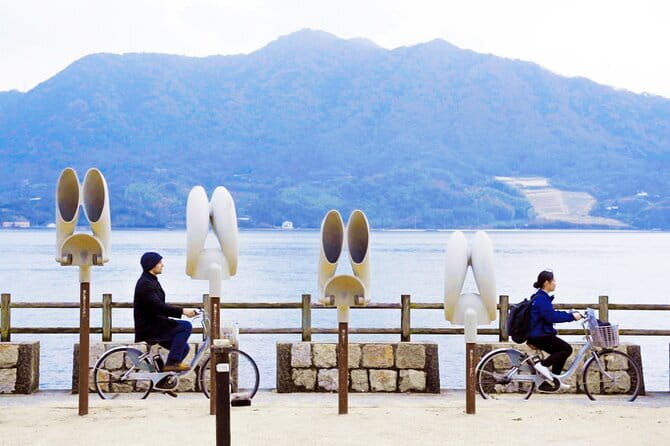
- Wild rabbits are part of a larger story: Okunoshima’s animals are charming, but the tour also explains why the island was once removed from maps.
- Junko has earned special praise: Her warm, personal approach helps connect the island’s beauty with its painful past.
- The group is small: A maximum of five people makes it easier to hear the guide and ask questions.
- You pay 360 yen for the ferry: The bicycle, taxes, and travel insurance are included, but the Tadanoumi to Okunoshima boat is not.
- Several ruins are viewed from outside: The lighthouse, poison gas storage ruins, and power plant are closed to entry for safety reasons.
- Rain can cancel the outing: If a 60 percent or higher chance of rain is forecast by noon the day before, the tour may be canceled without a fee.
Why Okunoshima is more than Rabbit Island
Okunoshima sits in the Seto Inland Sea, a warm body of water scattered with more than 700 islands. Its quiet setting and large population of wild rabbits make it one of the gentler stops in Hiroshima Prefecture. Yet the island also carries a grim story tied to Japan’s wartime chemical weapons production.
That sharp contrast is the heart of this experience. You may arrive smiling at rabbits along the road, then pause beside a military ruin where poison gas was stored or manufactured. A good guide helps you hold both facts at once. The island is peaceful today, but its peace does not erase what happened there.
I like that the tour does not treat Okunoshima as a simple animal stop. The rabbits draw people in, while the history gives the visit weight. You leave with a clearer sense of why the island was once kept off maps and why its remaining structures matter.
The setting also helps. Okunoshima is small enough to circle by bicycle, so you can see several important places without spending a full day on foot. The ride gives you changing views of the coast and a practical way to cover ground between the historic sites.
More Bike Tours in Hiroshima
- Hiroshima 2hr Peace Cycling Tour with Local Guide
★ 5.0 · 321 reviews - Hiroshima: Peace Cycling Tour with Local Guide
★ 4.8 · 286 reviews - Hiroshima 3hr Peace Cycling Tour with Local Guide
★ 5.0 · 131 reviews
Starting at Kyukamura and getting ready to ride
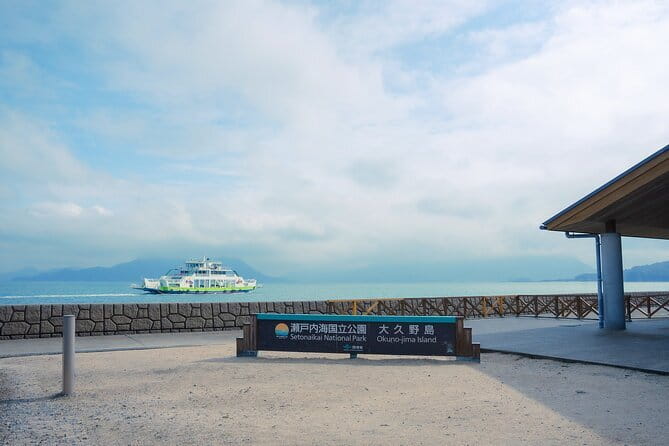
The meeting and finishing point is Kyukamura Ohkunoshima, written in Japanese as 休暇村大久野島. The tour begins and ends in front of this hotel, so you do not need to arrange a separate return transfer after the ride.
The ferry from Tadanoumi to Okunoshima costs 360 yen and is not included in the tour price. That is an important detail when you calculate the total cost. Private transportation is also excluded, while the bicycle, taxes, and travel insurance are included.
You should allow time to reach the meeting point and board the ferry. The experience itself lasts about two hours, but the ferry journey and any waiting time are outside that estimate. Since the tour requires at least two participants, a departure can be canceled if that minimum is not reached.
The physical demand should be manageable for anyone with a moderate fitness level. Still, you are cycling around an island and stopping several times, so comfortable clothing and shoes make sense. The small group limit of five is a real advantage here. It should be easier to stay with the guide, hear explanations, and pause for questions than on a large coach-style outing.
Cycling around an island of about 4 kilometers
Okunoshima has a circumference of about 4 kilometers, making it well suited to a short cycling tour. You are not signing up for a long-distance ride. Instead, the bicycle lets you move between scattered points while enjoying the island at a slower pace than a bus would allow.
The pace also suits the subject. The tour is not just a race from one ruin to the next. You have time to look toward the Seto Inland Sea, notice rabbits along the route, and listen as the guide explains how the island changed over time.
The tour description does not promise a set number of rabbits at each stop, and animals are wild rather than staged. You should enjoy the chance to see them without expecting a guaranteed animal encounter at a particular moment. That unpredictability is part of the appeal, but it also means the experience is not the same as visiting a zoo.
There is a useful balance here: the bicycle creates freedom of movement, while the guide gives the ride a clear purpose. Without the history, you might simply circle the island and take photographs. Without the cycling, you might miss the relationship between the quiet natural setting and the remains scattered around it.
Okunoshima Lighthouse and the Seto Inland Sea
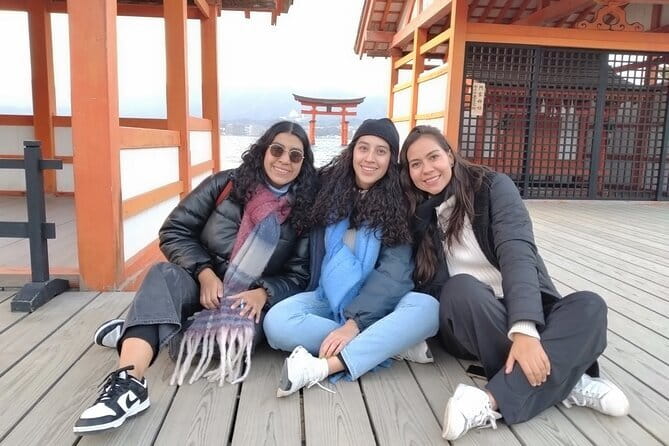
The first listed stop is Okunoshima Lighthouse, with about 10 minutes set aside. You cannot enter the lighthouse, so this is an exterior viewing stop rather than a climb.
That limitation matters if you are hoping for a high lookout. You will instead view the lighthouse from a short distance and take in the surrounding scenery. The stop works best as a quick orientation point, giving you a sense of Okunoshima’s position among the islands of the Seto Inland Sea.
I like the fact that this stop is brief. The lighthouse is part of the island’s visual character, but it is not the main reason to book the tour. Ten minutes is enough to appreciate it without taking time away from the historic sites.
Bring your own interest in scenery here. No admission fee is listed, and the visit is about the view and the setting rather than access to the building itself.
A completely different kind of day out:
- Peaceful Hiroshima & Miyajima UNESCO 1 Day Bus Tour
★ 5.0 · 5,309 reviews - Hiroshima Peace Memorial Museum Ticket
★ 4.8 · 2,727 reviews - Hiroshima: Hiroshima and Miyajima UNESCO Sites 1-Day Tour
★ 4.9 · 2,330 reviews - Hiroshima Peace Memorial Museum Admission
★ 4.6 · 1,308 reviews
Okuno Shrine, where rabbits share the island’s only shrine
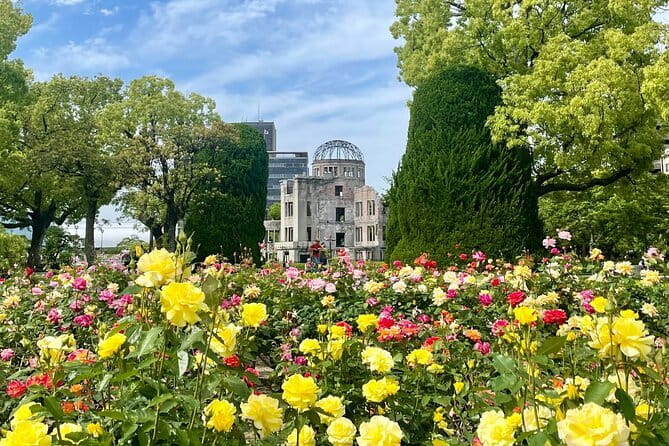
Okuno Shrine is the island’s only shrine, and the stop lasts about 10 minutes. It is now also associated with rabbits, adding one of Okunoshima’s softer touches to a tour that otherwise deals with difficult history.
This is a good place to notice how the island’s present identity has developed. The shrine is a living religious site, but rabbits have become part of the visitor experience. You may find the setting peaceful, though the tour does not promise a particular number of animals or a scheduled interaction.
The short stop keeps the visit focused. You are unlikely to spend a long time here, but the shrine gives the route variety. After the lighthouse and coastal views, you get a cultural point of interest before moving on to the military remains.
As with the rest of Okunoshima, the attraction is the mixture. A shrine, wild rabbits, and wartime ruins exist within a very small area. The guide’s explanation is especially useful because the physical sites alone cannot tell you the full story.
Nagaura Poison Gas Storage Ruins
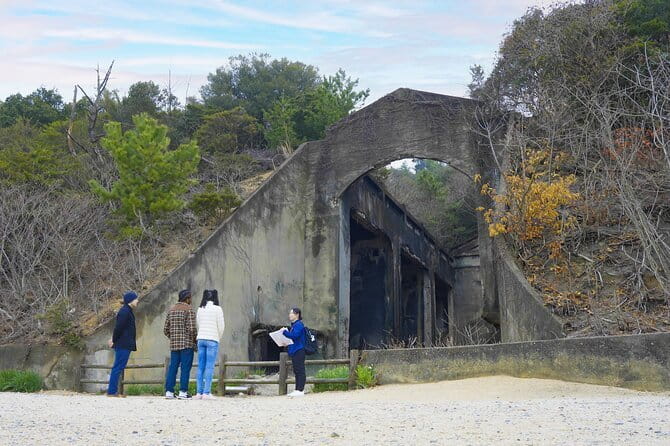
The Nagaura Poison Gas Storage Ruins receive about 10 minutes. This was once a facility for tanks filled with poison gas. Today, safety rules prevent you from entering, so you view the structure from a short distance.
This is one of the stops where a local guide adds real value. An old building can look like a shell unless you understand its purpose. With context, the quiet ruins become evidence of the secret work carried out on the island.
Do not expect an indoor museum visit here. The stop is exterior only, and some people may find the subject matter upsetting. That is not a flaw in the tour, but you should know the tone before you book. The experience treats Okunoshima’s wartime past as something to face, not something to soften for entertainment.
The brief timing is sensible. You receive historical context, inspect the remains, and continue along the route. A longer stop might add detail, but the two-hour format aims to give you a broad picture of the island rather than a full archival study.
Power Plant Ruins and the island’s hidden industry
The Power Plant Ruins are another 10-minute exterior stop. The plant supported the secret production of poison gas on Okunoshima. Entry is prohibited for safety reasons, but you can view the structure from outside.
This site helps explain that the island’s wartime role required more than storage buildings. Production needed power and infrastructure, and the ruins show the practical side of that operation. The place may look plain at first, but its function gives it importance.
I would pay close attention to the guide here. The value is less about seeing an intact building and more about understanding how the different sites fit together. The storage facility and power plant are not isolated curiosities. They form part of the same wartime system.
The stop also reinforces a useful lesson about Okunoshima: the island’s natural calm can hide evidence of organized and dangerous work. You can enjoy the sea air and still recognize that this was once a controlled military site.
Northern Cannon Battery Remnants

The Northern Cannon Battery Remnants receive the longest individual history stop at about 15 minutes. Unlike the lighthouse, storage ruins, and power plant, you can see this gun battery more closely.
That extra access gives the stop a different feel. You are not only looking at a building from a protected distance. You can examine the remaining military structure and get a clearer sense of how the island was defended.
The battery is also a good place to connect the island’s wider military role with the poison gas facilities. Okunoshima was not simply a production site hidden away in the sea. Its defenses formed part of the island’s wartime setting.
Fifteen minutes is enough for a focused visit, though anyone with a strong interest in military architecture may wish for more time. The tour has to keep moving, and the route includes rabbits, scenery, and several historic locations. That is the tradeoff of a compact guided circuit.
What the $59.12 price really covers
At $59.12 per person, this is not the cheapest way to see rabbits on Okunoshima. The ferry fee adds 360 yen, and food and drinks are also your responsibility. Still, the price includes bicycle use, all listed taxes and fees, travel insurance, and a local guide for a small group.
I see the value in the interpretation rather than the equipment alone. You could reach the island and ride around independently, but you would need to research the poison gas facilities and military remains yourself. The guide turns a collection of scattered sites into a connected story.
The maximum of five people also improves the value. A private tour would normally cost more, while a large group could make it hard to hear or ask questions. This format sits between the two: shared, but personal enough to feel direct.
The cost makes the most sense if you care about both sides of Okunoshima. If you only want quick rabbit photographs, the tour may feel more expensive than necessary. If you want to understand why this small island matters, the guide and included bicycle make the fee easier to justify.
The guide can shape the whole experience
Junko receives especially warm praise for her kindness and passion. Her role goes beyond pointing out buildings. She helps visitors connect the rabbits, scenery, and wartime history without losing sight of the human cost.
That personal approach matters on a place like Okunoshima. The island’s cute reputation can make it easy to overlook the poison gas story. A guide who cares about education can keep the visit respectful while still making it approachable.
The tour provider is Takehara DMO, which gives the experience a local connection. Confirmation is sent within 48 hours of booking, subject to availability. Since the tour is shared, you may not have Junko on every departure, but her approach gives you a useful idea of the kind of guiding the experience aims to offer.
The 4.7 rating from 17 ratings and 94 percent recommendation rate point to a strong overall response. Those figures do not remove the need to consider the practical limits, such as outdoor viewing only and the extra ferry cost, but they support the idea that the guide is a major strength.
Weather, cancellations, and the best match for this tour
This experience depends on good weather. If the Japan Meteorological Agency forecasts a 60 percent or higher chance of rain by noon the day before, the tour will be canceled without cancellation fees. A poor-weather cancellation also brings the choice of another date or a full refund.
For your own plans, that means you should avoid placing this tour at the very end of a tightly packed Hiroshima itinerary. Keep some flexibility if possible. You can cancel for a full refund up to 24 hours before the start time, but cancellations or changes made inside that window are not refunded or accepted.
I would recommend this tour to you if you:
- Want a small-group experience with a local guide
- Like combining gentle cycling with history
- Are interested in Okunoshima beyond its rabbits
- Have moderate physical fitness
- Can accept outdoor viewing at several historic sites
- Have enough schedule flexibility for weather changes
I would think twice if you want a long museum visit, a guaranteed rabbit encounter, or a fully private outing. The tour is short and carefully paced. Its strength is the blend of nature, animals, and difficult history, not deep specialist study at any single site.
Should you book the Okunoshima cycling tour?
I would book this tour if you want Okunoshima to mean more than a cute stop on a Japan itinerary. The bicycle route is short, the group is limited to five, and the guide adds context that is hard to gain from photographs alone.
Before booking, budget for the 360-yen ferry, confirm that a two-hour outdoor ride suits your fitness level, and leave room for a weather change. If those details work for you, this is a thoughtful way to see the island’s rabbits while facing the history beneath its peaceful surface.
FAQ
How long does the Okunoshima Rabbit Island Cycling Tour last?
The tour lasts approximately two hours.
Where does the tour start and finish?
It starts and ends in front of Kyukamura Ohkunoshima, also written as 休暇村大久野島.
Is the ferry included in the tour price?
No. The ferry from Tadanoumi to Okunoshima costs 360 yen and is paid separately.
Is bicycle use included?
Yes. Bicycle use is included in the tour.
Are taxes and travel insurance included?
Yes. All fees and taxes, along with travel insurance, are included.
How many people can join the tour?
The tour has a maximum of five participants. It is a shared group experience.
What happens if only one person books?
At least two participants are required for the tour to operate. If the minimum is not reached, you can choose another date or experience, or receive a full refund.
Can you enter the Okunoshima Lighthouse?
No. Entry to the lighthouse is currently prohibited, so you view it from a short distance.
Can you enter the poison gas storage ruins or power plant ruins?
No. Entry to both sites is prohibited for safety reasons. You view them from outside.
What happens if the tour is canceled because of rain?
If the experience is canceled because of poor weather, you can choose a different date or receive a full refund.
Just added in Hiroshima
- Hiroshima Peace Memorial Museum Ticket★ 4.8 · 2,727 reviews
- Hiroshima Peace Memorial Museum Admission★ 4.6 · 1,308 reviews
- Private Full Day Hiroshima Tour★ 4.5 · 29 reviews
- The Peace Memorial to Miyajima : Icons of Peace and Beauty★ 4.5 · 31 reviews
- Shore Excursion from Hiroshima Port : Private Tour in Hiroshima★ 5.0 · 17 reviews
- Hiroshima & Miyajima All-Inclusive Tour w/Licensed guide Pancho★ 5.0 · 54 reviews
- Hiroshima Country Cycling: Explore Rural Life 1 HR from City★ 5.0 · 22 reviews
- Hiroshima Saijo Sake Tasting Tour with visit to 7 Breweries★ 5.0 · 104 reviews
Cycling and E-Bike Tours, compared.



3h Tokyo E-Bike Tour: Hidden Gems, and Local Life with guide
Read our review →
Arashiyama Bamboo Forest & Hidden Gems Bike Tour (Early Bird)
Read our review →
5 Top Highlights of Kyoto Full Day Bike Tour (E-bike option)
Read our review →

Hiroshima 2hr Peace Cycling Tour with Local Guide
Read our review →Browse the lists this tour appears in