
Reviewed · CYCLING AND E-BIKE TOURS
Hiroshima 3hr Peace Cycling Tour with Local Guide
Hiroshima is best understood in motion. I like the small group of 10 or fewer, which gives you room to ask questions, and I like the easy electric bicycles that connect major memorials with less familiar places. The route is flat, gentle, and thoughtfully paced, though the subject matter is often painful and the compact bikes may feel undersized for some adults.
You meet at the Hiroshima Peace Park Rest House, ride through the city, and return there about three hours later. Guides such as Shin, Moe, Kana, Toma, and Thomas have been praised for clear explanations and personal family connections to the bombing. The main tradeoff is that this is a shared ride, so the pace can slow if someone in the group is new to cycling.
In This Review
- Key points at a glance
- Why a bicycle is a good fit for Hiroshima
- Starting at the Peace Park Rest House
- Hiroshima Castle and Gokoku Shrine: the city before and after the bomb
- Central Park and Aioi Bridge
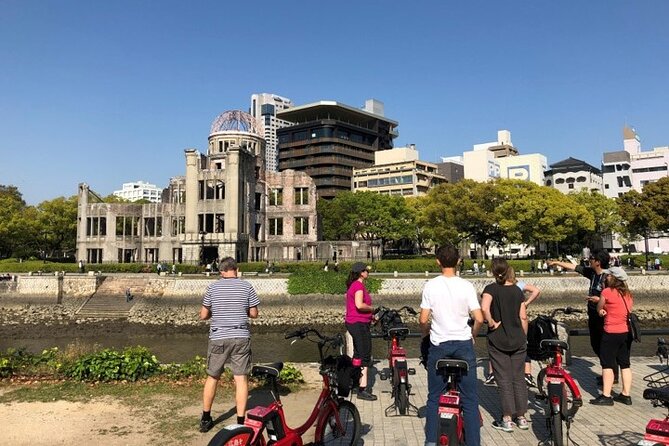
- The Atomic Bomb Dome and Motoyasu River
- Higashisenda Park and the surviving Red Cross Hospital window
- Hiroshima’s surviving railway and Miyuki Bridge
- The surviving weeping willow and Peace Boulevard
- The guides make the difference
- Is $85.89 a fair price?
- Who should book this ride?
- Rain plans, cancellations, and practical details
- Should you book the 3-hour route?
- FAQ
- Where does the Hiroshima Peace Cycling Tour begin and end?
- How long is the cycling tour?
- How many people can join the tour?
- Are electric bicycles provided?
- What happens if it rains?
- Can I leave luggage at the meeting point?
Key points at a glance
- Personal stories from local guides: Shin and Moe have shared family connections to Hiroshima’s bombing, adding human detail to the historical account.
- A flat route on electric bicycles: The e-bikes make the 3-hour ride manageable, including in warm weather.
- More than the usual memorial stops: Hiroshima Castle, surviving trees, the Red Cross Hospital remains, and the railway add useful context.
- Small mixed group: The tour accepts up to 10 people, though the exact group size can be much smaller.
- Entrance fees and bicycle accident insurance included: You do not need to pay at each included site.
- Rain alternative: You can switch to a walking route or request a refund if poor weather cancels the cycling plan.
Why a bicycle is a good fit for Hiroshima
Hiroshima’s central memorial sites are walkable, but they are spread across rivers, parks, bridges, and several city blocks. On foot, you can see the Peace Park and Atomic Bomb Dome well, yet reaching sites farther south takes extra time. A bicycle lets you connect the landmarks without turning the whole morning into a march.
The electric bicycles make the route easier than the word cycling might suggest. You still pedal, but the motor takes much of the strain. The ride is described as gentle and mostly flat, and the e-bike is especially useful during Hiroshima’s hotter months.
I also like that the route uses ordinary city streets and riverside paths rather than keeping you inside one memorial zone. You see Hiroshima as a living city, not only as a place defined by August 6, 1945. Peace Boulevard, railway lines, parks, and rebuilt neighborhoods help explain the city’s recovery.
This is not a racing tour. The group stays together, and the guide adjusts the pace for children or riders who are less confident. That makes the ride approachable, but strong cyclists should not expect a fast workout.
More Bike Tours in Hiroshima
- Hiroshima 2hr Peace Cycling Tour with Local Guide
★ 5.0 · 321 reviews - Hiroshima: Peace Cycling Tour with Local Guide
★ 4.8 · 286 reviews - Hiroshima: Best of Hiroshima Guided Bike Tour
★ 4.9 · 89 reviews
Starting at the Peace Park Rest House
The tour begins at the Hiroshima Peace Memorial Park Rest House, with the morning departure listed for 10:00. An afternoon departure is also scheduled for 14:00, returning around 17:00. The Rest House is a practical meeting point in the park, but it does not provide luggage storage.
You receive introductions, a route explanation, bicycle guidance, and safety instructions before setting off. The listed opening procedures also include temperature checks and other health precautions, though the exact timetable can change on the day.
Arrive early. If you miss the meeting time without advance notice, the tour can be canceled with no refund. Even advance contact does not guarantee that a late arrival can be accommodated, since the ride is shared with other people.
If you have luggage, use the coin lockers at the International Conference Center Hiroshima or Hiroshima Peace Memorial Museum, both about a six-minute walk from the Rest House. That small planning step will make the start much easier.
Hiroshima Castle and Gokoku Shrine: the city before and after the bomb
The first ride takes you to Hiroshima Castle, scheduled for roughly 20 minutes. The castle site connects the modern city with its military past, and the guide explains how the fort became the first location to report the atomic bombing.
That detail gives the tour an early shift in perspective. You are not starting only with a famous monument. You are learning how information moved through the city during the disaster and how Hiroshima’s prewar institutions were affected.
Nearby, Hiroshima Gokoku Shrine and its gate add another layer. The guide points out the Guardian Dog statue and the shrine gate that survived the blast. These are easy details to miss if you follow only the most famous memorial route.
The stop is short, so you will not have unlimited time for independent exploration. The value comes from having someone point out what survived and explain why it matters.
Central Park and Aioi Bridge
At Hiroshima Central Park, the route slows for about 20 minutes. This broad green space offers a break from the memorial sites and lets you see the city’s trees and open areas. It is also a reminder that the central districts were rebuilt into places for everyday life.
The next stop is Aioi Bridge, the intended target of the atomic bomb. The bridge and the river remain important physical reference points, and the guide explains how the location relates to the bombing.
Aioi Bridge is particularly useful because it helps you orient the rest of the tour. Hiroshima’s memorial sites are not abstract points on a map. The river, bridge, and surrounding streets show you how close these places are to one another and how the force of the blast spread outward.
A completely different kind of day out:
- Peaceful Hiroshima & Miyajima UNESCO 1 Day Bus Tour
★ 5.0 · 5,309 reviews - Hiroshima Peace Memorial Museum Ticket
★ 4.8 · 2,727 reviews - Hiroshima: Hiroshima and Miyajima UNESCO Sites 1-Day Tour
★ 4.9 · 2,330 reviews - Hiroshima Peace Memorial Museum Admission
★ 4.6 · 1,308 reviews
The Atomic Bomb Dome and Motoyasu River
The Atomic Bomb Dome is the best-known stop, with about 15 minutes scheduled here. You will hear stories connected to local people and see the preserved structure from close by. The stop is brief, but the guide’s explanation gives the building a human setting rather than treating it as a photo opportunity.
Cycling then continues along the Motoyasu River toward the Peace Bridge and the southern part of the city. This riverside section changes the mood. You have just been standing beside one of the world’s most recognizable symbols of nuclear destruction, and now you are moving through trees, water, and active city streets.
That contrast is one of the tour’s strengths. Hiroshima is not frozen in the past. The route shows both memory and ordinary life, side by side.
Higashisenda Park and the surviving Red Cross Hospital window
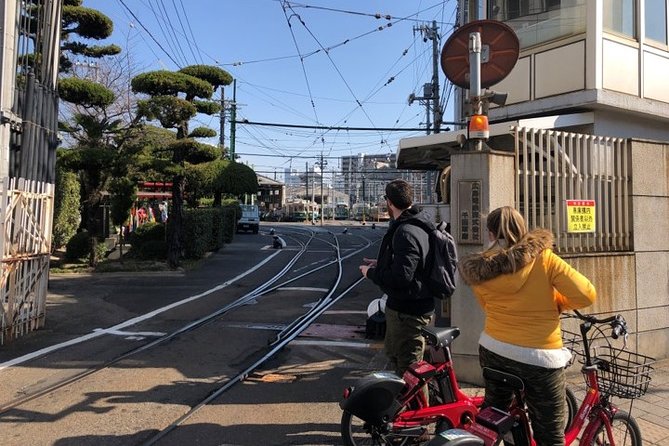
Higashisenda Park sits about one kilometer from the blast center. The park contains trees sent from countries around the world, and the guide explains the stories attached to the site. This stop focuses less on a single building and more on international remembrance and the way Hiroshima has been represented through trees and public spaces.
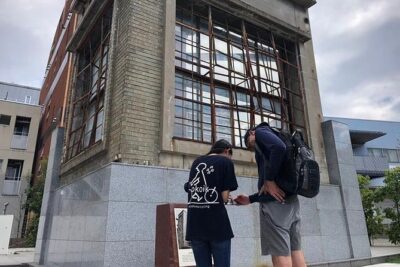
At the Hiroshima Red Cross Hospital, you see the Atomic Bomb Window Frame Monument, the remaining section of the hospital building. The site is about 1.5 kilometers from the blast center and offers a stark sense of how far the bomb’s force reached.
I find this part of the route particularly valuable because it moves away from the polished memorial core. You are looking at a remnant of a working hospital, a place where people faced the immediate medical consequences of the bombing. The physical evidence is direct and difficult.
The emotional weight increases here. If you prefer to keep the morning light, this may feel intense. The tour does not treat the subject casually, and that is appropriate, but you should be ready for a serious experience.
Hiroshima’s surviving railway and Miyuki Bridge
The route continues to Hiroshima’s railway, where you learn about two trains that survived the blast and continued operating. The stop lasts about 10 minutes, so the guide’s explanation is the main point rather than a long visit.
This is an effective detail because trains represent movement, work, and daily routine. They help you picture the city before the bombing and the effort to restore basic services afterward.
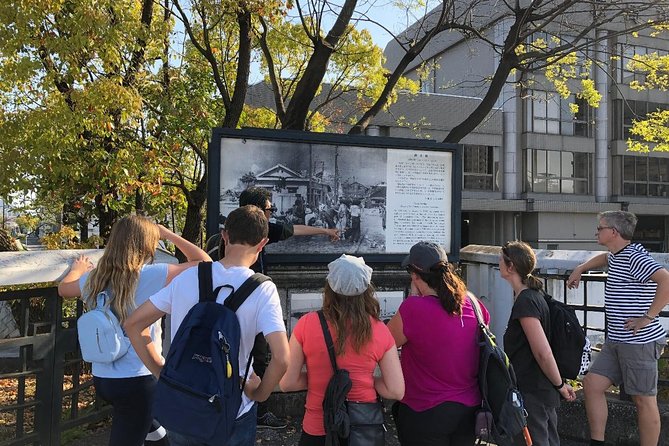
At Miyuki Bridge and the Kobayashi River, the guide shows a photograph marking the point where the bomb’s reach ended. The image contrasts the area then with the same setting today. That visual comparison helps translate a historical event into a physical distance you can understand.
By this stage, you have traveled outward from the central blast area through a series of places that reveal different levels of destruction and survival. The bicycle makes that progression especially clear.
The surviving weeping willow and Peace Boulevard
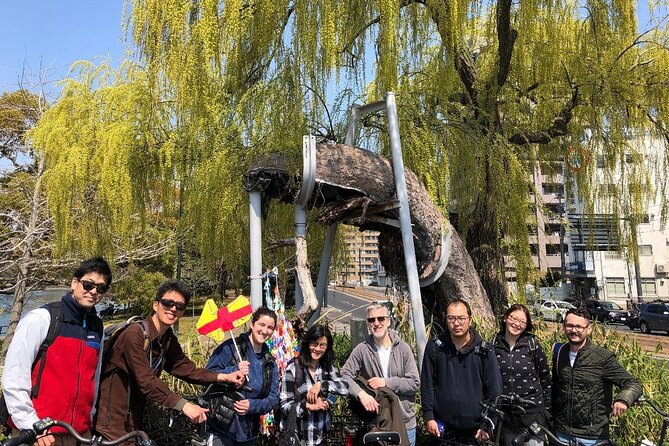
A surviving weeping willow tree near the Hiroshima City Children’s Cultural Science Museum is described as a major moment of the tour. The tree continued to grow despite the belief that natural growth might not return for decades.
The tree carries a simple message about survival, but the guide gives it local meaning rather than reducing it to a slogan. It is one of the quieter stops, and that can make it more affecting than a crowded landmark.
The final ride follows Peace Boulevard back toward the park. Along the way, you pass monuments and significant trees while seeing the thriving present-day city around them. This closing stretch brings the route full circle: remembrance remains visible, but it exists within a functioning, rebuilt Hiroshima.
You return to the Peace Park at about 13:00. The timing leaves the afternoon open for the Peace Memorial Museum, lunch, additional memorial sites, or another part of the city.
The guides make the difference
The strongest part of this experience is the human voice leading it. Shin has been praised for sharing stories about his family’s connection to August 6, 1945, including the experience of relatives who lived through the bombing. Moe has also shared that all four of her grandparents were affected, giving her explanations a personal connection.
That does not mean every departure will feature the same guide or the same family story. The available guide names include Shin, Moe or Moet, Kana, Toma, and Thomas. The quality of the ride depends partly on who leads your group, but the repeated praise for clear speaking, warmth, safety, and personal context is encouraging.
A good guide matters in Hiroshima because facts alone can feel distant. The best moments here seem to come when a guide links a building, tree, or bridge to a family memory or a local tradition. Shin, in particular, is praised for balancing sadness with humor and a positive outlook. That balance helps you stay engaged during a heavy morning.
Is $85.89 a fair price?
At $85.89 per person, this is not the cheapest way to see central Hiroshima. You could walk through Peace Memorial Park and view the Atomic Bomb Dome without paying for a guide. Public transportation can also move you around the city for less.
The price makes more sense when you count what is included: an electric bicycle, a local guide for about three hours, admission fees listed in the route, and bicycle accident insurance. You are also paying for a planned route that reaches several sites many people would skip on their own.
The small group adds value. With a maximum of 10 people, you have a reasonable chance to hear the guide and ask questions. Some departures may be much smaller, even four people, which can feel close to a private outing.
I would see the price as fair if you want context, personal stories, and efficient movement between sites. If your priority is only taking photographs at the Atomic Bomb Dome and visiting the museum, a self-guided morning will cost less.
Who should book this ride?
This tour suits first-time visitors who want an introduction to Hiroshima’s wartime past and postwar rebuilding. It also works well for families with older children and teenagers, since the cycling adds movement to a subject that can otherwise feel demanding.
You do not need to be a serious cyclist. The route is gentle, the bikes are electric, and the guides pay attention to safety. Children from 110 to 145 centimeters can use one of the two available children’s bicycles per booking, while children under 115 centimeters and under 22 kilograms can use an electric bicycle with a child seat.
Adults using an electric bicycle need to be at least 145 centimeters tall. One practical caution is that some people found the bicycles undersized, so taller adults may want to check the fit carefully before leaving.
The tour is less suitable if you want a silent, self-directed visit. You will follow a set route, stop often, and listen to serious historical explanations. Cyclists who want speed should also choose another activity.
Rain plans, cancellations, and practical details
The cycling route requires suitable weather. If rain makes the ride unsafe, you can switch to a rainy-day walking route or receive a refund. The alternative visits Peace Memorial Park, the Atomic Bomb Dome, the hypocenter, the Former Bank of Japan, Fukuromachi Elementary School, and the main street, with the tour ending around 13:00 or 17:00 depending on the departure.
The walking route is not simply a shortened bicycle ride. It focuses more tightly on the central blast area, covering roughly a 0.5 to 1 kilometer radius around the hypocenter. If you prefer not to change the format, request the refund option.
Free Wi-Fi is not provided at the meeting point, though Hiroshima Free Wi-Fi is available around the city. Since schedules can change with conditions on the day, keep some flexibility in your morning plans.
Cancellation is free up to 24 hours before the start time. Inside that window, the payment is nonrefundable and changes are not accepted. The same local-time cutoff applies to all changes.
Should you book the 3-hour route?
I would book the 3-hour Peace Cycling Tour if you want Hiroshima explained as a city, not just a collection of memorials. The extra hour beyond the shorter route adds Hiroshima Castle, Gokoku Shrine, Central Park, the surviving railway, and other sites that show the city’s prewar life and rebuilding.
The ride is gentle, the e-bikes reduce effort, and the return to Peace Park leaves you free for the rest of the day. Most important, a strong local guide can connect the places you see with family memories and the long work of recovery.
Skip it if you dislike group activities, need a fully private schedule, or prefer to spend every minute inside the Peace Memorial Museum. For most first-time visitors, though, this is a thoughtful and efficient way to begin a Hiroshima visit. Book it early if a small group matters to you, and arrive ready for a moving morning rather than a casual bike outing.
FAQ
Where does the Hiroshima Peace Cycling Tour begin and end?
It begins at the Hiroshima Peace Park Rest House in Naka Ward and returns to the same meeting point at the end.
How long is the cycling tour?
The tour lasts about three hours. The morning departure is scheduled from 10:00 to 13:00, and the afternoon departure is scheduled from 14:00 to 17:00.
How many people can join the tour?
It is a shared tour with a maximum of 10 participants. The actual group may be smaller.
Are electric bicycles provided?
Yes. Adult electric bicycles are available for people at least 145 centimeters tall. Children can use available children’s bicycles, and certain children can use an electric bicycle with a child seat based on height and weight requirements.
What happens if it rains?
If poor weather prevents the bicycle tour, you can change to the rainy-day walking route or request a refund. The walking route includes Peace Memorial Park, the Atomic Bomb Dome, the hypocenter, the Former Bank of Japan, and Fukuromachi Elementary School.
Can I leave luggage at the meeting point?
No luggage storage is available at the Peace Park Rest House. Coin lockers are available at the International Conference Center Hiroshima and Hiroshima Peace Memorial Museum, about a six-minute walk away.
Just added in Hiroshima
- Hiroshima Peace Memorial Museum Ticket★ 4.8 · 2,727 reviews
- Hiroshima Peace Memorial Museum Admission★ 4.6 · 1,308 reviews
- Private Full Day Hiroshima Tour★ 4.5 · 29 reviews
- The Peace Memorial to Miyajima : Icons of Peace and Beauty★ 4.5 · 31 reviews
- Shore Excursion from Hiroshima Port : Private Tour in Hiroshima★ 5.0 · 17 reviews
- Hiroshima & Miyajima All-Inclusive Tour w/Licensed guide Pancho★ 5.0 · 54 reviews
- Hiroshima Country Cycling: Explore Rural Life 1 HR from City★ 5.0 · 22 reviews
- Hiroshima Saijo Sake Tasting Tour with visit to 7 Breweries★ 5.0 · 104 reviews
Cycling and E-Bike Tours, compared.
3h Tokyo E-Bike Tour: Hidden Gems, and Local Life with guide
Read our review →
Arashiyama Bamboo Forest & Hidden Gems Bike Tour (Early Bird)
Read our review →
5 Top Highlights of Kyoto Full Day Bike Tour (E-bike option)
Read our review →
Hiroshima 2hr Peace Cycling Tour with Local Guide
Read our review →Browse the lists this tour appears in