
Reviewed · CYCLING AND E-BIKE TOURS
Hiroshima: Best of Hiroshima Guided Bike Tour
Hiroshima’s story unfolds best at a gentle pace. This 210-minute guided ride links the Atomic Bomb Dome, Peace Memorial Park, Gokoku Jinja, Hiroshima Castle, and Shukkei-en Garden without making you wear out your feet. I especially like the flat route, which makes the tour approachable for most people who can ride a bicycle, and the small group of up to eight, which leaves room for questions and conversation.
The guides also add more than basic facts. Miyu, Aimee, Awais, James, Ehsan, and others have been praised for clear explanations, personal stories, and thoughtful handling of Hiroshima’s painful past. The main tradeoff is the weather: this is an outdoor tour, so rain, heat, or cold can affect the experience, and the tour may be canceled if conditions are poor.
In This Review
- Key points at a glance
- Starting at Cycle Hiroshima HQ
- The riverside ride to Hiroshima’s Peace Park
- The Atomic Bomb Dome and the weight of August 6
- Peace Memorial Park beyond the famous landmark
- Gokoku Jinja and Hiroshima Castle
- Shukkei-en Garden finishes the ride quietly
- What the cycling is really like
- Guides who make the history personal
- Is $70 a fair price?
- Who should book this tour?
- FAQ
- Where does the Hiroshima bike tour meet?
- How long does the tour last?
- How much does the tour cost?
- Is the tour conducted in English?
- How large is the group?
- Which major places does the tour visit?
- Is bicycle rental included?
- Is the route difficult?
- Is admission to Shukkei-en Garden included?
- What happens if the weather is bad?
- Who cannot join the tour?
- Is hotel pickup included?
- Should you book the Hiroshima bike tour?
Key points at a glance
- A flat route of roughly 10 kilometers: You cover a lot of central Hiroshima without hills becoming the main event.
- Peace Memorial Park by bicycle: The ride gives you a calm way to reach the Atomic Bomb Dome and other important memorials.
- Four major parts of Hiroshima in one half-day: The itinerary connects wartime history, the former samurai center, a major shrine, and an Edo-period garden.
- A small group capped at eight people: You get more chances to ask questions and keep a comfortable pace.
- Good bike choices: Trek bikes, step-through bicycles, e-bikes, and child-sized bikes are available, along with helmets and water.
- A useful option for a short stay: At $70 per person, the tour gives you a guided overview before you return to places that deserve more time.
Starting at Cycle Hiroshima HQ
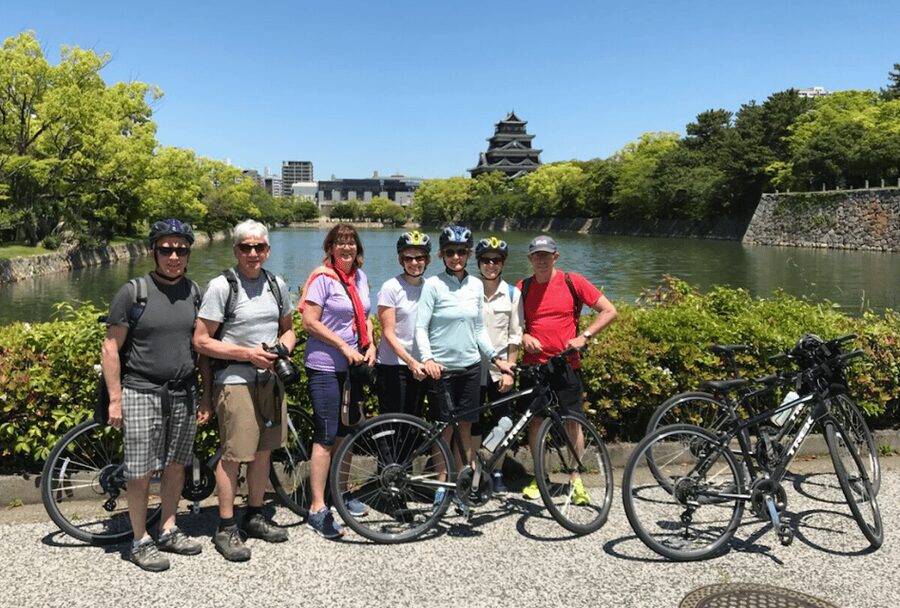
You meet at Cycle Hiroshima HQ, marked by a large Cycle Hiroshima sign at the front. Allow a little extra time before the scheduled departure for the orientation and bike fitting. This is not just paperwork. A properly adjusted saddle and the right frame size can make three and a half hours feel easy instead of tiring.
The shop provides a high-quality bike and helmet. The fleet includes Trek bikes in several sizes, step-through models, e-bikes, and child-sized bicycles. The stated minimum height is 140 centimeters, and children under 12 cannot join this particular experience.
I like the practical range of equipment here. A standard bike should be enough for most riders because the route is almost entirely flat, but an e-bike can be a sensible upgrade if you are not a regular cyclist, are dealing with summer heat, or simply want to save your energy for the historic stops.
You also receive bottled water. Wear comfortable clothing and shoes, and do not dress as if you are heading to a formal museum. You will be moving between stops, getting on and off the bike, and spending much of the tour outdoors.
More Bike Tours in Hiroshima
- Hiroshima 2hr Peace Cycling Tour with Local Guide
★ 5.0 · 321 reviews - Hiroshima: Peace Cycling Tour with Local Guide
★ 4.8 · 286 reviews - Hiroshima 3hr Peace Cycling Tour with Local Guide
★ 5.0 · 131 reviews
The riverside ride to Hiroshima’s Peace Park
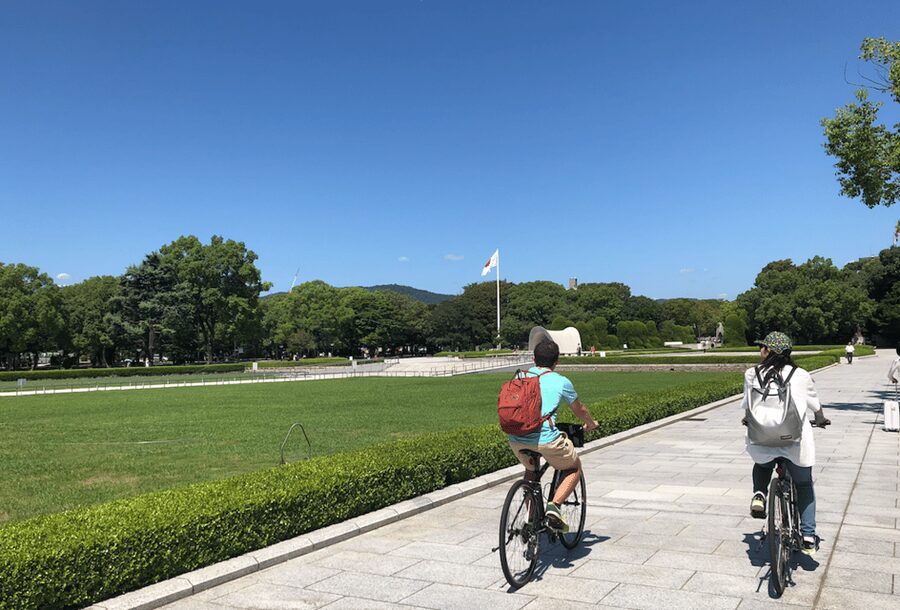
The tour begins with a relaxing ride beside the river toward Peace Memorial Park. This opening section matters because it eases you into the city rather than dropping you straight into its heaviest history. You get a sense of Hiroshima as a living place first, with water, streets, and ordinary city movement around you.
The route is designed to avoid the strain of a long urban walk. Several people have appreciated reaching each area by bike instead of covering the same ground on foot. You still need to pay attention to the guide and the route, but the cycling itself is described as leisurely, with frequent stops for explanations, photographs, and time to look around.
On hot days, guides have added extra pauses. Aimee, for example, stopped regularly during a particularly warm ride and even took the group to a local food spot for a quick bite. That sort of flexibility is useful, though you should not book this expecting a food tour or a guaranteed restaurant stop. It was part of that particular outing, not a listed inclusion.
The Atomic Bomb Dome and the weight of August 6
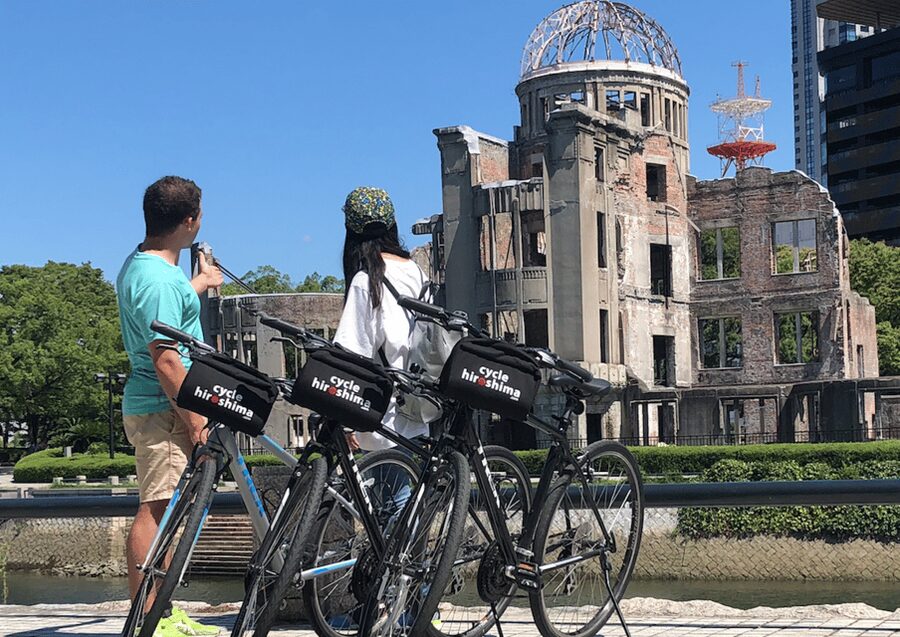
The Atomic Bomb Dome is the tour’s most powerful stop. The preserved structure is a UNESCO World Heritage Site and one of Hiroshima’s clearest visual reminders of the atomic bombing on August 6, 1945.
A guide gives the site context, explains what happened, and leaves time for questions. That balance is important. Hiroshima’s story is too serious for a rushed photo stop, yet a bicycle tour can help you cover the wider city before or after spending more time in the Peace Memorial Museum and park on your own.
The best guides handle this part with care. Aimee has been praised for speaking respectfully about those who died, while Miyu has connected the history with family stories. Other guides, including Ehsan and Awais, have used different viewpoints to encourage thought rather than presenting a single, flat version of events.
You may also hear about Sadako and the paper cranes, along with stories of survival, loss, destruction, and recovery. These personal details can make the history easier to grasp, but the guide’s role is not to turn tragedy into entertainment. The atmosphere remains reflective, with the cycling providing a quiet transition between serious stops.
Give yourself room to be silent here. You do not need to fill every pause with a question or a photograph.
Peace Memorial Park beyond the famous landmark
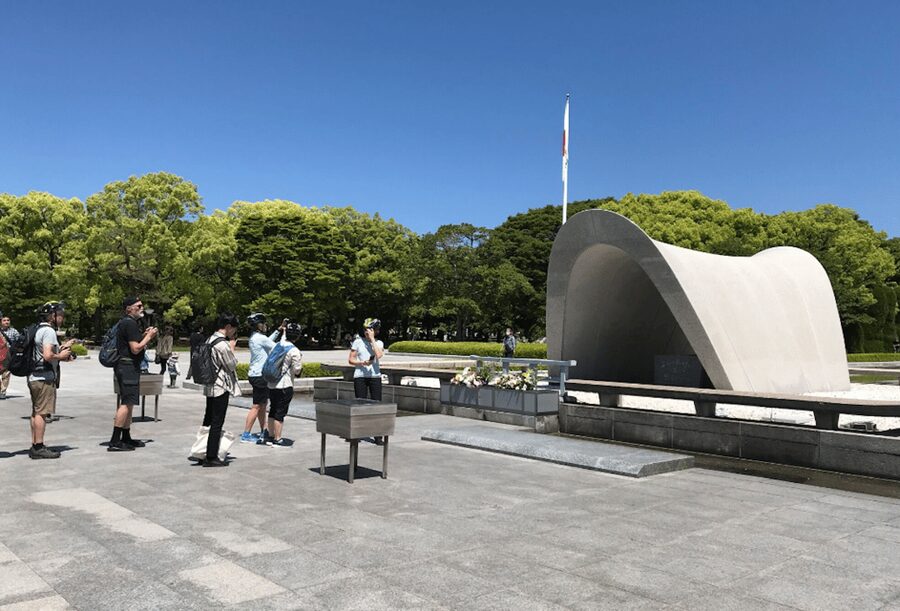
The park contains more than the Dome, and the guide points out several monuments connected with the bombing and the city’s peace message. This is one reason the bicycle format works well. You can move between sites that are spread across the park without repeatedly checking a map or waiting for public transport.
The tour is also useful because the guide can explain how Hiroshima changed after 1945 and how the city came to present itself as a City of Peace. This wider focus gives you more than a single image of destruction. You see a place shaped by memory, rebuilding, and public remembrance.
You should keep your expectations realistic. Three and a half hours cannot provide an exhaustive study of the bombing, every memorial, and Hiroshima’s full postwar development. Think of this ride as a thoughtful introduction. I would pair it with extra time in the Peace Memorial Museum if the subject is central to your visit.
The small group helps here. With no more than eight people, the guide can usually hear questions and pause when someone needs a closer look. Several outings have felt more personal when there were only four or five riders.
A completely different kind of day out:
- Peaceful Hiroshima & Miyajima UNESCO 1 Day Bus Tour
★ 5.0 · 5,309 reviews - Hiroshima Peace Memorial Museum Ticket
★ 4.8 · 2,727 reviews - Hiroshima: Hiroshima and Miyajima UNESCO Sites 1-Day Tour
★ 4.9 · 2,330 reviews - Hiroshima Peace Memorial Museum Admission
★ 4.6 · 1,308 reviews
Gokoku Jinja and Hiroshima Castle
After the Peace Memorial Park, the route heads north to Gokoku Jinja. It is described as the city’s most popular Shinto shrine, and it offers a different tone from the memorial park. Here, the focus shifts from modern wartime memory to Japanese religious practice and local civic life.
You may notice the contrast immediately. The shrine gives the ride a cultural turn, while the route itself shows how Hiroshima’s present-day streets fit around older institutions and reconstructed landmarks. Your guide can help explain what you are seeing instead of leaving you to guess at the meaning of the gates, grounds, and ritual spaces.
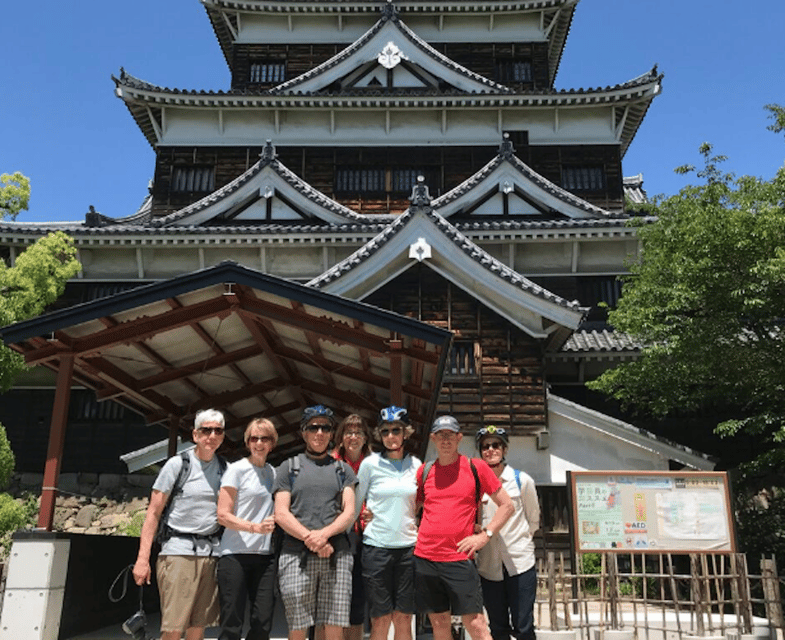
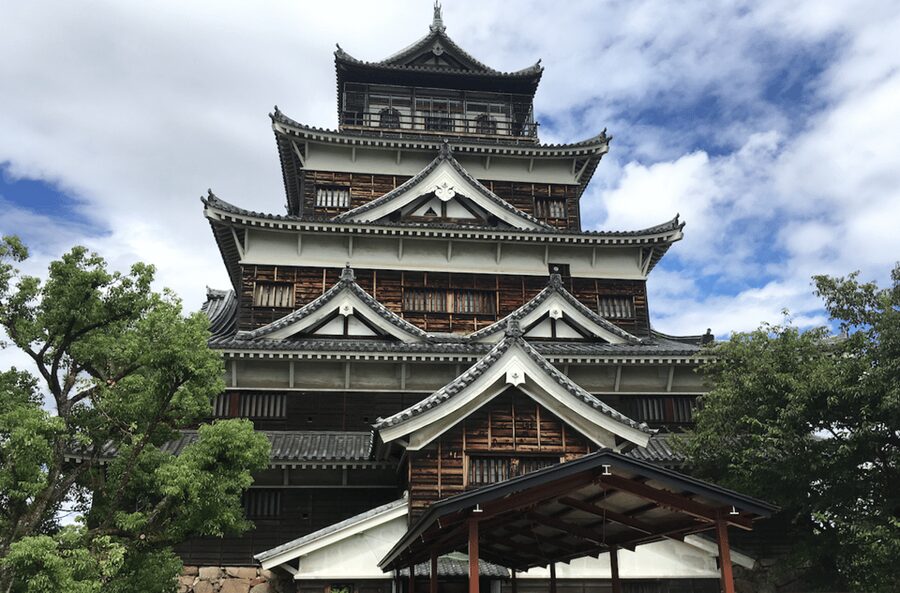
The next stop is Hiroshima Castle. The castle grounds provide a glimpse into the city’s samurai-era past. This is not a tour focused only on 20th-century history. By adding the castle, the itinerary shows that Hiroshima existed long before 1945 and has layers that deserve attention.
The grounds are especially useful for broadening your picture of the city. You move from the atomic bombing and peace movement to feudal Japan, then onward to a formal garden. That range is one of the strongest reasons to choose this tour instead of spending the entire day around the Peace Park.
The exact amount of time at each site can vary. Guides have sometimes extended the outing when everyone was free to stay longer, but you should treat that as a kindness, not a promise. If you have a train, lunch booking, or museum entry immediately afterward, keep a cushion in your schedule.
Shukkei-en Garden finishes the ride quietly
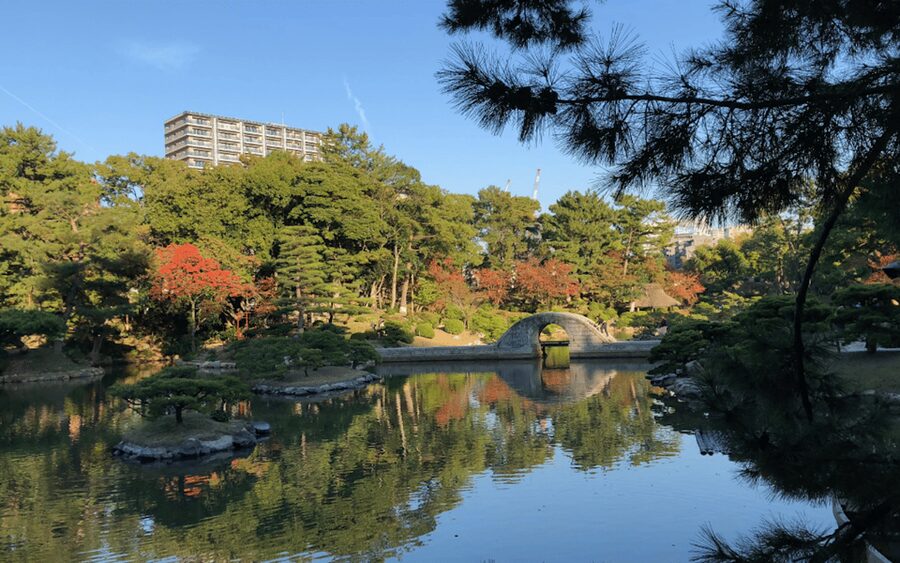
The final listed stop is Shukkei-en Garden, built during the Edo Period and regarded as one of the finest traditional gardens in western Japan. Entry is included in the $70 price, which is a useful touch because it lets the tour end with a proper visit rather than a quick look from outside.
After the emotional intensity of the Peace Park and the historical focus of the castle, the garden changes the tempo. Its carefully arranged scenery and quiet paths give you space to process the day. Several guides have used the garden as a memorable final stop, and I can see why. It gives the route a gentle finish instead of ending on the most difficult subject.
The garden is also a good reminder that Hiroshima is not defined by one event. The city carries its painful memory, but it also has older culture, beauty, and everyday life. The itinerary makes that point without needing a long speech about it.
Because the garden is included, you can return independently later if you want more time. The guided visit may be enough for a first look, but garden lovers will likely want to linger beyond the group schedule.
What the cycling is really like
The route is flat and suitable for anyone who can ride a bike, according to the tour information. A ride of about 10 kilometers has been reported on one outing, though the exact distance and pace can vary with the group and route conditions.
This is not a fast cycling excursion. The guides ride at a relaxed pace, stop often, and allow time for photographs and individual sightseeing. If you are comfortable on a bicycle but have not ridden for years, that slower rhythm should help.
The ride is also not completely free of urban awareness. You are cycling through a city, so you need to follow the guide, use care around other road users, and stay alert. Still, the route is described as mainly away from busy roads, which has helped people feel safe and comfortable.
Heat is the main physical concern. Summer conditions can be very hot, and frequent water and rest stops become important. Rain does not always ruin the day, but it can make the ride less pleasant. The company requires good weather and offers another date or a full refund if poor weather forces a cancellation.
People with back or heart problems, pregnant people, those with pre-existing medical conditions, and anyone under 140 centimeters should not book. The tour is also not suitable for children under 12. These limits are worth taking seriously, since the experience involves repeated cycling and getting on and off the bicycle.
Guides who make the history personal
The strongest part of this experience is the guide. The names that appear repeatedly in the feedback include Awais, Aimee, Miyu, James, Ehsan, Hasan, Ihsan, Melissa, Ali, Alex, Sage, and Awais is sometimes spelled Awis or Awaits in the supplied comments. The consistent praise is for clear English, friendliness, patience, and the ability to explain painful history without losing sight of the people involved.
Miyu has shared family stories connected with 1945. Melissa has also added personal family experiences while assisting on tours. Those details can give the historical account a local human dimension, though the guide assigned to your departure may be someone else.
James has been praised for careful explanations and for extending a tour to include additional sites. Ehsan has been described as an engaging storyteller who presented more than one perspective. Awais has received especially strong praise for setting up bicycles, explaining Japanese cycling culture, answering questions, and making sure the group could follow the discussion.
Guide quality can vary from one departure to another, as it can on any guided experience. The available feedback suggests a strong record, with a 4.9 rating from 89 reviews, but the more useful point is what the praise focuses on: not just facts, but patience, respect, personal stories, and a good pace.
Is $70 a fair price?
At $70 per person, the tour is not the cheapest way to move around Hiroshima. You could walk parts of the city or use local transport for less. The value comes from the combination of bicycle rental, helmet, bottled water, English guidance, a small group, and admission to Shukkei-en Garden.
I think the price makes the most sense if you have only one or two days in Hiroshima. You cover several major areas in 210 minutes, avoid spending the whole morning navigating, and get historical context while the places are in front of you.
The value is also good if walking long distances is not appealing. You still exercise, but you replace a series of long walks with an easy ride. An e-bike may cost extra if offered as an upgrade, but the flat route means most people should not need one.
It is less useful if you already plan to spend a full day at the Peace Memorial Museum and park, Hiroshima Castle, and Shukkei-en Garden at your own pace. In that case, the tour’s advantage is the guide, not simply transportation.
Who should book this tour?
I would choose it for first-time visitors who want a clear introduction to Hiroshima. It suits solo visitors, couples, families with children aged 12 and over, and anyone who prefers seeing a city actively rather than moving from one indoor attraction to another.
It is especially good for people who want to understand how the Peace Park fits into the wider city. You get the major memorials, then see the shrine, castle, and garden that show Hiroshima’s other layers.
I would skip it if you dislike bicycles, have a medical condition that makes cycling unsafe, or want a long, unhurried visit at each memorial. It is also a poor choice for a tight schedule immediately before a train, since the duration is three and a half hours and occasional extensions have happened.
Book for a dry, mild part of the day when possible. In hot weather, bring the most comfortable clothes you own, use the provided water, and accept the guide’s rest stops rather than trying to push on.
FAQ
Where does the Hiroshima bike tour meet?
The meeting point is Cycle Hiroshima HQ. The shop has a large Cycle Hiroshima sign at the front.
How long does the tour last?
The tour lasts 210 minutes, or three and a half hours.
How much does the tour cost?
The listed price is $70 per person.
Is the tour conducted in English?
Yes. The experience includes a live English-speaking guide.
How large is the group?
The maximum group size is eight participants.
Which major places does the tour visit?
The route includes Peace Memorial Park, the Atomic Bomb Dome, Gokoku Jinja, Hiroshima Castle, and Shukkei-en Garden.
Is bicycle rental included?
Yes. A high-quality bicycle and helmet are included. Trek bikes, step-through bikes, e-bikes, and child-sized bikes are available.
Is the route difficult?
The route is described as completely flat and suitable for anyone who can ride a bicycle. One outing covered about 10 kilometers, with several stops along the way.
Is admission to Shukkei-en Garden included?
Yes. Entry to Shukkei-en Garden is included in the tour price.
What happens if the weather is bad?
The tour requires good weather. If poor conditions cause a cancellation, you are offered a different date or a full refund.
Who cannot join the tour?
The experience is not suitable for children under 12, pregnant women, people with back or heart problems, people under 140 centimeters, or people with pre-existing medical conditions.
Is hotel pickup included?
No. You need to make your own way to Cycle Hiroshima HQ, since hotel pickup and drop-off are not included.
Should you book the Hiroshima bike tour?
Book it if you want a fast but thoughtful introduction to Hiroshima, especially during a short stay. The flat cycling route, good bicycles, small group, and strong guide presence make it an efficient way to connect the Peace Park with the castle, shrine, and garden.
I would not treat it as a replacement for a full day at the Peace Memorial Museum or for quiet time at the memorials. Instead, use it as your city overview. You will learn the basic story, see how Hiroshima’s historic areas relate to one another, and finish with a peaceful garden. At $70, that is a fair deal for an active half-day, provided the weather cooperates and you are comfortable on a bike.
Just added in Hiroshima
- Hiroshima Peace Memorial Museum Ticket★ 4.8 · 2,727 reviews
- Hiroshima Peace Memorial Museum Admission★ 4.6 · 1,308 reviews
- Private Full Day Hiroshima Tour★ 4.5 · 29 reviews
- The Peace Memorial to Miyajima : Icons of Peace and Beauty★ 4.5 · 31 reviews
- Shore Excursion from Hiroshima Port : Private Tour in Hiroshima★ 5.0 · 17 reviews
- Hiroshima & Miyajima All-Inclusive Tour w/Licensed guide Pancho★ 5.0 · 54 reviews
- Hiroshima Country Cycling: Explore Rural Life 1 HR from City★ 5.0 · 22 reviews
- Hiroshima Saijo Sake Tasting Tour with visit to 7 Breweries★ 5.0 · 104 reviews
Cycling and E-Bike Tours, compared.
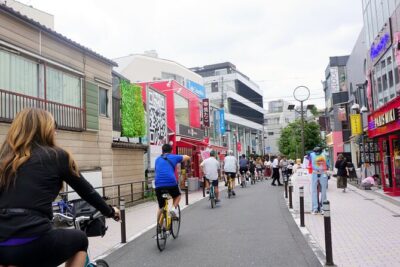
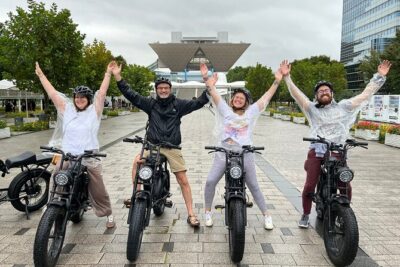
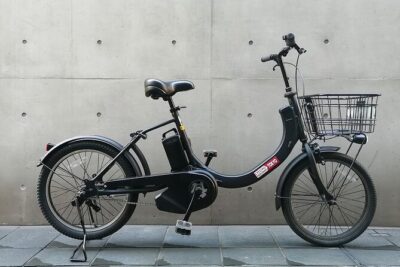
3h Tokyo E-Bike Tour: Hidden Gems, and Local Life with guide
Read our review →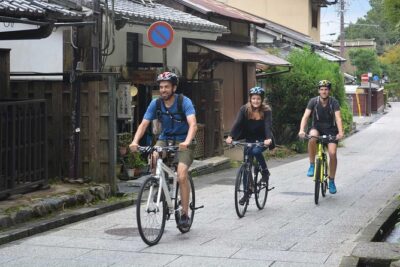
Arashiyama Bamboo Forest & Hidden Gems Bike Tour (Early Bird)
Read our review →
5 Top Highlights of Kyoto Full Day Bike Tour (E-bike option)
Read our review →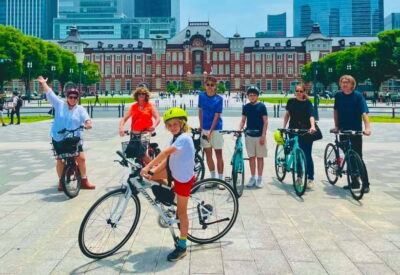
Hiroshima 2hr Peace Cycling Tour with Local Guide
Read our review →Browse the lists this tour appears in