
Reviewed · WALKING TOURS
4 Hour Private Hiroshima City Walking Tour
History here is never far away. This private Hiroshima walking tour links the Atomic Bomb Dome, Peace Memorial Museum, Hiroshima Castle, and Shukkeien Garden in four focused hours. I like the personal pace and the chance to ask a local guide direct questions. I also like the thoughtful shift from sorrowful memorials to calm gardens. The main drawback is simple: fitting four major stops into one morning or afternoon can feel rushed, especially inside Hiroshima Castle.
The price is $104.10 per person, with admission fees included for the museum, castle, and garden. That is fair if you value a private guide who can adjust the route, explain difficult history with care, and help you make good use of a short stay. Just remember that this is a true walking tour, with no private vehicle, and Hiroshima’s summer heat can be severe.
In This Review
- Key points to know before booking
- Why this four-hour route works well
- Meeting at Otemachi and walking through Hiroshima
- Atomic Bomb Dome: a brief but powerful beginning
- Peace Memorial Museum: allow emotional room for ninety minutes
- Hiroshima Castle: traditional Japan after wartime destruction
- Shukkeien Garden: the calm finish
- What the private guide adds
- Price, timing, and overall value
- Who should book this Hiroshima tour
- Should you book the 4 Hour Private Hiroshima City Walking Tour?
- FAQ
- How long is the Hiroshima city walking tour?
- Is the tour private?
- What sights are included?
- Are admission fees included?
- Is transportation provided?
- Where does the tour start and end?
- Is Hiroshima Castle open throughout the tour period?
- What happens if the weather is poor?
Key points to know before booking
- Four major sights in four hours: You visit the Atomic Bomb Dome, Peace Memorial Museum, Hiroshima Castle, and Shukkeien Garden in one compact outing.
- A genuinely private format: Only your own group takes part, so you can ask questions, change the pace, or request extra stops when time allows.
- The emotional order matters: The tour moves from the devastation of 1945 to Hiroshima’s traditional architecture and quiet garden culture.
- Guides add personal value: Masa, Yuki, Yoshiko, and Yui have been singled out for warmth, flexibility, clear explanations, and helpful local suggestions.
- The route finishes near transport: The final stop is Shukkeien Garden, close to Shukkeien-Mae Station, which makes continuing your day easy.
- Summer requires planning: August temperatures can rise above 35 degrees Celsius, so water, shade, and sensible clothing matter.
Why this four-hour route works well
Hiroshima can be easy to misunderstand if you only visit the Peace Memorial Park, take a few photographs, and leave. The city’s identity includes terrible wartime destruction, but also castle traditions, garden design, food, modern daily life, and a strong message of peace.
This tour gives you those contrasting pieces in a short span. The first half asks you to pay attention to the atomic bombing and its human cost. The second half shifts toward older Japanese culture, with the castle and garden offering a quieter way to process what you have seen.
I like that the tour is private rather than fixed around a large group. If your family needs more time at the museum, you can ask the guide to adjust the pace. If the castle is less important to you, you can discuss spending more time at Peace Memorial Park or adding a small local stop if timing permits.
The schedule is tight, though. The listed timing gives about 30 minutes at the Atomic Bomb Dome, 90 minutes at the Peace Memorial Museum, one hour at Hiroshima Castle, and one hour at Shukkeien Garden. That leaves little room for long meal breaks, extended shopping, or major detours.
More Walking Tours in Hiroshima
- Hiroshima Historical Walking Tour – Why A-Bomb was Dropped
★ 4.8 · 893 reviews - Hiroshima Peace (Heiwa) Walking Tour at World Heritage Sites
★ 5.0 · 872 reviews - Hiroshima City 4hr Private Walking Tour with Licensed Guide
★ 5.0 · 437 reviews
Meeting at Otemachi and walking through Hiroshima
The meeting point is the 7-Eleven at 1-chōme-1-21 Ōtemachi in Naka Ward. You meet your guide on foot, and the tour also ends on foot at Shukkeien-Mae Station, 4 Kamihatchobori.
This arrangement works best if you are staying in central Hiroshima or can reach the starting point easily by public transport. It is less convenient if you are arriving from a cruise port with luggage or have mobility concerns. One useful detail from past outings is that guides have sometimes met people at a hotel or train station by arrangement, but you should confirm this before booking rather than count on it.
Because there is no private car, wear shoes you can walk in for four hours. You will spend time outdoors between the sites, and the city streets can feel tiring in hot weather. A small bottle of water is not optional in August.
The private setup also gives you a better chance to keep the day practical. Masa has helped groups begin earlier when their train arrived ahead of schedule. Guides have also suggested restaurants and arranged convenient drop-off points within the central area after the tour.
Atomic Bomb Dome: a brief but powerful beginning
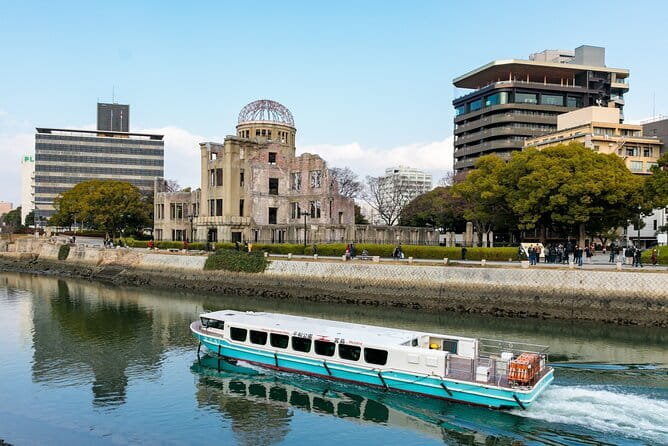
The Atomic Bomb Dome receives about 30 minutes, and that is usually enough for an introduction and a careful look from the surrounding area. The building was damaged by the first nuclear weapon used in war during the final stages of World War II. Its ruined frame remains close to its post-blast condition.
The site is free to enter, although the experience is mainly about viewing the building and the riverfront setting rather than walking through the structure. Your guide can explain what the building was before the bombing and why its preserved remains became such an important symbol.
I appreciate beginning here instead of rushing straight into the museum. The Dome gives you a physical point of reference. You are not dealing with an abstract date or a distant headline. You are looking at a real building in the middle of a living city.
Thirty minutes will not allow for a long historical lecture or a detailed visit to every nearby memorial. If you want extended time around the park, tell your guide early. The private format makes that conversation possible, but the four-hour limit still applies.
Peace Memorial Museum: allow emotional room for ninety minutes
The museum is the heart of the tour. It was founded in 1955 to show the effects of the atomic bomb and support the abolition of nuclear weapons. The exhibits focus on the destruction of Hiroshima and the experiences of people affected by the bombing.
You should expect this part to be sobering. The museum is not a light sightseeing stop, and the material can be upsetting. A good guide helps place the displays in context without turning the visit into a rushed list of dates and facts.
Ninety minutes is a useful amount of time for a first visit, but it is not enough to read every display closely. If you tend to spend a long time in museums, ask your guide how to prioritize. The private setting helps because you can pause at subjects that matter to you and move more quickly through sections that are less relevant.
The surrounding Peace Memorial Park adds important context. The walk between memorials lets you see how Hiroshima remembers the dead while also addressing the future. Guides such as Masa and Yoshiko have been especially effective at connecting the museum’s exhibits with Hiroshima’s present-day culture and peace message.
One particularly valuable feature of a private guide is the ability to respond to your interests. Yui has accommodated a request to visit a small museum at a school that survived the atomic bombing. That sort of extra stop is not guaranteed, but it shows what can happen when you communicate clearly before or during the tour.
Give yourself a little emotional space after leaving the museum. The next stops are more peaceful, but you may not feel ready to switch instantly into sightseeing mode. A thoughtful guide can let the pace breathe.
A completely different kind of day out:
- Peaceful Hiroshima & Miyajima UNESCO 1 Day Bus Tour
★ 5.0 · 5,309 reviews - Hiroshima Peace Memorial Museum Ticket
★ 4.8 · 2,727 reviews - Hiroshima: Hiroshima and Miyajima UNESCO Sites 1-Day Tour
★ 4.9 · 2,330 reviews - Hiroshima Peace Memorial Museum Admission
★ 4.6 · 1,308 reviews
Hiroshima Castle: traditional Japan after wartime destruction
Hiroshima Castle provides a sharp change of mood. Built during Japan’s Warring States period, it reflects the military and architectural traditions of the era. Its design, gardens, and displays offer a useful counterpoint to the modern memorial sites.
The castle visit is listed at one hour, with admission included. You can expect to learn about the castle’s place in Hiroshima’s development and see exhibits connected with Japanese history and architecture.
The key caution is time management. One group found the castle portion too hurried, with little choice but to move quickly through exhibits to keep the full schedule. If you are deeply interested in castles, Japanese warfare, or historic architecture, tell your guide at the start. You may prefer to reduce time elsewhere or skip some interior displays.
The castle is not simply a decorative stop added to fill the route. It helps you see that Hiroshima was an established center long before 1945. The visit restores some sense of the city’s older identity, which can be lost if your entire day centers on the bombing.
The castle’s status also needs attention when you book. Hiroshima Castle is scheduled to close for renovation from March 23, 2026. The tour information says the admission fee is included, but you should confirm how the route changes during the closure if your visit falls after that date.
Shukkeien Garden: the calm finish
Shukkeien Garden is scheduled for the final hour, and it is a wise ending. The garden combines traditional Japanese design with ponds, bridges, plants, and carefully arranged views. Its peaceful atmosphere gives you somewhere quiet to reflect after the museum.
This is likely to be the most relaxing part of the day. Seasonal scenery changes the feel of the garden, so the experience will vary depending on when you visit. The point is not to race from one landmark to another. Slow down, notice the proportions, and let your guide explain how Japanese gardens create a sense of distance and balance in a relatively small space.
Several people have found the garden to be a favorite stop, especially after the difficult museum visit. I understand why. Hiroshima’s story is not only about loss. Shukkeien gives you a view of beauty, care, and continuity in the city.
The garden admission fee is included. The tour ends at Shukkeien-Mae Station, so you can continue by public transport or make your own plans nearby. Guides have also helped groups find dinner afterward, including local okonomiyaki areas and department-store dining options. Ask for suggestions if you want your meal to carry on the local theme.
What the private guide adds

The guide is the main reason to choose this tour over visiting the same places on your own. The landmarks are accessible independently, but a private guide can help you understand connections between them.
Guides named Masa, Yuki, Yoshiko, and Yui have been described as warm, flexible, clear, and good company. Masa, in particular, has helped with timing, restaurant ideas, cultural explanations, and small personal interests such as collecting station stamps. Yoshiko has adjusted the pace around areas of interest and even helped arrange a lunch stop during the day.
English ability can vary by guide, but the available experiences describe the communication as good and the explanations as clear. If you have a particular interest, such as the bombing, Japanese gardens, castles, food, or modern Hiroshima, share it before the tour. The guide can then shape the emphasis more effectively.
A private guide also helps with the small practical moments. You can ask where to eat, how to continue sightseeing, or how to use the local transport system. Those details can save time after the formal tour ends.
Price, timing, and overall value
At $104.10 per person, the tour is not the cheapest way to see Hiroshima. You can visit the public sites independently for less, especially if you already know how to reach them and are comfortable reading the exhibits without help.
The price becomes easier to justify when you consider what is included: a local English-speaking guide, museum admission, Hiroshima Castle admission, and Shukkeien Garden admission. You are also paying for a private four-hour block that can be adapted to your group.
For two people, the cost buys convenience and personal attention. For a larger family or group, the per-person price may compare favorably with arranging separate guides or transport. It is less compelling for a solo visitor on a strict budget, unless having an expert companion is central to your trip.
The tour is booked an average of 42 days ahead, so popular dates may fill early. Confirmation arrives within 48 hours, subject to availability. Free cancellation is available up to 24 hours before the start time. Changes or cancellations inside that window are not accepted for a refund.
The experience requires good weather. If poor weather causes cancellation, you are offered another date or a full refund. Even in fair weather, prepare for heat, especially in August. Temperatures can exceed 35 degrees Celsius, and much of the day is spent outdoors.
Who should book this Hiroshima tour
I would choose this tour if you have only one day in Hiroshima and want a clear route through the city’s main sights. It is also a strong fit if the Peace Memorial Museum feels important but you want to place it within a wider picture of Hiroshima.
Families may appreciate the private format because the guide can adjust explanations and walking speed. First-time visitors benefit from the simple progression from the Dome to the museum, castle, and garden.
This tour suits you particularly well if you:
- Want a private English-speaking guide
- Prefer local explanation over independent sightseeing
- Have four hours and need an efficient route
- Want help choosing food or continuing your day
- Care about both wartime history and traditional Japanese culture
You may want another plan if you dislike walking, need a long and slow museum visit, or want to explore each landmark in great detail. The four stops are ambitious for four hours, and the castle may feel rushed unless you agree on priorities at the beginning.
Should you book the 4 Hour Private Hiroshima City Walking Tour?
Yes, if you want a personal introduction to Hiroshima and can handle a fairly brisk walking schedule. The combination of the Peace Memorial Museum, Atomic Bomb Dome, Hiroshima Castle, and Shukkeien Garden gives you a broad view of the city in one well-planned block.
I would book it for a first visit, a short stay, or a family group that values guidance and flexibility. Before confirming, ask about the meeting point, your preferred emphasis, the Hiroshima Castle renovation after March 23, 2026, and whether any hotel or station pickup is possible.
If you want maximum museum time or a slow castle study, choose fewer stops. If you want Hiroshima’s difficult past, older traditions, peaceful gardens, and practical local advice in one outing, this private tour offers good value.
FAQ
How long is the Hiroshima city walking tour?
The tour lasts approximately four hours.
Is the tour private?
Yes. Only your group participates in the private tour.
What sights are included?
The route includes the Atomic Bomb Dome, Hiroshima Peace Memorial Museum, Hiroshima Castle, and Shukkeien Garden.
Are admission fees included?
Yes. Admission to the Hiroshima Peace Memorial Museum, Hiroshima Castle, and Shukkeien Garden is included.
Is transportation provided?
No private vehicle is provided. You meet the guide and complete the tour on foot.
Where does the tour start and end?
The starting point is the 7-Eleven at 1-chōme-1-21 Ōtemachi in Hiroshima. The tour ends at Shukkeien-Mae Station.
Is Hiroshima Castle open throughout the tour period?
Hiroshima Castle is scheduled to close for renovation from March 23, 2026. Confirm the planned route if you visit on or after that date.
What happens if the weather is poor?
The experience requires good weather. If it is canceled because of poor weather, you are offered a different date or a full refund.
Just added in Hiroshima
- Hiroshima Peace Memorial Museum Ticket★ 4.8 · 2,727 reviews
- Hiroshima Peace Memorial Museum Admission★ 4.6 · 1,308 reviews
- Private Full Day Hiroshima Tour★ 4.5 · 29 reviews
- The Peace Memorial to Miyajima : Icons of Peace and Beauty★ 4.5 · 31 reviews
- Shore Excursion from Hiroshima Port : Private Tour in Hiroshima★ 5.0 · 17 reviews
- Hiroshima & Miyajima All-Inclusive Tour w/Licensed guide Pancho★ 5.0 · 54 reviews
- Okunoshima Rabbit Island Cycling Tour with Local Guide★ 4.5 · 17 reviews
- Hiroshima Country Cycling: Explore Rural Life 1 HR from City★ 5.0 · 22 reviews
Walking Tours, compared.
Kyoto Geisha Walking Tour: Gion District & Hidden Gems
Read our review →
Tokyo Tsukiji Fish Market Food and Culture Walking Tour
Read our review →
Gion Magical Night Walking Tour with Geisha Trivia
Read our review →
Imperial Palace and Shogun Historical Walking Tour
Read our review →
Gion Geisha District Walking Tour – Stories of Geisha
Read our review →
Shinjuku Local Bar and Izakaya Guided Walking Tour
Read our review →
Browse the lists this tour appears in