
Reviewed · HIROSHIMA TOURS
Hiroshima & Miyajima: UNESCO A-Bomb Dome & Itsukushima
Some days in Japan carry unusual weight. This private Hiroshima and Miyajima tour brings together two very different places: the sacred beauty of Itsukushima Shrine and the painful memory held at Hiroshima’s Peace Memorial Park. I like the flexible route, which can shift around tides, weather, mobility, and your interests. I also like the local guides, especially Masa, Yuka, and Masayo, whose family connections give the history a human voice. The main drawback is cost control: the $177 price covers the guide and some entries, but you still pay for trains, ferries, trams, taxis, food, and Miyajima’s visitor tax.
You have seven hours to move from quiet temple grounds and deer-lined paths to the Atomic Bomb Dome, the hypocenter, and the Peace Memorial Museum. That is a lot for one day, and the schedule can feel brisk, particularly if you want a slow Miyajima visit or plenty of time in the museum.
In This Review
- Key points at a glance
- Why this private format works in Hiroshima
- Miyajima begins with a ferry and a change of pace
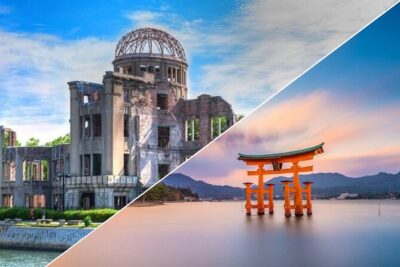
- Itsukushima Shrine and the floating torii gate
- Daisho-in and Senjokaku show another side of Miyajima
- Miyajima lunch means local food, not a fixed menu
- Returning to Hiroshima by ferry, tram, or another boat
- Shukkei-en Garden and Hiroshima Castle add balance
- The Atomic Bomb Dome and the hypocenter
- Peace Memorial Park and the Children’s Peace Monument
- The Peace Memorial Museum requires time and care
- What the $177 price really covers
- Who should book this Hiroshima experience?
- FAQ
- How long does the Hiroshima and Miyajima tour last?
- What places are included?
- Is the Peace Memorial Museum ticket included?
- Are trains, ferries, and trams included in the price?
- Can the itinerary be changed?
- Can I be picked up at my hotel?
- Is the tour wheelchair accessible?
- Is the Peace Memorial Museum always open during this tour?
- Should you book it?
Key points at a glance
- Family history adds meaning: Some guides are Hiroshima-born and have parents or grandparents connected to the atomic bomb experience.
- Miyajima comes first: You visit Itsukushima Shrine, the floating torii gate, Daisho-in, Senjokaku Pavilion, and the Omotesandō shopping street.
- The route uses public transport: Expect trains, ferries, trams, and possibly taxis, with transport costs paid separately.
- The day is genuinely private: Your guide can adjust the pace, change stops, and respond to tides or special requests.
- The Peace Museum is included: Entry is covered, but the museum is closed for renewal from February 16 through February 21.
- The tour has a strong record: It holds a 5 out of 5 rating from 76 reviews, with repeated praise for the guides’ care, English, and local insight.
Why this private format works in Hiroshima
Hiroshima and Miyajima are easy to reach, but seeing both in one day involves several connections. You may take a 40-minute train, a 15-minute ferry, a 45-minute tram ride, and perhaps another boat or taxi depending on the plan. A local guide handles the practical steps while you focus on the places themselves.
That help matters most at the start. Pickup is on foot from a selection of central hotels, Hiroshima Station, the cruise terminal, the Peace Memorial Museum, Orizuru Tower, and other listed points. If your hotel or Airbnb is elsewhere in central Hiroshima, you can ask about pickup in advance.
The tour is private, so you are not tied to a large group’s walking speed. That has made a clear difference for people traveling with older relatives, children, and wheelchair users. Tell the guide about mobility needs ahead of time. Wheelchair access is available, but the operator asks for advance notice.
The most praised part of the experience is the human attention. Yuka has contacted people before the tour to discuss their wish list and adjust the route. Masa has changed the order around Miyajima’s tide times and suggested a charter boat when less walking was needed. This is the kind of practical local help that is hard to arrange from a map.
A few more options to weigh up in Hiroshima
- Peaceful Hiroshima & Miyajima UNESCO 1 Day Bus Tour
★ 5.0 · 5,309 reviews - Hiroshima Peace Memorial Museum Ticket
★ 4.8 · 2,727 reviews - Hiroshima: Hiroshima and Miyajima UNESCO Sites 1-Day Tour
★ 4.9 · 2,330 reviews
Miyajima begins with a ferry and a change of pace
The trip to Miyajima starts with a train ride of about 40 minutes, followed by a ferry of roughly 15 minutes. The crossing is not just a transfer. It gives you a clean break from Hiroshima City and brings you toward an island whose religious identity is tied to the sea.
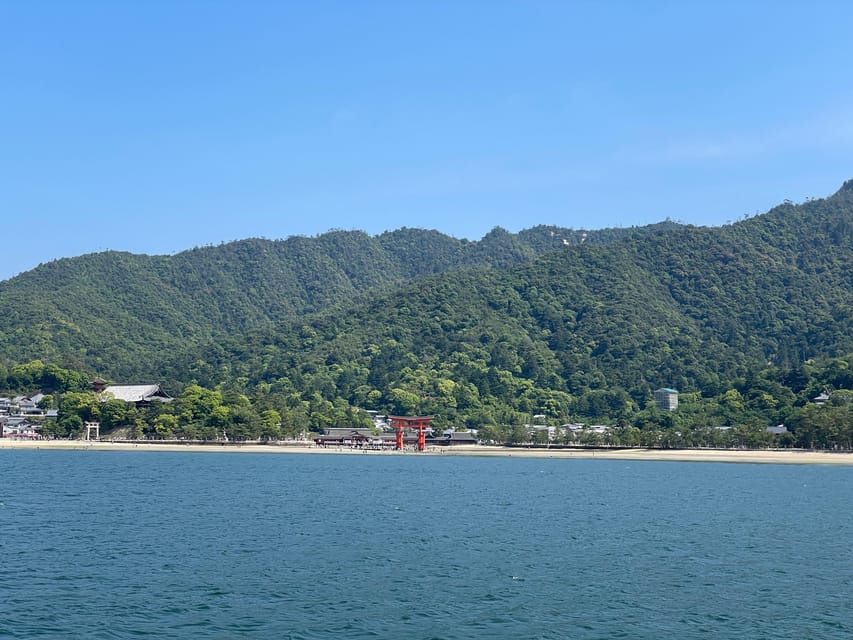
Miyajima is best known for its great orange torii gate, but the island offers more than a famous photograph. Wild deer wander around the public areas, and the route includes Itsukushima Shrine, Daisho-in Temple, Senjokaku Pavilion, and the shopping street. The guide explains the religious customs and symbols so the buildings do not blur into a series of pretty views.
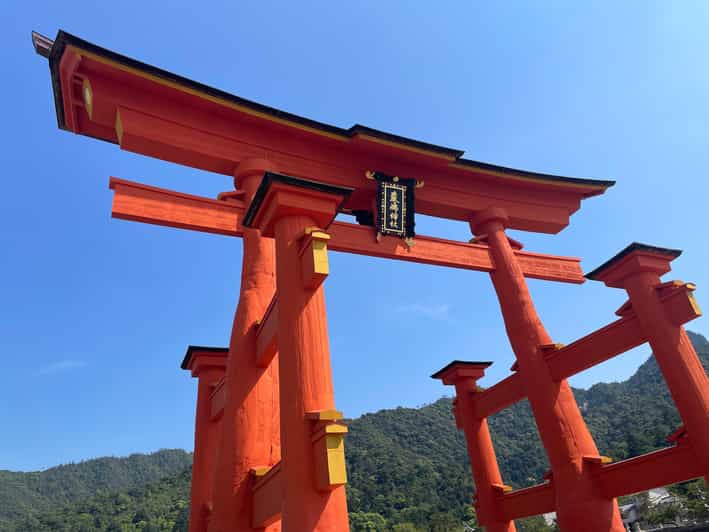
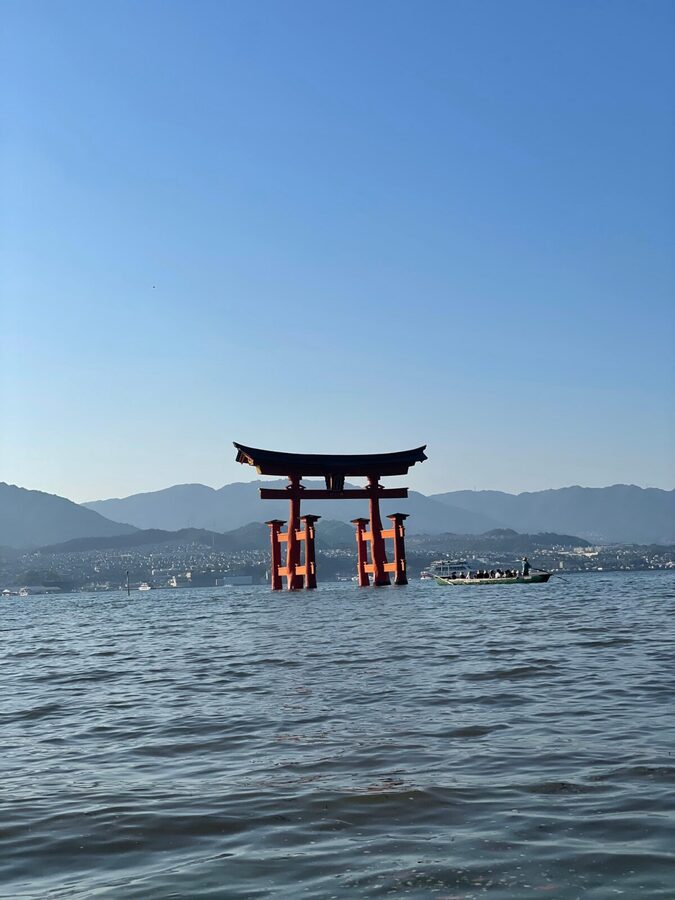
Tides matter here. At high tide, the torii appears to float offshore. At lower water, the view and approach change. The guide may alter the order of the morning to give you the best chance of seeing the gate in the way you prefer. This is one reason a fixed group itinerary can be less useful than a private one.
The island portion lasts several hours, but it is not a full-day Miyajima visit. If you want to hike, browse every shop, or spend a long time at each temple, you will need to keep an eye on the clock.
Itsukushima Shrine and the floating torii gate
The torii gate is the visual star, but Itsukushima Shrine gives the scene its purpose. The shrine sits beside the water, and its position reflects Miyajima’s long connection with sacred space and the sea.
You get a guided visit of about 20 minutes, with time for scenic views and photographs. Your guide can explain the symbolism and traditions instead of leaving you to admire the colors without context. The actual time may change with tides and your pace.
This stop is a good match for anyone interested in Japanese religious culture, architecture, or photography. The tradeoff is that the shrine can feel hurried if you stop often for pictures. Tell your guide if you would rather study fewer places carefully than collect a long list of stops.
The torii photo stop is scheduled for about 10 minutes. That sounds short, but it can be enough for a few carefully chosen photographs, especially when the guide knows where to position you. Several guides also take photographs for you, and the tour includes delivery of the photo files.
Daisho-in and Senjokaku show another side of Miyajima
Daisho-in receives about 30 minutes and is one of the more substantial temple visits on the route. The setting adds a quieter, more contemplative part to the island experience, away from the single famous gate.
Your guide can explain the temple’s role and details that are easy to overlook when you are moving independently. The stop is especially useful if you want a better sense of Japanese Buddhist practice rather than only a quick shrine visit.
Senjokaku Pavilion follows as a shorter stop of about 10 minutes. It offers another useful view of Miyajima’s religious and architectural character. You may find this visit brief, but it helps round out the island before lunch.
The tour also includes a stop at the Omotesandō shopping street. There may be an optional workshop, but workshops are not included in the price. Food and drinks are also separate, so ask the guide what fits your budget and schedule before settling in.
A completely different kind of day out:
- Hiroshima Peace Memorial Museum Admission
★ 4.6 · 1,308 reviews - Hiroshima / Miyajima Full-day Private Tour with Government Licensed Guide
★ 5.0 · 1,298 reviews - Hiroshima Historical Walking Tour – Why A-Bomb was Dropped
★ 4.8 · 893 reviews - Hiroshima Peace (Heiwa) Walking Tour at World Heritage Sites
★ 5.0 · 872 reviews
Miyajima lunch means local food, not a fixed menu
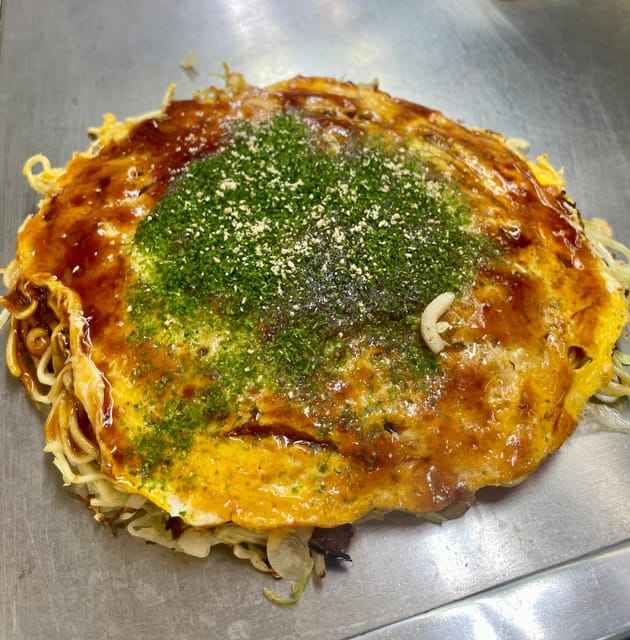
Lunch lasts about an hour and a half, giving you time for food, street snacks, and shopping. The menu is not fixed, which is helpful because Miyajima is known for local specialties and your guide can steer you toward regional choices.
Past visits have included momiji manju, a small maple-leaf-shaped cake associated with the island, along with oysters, eel, and local beef. Hiroshima-style okonomiyaki is another popular choice, though one account places that meal in Hiroshima City rather than on Miyajima.
You pay for lunch yourself. That keeps the tour flexible, but it also means the final bill depends on your choices. If you have dietary concerns or a particular food in mind, mention it before the day begins.
The shopping street is one place where the private format earns its keep. You can spend more time sampling food, or move on if the island’s religious sites matter more to you. A guide can also suggest where to eat without turning the meal into a rushed stop.
Returning to Hiroshima by ferry, tram, or another boat
After Miyajima, you return by ferry and then continue by tram for about 45 minutes. The exact route may change depending on your starting point, tides, and preferences. Some people have used a direct river boat back to the Peace Memorial area, while others have taken a charter boat to reduce walking.
This is a public transportation tour, not a private car tour. You are responsible for trains, ferries, trams, buses, and taxis. The operator says taxis can be used if you prefer, but those costs are extra. Cruise passengers should also budget for a taxi to and from the cruise port.
The transport itself gives you a look at ordinary Hiroshima, but it can add fatigue. Wear comfortable shoes and keep your day bag light. If you are traveling with children, an older family member, or a wheelchair user, discuss the route before you arrive.
Shukkei-en Garden and Hiroshima Castle add balance
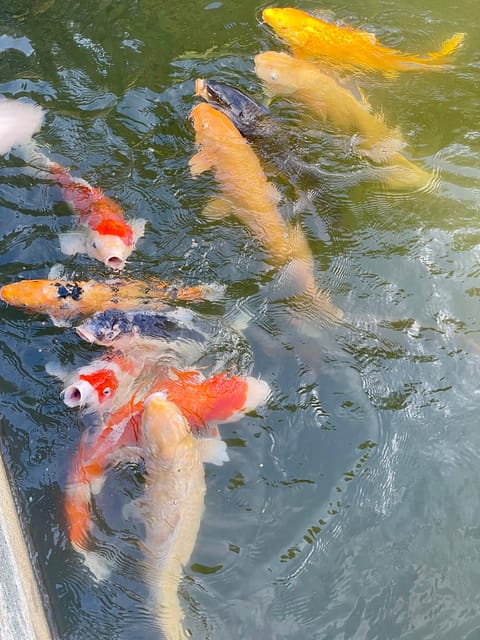
The city portion can include Shukkei-en Garden, with about 30 minutes for a guided visit and photographs. This is a useful pause before the heavier memorial sites. The garden offers a calmer setting and helps show that Hiroshima is a living city, not only a place associated with August 6, 1945.
Hiroshima Castle follows as a shorter 15-minute visit. It is primarily a photo stop and guided look rather than a long castle museum visit. One person specifically requested the castle and had the itinerary changed to include it, which shows how much room there is for personal preferences.
These two stops may not fit every version of the tour. The starting point, tide schedule, transport choices, and your interests can change the order. If you have a personal priority, such as the castle, garden, or a particular food stop, raise it during the pre-tour planning.
The Atomic Bomb Dome and the hypocenter
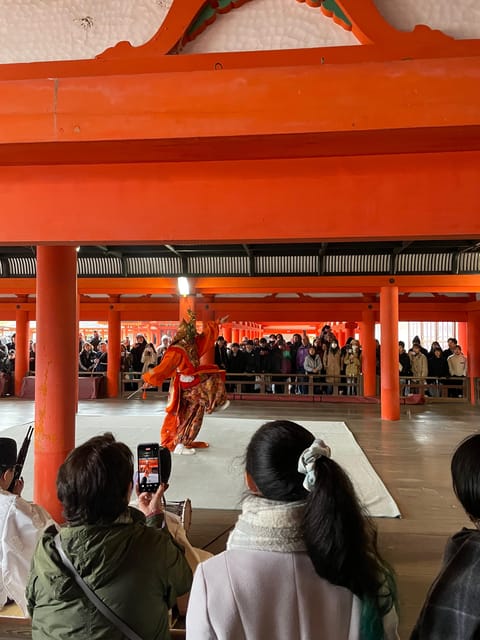
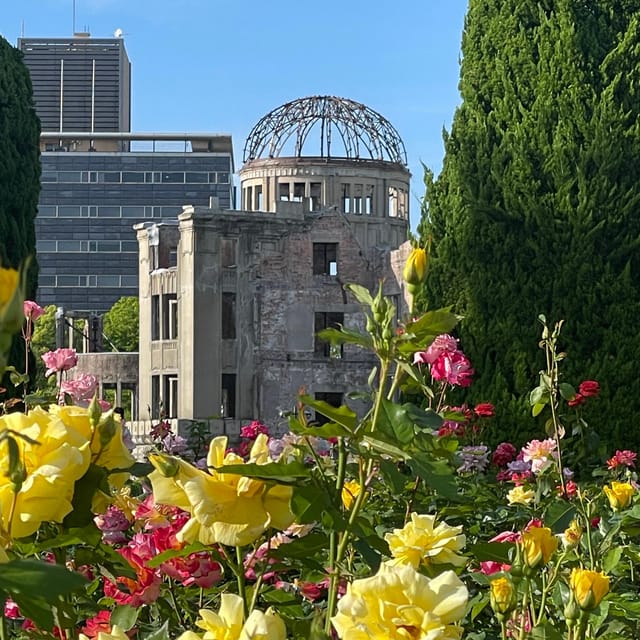
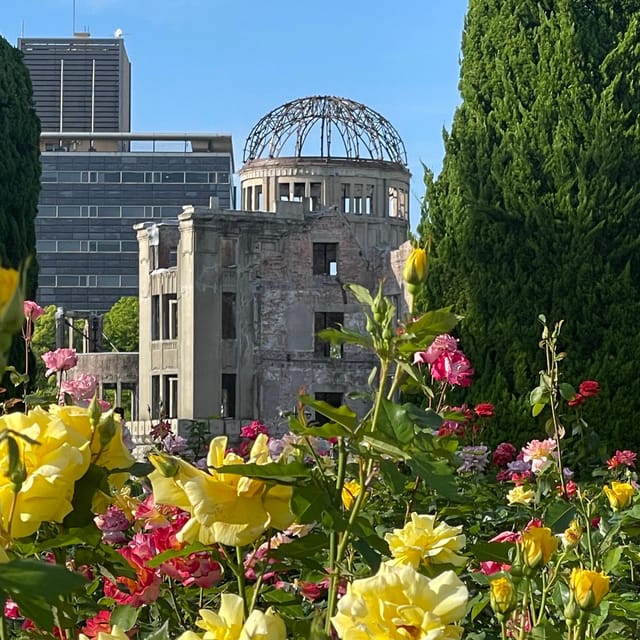
The Atomic Bomb Dome is a short guided stop of about 15 minutes. Its damaged structure is direct and difficult to ignore. The building is not a theatrical exhibit. It is an original survivor of the 1945 bombing, and its presence beside the river gives the memorial area a stark physical focus.
The route then goes to the hypocenter, marked by a plaque at the location identified as the bomb’s detonation point. The stop is brief, about 10 minutes, and easy to miss if you walk around Hiroshima alone. A guide helps connect the modest marker to the scale of what happened.
The personal stories are the most important reason to take this tour with a local guide. Masa, Masayo, and other Hiroshima-born guides have shared family accounts passed down through generations. Some have parents who survived the bombing. That does not replace the museum’s evidence, but it adds a personal layer to the facts.
The tone is serious, and you should expect emotional material. This is not a light sightseeing excursion from start to finish. The peaceful island and garden help provide contrast, but the memorial section asks for attention and respect.
Peace Memorial Park and the Children’s Peace Monument
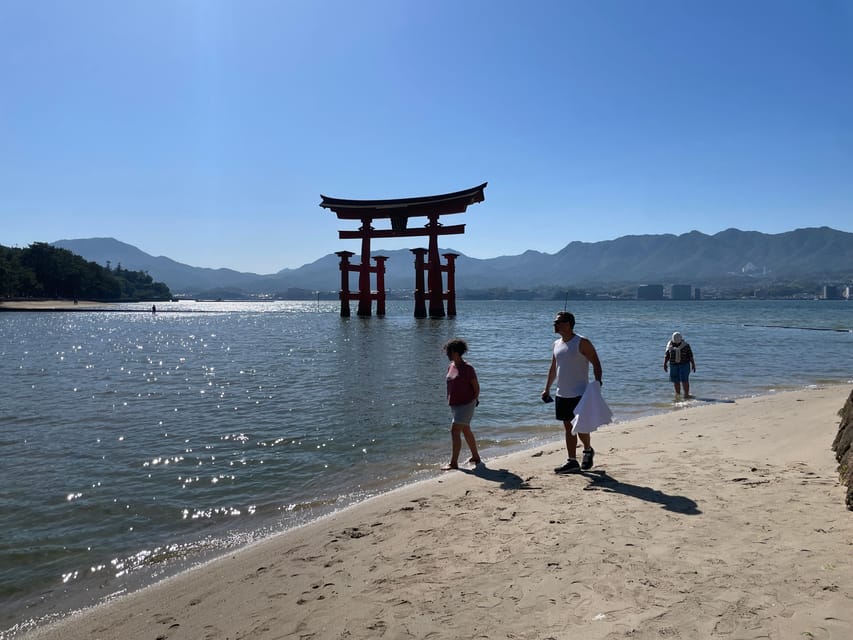
Peace Memorial Park gives you time to walk through the central memorial area, with about 30 minutes for a guided visit. The park includes the Children’s Peace Monument, one of the stops on the route.
Your guide can explain the meaning of the memorials and point out details you might pass without context. Family stories about loss, recovery, and hope make this section feel connected to present-day Hiroshima rather than sealed inside a history lesson.
The route is also adjustable in a practical sense. One visit included Fukuromachi Elementary School, which has a small museum with artifacts connected to the bombing. Another guide showed a plaque marking the actual ground zero on an ordinary nearby street. These extra places are not guaranteed, but they show the kind of local context that can be added when time and interest allow.
The Peace Memorial Museum requires time and care
The Peace Memorial Museum visit is scheduled for about one hour, and admission is included. The museum presents photographs, objects, and personal accounts from the bombing and its aftermath. I would treat this as a serious appointment rather than something to squeeze in between photographs.
One hour is enough for an introduction, but it may feel short if you read every panel carefully. The museum can also be crowded. One person found that a guide had less room to add commentary inside because of the crowds and felt the museum might work better as a self-guided visit. That is a fair point.
A good approach is to let the guide provide context before and after the museum, then use your own pace inside. If you need more time, ask whether another stop can be shortened. If the museum is the main reason for your visit, you may prefer to arrange it separately and use the private tour for Miyajima and the city’s lesser-known memorial locations.
Important date note: the Peace Memorial Museum is closed for renewal from February 16 through February 21. Confirm the current schedule when booking if your visit falls near those dates.
What the $177 price really covers
At $177 per person, this is not the cheapest way to see Hiroshima and Miyajima. The value comes from the private guide, route planning, interpretation, photography, and help with transport rather than from bundled meals or all-inclusive transfers.
Included are a live Hiroshima-born guide, advance communication, walking pickup, Peace Memorial Museum entry, Shukkei-en Garden entry, and photographs with the data provided. The price does not include transportation, Miyajima’s visitor tax, food, drinks, optional workshops, or taxis to and from the cruise port.
The cost makes more sense for two or more people who want a private day and would otherwise spend time arranging every connection. It is also more defensible if you value family stories and local explanations, need a slower pace, or want someone to manage changes caused by tides.
For a solo visitor focused mainly on the museum and Atomic Bomb Dome, independent sightseeing may cost less. For a family or small group trying to combine both destinations in seven hours, the service and flexibility may justify the higher price.
Who should book this Hiroshima experience?
I would choose this tour if you want both Miyajima and Hiroshima in one day and prefer a guide who can adapt the route. It suits first-time visitors, families, older people, and anyone who wants help with trains, ferries, trams, and city navigation.
It is also a strong choice if you want Hiroshima’s history presented through local family memory. Masa’s and Masayo’s personal connections have made a particular impression, while Yuka has been praised for careful planning, clear English, photography, and attention to individual needs.
I would think twice if you dislike public transportation, want a slow full day on Miyajima, or prefer to study the Peace Memorial Museum alone for several hours. The day covers a lot, and the schedule can feel tight around tides, lunch, and museum crowds.
FAQ
How long does the Hiroshima and Miyajima tour last?
The tour lasts seven hours. The route can change based on your pickup point, tide times, transport choices, and personal preferences.
What places are included?
The planned route includes Miyajima, Itsukushima Shrine, the floating torii gate, Daisho-in, Senjokaku Pavilion, Omotesandō shopping street, Shukkei-en Garden, Hiroshima Castle, the Atomic Bomb Dome, the hypocenter, Peace Memorial Park, the Children’s Peace Monument, and the Peace Memorial Museum.
Is the Peace Memorial Museum ticket included?
Yes. Entry to the Peace Memorial Museum is included, along with entry to Shukkei-en Garden.
Are trains, ferries, and trams included in the price?
No. You pay transportation costs separately. The route may use trains, ferries, trams, buses, or taxis.
Can the itinerary be changed?
Yes. The tour is private and can be adjusted to your pace and interests. The route may also change because of tide times, the pickup point, weather, or your mobility needs.
Can I be picked up at my hotel?
Walking pickup is available from the listed central Hiroshima locations. If your hotel or Airbnb is not listed, contact the operator in advance to ask about pickup within central Hiroshima City.
Is the tour wheelchair accessible?
Yes, but you must inform the operator in advance so the route and transport choices can be planned appropriately.
Is the Peace Memorial Museum always open during this tour?
No. The museum is closed for renewal from February 16 through February 21. Check the schedule if you plan to visit during that period.
Should you book it?
Book this tour if you want a personal, flexible day that joins Miyajima’s sacred sites with Hiroshima’s memorial places. The strongest reason is not simply convenience. It is the chance to hear family history from Hiroshima-born guides who can explain what the city means beyond the standard facts.
Skip it if you want the lowest possible cost, a private vehicle, or a slow museum-focused visit. For most first visits, though, the combination of local guidance, careful transport help, Itsukushima Shrine, and the Peace Memorial sites makes the $177 starting price worthwhile, as long as you budget separately for food and transportation.
Just added in Hiroshima
- Hiroshima Peace Memorial Museum Ticket★ 4.8 · 2,727 reviews
- Hiroshima Peace Memorial Museum Admission★ 4.6 · 1,308 reviews
- Private Full Day Hiroshima Tour★ 4.5 · 29 reviews
- The Peace Memorial to Miyajima : Icons of Peace and Beauty★ 4.5 · 31 reviews
- Shore Excursion from Hiroshima Port : Private Tour in Hiroshima★ 5.0 · 17 reviews
- Hiroshima & Miyajima All-Inclusive Tour w/Licensed guide Pancho★ 5.0 · 54 reviews
- Okunoshima Rabbit Island Cycling Tour with Local Guide★ 4.5 · 17 reviews
- Hiroshima Country Cycling: Explore Rural Life 1 HR from City★ 5.0 · 22 reviews
Hiroshima Tours, compared.
Peaceful Hiroshima & Miyajima UNESCO 1 Day Bus Tour
Read our review →
Hiroshima and Miyajima UNESCO Sites 1-Day Tour
Read our review →
Hiroshima / Miyajima Full-day Private Tour with Government Licensed Guide
Read our review →
Hiroshima Historical Walking Tour – Why A-Bomb was Dropped
Read our review →
Hiroshima Peace (Heiwa) Walking Tour at World Heritage Sites
Read our review →
Hiroshima in a Nutshell: Morning Bike Adventure
Read our review →Browse the lists this tour appears in