Reviewed · SHOW
Japanese Traditional Music Show in Tokyo
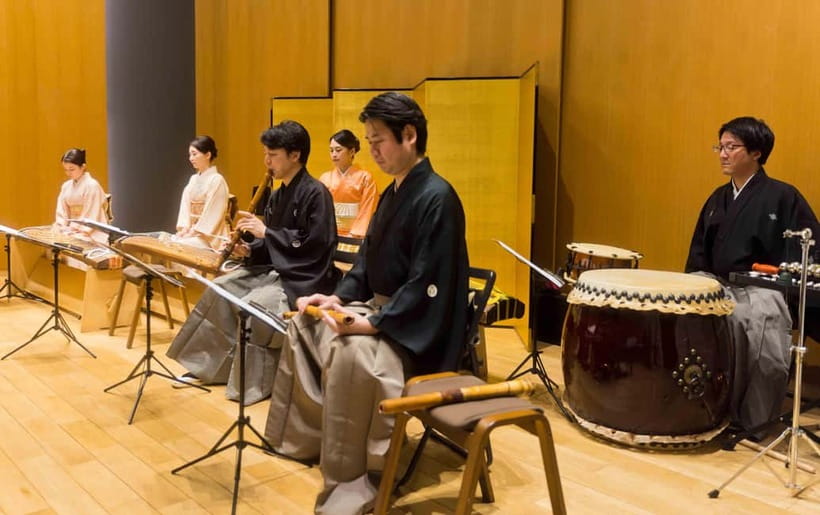
Traditional music feels close here. The Zakuro Show puts musicians in kimono just a few steps away, turning a one-hour concert into a friendly introduction to Japanese instruments and the stories behind them. I like the small numbered audience, which keeps the performance personal, and I like the clear English and Japanese explanations between pieces. The only drawback is that the program lasts just one hour, so anyone seeking a long formal concert may find it brief.
At $38 per person, this is a fair price for a reserved seat, live performance, and cultural explanation in central Tokyo. You can also take photos and video during the show, then pose with the musicians afterward. That relaxed approach makes it a good pick for families and first-time visitors, though food, drinks, transport, and merchandise cost extra.
In This Review
- Key points to know before booking
- Why the Zakuro Show works so well in Tokyo
- Finding Hall 60 in Harajuku
- The opening lesson: meeting Japanese musical instruments
- How the one-hour concert unfolds
- Why the explanations matter
- Photos, video, and meeting the performers
- Is $38 a fair price?
- Who should book this experience?
- Timing the show with your Tokyo plans
- Final call: book it or skip it?
- FAQ
- Where is the Japanese Traditional Music Show held?
- How long does the show last?
- What instruments are performed?
- Is the show available in English?
- Can I take photos or videos?
- What does the ticket include?
- Can I cancel my booking?
Key points to know before booking
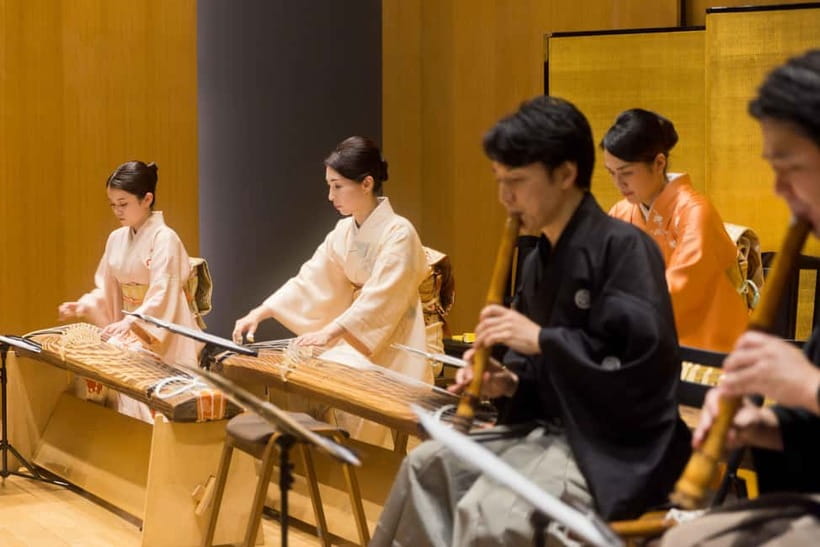
- Four distinct Japanese instruments: Hear the koto, shamisen, shakuhachi flute, and taiko drums in one compact program.
- Music with context: The host explains each instrument, its construction, history, and place in the selected pieces.
- English-friendly presentation: The show operates in English and Japanese, with translation woven into the performance.
- Small audience format: Numbered seating keeps you close to the musicians instead of sending you into a huge concert hall.
- Old, new, and one surprise: The program combines traditional compositions, modern Japanese music, and a Western hit arranged for Japanese instruments.
Why the Zakuro Show works so well in Tokyo
Tokyo gives you endless chances to see temples, shrines, neon streets, and food markets. Traditional music can be harder to fit into a short visit. You may hear a few instruments at a cultural display, but hearing several of them played live, with explanations, gives you a much clearer sense of how Japanese sound works.
The Zakuro Show is built for people who may know little about wagakki, the Japanese word for traditional instruments. You do not need musical training. The host introduces the instruments in plain terms and helps you listen for their different tones. That matters because the koto, shamisen, shakuhachi, and taiko do not simply blend into one general sound. Each brings a distinct texture and role.
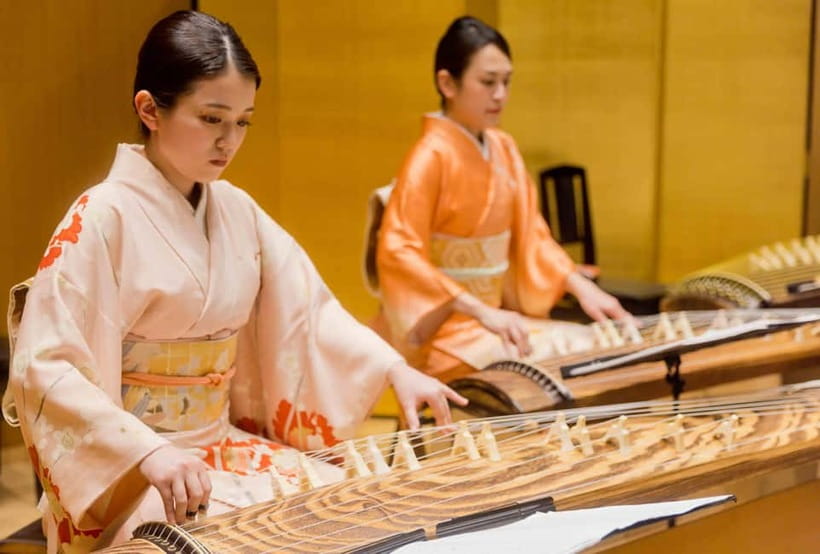
The setting also helps. The audience is limited to a small number of numbered seats, and the musicians perform directly in front of you. This is not a distant stage production where you spend half the time watching a screen. You can see the players’ hands, instruments, clothing, and expressions at close range.
The format has a useful balance. It teaches without turning into a classroom, and it entertains without treating Japanese culture as a quick costume display. The musicians play seriously, while the host makes sure you know what you are hearing.
A few more options to weigh up in Tokyo
- Mt Fuji & Hakone Cruise, Drum Show Bullet Train 1 Day from Tokyo
★ 4.0 · 7,413 reviews - Tokyo: Sumo Show Experience with Chicken Hot Pot and a Photo
★ 4.8 · 6,678 reviews - Tokyo: Sumo Live Show with Photo in Shinjuku
★ 5.0 · 3,438 reviews
Finding Hall 60 in Harajuku
The venue is Hall 60, close to two well-known Tokyo rail stations. From Meiji-Jingumae Station, use Exit 7. The hall is about a one-minute walk away. From JR Harajuku Station, use the Omotesando Exit and allow about five minutes on foot.
That easy access makes the show simple to add to a Harajuku or Omotesando day. You can visit shops, cafés, and nearby sights before the concert, then reach the hall without arranging a separate taxi or hotel transfer. Hotel pickup and drop-off are not included, so plan to make your own way there.
You receive a reserved seat rather than an open admission spot. That removes one small worry from an evening out. Still, check the exact starting time when you book, since availability determines the performance schedule.
The hall is wheelchair accessible. If access is important for your party, the stated accessibility is a useful advantage, though you should still confirm any personal seating needs when making your reservation.
The opening lesson: meeting Japanese musical instruments
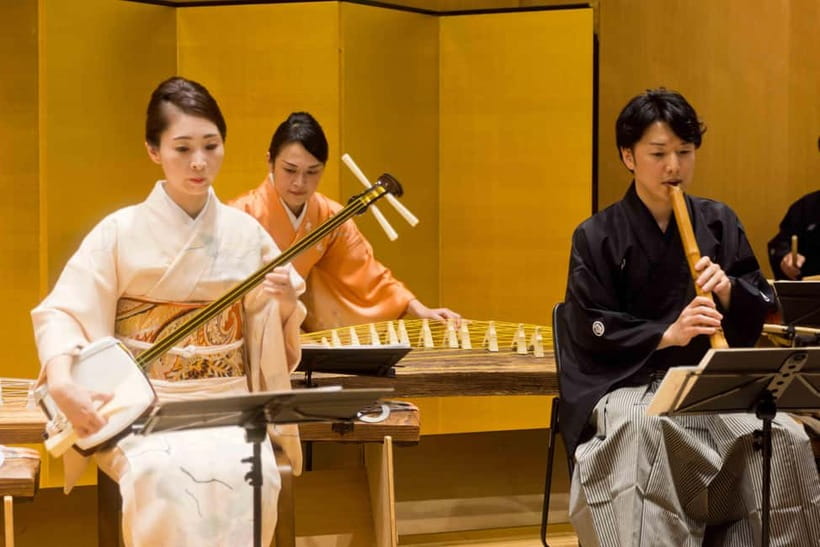
The program does more than announce the names of the instruments. The host explains their background and how they are made, then connects those details to the music. This gives you a better way to listen.
The koto, often described as a Japanese harp, has a bright, delicate sound. It can suggest calm, open space, but it is not limited to quiet music. You will hear how its strings can carry melody and ornament.
The shamisen has a sharper, more percussive voice. This three-stringed instrument is closely associated with several Japanese musical traditions, and its tone can feel dry, lively, or dramatic. In a short concert, hearing it beside the koto helps you notice the contrast.
The shakuhachi flute brings breath and air into the program. Its sound can be soft and haunting, with a character quite unlike a polished Western flute. The host’s explanation is helpful here because the instrument’s tone is shaped by the player’s breath and phrasing as much as by the notes.
Then come the taiko drums, which provide weight and physical force. They change the room’s energy quickly. After hearing strings and flute, the deep pulse of a taiko can feel almost startling, especially in a small hall.
This introduction is one of the strongest reasons to book the show. You do not just hear unfamiliar sounds. You learn what to listen for.
How the one-hour concert unfolds
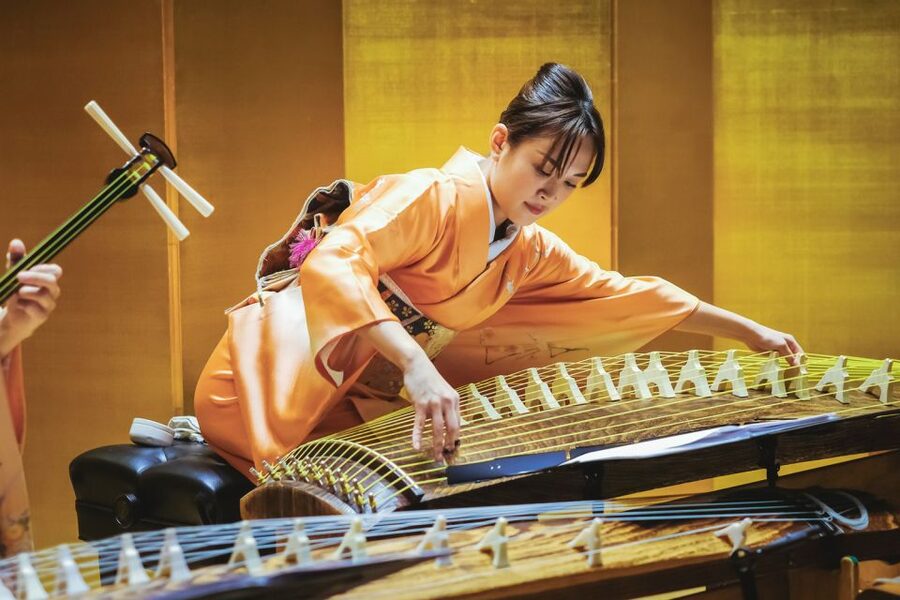
The exact running order can vary, but the one-hour program combines explanations with live pieces. That structure keeps the information connected to what you hear. Instead of giving you a long lecture at the start, the host introduces an instrument or musical idea and then lets the musicians demonstrate it.
The program includes ancient and modern Japanese traditional music. Older pieces provide a link to Japan’s musical past, while newer arrangements show that these instruments are not locked in a museum. The contrast makes the concert more useful than a single uninterrupted block of traditional repertoire.
The musicians perform in kimono, adding a visual connection to the sound. That is pleasant to see, but the music remains the main event. The clothing supports the setting without replacing the actual skill of the performers.
A Western hit is also included as a surprise. I think this is a smart choice. You may recognize the basic melody, but hear it through koto, shamisen, shakuhachi, and taiko. The familiar tune gives your ears a reference point and shows how flexible these instruments can be.
The surprise song has been a highlight for several people who attended. It is especially useful for teenagers or family members who might not usually choose a traditional music concert. You get the old and the new, plus one familiar bridge between Japanese and Western music.
A completely different kind of day out:
- Tokyo Disney Resort – Tokyo Disneyland & Tokyo DisneySea Park Tickets
★ 4.8 · 99,488 reviews - SHIBUYA SKY Ticket
★ 4.7 · 46,509 reviews - JR Whole Japan Rail Pass
★ 4.8 · 29,150 reviews - Mt Fuji and Hakone 1-Day Bus Tour Return by Bullet Train
★ 5.0 · 26,383 reviews
Why the explanations matter
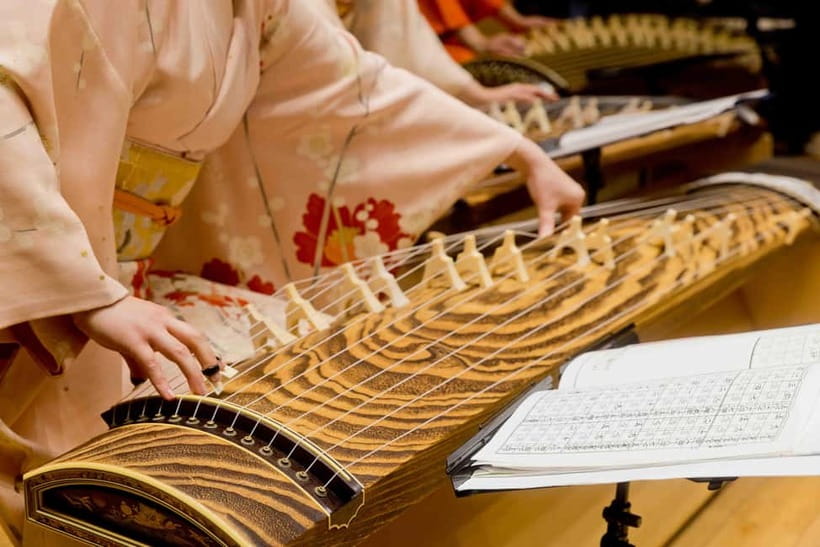
A traditional concert can be beautiful but confusing if you do not know the instruments or the setting. The Zakuro Show addresses that problem directly. The host translates and explains in English and Japanese, helping you follow the program even if you speak no Japanese.
The strongest part of the presentation is its timing. Explanations are interspersed between pieces, so the information never has to compete with the music. You hear an instrument, learn about it, and then hear it again with a clearer ear.
Past visitors have praised the host’s translation and the way the lessons are fitted into the concert. That praise makes sense. Good interpretation is not just word-for-word translation. It also tells you why a piece was selected and what makes an instrument different.
You should not expect an academic seminar. This is a performance with cultural guidance, not a full course in Japanese music. For most visitors, that is the right level. You leave with useful facts and a stronger impression of the music without giving up most of the hour to technical detail.
Photos, video, and meeting the performers
Many concert venues ask you to put your phone away. Here, photos and video are allowed during the performance. That is a meaningful perk if you want to remember the sound, clothing, or close view of the instruments.
Use some judgment so you do not block another person’s view or let your screen become the main event. A few short clips are likely to be more useful than recording every minute, especially since the live atmosphere is part of the experience.
After the show, you can take photos with the musicians. This gives the event a warmer finish than simply walking out of a dark hall. It also gives children and teenagers a chance to meet the performers after seeing the instruments in action.
Do not assume that a photo session turns into a long private meeting. The advertised benefit is the chance to take pictures next to the musicians afterward. If that matters to you, have your camera ready and follow the host’s instructions.
Is $38 a fair price?
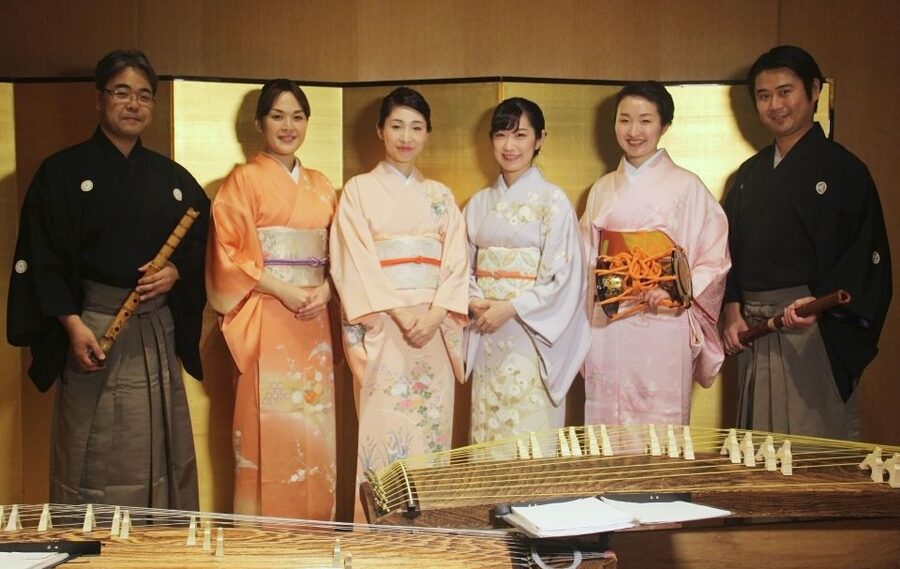
At $38, the Zakuro Show is not the cheapest entertainment in Tokyo, but it offers more than a basic stage ticket. The price includes entry, a reserved seat, and the complete one-hour concert. You are also paying for live performance, translation, instrument demonstrations, and the intimate room.
I see the value most clearly if you want cultural context. A shorter concert with no explanation might cost less, but it would leave you to identify the instruments and meaning on your own. Here, the host helps turn sound into something you can understand.
The value is also good for families. One-hour shows are easier to fit into a busy day and less demanding for younger children than a long formal concert. The Western cover gives the program a familiar moment, while the taiko drums and colorful instruments help hold attention.
You should lower your expectations if you want a major concert hall production, a full evening of music, or dinner included. This is a compact cultural performance. Food, drinks, merchandise, and transport are not part of the ticket.
Who should book this experience?
I would recommend it to first-time visitors who want an accessible introduction to Japanese culture without committing to a full evening. It suits couples, families, solo visitors, and anyone curious about instruments they may not encounter elsewhere in Tokyo.
It is also a good choice for music fans. You can focus on the musicians’ technique, compare the tones of the instruments, and hear how traditional sounds work in a modern arrangement. You do not need to be a musician, but people who enjoy unusual sounds may find the concert especially rewarding.
The show works well for visitors who do not speak Japanese because English translation is part of the program. Japanese residents can also attend, since the presentation operates in both languages. That bilingual format gives the event a broader purpose than a performance made only for overseas visitors.
I would hesitate only if you want complete silence between pieces, a large-scale theatrical production, or an extended concert lasting several hours. The friendly explanations and photo opportunities are central to the format. They are advantages for most people, but not for someone seeking a strictly formal recital.
Timing the show with your Tokyo plans
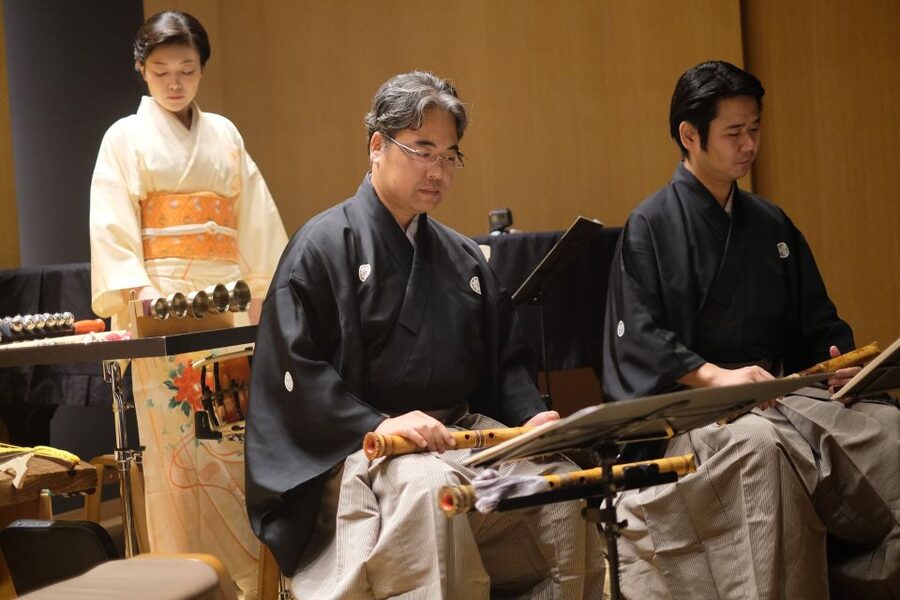
The location makes this easy to pair with Harajuku, Meiji-Jingumae, or Omotesando. Because the performance lasts one hour, you can place it between daytime sightseeing and an evening meal without giving up an entire afternoon or night.
Allow enough time to reach Hall 60 from the station. The stated walk is very short, but Tokyo station exits can be confusing, especially if you are navigating with luggage or arriving during a crowded part of the day.
The show can also provide a welcome change of pace. After several hours of shopping or walking, sitting down for a reserved performance gives your feet a break while still adding something meaningful to your schedule.
Free cancellation is available up to 24 hours before the activity for a full refund. You can also reserve now and pay later, which helps if your Tokyo plans are still shifting. Check availability for the start time that fits your day.
Final call: book it or skip it?
Book the Zakuro Show if you want live Japanese music with clear cultural explanation, a close view of the performers, and a short format that fits neatly into a Tokyo itinerary. The combination of koto, shamisen, shakuhachi, and taiko gives you a broad sample in one sitting, while the Western cover keeps the program approachable.
Skip it if you want a long, formal concert with no speaking or audience interaction. For most visitors, though, the reserved seat, bilingual host, small room, photo permission, and $38 price make this a strong cultural choice. It gives you something more lasting than another quick photo stop: a way to recognize and appreciate the sounds of Japanese instruments after you leave the hall.
FAQ
Where is the Japanese Traditional Music Show held?
The show is held at Hall 60 in Tokyo, Japan. Meiji-Jingumae Station Exit 7 is about a one-minute walk away, and JR Harajuku Station’s Omotesando Exit is about a five-minute walk.
How long does the show last?
The concert program lasts one hour.
What instruments are performed?
The program features the koto, also described as a Japanese harp, shamisen, shakuhachi flute, and taiko drums.
Is the show available in English?
Yes. The experience operates in English and Japanese, and the host or greeter can provide English and Japanese support.
Can I take photos or videos?
Yes. Photos and videos are allowed during the show, and you can take photos with the musicians afterward.
What does the ticket include?
The ticket includes entry to the venue, a reserved seat, and the one-hour concert program. Food, drinks, merchandise, and hotel transportation are not included.
Can I cancel my booking?
Yes. You can cancel up to 24 hours in advance for a full refund. Reserve now and pay later is also available.
Just added in Tokyo
- A One-of-a-Kind Sushi Experience in a Special Place of Japan★ 5.0 · 15 reviews
- Tokyo Cute Bento Cooking Class – Make a Kawaii Character Lunchbox★ 5.0 · 126 reviews
- Japanese Home Cooking Class & Walk in Todoroki Temple Tokyo★ 5.0 · 88 reviews
- Japan Tokyo Tower Observatory Deck E-Ticket★ 4.0 · 34 reviews
- Catch a Baseball Game in Tokyo with a Local – Tickets Included★ 5.0 · 24 reviews
- JDM Experience with Fast&Furious RX-7 (English speaking Driver)★ 5.0 · 57 reviews
- Tokyo Private Day Tour by Car with English speaking Driver Guide★ 4.0 · 29 reviews
- Japan Classic 10 Day – One Life Adventures★ 5.0 · 129 reviews
Show, compared.

Mt Fuji & Hakone Cruise, Drum Show Bullet Train 1 Day from Tokyo
Read our review →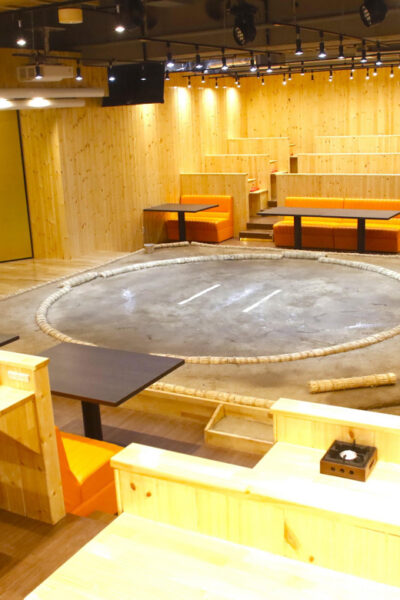
Sumo Show Experience with Chicken Hot Pot and a Photo
Read our review →
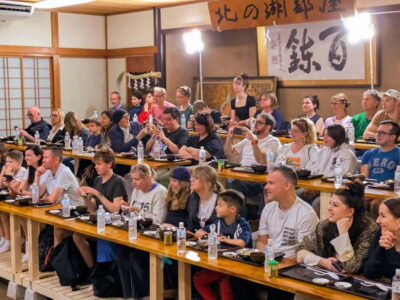

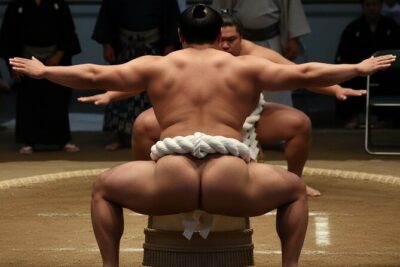
Tokyo Shinjuku Sumo Show & Experience with Photo
Read our review →
Asakusa Sumo Club Sumo Show Admission with Chankonabe in Tokyo
Read our review →