
Reviewed · CYCLING AND E-BIKE TOURS
Japan’s Rural Life & Nature: Private Half Day Cycling Near Kyoto
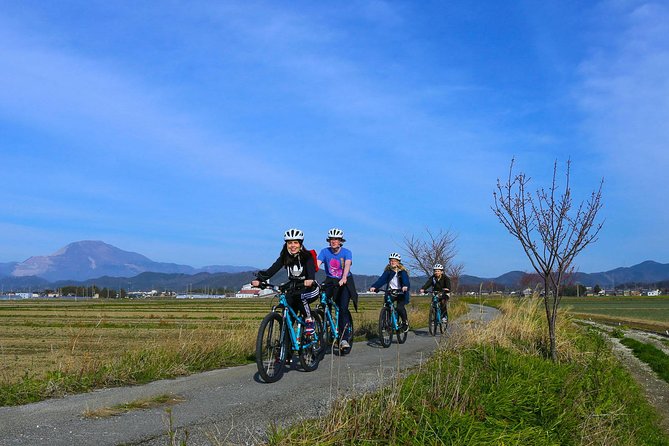
Trade Kyoto crowds for rice fields. This private half-day ride near Maibara gives you a close look at village life, old temples, farm country, and Lake Biwa without spending a full day away from Kyoto. I like the gentle 13-kilometer route and the personal guidance from Tako, an English-speaking guide who brings local history to life.
I also like the small, human touches: coffee or tea, water, snacks, and time to pause for photos. The main drawback is the weather-dependent schedule. You need moderate fitness for cycling and a short mountain walk, and the $255 price makes the most sense for a private group rather than a solo visitor.
In This Review
- Key points to know before you book
- Why this Maibara bike ride is worth leaving Kyoto for
- Getting from Kyoto to the rural start
- Maibara’s villages and farm roads
- Saienji Temple and a traditional village
- Iwaya Zenkodo’s mountain temple, shrine, and cave
- The community spring near Mount Ibuki
- Rice fields built from a former lake
- A guide who makes the countryside easier to read
- What the $255 price really gets you
- Weather, fitness, and who should book
- Adding Lake Biwa or Hikone Castle
- Should you book this private cycling tour?
- FAQ
- Where does the cycling tour start?
- Where does the tour finish?
- How long does the tour last?
- How far do you cycle?
- Is the cycling route suitable for beginners?
- Is this a private tour?
- Is an English-speaking guide provided?
- Are bicycles included?
- Are food and drinks included?
- Can you drink the water from the natural spring?
- Can you visit Lake Biwa or Hikone Castle afterward?
- What happens if the weather is poor?
- Can you cancel for a full refund?
Key points to know before you book
- A 20-minute bullet train ride reaches Maibara: The tour starts and ends at Maibara Station, making this a practical countryside outing from Kyoto.
- The 13-kilometer route is beginner-friendly: You ride through villages, rice fields, farm roads, and the area near Lake Biwa.
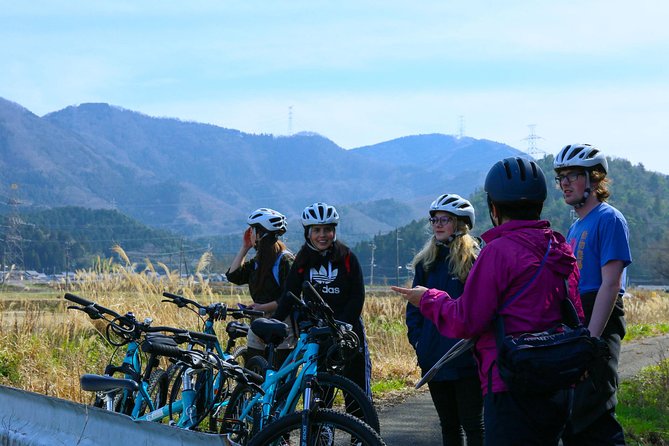
- Tako adds local context: Her fluent English, historical knowledge, and personal binder help explain what you are seeing.
- The temple stop includes a short hike: Iwaya Zenkodo is built into a 120-meter-high mountain and includes a shrine and old cave.
- The route reveals changing rural Japan: Former lake country was drained after the war and turned into farmland for rice production.
- You can extend the day: Lake Biwa or Hikone Castle can be added to your plans after the cycling finishes.
Why this Maibara bike ride is worth leaving Kyoto for
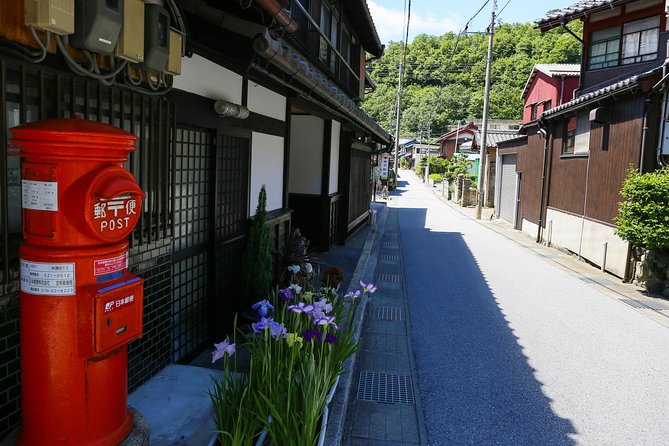
Kyoto gives you temples by the dozen, but it can also feel crowded and tightly packed. This ride changes the pace. You follow quiet back roads around Maibara, where villages, fields, shrines, springs, and mountains fit together in a more ordinary picture of Japan.
That ordinary quality is the point. You are not rushing from one famous sight to another. You are seeing agricultural land, old community spaces, and small religious sites that make sense in their local setting. The ride shows how people have worked with water, mountains, and limited farmland over many generations.
The tour lasts about three to four hours, including stops. That is long enough to feel like a real outing but short enough to leave room for Lake Biwa, Hikone Castle, or another stop in the region. I see it as a useful middle ground: more active and personal than a standard sightseeing trip, but not a demanding full-day cycling expedition.
More Bike Tours in Japan:
- Bike Tour Exploring North Kyoto plus Lunch
★ 5.0 · 1,087 reviews - Tokyo Great Cycling Tour
★ 5.0 · 811 reviews - Tokyo Top Highlights 3h Guided E-bike Tour
★ 5.0 · 714 reviews
Getting from Kyoto to the rural start
The journey begins at Maibara Station, not in central Kyoto. The advertised route uses a short shinkansen ride of about 20 minutes to reach the starting area. This is one of the tour’s practical strengths, since you can move from a major city to open farmland with very little travel time.
Check the train arrangements carefully before booking. The tour includes the guide, bicycle, and coffee or tea, but the train fare is not listed among the included services. The meeting point is Maibara Station, and the ride returns there at the end.
Once you meet Tako, she helps set the tone. Her English is fluent, and she has spent time in the United States. She also uses a handy binder to explain Japanese history and local details, which is especially useful when a temple, village, or field does not come with much written information in English.
Because this is a private activity, only your group takes part. That matters on a cycling route. You do not have to match the speed of a large group, and you can ask questions as you go. One useful tip from past outings is to speak up if you want a photo stop or a quick look at something along the road.
Maibara’s villages and farm roads
The route covers about 13 kilometers, or roughly 8 to 9 miles, around the farming areas and villages that now fall under Maibara’s local government. These places were once separate communities, but administrative mergers brought them together in recent decades.
That detail gives you a better sense of what you are riding through. The route is not simply countryside in the abstract. It passes through communities with their own identity, temples, and long connection to the surrounding fields.
The cycling is described as beginner-friendly, and the past outings included children as young as 11. Still, you should be comfortable riding for several hours and handling a short hike during the temple stop. The route is not presented as a technical ride, but moderate physical fitness is required.
The bikes are supplied, and one past outing noted that they were new. Coffee, tea, water, and snacks are included, which helps keep the ride relaxed. Lunch is not included, so plan to eat before the tour or arrange food afterward. Since the ride is only a half day, most people will find it easy to fit a meal around the schedule.
Saienji Temple and a traditional village
The first named stop is Saienji, a Chinese-influenced Zen temple that also gives its name to the nearby village community. You spend about 15 minutes here, so this is a brief look rather than a long temple visit.
That short stop works well because the temple is part of the village, not an isolated monument. You can connect the religious site with the homes, roads, and community life around it. Tako explains the setting, so the visit becomes more than a quick photograph.
Do not expect the scale or polished presentation of Kyoto’s most famous temples. Saienji is valuable for another reason. It shows how Buddhism, local settlement, and daily rural life can occupy the same small area.
If your priority is grand architecture, you may find this stop modest. If you want a glimpse of a village temple without crowds and ceremony built for mass tourism, it fits the day very well.
A completely different kind of day out:
- Tokyo Disney Resort – Tokyo Disneyland & Tokyo DisneySea Park Tickets
★ 4.8 · 99,488 reviews - Universal Studios Japan Studio Pass
★ 4.8 · 89,883 reviews - Universal Studios Japan Express Pass
★ 4.7 · 53,138 reviews - SHIBUYA SKY Ticket
★ 4.7 · 46,509 reviews
Iwaya Zenkodo’s mountain temple, shrine, and cave
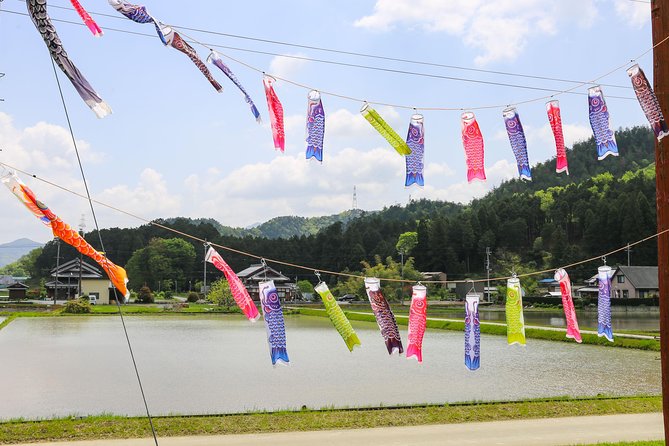
The most unusual stop is Iwaya Zenkodo Temple. The site sits on a small mountain about 120 meters high, and the temple was built into the mountainside. You stop for around 30 minutes, including a short hike and refreshments.
The climb is not described as long, but it does add effort to an otherwise gentle ride. Wear shoes you can walk in comfortably, not just cycling shoes or thin sandals. The reward is a compact site with several layers of interest: the temple, an Inari Shrine, and an old manmade cave with its own local story.
This stop gives the tour a welcome change of texture. You move from flat farm roads to a wooded slope and a place shaped by both religion and human labor. The cave is especially useful for understanding that rural history is often found in small, practical places rather than only in grand museums.
The 30-minute timing means you get an introduction, not an exhaustive visit. That is enough for most people on a half-day outing, though anyone wanting a long temple exploration may wish for more time.
The community spring near Mount Ibuki
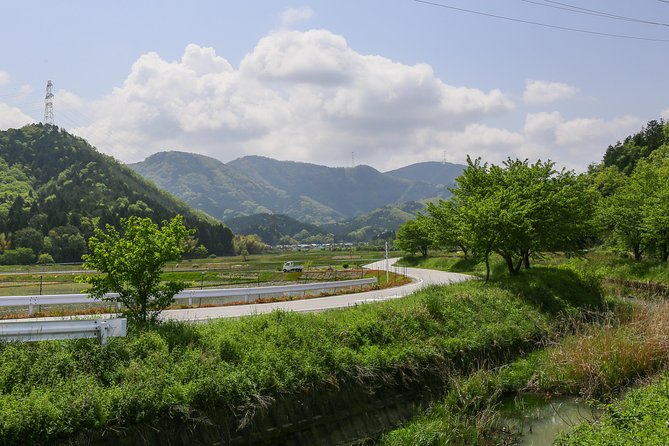
The route also pauses at a natural spring known locally as 南世継外れ温泉. The spring is part of the underground water system between Mount Ibuki and Lake Biwa, and the local community has shared it for a very long time.
This is a good example of the tour’s attention to everyday rural details. A spring may not sound like a major sight, but water shapes where people live, how they wash, and how they farm. You get about 10 minutes here.
Pay attention to the safety note: the water is untreated and is not for drinking. Local people use it for washing vegetables and other purposes, but you should not fill your bottle from it. That small distinction is important, especially since drinking water and refreshments are already provided during the ride.
The stop will appeal most to people who like practical local culture. If you prefer only famous attractions, it may seem quick and simple. For me, that simplicity is exactly why it belongs on this route.
Rice fields built from a former lake
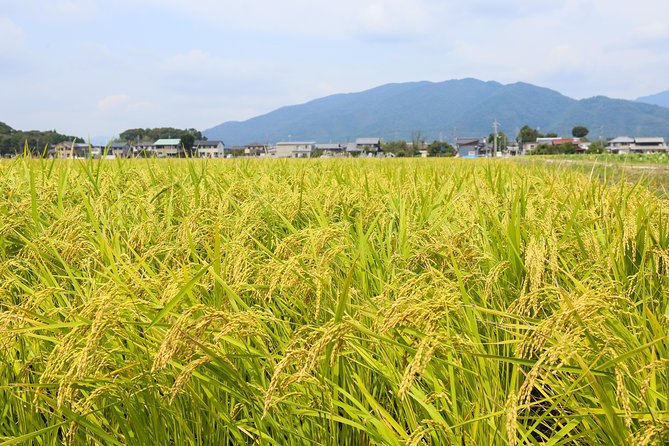
One of the strongest pieces of local history comes while cycling through the agricultural area near Lake Biwa. Before the war, this was a smaller inland lake. It was later drained and converted into farmland to produce more rice for Japan’s recovery after the war.
This turns the fields into something more than pretty scenery. You can see how national needs changed the local environment, and how food production shaped the region. The agricultural views are part of a larger story about water control, postwar rebuilding, and rural work.
The route is especially appealing during the growing season, when the fields give you a clear view of how much land is used for rice. The supplied information does not promise a particular seasonal appearance, so conditions will vary. Still, the area remains worthwhile because the guide explains what happened there.
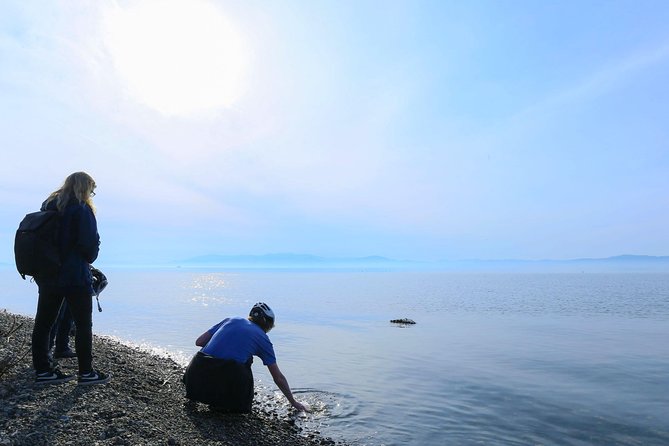
You will also spend time near Lake Biwa, Japan’s largest lake. The ride does not treat the lake as a full sightseeing cruise or a long lakeside excursion. Instead, it gives you a taste of the water and farmland together, with the option to plan extra time nearby.
A guide who makes the countryside easier to read
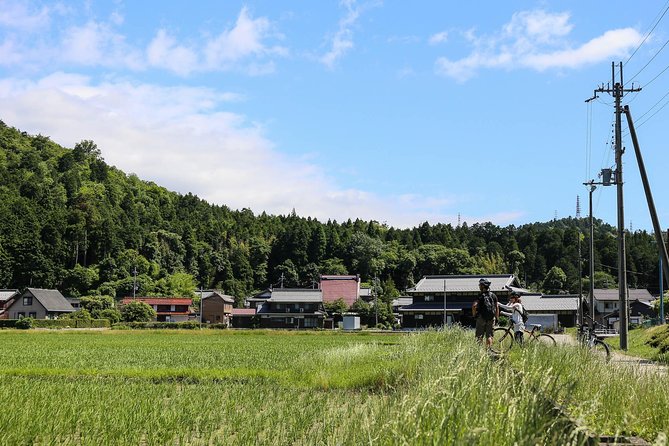
Tako receives the strongest praise for this outing. Her fluent English is useful, but her local connection matters just as much. She knows the history of Maibara and the surrounding area, and she can explain details that would otherwise pass unnoticed.
A memorable feature of the route is the chance for local encounters. During one visit, an older man came out to greet Tako and spent time talking with the group. That sort of moment cannot be promised, but it shows how a private guide can open a door to a more personal view of village life.
You should also feel free to ask questions. The guide carries historical material, and the route has several natural pauses for conversation. If you want more time at a shrine, a village shop, or a photo point, mention it rather than silently keeping to the schedule.
The private format helps here. You are not one person in a large line of cyclists. The pace can remain comfortable, and the guide can give more attention to your interests.
What the $255 price really gets you
At $255, this is not a cheap way to rent a bicycle for a few hours. The value comes from the private guide, supplied bike, local interpretation, refreshments, and the carefully chosen route.
For two or more people, the cost becomes easier to justify, especially if you value direct guiding and a flexible pace. Group discounts are available, so check the current price for your party before booking. For a solo visitor, the cost is harder to defend unless a private, English-language outing is a major priority.
The experience also saves planning time. You do not need to research rural roads, find a suitable bike route, or work out which small temples and water sites are worth visiting. You simply meet at Maibara Station and follow a local route with someone who understands it.
The tour does not include lunch, and the train fare is not listed as included. Add those costs when comparing it with other day trips. Even so, the short duration and private setup can make it good value for a couple, family, or small group wanting a change from city sightseeing.
Weather, fitness, and who should book
Good weather is required. The operator may cancel for poor conditions and offer another date or a full refund, but you should still avoid placing this ride on the only possible day of a tightly packed itinerary.
You need moderate physical fitness. The ride is beginner-friendly, but 13 kilometers plus a short uphill walk is more active than a station-to-station sightseeing tour. Comfortable clothing, shoes suitable for walking, and protection from changing weather are sensible choices.
I would recommend this most strongly for:
- Families with older children who can manage a half-day ride
- Couples wanting a quieter day outside Kyoto
- First-time cyclists looking for an easy rural route
- Visitors interested in farming, water, villages, and local history
- Small private groups who want to set their own pace
I would think twice if you dislike bicycles, have trouble with short walks, or want a major castle and temple tour packed into the same morning. This is a slower outing, and its rewards come from paying attention to small details.
Adding Lake Biwa or Hikone Castle
The ride ends back at Maibara Station, but the area gives you options for the rest of the day. You can spend extra time around Lake Biwa or continue to Hikone Castle.
One past family outing finished with the guide giving the group a ride to Hikone Castle. Treat that as an example of above-and-beyond help, not a guaranteed part of the service. The confirmed tour ends at the meeting point, so arrange any onward transport separately unless the guide agrees to something else.
Hikone Castle makes a sensible companion stop because it offers a very different kind of Japanese history from the quiet temples and farm roads. Lake Biwa is the better choice if you want to keep the day outdoors and unhurried.
Should you book this private cycling tour?
Book it if you want to see Japan beyond Kyoto’s famous sights and you like the idea of learning through movement. The ride offers a gentle route, a strong guide, personal attention, and a series of stops that explain how rural communities relate to temples, mountains, water, and rice fields.
The price is the key question. It is a fairer deal for a private group than for one person, especially with group discounts available. Confirm the train fare and plan for lunch, since neither is included in the stated package.
For a quiet, active morning with a fluent guide and a real sense of place, I would choose this over another standard city sightseeing block. Just allow for the weather, bring comfortable walking shoes, and leave room in your schedule for Lake Biwa or Hikone Castle afterward.
FAQ
Where does the cycling tour start?
The tour starts at Maibara Station in Shiga Prefecture.
Where does the tour finish?
The activity ends back at the meeting point, Maibara Station.
How long does the tour last?
The cycling experience lasts approximately three to four hours.
How far do you cycle?
The route covers about 13 kilometers, or roughly 9 miles.
Is the cycling route suitable for beginners?
The route is described as beginner-friendly, but you should have moderate physical fitness because the experience also includes a short hike.
Is this a private tour?
Yes. Only your group participates in the activity.
Is an English-speaking guide provided?
Yes. A professional English-speaking guide is included. Tako is identified as one of the guides associated with the experience.
Are bicycles included?
Yes. Use of a bicycle is included in the tour price.
Are food and drinks included?
Coffee or tea, water, and snacks are included. Lunch is not included.
Can you drink the water from the natural spring?
No. The spring water is untreated and is not for drinking.
Can you visit Lake Biwa or Hikone Castle afterward?
Yes. You can choose to spend more time at Lake Biwa or Hikone Castle after the cycling tour, but those extra visits are not described as included parts of the activity.
What happens if the weather is poor?
The experience requires good weather. If it is canceled because of poor conditions, you can receive a full refund or choose a different date.
Can you cancel for a full refund?
Yes, if you cancel at least 24 hours before the experience start time. Cancellations or changes made less than 24 hours before the start time are not refunded or accepted.
Just added in Japan
- A One-of-a-Kind Sushi Experience in a Special Place of Japan★ 5.0 · 15 reviews
- Tokyo Cute Bento Cooking Class – Make a Kawaii Character Lunchbox★ 5.0 · 126 reviews
- Japanese Home Cooking Class & Walk in Todoroki Temple Tokyo★ 5.0 · 88 reviews
- Japan Tokyo Tower Observatory Deck E-Ticket★ 4.0 · 34 reviews
- Catch a Baseball Game in Tokyo with a Local – Tickets Included★ 5.0 · 24 reviews
- JDM Experience with Fast&Furious RX-7 (English speaking Driver)★ 5.0 · 57 reviews
- Tokyo Private Day Tour by Car with English speaking Driver Guide★ 4.0 · 29 reviews
- Japan Classic 10 Day – One Life Adventures★ 5.0 · 129 reviews
Cycling and E-Bike Tours, compared.
3h Tokyo E-Bike Tour: Hidden Gems, and Local Life with guide
Read our review →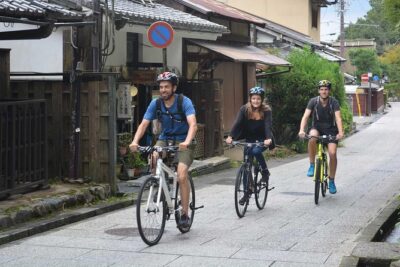
Arashiyama Bamboo Forest & Hidden Gems Bike Tour (Early Bird)
Read our review →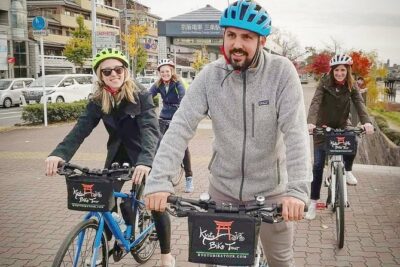
5 Top Highlights of Kyoto Full Day Bike Tour (E-bike option)
Read our review →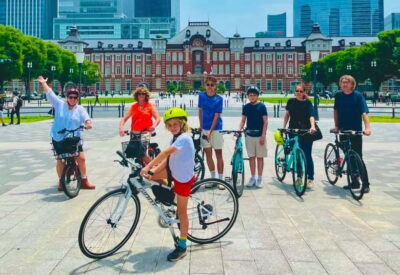
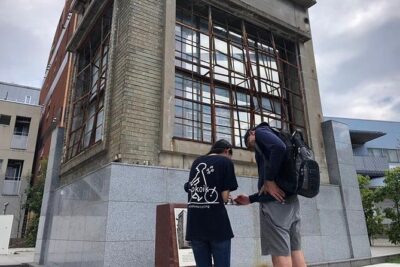
Hiroshima 2hr Peace Cycling Tour with Local Guide
Read our review →Browse the lists this tour appears in