
Reviewed · DAY TRIPS
Nagasaki Full Day Tour with Licensed Guide and Vehicle
Nagasaki rewards a careful look. This private six-hour tour gives you a local English-speaking guide, a private vehicle, and the freedom to choose three or four sights instead of following a fixed group schedule. I especially like the custom itinerary and the chance to hear personal stories from guides raised in Nagasaki, including Yoshi, Rikako, Hiromi, and Fumiko. The private car also saves energy on Nagasaki’s steep hills.
The main consideration is price. At $598.53 per group of up to two, this is a serious outlay, and entrance fees, lunch, and personal costs are extra. You are paying for time, transport, and individual attention rather than a long list of included tickets.
In This Review
- The most useful things to know
- Why a private car makes sense in Nagasaki
- Mount Inasa gives you the quick city view
- Glover Garden and the foreign settlement hills
- Dejima connects Nagasaki to the outside world
- Chinese temples show another side of Nagasaki
- Peace Park and the Atomic Bomb Museum need time
- Bridges, art, and a closer look at the city
- How much can you really see in six hours?
- Guides, drivers, and the personal touch
- Is $598.53 a fair price?
- Practical details before you reserve
- Who should book this Nagasaki tour?
- FAQ
- How long is the Nagasaki private tour?
- How many people can join for the listed price?
- Is the tour private?
- Is hotel or port pickup available?
- How many attractions can I choose?
- Is an English-speaking guide included?
- Is a private vehicle included?
- Are entrance fees included?
- Are children’s car seats available?
- Can I cancel for a full refund?
The most useful things to know
- Choose only three or four sights: The tour lists 14 main stops plus additional possibilities, but six hours is not enough for a proper visit to all of them.
- Local guides add meaning: Guides such as Yoshi and Rikako have strong ties to Nagasaki, and Yoshi has shared a personal family connection to the atomic bombing.
- A private vehicle matters here: Nagasaki includes hills, separated districts, and several sights that are easier to connect by car.
- Excellent for cruise passengers: Pickup is offered, and several tours began at the Nagasaki cruise terminal, making the limited port time more useful.
- Entrance fees are extra: Plan separately for Glover Garden, Dejima, museums, churches, temples, and other paid attractions.
- The tour is private: Only your own group participates, but one reservation cannot be combined with another group booking.
Why a private car makes sense in Nagasaki
Nagasaki is not a city you understand from one central street. The port, foreign settlement, Chinese temples, Christian sites, atomic bomb memorials, and hilltop viewpoints are spread across different parts of town. Some roads rise sharply, and moving between distant sights can take valuable time.
A private vehicle gives you a practical advantage. You can spend less time working out connections and more time inside the places that matter to you. Pickup is offered, and the experience has worked particularly well for people arriving by cruise ship. The guide and driver can also adjust the order of stops when weather or your interests call for a change.
That flexibility is the heart of the tour. You choose three or four attractions from the long list, then discuss how to use the six-hour window. I would decide on your priorities before pickup, but leave some room for your guide’s advice. Several guides have suggested extra sights when time allowed, including the Penguin Aquarium, Suwa Shrine, and Fukusaiji Temple.
The private format also keeps the day personal. You are not waiting for a large group at every gate or moving on because a bus schedule says so. That said, private does not mean unlimited. A six-hour tour with a vehicle still has to account for traffic, walking, parking, photography, and admission lines.
More Private Tours in Nagasaki
- Nagasaki: Private Walking Tour with a Local
★ 4.7 · 79 reviews - Nagasaki Full-Day Private Tour with Government-Licensed Guide
★ 5.0 · 66 reviews - Nagasaki Half-Day Private Tour with Government-Licensed Guide
★ 5.0 · 53 reviews
Mount Inasa gives you the quick city view
The Inasayama Observation Deck sits on Mount Inasa, a 333-meter-high mountain near central Nagasaki. From the summit, you get broad views over the city and harbor. The mountain can be reached by ropeway, bus, or car, but this tour’s private vehicle makes the car option especially convenient.
The planned stop is listed as about 20 minutes with free admission. That is enough for a quick look and photographs, but not a long visit. If the view matters to you, ask whether the timing can be adjusted, especially if clouds or poor weather affect visibility.
Mount Inasa is also a useful opening stop because it helps you understand Nagasaki’s shape. You see the hills, port, and built-up valleys before exploring them at street level. Night views are famous, but this tour is a daytime experience unless your schedule is arranged differently.
Glover Garden and the foreign settlement hills
Glover Garden is an open-air museum displaying former residences of foreign merchants and related buildings. It sits on a hill in the area associated with Nagasaki’s Western trading community. The appeal is not just the houses. The site helps explain how foreign commerce changed the city after Japan opened Nagasaki to wider trade.
Allow about one hour here. Admission is not included, so budget for the ticket. The uphill setting may also require more walking than the short itinerary time suggests. If you have limited mobility, tell the provider when booking so the day can be planned sensibly.
The garden pairs well with Oura Church and the Dutch Slope. These places tell connected parts of the same story: foreign residents, Christian communities, trade, and the physical shape of the hillside district. I would choose this cluster if you want architecture and international history in one part of the day.
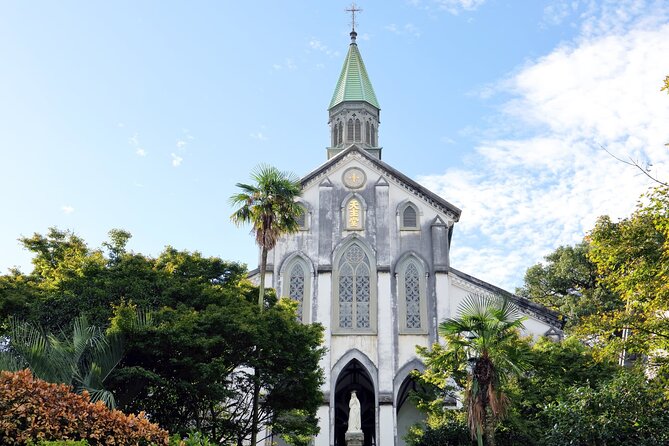
Oura Church, also called Catholic Oura Church, was built in 1864 by a French missionary for foreign merchants. It offers another look at Nagasaki’s Christian past and is listed as a roughly 20-minute stop with admission extra. That is a short visit, so you will want to ask your guide how much time is needed inside.
The Dutch Slope is a stone-paved hillside street where foreign traders lived after the port opened to foreign trade in 1859. There is no stated admission charge or fixed duration for this stop, so it can be a useful brief addition if you are already near Glover Garden and Oura Church.
Dejima connects Nagasaki to the outside world
Dejima began as a man-made island in 1636. It was created to separate Portuguese residents from the Japanese population and to control missionary activity. Later, it became linked with Dutch trade and Japan’s restricted contact with the outside world.
The suggested visit lasts about 50 minutes, with admission not included. That makes Dejima one of the more substantial historical stops on the route. You get more than a scenic walk here: the site explains how Nagasaki served as one of Japan’s key international gateways during a period of limited foreign contact.
I would choose Dejima if you want a clear explanation of Nagasaki’s role in trade and diplomacy. It also works well with the Nagasaki Museum of History and Culture, though visiting both properly may use much of the day.
A completely different kind of day out:
- Huis Ten Bosch Ticket
★ 4.7 · 4,465 reviews - Visit Gunkanjima Island (Battleship Island) in Nagasaki
★ 4.0 · 32 reviews - Taste Local Life: Nagasaki’s Historical Street Walking Tour
★ 5.0 · 27 reviews - Nagasaki Street Food Adventure: Private Walking Tour with a Local
★ 5.0 · 26 reviews
Chinese temples show another side of Nagasaki
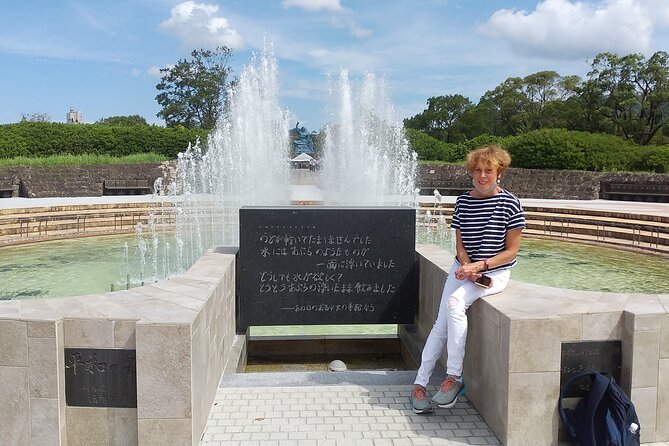
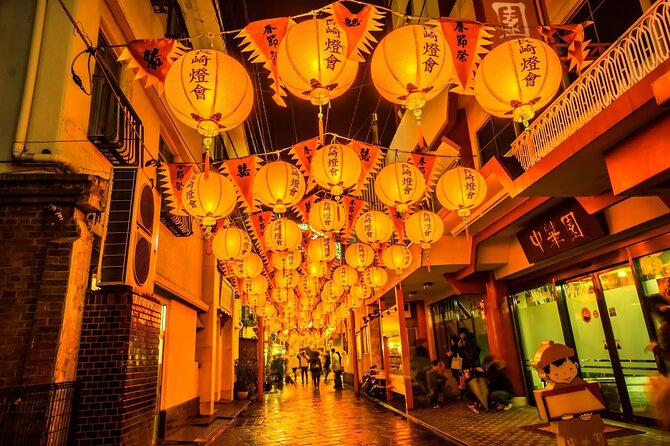
Sofukuji Temple was built in 1629 for Nagasaki’s Chinese residents and belongs to the Obaku school of Zen Buddhism. Its Chinese-style architecture makes it different from many Japanese temples. The listed visit is about 20 minutes, with admission extra.
Kofukuji Temple is the oldest and one of the most important Chinese-founded temples in Nagasaki. It is in the Teramachi, or Temple Town, district, and is linked to the beginnings of the Obaku school in Japan. The planned stop is also about 20 minutes, with admission extra.
These temples are worth choosing if you want to see how strongly Chinese culture shaped the port city. They are not interchangeable, so your guide can help decide which one fits your schedule. One guide, Hiromi, particularly enjoyed showing Kofukuji and the nearby Spectacles Bridge.
The Confucian Temple and Chinese Museum of Successive Generations offers another view of Nagasaki’s Chinese community. The shrine was built in 1893 by the city’s Chinese community and is one of only a small number of Confucian shrines in Japan. The planned visit is only 15 minutes, and admission is extra.
Peace Park and the Atomic Bomb Museum need time
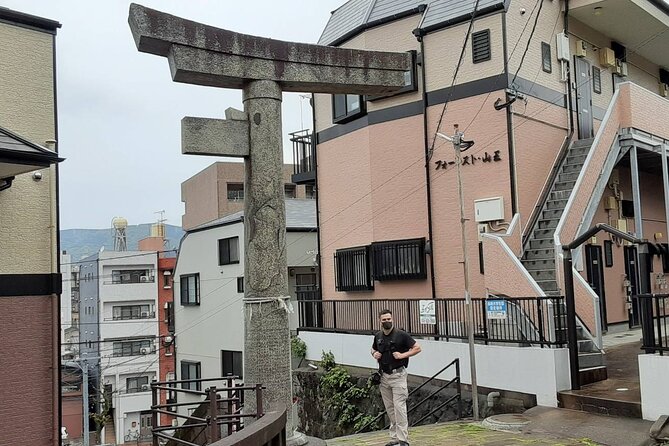
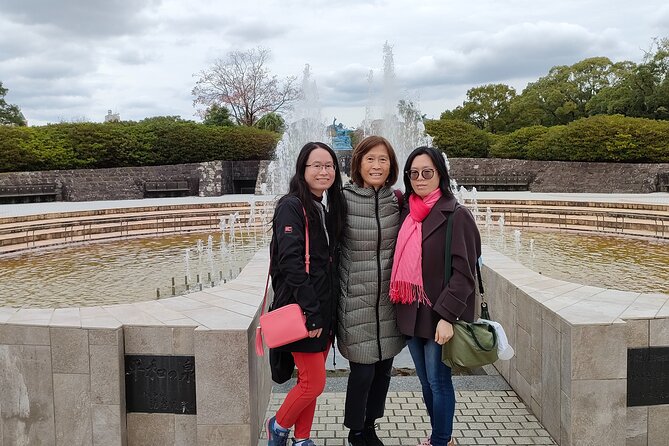
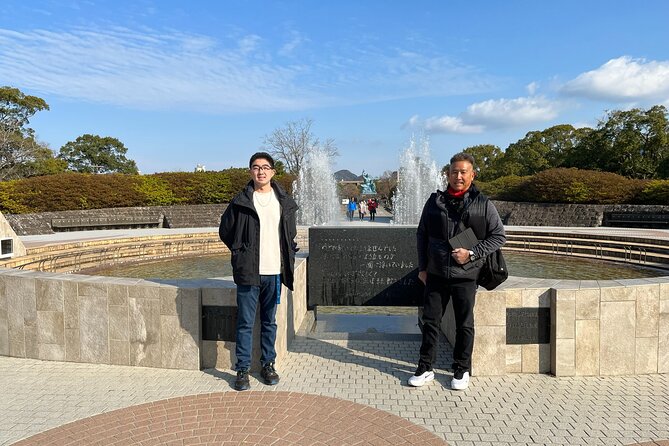
Nagasaki Peace Park was built near the atomic bomb hypocenter. Its central Peace Statue represents hope and remembrance, and admission is free. The suggested visit is only 15 minutes, which works for a brief, quiet stop but not for extended reflection or a detailed walk through the park.
The Nagasaki Atomic Bomb Museum documents the bombing of August 9, 1945, the destruction that followed, and the city’s recovery. Admission is not included, and the listed time is also 15 minutes. In practical terms, that is very short for a museum of this weight.
If the bombing and peace history are central to your visit, tell your guide before the tour begins. Several guides have adjusted the day to allow more time at the museum. Yoshi has shared personal family stories, including the account of her father being the only survivor at his company during the bombing. That kind of firsthand connection can make the historical discussion more personal, though you should also expect an emotionally difficult visit.
The Twenty-Six Christian Martyrs Monument and adjacent museum provide a different but equally serious historical focus. They commemorate 26 Christians executed in Nagasaki on February 5, 1597. The planned visit is about 20 minutes, with admission not included.
You could build a full day around Nagasaki’s Christian and peace history, but three or four stops are enough. A possible focus would be Oura Church, Glover Garden, the Twenty-Six Martyrs site, and the Atomic Bomb Museum. Another option would be Peace Park, the museum, Urakami Cathedral, and the Twenty-Six Martyrs Monument.
Urakami Cathedral is a working Catholic church in a large European-style red brick building. It has a tragic past connected to Nagasaki’s wartime history and is listed as a 20-minute stop. Admission is not included.
Bridges, art, and a closer look at the city
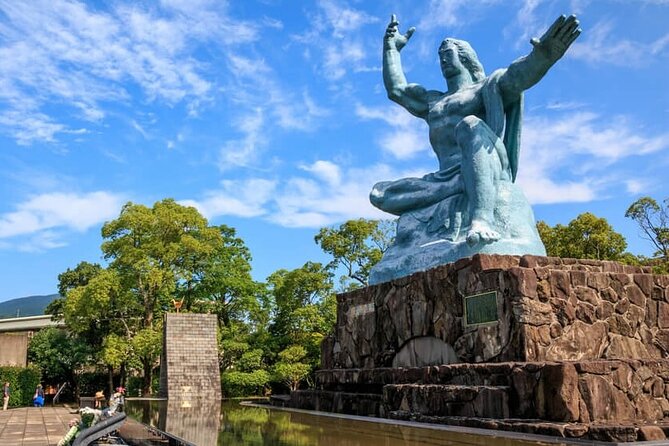
Meganebashi, or Spectacles Bridge, is the best known of the stone bridges over the Nakashima River. Its name comes from the reflection of the arches, which can resemble a pair of spectacles. The stop takes about 15 minutes and is free.
This is a simple stop, but it gives you a pleasant change from museums and memorials. It is also easy to combine with Kofukuji Temple and the city’s older temple district. If you enjoy photographs, allow a little extra time beyond the listed 15 minutes.
The Nagasaki Prefectural Art Museum is a modern museum beside the port. It is listed as a 20-minute stop with admission extra. I would choose it only if art is a major interest or if you have already seen Nagasaki’s main historical sites. With only six hours, it will usually lose out to Dejima, Glover Garden, or the Atomic Bomb Museum.
The Nagasaki Museum of History and Culture is a modern museum focused on Nagasaki’s role as an international trading city. The planned stop is 20 minutes, with admission extra. Like the art museum, this is best for a specific interest, not as an automatic addition to an already full day.
How much can you really see in six hours?
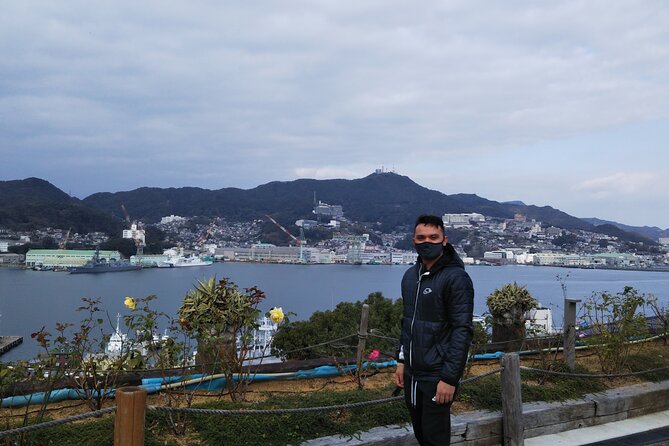
The time stamps are a planning guide, not a promise that you can visit every listed attraction. The stops shown add up to far more than six hours even before driving, parking, meals, and admission lines. The tour is designed for three or four chosen sites.
Some groups have managed to see eight attractions without feeling rushed, but that depends on the exact route, the depth of each visit, and how much time is spent inside. You should not build your own plan around that result. A better approach is to choose two main sites, one or two shorter stops, and let the guide fill gaps nearby.
For example:
- International Nagasaki: Glover Garden, Oura Church, Dejima, and the Dutch Slope.
- Peace and religion: Peace Park, Atomic Bomb Museum, Urakami Cathedral, and the Twenty-Six Martyrs Monument.
- Chinese and historic Nagasaki: Sofukuji Temple, Kofukuji Temple, Meganebashi, and Dejima.
- A broad first look: Mount Inasa, Dejima, Glover Garden, and Peace Park.
Lunch is not included. You will need to discuss timing with the guide if you want a proper meal rather than a quick stop.
Guides, drivers, and the personal touch
The strongest part of this experience is the human side. The guides named in the feedback include Rikako, Yoshi, Hiromi, Fumiko, Norah, Yoko, Yoshiko, and Taiyo Horio. Several were born or raised in Nagasaki, which can add local detail that a standard audio guide cannot provide.
Small personal touches also appear often. One guide prepared gift bags containing a handmade crane, cake, and eye mask. Another gave visitors folded paper cranes and taught origami. These are not guaranteed features, but they show the warm, thoughtful style some guides bring to the day.
The driver matters, too. Guides and drivers work as a team, and the driver may help with route choices when time remains. The private vehicle is not merely a comfort item. It is what makes a customized route across Nagasaki’s separated districts practical.
Is $598.53 a fair price?
The price is $598.53 for a group of up to two people. That works out to about $299 per person before admission fees, lunch, and other personal expenses. For a couple, this is expensive compared with public transport and self-guided sightseeing.
The value improves if you are arriving by cruise ship, have only a short time in port, dislike managing steep hills and transfers, or want detailed help at the Peace Park and Atomic Bomb Museum. You are also paying for a private guide’s full attention rather than sharing explanations with a large group.
The value is weaker if you enjoy slow independent visits, already know Nagasaki’s transport system, or want to spend hours inside museums. The six-hour limit and extra entrance costs mean you should book this for convenience and interpretation, not because it includes every sightseeing expense.
The published rating is 5 out of 5 from 27 reviews, with 100 percent recommending the experience. That is a strong signal, but the price still deserves a close look. Confirm which attractions you want, ask about estimated entrance costs, and make sure the plan suits your arrival and departure times.
Practical details before you reserve
You receive confirmation at booking, and free cancellation is available up to 24 hours before the start time. Changes or cancellations inside that 24-hour window are not accepted for a refund, based on local time.
Service animals are allowed, and most people can participate. Only a limited number of car seats and booster seats are available, and rear-facing seats are not available. Contact the provider directly if you need child seating.
Only one reservation is allowed per group. You cannot combine multiple bookings into a larger party, so check the group limit carefully before paying.
Who should book this Nagasaki tour?
I would choose this tour if you want Nagasaki’s major themes explained in one day, especially if you are coming from a cruise ship. It is also a strong choice for couples who value a private car, personal stories, and a flexible route more than the lowest possible price.
Families may appreciate the vehicle and private format, but should confirm car-seat arrangements early. History-focused visitors should speak up about the Atomic Bomb Museum and Peace Park, since the default 15-minute entries are too brief for serious study.
I would skip it if your budget is tight or if you prefer to set your own pace inside museums and churches. For everyone else, the best way to use it is to arrive with a short wish list, then trust the guide to arrange the day. Nagasaki has too many important threads to cover carelessly. Three or four well-chosen stops will serve you better than racing through ten.
FAQ
How long is the Nagasaki private tour?
The tour lasts approximately six hours.
How many people can join for the listed price?
The price of $598.53 covers a group of up to two people.
Is the tour private?
Yes. Only your own group participates, and multiple tour groups cannot be combined.
Is hotel or port pickup available?
Pickup is offered. The experience has also been used by people departing from the Nagasaki cruise terminal.
How many attractions can I choose?
The tour includes a customizable itinerary with your choice of three or four sites from the listed attractions.
Is an English-speaking guide included?
Yes. A licensed local English-speaking guide is included.
Is a private vehicle included?
Yes. Transportation in a private vehicle is included.
Are entrance fees included?
No. Entrance fees, lunch, and other personal expenses are not included. The provider notes that guide entry fees are covered for sights listed under the included sightseeing choices.
Are children’s car seats available?
Only a limited number of car seats and booster seats are available. Rear-facing car seats are not available, so contact the provider directly if you need child seating.
Can I cancel for a full refund?
Yes, if you cancel at least 24 hours before the experience start time. Cancellations or changes made less than 24 hours before the start time are not accepted for a refund.
More Day Trips in Nagasaki
- Nagasaki Private Customizable Half Day Tour
★ 5.0 · 16 reviews - Mt. Fuji Instagram-Worthy Spots Day Tour: Ladder Town, Oshino Hakkai, Lake Kawaguchi, Lawson Convenience Store (Departing from Tokyo Station or Shinjuku Station)
★ 4.8 · 35,467 reviews - 【Mount Fuji Magnificent Scenery Exploration Day Tour】Arakurayama Sengen Park & Kawaguchiko Oishi Park & Oshino Hakkai & INS Famous Lawson & Hikawa Clock Shop (Departing from Tokyo)
★ 4.9 · 12,075 reviews - [Kyoto & Nara Day Tour] Sagano Scenic Railway & Nara Park & Fushimi Inari Taisha Thousand Torii Gates & Togetsukyo Bridge & Bamboo Grove & Kimono Forest (Departing from Osaka)
★ 4.9 · 10,942 reviews
Just added in Nagasaki
- Huis Ten Bosch Ticket★ 4.7 · 4,465 reviews
- Nagasaki Private Historical Tour with Licensed Guide★ 5.0 · 13 reviews
- Traditional Kimono Experience in Nagasaki★ 5.0 · 16 reviews
- Taste Local Life: Nagasaki’s Historical Street Walking Tour★ 5.0 · 27 reviews
- Private Ring Craft Experience in Nagasaki★ 5.0 · 14 reviews
- Semi Private Guided Tour of Nagasaki.★ 5.0 · 17 reviews
- Nagasaki WW2 History and Culture Tour★ 5.0 · 19 reviews
- Nagasaki Private Customizable Half Day Tour★ 5.0 · 16 reviews
Day Trips, compared.
![[Kyoto & Nara Day Tour] Sagano Scenic Railway & Nara Park & Fushimi Inari Taisha Thousand Torii Gates & Togetsukyo Bridge & Bamboo Grove & Kimono Forest (Departing from Osaka)](https://media.japanvisits.com/wp-content/uploads/kyoto-nara-day-tour-sagano-scenic-railway-nara-park-fushimi-inari-taisha-thousand-torii-gates-togetsukyo-bridge-bamboo-grove-kimono-forest-departing-from-osaka-k110001-400x257.jpg)
Kyoto Amanohashidate & Ine Funaya & Ine Bay Scenic Day Trip (Departing from Osaka or Kyoto)
Read our review →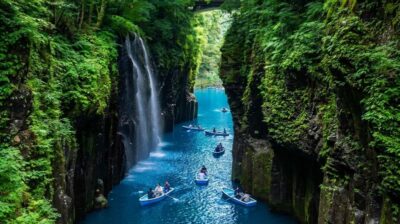
Kyushu: Mount Aso, Kusasenri & Takachiho Gorge Day Tour (Optional Takachiho Boat Ride Experience)
Read our review →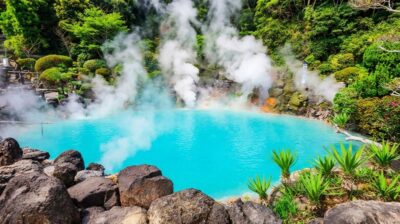
Kyushu One-Day Tour: Yufuin no Mori Train & Yufuin Town & Nyoirin-ji Temple & Dazaifu & Hell Hot Springs (Departing from Fukuoka)
Read our review →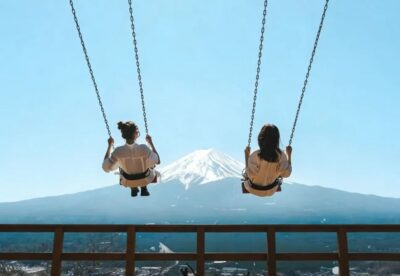
Browse the lists this tour appears in