
Reviewed · DAY TRIPS
Nagasaki Private Customizable Half Day Tour
Nagasaki rewards a carefully chosen first look. I like the private planning and the chance to choose two or three places that fit your interests, rather than racing through a fixed checklist. I also like the personal service from guides such as Yuki Kato and Satoshi Nishimura, who have been praised for thoughtful preparation and flexible pacing. The main drawback is simple: four hours passes quickly, and the price of $203.80 per person is a serious spend if you only visit a couple of sights.
You meet at Nagasaki Station at 9:00 am, then travel by public transport or private vehicle within the city. The tour can focus on atomic-bomb history, Christian heritage, Chinese culture, art, food, bridges, gardens, or city views. You fill out a planning form after booking, which gives the guide a useful head start, but you need to book early and return the form at least seven days before your tour.
In This Review
- Key points at a glance
- Why a custom tour works well in Nagasaki
- Starting at Nagasaki Station at 9:00 am
- Choosing the peace and atomic-bomb route
- Seeing Nagasaki’s Christian heritage
- Dejima and Nagasaki’s trading past
- Chinatown, Meganebashi Bridge, and local city life
- Art, temples, museums, and quieter choices
- Gunkanjima and viewpoints require careful planning
- Guide quality and the value of private planning
- Booking rules you should take seriously
- Is this Nagasaki tour worth booking?
- FAQ
- How long is the Nagasaki private tour?
- Where does the tour begin?
- Where does the tour end?
- Is hotel pickup included?
- How many attractions can I visit?
- Can I choose the sights and themes?
- Is transportation included?
- Are meals and entrance fees included?
- What happens if I arrive late or need to cancel?
Key points at a glance
- Choose your own Nagasaki: Select themes and must-see places, then receive a custom four-hour plan.
- A strong fit for first-time visitors: Your guide can connect major sights instead of leaving you to sort out the city’s many districts alone.
- Peace and wartime history are handled with care: The Atomic Bomb Museum, Peace Park, hypocenter, and Shiroyama area can form a serious but important half-day.
- Public transport can be part of the experience: The tram and city network help you see how Nagasaki works, rather than simply moving between sights in a car.
- Private means flexible, not unlimited: You will usually cover two or three attractions, so choosing priorities matters.
- Book early: The operator recommends about three months ahead, especially if your plan includes reservations or special venues.
Why a custom tour works well in Nagasaki
Nagasaki is not a one-theme city. Its story includes Christianity, international trade, Chinese influence, industrial labor, art, gardens, and the atomic bombing of 1945. These subjects are spread across different parts of the city, and a short visit can feel scattered without a plan.
That is where this tour earns its keep. After booking, you receive a form asking about interests, places you have already visited, and sights you want to include. You can point the guide toward culture, history, cuisine, nature, special events, or a combination. I like this system because it gives you a say before the day begins, while leaving room for the guide to arrange a practical route.
You should be realistic about the four-hour limit. The plan generally includes two or three attractions, not every place listed in the available choices. If you ask for the Atomic Bomb Museum, Dejima, Glover Garden, Chinatown, Meganebashi Bridge, and Mount Inasa, you are asking for a tour that exists only on paper. Pick a theme or two, then allow the guide to make the route work.
More Day Trips in Nagasaki:
- Nagasaki Full Day Tour with Licensed Guide and Vehicle
★ 5.0 · 27 reviews - Mt. Fuji Instagram-Worthy Spots Day Tour: Ladder Town, Oshino Hakkai, Lake Kawaguchi, Lawson Convenience Store (Departing from Tokyo Station or Shinjuku Station)
★ 4.8 · 35,467 reviews - 【Mount Fuji Magnificent Scenery Exploration Day Tour】Arakurayama Sengen Park & Kawaguchiko Oishi Park & Oshino Hakkai & INS Famous Lawson & Hikawa Clock Shop (Departing from Tokyo)
★ 4.9 · 12,075 reviews
Starting at Nagasaki Station at 9:00 am
The meeting point is Nagasaki Station, at 1 Onouemachi. Hotel pickup and drop-off are included, but the listed start point is the station, so confirm the pickup arrangement when you book. You should arrive at least 10 minutes early.
The day lasts about four hours and ends back at the meeting point. That makes the tour useful for a first morning in town, a cruise stop, or a short stay when you want a quick orientation before exploring alone.
Transportation within the city is included. Depending on the booking, you may use public transport or a private vehicle. The tram is a particularly useful option because it gives you a look at ordinary city life and keeps the tour tied to Nagasaki’s own rhythm. One positive experience came from using public transportation, including the tram, rather than spending the whole morning inside a vehicle.
If you use a private vehicle, you may save time between districts. If you use public transport, you may get a clearer feel for the city, though walking and transfers can reduce your sightseeing time. Tell the operator your preference in the planning form.
Choosing the peace and atomic-bomb route
For many people, Nagasaki’s wartime history is the reason to visit. A custom tour can include the Nagasaki Peace Park, the atomic-bomb hypocenter, the Atomic Bomb Museum, and the Shiroyama National School Building or related sites.
The Peace Park offers a place for reflection, while the hypocenter marks the point connected to the bombing on August 9, 1945. The museum gives the event wider context through exhibits about the blast, its effects, and the human cost of nuclear weapons. This is not light sightseeing, and you should allow yourself emotional space rather than trying to squeeze it between too many unrelated stops.
The Shiroyama area adds a more local and personal layer. A guide can help explain how the bombing affected schools, neighborhoods, and daily life. One especially praised route included the Shiroyama School Museum, Peace Park, and the hypocenter. That combination makes sense in four hours because the sites support one another.
I would choose this route if Nagasaki is your first visit and you want to understand why the city’s peace message matters. If you already plan to spend several hours at the museum, choose only one or two additional sites. Museum time can expand quickly, and rushing through it would weaken the experience.
Seeing Nagasaki’s Christian heritage
Oura Church is one of the oldest Christian churches in Japan and a UNESCO World Heritage Site. It offers a direct link to Nagasaki’s Christian communities and to the long, difficult story of Christianity in Japan.
This is a strong choice if you want history with a religious and architectural focus. It also pairs naturally with Glover Garden, where Dutch-style buildings and international trade connections provide a different view of Nagasaki’s contact with the outside world.
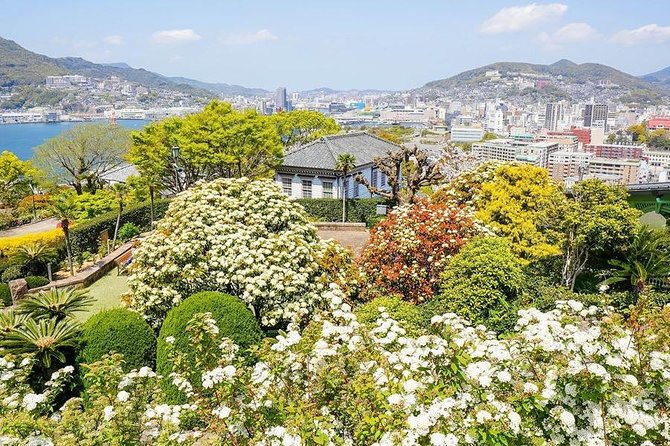
Glover Garden is known for its picturesque Western-style buildings and its connection to the old foreign settlement. The available description also links its setting with Dejima, the artificial island that once held the Dutch East India Company trading post. You should ask the guide to clarify the exact combination planned, since Dejima and Glover Garden are separate sights with different stories.
The drawback is distance and time. Christian sites, old foreign-settlement areas, and Dejima can easily fill the entire half-day. That is not a problem if this is your main interest. It is a problem if you also want peace history, Chinatown, and a museum.
A few more options to weigh up in Nagasaki
- Huis Ten Bosch Ticket
★ 4.7 · 4,465 reviews - Nagasaki: Private Walking Tour with a Local
★ 4.7 · 79 reviews - Nagasaki Full-Day Private Tour with Government-Licensed Guide
★ 5.0 · 66 reviews - Nagasaki Half-Day Private Tour with Government-Licensed Guide
★ 5.0 · 53 reviews
Dejima and Nagasaki’s trading past
Dejima began as a small artificial island and served as a Dutch trading post from the seventeenth through the nineteenth centuries. During Japan’s period of limited foreign contact, it provided an important link between Japan and the outside world.
I find Dejima a smart pick for anyone interested in trade, international exchange, or how Japan managed contact with foreign merchants. It gives you a more practical look at the city’s past than a single monument does. A guide can help tie the site to Western buildings, foreign residents, and the commercial life that shaped Nagasaki.
You may also choose the Dutch-style buildings connected with the old foreign settlement. These offer good visual contrast with the city’s temples and Chinese sites. The tour description includes both Dejima and buildings associated with the former trading area, so ask which locations are included in your proposed plan.
Chinatown, Meganebashi Bridge, and local city life
Nagasaki Chinatown is one of the oldest Chinatowns in Japan. Its Chinese cultural influence is an important part of the city’s identity, and it is a useful stop if you want food and neighborhood atmosphere alongside formal museums and monuments.
Meals are not included, but lunch in Chinatown can make a practical break if your timing allows. Since food and drinks are at your own expense, ask the guide to suggest a suitable place or include a food stop in the planning form. Do not expect a full meal to be part of the tour price.
Meganebashi Bridge crosses the Nakashima River and is one of Nagasaki’s best-known photo spots. Its stone arches and river setting offer a short, easy change of pace after a museum or memorial. The bridge is also a chance to see the city as a living place, not only as a collection of historical sites.
A route combining Chinatown, Meganebashi Bridge, and a tram ride can be pleasant for someone who wants a lighter introduction. It will not provide the same depth as a peace-history route, but it may suit you better if you prefer neighborhoods, food, and photography.
Art, temples, museums, and quieter choices
The Nagasaki Prefectural Art Museum holds Japanese and Western paintings, sculptures, and ceramics. Choose it if you want a cultural stop that is less emotionally heavy than the atomic-bomb sites. Because the collection covers both Japanese and Western work, it also fits the city’s long connection with international exchange.
Sofukuji Temple is a Zen Buddhist temple founded in the fourteenth century by a Chinese monk. Its link to Chinese Zen Buddhism makes it a good counterpart to Chinatown or Confucius Shrine. The pairing would give you a clear sense of Chinese influence in religious, cultural, and commercial life.
Nagasaki Museum of History and Culture offers exhibits on the prefecture’s past, including objects, documents, and multimedia displays. It is a sensible choice if you want a broad introduction rather than one narrow subject. With only four hours, however, you should avoid combining it with too many other museums.
Confucius Shrine connects Nagasaki with Chinese philosophy and cultural exchange. Built in the seventeenth century to honor Confucius, it can work well for you if temples, learning, and Asian cultural connections interest you.
These places are not interchangeable. The art museum suits visual culture, the prefectural museum offers a wider regional overview, and Sofukuji Temple and Confucius Shrine focus more on religious and Chinese connections. Tell the guide what kind of visit you want, not simply that you want to see culture.
Gunkanjima and viewpoints require careful planning
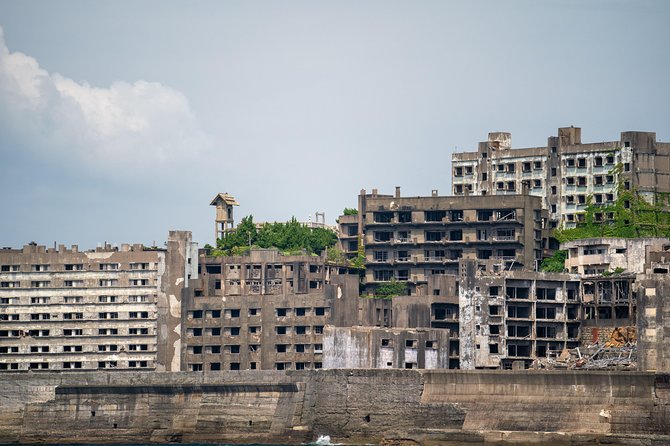
Gunkanjima, also called Battleship Island, is known for its abandoned industrial ruins. It was once a thriving mining community and was abandoned after the mines closed in the 1970s.
This is a powerful subject, but it deserves a warning. A four-hour city tour cannot automatically include a full island visit, and the description presents Gunkanjima among possible points of interest rather than a guaranteed stop. Ask exactly what is possible before booking. Optional tours and activities are not included for you or the guide.
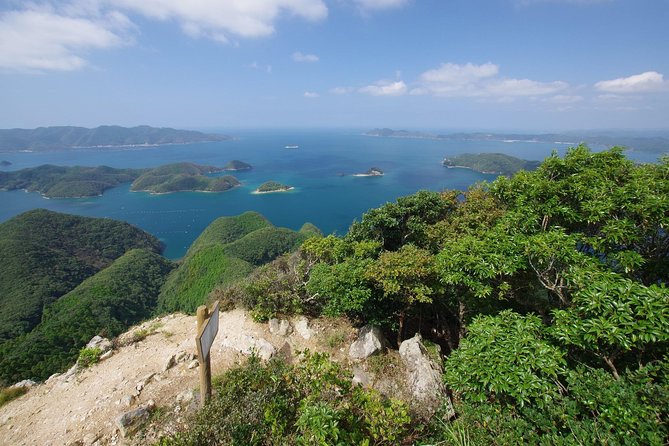
Mount Inasa is known for broad views, especially around sunrise and sunset. It offers a break from city streets and a chance to see Nagasaki from above. The timing matters: a morning tour beginning at 9:00 am will not provide a sunrise visit, and the four-hour schedule may not suit sunset.
Huis Ten Bosch is known for flower displays, especially spring tulips, but it is not a simple city-center stop. Since the included transportation is within Nagasaki City only, you should confirm whether any special event or garden request fits the tour’s boundaries. Do not assume that every listed attraction can be added just because it appears among the possible choices.
Guide quality and the value of private planning
The strongest part of this experience is the guide service. Yuki Kato has been praised for being organized, kind, helpful, and attentive to personal priorities. One carefully planned route included the Shiroyama School Museum, Peace Park, the hypocenter, Meganebashi Bridge, and a walk through Chinatown.
Another excellent experience involved Satoshi Nishimura and a personalized day. These details matter because a custom tour is only as good as the person shaping it. Japan Awaits uses licensed guides across Japan, and the supplied information says its guides are registered and vetted.
The private format also means the tour belongs to your group alone. You can ask questions, change the pace within reason, and avoid sights you have already visited. If your group has mixed interests, tell the operator early so the plan does not favor only one person.
At $203.80 per person, the value depends on group size and your priorities. The price includes a four-hour private guide, city transportation, hotel pickup and drop-off, and reservations or bookings made on your behalf. It does not include meals, drinks, optional activities, attraction fees when applicable, or gratuities.
For a small group, the cost may feel high for a half-day. For a group that wants careful planning, language help, and an efficient route during a short port call, it can be reasonable. The more specific your needs, the more useful the private format becomes.
Booking rules you should take seriously
Book about three months ahead if possible, or at least one month before your visit. The operator says that requests within seven days may not be possible, especially when restaurants, venues, or other reservations are needed.
After booking, you should receive the Nagasaki planning form within 48 hours. Complete it accurately at least seven days before the tour date. The guide cannot build a useful plan from vague instructions, so list your must-see places, interests, mobility needs, and sights you have already visited.
The cancellation terms are strict. The supplied conditions include fees of 25 percent within 30 days, 50 percent within 21 days, and 100 percent within 14 days, while the final policy also describes the experience as non-refundable and not changeable. If an itinerary has already been prepared, a 15 percent service fee is nonrefundable. Confirm the exact terms before paying.
You are given the guide’s phone number before the tour. If you arrive late, the guide waits for up to 30 minutes before the tour is canceled. Dress for the weather, and carry a passport if age verification is requested.
Is this Nagasaki tour worth booking?
Book this tour if you want Nagasaki shaped around your interests, especially if you have only one morning, are visiting from a cruise, or want help handling serious historical sites. I would give the peace route first priority for a first visit, then consider Chinatown, Meganebashi Bridge, Dejima, or Oura Church according to your interests.
Skip it if you prefer wandering alone, want a full-day excursion, or expect to see most of Nagasaki in four hours. The cost is easier to justify when you value private guidance and planning, not when you are simply looking for transportation between famous sights.
The best approach is to request a focused plan. Choose two or three priorities, complete the form early, and ask which attractions are practical together. That is how this half-day becomes more than a hurried checklist.
FAQ
How long is the Nagasaki private tour?
The tour lasts approximately four hours.
Where does the tour begin?
The listed meeting point is Nagasaki Station at 1 Onouemachi, Nagasaki, at 9:00 am.
Where does the tour end?
The activity ends back at the meeting point.
Is hotel pickup included?
Yes. Hotel pickup and drop-off are included, though the listed meeting point is Nagasaki Station. Confirm the exact pickup arrangement when booking.
How many attractions can I visit?
The tour is designed to cover two or three attractions within the four-hour period.
Can I choose the sights and themes?
Yes. After booking, you receive a form where you can select interests such as culture, history, cuisine, nature, special events, and specific must-see places.
Is transportation included?
Transportation within Nagasaki City is included. The tour may use public transportation or a private vehicle, depending on the booking.
Are meals and entrance fees included?
Meals, food, drinks, and fees for optional tours or activities are not included. Confirm whether any attraction admission fees apply to your chosen plan.
What happens if I arrive late or need to cancel?
You should arrive at least 10 minutes early. The guide waits for up to 30 minutes after the start time before the tour is canceled. Cancellation terms are strict, with the final policy stating that the experience is non-refundable and cannot be changed.
Just added in Nagasaki
- Huis Ten Bosch Ticket★ 4.7 · 4,465 reviews
- Nagasaki Private Historical Tour with Licensed Guide★ 5.0 · 13 reviews
- Traditional Kimono Experience in Nagasaki★ 5.0 · 16 reviews
- Taste Local Life: Nagasaki’s Historical Street Walking Tour★ 5.0 · 27 reviews
- Private Ring Craft Experience in Nagasaki★ 5.0 · 14 reviews
- Semi Private Guided Tour of Nagasaki.★ 5.0 · 17 reviews
- Nagasaki WW2 History and Culture Tour★ 5.0 · 19 reviews
- Nagasaki Street Food Adventure: Private Walking Tour with a Local★ 5.0 · 26 reviews
Day Trips, compared.
![[Kyoto & Nara Day Tour] Sagano Scenic Railway & Nara Park & Fushimi Inari Taisha Thousand Torii Gates & Togetsukyo Bridge & Bamboo Grove & Kimono Forest (Departing from Osaka)](https://media.japanvisits.com/wp-content/uploads/kyoto-nara-day-tour-sagano-scenic-railway-nara-park-fushimi-inari-taisha-thousand-torii-gates-togetsukyo-bridge-bamboo-grove-kimono-forest-departing-from-osaka-k110001-400x257.jpg)
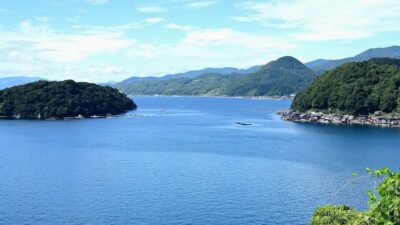
Kyoto Amanohashidate & Ine Funaya & Ine Bay Scenic Day Trip (Departing from Osaka or Kyoto)
Read our review →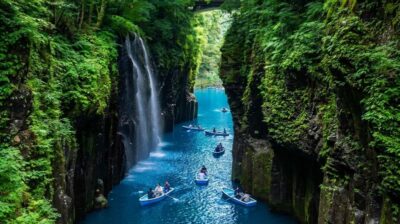
Kyushu: Mount Aso, Kusasenri & Takachiho Gorge Day Tour (Optional Takachiho Boat Ride Experience)
Read our review →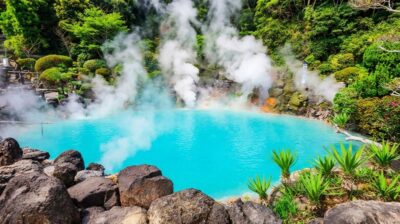
Kyushu One-Day Tour: Yufuin no Mori Train & Yufuin Town & Nyoirin-ji Temple & Dazaifu & Hell Hot Springs (Departing from Fukuoka)
Read our review →
Browse the lists this tour appears in