
Reviewed · NAGASAKI TOURS
Nagasaki Like a Local: Private & Custom Experience (2-3 hrs)
Nagasaki rewards curious walkers. This private tour gives you a flexible way to see central Nagasaki through local eyes, mixing famous sights such as Meganebashi Bridge and Oura Cathedral with quieter streets, food stops, and personal suggestions from your host. I especially like the one-to-one format and the chance to shape the route around your interests. I also like that hosts have helped guests manage foot injuries, cruise-port schedules, poor weather, and special requests such as cherry blossoms.
The main catch is that the advertised stops are examples, not guarantees. Your host chooses the route after learning what you want, so you may not see every listed sight in two or three hours. English ability can also vary, as one guest found with Yuki. For history-heavy sightseeing, confirm your priorities and communication needs before setting out.
In This Review
- Key points to know before booking
- Why a private Nagasaki walk can work so well
- Meeting at the Tourist Information Center, or arranging another point
- Chinatown: a quick taste of Nagasaki’s port connections
- Meganebashi Bridge and the older city center
- Fukusai-ji Temple and Nagasaki’s wartime memory
- Oura Cathedral and the former foreign settlement
- Dutch Slope and the old foreign residences
- Dejima, Higashiyamato, and the port story
- Quiet neighborhoods, tea, blossoms, and small surprises
- How much history and explanation should you expect?
- Price, group size, and what you actually receive
- Who should book this Nagasaki experience?
- Practical advice for getting the best route
- Should you book Nagasaki Like a Local?
- FAQ
- How long does the Nagasaki private experience last?
- Where does the tour start?
- Does the tour end at the starting point?
- Are food, drinks, tickets, and transportation included?
- Is this a private tour?
- Can I cancel for a full refund?
Key points to know before booking
- Private route for your group: You do not share the walking tour with strangers, and the route can change as your interests develop.
- Strong local focus: The experience can include Chinatown, temple neighborhoods, former foreign residences, street food, and small discoveries away from the main crowds.
- Useful for cruise visits: Hosts have met people at the cruise port, even though the standard meeting point is the Nagasaki City Tourist Information Center.
- Walking comes first: Public transportation may be used, but food, attraction tickets, drinks, and transit costs are not included.
- Good flexibility for mobility needs: Hosts have adjusted routes for foot injuries and difficulty with stairs, but you should raise these needs in advance.
- Price reflects personal attention: At $64.07 per person, the value is strongest for couples, families, or small groups who want a custom introduction rather than a fixed sightseeing circuit.
Why a private Nagasaki walk can work so well
Nagasaki is not a city that fits neatly into a single sightseeing line. Chinatown, the old foreign settlement, Buddhist temples, historic bridges, and wartime memorials sit in different parts of town. Hills and stairs add another layer. A local host can help you connect these pieces without spending your short visit stopping constantly to check a map.
The tour lasts about two or three hours. That is enough time for a useful orientation and several major stops, but not enough to cover every part of the city in depth. Think of it as a focused introduction, not a complete Nagasaki tour.
The private setup makes the time more useful. You can ask for food, architecture, wartime history, quiet neighborhoods, shopping, or a gentler route. One guide, Senyo, adjusted a tour for a group of eight that included someone who had trouble with stairs. Another host, Miki, changed the pace and route for a guest with a new foot injury.
That kind of flexibility is the real product here. You are paying for a person who can respond to the day, not simply for a checklist of monuments.
A few more options to weigh up in Nagasaki
- Nagasaki: Private Walking Tour with a Local
★ 4.7 · 79 reviews - Nagasaki Full-Day Private Tour with Government-Licensed Guide
★ 5.0 · 66 reviews - Nagasaki Half-Day Private Tour with Government-Licensed Guide
★ 5.0 · 53 reviews
Meeting at the Tourist Information Center, or arranging another point
The usual start is the Nagasaki City Tourist Information Center at 1-60 Onouemachi. This is a practical meeting point near public transportation and easy to identify in central Nagasaki.
A central hotel meet-up is available on request. Cruise passengers should contact the provider before the tour, since hosts have met guests at the cruise port in the past. That option can save time, especially if you have a strict return deadline.
I would confirm three things before the day:
- Your preferred meeting location
- The sights that matter most to you
- Any limits involving stairs, hills, walking speed, or weather
The tour ends back at the meeting point. Since transportation is not included, you should allow extra time and money if your route uses a tram or other public transport. The tour is mainly on foot.
Chinatown: a quick taste of Nagasaki’s port connections
Nagasaki Chinatown is presented as the oldest Chinatown in Japan, making it a natural place to begin a conversation about the city’s port past. Its lanes are compact and easy to combine with nearby central sights.
The food stop is informal rather than a full meal included in the tour. You pay for your own food and drinks, but your host can help you decide what to try and explain how the area fits into Nagasaki’s wider connections with China and overseas trade.
This is one place where a local host adds more than a standard map. You can ask for a snack, a quick lunch, or a recommendation that suits your appetite. One guest enjoyed a meal arranged during the day, while another had delicious crepes with Senyo. These details suggest that food can become part of the experience, but you should not expect it to be covered in the price.
The limitation is time. If you spend too long eating, you will have less time for temples, bridges, and the old foreign quarter. Tell your host at the start if food is a main reason for booking.
Meganebashi Bridge and the older city center
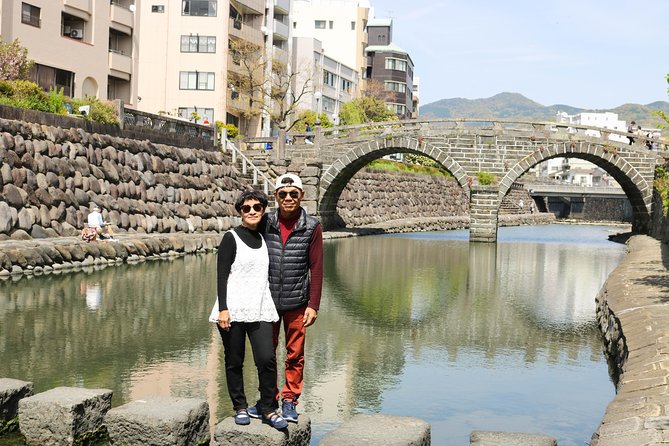
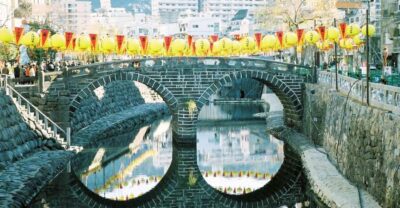
Meganebashi, or Spectacles Bridge, is one of Nagasaki’s best-known sights. The 400-year-old stone bridge gets its name from the rounded reflection formed in the water beneath its arches.
It is a small stop, but a worthwhile one. The bridge gives you a clear sense of Nagasaki’s older urban fabric, and it works well as part of a walking route through the center. Your host can explain where it fits in the city’s development and point out details you might pass without noticing.
Do not expect a long guided visit here. The bridge is a place to pause, take photographs, and hear a short explanation before moving on. Its value comes from the way it connects with nearby streets and religious buildings.
A completely different kind of day out:
- Visit Gunkanjima Island (Battleship Island) in Nagasaki
★ 4.0 · 32 reviews - Taste Local Life: Nagasaki’s Historical Street Walking Tour
★ 5.0 · 27 reviews - Nagasaki Full Day Tour with Licensed Guide and Vehicle
★ 5.0 · 27 reviews - Nagasaki Street Food Adventure: Private Walking Tour with a Local
★ 5.0 · 26 reviews
Fukusai-ji Temple and Nagasaki’s wartime memory
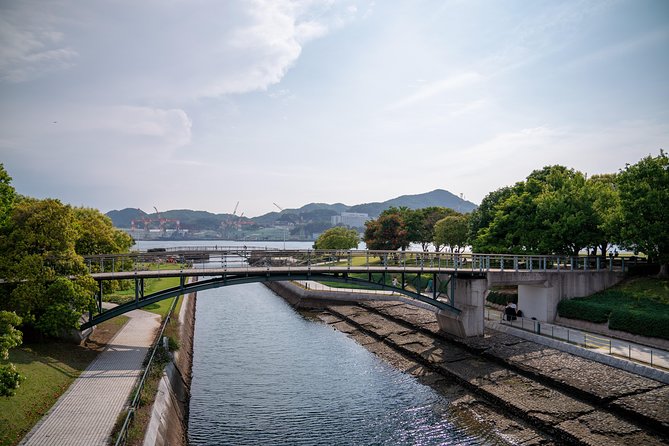
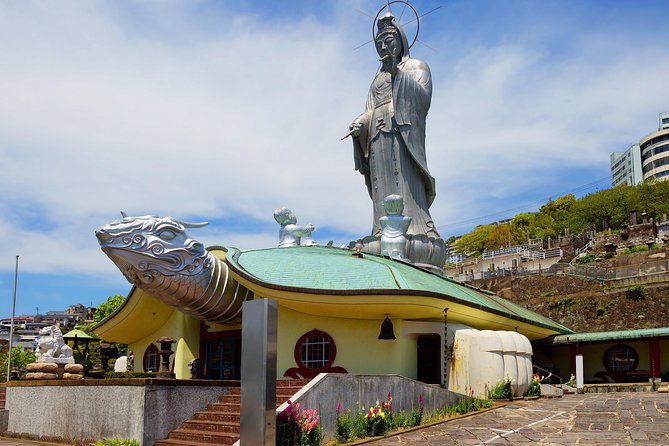
Fukusai-ji is visually unusual, with a shape unlike the traditional temple image many visitors expect. It was rebuilt after World War II as a mausoleum for fallen Japanese soldiers.
That combination of Buddhist architecture and twentieth-century memory makes it a thoughtful stop. It also gives the tour a chance to move beyond scenic streets and old trading connections. Nagasaki’s past includes beauty, international exchange, destruction, and rebuilding. A private guide can help you ask questions at your own pace.
The temple may not suit every visitor looking for a light city walk. Its memorial purpose is serious, and you should allow a little quiet time rather than treating it as just another photo stop. If you want more wartime context, say so early, since the short tour cannot cover every related site.
Several guests valued discussions about the 1945 atomic bombing and visited the hypocenter during their custom routes. The hypocenter is not promised as part of every tour, but it can be requested if that subject matters to you. Nagasaki’s Atomic Bomb Museum and Peace Park are separate attractions, and admission to attractions is not included.
Oura Cathedral and the former foreign settlement
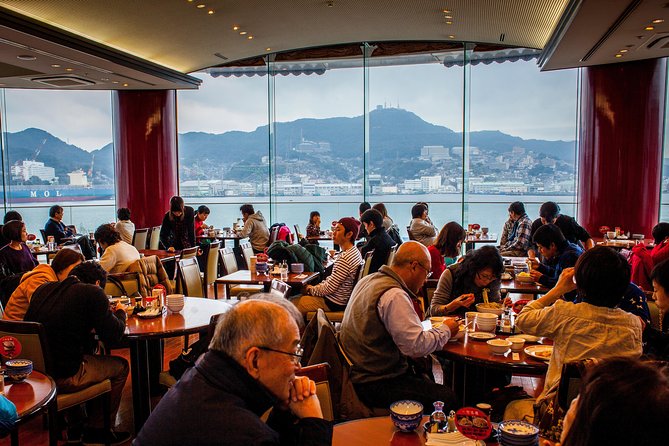
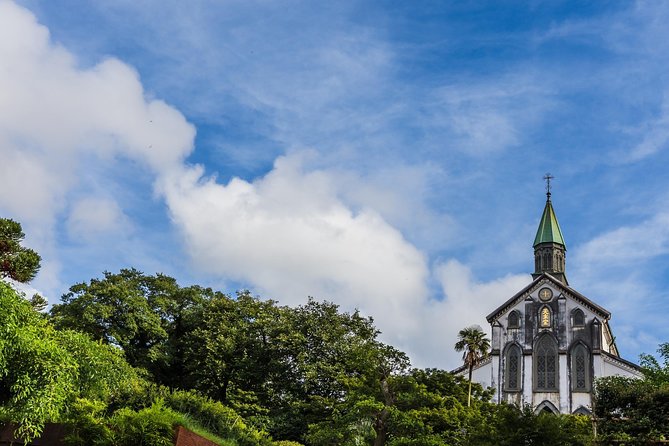
Oura Cathedral brings a different side of Nagasaki into view. Its European-style design reflects the city’s long connection with foreign traders and Christian communities.
The cathedral is located near the area once associated with foreign residents. This makes it a useful pairing with the Dutch Slope and the former Western-style homes nearby. You are not simply moving from one monument to another. You are seeing how a port city took in outside influences and gave them a place in its streets.
Admission tickets are not included, so check with your host about whether entering fits your route and budget. With only two or three hours, you may see the exterior and surrounding district rather than spend a long time inside.
I would choose this stop if you enjoy architecture, religion, or international connections. If your main goal is wartime history or local food, you may prefer to use the time elsewhere. The advantage of a custom tour is that you can make that choice.
Dutch Slope and the old foreign residences
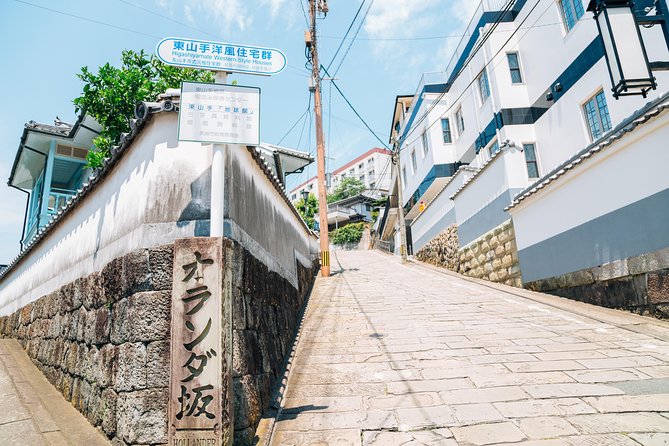
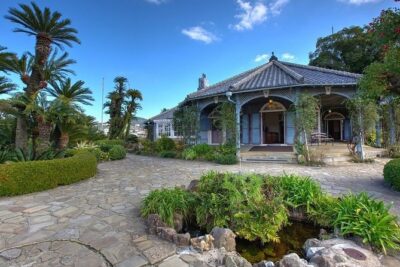
Dutch Slope is a stone-paved street lined with former Western-style residences connected with foreign traders. The name points to the Dutch presence that shaped Nagasaki during its long period of limited contact with the outside world.
The street is a good place to slow down. Its architecture and incline help you picture how foreign residents once lived apart from much of the surrounding Japanese city. It is also one of the more atmospheric parts of the route, though the slope itself may be demanding if your knees or feet are not happy with hills.
A walking tour is only as comfortable as its pace. Tell your host if you want fewer stairs or a flatter route. Senyo has accommodated guests with stair difficulties, and Miki adjusted a route for a foot injury, but that does not mean every route will be fully accessible. Ask for a realistic plan before you begin.
Dejima, Higashiyamato, and the port story
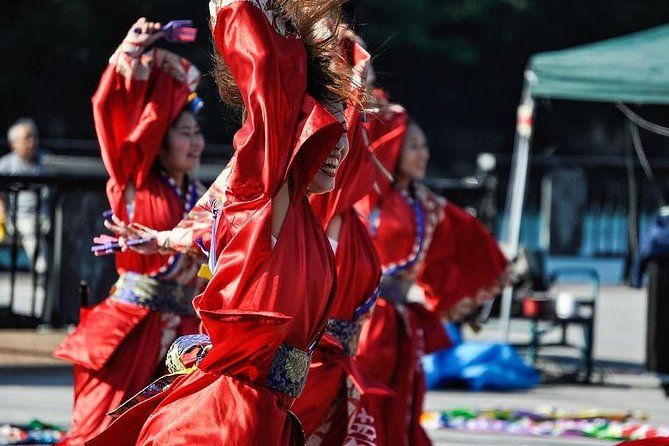
The experience can also include Higashiyamato and Dejima, both important for understanding Nagasaki as an international port. The supplied route description treats these areas as part of the city’s wider story rather than promising a long, formal visit to each.
Dejima is especially useful for visitors who want context about foreign contact and trade. Higashiyamato adds another piece to the central Nagasaki picture. Depending on your host and interests, you may pass through these areas, stop for an explanation, or focus on other nearby sights.
This is a good example of why you should not book the tour expecting a fixed sequence. The host may choose Dejima for someone interested in port history, while another person may spend more time in Chinatown, temples, or quiet residential lanes.
Quiet neighborhoods, tea, blossoms, and small surprises
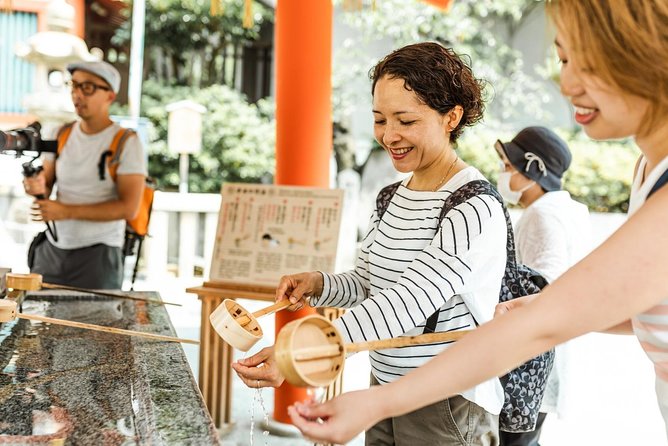
The strongest part of this experience may be what is not printed in the standard sightseeing list. Hosts have taken guests through neighborhoods they would not have found alone, selected parks with more than 400 cherry trees, and arranged a matcha tea stop at a Zen Buddhist temple.
Those details show how the tour can respond to the season and your personal interests. If you visit during cherry blossom time, ask about parks and local viewing spots. If you want a calmer cultural moment, request a temple or tea experience. If you dislike crowds, say so. Armand created a route through quieter areas with a large cherry blossom park, while another guide offered a matcha stop that became a highlight.
Of course, these experiences are not guaranteed. A host may not be able to provide every special request on a short tour, and seasonal sights depend on timing. Still, the possibility is valuable because it gives you a chance to see Nagasaki as a lived-in city rather than a string of headline attractions.
How much history and explanation should you expect?
Host quality is central to this experience. Moe, Macchi, Armand, Ceci, and Senyo received especially warm praise for their friendliness, English, local insight, and ability to adjust the day. Senyo, in particular, was praised for fitting many sights into a flexible walking route, using trams, visiting hilltop residences, and stopping for crepes.
One important caution: English fluency and historical depth may vary by host. Yuki was described as kind and helpful, but not strong enough in English to explain the history as fully as the guest wanted. That does not make the tour a poor choice, but it does matter if detailed interpretation is your main reason for booking.
You can reduce the risk by writing clear interests in the questionnaire and asking about the host’s language ability if that is important to you. The provider sends a short questionnaire within 24 hours after booking. Your answers help match you with a host who has similar interests, and the host then contacts you to suggest a route and agree on the meeting details.
Price, group size, and what you actually receive
The listed price is $64.07 per person. For a two or three-hour private walking experience, that is reasonable if you are traveling with another person or a small group and want personal attention.
The price does not include food, drinks, attraction tickets, transportation, or gratuities. Those extra costs are easy to manage, but you should budget for them. A tram ride, lunch in Chinatown, or entry to Oura Cathedral will be paid separately if you choose them.
The value improves with group size because the host works only with your party. A group of eight used the custom format successfully, including a guest with difficulty on stairs. Group discounts are available, though the exact saving is not specified here.
You are not buying a formal lecture or guaranteed access to every major sight. You are buying a flexible local introduction that can save you planning time and help you find places you might otherwise miss.
Who should book this Nagasaki experience?
I would recommend it most strongly to:
- Cruise passengers who need a custom meeting point and a compact city overview
- First-time visitors who want help connecting Nagasaki’s scattered sights
- Couples and families who prefer a private pace
- People interested in food, architecture, temples, neighborhoods, or port history
- Visitors who want quieter streets instead of a crowded group excursion
- Anyone with a specific request, such as cherry blossoms, matcha tea, or fewer stairs
It is less suitable if you want a guaranteed, highly structured list of attractions. It may also disappoint if you expect every historical detail to be delivered in polished English. The private format gives you flexibility, but it also means the final experience depends heavily on your assigned host.
The public score is 4.9 out of 5, with 93 percent recommending it, based on 14 ratings. That is a strong result, but the small number of ratings means I would treat it as encouraging rather than conclusive.
Practical advice for getting the best route
Before the host contacts you, decide what matters most. Pick two or three priorities rather than asking for everything. For example, you might request Chinatown food, Meganebashi Bridge, and the Dutch Slope, or Fukusai-ji, the hypocenter, and a quiet temple.
Be honest about your walking ability. Nagasaki includes hills, stone streets, and stairs, and the route may use public transportation. If you have a foot injury or difficulty with steps, say so in the questionnaire and again when you meet.
Bring money for food, drinks, tickets, and possible transit. Wear shoes suited to uneven streets, and carry rain protection if the forecast looks poor. A host named Moe continued showing guests around in bad weather, but your own comfort still depends on sensible clothing.
Free cancellation is available if you cancel at least 24 hours before the local start time. Changes made inside that window are not accepted, so make your timing firm before the deadline.
Should you book Nagasaki Like a Local?
Book it if you want a private, adjustable introduction to Nagasaki and value local conversation more than a fixed schedule. The best parts are the ability to avoid crowds, request a gentler pace, and find personal touches such as a quiet neighborhood, cherry blossom park, matcha tea, or a favorite food stop.
Skip it if you need a guaranteed list of sites, formal historical commentary, or a fully inclusive price. In that case, a conventional guided sightseeing tour may be easier to compare.
For most cruise visitors, first-time guests, and small groups, the flexibility is worth the $64.07 starting price. Just tell your host what you care about, confirm the meeting plan, and accept that your Nagasaki will be shaped by the person assigned to you.
FAQ
How long does the Nagasaki private experience last?
The tour lasts approximately two to three hours.
Where does the tour start?
The standard meeting point is the Nagasaki City Tourist Information Center at 1-60 Onouemachi, Nagasaki. A central hotel meet-up is available on request.
Does the tour end at the starting point?
Yes. The experience ends back at the meeting point.
Are food, drinks, tickets, and transportation included?
No. Food, drinks, attraction tickets, and transportation are not included. The tour is mainly walking, though public transportation may be used.
Is this a private tour?
Yes. Only your own group participates in the activity.
Can I cancel for a full refund?
Yes, if you cancel at least 24 hours before the experience start time. Cancellations or changes made less than 24 hours in advance are not accepted for a refund.
Just added in Nagasaki
- Taste Local Life: Nagasaki’s Historical Street Walking Tour★ 5.0 · 27 reviews
- Private Ring Craft Experience in Nagasaki★ 5.0 · 14 reviews
- Semi Private Guided Tour of Nagasaki.★ 5.0 · 17 reviews
- Nagasaki Private Customizable Half Day Tour★ 5.0 · 16 reviews
- Nagasaki WW2 History and Culture Tour★ 5.0 · 19 reviews
- Nagasaki Street Food Adventure: Private Walking Tour with a Local★ 5.0 · 26 reviews
- Nagasaki Private Tour with a Local – Highlights & Hidden Gems★ 5.0 · 24 reviews
- Nagasaki: Private Tour with Local Guide★ 4.8 · 18 reviews
Nagasaki Tours, compared.
Nagasaki Full-Day Private Tour with Government-Licensed Guide
Read our review →
Nagasaki Half-Day Private Tour with Government-Licensed Guide
Read our review →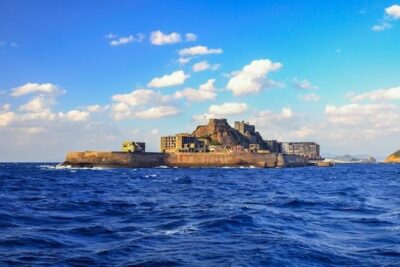
Visit Gunkanjima Island (Battleship Island) in Nagasaki
Read our review →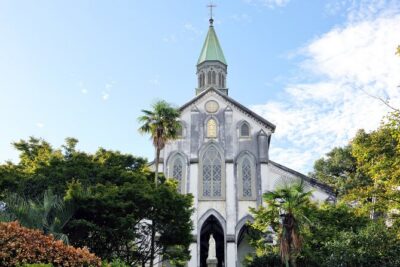
Nagasaki Full Day Tour with Licensed Guide and Vehicle
Read our review →
Taste Local Life: Nagasaki’s Historical Street Walking Tour
Read our review →
Nagasaki Street Food Adventure: Private Walking Tour with a Local
Read our review →
Nagasaki Private Tour with a Local – Highlights & Hidden Gems
Read our review →Browse the lists this tour appears in