
Reviewed · NAGASAKI TOURS
Nagasaki WW2 History and Culture Tour
Nagasaki tells more than one story. This private full-day outing links the city’s wartime sites with shrines, sake, ceramics, coastal views, and Nagasaki’s long connection with foreign cultures. I like the way it moves beyond the central memorial area, and I especially like that guide Shannon Lefebvre includes places many visitors would not find alone.
I also like the practical touches: Atomic Bomb Museum and Inasayama Observation Deck admission are included, along with private transport, water, drinks, WiFi, and lunch. The main drawback is the price, $656.88 for up to three people, plus the need for good weather. If you are visiting solo, the cost is much harder to justify than if you share it with two companions.
This is not a light sightseeing day. The air-raid shelter, torpedo base, radio towers, and Atomic Bomb Museum require quiet attention. But the route also includes a picnic, ceramics, sake, and broad views, giving the day room to breathe.
In This Review
- The day at a glance
- Why this private tour works best for small groups
- Starting at Sohonzan Shrine
- Saikai Bridge and the Hario Straits
- Hario Radio Tower and the road to war
- Umegae Sake Brewery, a welcome change of pace
- Mukyudo and Katashima Torpedo Base
- Hasami ceramics after the war sites
- Peace Park and the Atomic Bomb Museum
- Inasayama Observation Deck and the final view
- Lunch, drinks, transport, and timing
- Who should book this Nagasaki day tour?
- Should you book it?
- FAQ
- How long does the Nagasaki WW2 History and Culture Tour last?
- How many people can join the private tour?
- Is pickup available?
- Are Atomic Bomb Museum tickets included?
- Is admission to Inasayama Observation Deck included?
- What food and drinks are provided?
- What happens if bad weather cancels the tour?
The day at a glance
- A private route for up to three people: You get your own group, air-conditioned vehicle, and a guide who can shape the pace around your interests.
- WWII sites outside the standard city circuit: Hario Radio Tower, Mukyudo, and Katashima Torpedo Base add difficult but important context.
- Two included admission tickets: Entry to the Atomic Bomb Museum and Inasayama Observation Deck is covered.
- Food and drinks are built in: Lunch may be eaten on the go or as a picnic, with still or sparkling water and alcoholic and nonalcoholic drinks provided at set points.
- Culture beyond wartime history: Hasami ceramics, Umegae Sake Brewery, Sohonzan Shrine, and Saikai Bridge broaden the day.
- A full road day: The planned duration is about seven to nine hours, so this suits you if you want a wide view of Nagasaki rather than a short city walk.
Why this private tour works best for small groups
The tour costs $656.88 per group of up to three, not per person. That makes the calculation simple: three people sharing the cost pay about $219 each, while two people pay about $328 each. For a private vehicle, guide, lunch, drinks, admissions, and a full day on the road, the price can make sense for a small group with limited time.
For one person, the value is less clear. You are paying for the entire vehicle and guiding service, even though the group limit is three. I would book it alone only if the offbeat WWII locations and flexible private format matter more to you than keeping costs low.
The guide, Shannon Lefebvre, receives especially strong praise for connecting the stops into a story rather than simply dropping people at photo points. His style also appears to suit mixed groups. Two people from Nagasaki once joined the route and still found several places unfamiliar, which tells you that this is not simply a basic city orientation.
The private format has another advantage. Nagasaki’s wartime sites can affect people in different ways. You may want more time at the Peace Park, or you may need a short pause after the museum. With only your own group, the day should feel less rushed than a large coach excursion, though the number of stops means you still need to keep moving.
A few more options to weigh up in Nagasaki
- Huis Ten Bosch Ticket
★ 4.7 · 4,465 reviews - Nagasaki: Private Walking Tour with a Local
★ 4.7 · 79 reviews - Nagasaki Full-Day Private Tour with Government-Licensed Guide
★ 5.0 · 66 reviews
Starting at Sohonzan Shrine
The first stop is Sohonzan Shrine, reached through a very large torii gate. The scale of the entrance immediately signals that this is not a minor neighborhood shrine.
You have about 30 minutes here, with no admission charge. This is a useful opening because it places Japanese religious culture before the heavier wartime material. The stop also gives you a quiet beginning and a chance to see a part of Nagasaki that can be missed when a visit focuses only on museums and memorials.
I would use this time to ask Shannon about shrine customs and the role of the site in local life. The tour description specifically points to Japanese customs as part of his guiding, and the shrine offers a natural setting for that conversation.
The limitation is time. Thirty minutes is enough for an introduction and a walk, not a long religious visit. If shrines are your main interest, you may wish the stop were longer. Here, it works best as the first piece in a larger day.
Saikai Bridge and the Hario Straits
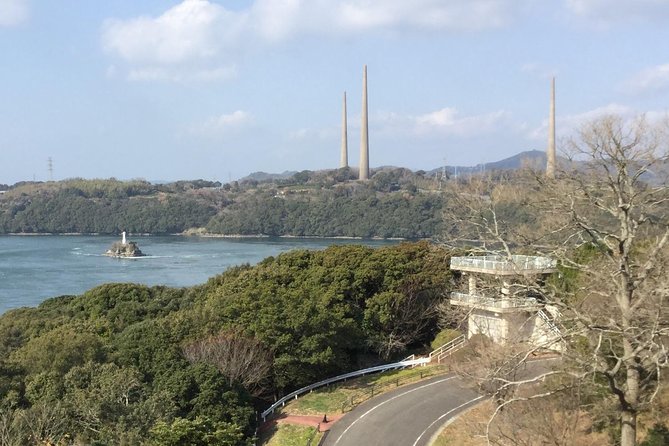
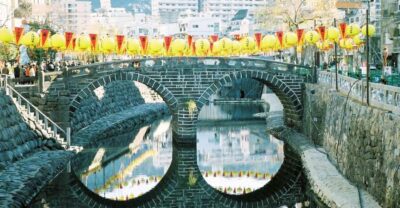
At Saikai Bridge, the subject changes from religion to geography. The bridge overlooks the Hario Straits, known for some of Japan’s fastest-flowing currents and whirlpools created as seawater moves between Omura Bay and the narrow channel.
You get roughly 30 minutes and no admission charge. This is more than a quick scenic pause because the moving water helps explain why the area has mattered for transport and military communications. The changing tide is important, so the appearance of the strait may differ depending on when you arrive.
I like this kind of stop on a long tour. It breaks up the museums and ruins with open air and a strong sense of place. You can also see how varied Nagasaki Prefecture is beyond the urban core.
Do not expect a long bridge walk or a full nature outing. The scheduled time is short, and the visit is designed as a viewpoint stop within a larger route. Weather will also affect how much you enjoy it.
Hario Radio Tower and the road to war
The Hario Transmission Towers are among the tour’s most unusual stops. The site is presented as an important WWII location connected with the message sent to officials to proceed with the attack on Pearl Harbor.
That gives the towers a role in the wider chain of events leading to the Pacific War. You are given about 30 minutes, with no admission fee listed. The value is not in a polished museum display. It is in standing at a surviving communications site and considering how distant decisions moved through real places.
This is precisely the kind of stop that benefits from a guide. Without context, towers can look like anonymous industrial structures. Shannon’s explanations are central here, especially for anyone who wants to understand why this location matters.
At the same time, you should come prepared for a brief outdoor visit rather than an elaborate exhibit. The information supplied does not promise extensive facilities or a large indoor collection, so the stop depends heavily on the guide’s storytelling.
A completely different kind of day out:
- Nagasaki Half-Day Private Tour with Government-Licensed Guide
★ 5.0 · 53 reviews - Visit Gunkanjima Island (Battleship Island) in Nagasaki
★ 4.0 · 32 reviews - Taste Local Life: Nagasaki’s Historical Street Walking Tour
★ 5.0 · 27 reviews - Nagasaki Full Day Tour with Licensed Guide and Vehicle
★ 5.0 · 27 reviews
Umegae Sake Brewery, a welcome change of pace
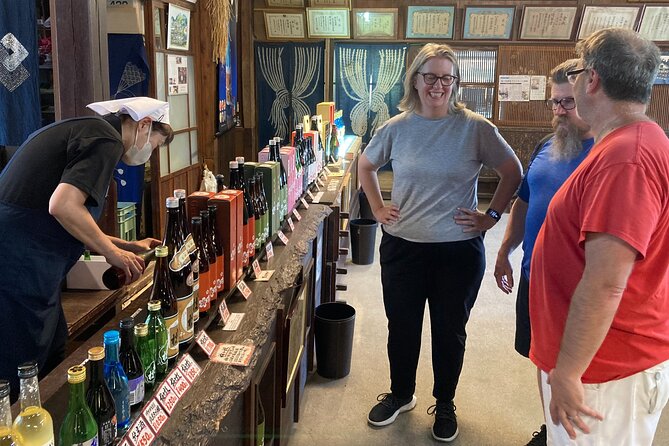
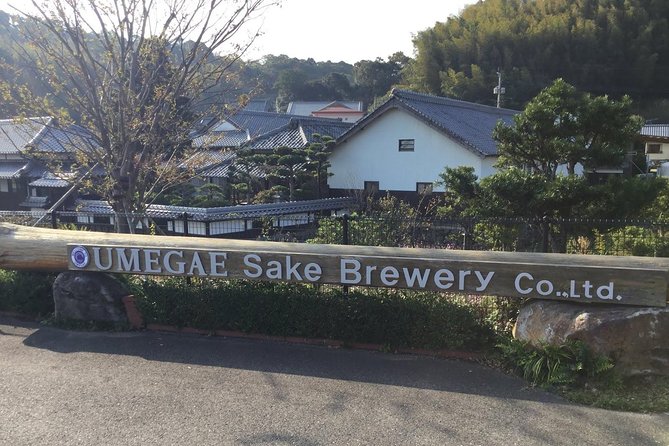
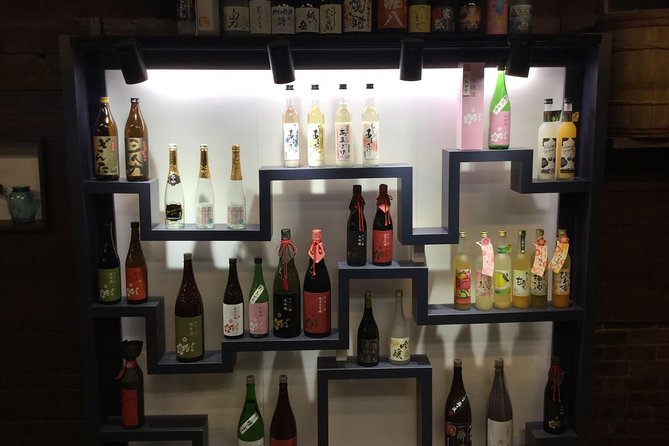
Umegae Sake Brewery adds a more social and everyday side of Japanese culture. After several serious historical sites, a brewery visit gives you time to consider local production, drinking customs, and the way regional food and drink shape a place.
The stop lasts about 30 minutes and has no separate admission charge listed. Alcoholic and nonalcoholic beverages are provided at certain times during the day, but you should not assume that every drink or tasting is available at every stop. The tour also supplies still and sparkling water throughout the day, a very useful detail on a long outing.
This is a good point to ask about sake etiquette and local preferences. If you do not drink alcohol, the inclusion of nonalcoholic beverages means you are not left out.
The short visit means you may only get an introduction rather than a long brewery tour. Still, the stop earns its place because it changes the rhythm of the day. Nagasaki is not only a place of war memory. It is also a living region with working traditions.
Mukyudo and Katashima Torpedo Base
Mukyudo is an air-raid shelter associated with the former Miyamura Elementary and Junior High School. The site is described as unusual because both male and female students used the shelter, a detail that gives the place a human scale.
You have about 20 minutes here. That is enough for a focused look, but not enough to linger at length. Air-raid shelters can be stark, and this one may affect you more than its short scheduled time suggests. I would keep your pace calm and let the guide set the tone.
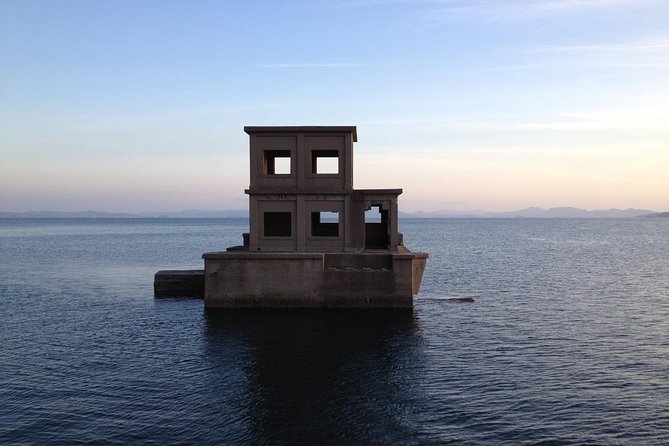
Katashima Torpedo Base Ruin receives about 30 minutes. The surviving empty building was used as training facilities, and its plain, vacant appearance is part of what makes the stop powerful. A ruin does not offer the neat sequence of rooms and labels found in a museum. You have to picture the people who trained there and the military system that once filled the building.
These are not polished attractions. Access and finding the exact structures may require careful navigation, which is one reason private transport and a local guide matter. If you want tidy displays and easy explanations at every turn, you may find these locations rough around the edges. If you value direct contact with lesser-known wartime places, they are among the strongest parts of the route.
Hasami ceramics after the war sites
Hasami Ceramics Museum and the surrounding ceramics area provide a welcome cultural counterpoint. Hasami porcelain is a major part of the region’s craft identity, and the museum displays Japanese ceramics with a particular focus on Hasami ware.
The scheduled stop is about 30 minutes. That is brief for anyone who collects pottery, so serious ceramics enthusiasts may wish they had more time. Still, it offers a useful introduction and may help you recognize the local style when you see Hasami pieces elsewhere in Japan.
The tour also describes the Hasami area as a place where you may find small ceramic pieces. That could make this a good stop if you like practical souvenirs rather than mass-produced keepsakes. Check the time carefully, though. A short stop can disappear quickly when you are comparing cups, plates, and sake pieces.
One of the route’s strengths is this change in subject. You move from military ruins to a craft tradition that points toward daily life and the future. That balance keeps the day from becoming emotionally flat or relentlessly grim.
Peace Park and the Atomic Bomb Museum
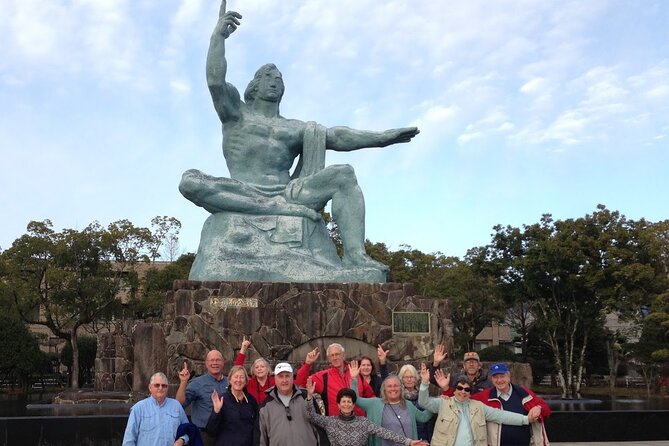
Nagasaki Peace Park is scheduled for about 30 minutes and has no admission charge listed. It is a place for quiet reflection, with open space that gives you room to think about the human cost of the atomic bombing.
The Atomic Bomb Museum follows with about 35 minutes. Admission is included, which saves you one extra expense and keeps the group moving. The exhibits and photographs can be graphic and upsetting. I would not treat this as a quick box to check, even though the planned visit is short.
Thirty-five minutes may feel tight, especially if you read every panel. You will need to choose what to focus on. The museum’s value comes from its direct presentation of evidence and personal stories, but the emotional weight can be considerable. Families and groups with different comfort levels should discuss that beforehand.
The pairing of Peace Park and the museum is effective. The park offers space and silence, while the museum supplies detail and testimony. Together, they make the central moral point of the tour clear: Nagasaki is not only a historic destination but also a place that asks you to remember what war does to ordinary people.
Inasayama Observation Deck and the final view
The day ends at the Inasayama Observation Deck, with admission included and about 20 minutes scheduled. From Mount Inasa, you get a broad view over Nagasaki, and the city’s shape becomes easier to understand after a day spent crossing its surrounding areas.
The timing matters. The tour information praises the nighttime view, but the listed stop is only about 20 minutes. If the schedule places you there after dark, you may get a striking city view. If you arrive during daylight, the scene will be different, with clearer visibility but less sparkle.
I like ending here because the view provides a physical pause after the museum. It lets you look outward rather than only backward. Still, do not book the tour solely for a long night-view session. This is a short final stop within a much bigger day, not a dedicated evening excursion.
Lunch, drinks, transport, and timing
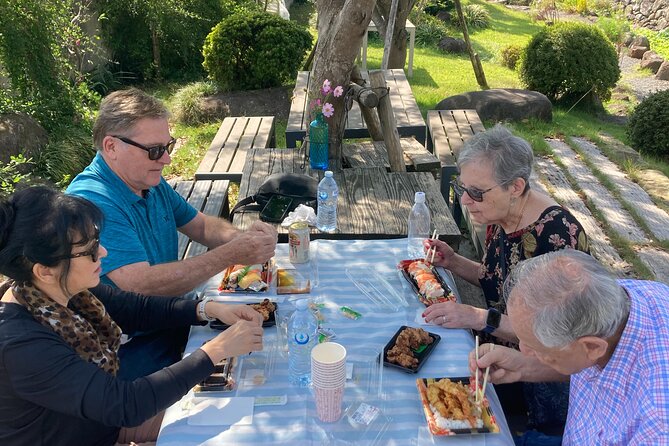
Lunch is provided either on the go or as a sit-down picnic, depending on weather and time limits. That flexibility helps because the route covers many locations, but it also means you may not receive a long restaurant meal. The available information notes Japanese ramen and Nagasaki’s famous chanpon in connection with one tour day, so local food is part of the experience, though the exact lunch format is not fixed.
Private transportation is included in an air-conditioned vehicle. That is a major advantage for this route. Several stops are spread across Nagasaki Prefecture, and a public-transport plan would be slower and more complicated. You also get WiFi on board, bottled water, and alcoholic and nonalcoholic drinks at certain times.
The planned duration is seven to nine hours. That range tells you the day has some flexibility, but it also reflects weather, traffic, meal timing, and how long your group spends at each site. Wear comfortable shoes and bring a water bottle even though water is provided. You should also leave room in your attention span for a serious museum visit late in the day.
The tour is usually booked about 65 days in advance, so last-minute availability may be limited. Confirmation is provided at booking, and most people can participate. The experience is private, meaning only your group joins.
Who should book this Nagasaki day tour?
I would recommend it to a couple, family, or small group that wants wartime history with local culture, not just the Peace Park and Atomic Bomb Museum. It is particularly useful if you have one full day and want someone else to connect distant sites by car.
It also suits repeat visitors and people who enjoy places that are not polished for mass tourism. The Hario towers, Mukyudo, and Katashima ruin may be more rewarding to you than a standard sightseeing stop, especially when Shannon explains their role.
You should think twice if you want a slow museum day, a dedicated ceramics tour, or a relaxed food tour. Ten stops in seven to nine hours creates a broad overview, not deep time at every location.
The cancellation terms are strict: the experience is non-refundable and cannot normally be changed. Since good weather is required, a weather cancellation leads to another date or a full refund. Keep that in mind before paying far ahead.
Should you book it?
Book this tour if you want Nagasaki presented as a whole place: a city shaped by foreign contact, religious life, craft, food, military history, atomic destruction, and renewal. The strongest feature is the range of stops, backed by private transport and a guide who knows how to make lesser-known sites matter.
The price is fair for three people sharing the cost, less attractive for a solo visitor. If you can handle a serious museum, accept a busy schedule, and value unusual WWII locations, this is a strong choice. If you prefer a slow, central, low-cost day, build your own Peace Park and museum visit instead.
FAQ
How long does the Nagasaki WW2 History and Culture Tour last?
The tour lasts approximately seven to nine hours.
How many people can join the private tour?
The tour is for one private group of up to three people. Only your group participates.
Is pickup available?
Yes, pickup is offered.
Are Atomic Bomb Museum tickets included?
Yes. Admission to the Nagasaki Atomic Bomb Museum is included.
Is admission to Inasayama Observation Deck included?
Yes. Admission to the Inasayama Observation Deck is included.
What food and drinks are provided?
Lunch is provided either on the go or as a picnic, depending on weather and time constraints. Still and sparkling water are supplied throughout the day, and alcoholic and nonalcoholic beverages are provided at certain times.
What happens if bad weather cancels the tour?
If the experience is canceled because of poor weather, you will be offered another date or a full refund. Normal cancellations and amendments are non-refundable.
Just added in Nagasaki
- Huis Ten Bosch Ticket★ 4.7 · 4,465 reviews
- Nagasaki Private Historical Tour with Licensed Guide★ 5.0 · 13 reviews
- Traditional Kimono Experience in Nagasaki★ 5.0 · 16 reviews
- Taste Local Life: Nagasaki’s Historical Street Walking Tour★ 5.0 · 27 reviews
- Private Ring Craft Experience in Nagasaki★ 5.0 · 14 reviews
- Semi Private Guided Tour of Nagasaki.★ 5.0 · 17 reviews
- Nagasaki Private Customizable Half Day Tour★ 5.0 · 16 reviews
- Nagasaki Street Food Adventure: Private Walking Tour with a Local★ 5.0 · 26 reviews
Nagasaki Tours, compared.

Nagasaki Full-Day Private Tour with Government-Licensed Guide
Read our review →
Nagasaki Half-Day Private Tour with Government-Licensed Guide
Read our review →
Visit Gunkanjima Island (Battleship Island) in Nagasaki
Read our review →
Nagasaki Full Day Tour with Licensed Guide and Vehicle
Read our review →
Taste Local Life: Nagasaki’s Historical Street Walking Tour
Read our review →
Nagasaki Street Food Adventure: Private Walking Tour with a Local
Read our review →Browse the lists this tour appears in