
Reviewed · PRIVATE TOURS IN NAGASAKI
Nagasaki Full-Day Private Tour with Government-Licensed Guide
Start with Nagasaki’s human story. This six-hour private tour gives you a local guide, a flexible route, and the freedom to choose three or four places from a long list of major sights. I like the personal itinerary, especially if you want to focus on the atomic bombing, Christian heritage, Chinese influence, or city views. I also like the use of trams and buses, which lets you move around as people in Nagasaki do.
The main catch is that transport, meals, and entrance fees cost extra, and this is not a private-car tour. You meet your guide on foot in the designated area, then travel by walking and public transport. That keeps the price reasonable, but you should be ready for hills, station transfers, and a day shaped by Nagasaki’s public transit.
In This Review
- Key points before you book
- A private route through Nagasaki’s complicated past
- Peace Park and the Atomic Bomb Museum
- Mt. Inasa for the city’s broadest view
- Dejima, Glover Garden, and the foreign-trade story
- Chinese influence in temples and festivals
- Meganebashi and the city center
- Museums and Christian memorials
- What $155.22 per person buys you
- Timing, fitness, and how to shape the day
- The strongest feature: a guide who listens
- Should you book the Nagasaki private tour?
- FAQ
- How long does the Nagasaki private tour last?
- How many attractions can I choose?
- Is this a private tour?
- Is hotel pickup included?
- Does the tour use public transportation?
- Is a private car included?
- Are entrance fees included?
- Is lunch included?
- Can most people participate?
- Can I cancel for a full refund?
Key points before you book
- Choose three or four sights: You can build the day around Peace Park, the Atomic Bomb Museum, Glover Garden, Dejima, temples, churches, museums, or city views.
- Ride with local residents: Trams and buses are part of the experience, not just a way to get from one stop to the next.
- Expect a private guide: Only your party takes part, so you can ask questions, adjust the pace, and spend more time on subjects that matter to you.
- Plan for a serious morning or afternoon: The Peace Park and Atomic Bomb Museum can be emotionally demanding, while the hills and temples require some walking.
- Mt. Inasa is a strong choice for views: The 333-meter summit offers wide views over Nagasaki and the water, with access by ropeway, bus, or car.
- The price is guide-focused: At $155.22 per person, the value depends on your group size and how much you want help with history, transit, and route planning.
A private route through Nagasaki’s complicated past
Nagasaki is not a city you understand from one postcard view. Its story includes international trade, Chinese communities, Portuguese contact, Dutch merchants, Christianity, the atomic bombing, and postwar recovery. This tour lets you decide which parts deserve your limited time.
You choose three or four sites from the supplied list. That sounds simple, but it is the heart of the experience. A first-time visitor interested in World War II might choose Peace Park, the Atomic Bomb Museum, Urakami Cathedral, and the Twenty-Six Christian Martyrs Monument. Someone drawn to early foreign contact might choose Dejima, Glover Garden, Oura Church, and the Dutch Slope.
The guide adds value by helping you connect those places. Nagasaki’s sights are spread across different parts of the city, and a private guide can help you avoid wasting your six hours on a confused route. Guides such as Hiro, Mei, Yoko, Yoshi, Yoshiko, Minnie, and Norah have been praised for their warmth, preparation, and ability to adjust the day.
You should not expect a fixed coach itinerary. This is a walking and public transport tour, and pickup is on foot. That means your guide meets you at a designated location near your Nagasaki accommodation or agreed meeting point, then helps you use the city’s buses and trams.
More Private Tours in Nagasaki
- Nagasaki: Private Walking Tour with a Local
★ 4.7 · 79 reviews - Nagasaki Half-Day Private Tour with Government-Licensed Guide
★ 5.0 · 53 reviews - Nagasaki Full Day Tour with Licensed Guide and Vehicle
★ 5.0 · 27 reviews
Peace Park and the Atomic Bomb Museum
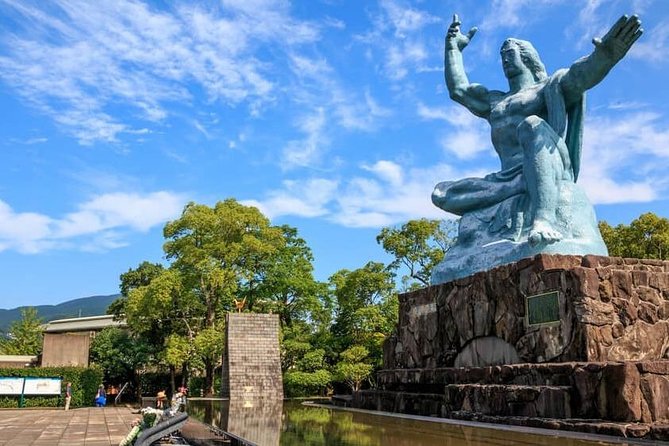
For many people, the most important part of the day is the area around the atomic bomb hypocenter. Nagasaki Peace Park offers a quiet place to think about the bombing of August 9, 1945, which destroyed a large part of the city and killed many people.
A short scheduled stop of 15 minutes at Peace Park is enough for a first look, but not enough if you want to reflect, take photographs, and discuss the site carefully. If this subject matters to you, ask your guide to give it more time and choose fewer additional stops.
The Nagasaki Atomic Bomb Museum is listed with a 30-minute visit. That is a useful introduction, but the museum can leave you wanting more time. Its displays document the bombing, the destruction near the hypocenter, and the city’s recovery. The subject is painful, and you should think honestly about your own energy before placing it early or late in the day.
One family found that the guide made the museum accessible for different ages by using quizzes about Japan and Nagasaki. That detail matters if you are traveling with a child. A good guide can explain difficult events without turning the visit into a dry lecture.
Urakami Cathedral adds another layer to this area. It is a working Catholic church in a large red-brick European-style building, with a tragic past linked to the bombing. You may want to pair it with Peace Park and the museum because the locations speak to one another.
Mt. Inasa for the city’s broadest view
At 333 meters, Mount Inasa gives you a very different Nagasaki experience. From the observation deck, you can look across the city and toward the water, replacing the solemn mood of the Peace Park district with a wide view of the city’s hills and port.
The summit can be reached by ropeway, bus, or car. Since this tour does not include a private vehicle, your guide can help you use public transportation, but you should expect the trip to take part of your six-hour schedule. A previous guest particularly enjoyed riding the gondola to the top.
The listing gives this stop 15 minutes, which is brief for a scenic lookout. If clear views are a priority, ask for more time and consider dropping another stop. Weather matters here, so Mt. Inasa is best treated as a flexible choice rather than a guaranteed highlight.
This is also a good example of why a private tour helps. You can tell your guide that you care more about photographs and views than about visiting another museum. Yoko, for example, was praised for quickly turning a guest’s rough list of interests into a workable route.
Dejima, Glover Garden, and the foreign-trade story
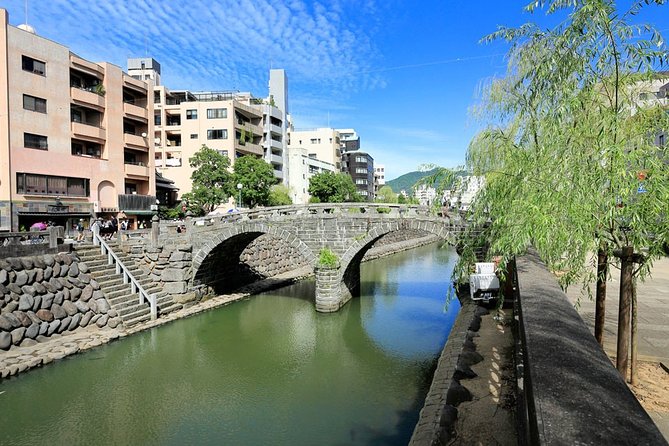
Dejima was a man-made island in Nagasaki’s port. It was created in 1636 to separate Portuguese residents from the Japanese population and control missionary activity. Later, the Dutch used the area during Japan’s long period of restricted foreign contact.
The restored district helps explain why Nagasaki developed a different outlook from many other Japanese cities. Give Dejima more than a quick photograph if you want the buildings and trading history to make sense. Its admission fee is extra.
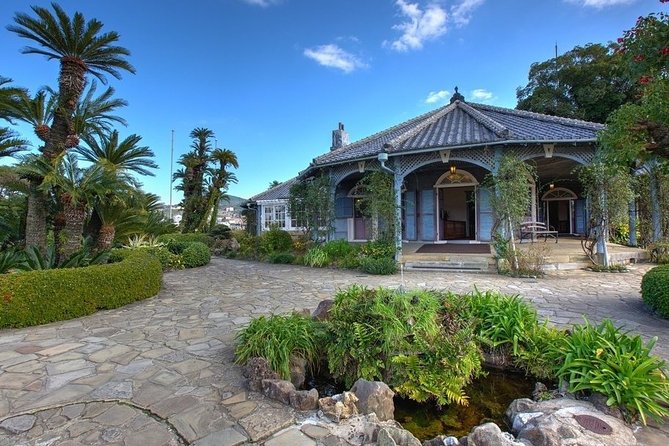
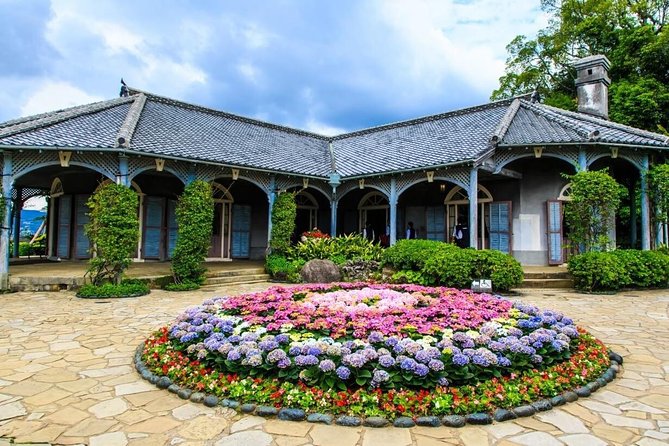
Glover Garden is an open-air museum on a hillside. It preserves the mansions of former foreign residents and other related buildings, in the area where Western merchants lived after Nagasaki opened to foreign trade in 1859.
The setting is one of the attraction’s main pleasures, but the hill also means some uphill walking. Glover Garden is a good choice if you like architecture, port history, and views. It pairs naturally with Oura Church and the Dutch Slope, although choosing all three may leave little time for the Peace Park area.
Oura Church was built in 1864 by a French missionary for foreign merchants. It is one of the city’s clearest reminders of Nagasaki’s Christian history and foreign community. The church has an admission fee, so add that cost when comparing your route.
The Dutch Slope is a stone-paved hillside street where foreign traders lived after the port opened in 1859. It is not a major museum visit, but it gives you a feel for the shape of the old foreign settlement. Ask your guide to include it as a short stop if you are already visiting Glover Garden or Oura Church.
A completely different kind of day out:
- Huis Ten Bosch Ticket
★ 4.7 · 4,465 reviews - Visit Gunkanjima Island (Battleship Island) in Nagasaki
★ 4.0 · 32 reviews - Taste Local Life: Nagasaki’s Historical Street Walking Tour
★ 5.0 · 27 reviews - Nagasaki Street Food Adventure: Private Walking Tour with a Local
★ 5.0 · 26 reviews
Chinese influence in temples and festivals
Nagasaki’s international character was not limited to Europe. Sofukuji Temple was built in 1629 for the city’s Chinese residents and follows the Obaku school of Zen Buddhism. Its Chinese architectural style makes it different from the image many people have of a Japanese temple.
Kofukuji Temple is another major Chinese-founded temple in Nagasaki’s Teramachi, or Temple Town, district. It is described as the oldest and one of the most important temples of its kind in the city, as well as the birthplace of the Obaku tradition.
The route information lists Kofukuji more than once, so confirm the final selection with your guide when planning. A 30-minute visit gives you enough time to see the grounds and hear the main story, but a temple-heavy route may involve stairs and uneven surfaces.
The Confucius Shrine, also called Nagasaki Confucius Shrine, was built in 1893 by Nagasaki’s Chinese community. It is one of only a small number of shrines dedicated to Confucius in Japan. The site offers another way to see the city’s long connection with China.
The festival stop needs a little care. The supplied tour information refers to the Nagasaki Lantern Festival but describes Nagasaki Kunchi, the annual festival of Suwa Shrine held October 7 to 9. Since these are different festival traditions, ask what is operating on your date before building your day around this option.
Meganebashi and the city center
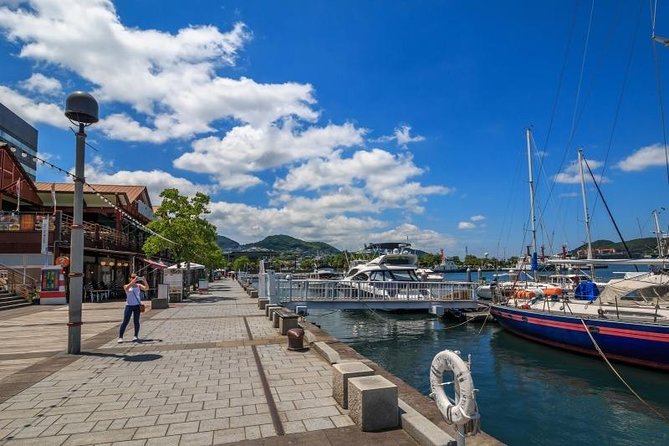
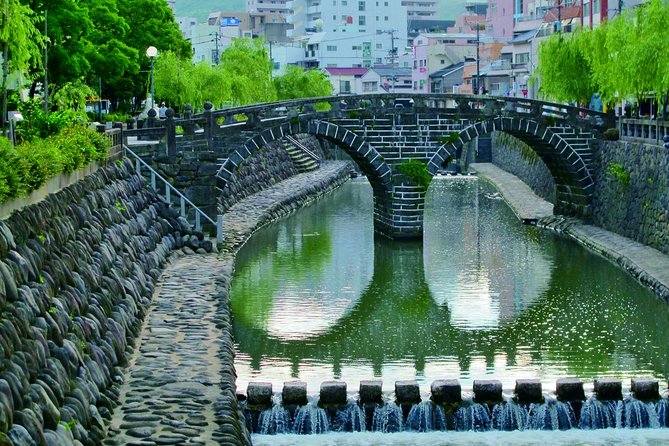
Meganebashi, or Spectacles Bridge, is the most notable of several stone bridges crossing the Nakashima River. Its name comes from the way the bridge resembles a pair of spectacles when reflected in the water.
This is an easy, compact stop and a sensible choice if you want photographs without committing to a long museum visit. It also works well with Kofukuji and the older temple district.
One guest particularly enjoyed combining the Atomic Bomb Museum with Spectacles Bridge and then having a quiet lunch at a small soba restaurant. Lunch is not included, but a private guide can help you make a practical food choice along the route. You pay for your own meal.
Museums and Christian memorials
The Nagasaki Museum of History and Culture focuses on the city’s role as one of Japan’s major international trading centers. It is a strong choice if you want background before seeing Dejima, the foreign settlements, or the Chinese temples.
The Nagasaki Prefectural Art Museum is a modern building by the port. Choose it if art, design, or a calmer indoor stop appeals to you more than another historical site. Its admission fee is extra, and 30 minutes is enough for a brief look rather than a serious museum visit.
The Twenty-Six Christian Martyrs Monument and adjacent museum commemorate 26 Christians executed in Nagasaki on February 5, 1597. This stop gives you an earlier Christian history than Oura Church, which dates from the late Edo period.
It is a thoughtful choice for anyone interested in religious history, persecution, and the long relationship between Japan and Christianity. The listed 30-minute visit gives you an introduction, but you may want to extend it if the museum becomes a main interest.
What $155.22 per person buys you
The price is $155.22 per person for about six hours. That is not a bargain sightseeing ticket, but it can be fair value for a private guide who meets only your party, helps create the route, explains the city, and handles public transport with you.
The value improves for families or small groups because the guide’s attention is not shared with strangers. You can also ask for a slower pace, spend longer at the Atomic Bomb Museum, or change the balance between temples, churches, viewpoints, and museums.
Budget separately for tram and bus fares, ropeway or other transport costs, entrance fees, lunch, and personal expenses. The tour does not include a private vehicle. The information also says guide entry fees are covered only for sights listed in the included sightseeing list, while the general inclusions say entrance fees are not included. Because that wording is not perfectly clear, confirm which admissions, if any, are covered before you pay.
Group discounts are available, but you cannot combine separate tour groups. Only your own party participates, which is useful if your group has particular interests or different walking speeds.
Timing, fitness, and how to shape the day
Six hours can cover three or four well-chosen sites. It cannot give every location on the long list the attention it deserves. The 15-minute times shown for several stops are best understood as short visits, not full explorations.
Nagasaki has hills, and several important places sit on slopes. Public transport reduces some of the effort, but you still walk between stops and through temple, church, park, and museum areas. Most people can participate, and service animals are allowed, but the tour is not presented as a private-car or fully step-free experience.
I would choose one main theme and one contrasting stop:
- War and peace: Peace Park, Atomic Bomb Museum, Urakami Cathedral, and the Twenty-Six Christian Martyrs Monument.
- International Nagasaki: Dejima, Glover Garden, Oura Church, and the Dutch Slope.
- Chinese connections: Sofukuji, Kofukuji, the Confucius Shrine, and Meganebashi.
- A broad first look: Peace Park, Mt. Inasa, Dejima, and one temple or church.
Your guide can adjust the plan. Yoko was praised for being on time, asking what mattered, and quickly producing a route. Other guides were praised for sharing local food knowledge, helping with an unusual anime gift request, and adding unexpected stops such as a cat shrine when the schedule allowed.
The strongest feature: a guide who listens
The most praised part of this experience is not a single monument. It is the guide’s ability to listen and respond.
Several guides are described as friendly, considerate, prepared, and easy to talk with. Hiro helped connect Nagasaki culture, history, and food. Mei made a family walking route easier by using trams. Minnie helped a couple reach the places that interested them most and even shared a Chinese meal with them.
That does not mean every guide will create the same day. Your experience depends on the person assigned, your communication, the weather, and how realistic your site list is. Send your main interests clearly and decide which one or two places deserve extra time.
The rating is 4.9 from 66 reviews, with 97 percent recommending the experience. One written rating was one star even though the accompanying comments were positive, so the numerical record has one clear inconsistency. I would treat the overall picture as very strong, while remembering that a high rating cannot remove the practical limits of a six-hour walking tour.
Should you book the Nagasaki private tour?
Book it if you want help making sense of Nagasaki, prefer a private day to a fixed group schedule, and are comfortable paying extra for transport and admissions. It is especially useful for first-time visitors, families, cruise or short-stay visitors, and anyone who wants a guide to connect the city’s war history with its Chinese, European, and Christian past.
Skip it if you want a cheap hop-on, hop-off day, a private car, or enough time to explore ten or more sights. You can get better value by choosing three places that match your interests, asking for a sensible route, and protecting enough time for the Peace Park or Atomic Bomb Museum if those are your priorities.
Free cancellation is available up to 24 hours before the start time. For the best result, book with a clear plan: tell the guide what you care about, ask which admissions are included, and accept that public transport is part of the day.
FAQ
How long does the Nagasaki private tour last?
The tour lasts approximately six hours.
How many attractions can I choose?
You can customize the tour by choosing three or four sites from the available sightseeing list.
Is this a private tour?
Yes. Only your own group participates, and separate tour groups cannot be combined.
Is hotel pickup included?
A guide can meet you on foot within the designated area of Nagasaki. This is not pickup by private vehicle.
Does the tour use public transportation?
Yes. The experience is a walking and public transport tour, using options such as buses and trams.
Is a private car included?
No. A private vehicle is not included.
Are entrance fees included?
The general information says entrance fees are not included. It also says guide entry fees are covered only for sights listed in the sightseeing section, so confirm the exact admission arrangements before booking.
Is lunch included?
No. Lunch and personal expenses are not included.
Can most people participate?
Most travelers can participate, according to the tour information. Since the tour involves walking and public transport, you should also consider your comfort with hills and transfers.
Can I cancel for a full refund?
Yes, if you cancel at least 24 hours before the experience start time. Cancellations or changes made less than 24 hours before the start time are not accepted for a refund.
Just added in Nagasaki
- Huis Ten Bosch Ticket★ 4.7 · 4,465 reviews
- Nagasaki Private Historical Tour with Licensed Guide★ 5.0 · 13 reviews
- Traditional Kimono Experience in Nagasaki★ 5.0 · 16 reviews
- Taste Local Life: Nagasaki’s Historical Street Walking Tour★ 5.0 · 27 reviews
- Private Ring Craft Experience in Nagasaki★ 5.0 · 14 reviews
- Semi Private Guided Tour of Nagasaki.★ 5.0 · 17 reviews
- Nagasaki Private Customizable Half Day Tour★ 5.0 · 16 reviews
- Nagasaki WW2 History and Culture Tour★ 5.0 · 19 reviews
Private Tours in Nagasaki, compared.
Nagasaki Half-Day Private Tour with Government-Licensed Guide
Read our review →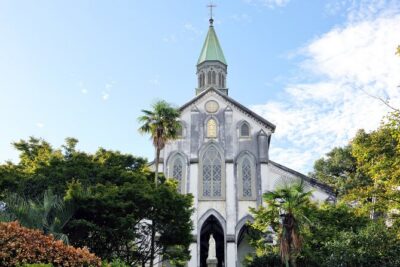
Nagasaki Full Day Tour with Licensed Guide and Vehicle
Read our review →
Nagasaki Street Food Adventure: Private Walking Tour with a Local
Read our review →
Nagasaki Private Tour with a Local – Highlights & Hidden Gems
Read our review →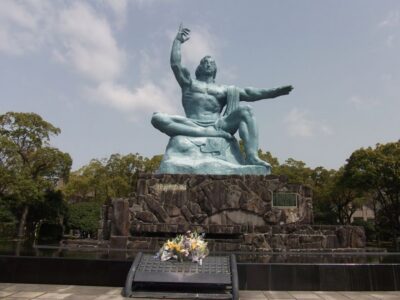
Nagasaki Private Historical Tour with Licensed Guide
Read our review →Browse the lists this tour appears in