
Reviewed · NAGASAKI TOURS
Visit Gunkanjima Island (Battleship Island) in Nagasaki
Some islands tell stories without saying a word. Gunkanjima, also called Battleship Island, is one of them. This short boat tour takes you from Nagasaki to a former coal-mining island that once held more than 5,000 people on a narrow patch of land. I like the included cruise and island admission, and I especially value the digital museum, which helps make sense of the ruins before you see them. The main drawback is clear: English support can be limited, and rough seas may prevent you from landing.
You meet at the Gunkanjima Digital Museum near Nagasaki Port, then travel by boat to Hashima Island, about 20 kilometers offshore. The full experience lasts about three hours, with the museum visit built into the schedule. At roughly $71.85 per person, the price is fair for the boat, museum, island admission, and local assistance, but you should treat landing as a possibility rather than a promise.
In This Review
- Key points to know before booking
- Why Gunkanjima feels so different from ordinary sightseeing
- Starting at the Gunkanjima Digital Museum
- The boat ride across Nagasaki Bay
- Landing on Hashima Island
- The language question for English speakers
- Weather, clothing, and small rules that matter
- Is the $71.85 price good value?
- Who should book this experience?
- Practical booking advice for Nagasaki
- Should you book the Gunkanjima tour?
- FAQ
- Is admission to Gunkanjima Island included?
- Is the Digital Museum included?
- Is an English-speaking guide included?
- Can bad weather stop the island landing?
- What should I wear?
- Where does the tour start and finish?
Key points to know before booking
- Gunkanjima was once Japan’s most crowded island: More than 5,000 people lived on an island only about 480 meters long and 150 meters wide.
- The boat ride is part of the experience: You may see the island from several angles, but landing depends on wave height and weather.
- The Digital Museum adds real context: Plan about 30 minutes to an hour there before boarding, depending on the day’s schedule.
- English assistance varies: Some departures use English leaflets, folders, or a radio guide, while others offer little spoken English.
- You need practical clothing: Flat shoes are required, umbrellas are not allowed, and rain or strong sun can affect your comfort.
- A small extra landing fee applies: Adults pay 310 yen, while youth and children pay 150 yen for Nagasaki City’s island boarding charge.
Why Gunkanjima feels so different from ordinary sightseeing
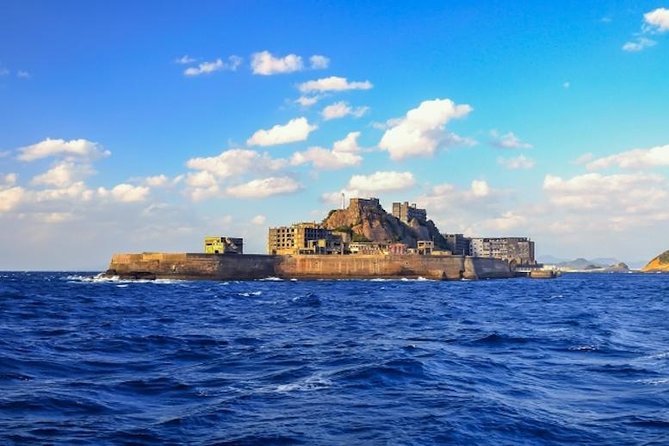
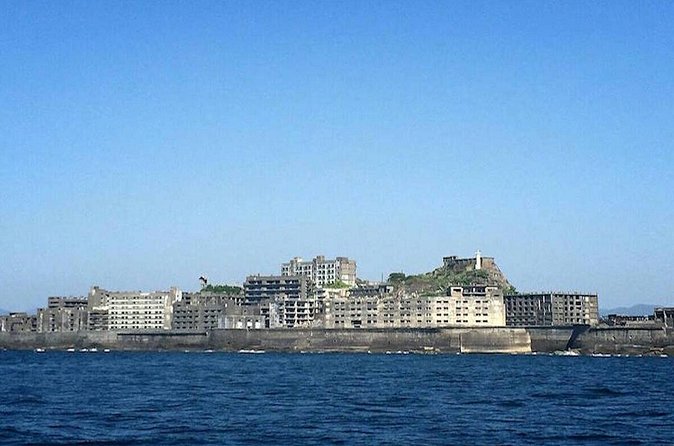
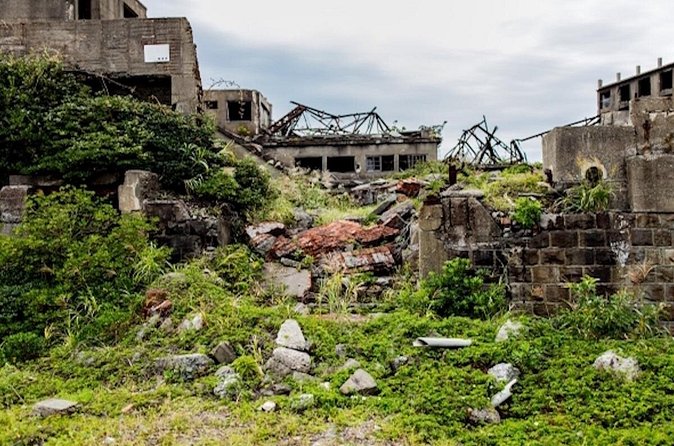
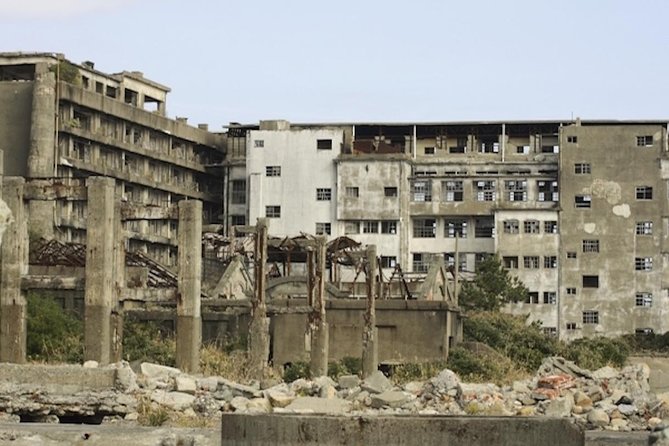
From a distance, Gunkanjima looks like a giant concrete ship. That shape gave it the nickname Battleship Island. Up close, it is a compact mass of abandoned apartment blocks, industrial structures, walls, and damaged buildings, all pressed together on a small island in the sea.
The island’s story is what makes the trip worthwhile. Until 1974, Hashima was a working coal mine. Families lived there, children attended school, and daily life unfolded in a place that had very little spare land. The island included schools, a gym, and a pool, details that help you picture it as a real community rather than a movie set or a pile of ruins.
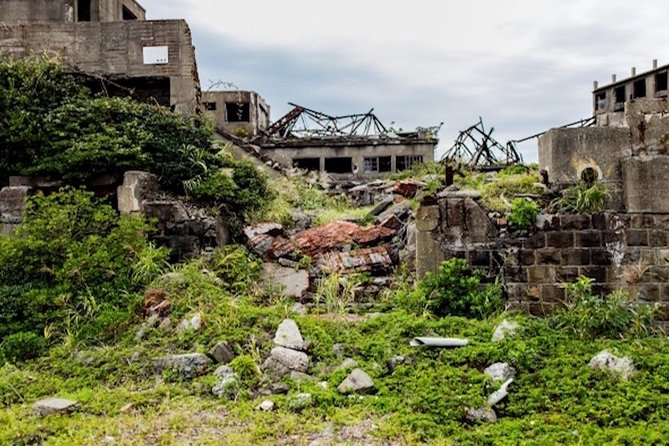
The population density was extraordinary. More than 5,000 people lived within a very limited area, making Gunkanjima one of the most densely populated places ever recorded. Then the mine closed, and the island was abandoned.
That sudden change gives the visit its strange power. You are not looking at ancient ruins slowly worn away over centuries. You are looking at a modern industrial community that emptied in a short period and was left to weather.
The island is also associated with the James Bond film Skyfall. It has appeared in other screen productions as well, including Attack on Titan, but the film connection should be treated as a small bonus. The real subject here is the island’s mining past and the people who lived there.
A few more options to weigh up in Nagasaki
- Huis Ten Bosch Ticket
★ 4.7 · 4,465 reviews - Nagasaki: Private Walking Tour with a Local
★ 4.7 · 79 reviews - Nagasaki Full-Day Private Tour with Government-Licensed Guide
★ 5.0 · 66 reviews
Starting at the Gunkanjima Digital Museum
The meeting point is the Gunkanjima Digital Museum at 5-6 Matsugaemachi in Nagasaki. This is more than a place to wait for the boat. It provides the background that the island itself cannot easily explain.
The museum covers coal mining, island life, and the physical development of Hashima. Digital displays and virtual-reality material can show parts of Gunkanjima that you cannot enter in person. The abandoned buildings are unsafe, so your access on the island is tightly restricted. The museum helps fill in the missing pieces.
Allow roughly 30 minutes to an hour here. The timing can vary, but the schedule may place the museum visit around noon, followed by boarding at about 1:20 p.m. You can also visit the museum again after returning from the island, with one re-entry permitted using the pass issued to you.
I recommend arriving at the meeting point on time and visiting the museum before the boat. It is much easier to understand the concrete blocks from the water when you already know what they were used for.
The museum also matters if you cannot land. Bad weather or high waves can turn the trip into a boat ride around the island. In that situation, the museum becomes the main source of detailed information, and the virtual displays may be the closest you get to certain parts of Hashima.
The boat ride across Nagasaki Bay
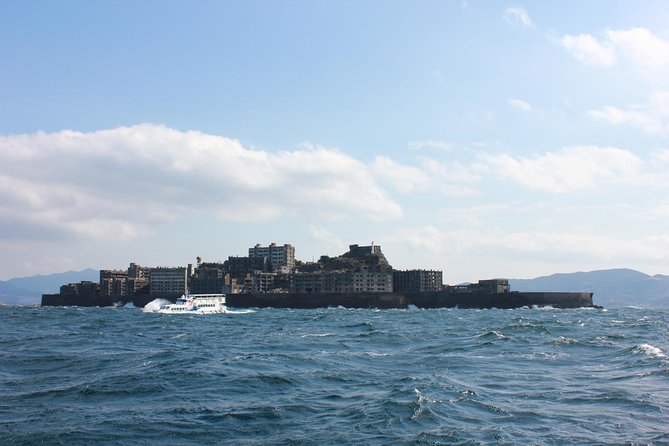
The cruise fare is included, and the boat trip usually takes the largest share of the experience. You get views of Gunkanjima from the water before reaching the landing area, assuming conditions allow a landing.
The seating system can matter. Boarding is first come, first served, so getting to the ship around 1 p.m. is suggested if you want a better chance of choosing your seat. Some boats are modern and comfortable, but seating may not always give you an ideal view. One practical complaint involved facing a toilet door with limited access to the outside.
The best viewing position may change as the boat approaches the island. Staff have sometimes moved passengers toward the back deck for a clearer look and better photographs. The island’s outline becomes more dramatic as you get closer, especially when the apartment blocks and sea walls fill your view.
The ride can be rough. If you are prone to motion sickness, prepare before boarding. One Japanese guide reportedly handed out sweets said to help with seasickness, but you should not rely on that. Bring your own usual remedy if you need one.
The boat commentary is a mixed part of the experience for English speakers. Some departures have offered an English radio guide or written material. In other cases, the main explanation was in Japanese, with an English folder or leaflet provided. A few English-speaking visitors felt they missed important details because there was no live English guide.
You can rent an audio guide locally for an extra fee, but it is not included in this package. If understanding the history in real time is central to your visit, ask about the audio guide when you arrive.
Landing on Hashima Island
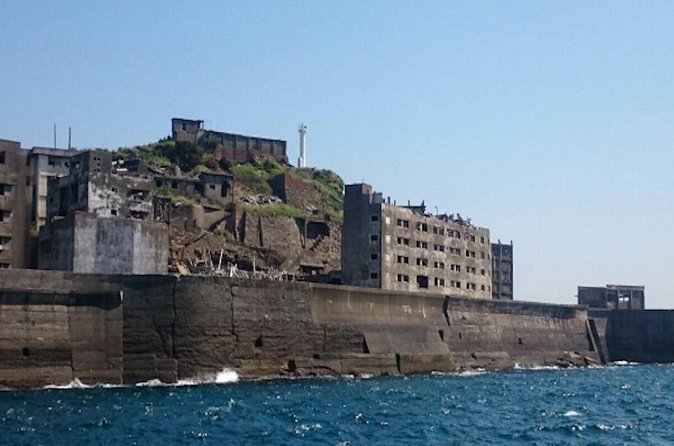
Landing is the moment most people are waiting for, but it is not guaranteed. The ship can only allow shore access when the sea meets safety rules. If wave height exceeds the regulations, you may circle the island without going ashore.
When landing is possible, the visit is controlled and brief. You are limited to designated viewing areas because the abandoned buildings may collapse. Do not expect to wander through apartment blocks, climb structures, or explore the island freely.
That restriction can feel disappointing if you arrive expecting an urban-exploration adventure. It is also the reason the site can be visited safely at all. The designated paths let you look into the island’s remains without treating unstable buildings as a playground.
The three viewing areas give you different angles on the ruins. You may see housing blocks, industrial remains, and the tight arrangement of structures that once supported everyday life. The guide may point out schools, the gym, and the pool, features that show how much infrastructure was packed onto the island.
Photography is a major part of the stop. The concrete buildings, open sea, and narrow viewing platforms create memorable images. Give yourself time to look beyond the dramatic photographs. The more important sight is the scale of the former community and the abrupt end of its working life.
You will likely be moved along with the group rather than allowed to linger wherever you choose. That keeps the tour safe and on schedule, but it can make the island portion feel rushed.
A completely different kind of day out:
- Nagasaki Half-Day Private Tour with Government-Licensed Guide
★ 5.0 · 53 reviews - Taste Local Life: Nagasaki’s Historical Street Walking Tour
★ 5.0 · 27 reviews - Nagasaki Full Day Tour with Licensed Guide and Vehicle
★ 5.0 · 27 reviews - Nagasaki Street Food Adventure: Private Walking Tour with a Local
★ 5.0 · 26 reviews
The language question for English speakers
This is the largest uncertainty in the tour. The experience is not consistently an English-language guided visit.
You may receive a printed English folder, an information booklet, or access to a radio guide. Some staff have taken special care to place English-speaking visitors where the audio signal works well. On other departures, the main narration has been entirely in Japanese, with no live English explanation.
That difference can change the value of the trip. If you mainly want to see Gunkanjima and photograph its unusual ruins, written material may be enough. If you want detailed explanations about mining, housing, Nagasaki’s industrial growth, and the island’s social history, spoken translation or an audio guide will make a major difference.
The digital museum helps reduce this problem because the exhibits provide visual and recorded context. Still, you should not book this as a guaranteed English guided tour unless the operator confirms the language support for your date.
A useful approach is to read the English material before the boat leaves, then use the cruise for the views. That way, you can follow the main story even if the onboard commentary is not translated fully.
Weather, clothing, and small rules that matter
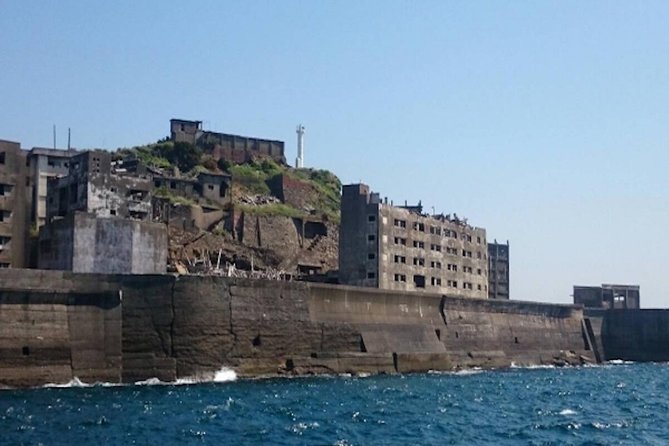
Gunkanjima is exposed to the sea, so conditions can change the entire day. High waves may prevent landing, and poor weather can lead to cancellation or a boat trip around the island instead.
If the operator cancels because of weather, you may be offered another date or a full refund. If the boat circles the island without landing, a gift may be offered as an alternative. That does not replace the main experience, so build some flexibility into your Nagasaki plans if landing is important to you.
Wear flat shoes. Heels are not allowed ashore. Comfortable walking shoes are the sensible choice, even though the permitted route is limited.
Umbrellas and parasols are not allowed on the boat. Bring a raincoat if rain is possible. Raincoats can be bought at reception or onboard for 200 yen, but having one ready saves time.
Sun protection matters too. The island has little shelter in the viewing areas, so use a hat and sunscreen. The same open exposure that gives you clear photographs can make the stop uncomfortable on a hot day.
The tour requires you to sign a boarding pledge. There is also an additional Nagasaki City boarding fee of 310 yen per adult, or 150 yen for youth and children. These charges are separate from the advertised price, so include them in your budget.
Is the $71.85 price good value?
At about $71.85 per person, this is a reasonable package if you can land. You receive the cruise, admission to Gunkanjima, admission to the Digital Museum, and local assistance. Since the island can only be reached by boat, having the transfer arranged saves you the trouble of coordinating the maritime portion yourself.
The value is less certain if you cannot land. You still receive the boat trip and museum access, and the museum can be quite worthwhile on its own. But the central appeal is standing on Hashima, so a no-landing day may feel like a partial experience.
The package does not include food or drinks, hotel pickup, hotel drop-off, the extra landing fee, or an English audio guide. Plan your own meals and make your way to the museum meeting point.
The group is listed as a maximum of 10 people, which should make local assistance easier than on a large coach excursion. Still, the boat may have shared seating and a larger overall passenger group. Do not assume a private boat or private guide.
Who should book this experience?
I would choose this tour if you are interested in industrial history, abandoned places, photography, or the working life behind Nagasaki’s modern development. It also suits film fans who want to see the setting associated with Skyfall, though the movie connection is not the main reason to go.
You should be comfortable with three uncertainties: rough water, possible cancellation or no landing, and uneven English support. The experience asks you to accept those limits in exchange for access to a place that cannot be visited independently.
It is less suitable if you want a relaxed cruise with guaranteed sunshine, a long time ashore, or a fully narrated English tour. The island visit is controlled, the boat can be uncomfortable, and the commentary may not match the language promised in your expectations.
Practical booking advice for Nagasaki
Confirmation is sent within 48 hours, subject to availability, so include a working email address. Weather notices and changes are communicated by email.
The tour ends back at the Gunkanjima Digital Museum meeting point. The information provided gives a completion time of about 5 p.m., even though the core outing is described as approximately three hours. Leave room in your schedule rather than booking a tight connection afterward.
Cancellation terms are strict near the departure date. Cancel at least six full days ahead for a full refund. Cancelling two to six full days ahead may return 50 percent, while cancelling less than two full days ahead brings no refund. Weather cancellation by the operator is treated differently, with a new date or full refund offered.
Should you book the Gunkanjima tour?
Book it if you want to see one of Japan’s strangest historic sites and can accept that nature controls the final result. The Digital Museum, boat approach, and dramatic island views give the tour real value even before you step ashore.
Before paying, confirm the English arrangements for your date and budget the extra boarding fee. If landing is essential, keep your Nagasaki schedule flexible. For the right kind of visitor, Gunkanjima is unforgettable. Just approach it as a carefully managed historic site, not an abandoned island you can freely explore.
FAQ
Is admission to Gunkanjima Island included?
Yes. The package includes the admission fee for Gunkanjima Island, along with the cruise fare and Digital Museum admission.
Is the Digital Museum included?
Yes. Admission to the Gunkanjima Digital Museum is included. The museum visit may take about 30 minutes to an hour, and one re-entry after the boat trip is permitted.
Is an English-speaking guide included?
No English audio guide is included. English support varies by departure. You may receive an English folder, leaflet, or radio guide, and an audio guide may be available to rent locally for an extra fee.
Can bad weather stop the island landing?
Yes. High waves or poor weather may prevent you from going ashore. The tour may instead circle the island by boat, or the operator may cancel the experience.
What should I wear?
Wear flat shoes because heels are not allowed ashore. Bring rain protection if needed, but do not bring an umbrella or parasol onto the boat. A hat and sunscreen are recommended in sunny weather.
Where does the tour start and finish?
The tour starts at the Gunkanjima Digital Museum at 5-6 Matsugaemachi, Nagasaki. It finishes back at the same meeting point.
Just added in Nagasaki
- Huis Ten Bosch Ticket★ 4.7 · 4,465 reviews
- Nagasaki Private Historical Tour with Licensed Guide★ 5.0 · 13 reviews
- Traditional Kimono Experience in Nagasaki★ 5.0 · 16 reviews
- Taste Local Life: Nagasaki’s Historical Street Walking Tour★ 5.0 · 27 reviews
- Private Ring Craft Experience in Nagasaki★ 5.0 · 14 reviews
- Semi Private Guided Tour of Nagasaki.★ 5.0 · 17 reviews
- Nagasaki Private Customizable Half Day Tour★ 5.0 · 16 reviews
- Nagasaki WW2 History and Culture Tour★ 5.0 · 19 reviews
Nagasaki Tours, compared.

Nagasaki Full-Day Private Tour with Government-Licensed Guide
Read our review →
Nagasaki Half-Day Private Tour with Government-Licensed Guide
Read our review →
Nagasaki Full Day Tour with Licensed Guide and Vehicle
Read our review →
Taste Local Life: Nagasaki’s Historical Street Walking Tour
Read our review →
Nagasaki Street Food Adventure: Private Walking Tour with a Local
Read our review →
Nagasaki Private Tour with a Local – Highlights & Hidden Gems
Read our review →Browse the lists this tour appears in