
Reviewed · PRIVATE TOURS IN NAGASAKI
Nagasaki Half-Day Private Tour with Government-Licensed Guide
Nagasaki rewards a flexible plan. This private four-hour tour is interesting because it lets you shape the morning around the places that matter most to you, with a licensed local guide rather than a fixed bus route. I especially like the small private format and the chance to hear personal stories from guides such as Yoshi, Hiromi, Noriko, and Toru. The main caution is simple: this is not a private-car tour, and the $122.20 per-person price does not include transport or entrance fees.
I also like how easily the tour can connect Nagasaki’s major themes: the atomic bombing, Christianity, Chinese influence, Western trade, and everyday city life. A guide can help you fit two or three meaningful sites into four hours instead of rushing through a long checklist.
The tour works best when you decide what you want before meeting your guide. If you expect to see all 16 suggested stops, you will be disappointed. The listed places are choices, not a promise to visit every one.
In This Review
- Key points to know before booking
- What four hours in Nagasaki really gives you
- Peace Park, Ground Zero, and the Atomic Bomb Museum
- Glover Garden and the Western hillside
- Dejima and Nagasaki’s international past
- Sofukuji, Kofukuji, and Chinese Nagasaki
- Christianity and remembrance beyond the bomb sites
- The guides are the real value
- Food, weather, and getting around
- Is $122.20 per person a fair price?
- Who should book this Nagasaki tour?
- Final verdict: a strong choice with one clear condition
- FAQ
- How long does the Nagasaki private tour last?
- How many attractions can I visit?
- Is this a private tour?
- Does the tour include a private car?
- Can the guide meet me at my hotel?
- Are entrance fees included?
- Is transportation included in the price?
- Is lunch included?
- Can I cancel for a full refund?
Key points to know before booking
- Choose two or three main sites: The four-hour schedule is designed for a focused custom route, not a complete city tour.
- Walk and use public transport: Your guide meets you on foot within the designated Nagasaki area. Trams, buses, taxis, and other transport are at your expense.
- Peace sites can be deeply personal: The Peace Park, atomic bomb hypocenter, and Atomic Bomb Museum are handled with care, and some guides bring family connections to the subject.
- Local guides shape the experience: Yoshi, Hiromi, Noriko, Norah, Koko, Hiro, and Toru have all guided visitors on different routes, with strong praise for their warmth and city knowledge.
- Entrance fees are extra: Glover Garden, museums, temples, churches, and other paid sites are not covered in the tour price.
- Cruise passengers can benefit: Guides have met people at Nagasaki Station, hotels, terminals, and the port area, making the tour useful for a short stop.
What four hours in Nagasaki really gives you
Four hours sounds generous until you look at Nagasaki’s hills, tram rides, and spread-out sights. The city is not a place where you can stroll between every major attraction in a neat line. You may walk uphill, wait for public transport, and pause for serious conversations at memorial sites.
That is why the custom format matters. You can focus on the atomic bomb sites, combine Dejima with Glover Garden, or spend the morning on temples and old foreign-settlement streets. Your guide can also adjust the pace for children, older family members, rain, or a strong preference for walking.
The experience is private, so only your own group takes part. That gives you room to ask questions, stop for a photograph, or move on when a site has said what you need it to say. It also means you do not have a larger group to slow down or keep up with.
The published meeting arrangement needs careful reading. Pickup is offered in the sense that the guide can come to your hotel in the morning, but the tour itself is on foot and by public transport. There is no private vehicle included. One unhappy experience appears to have come from expecting a car, so confirm the meeting point and transport plan before the day begins.
More Private Tours in Nagasaki
- Nagasaki: Private Walking Tour with a Local
★ 4.7 · 79 reviews - Nagasaki Full-Day Private Tour with Government-Licensed Guide
★ 5.0 · 66 reviews - Nagasaki Full Day Tour with Licensed Guide and Vehicle
★ 5.0 · 27 reviews
Peace Park, Ground Zero, and the Atomic Bomb Museum
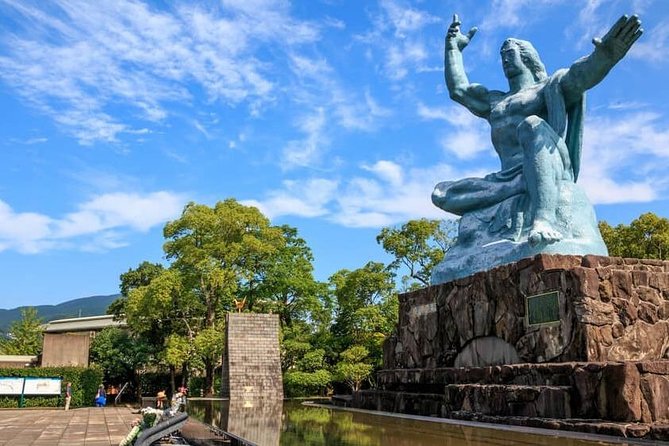
For many people, the morning’s central purpose is Nagasaki’s atomic bomb memorial area. Nagasaki Peace Park provides a quiet setting for remembrance, while the nearby hypocenter marks the location directly connected with the bombing on August 9, 1945.
The Atomic Bomb Museum gives the event historical and human context. It documents the destruction and the city’s recovery, but this is not light sightseeing. You should allow yourself enough emotional space to take in the displays. A 15-minute listing for the museum is only a rough stop marker, not enough time for a serious visit through the exhibits.
Guides can make this part more understandable by explaining what you are seeing and placing the bombing within Nagasaki’s broader story. Yoshi has been praised for sharing a family connection to the bombing, while Toru has also spoken from personal family experience. Those accounts can bring a human voice to a subject that otherwise risks becoming a series of dates and photographs.
One practical route used by groups has combined a tram ride to the Peace Park, the ground zero area, and the museum. That is a good use of the tour if you have only one day in Nagasaki. You can ask your guide to help with the tram route and then continue toward another part of town.
Glover Garden and the Western hillside
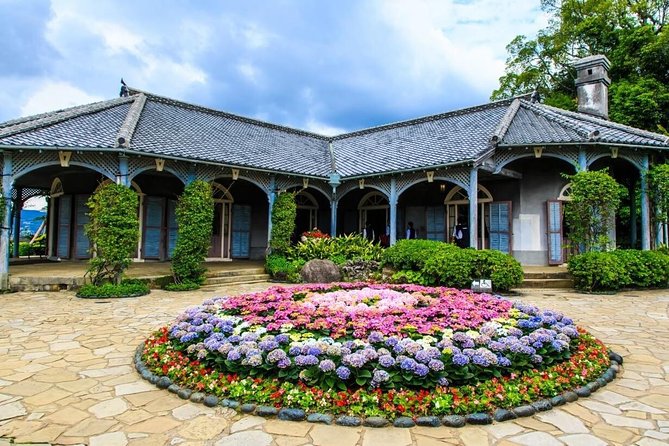
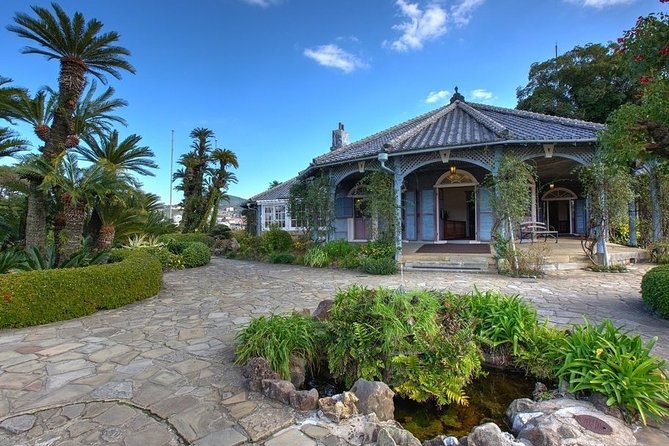
Glover Garden sits on a hillside in the former foreign settlement. The open-air museum includes mansions linked to former foreign residents and offers a look at Nagasaki after the port opened to foreign trade in 1859.
This is a good choice if you want architecture, harbor views, and the story of Japan’s contact with Western merchants. The uphill setting also explains why comfortable shoes matter. A 15-minute stop would let you see the setting, but it would not give you much time for the houses and grounds.
Glover Garden has an entrance fee, and that fee is not included. You should also remember that the site pairs naturally with Oura Church and the Dutch Slope, but trying to fit all three into a short morning may leave you hurrying.
The nearby Oura Catholic Church is another important stop. Built in 1864 by a French missionary for the foreign merchant community, it reflects Nagasaki’s early modern connection with Christianity. The church is sometimes listed twice in the proposed stops, but it is the same attraction, not two separate places.
The Dutch Slope is free to visit. This stone-paved hillside street recalls the period when foreign traders lived in Nagasaki after the port reopened. It is a quick outdoor stop and can work well between larger paid attractions.
Dejima and Nagasaki’s international past
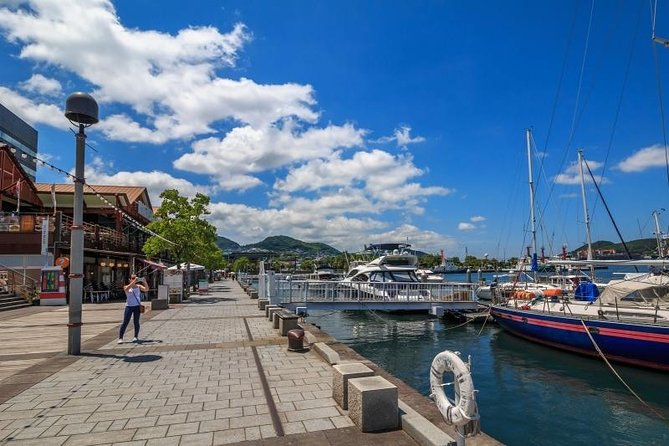
Dejima began as a man-made island built in 1636 to separate Portuguese residents from the Japanese population and control missionary activity. Later, it became associated with Dutch trade and Japan’s restricted foreign contact.
Today, Dejima helps explain why Nagasaki developed a different outlook from many other Japanese cities. It is especially worthwhile if you want to understand trade, foreign influence, and the controlled exchange of ideas during Japan’s long period of limited outside contact.
The site has an entrance fee. Since the tour allows only two or three main choices, Dejima may compete with the Peace Park or Glover Garden for your time. I would pick it if your interests lean toward early international trade, architecture, and the story of Japan’s opening to the world.
The Nagasaki Museum of History and Culture can add more context. It is a modern museum devoted to the city’s role as an international trading center and its connections with foreign visitors. One family chose it along with the Peace Park, the atomic bomb hypocenter, and Chinatown, showing how the tour can be adjusted for different ages and interests.
The museum also requires a separate admission fee. If you are a museum person, it may deserve more than the short stop suggested in the schedule. Ask your guide to help you decide how much time to reserve.
A completely different kind of day out:
- Huis Ten Bosch Ticket
★ 4.7 · 4,465 reviews - Visit Gunkanjima Island (Battleship Island) in Nagasaki
★ 4.0 · 32 reviews - Taste Local Life: Nagasaki’s Historical Street Walking Tour
★ 5.0 · 27 reviews - Nagasaki Street Food Adventure: Private Walking Tour with a Local
★ 5.0 · 26 reviews
Sofukuji, Kofukuji, and Chinese Nagasaki
Nagasaki’s story is not only Japanese and European. Chinese merchants and residents shaped the city for centuries, and Sofukuji and Kofukuji offer two clear ways to see that influence.
Sofukuji is an Obaku Zen temple originally built in 1629 for Nagasaki’s Chinese residents. Its Chinese architectural style makes it different from the temple designs you may see elsewhere in Japan. The grounds and gates are the attraction here, but admission is extra.
Kofukuji is the oldest and one of the most important Chinese-founded temples in Nagasaki. It sits in Teramachi, the city’s temple district, and is linked with the development of the Obaku school of Zen Buddhism.
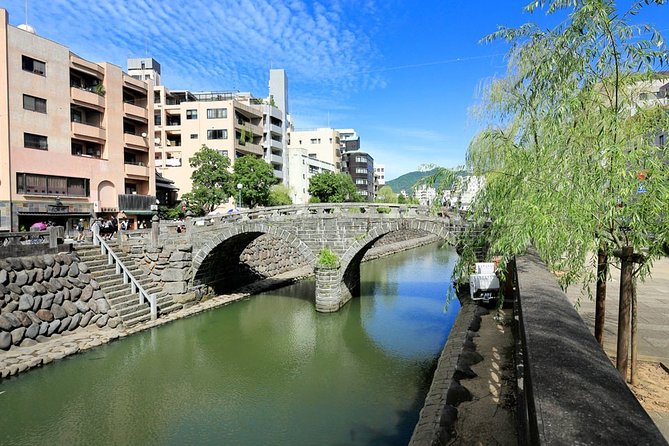
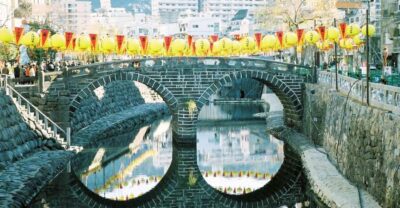
These temples are strong choices for visitors who want a quieter, less solemn side of Nagasaki. They also pair well with Meganebashi, or Spectacles Bridge, downtown. The stone bridge crosses the Nakashima River and gets its name from the reflection of its arches in the water.
Meganebashi is free and takes little time to see. It is an easy addition to a temple-focused route, though wet weather may make the riverside stones less comfortable.
Christianity and remembrance beyond the bomb sites
The Twenty-Six Christian Martyrs Monument and adjacent museum commemorate the 26 Christians executed in Nagasaki on February 5, 1597. This stop adds an earlier layer of religious history and helps explain why Nagasaki is so closely associated with Christianity in Japan.
The monument and museum require an admission fee. The suggested 30-minute stop gives this site more time than most of the other listed attractions, which is sensible if you want to understand the story rather than simply take a photograph.
The Confucian Temple and Chinese Museum of Successive Generations offers another view of Nagasaki’s Chinese connection. It is one of only a small number of Confucian shrines in Japan and was built in 1893 by the city’s Chinese community.
Nagasaki Gokoku Shrine has a different purpose. Gokoku shrines honor people who died for the nation. The shrine’s background changed after World War II, when these sites were no longer administered by the prewar Ministry of the Interior.
Urakami Cathedral is a working Catholic church with a tragic past. Its large red-brick building reflects Nagasaki’s Christian community, while its history is tied closely to the atomic bombing. It can be a meaningful choice for someone who wants to connect religious history with the city’s wartime experience.
The guides are the real value
The biggest strength of this tour is not the number of places you can visit. It is the person walking beside you.
Yoshi appears repeatedly in the feedback, praised for clear English, preparation, flexibility, and a personal connection to Nagasaki. She has met people at hotels, stations, and the port, adjusted routes for rain, helped families with children, recommended local meals, and taught origami to grandchildren during a family outing.
Hiromi has also been praised for asking about children’s interests and warning groups about rainy weather in advance. Noriko helped visitors with transport questions, dining options for vegans, and plans for the rest of their stay. Norah combined the Peace Park and atomic bomb sites with local food, including Nagasaki champon.
Koko met a group directly at the terminal and shared memories of growing up in Nagasaki, including stories connected with her grandparents. Hiro guided a route using trams, the Peace Park, ground zero, and Glover Garden.
These details matter because a licensed guide can do more than recite dates. You can ask how a site connects to modern Nagasaki, how to use the tram, where to eat, or what to see after the tour. The quality will depend on the individual guide, so it is worth communicating your interests clearly before the meeting.
There is one caution. One poor experience involved broken English, a soft speaking voice, and worn visual materials. The wider rating is very strong, at 4.9 from 53 reviews, with 98 percent recommending the experience, but that does not guarantee the same communication style with every guide.
Food, weather, and getting around
Lunch is not included, but guides have recommended or arranged local meals. Nagasaki champon, a noodle dish associated with the city, has been part of family-friendly routes. Another guide helped arrange a traditional Japanese meal, and one group learned about shippoku cuisine, which combines Japanese, Chinese, and Dutch influences.
You should tell the guide about food needs early. One guide helped find vegan dining, which can be useful because suitable choices are not always easy to locate.
Wear comfortable shoes. Even a route with only two or three stops may include hills, stone streets, station transfers, and outdoor walking. Rain can change the pace, so bring suitable clothing and ask about taxi costs if you prefer not to walk in poor weather. Taxis are not included.
The tour operates near public transportation, and most people can participate. Service animals are allowed. The experience is described as a walking and public transport tour, not a private-car excursion, so budget separately for fares.
Is $122.20 per person a fair price?
At $122.20 per person, this is not the cheapest way to see Nagasaki. You also pay entrance fees, transport, meals, and personal expenses. A solo visitor may find the cost hard to justify compared with using public transport and a guidebook.
For two or more people, the calculation improves. You are paying for a private four-hour service, route planning, local interpretation, and the freedom to avoid a fixed group schedule. One group of three found the price comparable to a ship excursion while getting a more personal route and avoiding the larger crowd at the port.
The value is highest when your time is short or your interests are specific. If you want the Peace Park, atomic bomb museum, and Dejima in one morning, a guide can reduce the time spent figuring out transfers. If you want temples, churches, and trade history instead, the route can be built around those subjects.
Group discounts may be available, but the tour cannot combine separate tour groups. Confirm the final cost of transport and admissions before booking.
Who should book this Nagasaki tour?
I would recommend it to first-time visitors with only a morning or a single day in Nagasaki. It is also a good fit for families, cruise passengers, couples, and anyone who wants a local explanation of difficult historical sites.
You should book it if you value conversation more than a packed checklist. You should skip it if you want a private vehicle, a fully guided tour of every listed attraction, or a package with admissions and lunch included.
The tour has free cancellation up to 24 hours before the start time. Changes or cancellations inside that period are not accepted for a refund.
Final verdict: a strong choice with one clear condition
I like this tour because it gives Nagasaki room to be more than a collection of famous sights. You can spend time with the atomic bomb memorials, then shift to Chinese temples, Christian history, foreign trade, local food, or city views.
Book it with a short priority list, comfortable shoes, and a clear understanding that you will walk and use public transport. If you do that, the private format and the guide’s personal connection to Nagasaki can make four hours feel focused, humane, and genuinely useful.
FAQ
How long does the Nagasaki private tour last?
The tour lasts approximately four hours.
How many attractions can I visit?
The tour is designed around your choice of two or three sites from the suggested attractions.
Is this a private tour?
Yes. Only your group participates, and separate tour groups cannot be combined.
Does the tour include a private car?
No. A private vehicle is not included. The tour uses walking and public transportation, and taxis can be arranged at your own expense.
Can the guide meet me at my hotel?
The guide can come to your hotel in the morning, but the service describes pickup as an on-foot meeting within the designated Nagasaki area. Confirm the exact meeting point in advance.
Are entrance fees included?
No. Entrance fees are not included. The guide’s admission is covered only for sights listed under the tour’s expected attractions.
Is transportation included in the price?
No. Transportation fees are not included.
Is lunch included?
No. Lunch and personal expenses are not included, though guides may recommend or help arrange meals.
Can I cancel for a full refund?
Yes. You can cancel at least 24 hours before the experience start time for a full refund. Cancellations or changes made less than 24 hours before the start time are not accepted for a refund.
Just added in Nagasaki
- Huis Ten Bosch Ticket★ 4.7 · 4,465 reviews
- Nagasaki Private Historical Tour with Licensed Guide★ 5.0 · 13 reviews
- Traditional Kimono Experience in Nagasaki★ 5.0 · 16 reviews
- Taste Local Life: Nagasaki’s Historical Street Walking Tour★ 5.0 · 27 reviews
- Private Ring Craft Experience in Nagasaki★ 5.0 · 14 reviews
- Semi Private Guided Tour of Nagasaki.★ 5.0 · 17 reviews
- Nagasaki Private Customizable Half Day Tour★ 5.0 · 16 reviews
- Nagasaki WW2 History and Culture Tour★ 5.0 · 19 reviews
Private Tours in Nagasaki, compared.
Nagasaki Full-Day Private Tour with Government-Licensed Guide
Read our review →
Nagasaki Full Day Tour with Licensed Guide and Vehicle
Read our review →
Nagasaki Street Food Adventure: Private Walking Tour with a Local
Read our review →
Nagasaki Private Tour with a Local – Highlights & Hidden Gems
Read our review →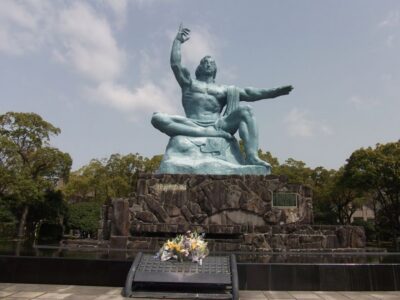
Nagasaki Private Historical Tour with Licensed Guide
Read our review →Browse the lists this tour appears in