
Reviewed · WALKING TOURS
Taste Local Life: Nagasaki’s Historical Street Walking Tour
Nagasaki rewards slow walking. This 3.5-hour tour links Chinese temples, old shopping streets, local snacks, and Spectacles Bridge, with the city tram doing some of the legwork. I like the small-group format, limited to eight people, and the way the route reaches places that can be easy to miss when you focus only on Nagasaki’s major sights. The main drawback is that food, drinks, and private transport are not included, so the $105.42 price covers guiding, temple access, and local knowledge rather than a full tasting tour.
I also like the easy morning start near Nagasaki Station and the mix of quiet temple grounds with the more active Hamamachi Arcade. Guides such as Yuko, Tomomi, Masaaki, and Yuki have been praised for clear English, kindness, and strong knowledge of the city. Still, you should expect plenty of walking, some time on public transport, and occasional difficulty hearing a guide in busy areas without a whisper system.
In This Review
- Key points at a glance
- Why this Nagasaki walk is worth your morning
- Riding the Nagasaki tram from the station area
- Sofukuji Temple and its Chinese design
- Kofukuji Temple and Nagasaki’s unusual connections
- Teramachi-dori and the old shopping streets
- Motenashiya, a useful pause near the bridge
- Spectacles Bridge and the famous heart-shaped stones
- Hamamachi Arcade and the modern city
- The guide can make or break the experience
- Who gets the best value from this tour
- Should you book Taste Local Life?
- FAQ
- Where does the tour begin?
- What time does the tour start?
- How long does the experience last?
- Where does the tour end?
- How many people can join?
- Is transportation included?
- Are temple admission fees included?
- Are food and drinks included?
- What should I wear?
- Can I cancel for a full refund?
Key points at a glance
- Chinese temple architecture: Sofukuji and Kofukuji show Nagasaki’s long connection with Chinese residents and trade.
- Tram ride included: The Nagasaki Electric Tramway gives you a practical introduction to getting around town.
- Eight-person limit: The compact group size allows more room for questions and conversation.
- Local shopping streets: Teramachi-dori and Hamamachi Arcade add everyday city life to the temple visits.
- Spectacles Bridge finish: Meganebashi provides one of Nagasaki’s most recognizable photo stops.
- Morning timing: The 9:00 a.m. departure leaves much of the afternoon free for your own plans.
Why this Nagasaki walk is worth your morning
Nagasaki is not a city you understand from one viewpoint. Its story appears in layers: Japanese Buddhist temples, Chinese influence, old commercial lanes, electric trams, bridges, and modern shopping arcades. This tour works because it places those pieces close together in a manageable half-day route.
You begin at Hotel New Nagasaki, at 14-5 Daikokumachi, close to the station area. That is more useful than a remote meeting point, especially if you arrive by train or are still getting your bearings. The tour then uses the city tram to reach Sofukuji Temple, giving you a little local transport practice along the way.
The tour costs $105.42 per person. That is not a bargain-priced stroll, but the value improves if you want history explained in person and prefer not to sort out the temple route yourself. Admission to the temples and local taxes are included. Food and drinks are extra, and the tour does not include hotel pickup, drop-off, or a private car.
For a couple or small family, the price may feel worthwhile because you receive several hours of guiding rather than a quick photo stop. Solo participants should weigh the cost more carefully. The strongest reason to book is the access to context: the guide connects architecture, local customs, shopping streets, and Nagasaki’s Chinese links in one morning.
More Walking Tours in Nagasaki:
- Nagasaki: Private Walking Tour with a Local
★ 4.7 · 79 reviews - Nagasaki Street Food Adventure: Private Walking Tour with a Local
★ 5.0 · 26 reviews - Kyoto Geisha Walking Tour: Gion District & Hidden Gems
★ 4.7 · 3,273 reviews
Riding the Nagasaki tram from the station area
The first stop is the Nagasaki Electric Tramway Head Office, with about 10 minutes set aside for the tram portion. The tram is one of the city’s simplest ways to move around, and clear signs make it approachable even if you have never used it before.
This short ride matters because it turns transportation into part of the experience. Rather than rushing straight into a temple, you get a practical look at how Nagasaki works. It also saves your legs for the walking sections.
The tour description includes the tram ride as an included admission, but private transportation is not part of the package. That means you should understand this as a public tram journey, not a chauffeured transfer. Keep your shoes comfortable and be ready to walk once you arrive.
Sofukuji Temple and its Chinese design
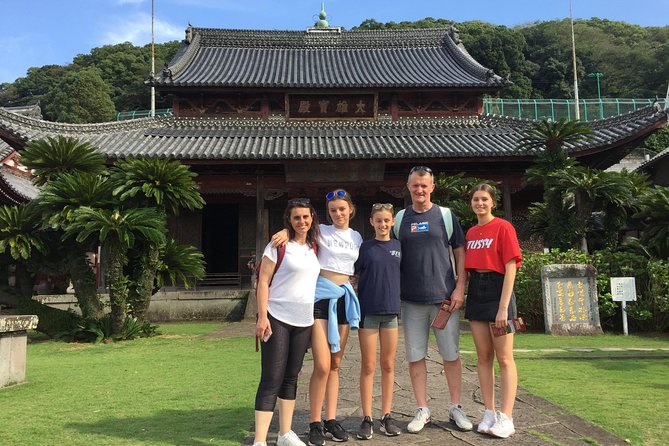
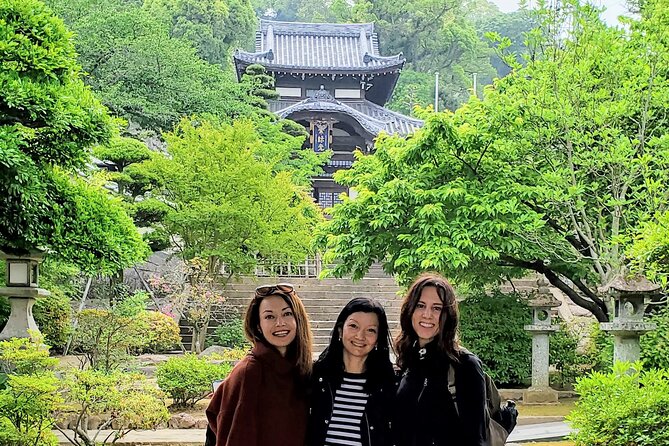
Sofukuji receives about 35 minutes, enough time to look closely without letting the temple dominate the entire morning. Built in 1629 in the Nanchuan architectural style of China, it offers a clear visual reminder that Nagasaki developed through close contact with Chinese communities.
The Daimon Gate and Daeleon Hall, the main hall, are designated Important Cultural Properties and National Treasures. Those designations matter, but you do not need a long lecture to appreciate the place. Look for the shapes, colors, and construction details that set the temple apart from more familiar Japanese Buddhist sites.
A good guide helps here. The strongest feedback about this experience focuses on guides who explain the differences between Chinese-style temples and Japanese religious buildings in plain English. Tomomi, for example, has been praised for explaining temples and shrines with warmth and care. Masaaki has also been singled out for clear English, energy, and historical detail.
Thirty-five minutes is a sensible length. You get an introduction and time to observe, but not an exhaustive temple study. If you want extended photography, quiet meditation, or a detailed architectural survey, this schedule may feel brisk.
Kofukuji Temple and Nagasaki’s unusual connections
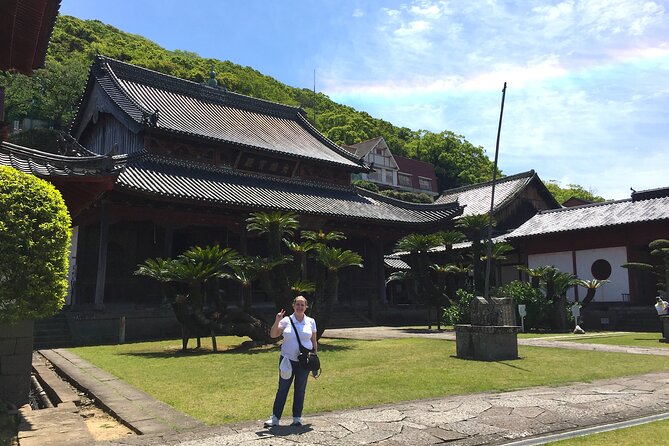
The route continues to Kofukuji Temple, where the planned visit lasts about 50 minutes. This is one of the more interesting parts of the tour because the temple is connected to several local stories, including the introduction of Japanese kidney beans, Mincho kanji characters, and Kofukuji dining tables.
Those details give the visit a wider reach. You are not only looking at a religious building. You are hearing about how ideas, objects, writing, and food moved through Nagasaki. That is the sort of information you can easily miss if you visit only for photographs.
The time at Kofukuji also leads into the old shopping streets. The change in mood is part of the appeal. You move from temple grounds and historic architecture into a commercial area where you can look at shops, snack stands, and ordinary city activity.
The wording around the route describes this as one of Nagasaki’s oldest shopping streets. You should expect a walking visit rather than a formal food crawl. Food and drinks are not included, so bring money if you want to buy a snack. The advantage is choice: you can ask the guide what looks appealing instead of being committed to a fixed menu.
A few more options to weigh up in Nagasaki
- Huis Ten Bosch Ticket
★ 4.7 · 4,465 reviews - Nagasaki Full-Day Private Tour with Government-Licensed Guide
★ 5.0 · 66 reviews - Nagasaki Half-Day Private Tour with Government-Licensed Guide
★ 5.0 · 53 reviews - Visit Gunkanjima Island (Battleship Island) in Nagasaki
★ 4.0 · 32 reviews
Teramachi-dori and the old shopping streets
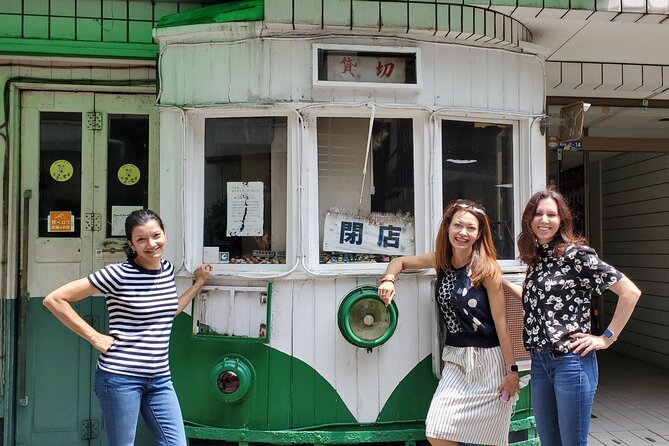
The walking section around Teramachi-dori is where the tour earns its local-life title. The focus shifts from famous monuments to the spaces between them, including shops and small food stops that may not appear on a first-time sightseeing plan.
I like this part because it gives you a chance to ask practical questions. You can learn what local specialties to look for, where the shopping areas connect, and how the temple district fits into the wider city. The tour does not simply move from one landmark to another. It shows how religious sites and commercial streets sit within the same urban fabric.
The pace should suit people who want explanation rather than a strenuous hike. Even so, the physical requirement is listed as moderate, and you should wear shoes that are easy to walk in. The route includes temples, streets, tram access, and later shopping arcades. Anyone with limited walking ability should ask the operator for current route details before booking.
Motenashiya, a useful pause near the bridge
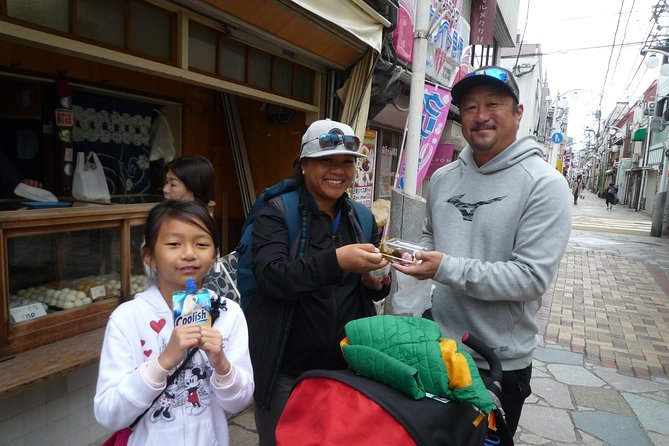
Motenashiya receives about 15 minutes. It is a tourist information center and souvenir shop run by its landlady, located near Meganebashi. You can find maps and sightseeing materials here, along with selected local items.
This stop has a practical purpose. If you are staying in Nagasaki for more than one day, the maps may help you plan the rest of your visit. The stop also gives the guide a natural place to point out nearby sights and explain how the bridge area connects with the shopping streets.
Do not expect a major museum visit or a long shopping session. Fifteen minutes is short. Treat Motenashiya as a helpful orientation stop, not the centerpiece of the tour.
Spectacles Bridge and the famous heart-shaped stones
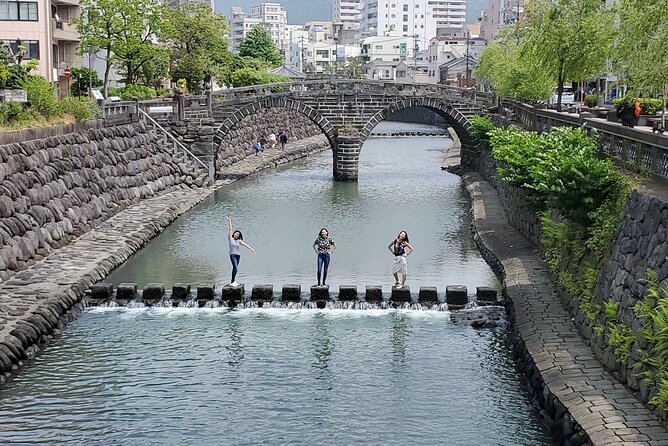
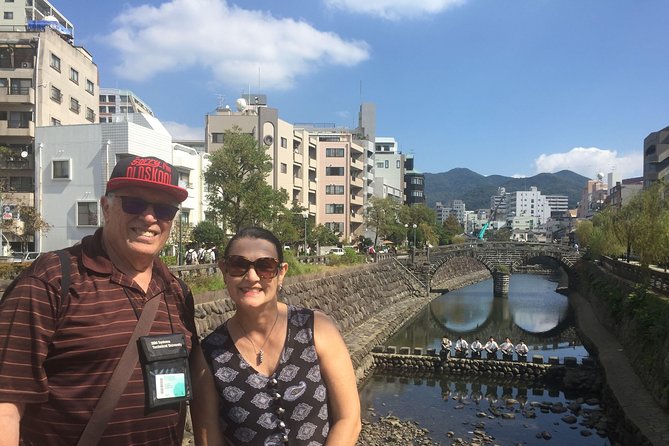
Meganebashi, or Spectacles Bridge, receives about 30 minutes. Built in 1634, it is described as the oldest surviving arcuate stone bridge in Japan. It was once associated with the entrance to Kofukuji for the local Chinese community.
The bridge gets its English name from the reflection of its arches in the water, which can resemble a pair of spectacles. The nearby heart-shaped stone wall adds another popular photo detail. A half-hour gives you time to look, take pictures, and hear why this small crossing matters.
The bridge is a good example of the tour’s scale. It is not trying to turn every stop into a long formal lecture. Instead, the guide supplies enough background for you to recognize the bridge’s role in the city and then lets you enjoy the setting.
Conditions around water and stone surfaces can vary, so sensible footwear helps. The tour information does not promise a specific water level or perfect reflection. Go for the structure, the history, and the photo opportunity, not a guaranteed postcard image.
Hamamachi Arcade and the modern city
The last scheduled stop is Hamamachi Arcade, with about 25 minutes. These long covered shopping arcades stretch for hundreds of meters in different directions and use local emblems and colorful banners in their decoration.
This is an important counterpoint to the temples. Nagasaki is not an open-air historical set. It is a working city, and the arcade shows you where people shop, eat, and spend time today. You can browse stores, compare the atmosphere with the older streets, and note possible places to return later.
The tour ends back at the meeting point, though the stated route description also presents Hamamachi Arcade as the final sightseeing area. Confirm the precise finishing instructions when your booking is confirmed, particularly if you plan a timed train or restaurant reservation afterward. The morning ends around midday, leaving the afternoon available for other Nagasaki sights.
The guide can make or break the experience
This tour depends heavily on the guide. The temples and bridge are worthwhile on their own, but their cultural connections are much easier to understand when someone explains what you are seeing.
The guide team has included Yuko, Tomomi, Masaaki, and Yuki. Yuko has been praised for taking an active interest in the city and for her warm, personal manner. Tomomi has received praise for temple and shrine explanations. Masaaki has been noted for his timing, English, energy, and historical information, while Yuki has been described as friendly and well informed about the different Chinese temple styles.
One useful caution is sound. In a group, it may occasionally be hard to hear every word in a busy street or shopping area. A previous suggestion was the use of whisper-style audio equipment. The group limit helps, but you should stay close to the guide when crossing streets or walking through the arcade.
The supplied details describe the activity as private, with only your group participating, while also giving a maximum of eight people. In practical terms, you should expect a small, compact party rather than a large coach group. If the exact group arrangement matters to you, confirm it before paying.
Who gets the best value from this tour
I would recommend this tour to you if you want a guided introduction to Nagasaki beyond the best-known memorial sites. It suits first-time visitors who want the station area, temples, local streets, and central shopping district connected in one morning.
It is also a good choice if you value conversation. The guide names and comments attached to the experience suggest a personal style, with room for questions and informal explanation. Families, couples, and small groups can benefit from that format, especially when a guide can adjust the emphasis toward food, architecture, or local history.
You may want to skip it if you prefer to move at your own pace. The fixed 9:00 a.m. departure and scheduled stop lengths leave less time for lingering. You should also think twice if your main goal is a food tour, since meals and snacks are not included.
The tour is booked an average of 101 days ahead, so advance planning makes sense. Confirmation is sent within 48 hours, subject to availability. Free cancellation is available up to 24 hours before the 9:00 a.m. start time. Changes or cancellations inside that window are not accepted for a refund.
Should you book Taste Local Life?
Book it if you want context, local transport, and a small-group morning rather than a checklist of major attractions. Sofukuji and Kofukuji provide the strongest cultural content, while the old streets and Hamamachi Arcade keep the experience connected to daily Nagasaki.
The $105.42 cost is easiest to justify when you would otherwise spend time researching the temple route, tram connections, and bridge district yourself. Bring comfortable shoes, budget separately for food and drinks, and keep the afternoon open for independent sightseeing.
If you want a quiet, well-organized introduction to Nagasaki’s Chinese influence and older shopping streets, this is a strong pick. If you want extensive temple photography or a meal-led food tour, choose a slower or more specialized experience instead.
FAQ
Where does the tour begin?
The stated meeting point is Hotel New Nagasaki, 14-5 Daikokumachi, Nagasaki, near Nagasaki Station.
What time does the tour start?
The tour starts at 9:00 a.m.
How long does the experience last?
It lasts approximately 3 hours and 30 minutes.
Where does the tour end?
The activity ends back at the meeting point.
How many people can join?
The experience is limited to eight people and is described as a private activity for your group.
Is transportation included?
The route includes travel by the Nagasaki Electric Tramway. Private transportation by taxi, private car, or bus is not included.
Are temple admission fees included?
Admission tickets for Sofukuji Temple and Kofukuji Temple are included.
Are food and drinks included?
No. Food and drinks are not included in the price.
What should I wear?
Wear shoes that are comfortable and easy to walk in. A moderate level of physical fitness is required.
Can I cancel for a full refund?
Yes. You can cancel at least 24 hours before the local start time for a full refund. Cancellations or changes made less than 24 hours before the start are not accepted for a refund.
Just added in Nagasaki
- Huis Ten Bosch Ticket★ 4.7 · 4,465 reviews
- Nagasaki Private Historical Tour with Licensed Guide★ 5.0 · 13 reviews
- Traditional Kimono Experience in Nagasaki★ 5.0 · 16 reviews
- Private Ring Craft Experience in Nagasaki★ 5.0 · 14 reviews
- Semi Private Guided Tour of Nagasaki.★ 5.0 · 17 reviews
- Nagasaki Private Customizable Half Day Tour★ 5.0 · 16 reviews
- Nagasaki WW2 History and Culture Tour★ 5.0 · 19 reviews
- Nagasaki Street Food Adventure: Private Walking Tour with a Local★ 5.0 · 26 reviews
Walking Tours, compared.
Kyoto Geisha Walking Tour: Gion District & Hidden Gems
Read our review →
Tokyo Tsukiji Fish Market Food and Culture Walking Tour
Read our review →
Gion Magical Night Walking Tour with Geisha Trivia
Read our review →
Imperial Palace and Shogun Historical Walking Tour
Read our review →
Gion Geisha District Walking Tour – Stories of Geisha
Read our review →
Shinjuku Local Bar and Izakaya Guided Walking Tour
Read our review →
Browse the lists this tour appears in