Reviewed · GUIDED
Nikko Private Custom Tour with Local Guide
Nikko rewards curious visitors. This six-hour private tour pairs Japan’s most ornate shrine with a local English-speaking guide who can shape the day around your interests. I like the freedom to focus on Toshogu, temples, mountain scenery, or some mix of all three. I also like the chance to ask questions as you go, instead of trying to decode the site from a guidebook.
The main catch is cost. At $214 per person, this is not a cheap sightseeing day, and entrance fees, lunch, and transportation are extra. You are paying for privacy, planning help, and personal explanation rather than an all-inclusive package.
In This Review
- Key points at a glance
- Why Nikko works so well as a day of culture
- Entering Toshogu and meeting Tokugawa Ieyasu
- Yomeimon Gate and the details worth slowing down for
- The Three Wise Monkeys and the Sleeping Cat
- The Five-Story Pagoda and Edo craftsmanship
- Adding Rinnoji and Futarasan Shrine
- Kegon Falls and Lake Chuzenji
- What the private format is really worth
- How to shape your six hours
- Who should book this Nikko tour?
- Final verdict: a strong choice for personal sightseeing
- FAQ
- Where does this tour take place?
- How long does the Nikko private tour last?
- Is the tour private?
- Is an English-speaking guide included?
- Can I customize the itinerary?
- Are entrance fees and transportation included?
- What is the cancellation policy?
Key points at a glance
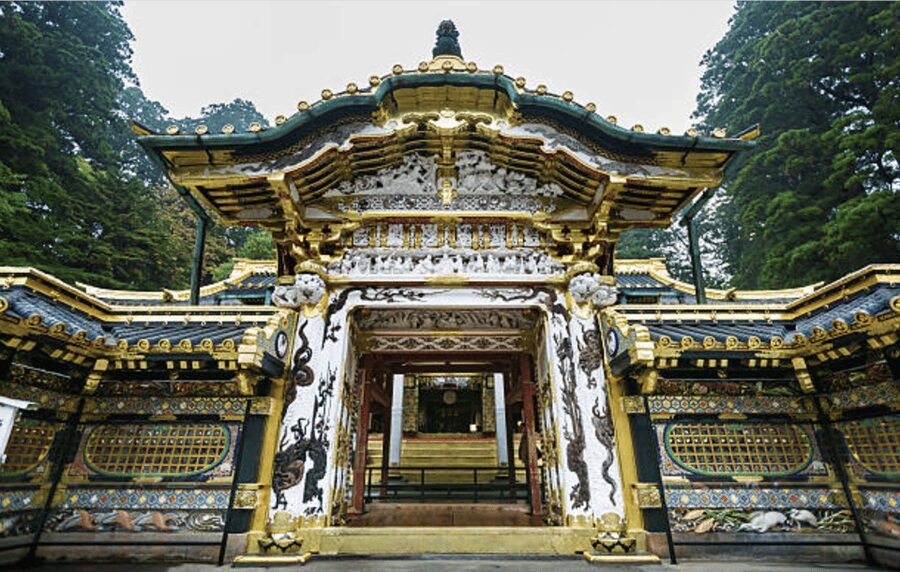
- Toshogu Shrine’s famous carvings: See Yomeimon Gate, the Sleeping Cat, the Three Wise Monkeys, and the red Five-Story Pagoda.
- A private six-hour format: You can adjust the itinerary instead of following a fixed group schedule.
- English-speaking local guidance: Get context about Tokugawa Ieyasu, the Edo period, and the mix of Shinto and Buddhist traditions.
- More than one major sight: Add Rinnoji Temple, Futarasan Shrine, Lake Chuzenji, or Kegon Falls if your timing and priorities allow.
- Costs remain separate: Entrance tickets, your transportation, lunch, personal spending, and the guide’s necessary expenses are not included.
- Best for flexible sightseers: This suits couples, families, and small private groups who value conversation and control over the day.
Why Nikko works so well as a day of culture
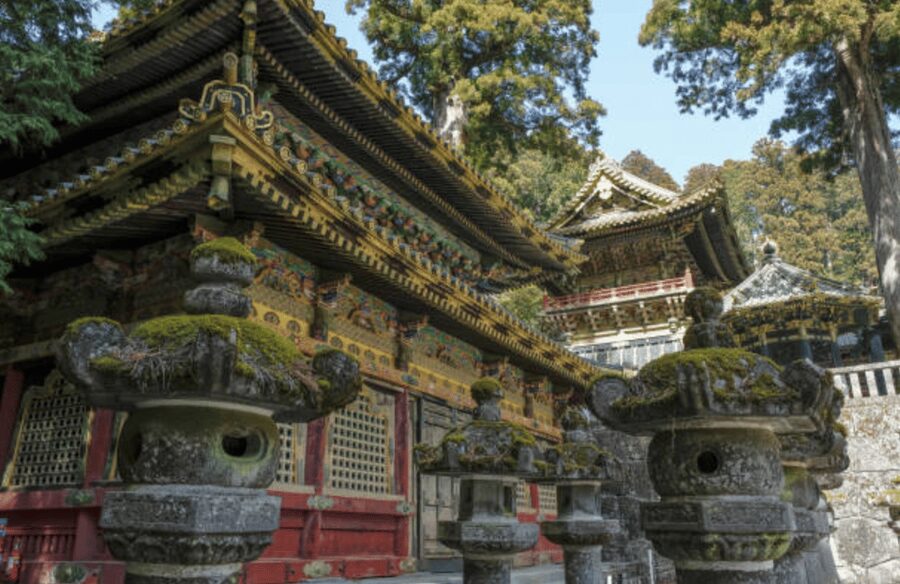
Nikko gives you an unusually strong pairing: grand religious buildings in an old cedar forest, plus mountain scenery nearby. The cultural center is the Toshogu Shrine complex, dedicated to Tokugawa Ieyasu, the founder of the shogunate that ruled Japan for more than 250 years.
That background matters. Toshogu is not simply a pretty shrine. It was built in 1617 as a place of honor for a ruler whose government shaped Japan for centuries. The elaborate decoration reflects political power as much as religious devotion.
I like this tour because a guide can explain the symbols while you are standing in front of them. Without context, the carvings can blur into a long parade of woodwork and painted color. With context, the site becomes easier to read: animals, flowers, sages, gates, and religious forms all carry meaning.
The setting also helps. Ancient cedar trees give the complex a quiet, shaded feel, even when the architecture demands attention. You get a useful contrast between the restrained forest and the highly decorated buildings.
A few more options to weigh up in Japan
- Tokyo 6hr Private Tour with Government-Licensed Guide
★ 5.0 · 3,902 reviews - (Okinawa’s No. 1 Popular Northern Day Trip) Chinese-speaking guide · Includes admission tickets · 1 person can book: Churaumi Aquarium · Cape Manzamo · Kouri Island · American Village
★ 4.7 · 1,846 reviews - Shiraito Falls & Forest Cafe & Handmade Flower Salt Pudding & Grilled Seafood & Totoro Forest & Sakurai Futamigaura & Angel’s Wings & Coconut Tree Swing Day Tour (Departing from Hakata Station, with Mandarin, English, and Cantonese speaking guide)
★ 4.9 · 1,840 reviews
Entering Toshogu and meeting Tokugawa Ieyasu
Toshogu is the natural center of the tour. The complex contains more than a dozen buildings, and many are covered in detailed carvings and strong colors. You should expect to spend real time looking upward, stopping at gates, and comparing one decorative panel with another.
The shrine blends Shinto and Buddhist elements. That combination reflects the religious practice of the Edo period, when the two traditions often existed side by side rather than in sharply separated categories. Your guide can help explain that mixture, which is one of the more useful reasons to choose a private format.
The shrine is dedicated to Tokugawa Ieyasu, whose shogunate brought a long period of rule to Japan. You do not need to arrive as a history expert. A clear explanation of who Ieyasu was and why this shrine received such lavish treatment gives the buildings a much stronger sense of purpose.
The tour is listed as a walking tour, so comfortable shoes matter. Six hours can pass quickly at Toshogu, but walking between the different structures and nearby sites takes energy. You should also remember that your entrance ticket is not included in the tour price.
Yomeimon Gate and the details worth slowing down for
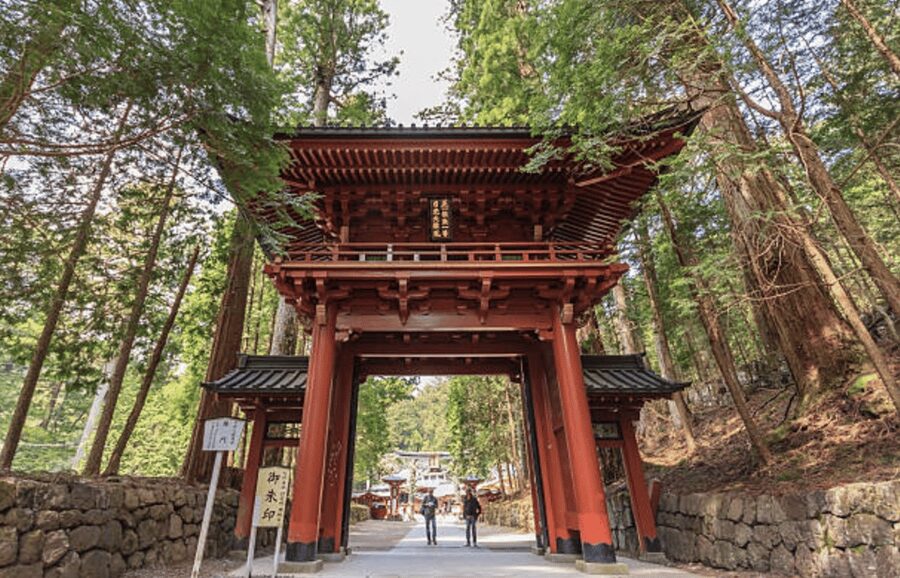
Yomeimon Gate is often the visual star of Toshogu. It is also called the Gate of Sunlight, and it is covered with more than 500 carvings of mythical creatures, flowers, and sages.
This is where a private guide can be especially useful. You can pause at the details that interest you rather than being rushed along with a large group. I would ask your guide to point out the subjects carved into the gate and explain how the decorative program fits the shrine’s purpose.
The gate can feel almost overwhelming at first. There is so much to see that you may need a moment simply to take in the colors and shapes. The value of having someone with you is not just factual information. It is help with deciding what deserves your attention.
Toshogu rewards patience, but it is not a calm, minimalist shrine visit. If you prefer simple wooden buildings and spare design, the ornate decoration may feel excessive. If you enjoy craftsmanship, symbolism, and visual detail, this is likely to be one of the strongest parts of your day.
The Three Wise Monkeys and the Sleeping Cat
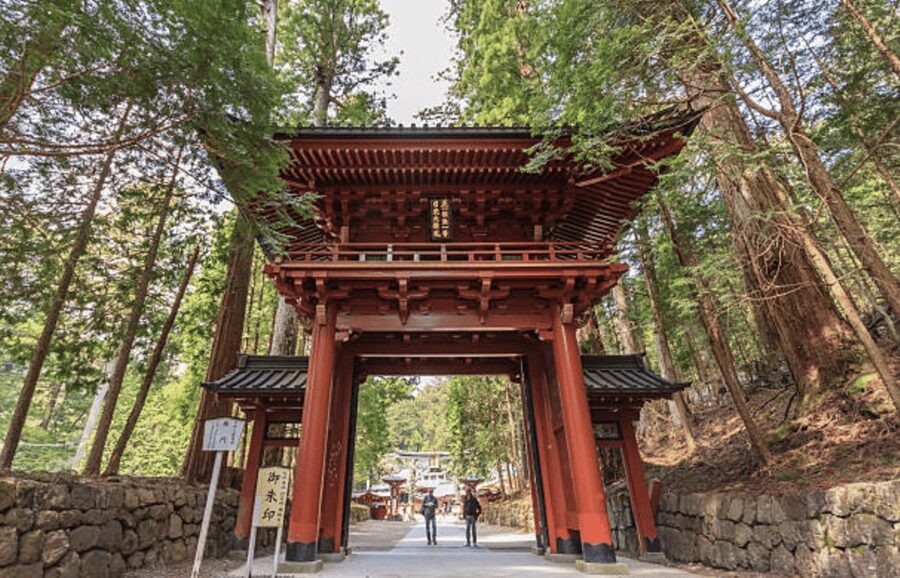
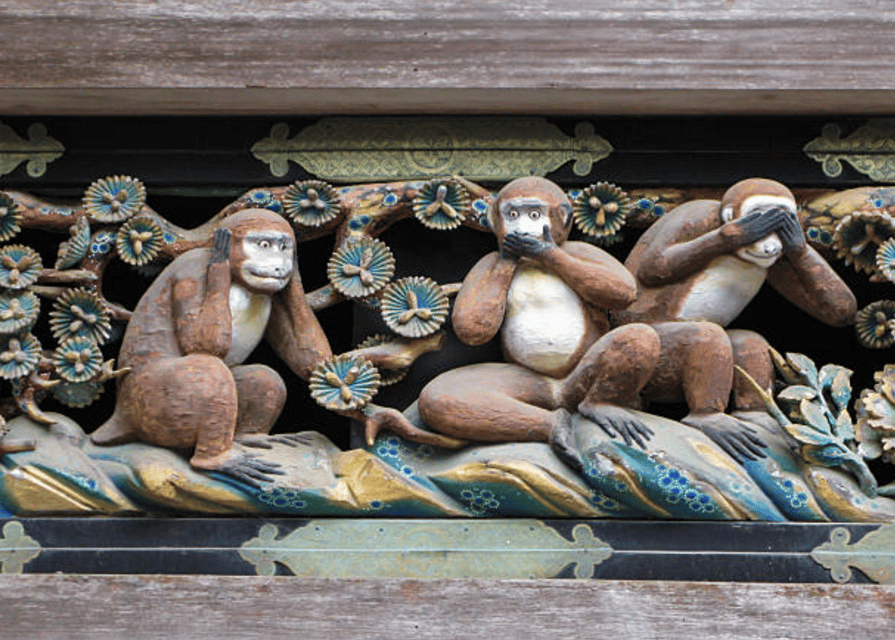
Two small carvings have become especially famous. The Three Wise Monkeys represent see no evil, hear no evil, and speak no evil. They are connected with an ethical code associated with the Edo period.
The image is easy to recognize, but the surrounding meaning is worth hearing from a guide. Rather than treating it as a quick photo stop, you can ask how the carving fits the wider moral ideas presented at Toshogu.
The Sleeping Cat, or Nemuri-neko, is located above the Kuguri-mon Gate. It symbolizes peace and tranquility. Its small size creates a useful lesson in shrine sightseeing: the most celebrated feature is not always the largest one.
You may find yourself searching for the carving among much grander structures. A guide can help you locate it and explain why it matters. That kind of practical assistance is one of the clearest benefits of this private tour.
A completely different kind of day out:
- Tokyo Disney Resort – Tokyo Disneyland & Tokyo DisneySea Park Tickets
★ 4.8 · 99,488 reviews - Universal Studios Japan Studio Pass
★ 4.8 · 89,883 reviews - Universal Studios Japan Express Pass
★ 4.7 · 53,138 reviews - SHIBUYA SKY Ticket
★ 4.7 · 46,509 reviews
The Five-Story Pagoda and Edo craftsmanship
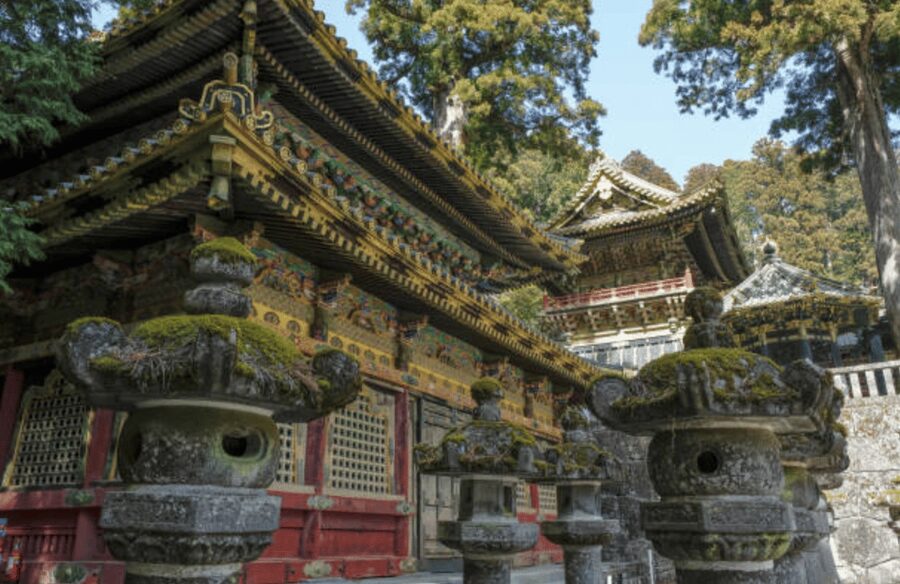
The red Five-Story Pagoda offers another change of scale. Its height and color make it easy to spot, while its detailed decoration shows the architectural skill of the Edo period.
The pagoda also gives you a chance to step back from the smaller carvings and consider the full design of the complex. Toshogu is built to create visual impact through gates, towers, halls, and forest paths. I like the way the pagoda helps you see that larger arrangement.
Your guide can connect the pagoda to the wider religious setting, including the relationship between Shinto and Buddhist traditions. Since the tour is private, you can spend more time on architecture if that is your interest, or move on sooner if you are more interested in the surrounding shrines and scenery.
Adding Rinnoji and Futarasan Shrine
The custom itinerary can include nearby attractions, subject to your available time and chosen priorities. Rinnoji Temple is noted for its three large gold-lacquered wooden Buddha statues.
Rinnoji offers a different visual and spiritual experience from Toshogu. The Buddha statues shift your attention indoors and toward religious sculpture, while Toshogu focuses heavily on gates, carvings, and public ceremony. Seeing both helps you understand that Nikko’s sacred area is not one single monument.
Futarasan Shrine is dedicated to the deities of the Nikko mountains. Its focus gives the day another layer, linking religious practice with the surrounding peaks and natural setting.
You should discuss your priorities early. Six hours is enough for a well-shaped visit, but it is not enough to explore every possible stop at length. If Toshogu is your main goal, adding too many sites may leave each one feeling hurried. If you have already seen Toshogu or prefer variety, Rinnoji and Futarasan can make the day feel more balanced.
Kegon Falls and Lake Chuzenji
Nikko is not only about temples and shrines. Kegon Falls and Lake Chuzenji offer the major nature stops named for this tour.
Kegon Falls brings a dramatic change from carved gates and religious buildings. Lake Chuzenji adds open mountain scenery and a slower visual rhythm. Together, they can provide a refreshing counterpoint to the dense detail of Toshogu.
The practical issue is time. These attractions are part of the wider Nikko area, so your guide will need to shape the route around what you want to see. The tour description does not promise that every cultural and natural stop will receive equal time. You should treat the itinerary as a planning conversation, not a guarantee of a full visit to every location.
That flexibility is valuable if you already know your preferences. You can ask for a day focused on architecture and religion, or try to combine the major shrine with nature. Just keep your expectations realistic. The more stops you add, the less time you have at each one.
What the private format is really worth
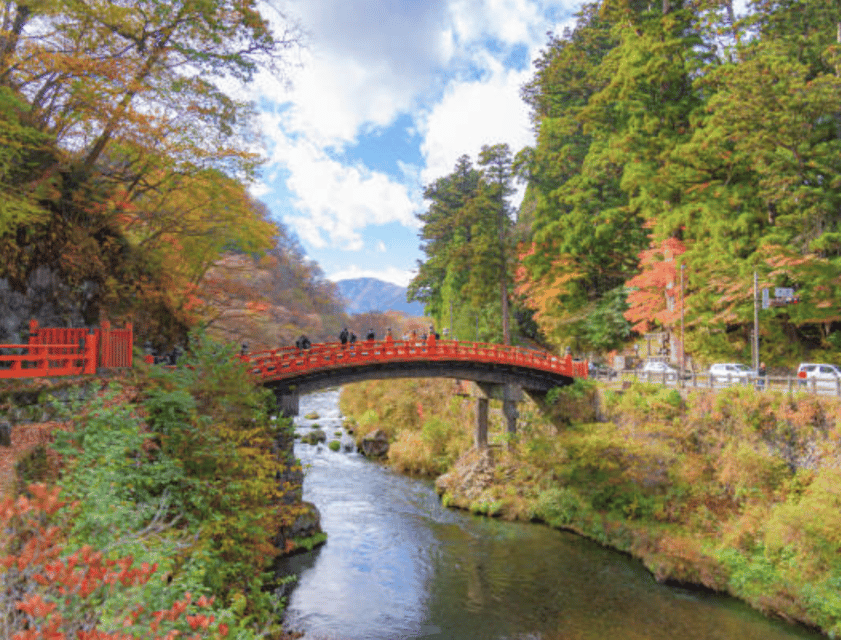
The tour includes a private guide, a walking tour, English-language service, and a customizable itinerary. It does not include private transportation, your transportation costs, entrance fees, lunch, personal expenses, or the guide’s necessary expenses during the tour.
That distinction is important. The $214 per-person price should not be compared with the cost of a bus excursion that includes admission or transport. You are paying for a personal touring service, but you still need to budget for the rest of the day.
I see the strongest value for people who want to ask questions and avoid a fixed group schedule. A private guide can adjust the pace, explain details that catch your eye, and help you choose between cultural and natural sights.
The value is weaker if you only want basic transport from one attraction to another. Since private transportation is specifically excluded, this is not a private car tour with every transfer handled for you. Read the inclusions carefully before booking.
For two people, the price can feel substantial. For a family or private group, the cost may make more sense if the per-person rate allows everyone to share the same guide and plan. The supplied information does not specify how the group size affects the final price, so check the booking details before committing.
How to shape your six hours
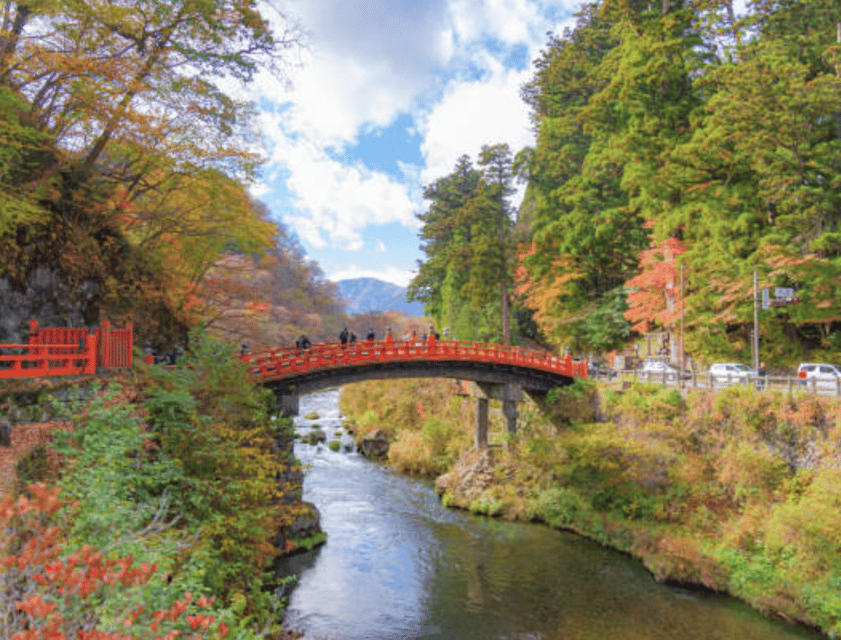
I would begin with Toshogu as the fixed point. It is the main reason to visit Nikko on this experience, and its carvings deserve time rather than a quick pass through.
Next, choose one direction:
- Add Rinnoji and Futarasan for a stronger religious and architectural focus.
- Add Kegon Falls and Lake Chuzenji for a cultural and natural mix.
- Keep more time at Toshogu if you want detailed explanations and a slower pace.
Tell the guide what matters to you at the start. You might care most about Japanese history, religious traditions, architecture, photography, or scenery. A custom tour works best when you give the guide a clear idea of your interests instead of waiting for the day to shape itself.
Lunch is not included, so plan for that expense as part of your budget. The tour information does not name a restaurant or promise a meal stop. Ask about timing if lunch matters to your schedule.
Who should book this Nikko tour?
I would recommend it to you if you want a private, conversation-based visit and you enjoy learning the meaning behind what you see. It is especially useful for couples, families, or private groups with different interests, since the itinerary can be adjusted.
It also suits you if this is your first visit to Nikko and you want help sorting the major sights. Toshogu alone can be difficult to absorb without a plan, and the nearby temples, shrines, lake, and waterfall create plenty of choices.
I would hesitate if you want a low-cost package with transport and admission included. I would also hesitate if you prefer to explore independently with no set guide fee. The private format has clear advantages, but those advantages come with a higher starting price and several extra costs.
The free cancellation policy allows a full refund when you cancel up to seven days in advance. That gives you some planning room, but cancellations inside that window are not covered by the stated policy.
Final verdict: a strong choice for personal sightseeing
The Nikko Private Custom Tour with Local Guide is best understood as a flexible guided visit, not an all-inclusive day trip. Its main strengths are personal attention, English-language explanation, and the ability to choose between Toshogu’s ornate buildings, nearby religious sites, and the mountain scenery around Lake Chuzenji and Kegon Falls.
I like the focus on details such as Yomeimon Gate, the Three Wise Monkeys, the Sleeping Cat, and the Five-Story Pagoda. I also like having the freedom to set the pace. The main drawback is the price, especially once transport, admissions, lunch, and other expenses are added.
Book it if you value insight and flexibility more than a bargain price. Skip it if you mainly need a ride or a simple self-guided visit. For the right kind of visitor, a private guide can turn Nikko from a collection of beautiful buildings into a place you understand.
FAQ
Where does this tour take place?
The tour takes place in Nikko on Honshu, Japan. The main attraction is Nikko Toshogu Shrine, with possible stops at nearby sites such as Rinnoji Temple, Futarasan Shrine, Kegon Falls, and Lake Chuzenji.
How long does the Nikko private tour last?
The tour lasts six hours. Starting times are subject to availability.
Is the tour private?
Yes. The experience is offered for a private group rather than as a shared group tour.
Is an English-speaking guide included?
Yes. The tour includes an English-speaking local guide, and English is the listed tour language.
Can I customize the itinerary?
Yes. The itinerary can be customized, allowing you to choose how to spend your time among Toshogu Shrine and the surrounding attractions.
Are entrance fees and transportation included?
No. Entrance fees, your transportation costs, private transportation, lunch, personal expenses, and the guide’s necessary expenses during the tour are not included.
What is the cancellation policy?
You can cancel up to seven days in advance for a full refund.
Just added in Japan
- A One-of-a-Kind Sushi Experience in a Special Place of Japan★ 5.0 · 15 reviews
- Tokyo Cute Bento Cooking Class – Make a Kawaii Character Lunchbox★ 5.0 · 126 reviews
- Japanese Home Cooking Class & Walk in Todoroki Temple Tokyo★ 5.0 · 88 reviews
- Japan Tokyo Tower Observatory Deck E-Ticket★ 4.0 · 34 reviews
- Catch a Baseball Game in Tokyo with a Local – Tickets Included★ 5.0 · 24 reviews
- JDM Experience with Fast&Furious RX-7 (English speaking Driver)★ 5.0 · 57 reviews
- Tokyo Private Day Tour by Car with English speaking Driver Guide★ 4.0 · 29 reviews
- Japan Classic 10 Day – One Life Adventures★ 5.0 · 129 reviews
Guided, compared.
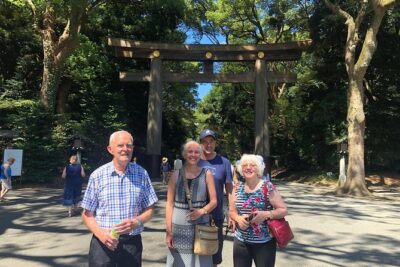
Tokyo 6hr Private Tour with Government-Licensed Guide
Read our review →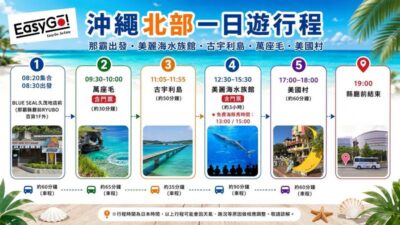
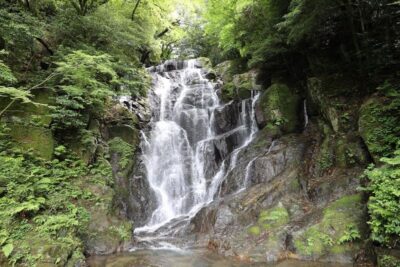
Shiraito Falls & Forest Cafe & Handmade Flower Salt Pudding & Grilled Seafood & Totoro Forest & Sakurai Futamigaura & Angel’s Wings & Coconut Tree Swing Day Tour (Departing from Hakata Station, with Mandarin, English, and Cantonese speaking guide)
Read our review →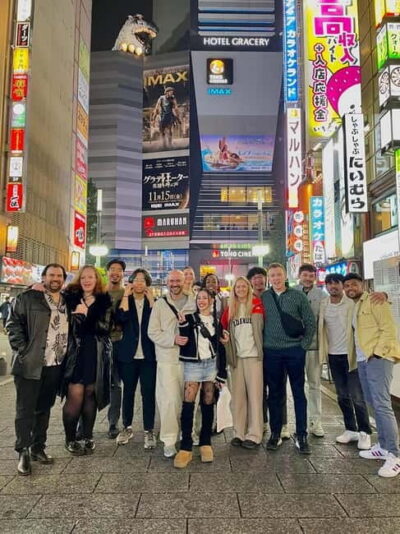
Shinjuku Local Bar and Izakaya Guided Walking Tour
Read our review →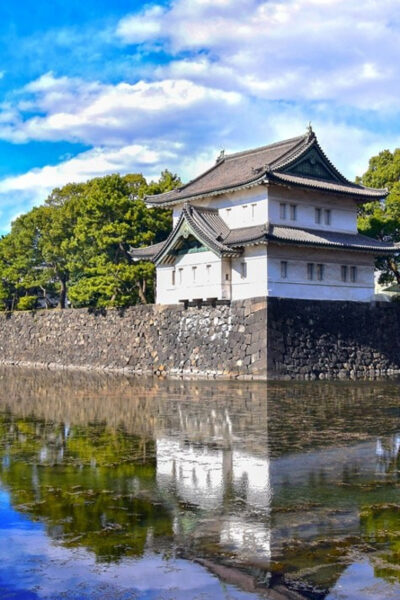
Private City Highlights Tour with Local Guide
Read our review →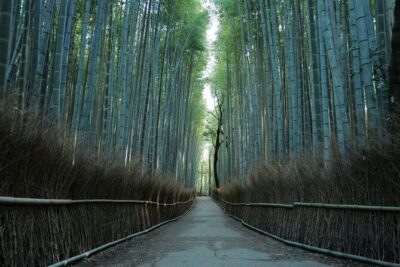
Kyoto Early Morning Tour with English-Speaking Guide
Read our review →