
Reviewed · TEMPLES AND SHRINES
Osaka/Kyoto: Arashiyama, Nara Park, Fushimi Shrine Tour
Small price, very full day. This Osaka and Kyoto tour links three major sights in one 10-hour outing: Arashiyama’s bamboo paths, Nara Park’s free-roaming deer, and Fushimi Inari’s famous red torii gates. I especially like the efficient route between Osaka, Kyoto, and Nara and the fact that transport, fuel, tolls, and parking are included.
I also like the generous sightseeing stops, with about two hours in Arashiyama, 80 to 90 minutes in Nara, and roughly 80 to 90 minutes at Fushimi Inari. The main drawback is the amount of time spent on the road. You are dependent on the bus schedule, traffic, and a strict departure time, so independent visitors who are comfortable with trains may find public transport faster and more flexible.
In This Review
- Key points at a glance
- How the Osaka and Kyoto schedule works
- Arashiyama at 10:00: bamboo, river views, and a quick start
- Nara Park around midday: sacred deer and open green space
- Fushimi Inari after 15:20: the red gates in a sacred setting
- What the guide service really provides
- Shared transport, traffic, and the value of $51
- Who will enjoy this day trip most
- Practical advice for making the day work
- Should you book this tour?
- FAQ
- How long is the tour?
- Where can I join the tour?
- Which places does the tour visit?
- How much free time is available at each stop?
- What languages are available?
- Are meals included?
- Is the tour wheelchair accessible?
- Can I cancel the booking?
Key points at a glance
- Three major sights in one day: Visit Arashiyama, Nara Park, and Fushimi Inari without arranging separate train journeys.
- Morning arrival in Arashiyama: The day begins there at about 10:00, when the area may feel less crowded than later in the day.
- Over 1000 deer in Nara Park: You can walk among deer regarded as sacred messengers and connected with more than 1,300 years of local tradition.
- A short but useful Fushimi Inari visit: About 80 to 90 minutes gives you time for the lower torii path, though not a full mountain walk.
- Shared, lightly guided transport: Chinese is the main tour language, with English, Japanese, and Korean support dependent on arrangements.
- Good cancellation flexibility: You can cancel up to 24 hours before departure for a full refund, and reserve now while paying later.
How the Osaka and Kyoto schedule works
You can join this tour from Kyoto Station’s Hachijo-guchi sightseeing bus area or from the Dotonbori area in Osaka. The listed schedule gives an 8:00 departure from Osaka, a 9:20 departure from Kyoto, and arrival in Arashiyama at about 10:00.
The return is planned for around 17:00 in Kyoto and 18:00 in Osaka. That sounds tidy on paper, but the day involves a long loop: Osaka, Kyoto, Arashiyama, Nara, Fushimi Inari, Kyoto, then Osaka. If you board in Osaka, the bus journey takes a substantial part of your day.
That tradeoff is the central question. For $51 per person, you are paying for one vehicle, fuel, tolls, parking, and a coordinator who keeps the group moving. You are not paying for long, detailed talks at every temple or shrine. The tour supplies the framework; you explore each stop on your own.
The bus can be a sensible choice if you are staying in Osaka, want to see several headline sights quickly, or prefer not to puzzle out multiple rail connections. It is less attractive if your main goal is saving time. A public transport plan can be quicker, though it requires more planning and separate fares.
More Temples and Shrines in Osaka
- Osaka: Katsuo-ji Temple
★ 4.9 · 996 reviews - Osaka: Minoh, Katsuoji Temple, & Minoh Falls Full-day Tour
★ 4.9 · 172 reviews - Sagano Romantic Train & Arashiyama, Kiyomizudera, Fushimi Inari Taisha Day Tour
★ 4.5 · 171 reviews
Arashiyama at 10:00: bamboo, river views, and a quick start
Arashiyama is the first sightseeing stop, with about two hours of free time. That is a useful length for seeing the bamboo forest, walking around the main area, and reaching Togetsukyo Bridge for the classic river view.
The bamboo trails are the visual star. Tall green stalks line the paths and give the walk a calm, enclosed feel, even though this is one of Kyoto’s best-known sightseeing districts. Your early arrival matters. The schedule places you in Arashiyama before the busiest part of the day, although the site can still be crowded.
Togetsukyo Bridge gives you a broader view after the narrow bamboo paths. The surrounding scenery changes with the seasons, which is why the bridge remains a popular stop throughout the year. I would use the first few minutes to get oriented, then head directly toward the bamboo grove before wandering near the bridge.
Two hours is enough for a focused visit, not a leisurely exploration of every corner. You should not expect time for a long restaurant meal, extensive shopping, or a slow visit to several additional temples. Meals are not included, and eating on the move can be awkward because food is not allowed inside the vehicle.
The tour provides only a basic overview rather than professional guiding at the attractions. That makes a little advance reading worthwhile. Know what you want to see before you arrive, and you will spend less of your short stop checking maps.
Nara Park around midday: sacred deer and open green space
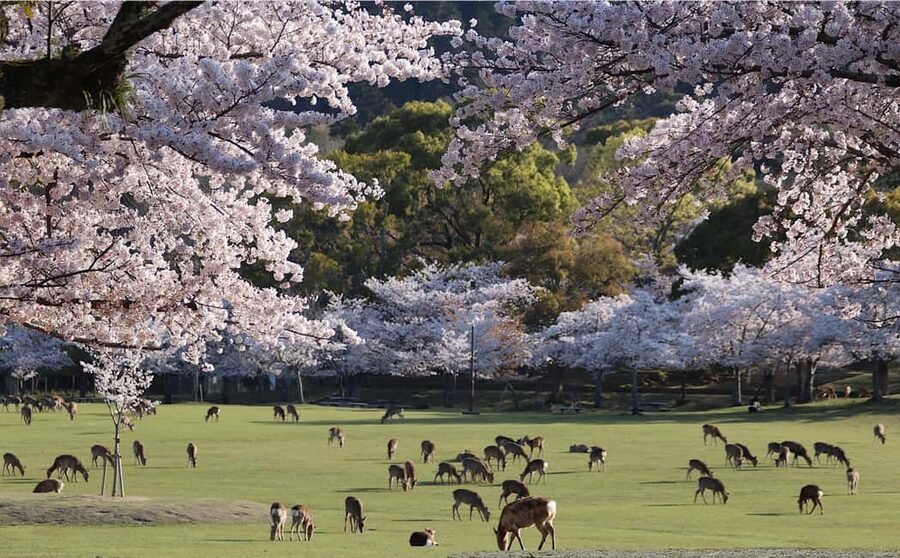
The bus reaches Nara at about 13:15, with approximately 80 to 90 minutes at Nara Park. The published details vary slightly between 80 minutes and one hour 30 minutes, so treat this as a short visit rather than a fixed promise.
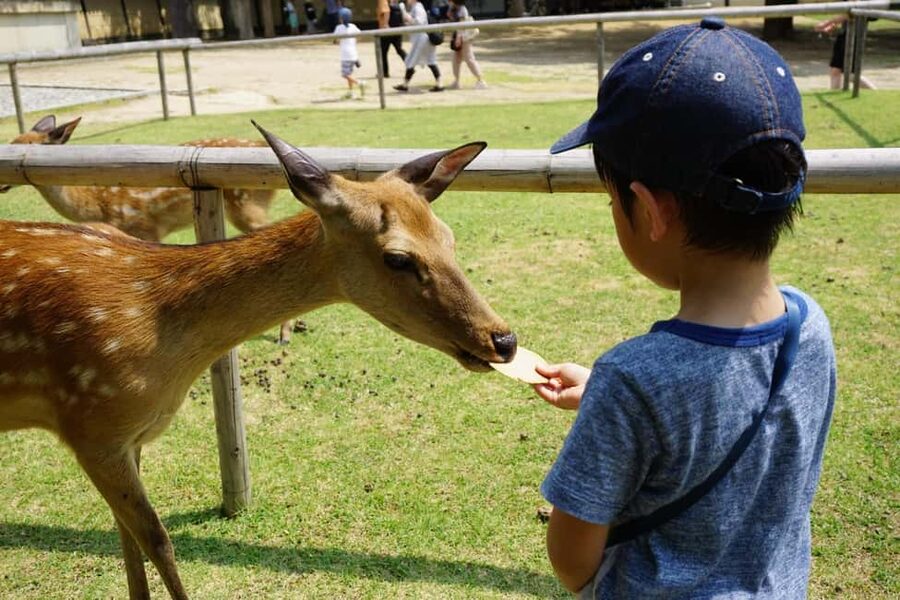
Nara Park is a wide public area beside Kasuga Taisha Shrine. More than 1000 deer roam freely here, and local tradition regards them as messengers of the gods. Their protected status is not just a cute photo opportunity. It is part of the cultural meaning of Nara, where deer have been connected with the area for more than 1,300 years and are listed as a national natural monument.
This stop is easy to enjoy without a detailed guide. You can walk through the park, watch the deer, and take photographs. The deer are accustomed to people, but you should still treat them as animals rather than props. Keep your movements sensible and follow posted instructions.
The limited time is the concern. Nara Park is large, and the tour does not give you a full afternoon for Kasuga Taisha, nearby historic streets, or other major Nara sights. If your priority is the deer and a quick look around, the stop works well. If you want a slower cultural visit, it will feel rushed.
The middle of the day also means you may be ready for food. Since meals are not included, carry something appropriate for the stops, but remember that food is prohibited in the vehicle. You will need to eat during permitted breaks and return to the meeting point on time.
Fushimi Inari after 15:20: the red gates in a sacred setting
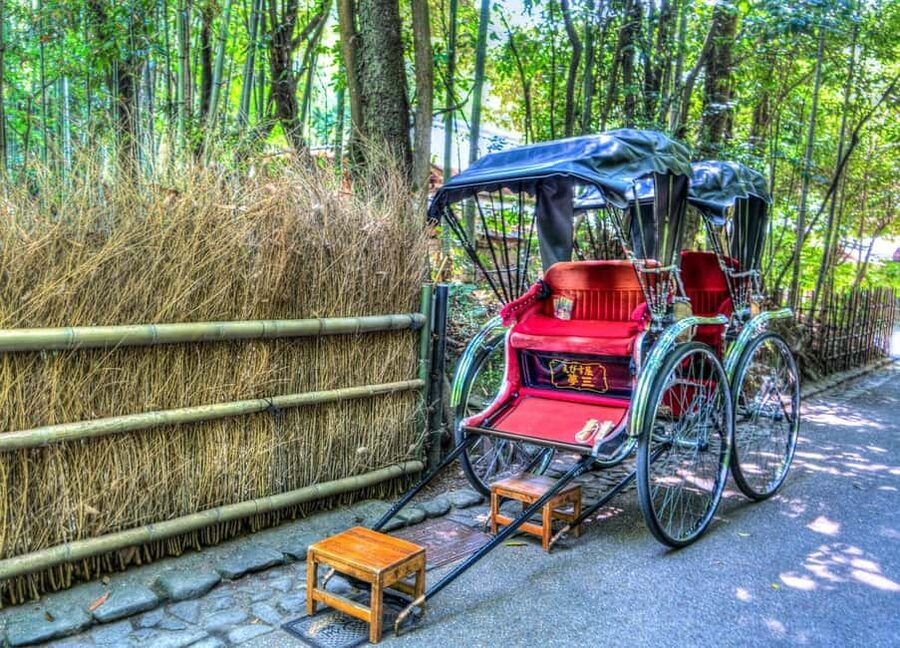
The final major stop is Fushimi Inari Taisha, reached at around 15:20. You receive about one hour 20 minutes to one hour 30 minutes here, depending on the schedule used and traffic conditions.
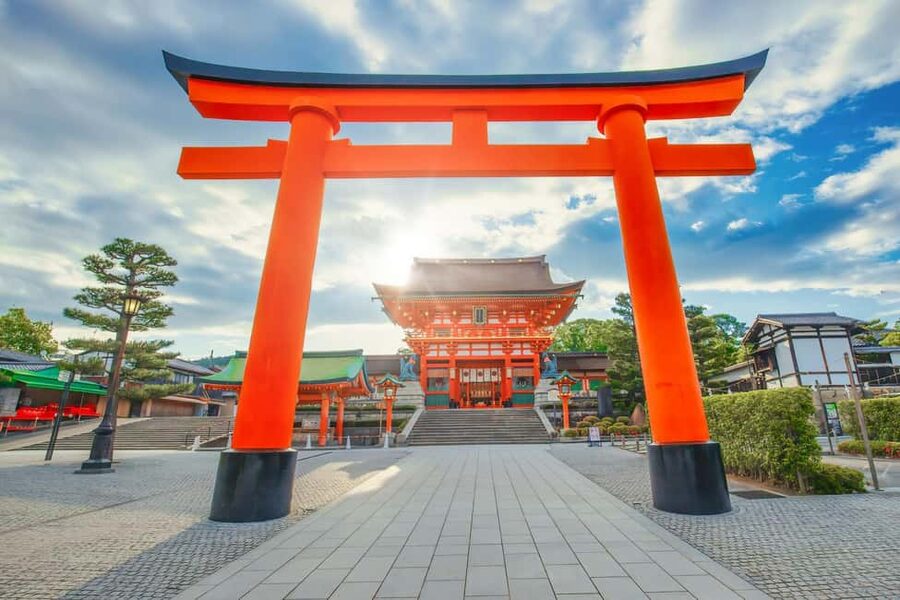
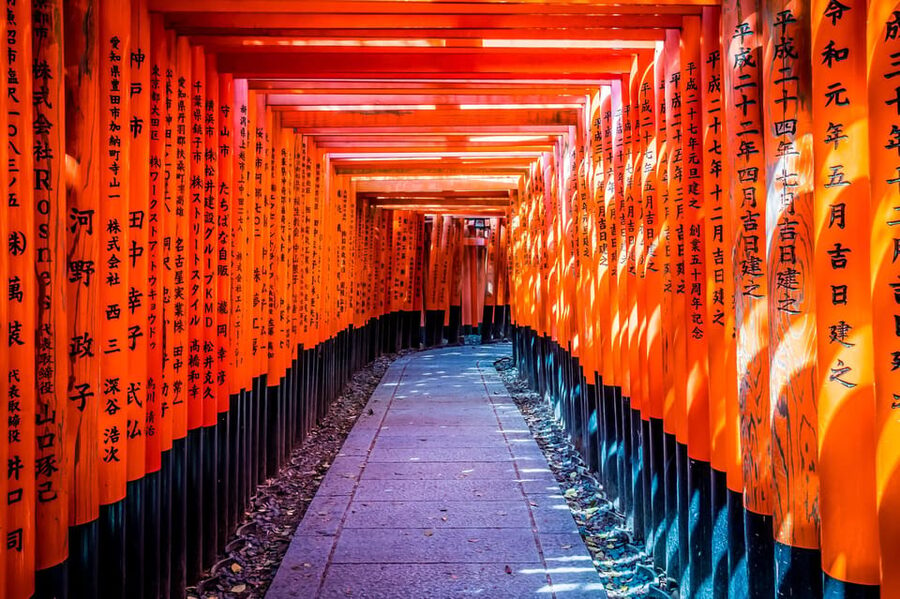
Fushimi Inari is the head shrine for roughly 30,000 Inari shrines across Japan. Its long story reaches back to 711 AD, and the entire Mount Inari area is treated as sacred. The torii gates create the famous red-orange corridors, with each gate marking a connection between worship, gratitude, and the shrine tradition.
With the time available, you can see the lower shrine area and walk through a good section of the torii paths. You probably will not complete a full climb around the mountain. The route continues much farther than the typical photograph suggests, so decide early how far you want to go.
This is the most atmospheric stop of the day, but it is also one where the schedule matters most. Stop too long for photographs near the entrance and you will lose walking time. Move steadily, take your pictures, and keep an eye on the clock.
Fushimi Inari can be visited independently by train, which gives you more freedom to arrive early or stay late. The benefit of the tour is not exclusive access or special commentary. It is the convenience of arriving after Nara without having to organize the connection yourself.
More Temples and Shrines in Japan:
- [Kyoto & Nara Day Tour] Sagano Scenic Railway & Nara Park & Fushimi Inari Taisha Thousand Torii Gates & Togetsukyo Bridge & Bamboo Grove & Kimono Forest (Departing from Osaka)
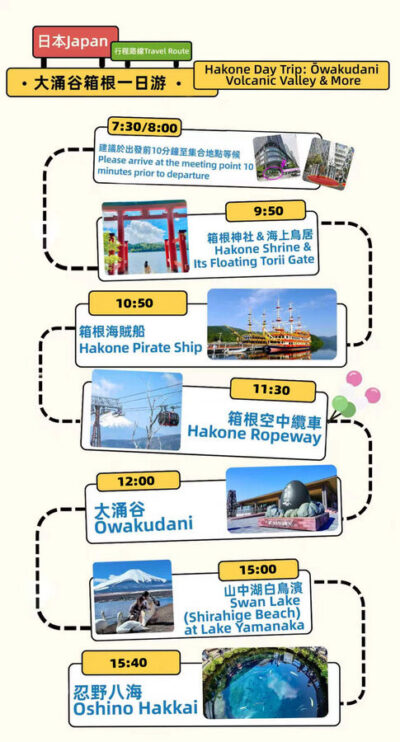
★ 4.9 · 10,942 reviews - Mount Fuji & Hakone – Lake Ashi Torii Gate, Hakone Shrine, Hakone Pirate Ship, Hakone Ropeway, Owakudani, Lake Yamanaka & Oshino Hakkai Day Trip: Sea, Land, and Air Panoramic Tour from Tokyo
★ 4.8 · 7,989 reviews - Kyushu One-Day Tour: Yufuin no Mori Train & Yufuin Town & Nyoirin-ji Temple & Dazaifu & Hell Hot Springs (Departing from Fukuoka)
★ 4.9 · 4,474 reviews - Kyoto: Fushimi Inari, Kinkakuji, Bamboo Grove 1 Day Bus Tour
★ 4.8 · 4,316 reviews
What the guide service really provides
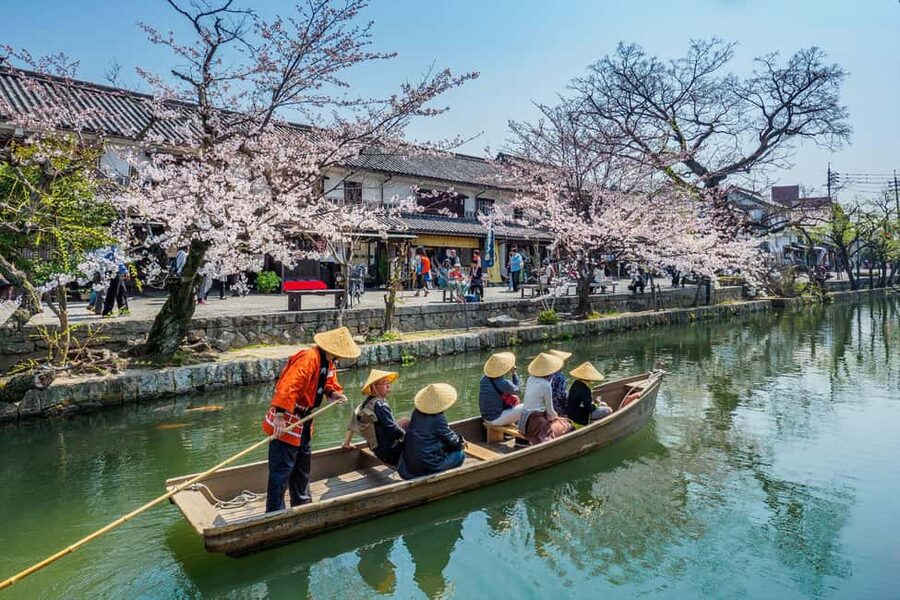
The experience includes Chinese, English, Japanese, and Korean language support, but Chinese is the main operating language. English and Korean staff may be available if requested when booking, though this is not guaranteed.
In a small group, the driver may also act as the guide. Expect basic information on the bus and directions for each stop, not a long guided walk through every shrine and park. That distinction is important. If you want strong historical explanation at each site, you may prefer a specialist guide.
The strongest guide experiences can make this format work very well. Levi is described as kind, polite, helpful, and effective, while CC received praise for giving useful information about where to go. HuaHua was also singled out for good organization. These details suggest that staff quality can make a real difference, but the language and guide arrangement may vary.
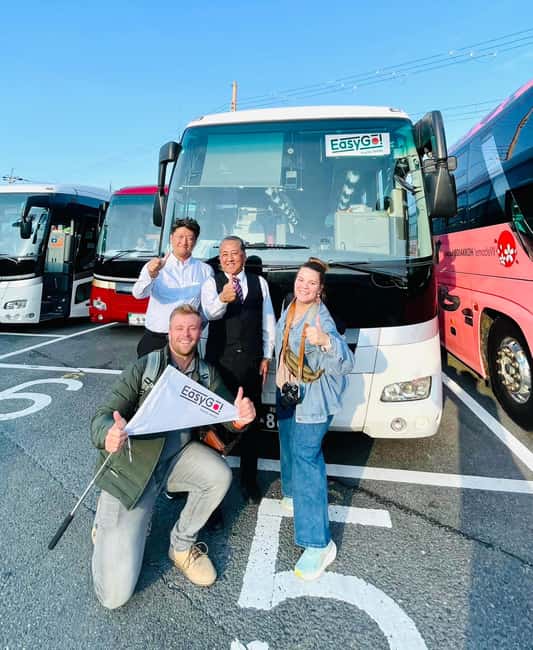
You should also pay close attention to the meeting point. The guide does not necessarily contact you in advance. Go directly to the stated location and look for staff wearing an EASY GO vest or holding an EASY GO flag.
One poor experience involved a family missing the departure after receiving conflicting information about the start time. The bus had already left, and the guide did not help them rejoin the group easily. I would treat the departure time as strict, arrive well before the required check-in time, and confirm the exact pickup location and time in writing if anything looks unclear.
Shared transport, traffic, and the value of $51
At $51, this is an inexpensive way to cover three major destinations in a single day. The price includes transport, tolls, parking, fuel, and a multilingual host or greeter. Those included costs matter in Japan, particularly when you are crossing between Osaka, Kyoto, and Nara.
The price does not include meals, drinks, or personal expenses. It also does not include professional guided commentary at the attractions. You are buying transport and structure, not a private cultural tour.
The main cost is time. One assessment of the route described roughly three quarters of the day as bus travel, and that is a fair warning for an Osaka departure. Traffic and participant numbers can change the exact time at each stop. The group may arrive early at the next location or finish ahead of schedule if facilities close or visiting hours change.
Shared transport may include international visitors, and the bus can feel less personal than a private car. Still, it removes the stress of finding three separate destinations and keeps the day simple. For a first visit, that convenience can be worth more than a small saving on train fares.
Who will enjoy this day trip most
I would recommend this outing to you if you have only one free day for Kyoto and Nara highlights, are staying in Osaka, or prefer a ready-made route. It also suits families and first-time visitors who would rather sit back between sights than change trains several times.
The tour works best for people who are comfortable with self-guided sightseeing. You need to read signs, choose your own walking route, manage your meals, and return to the bus on time. A friendly guide can point you in the right direction, but the visit itself is largely yours.
I would hesitate if you want slow mornings, detailed shrine explanations, or long walks into Mount Inari. I would also compare train routes before booking if you are already based in Kyoto. Independent transport may let you spend more time at the places you care about and less time looping through the region.
The wheelchair-accessible format is a useful option, but the details of access at each individual site are not provided. Confirm your specific needs before reserving.
Practical advice for making the day work
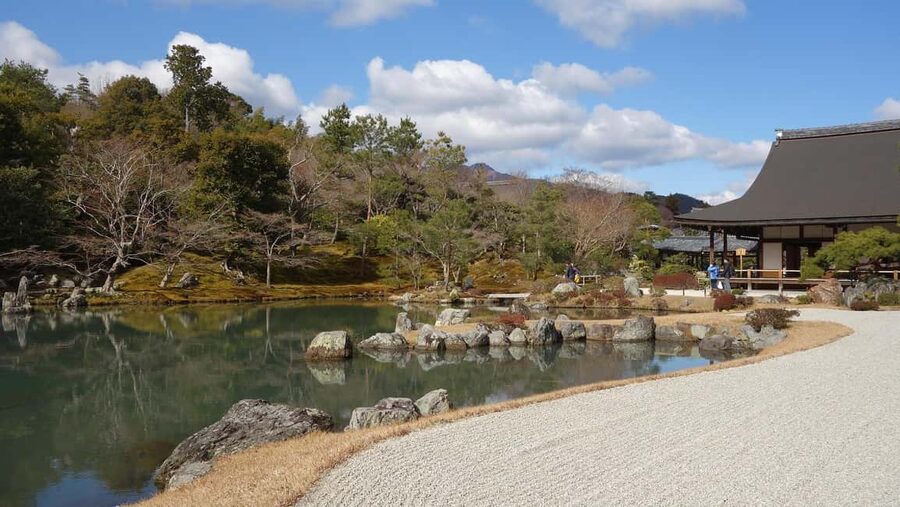
Arrive early at the pickup point. The conflicting departure information in one case shows why you should not cut it close, even if your booking confirmation gives a later meeting time.
Plan your priorities before boarding. In Arashiyama, choose bamboo and Togetsukyo Bridge. In Nara, focus on the deer and the park area. At Fushimi Inari, decide whether photographs or a longer uphill walk matter more.
Keep your phone charged, save the meeting point, and watch the time. Traffic can alter the schedule, and the bus will not wait indefinitely for late arrivals.
Bring water and plan meals around the stops. Food and beverages are not included, and food cannot be eaten in the vehicle. Weather can also affect the route, and severe weather or a natural disaster may lead to cancellation.
Should you book this tour?
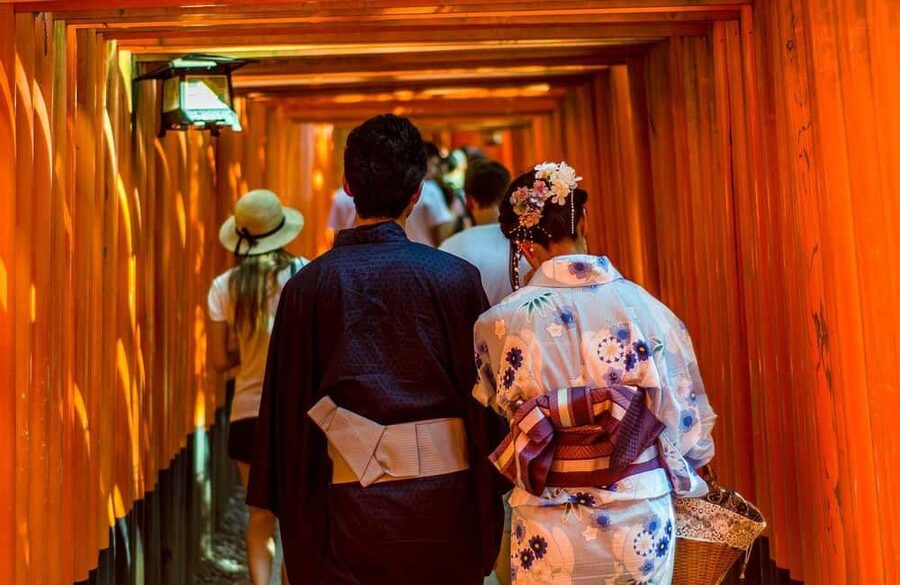
Book it if coverage and simplicity matter more to you than flexibility. For $51, you get a practical full-day route to Arashiyama, Nara Park, and Fushimi Inari, with transport costs handled and enough time for a first look at each place.
Skip it if you are an experienced rail user who wants to set your own pace. The long bus loop, basic commentary, language uncertainty, and strict departure times are real limitations.
My call: this is a good-value sampler for a packed first visit, especially from Osaka. Go in knowing that it is a transport-led day with self-guided stops, not an in-depth cultural tour. Arrive early, keep your plans focused, and the bargain price makes much more sense.
FAQ
How long is the tour?
The tour lasts about 10 hours. The schedule lists an 8:00 departure from Osaka, a 9:20 departure from Kyoto, and return around 17:00 to Kyoto or 18:00 to Osaka.
Where can I join the tour?
The available starting points are Kyoto Station’s Hachijo-guchi sightseeing bus area and 1-chōme-1-3 Dōtonbori in Osaka. The exact meeting point depends on the option booked.
Which places does the tour visit?
The tour visits Arashiyama, Nara Park, and Fushimi Inari Taisha Shrine.
How much free time is available at each stop?
The planned time is about two hours in Arashiyama, 80 minutes to one hour 30 minutes in Nara Park, and one hour 20 minutes to one hour 30 minutes at Fushimi Inari.
What languages are available?
The listed languages are Chinese, English, Japanese, and Korean. Chinese is the main tour language, and English or Korean support depends on actual arrangements and is not guaranteed.
Are meals included?
No. Meals, beverages, and personal expenses are not included. Food is also not allowed inside the vehicle.
Is the tour wheelchair accessible?
Yes, the activity is listed as wheelchair accessible. The supplied information does not give detailed access conditions for each individual attraction.
Can I cancel the booking?
You can cancel up to 24 hours before departure for a full refund. The booking option also allows you to reserve now and pay later.
Just added in Japan
- Japanese Home Cooking Class & Walk in Todoroki Temple Tokyo★ 5.0 · 88 reviews
- A One-of-a-Kind Sushi Experience in a Special Place of Japan★ 5.0 · 15 reviews
- Tokyo Cute Bento Cooking Class – Make a Kawaii Character Lunchbox★ 5.0 · 126 reviews
- Japan Tokyo Tower Observatory Deck E-Ticket★ 4.0 · 34 reviews
- Catch a Baseball Game in Tokyo with a Local – Tickets Included★ 5.0 · 24 reviews
- JDM Experience with Fast&Furious RX-7 (English speaking Driver)★ 5.0 · 57 reviews
- Tokyo Private Day Tour by Car with English speaking Driver Guide★ 4.0 · 29 reviews
- Japan Classic 10 Day – One Life Adventures★ 5.0 · 129 reviews
Temples and Shrines, compared.
![[Kyoto & Nara Day Tour] Sagano Scenic Railway & Nara Park & Fushimi Inari Taisha Thousand Torii Gates & Togetsukyo Bridge & Bamboo Grove & Kimono Forest (Departing from Osaka)](https://media.japanvisits.com/wp-content/uploads/kyoto-nara-day-tour-sagano-scenic-railway-nara-park-fushimi-inari-taisha-thousand-torii-gates-togetsukyo-bridge-bamboo-grove-kimono-forest-departing-from-osaka-k110001-400x257.jpg)
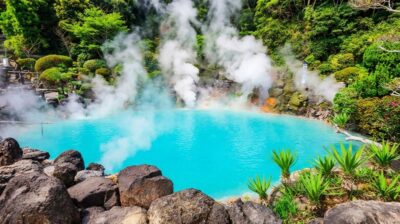
Kyushu One-Day Tour: Yufuin no Mori Train & Yufuin Town & Nyoirin-ji Temple & Dazaifu & Hell Hot Springs (Departing from Fukuoka)
Read our review →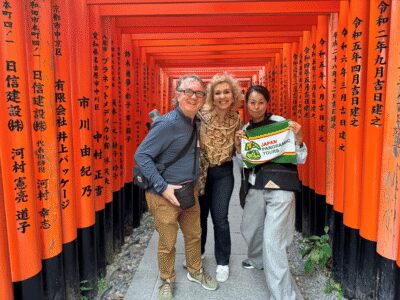
Fushimi Inari, Kinkakuji, Bamboo Grove 1 Day Bus Tour
Read our review →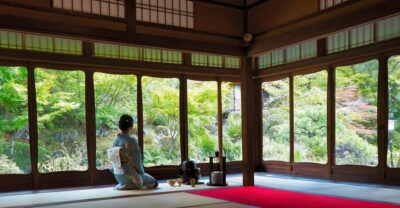
Tea Ceremony in a Traditional Tea House in Kiyomizu
Read our review →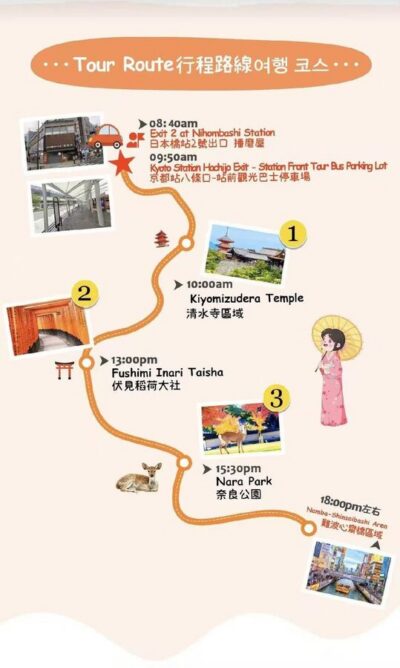
Kyoto Nara Day Trip │ Kiyomizu-dera Temple + Fushimi Inari-taisha Shrine + Nara Park (Departing from Osaka/Kyoto)
Read our review →
Browse the lists this tour appears in