
Reviewed · WORKSHOPS
Osaka: Private Ceramic Painting Workshop
Make something you cannot buy at a souvenir shop. This private ceramic workshop takes you into a century-old house in southern Osaka, where you paint a dish with Japanese designs while talking about local culture. I like the private format, which gives you room to ask questions and work at your own pace. I also like the walk from JR Teradacho Station through a less-touristed Showa-era neighborhood. The main drawback is practical: your painted dish takes about a month and a half to arrive, and shipping costs extra.
This is not a pottery-wheel class. You paint a prepared ceramic dish using brushes and ceramic colors, with help from an instructor who studied in Osaka. Anna and Ryo are especially warm hosts, and the class is available in English, Spanish, Catalan, or Japanese. You also receive a small handmade dish and a sakura-shaped chopstick holder to take home that day.
In This Review
- Key Points Before You Book
- From JR Teradacho Station Into Local Osaka
- A Century-Old House With a Personal Welcome
- Choosing Your Design and Painting the Dish
- Why the Private Format Matters
- The Gifts You Take Home That Day
- Waiting Six Weeks for the Fired Piece
- What the Two Hours Feel Like
- Who Will Get the Most From This Class
- Booking Details That Affect Your Plans
- Should You Book the Ceramics Tocoton Workshop?
- FAQ
- Where does the workshop meet?
- How long does the activity last?
- How much does the workshop cost?
- Is this a private workshop?
- What will I paint?
- Can I write a word in Japanese?
- Which languages are available?
- What is included in the price?
- When will I receive my painted dish?
- Can children join the workshop?
Key Points Before You Book
- Paint a dish with Japanese themes: Choose from Mount Fuji, sushi, cherry blossoms, traditional patterns, or your own kanji design.
- Enjoy a truly private class: The workshop is reserved for your group, so you can work without a crowded classroom or a fixed public-group pace.
- Walk through everyday Osaka: Pickup at JR Teradacho Station leads through a southern Osaka neighborhood that feels far removed from the main sightseeing routes.
- Learn in several languages: Instruction is offered in English, Spanish, Catalan, and Japanese, making this the only listed ceramic activity specifically available in Spanish or Catalan.
- Take home two gifts immediately: A small traditional-pattern dish and a sakura-shaped chopstick rest are included, while your painted piece arrives later.
- Plan for delayed delivery: Firing and shipping take around one and a half months, and postage is not part of the $61 price.
From JR Teradacho Station Into Local Osaka
Your meeting point is the north exit of JR Teradacho Station. Look for a guide holding a sign marked Ceramics Tocoton. Ryo has handled pickups and has been praised for making the walk to the workshop friendly and relaxed.
That short route is part of the appeal. The studio sits in the south of Osaka, in a non-touristy area described as a Showa-era part of the city. Showa refers to the period from 1926 to 1989, and the streets here offer a look at an older, more ordinary Osaka than the neon-heavy image many people expect.
You should not come expecting a major landmark or a polished sightseeing district. The value is in seeing a side of the city that rarely appears in standard Osaka plans. You get a little local orientation before the painting begins, and the walk helps the workshop feel connected to its neighborhood rather than placed in an isolated tourist venue.
Arrive on time. If you expect to be more than 15 minutes late, contact the provider. More than 15 minutes late counts as a no-show, so this is not an activity to squeeze between two uncertain train connections.
A few more options to weigh up in Japan
- Universal Studios Japan Studio Pass
★ 4.8 · 89,883 reviews - Universal Studios Japan Express Pass
★ 4.7 · 53,138 reviews - Osaka Amazing Pass
★ 4.7 · 21,697 reviews
A Century-Old House With a Personal Welcome
The workshop takes place in a century-old house. That setting gives the class a sense of place that a modern craft studio might not provide. You are not simply sitting at a table in a commercial room. You are entering an older Osaka home used for teaching and making ceramics.
The welcome is one of the strongest parts of the activity. Anna leads the ceramic instruction, and several people have found her friendly, patient, and generous with guidance. Ryo may meet you at the station, then Anna welcomes you at the house. You may also be offered tea at the end, depending on the flow of the visit.
The class has an informal, home-based feel. That can be a real plus if you enjoy conversation and personal contact. You may talk about Japanese customs, ceramics, Osaka, and daily life while you work. It is more social than a simple paint-and-leave craft session.
The tradeoff is that this is not a formal museum lesson with a large collection or a long lecture. If you want a detailed survey of Japanese ceramic history, you should visit a specialist museum as well. This class is about making something, asking questions, and sharing time with a local instructor.
Choosing Your Design and Painting the Dish
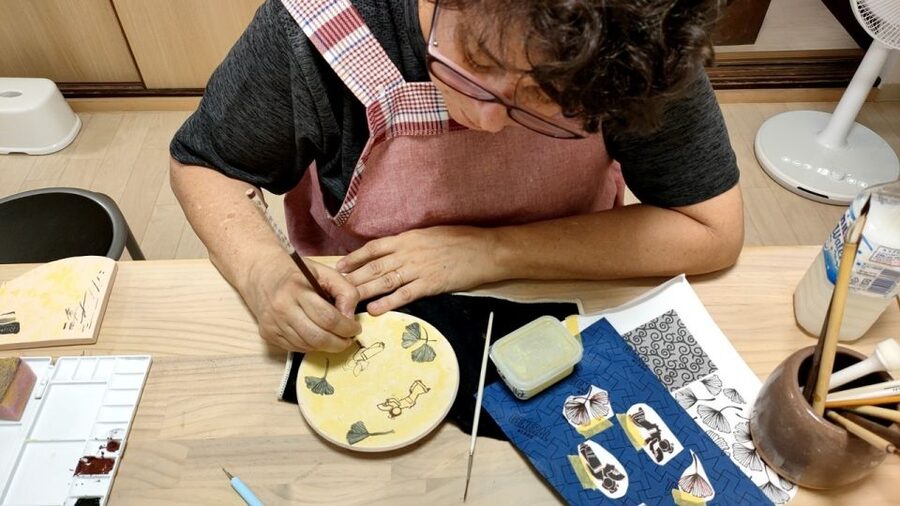
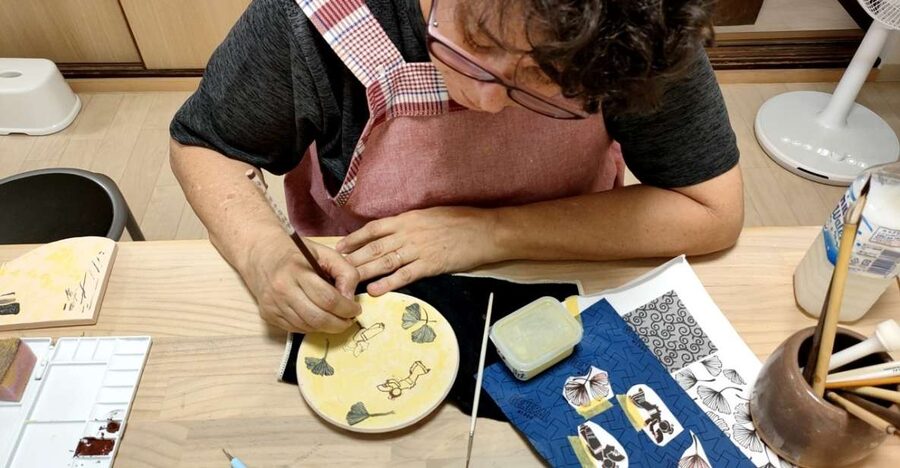
The central activity lasts about two hours from pickup and workshop time. You paint one ceramic dish with a brush, using a piece made from clay sourced from the Shigaraki area. Shigaraki is one of Japan’s well-known ceramic-producing regions, so the material gives the class a connection to Japanese pottery traditions even though you are working on decoration rather than shaping the clay.
You can select a traditional Japanese pattern or a familiar image from Japanese culture. Suggested ideas include:
- Mount Fuji
- Sushi
- A sakura tree
- Traditional Japanese patterns
- A word written in kanji
The design choices let you decide how personal or traditional the finished piece will be. You might create a clear Japan souvenir with Mount Fuji or cherry blossoms. You could also write a kanji word, though you should ask the instructor for help with the meaning and correct character before painting it.
You do not need to arrive with artistic training. The format leaves room for creativity, and Anna helps when you have trouble with the design or brushwork. The private setup is useful here. You can ask for advice without feeling that you are holding up a larger class.
At the same time, ceramic painting is still hands-on work. Your finished dish will reflect your own brush lines and choices, not factory-perfect decoration. That is part of its charm, but it also means you should not expect the result to look exactly like a professional studio piece.
Why the Private Format Matters
At $61 per person, the price is higher than a simple drop-in craft activity. But the class includes a two-hour private lesson, an instructor, materials, station pickup, and two handmade gifts. The value improves if you care about personal attention and conversation rather than just producing a low-cost souvenir.
A private class is also a good choice for couples, families with older children, and small groups who want to share one activity without strangers at the table. You can make different design choices while still having a common experience. The class is not suitable for children under five, and young children may find brush control and waiting for the finished piece difficult even if they meet the age requirement.
The language range adds real value. Instruction is offered in English, Catalan, Spanish, and Japanese. Spanish and Catalan are especially useful here because this is identified as the only ceramic-related option in those languages. If you are more comfortable discussing artistic choices in Spanish or Catalan, that can make the lesson much easier and more enjoyable.
You should also consider the pace. A private lesson can feel relaxed, but the scheduled duration is still two hours. If your design is detailed, use your time wisely. Ask for help early, decide on your main pattern before you begin, and avoid spending too long trying to make the first small line perfect.
A completely different kind of day out:
- Tokyo Disney Resort – Tokyo Disneyland & Tokyo DisneySea Park Tickets
★ 4.8 · 99,488 reviews - SHIBUYA SKY Ticket
★ 4.7 · 46,509 reviews - Mt. Fuji Instagram-Worthy Spots Day Tour: Ladder Town, Oshino Hakkai, Lake Kawaguchi, Lawson Convenience Store (Departing from Tokyo Station or Shinjuku Station)
★ 4.8 · 35,467 reviews - JR Whole Japan Rail Pass
★ 4.8 · 29,150 reviews
The Gifts You Take Home That Day
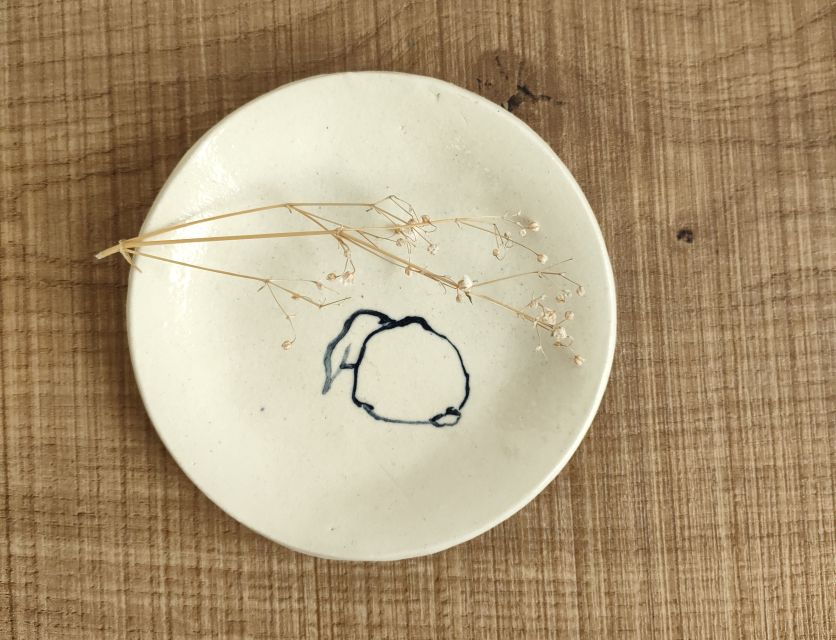
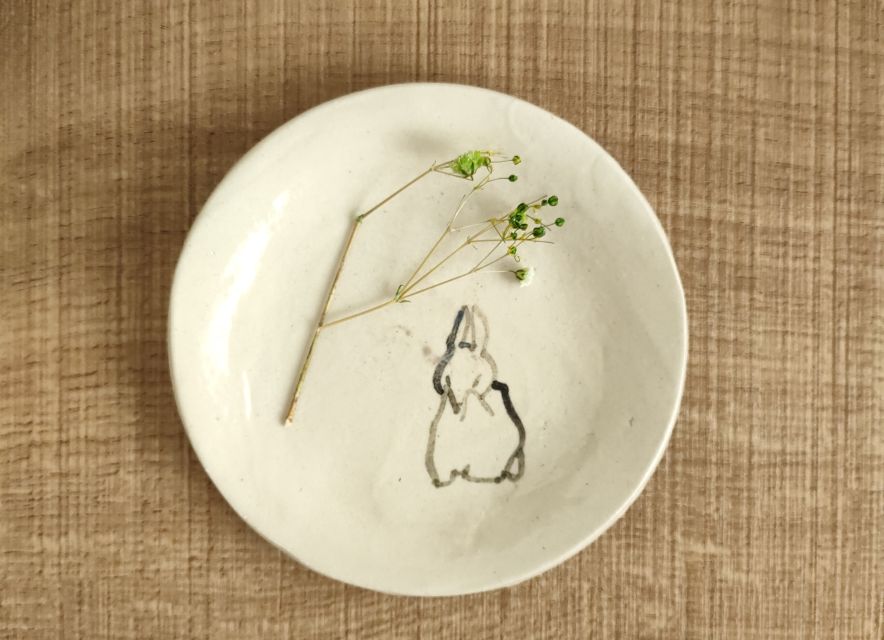
The workshop price includes a small plate with a traditional Japanese design and a sakura-shaped chopstick holder. These are handmade for your use and can go home with you on the day of the class.
That detail matters because your own painted dish is not immediately available. It must be fired first, then shipped to your home. The included gifts give you something tangible to pack right away, while the main souvenir follows later.
The chopstick holder is a particularly practical keepsake. It is small, light, and easy to fit into luggage. The dish is also more useful than a generic trinket, though you should pack it carefully.
The studio has a small gallery upstairs, where you might find additional Japanese ceramics made by Anna. Buying something there is optional and is not included in the class price. It gives you a chance to see finished work by the instructor and take home another piece if your luggage and budget allow.
Waiting Six Weeks for the Fired Piece
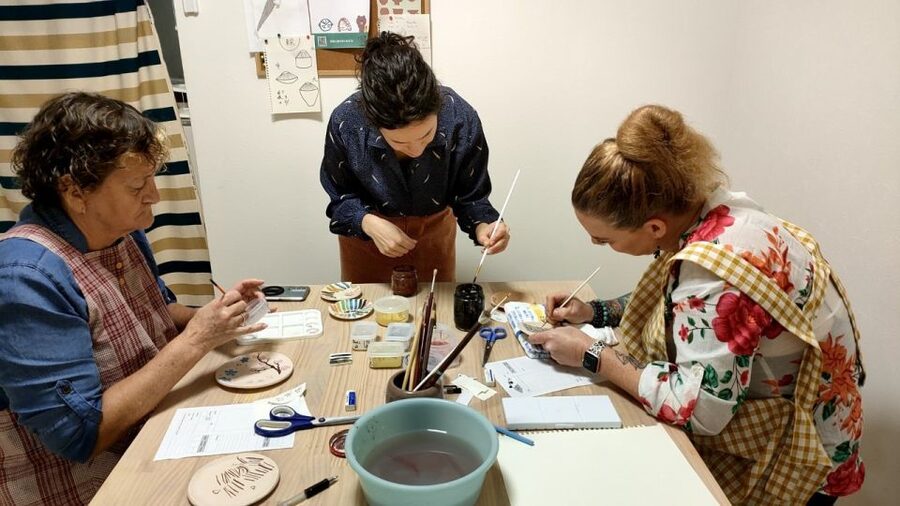
Your painted dish is sent to your home after firing. The stated wait is about one month and a half, and shipping is not included in the booking price. Check the expected postage before you commit, especially if you are watching your trip budget closely.
The delayed delivery changes how you should think about this souvenir. It is not a memento you carry out of Osaka on the same afternoon. Instead, it becomes a later reminder of your Japan trip. Make sure the provider has your correct home address and understand that the shipping fee is separate.
If you are moving between hotels or continuing to another country, home delivery is likely more convenient than carrying fragile pottery around Japan. If your home address may change soon, ask about the shipping details before the class.
The firing stage is also why you should not expect to inspect or use the completed dish immediately. Your design needs to go through the ceramic process first. That wait is a minor inconvenience, but it is important enough to include in your planning.
What the Two Hours Feel Like
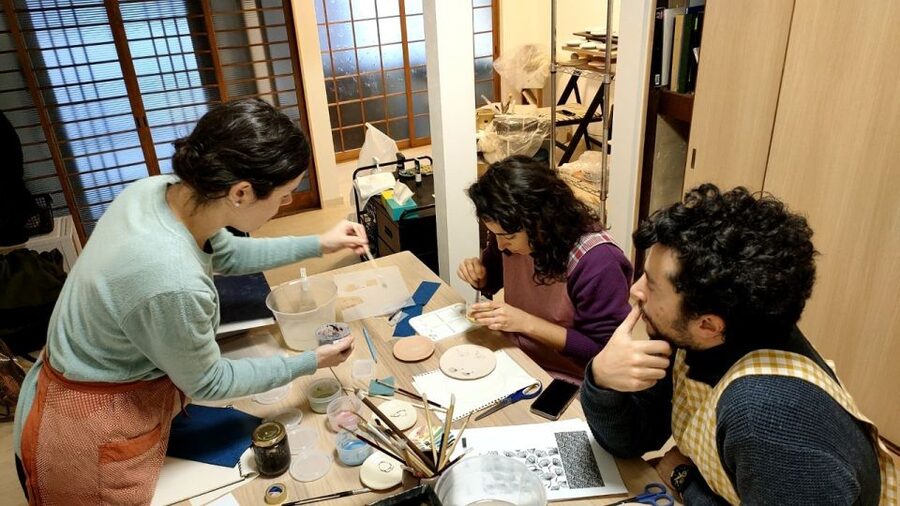
The workshop has a clear, manageable rhythm:
- Meet at JR Teradacho Station’s north exit.
- Walk with the guide to the century-old workshop house.
- Choose or discuss a Japan-related design.
- Paint your ceramic dish with brushes and ceramic colors.
- Talk with the instructor about Japanese culture and your design.
- Receive the small dish and sakura chopstick holder.
- Arrange shipping of your painted piece after firing.
The most valuable part is the combination of making and conversation. You are not only copying a pattern from a sheet. You can ask about the meaning of designs, talk about kanji, and learn how Japanese cultural images are used in everyday objects.
Past participants have described feeling welcomed into the home rather than processed through a standard activity. That is a useful distinction. If you prefer a quiet, personal class, the tone should suit you well. If you prefer a fast attraction with a clear start and finish, the conversation and slower pace may feel less efficient.
Tea may be served at the end, and the upstairs gallery adds a little extra time for browsing. These touches are not the main reason to book, but they help make the workshop feel personal.
Who Will Get the Most From This Class
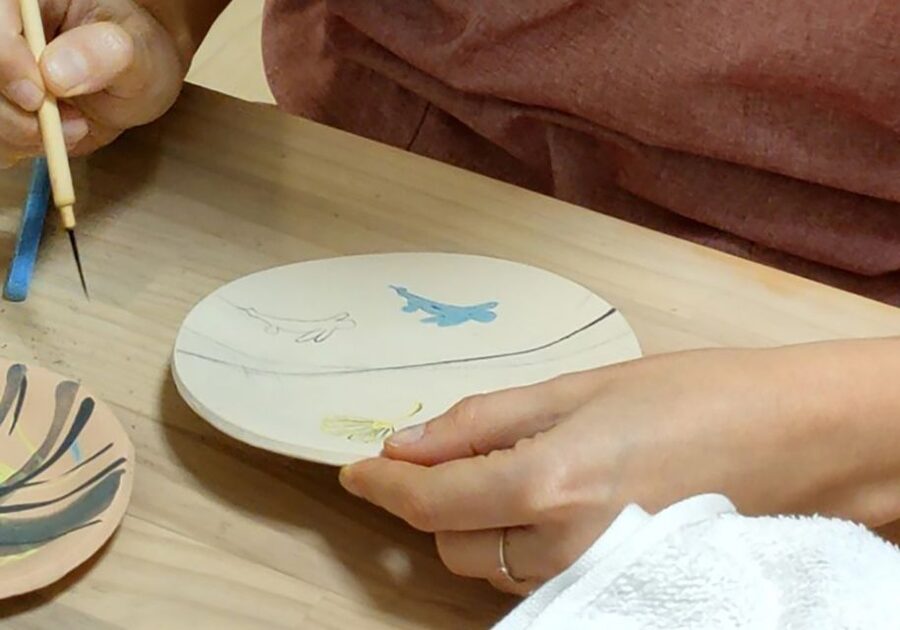
I would recommend this activity to you if you want a souvenir with your own mistakes, choices, and brush marks. It is especially suitable for visitors who enjoy crafts, small local encounters, and conversations about culture.
It also works well for:
- Couples seeking a shared creative activity
- Friends who want a private class
- Solo visitors who prefer direct instruction
- Spanish or Catalan speakers
- People who have already seen Osaka’s major sights
- Families with children aged five and older who can manage a two-hour class
You may want to skip it if your schedule is extremely tight, if you need to carry the finished souvenir home that day, or if you are looking for wheel throwing and clay shaping. This is a painting workshop, not a full pottery-making course.
The southern Osaka location is a benefit for some people and a drawback for others. You get a more ordinary neighborhood and a Showa-era setting, but you will need to travel to JR Teradacho Station rather than remain around Osaka’s most famous central districts.
Booking Details That Affect Your Plans
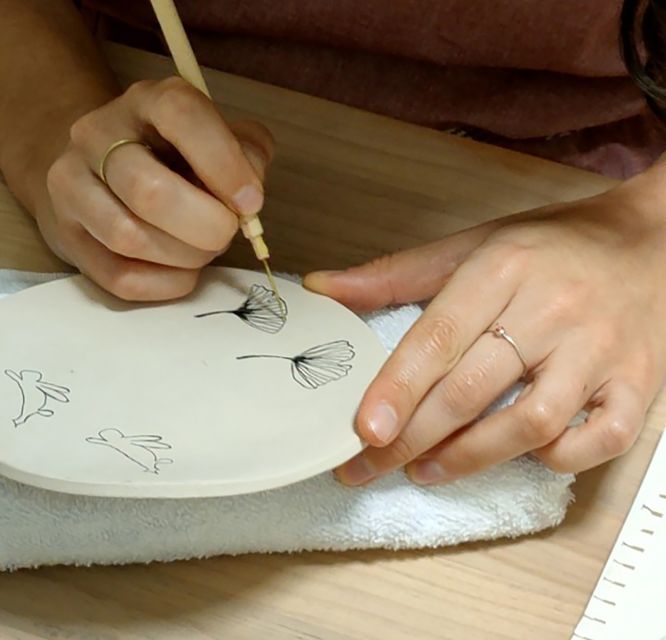
The activity costs $61 per person and lasts two hours. It is offered as a private group, so the price should be judged against the personal instruction rather than compared only with large group craft classes.
You can cancel up to 24 hours before the activity for a full refund. A reserve-now, pay-later option is also available, which helps if you are still arranging your Osaka days. Starting times vary, so check availability before building the rest of your schedule.
Bring an address suitable for pottery delivery and budget separately for shipping. Arrive at the north exit of JR Teradacho Station with enough time to find the guide and avoid the 15-minute no-show rule.
Should You Book the Ceramics Tocoton Workshop?
Book it if you want a calm, personal activity with a strong local feel. The combination of a private class, a century-old Osaka house, multilingual instruction, handmade gifts, and a custom dish makes the $61 reasonable for many visitors.
I would make this a priority for Spanish or Catalan speakers, anyone who values direct conversation, and people who prefer a personal neighborhood experience over a large tourist attraction. The delayed shipping is the main catch, but it is manageable if you plan for it.
Skip it if you want a finished souvenir immediately or if you are searching for advanced pottery technique. For everyone else, this is a thoughtful way to spend two hours in Osaka and create something that carries your own story, not just a shop label.
FAQ
Where does the workshop meet?
Meet at the north exit of JR Teradacho Station. Look for a guide carrying a sign with the studio name, Ceramics Tocoton.
How long does the activity last?
The activity lasts two hours.
How much does the workshop cost?
The price is $61 per person.
Is this a private workshop?
Yes. The class is offered for a private group exclusively for your party.
What will I paint?
You will paint a ceramic dish with a brush. You can choose Japan-related designs such as Mount Fuji, sushi, a sakura tree, or traditional patterns.
Can I write a word in Japanese?
Yes. You can write a desired word in kanji, which is a Japanese ideographic writing system.
Which languages are available?
The instructor can teach in English, Catalan, Spanish, or Japanese.
What is included in the price?
The price includes the instructor, materials, the ceramic dish made with clay from the Shigaraki area, ceramic paints, pickup from Teradacho Station, a small traditional-pattern dish, and a sakura-shaped chopstick holder.
When will I receive my painted dish?
The painted pottery takes about one month and a half to ship after firing. Shipping costs are not included.
Can children join the workshop?
Children under five are not permitted to take part.
Just added in Japan
- Tokyo Cute Bento Cooking Class – Make a Kawaii Character Lunchbox★ 5.0 · 126 reviews
- Japanese Home Cooking Class & Walk in Todoroki Temple Tokyo★ 5.0 · 88 reviews
- A One-of-a-Kind Sushi Experience in a Special Place of Japan★ 5.0 · 15 reviews
- Japan Tokyo Tower Observatory Deck E-Ticket★ 4.0 · 34 reviews
- Catch a Baseball Game in Tokyo with a Local – Tickets Included★ 5.0 · 24 reviews
- JDM Experience with Fast&Furious RX-7 (English speaking Driver)★ 5.0 · 57 reviews
- Tokyo Private Day Tour by Car with English speaking Driver Guide★ 4.0 · 29 reviews
- Japan Classic 10 Day – One Life Adventures★ 5.0 · 129 reviews
Workshops, compared.
Sushi Making Tokyo Roll and Authentic Japanese Sushi Class
Read our review →
Gion Make Your Own Chopsticks with Engraving Option
Read our review →
Roll and Authentic Sushi Making Class in Asakusa
Read our review →
Ramen Cooking Class at Ramen Factory in Kyoto
Read our review →
Tokyo Asakusa Chopsticks Workshop: Make Your Own Pair
Read our review →
Ring Making Workshop : Vintage Japanese Coin Ring
Read our review →Browse the lists this tour appears in