Reviewed · OSAKA TOURS
Osaka: Private Japanese Traditional Ceramics Experience
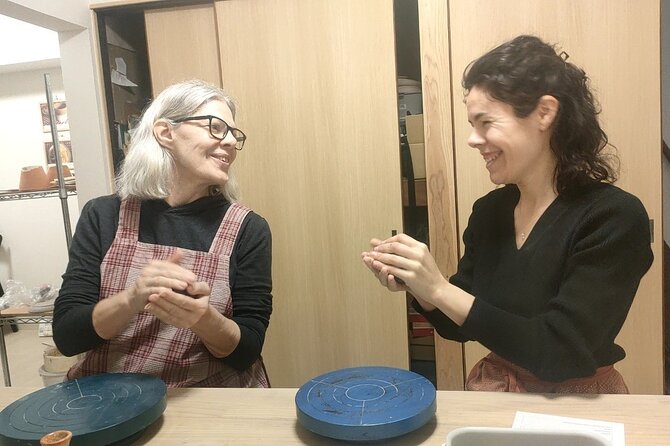
Make something useful from Osaka clay. This private workshop takes you beyond Osaka’s better-known sights and into a century-old two-storey home near Teradachō Station. I like the one-to-one instruction from Anna, Ryo, and their team, and I like that you choose your own project: a sake set, sushi set, or tea bowl. The main catch is that finished pieces take about a month and a half to ship, and postage is extra.
The two-hour class is friendly to complete beginners, yet experienced potters can also learn from the hand-building approach. English, Spanish, Catalan, and Japanese are offered, a real advantage for anyone seeking more than a standard craft demonstration. At about $94.13 per person, the price is fair if you value personal attention, materials, firing, refreshments, and a handmade souvenir, but less attractive if you want a quick, low-cost activity.
The walk from Teradachō Station is part of the appeal. Ryo has met participants at the station and led them through a local shopping street lined with food shops, a useful glimpse of everyday southern Osaka. You receive a small traditional sushi dish and a sakura-shaped chopstick rest made by Anna, even if your own pottery is still waiting in the kiln.
In This Review
- Key points to know before booking
- A two-hour pottery class with a personal pace
- Choosing between a sake set, sushi set, and chawan
- From Teradachō Station into everyday southern Osaka
- Anna and Ryo make the class feel like a visit
- What is included in the $94.13 price
- The quiet reward of a handmade souvenir
- Who will enjoy this Osaka activity most
- Practical details that can affect your decision
- Should you book the Ceramics Tocoton workshop?
- FAQ
- How long does the pottery workshop last?
- What can I make during the class?
- Is the workshop private?
- Which languages are available?
- Are firing and shipping included?
- What meeting point does the workshop use?
Key points to know before booking
- Choose one of three Japanese tableware projects: Make a sake bottle and cup, a sushi plate with chopstick holder, or a chawan tea bowl.
- Work in a century-old Osaka house: The studio offers a quiet look at a residential part of the city near local food shops.
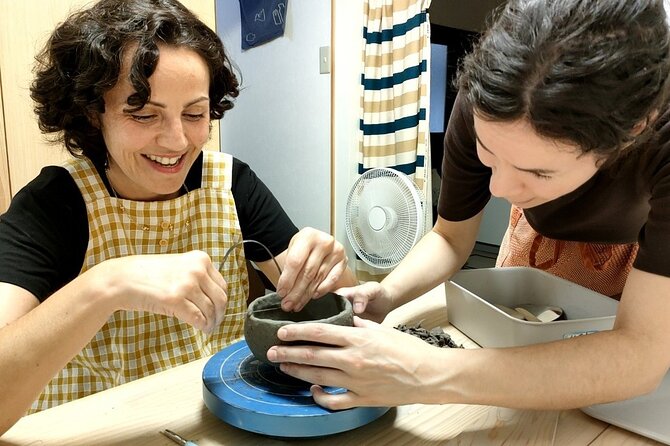
- Expect private instruction: Only your group takes part, so Anna and Ryo can adjust the pace and offer hands-on help.
- Finished pottery arrives later: Firing is included, but shipping takes about one and a half months and costs extra.
- Languages are unusually flexible: The workshop is available in English, Spanish, Catalan, and Japanese.
- You leave with more than unfinished clay: A small glazed sushi dish and sakura chopstick rest are included as souvenirs.
A two-hour pottery class with a personal pace
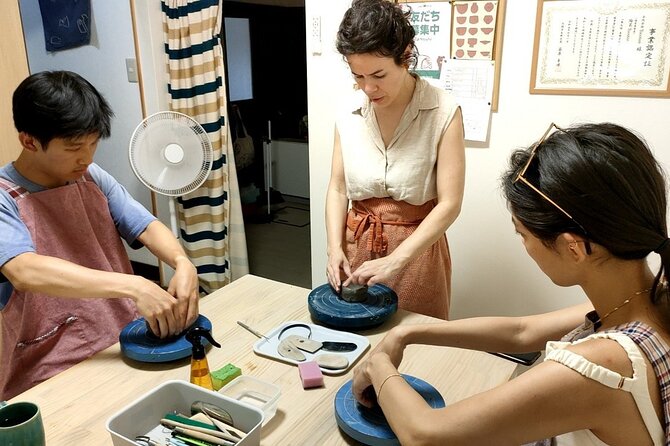
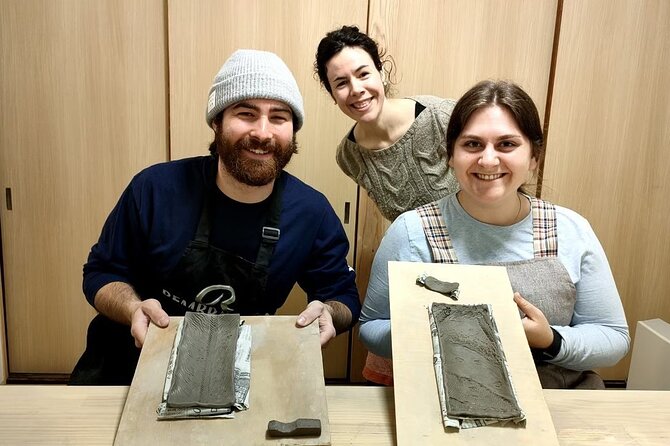
This is a compact workshop, not a full-day ceramics course. In about two hours, you learn the basic hand-building process, shape a piece connected to Japanese food culture, and talk with the instructors about pottery and daily life in Japan.
The private format changes the feel of the class. You are not trying to keep up with a large group or waiting for an instructor to reach your table. If your clay is too thick, your bowl begins to lose its shape, or you simply need another demonstration, there is time for direct help.
That makes this a strong choice for beginners. Several participants arrived with little or no experience and found the process approachable. The instruction is patient, and the aim is not to produce a museum-quality object in one sitting. It is to make something with your own hands while learning how Japanese ceramics connect to food, tea, and hospitality.
Experienced potters should note that this is a hand-building workshop rather than a wheel-throwing class. One participant specifically appreciated the difference between the two methods. If you already work with clay, you may enjoy the chance to use a different technique and create a piece with a Japanese purpose.
A few more options to weigh up in Japan
- Universal Studios Japan Studio Pass
★ 4.8 · 89,883 reviews - Universal Studios Japan Express Pass
★ 4.7 · 53,138 reviews - Osaka Amazing Pass
★ 4.7 · 21,697 reviews
Choosing between a sake set, sushi set, and chawan
Your choice of project gives the session a clear focus. Think about how you plan to use the piece at home before you arrive.
The sake set consists of a small bottle and a drinking glass. It is the best pick if you want a matched pair and like the idea of serving sake from something you made in Osaka. The small scale also makes it a practical souvenir, though the final shape and balance will depend on your own hand-building work.
The sushi set includes a sushi plate and a chopstick holder. This is a good option if you want a piece tied directly to Japanese dining. It also pairs nicely with the small sushi dish and sakura-shaped chopstick rest included with the class.
The chawan, or tea bowl, has a simpler outline but can be more demanding to shape evenly. A tea bowl is also a meaningful object in Japanese culture, so the class can offer useful context about tea and ceramics rather than just a craft lesson.
You will make the main pieces from clay during the session. The team handles firing afterward. The supplied details do not specify how much decorative choice or glazing you will have on your own pieces, so do not book expecting a long painting session. The emphasis is on shaping ceramic objects and understanding the process.
From Teradachō Station into everyday southern Osaka
The meeting point is Teradachō Station at 2 Chome-3 Tennojichokita in Abeno Ward. The studio is near public transportation, and the activity returns to the same meeting point when it ends.
Allow yourself enough time to locate the meeting point. The walk to the studio is part of the experience, especially if Ryo meets you at the station. The route passes through a local street with shops selling food, rather than leading through the polished commercial districts most people associate with Osaka.
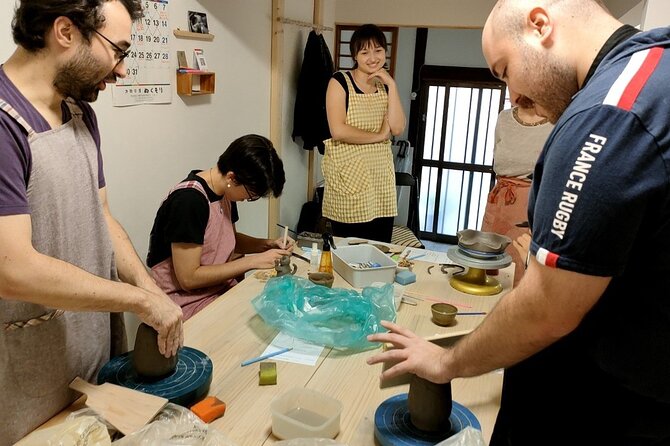
That contrast matters. You see a quieter, more residential side of the city before sitting down to make pottery. The building itself is a century-old, two-storey house, and the setting recalls the Showa era. It is not a grand cultural monument. Its value comes from its ordinary scale and lived-in character.
The surrounding area also gives you a useful chance to eat or browse away from the main tourist zones. The activity description does not promise a guided food tour, so keep your expectations in check. You are walking through a local neighborhood on the way to class, not receiving a full sightseeing program.
Anna and Ryo make the class feel like a visit
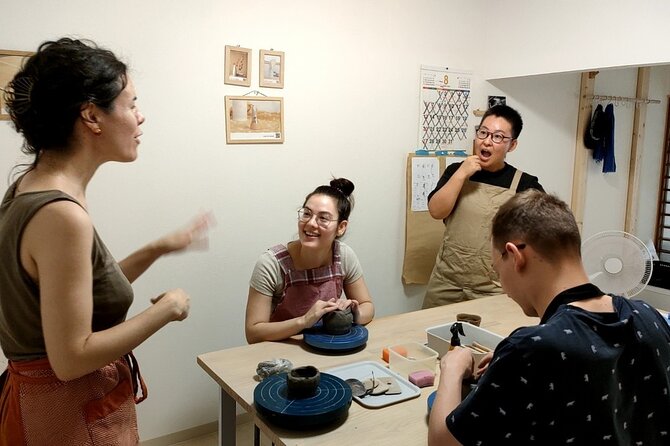
The instructors are central to the experience. Anna leads much of the pottery teaching, while Ryo has welcomed people at the station and helped introduce the neighborhood and studio.
The strongest praise centers on warmth, patience, and conversation. Anna is described as encouraging people to make each piece their own rather than copying a perfect model. That approach is especially helpful if you are nervous about making mistakes. Handmade pottery should show the hand that formed it, and the class appears to treat small irregularities as part of the charm.
The instruction also goes beyond technique. Anna and Ryo talk about Japanese culture, traditional pottery, and the role of ceramics in Japanese gastronomy. You might discuss how a bowl, plate, cup, or serving piece fits into a meal. These details give the clay a reason and a setting.
Several families and couples found the class easy to enjoy together. A parent and teenage son used it as a hands-on activity during a wider Japan trip, while couples appreciated the relaxed pace and private setting. Since only your group participates, the class can work well for people with different levels of ability.
Language is another major strength. You can take the workshop in English, Spanish, Catalan, or Japanese. The Spanish and Catalan options are particularly unusual among Osaka ceramics activities, so check the available time carefully if language is a deciding factor.
A completely different kind of day out:
- Tokyo Disney Resort – Tokyo Disneyland & Tokyo DisneySea Park Tickets
★ 4.8 · 99,488 reviews - SHIBUYA SKY Ticket
★ 4.7 · 46,509 reviews - Mt. Fuji Instagram-Worthy Spots Day Tour: Ladder Town, Oshino Hakkai, Lake Kawaguchi, Lawson Convenience Store (Departing from Tokyo Station or Shinjuku Station)
★ 4.8 · 35,467 reviews - JR Whole Japan Rail Pass
★ 4.8 · 29,150 reviews
What is included in the $94.13 price
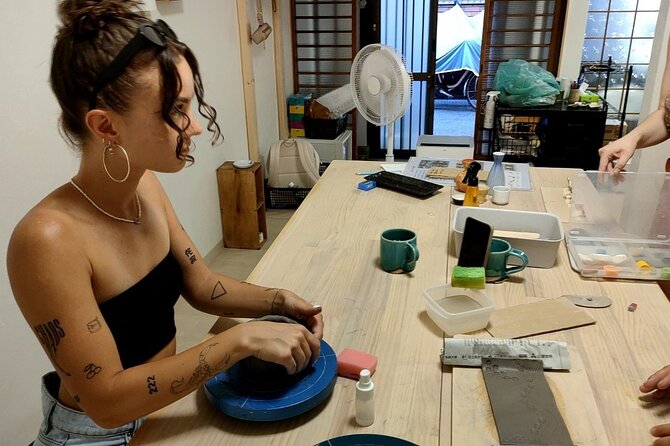
The cost is about $94.13 per person. That is not a bargain-basement craft class, but it covers more than clay and instruction.
Included are the instructor, materials, firing fee, tax, and a drink such as Japanese green tea, coffee, or water. You also receive a small traditional dish for sushi, decorated with traditional glaze, plus a sakura-shaped chopstick rest made by Anna.
The firing fee is important. You are paying for the work that happens after you leave, not simply for a temporary craft session. Your pieces need to be fired before they can become usable ceramics, and that later step is part of what turns the class into a lasting souvenir.
The included gifts also improve the value. You do not have to wait for your own work to be finished before taking something home. The small plate and flower-shaped chopstick rest give you an immediate reminder of the class.
Still, shipping is not included. The finished pottery can be sent to your home, but you pay the postage separately. The expected wait is about one month and a half. That delay is normal for fired ceramics, but you should factor it into your plans and budget.
If you are moving between hotels or leaving Japan soon, give the provider a reliable home address. The available information does not state the shipping price or whether pickup is possible, so ask before booking if delivery details matter to you.
The quiet reward of a handmade souvenir
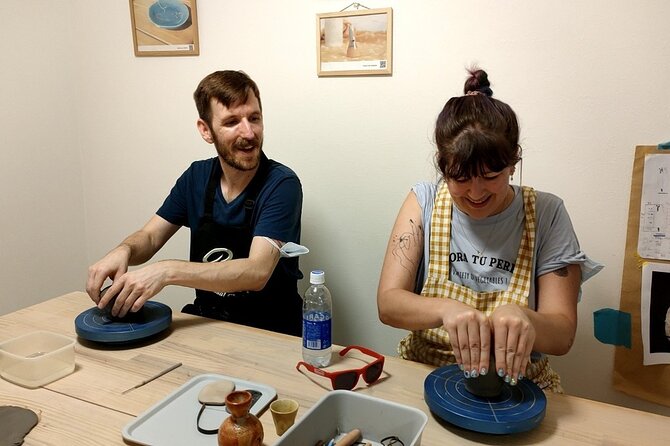
A mass-produced ceramic cup is easy to buy in Osaka. The point of this class is different. Your finished piece carries the marks of your own hands, along with memories of the room, the walk from the station, and the conversation around the worktable.
That makes the delayed delivery part of the experience. You leave Japan with a small gift, then wait for the larger souvenir to arrive later. When it does, you will have a useful object rather than a trinket that sits in a drawer.
The process also gives you a better sense of Japanese food culture. A sushi plate, sake set, or tea bowl is not just a shape. Each object serves a purpose at the table. The workshop uses that connection to explain why traditional ceramics remain such an important part of Japanese daily life.
Do not expect your piece to look exactly like the instructor’s. Beginners may produce uneven walls, slightly different sizes, or a shape with its own personality. That is part of the value. The class gives you guidance, not a factory mold.
Who will enjoy this Osaka activity most
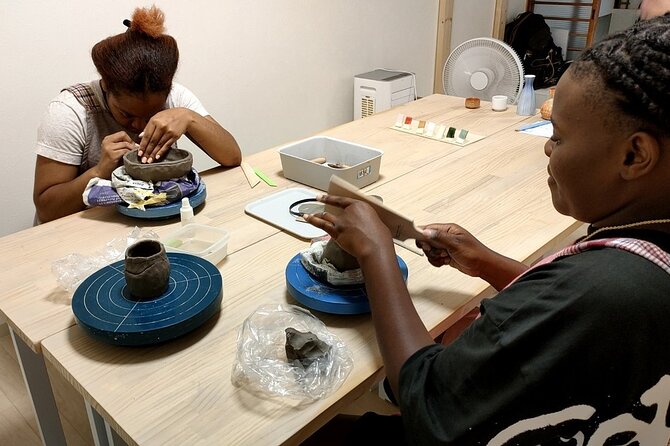
I would recommend this workshop to couples, families with older children, solo visitors who want conversation, and anyone who prefers making something to taking another photograph. It is also a good fit if you have already seen Osaka’s major districts and want a quieter neighborhood experience.
The class suits beginners especially well. You do not need to arrive with technical skills, and the private format allows the instruction to match your pace. Experienced potters may enjoy it too, particularly if hand-building is new to them or if they want to work in a Japanese food-related format.
It is less suitable if you need a finished souvenir immediately. The pottery takes about six weeks to ship, and postage is extra. It may also disappoint if you are looking specifically for wheel throwing, a large group social event, or a broad sightseeing tour of Osaka.
The two-hour length works nicely in a busy itinerary. You can schedule it in the morning or afternoon and still have most of the day free. A morning class leaves room for later sightseeing, while an afternoon class can follow time spent exploring southern Osaka.
Practical details that can affect your decision
Confirmation is provided when you book, and the activity is near public transportation. Most people can participate, and the session is private for your group alone.
Morning and afternoon times offer useful flexibility, but availability may be limited. Since the experience is often booked well in advance, planning around six weeks ahead is sensible. That is especially true if you need a Spanish or Catalan session or have only one open day in Osaka.
The meeting point and return point are the same, at Teradachō Station. Wear clothes you can work in without worry. The supplied information does not list a dress code, but clay and hands-on work are best approached in practical clothing.
Free cancellation is available until 24 hours before the start time. Changes or cancellations inside that window are not accepted for a refund. The activity also requires good weather, and if poor weather causes a cancellation, you are offered another date or a full refund.
Should you book the Ceramics Tocoton workshop?
Book it if you want a personal, hands-on introduction to Japanese ceramics and like the idea of seeing a less-touristed part of Osaka. The private teaching, four language choices, thoughtful included gifts, and later delivery of your own fired pieces give the experience real substance.
At $94.13, I see the best value for people who will appreciate the setting and conversation as much as the clay. If you want a cheap souvenir or a quick demonstration, spend your money elsewhere. If you want to make a useful object, meet warm instructors such as Anna and Ryo, and take home a story that arrives in the mail weeks later, this is a strong choice.
FAQ
How long does the pottery workshop last?
The workshop lasts approximately two hours.
What can I make during the class?
You can choose a sake set consisting of a small bottle and glass, a sushi set with a sushi plate and chopstick holder, or a chawan tea bowl.
Is the workshop private?
Yes. Only your group participates in the activity, so the instruction is personalized.
Which languages are available?
The workshop is offered in English, Spanish, Catalan, and Japanese.
Are firing and shipping included?
The firing fee is included. Shipping is not included, and the finished pottery takes about one month and a half to ship.
What meeting point does the workshop use?
The experience starts and ends at Teradachō Station, located at 2 Chome-3 Tennojichokita, Abeno Ward, Osaka.
Just added in Japan
- A One-of-a-Kind Sushi Experience in a Special Place of Japan★ 5.0 · 15 reviews
- Tokyo Cute Bento Cooking Class – Make a Kawaii Character Lunchbox★ 5.0 · 126 reviews
- Japanese Home Cooking Class & Walk in Todoroki Temple Tokyo★ 5.0 · 88 reviews
- Catch a Baseball Game in Tokyo with a Local – Tickets Included★ 5.0 · 24 reviews
- Japan Tokyo Tower Observatory Deck E-Ticket★ 4.0 · 34 reviews
- JDM Experience with Fast&Furious RX-7 (English speaking Driver)★ 5.0 · 57 reviews
- Tokyo Private Day Tour by Car with English speaking Driver Guide★ 4.0 · 29 reviews
- Japan Classic 10 Day – One Life Adventures★ 5.0 · 129 reviews
Osaka Tours, compared.





Umeda Sky Building & Kuchu Teien Observatory Ticket in Osaka
Read our review →