
Reviewed · WORKSHOPS
Osaka: Sushi Class in Dotonbori
Sushi is better when you make it. This three-hour class in Dotonbori teaches you three distinct Japanese sushi styles, from familiar nigiri to Osaka’s local pressed sushi. I like the small groups, limited to eight people, and the clear English instruction from friendly teachers such as Yoshi, Yoko, Ami, Eriko, and Naomi. I also like that the food is substantial, fresh, and eaten at the end rather than treated as a quick demonstration. The main consideration is that the cooking school can be tricky to spot, so allow extra time to find Cooking Sun Osaka.
The $67 price is strong value for a three-hour activity that includes all ingredients and a full meal. You will not slice the fish yourself, which may disappoint experienced home cooks, but beginners get careful step-by-step guidance and a satisfying chance to make sushi that looks and tastes good.
In This Review
- Five useful things to know before booking
- What makes this Dotonbori sushi class worthwhile
- A three-hour schedule with plenty to eat
- First technique: the salad roll
- Second technique: shaping nigiri
- Third technique: Osaka’s pressed oshizushi
- The meal at the end is part of the value
- The instructors make the difference
- Value at $67 per person
- Dietary needs and accessibility
- Who should book this experience?
- Should you book the Osaka sushi class?
- FAQ
- How long does the Osaka sushi class last?
- What types of sushi will I make?
- Is the class taught in English?
- How many people can join the class?
- Where does the class meet?
- Can I request vegetarian or gluten-free food?
- Is the activity wheelchair accessible?
Five useful things to know before booking
- Three sushi styles in one class: Make a vegetable and tuna salad roll, hand-shaped nigiri, and Osaka-style oshizushi.
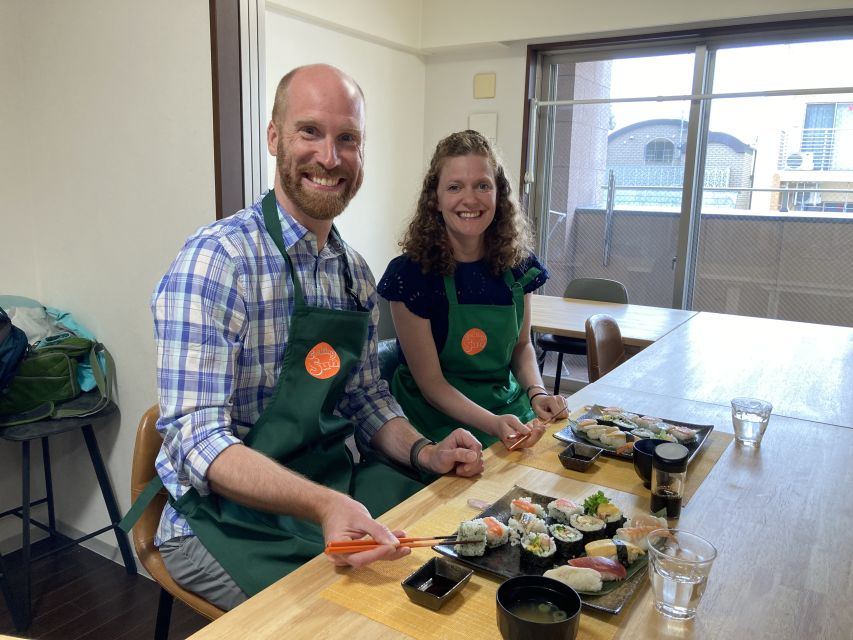
- Small groups matter: The class accepts no more than eight people, and groups of four have received especially attentive instruction.
- You eat what you make: Several courses produce enough food for a hearty lunch, not just a few samples.
- English instruction is a real strength: Teachers explain technique, food customs, preservation, and how to recreate parts of the meal at home.
- Find the entrance carefully: The meeting point is Cooking Sun Osaka, room 202. Press 202, then press the 呼出 call button at the entrance.
- Tell the school about dietary needs: Vegetarian and gluten-free options can be requested in a booking note.
What makes this Dotonbori sushi class worthwhile
Dotonbori is famous for neon signs, street food, and restaurants packed into a lively part of Osaka. This class gives you a different way to understand the city’s food culture. Instead of simply ordering sushi at a counter, you learn how rice, seaweed, fillings, toppings, and pressure create several very different dishes.
I especially like the regional focus. Nigiri may be the sushi style most familiar to you, but oshizushi connects the class to Osaka and the wider Kansai region. It is also called box sushi, because the finished sushi is made in a square wooden frame before being cut into pieces.
The class is aimed at beginners, but it is not childish or overly simplified. The teachers explain the work carefully, then let you handle the ingredients. People who had never made sushi before were able to produce attractive plates with patient guidance.
The strongest part is the combination of practical work and cultural explanation. Instructors have discussed Japanese food customs, dashi, pickling, preservation, and the meaning behind different courses. That makes the experience more useful than a simple recipe lesson.
A few more options to weigh up in Japan
- Universal Studios Japan Studio Pass
★ 4.8 · 89,883 reviews - Universal Studios Japan Express Pass
★ 4.7 · 53,138 reviews - Osaka Amazing Pass
★ 4.7 · 21,697 reviews
A three-hour schedule with plenty to eat
The exact starting time depends on availability, but you should set aside the full three hours. That gives the instructors time to explain the ingredients, demonstrate each method, let you practice, and serve the finished food.
The class is held at Cooking Sun Osaka in room 202. At the entrance, press 202 and then the button marked 呼出, which means call. The school’s location has caused some confusion for visitors, including one taxi driver who had trouble finding it. Look for the tree outside the building, and give yourself extra minutes rather than arriving at the last second.
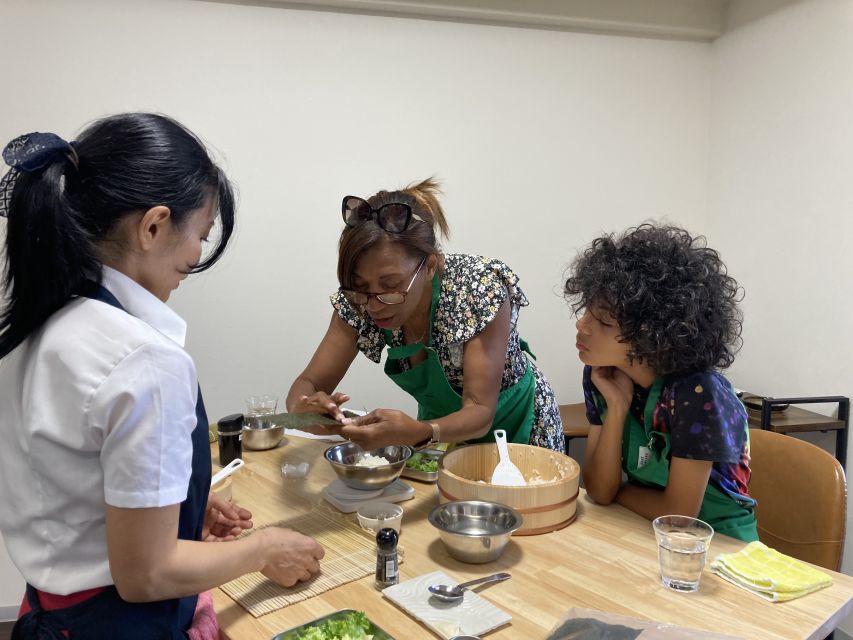
Once inside, the class takes place in a modern, clean kitchen with the equipment needed for the lesson. The small-group format helps here. With a maximum of eight participants, the instructor can watch your hand position, rice portions, and rolling technique instead of leaving you to guess.
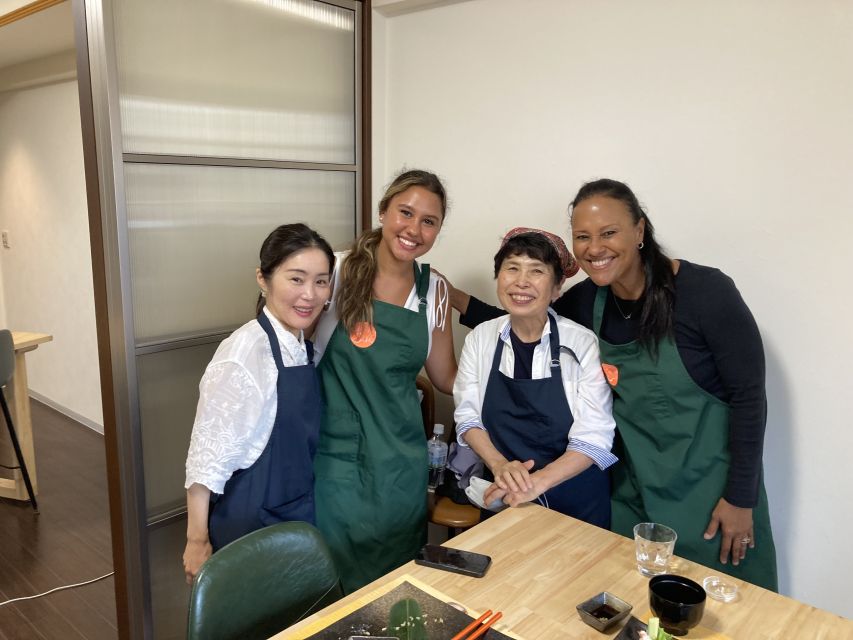
The teachers speak English and are used to explaining unfamiliar kitchen terms. Yoshi has been praised for thorough instructions and for offering Osaka food suggestions after class. Yoko has been described as funny, patient, and warm, while Ami, Eriko, and Naomi have also received praise for being helpful and attentive.
First technique: the salad roll
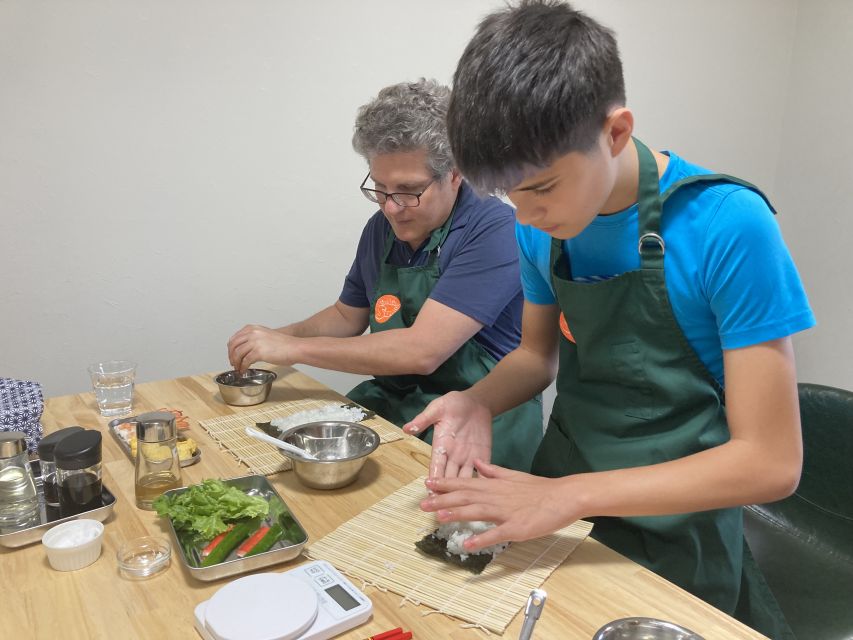
The salad roll is the most approachable of the three preparations. It combines crab-flavored kamaboko, lettuce, cucumber, and tuna mixed with mayonnaise. Nori forms the outer layer, while tamagoyaki, or Japanese rolled omelet, sits at the core.
This roll gives you a useful introduction to sushi assembly. You learn how to place ingredients in a line, control the amount of filling, and roll the nori and rice firmly enough to hold its shape without crushing the vegetables.
The ingredients are familiar, but the combination still feels distinctly Japanese. The crisp vegetables contrast with the creamy tuna and mayonnaise, while the egg adds sweetness. It is also a good choice for anyone who feels uncertain about handling raw fish, since the roll’s main character comes from prepared fillings and fresh vegetables.
The salad roll may sound less exciting than nigiri, but it is the most practical dish to repeat at home. You can adjust the fillings, use the technique for packed lunches, and make a vegetarian version if you arrange that in advance.
Second technique: shaping nigiri
Nigiri is the class’s lesson in restraint. A small piece of vinegared rice is shaped by hand, then topped with an ingredient such as fish, shellfish, or omelet.
The key is not to make a large rice ball. Nigiri should be compact and easy to eat in one or two bites. The instructor demonstrates the correct amount of rice and shows you how to shape it without pressing too hard.
For a first attempt, this is more difficult than it looks. Rice can stick to your hands, lose its shape, or become too dense. That is where the close instruction pays off. Several participants appreciated that the teachers demonstrated each step clearly before asking the class to repeat it.
One small limitation is worth noting: you should not expect to slice the fish yourself. At least one experienced cooking-class participant had hoped for that part of the process. If fish preparation is your main goal, another class may suit you better. If your interest is in shaping and presentation, this lesson still gives you the essential experience.
Nigiri also shows why sushi depends on balance. Too much topping overwhelms the rice. Too much rice hides the ingredient. The exercise makes you pay attention to texture, proportion, and hand control, even if you have never thought about those details while eating at a restaurant.
A completely different kind of day out:
- Tokyo Disney Resort – Tokyo Disneyland & Tokyo DisneySea Park Tickets
★ 4.8 · 99,488 reviews - SHIBUYA SKY Ticket
★ 4.7 · 46,509 reviews - Mt. Fuji Instagram-Worthy Spots Day Tour: Ladder Town, Oshino Hakkai, Lake Kawaguchi, Lawson Convenience Store (Departing from Tokyo Station or Shinjuku Station)
★ 4.8 · 35,467 reviews - JR Whole Japan Rail Pass
★ 4.8 · 29,150 reviews
Third technique: Osaka’s pressed oshizushi
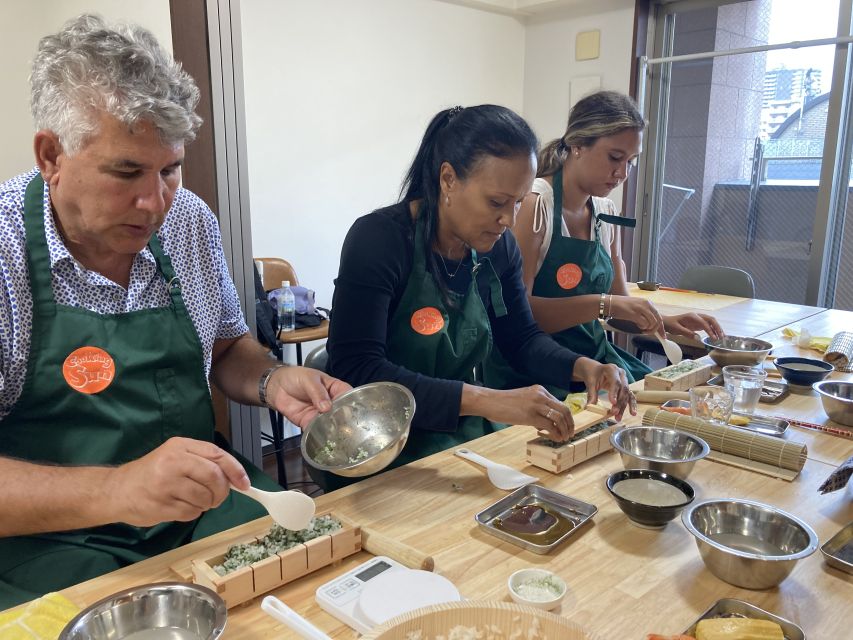
Oshizushi is the most distinctive part of the class because it is strongly associated with Kansai and Osaka. Instead of shaping each piece by hand, you fill a square wooden mold with sushi rice and toppings, then press everything together.
The finished sushi is removed from the frame as a solid square. You cut it into pieces just before eating. That firm shape and clean cross-section make oshizushi different from both rolled sushi and nigiri.
This method also gives you a small lesson in food preservation. Pressing rice and toppings together was a useful traditional way to prepare sushi, and the compact form is practical for cutting and serving. The instructor may also explain related Japanese methods such as pickling and preserving food, subjects that have made this class especially interesting for people who want cultural context along with cooking instruction.
Oshizushi is the reason I would choose this class over a generic sushi lesson. You get to try a style that is local to the region rather than spending the whole session on the type of sushi you can find almost anywhere.
The meal at the end is part of the value
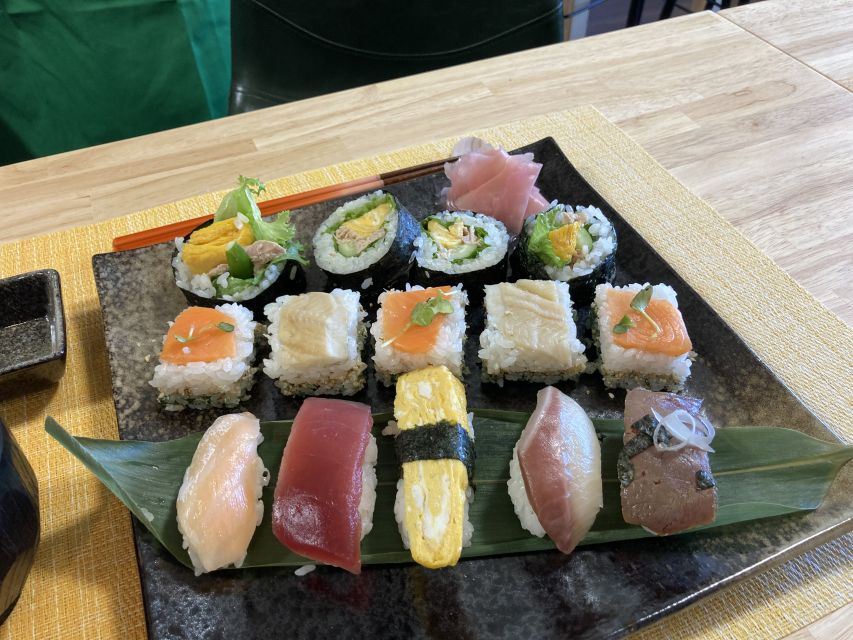
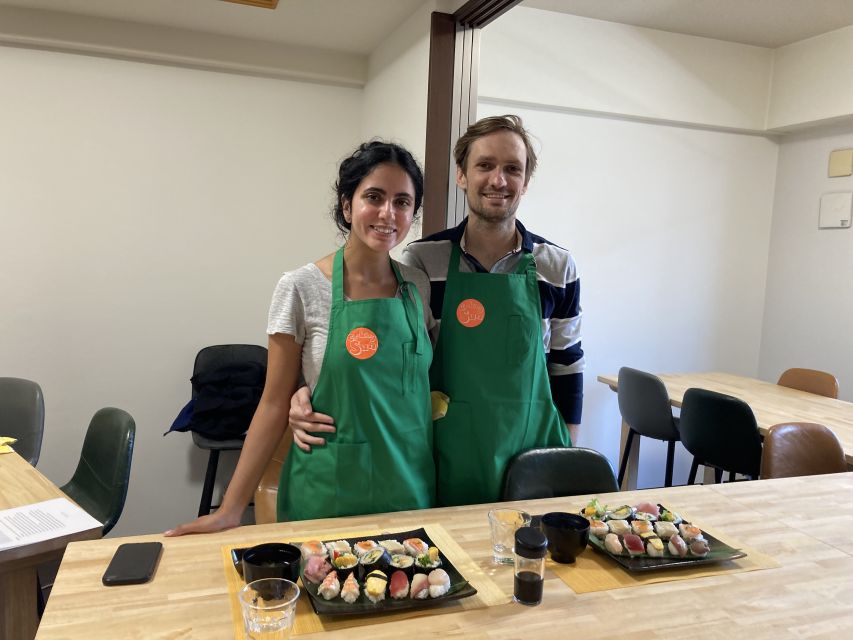
You eat the sushi you prepare, and the portions appear to be generous. Multiple participants have found there was plenty of food for a full lunch, including enough for people with large appetites.
The experience can also include additional Japanese dishes such as dashi and miso soup, depending on the class arrangements. One class experience included dashi, a salad roll, nigiri, oshizushi, and miso soup, which helps explain why three hours feels justified.
Freshness matters here. The ingredients are prepared for the class, and the finished sushi is eaten right away. Your food may not look as precise as restaurant sushi, but making it yourself gives the meal a pleasant sense of achievement.
You should arrive hungry, but not so hungry that you cannot concentrate. There is a fair amount of preparation before eating, and the class works best when you enjoy both the process and the meal.
The instructors make the difference
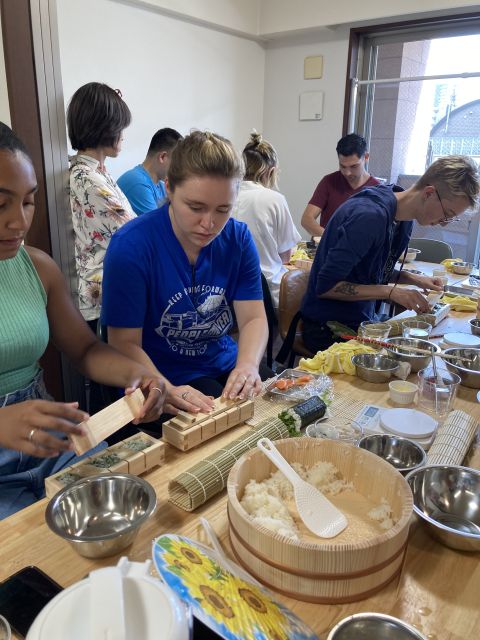
The teaching is the most consistently praised part of the experience. The instructors are not simply there to hand you ingredients and watch from the side. They demonstrate, correct mistakes, answer questions, and keep the class moving.
English is the working language, and the teachers have been praised for speaking clearly. That matters when you are learning small physical actions, such as how tightly to roll nori or how much rice to use for nigiri.
The personal interaction also goes beyond the kitchen. Yoshi has shared suggestions about where to go in Osaka and what foods to try. Other instructors have talked about Japanese culture and how to shop for ingredients or remake parts of the meal at home.
The small group helps create that atmosphere. A class of four can feel almost private, while eight participants is still manageable. If you prefer a quiet, independent cooking lesson, the conversation may feel more social than expected. For most people, that is part of the appeal.
Value at $67 per person
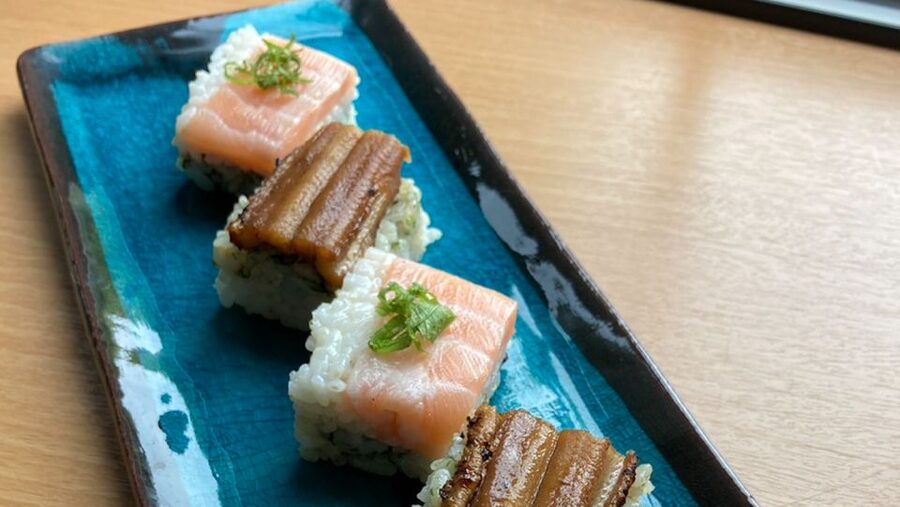
At $67, this is not the cheapest meal you can buy in Osaka. It is good value if you want an activity, instruction, and a substantial lunch in one package.
The three-hour length is important. A short demonstration followed by a few bites would not justify the price as well. Here, you learn three techniques and may also prepare soup or other supporting dishes. You leave with practical knowledge rather than only photographs.
The value is strongest for sushi lovers, first-time cooks, couples, families, and anyone who wants a planned indoor activity in central Osaka. It is also a smart choice for a honeymoon or special trip, since the class is interactive and gives you something to remember beyond another restaurant meal.
If you already make sushi regularly, the class may feel basic. You might prefer an advanced fish-cutting lesson or a class focused on professional knife work. Since this experience does not include slicing the fish, experienced cooks should book it for the Osaka-style oshizushi and cultural instruction rather than advanced technique.
Dietary needs and accessibility
Vegetarian and gluten-free options are available by request, but you need to leave a note when booking. Do not assume that the class can change the menu at the last minute.
The activity is listed as wheelchair accessible. The class is conducted in English, and the group size is limited to eight participants.
Cancellation is flexible up to 24 hours before the activity for a full refund. You can also reserve and pay later, which helps if your Osaka schedule is still changing.
Who should book this experience?
I would recommend this class to you if you want to do more than eat sushi. It suits beginners particularly well because the instructions are detailed, the teachers are patient, and the finished dishes are part of the lesson.
It is also a good pick if you want local context. Nigiri gives you a familiar Japanese favorite, while oshizushi connects the meal to Osaka and Kansai. The salad roll adds a fresh, approachable preparation that is easy to remember.
Families and couples should find the format easy to enjoy, provided everyone is comfortable spending three hours in a kitchen. The food quantity makes the price easier to accept, and the small group keeps the instruction personal.
I would think twice if you want a professional sushi apprenticeship, extensive fish butchery, or a lesson built around raw seafood alone. This is a friendly cultural cooking class, not a specialist culinary course.
Should you book the Osaka sushi class?
Yes, if you want a hands-on Osaka activity with clear English teaching, plenty of food, and three useful sushi techniques. The standout value is oshizushi, the local pressed style that gives the class a genuine Osaka connection.
Book it especially if you are new to sushi-making or want an easy activity to share with a partner or family member. Leave a dietary note in advance, arrive early enough to find room 202, and expect to eat well.
For experienced cooks, book only if the Kansai focus and friendly instruction appeal to you. The lack of fish slicing limits the technical challenge, but the class remains a well-priced and enjoyable introduction to Japanese food culture.
FAQ
How long does the Osaka sushi class last?
The class lasts three hours. Starting times vary, so check availability for the date you want.
What types of sushi will I make?
You will make a salad roll with nori, vegetables, tuna mixed with mayonnaise, crab-flavored kamaboko, and tamagoyaki. You will also make nigiri and Osaka-style oshizushi, or pressed sushi.
Is the class taught in English?
Yes. The instructor language is English.
How many people can join the class?
The class is limited to eight participants. Smaller groups, including groups of four, may be available.
Where does the class meet?
It meets at Cooking Sun Osaka, room 202. At the entrance, press 202 and then press the 呼出 call button.
Can I request vegetarian or gluten-free food?
Yes. Leave a note when booking to request a vegetarian or gluten-free option.
Is the activity wheelchair accessible?
Yes. The activity is listed as wheelchair accessible.
Just added in Japan
- Japanese Home Cooking Class & Walk in Todoroki Temple Tokyo★ 5.0 · 88 reviews
- A One-of-a-Kind Sushi Experience in a Special Place of Japan★ 5.0 · 15 reviews
- Tokyo Cute Bento Cooking Class – Make a Kawaii Character Lunchbox★ 5.0 · 126 reviews
- Japan Tokyo Tower Observatory Deck E-Ticket★ 4.0 · 34 reviews
- Catch a Baseball Game in Tokyo with a Local – Tickets Included★ 5.0 · 24 reviews
- JDM Experience with Fast&Furious RX-7 (English speaking Driver)★ 5.0 · 57 reviews
- Tokyo Private Day Tour by Car with English speaking Driver Guide★ 4.0 · 29 reviews
- Japan Classic 10 Day – One Life Adventures★ 5.0 · 129 reviews
Workshops, compared.
Sushi Making Tokyo Roll and Authentic Japanese Sushi Class
Read our review →
Gion Make Your Own Chopsticks with Engraving Option
Read our review →
Roll and Authentic Sushi Making Class in Asakusa
Read our review →
Ramen Cooking Class at Ramen Factory in Kyoto
Read our review →
Tokyo Asakusa Chopsticks Workshop: Make Your Own Pair
Read our review →
Ring Making Workshop : Vintage Japanese Coin Ring
Read our review →Browse the lists this tour appears in