
Reviewed · WORKSHOPS
Otsu-e Folk Art Workshop & Local Culture Walk Near Kyoto
Otsu keeps its best stories off Kyoto’s main route. This small-group experience pairs Otsu-e folk painting with old shops, a sake brewery, festival floats, and a preserved merchant house. I like the easy access, just about 10 minutes by train from Kyoto Station, and the personal touch of Misato Takahashi, an Otsu native from a family tied to the town’s painting tradition. The main consideration is pace: you will walk through shopping streets and make several short stops, so this suits you best if you have moderate fitness and enjoy local detail more than famous sights.
I also like that the tour ends with something you make yourself, either a Lucky Oni Bell or Three Wise Monkeys painting, rather than just another photograph. The mochi, dried snacks, sake-shop stop, and seasonal pickle add genuine local flavor. At $104.51 per person, it is not a cheap walk, but the private format, included workshop, guide, food treats, and entry fees make the price easier to justify, especially for a small group.
In This Review
- Key points at a glance
- Why Otsu makes a good break from Kyoto
- Meeting in Otsu and finding the route
- Old landmarks and the vanished lake view
- Mochi, dried foods, and the taste of Otsu
- A 365-year sake tradition and an Otsu festival float
- Inside an old Otsu merchant house
- Otsu-e, from folk image to living craft
- Ninety minutes at Ichie Wado
- What the $104.51 price covers
- Pace, walking, and the private format
- Who should book this Otsu experience?
- Should you book it?
- FAQ
- Where does the Otsu-e workshop tour take place?
- How long does the experience last?
- How far is Otsu from Kyoto Station?
- Is the train fare from Kyoto included?
- What will I paint during the workshop?
- Is the painting workshop included in the price?
- What food and drinks are included?
- Is lunch included?
- Is this a private tour?
- Is the tour suitable for someone with limited fitness?
- Are admission fees included?
- Can I cancel for a full refund?
Key points at a glance
- Otsu-e has a 400-year local story: Learn about a folk-art tradition that grew in Otsu near Lake Biwa.
- Misato Takahashi brings family knowledge: She is an Otsu native and the daughter of Otsu-e artist Wado Takahashi, from the Takahashi Shozan master family.
- The route feels local: You visit a mochi shop, dried-food store, pickle shop, sake brewery, merchant house, and festival float hall.
- The workshop lasts 90 minutes: Welcome tea, sweets, an Otsu-e presentation, and hands-on painting give the tour a satisfying finish.
- The group is private: Only your own party takes part, with group discounts available.
- Kyoto access is simple: Otsu is roughly a 10-minute train ride from Kyoto Station, though train fares are separate.
Why Otsu makes a good break from Kyoto
Kyoto can fill a day with temples, gardens, and crowds. Otsu offers a different kind of Japanese culture, one found in working streets, old storefronts, food traditions, and local festivals.
The town sits beside Lake Biwa and has long served as a place of movement and trade. This tour focuses on the streets around the Old Tokaido Road and Miidera sando, connecting everyday shops with Otsu’s older customs. You are not simply looking at a display of traditional objects. You are seeing where food is sold, sake is made, houses are preserved, and folk paintings continue to be taught.
That change of setting matters. You can reach Otsu quickly from Kyoto, but the mood shifts once you leave Kyoto’s tourist circuit. The tour is a good choice if you have already seen the headline sights in Kyoto or want one morning or afternoon devoted to a smaller Japanese city.
The experience lasts about three and a half hours. It is a private activity, so your own group participates rather than joining a large scheduled crowd. That gives Misato room to adjust the conversation to your interests, a useful advantage if you care more about art, food, architecture, or local history.
Other trips worth a look in Japan:
- Tokyo Disney Resort – Tokyo Disneyland & Tokyo DisneySea Park Tickets
★ 4.8 · 99,488 reviews - Universal Studios Japan Studio Pass
★ 4.8 · 89,883 reviews - Universal Studios Japan Express Pass
★ 4.7 · 53,138 reviews
Meeting in Otsu and finding the route
The detailed route begins at the North ticket gate of Otsu Station. The booking information also identifies Ichie Wado Seminar House at 4-17 Kozekicho as the start and end point, so you should check the final meeting instructions carefully before setting off.
This is a practical point, not a minor one. The workshop venue is in front of Nagara Jinja Shrine, while the walking route includes Otsu Station and several shopping streets. Confirming where Misato expects to meet you will prevent a needless scramble at the start.
Train fare is not included. The JR trip from Kyoto to Otsu is listed at JPY 200 for an adult, and a valid JR Pass covers it. Lunch is also not included, though the tour provides several snacks and sweets along the way.
Old landmarks and the vanished lake view
One early stop is the ginkgo trees of Kekaiji Temple in Kyomachi 3-chome. These trees once served as a landmark for boats on Lake Biwa, which gives the stop more meaning than a quick look at attractive foliage.
You get a glimpse of how closely Otsu’s streets were linked to the lake. Today, the practical purpose of the trees is gone, but the story connects the town’s built environment with its water route and past trade.
This is the kind of detail that can be easy to miss on your own. There is no admission fee, and the stop is brief. Do not expect a major temple visit here. Think of it as a small piece of local orientation that helps explain Otsu’s place beside Lake Biwa.
Mochi, dried foods, and the taste of Otsu
At Mochihyo, a Japanese sweets shop facing the Old Tokaido Road, you select sweets to enjoy later during the painting session. The stop lasts around 10 minutes and costs nothing extra.
The best part is the connection between the shop and the workshop. You are not buying a random snack at a station. You are choosing something from a local business, then carrying it into the final cultural activity. The treat becomes part of the afternoon rather than a separate purchase.
Next comes Senmaruya on Nakamachi Street, a long-established dried-food store. The shop sells ingredients used in Japanese cooking, and you pick up a retro snack. This stop gives you a look at a practical side of Japanese food culture, where preserved foods remain part of daily cooking rather than merely museum pieces.
You also visit Yaoyo, a long-established pickle shop in the Hishiya-cho shopping arcade. Here you choose a seasonal pickle to enjoy later. The pickle stop received especially warm praise for its flavor, so it is worth paying attention to this small tasting moment. A pickle shop may sound modest, but it offers a direct lesson in Japanese eating habits, preservation, and seasonality.
These food stops are one of the tour’s strongest features. They break up the walking, add taste and texture, and show you local commerce at a human scale. Do keep in mind that the tour is not a full meal. If you need lunch, plan it separately.
A completely different kind of day out:
- SHIBUYA SKY Ticket
★ 4.7 · 46,509 reviews - Mt. Fuji Instagram-Worthy Spots Day Tour: Ladder Town, Oshino Hakkai, Lake Kawaguchi, Lawson Convenience Store (Departing from Tokyo Station or Shinjuku Station)
★ 4.8 · 35,467 reviews - JR Whole Japan Rail Pass
★ 4.8 · 29,150 reviews - Mt Fuji and Hakone 1-Day Bus Tour Return by Bullet Train
★ 5.0 · 26,383 reviews
A 365-year sake tradition and an Otsu festival float
Hirai Shoten, in the Maruya-cho shopping arcade, is a sake brewery with 365 years of history. It sells its own local brand, giving you a chance to see another long-running food tradition connected to Otsu.
The supplied details do not promise a sake tasting, so you should treat this as a shop and brewery visit rather than a drinking session. The value comes from seeing how a local producer fits into the town’s old commercial streets.
The Otsu Festival Hikiyama Exhibition Pavilion is nearby. One of the actual floats pulled during the Otsu Festival is displayed inside. The visit lasts about 10 minutes and is included in the tour.
A festival float is easier to understand when you know it is used in a real event, not built solely for display. The pavilion gives you a concrete look at the scale and craft behind Otsu’s annual celebration. It also adds variety to the day: food, architecture, sake, festival culture, and painting all appear within a short route.
Inside an old Otsu merchant house
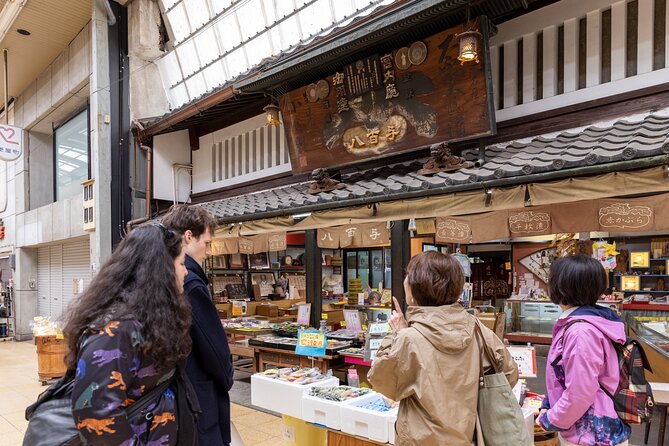
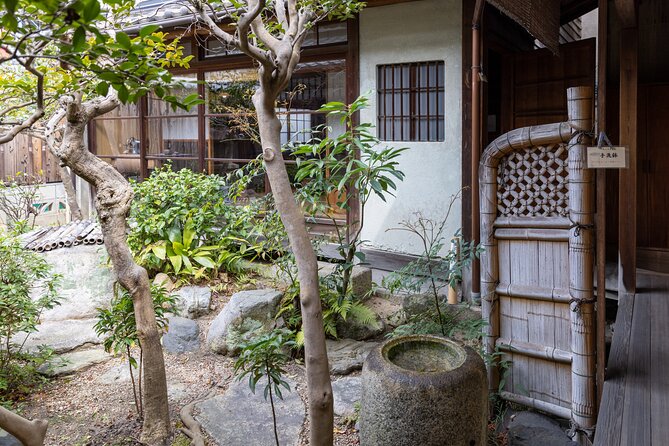
At Otsu Hyakuchokan, you enter a well-preserved Otsu Machiya merchant house. The house tour lasts about 20 minutes, and admission is included.
This is one of the more useful stops for understanding how an older Otsu business family lived and worked. A machiya is not just an attractive old building. It reflects the way commercial and domestic life could share one narrow urban property.
The stop is short, so do not expect a long museum visit. That brevity is also helpful. You get architectural context without losing the flow of the walking route. If old houses interest you, this may be one of the places where Misato’s explanations add the most value.
Otsu-e, from folk image to living craft
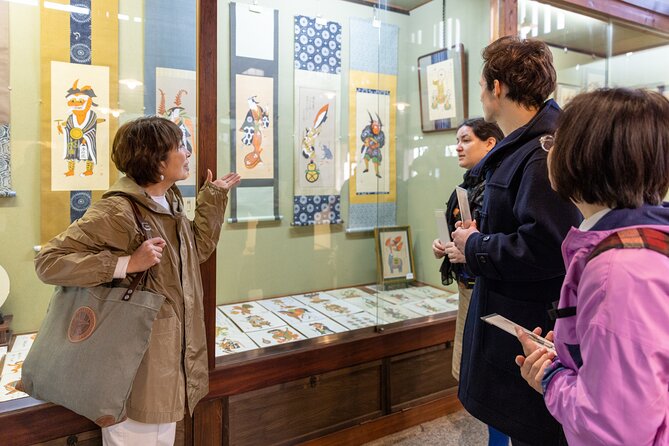
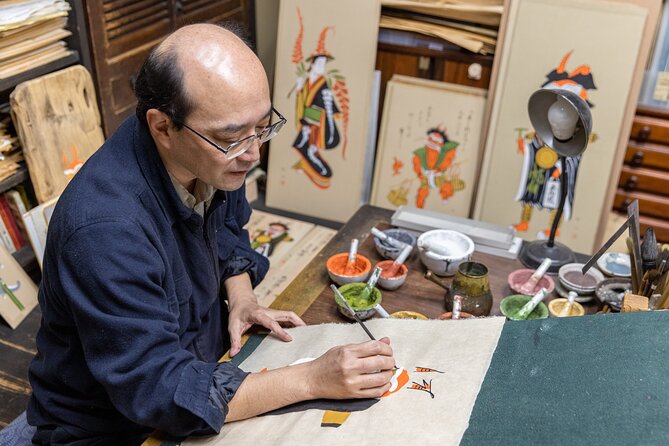
The tour’s central subject is Otsu-e, a form of folk painting that began in this area about 400 years ago. It developed as accessible art, with recognizable figures and themes that ordinary people could buy and carry away.
At Otsu-e no Mise, also called Otsu Enomise, you visit a folk-art painting store and workshop on Miidera sando. The shop is connected with the fifth Takahashi Shozan, linking the present-day craft to the family tradition behind the tour.
This is where Misato’s background matters. She is an Otsu native and the daughter of Wado Takahashi, an Otsu-e artist originally from the Takahashi Shozan master family. Her interest is not limited to presenting an old art form. She is committed to keeping the tradition active in Otsu.
That family connection does not mean you need previous art knowledge. The appeal is that you can ask about the images, methods, and local meaning while standing in a shop and workshop tied to the craft itself. You also receive an original Otsu-e souvenir, so the art continues beyond the visit.
Ninety minutes at Ichie Wado
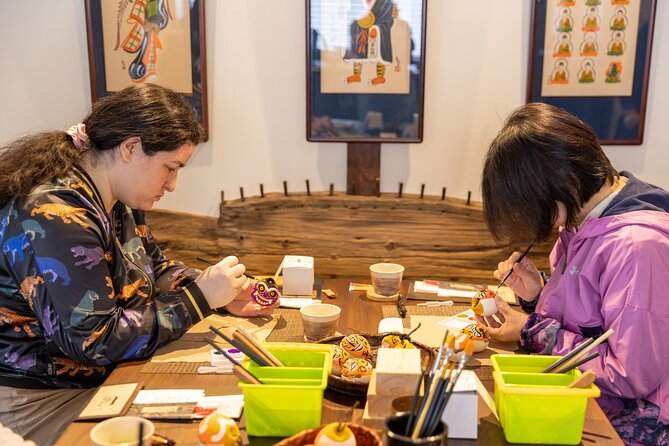
The final and longest portion takes place at Ichie Wado Seminar House, in front of Nagara Jinja Shrine. The workshop lasts about 90 minutes and is the main reason to choose this tour over an ordinary town walk.
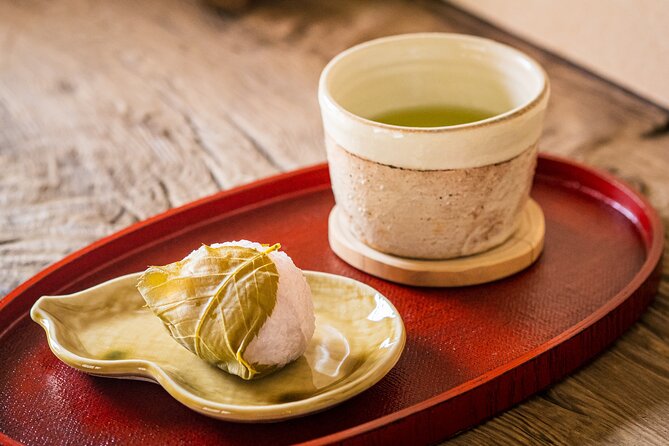
You begin with a presentation about Otsu-e’s history and visual features. Welcome tea and sweets are served, along with the local snacks collected earlier. This creates a calm change of pace after the shopping streets.
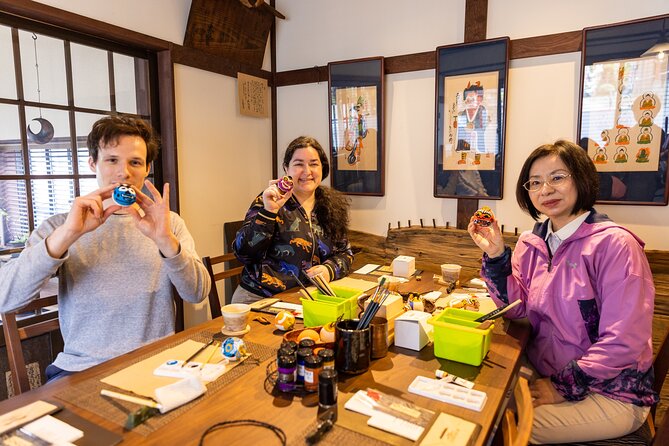
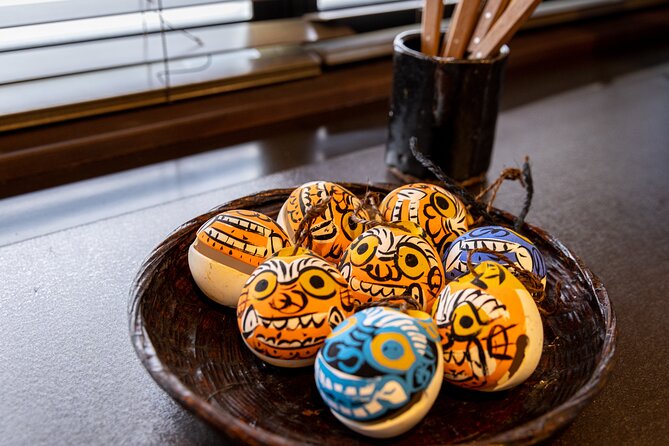
Then you paint your own Otsu-e piece. The listed choices are a Lucky Oni Bell or Three Wise Monkeys. The experience is hands-on, but you do not need to be an artist. The point is to learn the look and character of Otsu-e by making a version yourself.
The Lucky Oni Bell is an especially memorable choice because the finished object works as both a souvenir and a reminder of the town’s folk-art tradition. One person described enjoying the chance to paint an oni bell and take it home, which is exactly the kind of lasting result that makes a short cultural experience feel worthwhile.
The workshop also gives you something that a standard sightseeing stop cannot: time to slow down. You can listen, handle materials, make choices, and leave with an object connected to the place. If you are visiting Japan with children or with someone who prefers doing rather than simply looking, this part may be the strongest selling point.
What the $104.51 price covers
At $104.51 per person, this is a premium half-day activity. You are paying more than you would for a self-guided walk through Otsu, but the comparison is not quite fair.
The price includes an English-speaking professional guide, the painting workshop, an original Otsu-e souvenir, tea and sweets, local snacks, and admission to Otsu Hyakuchokan and the Otsu Festival Float Exhibition Hall, or an alternative site if needed. Local taxes are included as well.
You still pay your own train fare from Kyoto and arrange lunch separately. Even so, the food selections, private guide, included admissions, and 90-minute workshop give the cost real substance. The value improves when two or more people share the experience, especially since group discounts are available.
I would not choose this tour simply because it is the cheapest way to see Otsu. It is better understood as a private cultural lesson with a craft activity attached. If you mainly want temples or scenic lake views, you can spend less elsewhere. If you want local food, a working folk-art tradition, and personal guidance, the price is more reasonable.
Pace, walking, and the private format
The tour covers several stops in Otsu’s streets and shopping arcades. Individual visits are generally short, from 10 minutes at a food shop or exhibition pavilion to 20 minutes at the machiya house and Otsu-e store.
You should have a moderate level of physical fitness. The route uses public streets and includes repeated movement between stops, though the detailed information does not give a total walking distance. Comfortable shoes are a sensible choice.
Because only your group participates, you have more freedom than on a fixed large-group tour. Misato has shown flexibility in tailoring the experience to interests, which could be useful if your group wants more attention to art, food, or Otsu’s past. The private format is also better for questions and for families or friends who prefer not to keep pace with strangers.
The tradeoff is price. A private activity usually costs more per person than a large group outing. Here, group discounts may help, and the format is particularly attractive for a small party that values conversation.
Who should book this Otsu experience?
I would recommend it to you if you want a short trip from Kyoto that feels distinct from Kyoto itself. It is well suited to people interested in folk art, Japanese food traditions, old merchant homes, local festivals, and small-town streets.
Families may enjoy the painting task and snacks. Couples and friends can share the activity without needing advanced art skills. Repeat visitors to Japan may appreciate the focus on a regional tradition rather than another famous temple.
You may want to skip it if your schedule is very tight, you dislike walking between several short stops, or you want a full meal and extensive sightseeing in one outing. The tour is also not designed as a broad survey of every major attraction in Otsu. Its strength is its focused connection between local culture and Otsu-e.
The experience is currently rated five out of five from 13 ratings, with 100 percent recommending it. Those numbers point to a consistently strong response, but the more useful takeaway is the pattern: the personal guide, local food, off-route setting, and hands-on oni-bell painting are the parts most likely to make the day memorable.
Should you book it?
Book this experience if you want to make something, taste something, and understand a local tradition during a quick trip from Kyoto. Misato Takahashi’s family connection to Otsu-e gives the workshop a clear sense of place, while the old shops and merchant house keep the day grounded in ordinary Otsu life.
I would especially book it for a private group of friends or family members who can use the group discount and want an activity with a souvenir that they create themselves. Before paying, confirm the exact meeting instructions because the route begins at Otsu Station while the workshop venue is listed as both the meeting and ending location. If that detail is clear and the walking pace suits you, this is a thoughtful, well-priced way to spend three and a half hours outside Kyoto.
FAQ
Where does the Otsu-e workshop tour take place?
The experience takes place in Otsu, Japan. The painting workshop is held at Ichie Wado Seminar House, 4-17 Kozekicho, Otsu, in front of Nagara Jinja Shrine.
How long does the experience last?
The tour lasts approximately 3 hours and 30 minutes.
How far is Otsu from Kyoto Station?
Otsu is about a 10-minute train ride from Kyoto Station.
Is the train fare from Kyoto included?
No. The JR fare from Kyoto to Otsu is listed as JPY 200 per adult. A valid JR Pass covers this fare.
What will I paint during the workshop?
You can paint either the Otsu-e Lucky Oni Bell or the Three Wise Monkeys.
Is the painting workshop included in the price?
Yes. The Otsu-e painting workshop is included.
What food and drinks are included?
The experience includes welcome tea and sweets, local snacks, Japanese sweets from Mochihyo, a retro snack from Senmaruya, and a seasonal pickle from Yaoyo.
Is lunch included?
No. Lunch is not included.
Is this a private tour?
Yes. Only your own group participates in the activity.
Is the tour suitable for someone with limited fitness?
The information advises that participants should have a moderate physical fitness level. The route includes walking between several locations in Otsu.
Are admission fees included?
Yes. Admission to Otsu Hyakuchokan, the Otsu Festival Float Exhibition Hall, or an alternative location is included.
Can I cancel for a full refund?
Yes, if you cancel at least 24 hours before the experience start time. Cancellations made less than 24 hours in advance are not refunded, and changes during that period are not accepted.
Just added in Japan
- A One-of-a-Kind Sushi Experience in a Special Place of Japan★ 5.0 · 15 reviews
- Tokyo Cute Bento Cooking Class – Make a Kawaii Character Lunchbox★ 5.0 · 126 reviews
- Japanese Home Cooking Class & Walk in Todoroki Temple Tokyo★ 5.0 · 88 reviews
- Japan Tokyo Tower Observatory Deck E-Ticket★ 4.0 · 34 reviews
- Catch a Baseball Game in Tokyo with a Local – Tickets Included★ 5.0 · 24 reviews
- JDM Experience with Fast&Furious RX-7 (English speaking Driver)★ 5.0 · 57 reviews
- Tokyo Private Day Tour by Car with English speaking Driver Guide★ 4.0 · 29 reviews
- Japan Classic 10 Day – One Life Adventures★ 5.0 · 129 reviews
Workshops, compared.
Sushi Making Tokyo Roll and Authentic Japanese Sushi Class
Read our review →
Gion Make Your Own Chopsticks with Engraving Option
Read our review →
Roll and Authentic Sushi Making Class in Asakusa
Read our review →
Ramen Cooking Class at Ramen Factory in Kyoto
Read our review →
Tokyo Asakusa Chopsticks Workshop: Make Your Own Pair
Read our review →
Ring Making Workshop : Vintage Japanese Coin Ring
Read our review →Browse the lists this tour appears in