Reviewed · OSAKA TOURS
Private Osaka Tour with Government Licencsed Guide and Vehicle (Max 7 persons)
Osaka rewards curious eaters and flexible sightseers. This private tour pairs a government-licensed English-speaking guide with a private vehicle, letting you choose three or four major stops instead of following a fixed route. I like the freedom to mix Osaka Castle with Dotonbori, or trade a museum for a shrine. I also like the help this provides if subway transfers and long walks are difficult.
The main drawback is simple: six hours goes quickly. Osaka Castle, Dotonbori, Kuromon Market, and Shinsekai could each fill a good part of a day, and the vehicle does not remove all walking. The car has also felt a little cramped for some groups when both a guide and driver were present.
In This Review
- Key things to know before booking
- Why a private vehicle changes your Osaka day
- Planning three or four stops in six hours
- Dotonbori and Shinsaibashi: Osaka in lights and food
- Osaka Castle: the landmark that needs time
- Kuromon Market and Doguyasuji: two useful food stops
- Sumiyoshi Taisha and Shitennoji: Osaka’s quieter side
- Shinsekai and Umeda Sky Building
- The National Museum of Art as a focused alternative
- How the guides shape the experience
- Is $781.89 good value?
- Who should book this Osaka tour?
- Should you book it?
- FAQ
- How long is the private Osaka tour?
- How many people can join?
- Can I choose the places I visit?
- Is transportation included?
- Are meals included?
- Are entrance fees included?
- Are child seats available?
- Can I cancel for a full refund?
Key things to know before booking
- You choose three or four places: Build your day around food, temples, shopping, history, or a mix of all four.
- The private vehicle saves energy: This is useful when subway connections, stairs, or long station walks are a concern.
- The price is $781.89 for a group of up to two: That is a serious cost, but the private format may make sense for couples or families who value convenience.
- Osaka food is part of the appeal: Dotonbori, Kuromon Market, and Doguyasuji give you several ways to explore the city through its cooking culture.
- Admission fees are mostly extra: Osaka Castle, Shitennoji, Umeda Sky Building, and the National Museum of Art require separate payment.
- Guide quality matters: Kahori, Rie, and Yuji have each received praise for patience, punctuality, local knowledge, and friendly company.
Why a private vehicle changes your Osaka day
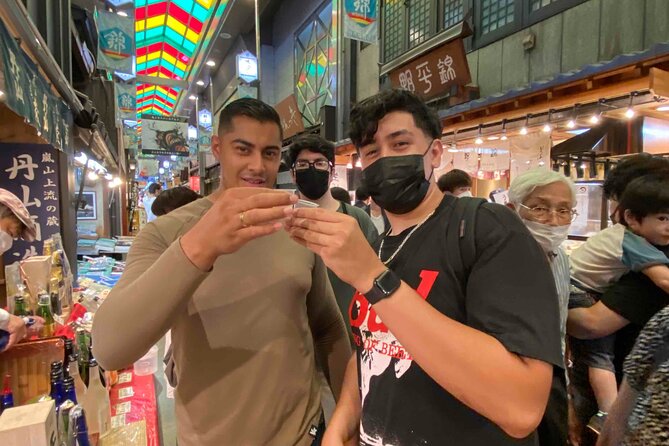
Osaka has an excellent rail network, but a map does not show every station corridor, staircase, platform change, or walk between a station and a sight. For visitors with limited mobility, families with young children, or anyone arriving tired from a long flight, a private vehicle can make the city easier to manage.
The car also lets you connect districts that are spread across Osaka. You can begin around Osaka Castle, continue to the southern districts near Shitennoji and Shinsekai, then finish among the lights and food of Dotonbori. That kind of route would be possible by train, but the transfers and walking would take more effort.
Still, the vehicle is not a magic carpet. At Dotonbori, Shinsaibashi, Kuromon Market, and the temple grounds, you will get out and walk. The tour is best understood as a private ride between walking visits, not a sightseeing trip conducted entirely from the passenger seat.
The maximum group size is seven, but the listed price covers up to two people. If you are booking for three to seven, confirm the final rate before paying. One useful detail is that only a limited number of car seats and booster seats are available. Rear-facing seats are not provided, so families must contact the operator directly if they need child seating.
A few more options to weigh up in Japan
- Universal Studios Japan Studio Pass
★ 4.8 · 89,883 reviews - Universal Studios Japan Express Pass
★ 4.7 · 53,138 reviews - Osaka Amazing Pass
★ 4.7 · 21,697 reviews
Planning three or four stops in six hours
After booking, the guide contacts you to shape the day. You can name three or four places from the available sights, or ask for a suggested route if Osaka is new to you.
This choice is the key to getting good value. You should not try to squeeze all ten listed locations into six hours. A plan built around Dotonbori, Osaka Castle, and Shinsekai will give you food, a major landmark, and a dose of old-style Osaka. A temple-focused day might use Sumiyoshi Taisha, Shitennoji, Osaka Castle, and Dotonbori.
Tell the guide what matters most before the day begins. If you want time to eat, say so. If photography is important, mention it. If stairs and long walks are a concern, explain that clearly. A private tour works best when the guide knows your priorities rather than trying to please everyone with a rushed checklist.
The published visits range from 15 minutes at Sennichimae Doguyasuji to one hour at Dotonbori and Osaka Castle. Those times are rough guides, not promises that every stop will receive exactly that amount of attention. Travel between districts, traffic, meals, shopping, and entrance lines will affect the pace.
Dotonbori and Shinsaibashi: Osaka in lights and food
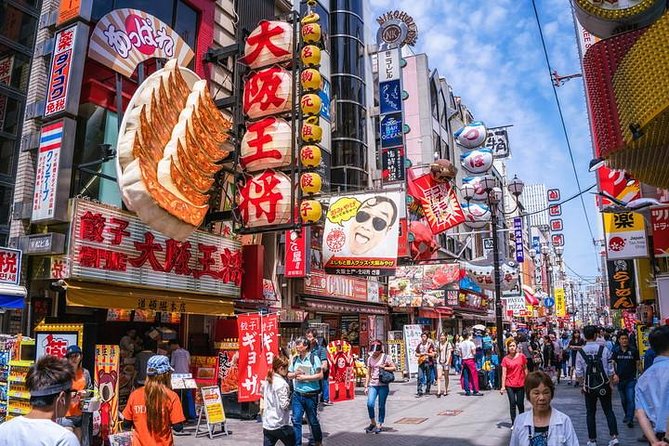
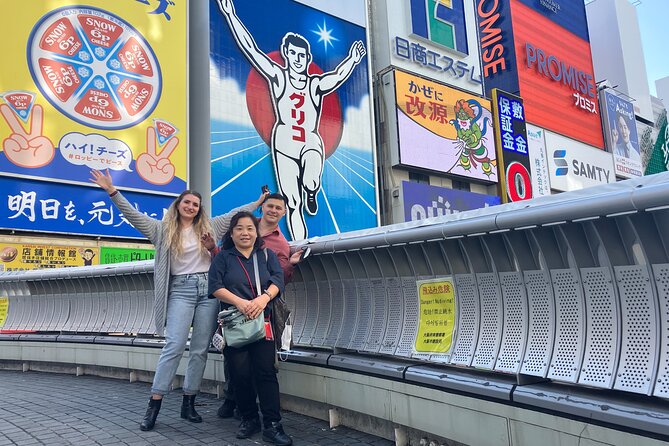
Dotonbori is the obvious place to begin if you want Osaka’s famous food culture. The street runs beside the canal and is packed with huge signs, restaurants, snack counters, and food stalls. The giant billboards provide the visual shorthand of Osaka, while takoyaki and okonomiyaki give you something much better than a photograph.
The guide can help you find places to try local dishes, including takoyaki, the hot octopus-filled snack, and okonomiyaki, the savory pancake associated with Osaka. Lunch is not included, so you pay for anything you eat. That is a cost, but it also gives you control over what and how much you order.
Allow enough time here if food is a main reason for booking. The listed hour can disappear quickly once you stop to study menus, wait for a fresh order, and navigate crowded lanes. If you only want photographs and a short orientation, Dotonbori can be shorter. If you want to eat, shop, and ask questions, it deserves priority.
Shinsaibashi-suji adds a different side of central Osaka. This covered shopping arcade stretches about 600 meters and includes cosmetics shops, clothing stores, restaurants, and other retail businesses. The planned visit is only 30 minutes, so think of it as a quick walk and orientation rather than a serious shopping session.
I would combine Shinsaibashi with Dotonbori because they fit naturally together. Choosing both gives you a good look at the commercial heart of Osaka without spending half the day in transit.
Osaka Castle: the landmark that needs time
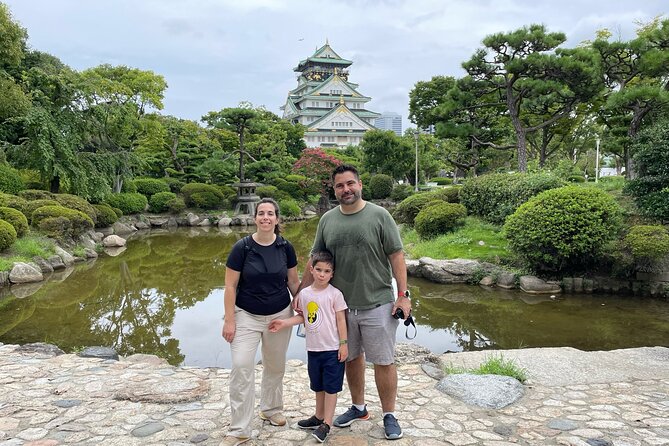
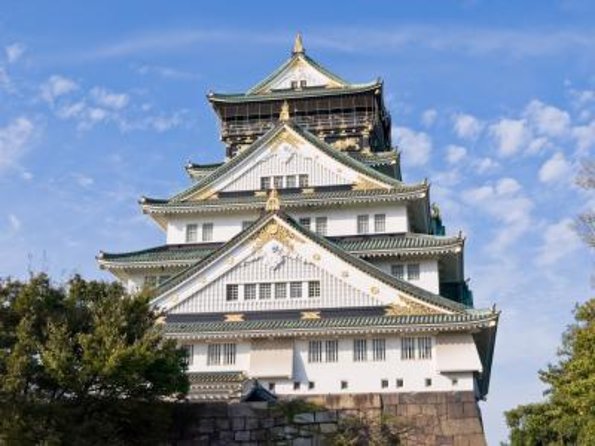
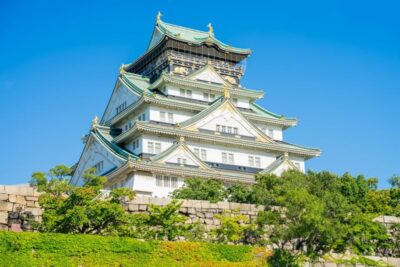
Osaka Castle is one of Japan’s best-known sights, with a history reaching back nearly 450 years. Its five-story exterior makes it one of the city’s strongest photo stops, and the grounds provide a welcome change from the dense shopping streets.
The suggested visit lasts one hour, with admission not included. That hour may be enough for the exterior, grounds, and a short look inside, but it is not generous if you want to study the displays or move slowly. One especially practical detail from the feedback is that lifts were available at Osaka Castle, which helped make the visit easier for someone with walking limitations.
You should ask in advance how much of the castle visit your guide recommends for your group. The guide’s entry fee is covered only for sights listed among the possible stops, while your own entrance costs remain extra. The wording around guide admission means you should confirm the exact arrangement before the day if the castle interior matters to you.
For many people, Osaka Castle is worth keeping even on a food-heavy route. It gives the day a historical anchor, and the contrast between the formal castle setting and the neon streets later on is one of the pleasures of this city.
A completely different kind of day out:
- Tokyo Disney Resort – Tokyo Disneyland & Tokyo DisneySea Park Tickets
★ 4.8 · 99,488 reviews - SHIBUYA SKY Ticket
★ 4.7 · 46,509 reviews - Mt. Fuji Instagram-Worthy Spots Day Tour: Ladder Town, Oshino Hakkai, Lake Kawaguchi, Lawson Convenience Store (Departing from Tokyo Station or Shinjuku Station)
★ 4.8 · 35,467 reviews - JR Whole Japan Rail Pass
★ 4.8 · 29,150 reviews
Kuromon Market and Doguyasuji: two useful food stops
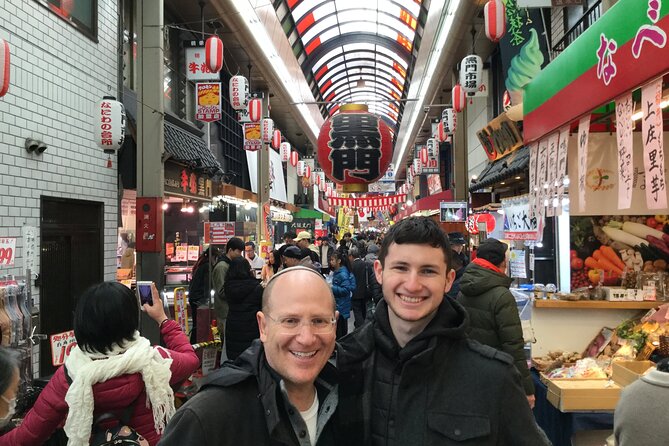
Kuromon Market is a covered market known for seafood and other food stalls. The seafood selection includes seasonal specialties such as conger pike in summer and fugu in winter. At least 10 percent of its seafood shops specialize in fugu and hamo, according to the supplied description.
The planned stop is 30 minutes, which makes Kuromon best for a quick look and perhaps a small purchase. Lunch is not included, and market food costs extra. If you want to sample several items, tell the guide before the day starts so the schedule allows for it.
Sennichimae Doguyasuji Shopping Street offers a different kind of food experience. Instead of eating, you browse roughly 150 meters of specialty shops selling cooking utensils, restaurant supplies, kitchen tools, and related items. It is a short 15-minute stop, but it can be a fun choice for cooks, food lovers, or anyone who wants an unusual souvenir.
The Doguyasuji Festival takes place on October 9, also called Tool Day, with tools offered for sale. That date-specific detail makes the street more appealing if your visit matches the festival, but the shops remain the main reason to stop at other times.
Sumiyoshi Taisha and Shitennoji: Osaka’s quieter side
Sumiyoshi Taisha is the main shrine among all Sumiyoshi shrines in Japan and is located in southern Osaka. The visit is planned for 30 minutes, making it a compact way to add Shinto architecture and a calmer setting to a city tour dominated by food and shopping.
Shitennoji is a Buddhist temple with several names, including Arahaka-ji, Nanba-ji, and Mitsu-ji. It is also a 30-minute stop, and admission is not included.
These sites are good choices when you want cultural variety rather than another commercial district. They may suit you especially well if Osaka Castle is already familiar to you, or if you want your guide to explain the difference between a Shinto shrine and a Buddhist temple.
The short visits mean you should keep expectations sensible. This is an introduction, not a full religious-site study. If you prefer to move slowly, take photographs, or spend time in temple grounds, choose one of the two rather than trying to fit both into an already crowded day.
Shinsekai and Umeda Sky Building
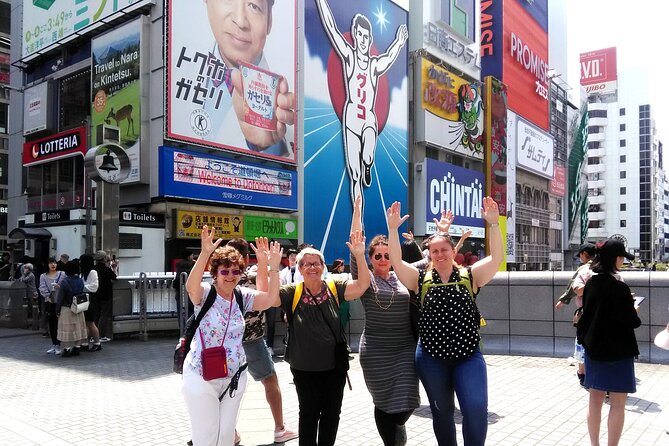
Shinsekai means New World, and its identity centers on Tsutenkaku, often compared with the Eiffel Tower, along with kushikatsu restaurants and the Billiken figure associated with wealth and money. The district also includes Spa World, a large bath complex with pools.
The planned visit lasts 30 minutes and admission is free. That is enough for a walk through the district and an introduction to its signs, food, and slightly retro character. If you want to eat kushikatsu, allow more time and budget for lunch or snacks.
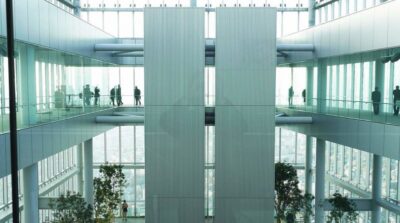
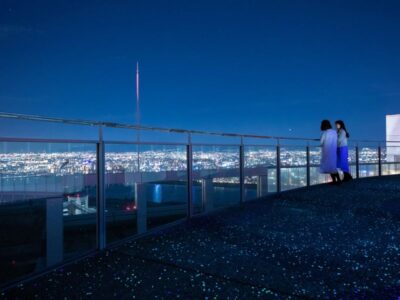
Umeda Sky Building gives you a different view of Osaka. This 173-meter-high building near Osaka and Umeda Stations is also called New Umeda City. The visit is listed at 30 minutes, and admission is not included.
I would not choose Umeda Sky Building and Osaka Castle together unless one is a quick exterior visit. Both can consume more time than expected once you account for entry, lifts, views, and moving through the building. Umeda makes sense for people who want modern architecture and city views, while Shinsekai is better for street atmosphere and food.
The National Museum of Art as a focused alternative
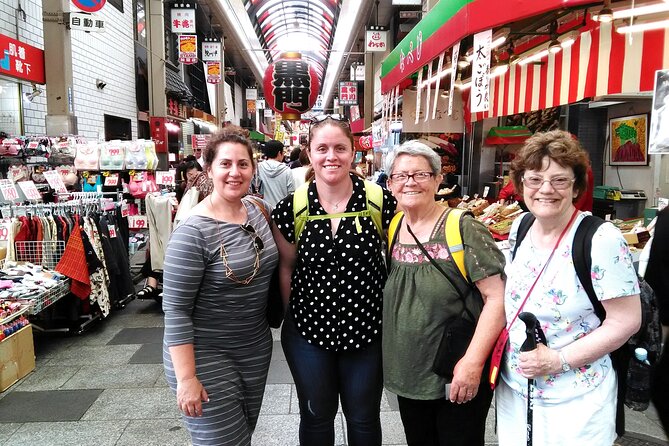
The National Museum of Art, Osaka is an underground museum on Nakanoshima, in central Osaka. It holds a major art collection, and admission is not included.
This stop is a strong alternative if you need an indoor activity or want a break from markets and shopping streets. The planned 30 minutes is short for a major collection, so treat it as a brief introduction. You may see selected works, but you should not expect a leisurely museum visit within that time.
Because the tour is customizable, the museum gives you a chance to make the day feel more personal. Osaka is not only castle walls, neon signs, and street food. If art matters to you, say so when planning the route.
How the guides shape the experience
The guide is the most important part of a private tour. The strongest comments describe patient, punctual, friendly guides who explain the places and stay involved while walking between sights.
Kahori was praised for patience and dedication, and for walking with the group while explaining the sites. Rie received praise for punctuality and for fitting the planned places into the day. Yuji was described as fun and well informed about his home city, with a route that included Shitennoji, Osaka Castle, and Dotonbori.
One particularly useful point is that the driver also made a strong impression, helping beyond the basic driving role. That matters when you are dealing with bags, lifts, vehicle access, or a family member who needs extra assistance.
The feedback is not perfectly uniform. One party found the arrangement cramped because both a driver and guide were in the vehicle, and described the guide as only adequate while praising the driver more strongly. If interior space is important, ask what vehicle will be used for your group size.
Is $781.89 good value?
At $781.89 for up to two people, this is an expensive half-day experience. For two, the listed cost works out to about $390.95 per person before food and entrance fees. That is far more than using Osaka’s trains and visiting sights independently.
The value comes from privacy, planning help, a licensed local guide, and a vehicle. You are paying to reduce navigation work and to shape the day around your needs. For a couple with limited time, a family managing mobility concerns, or a small group that wants a private explanation of Osaka, that convenience may justify the price.
The value is weaker if you are comfortable with public transportation, already know which sights you want, and prefer to set your own pace. You will also need to budget separately for lunch, personal purchases, and entrance fees at Osaka Castle, Shitennoji, Umeda Sky Building, and the National Museum of Art.
The published rating is 4.5 out of 5, with 92 percent recommending the experience, based on 12 ratings. That is encouraging, though the small number means you should still pay attention to the mixed note about vehicle space and guide fit.
Who should book this Osaka tour?
I would recommend it most for:
- Couples who want a private introduction without handling Osaka’s subway system.
- Families who need a vehicle and may require a booster seat.
- Older visitors or anyone who finds long station walks difficult.
- First-time visitors who want a local guide to choose the best three or four stops.
- Small groups willing to pay more for privacy and convenience.
I would be more cautious if you want a slow visit inside Osaka Castle, a full museum session, a long market lunch, or serious shopping. Six hours is enough for a well-planned sample of Osaka, not a complete city tour.
Free cancellation is available if you cancel at least 24 hours before the start time. Changes made within that same 24-hour window are not accepted, and late cancellations are not refunded. Service animals are allowed, and the tour is near public transportation, even though the main sightseeing is supported by a private vehicle.
Should you book it?
Book this experience if you want a tailored Osaka day with transport and personal guidance, especially if walking and subway connections may slow you down. Ask the guide to build a realistic route around three or four priorities, not every possible stop.
For the best food-and-sights mix, I would consider Dotonbori, Osaka Castle, and either Kuromon Market or Shinsekai. For a more cultural day, choose Osaka Castle, Sumiyoshi Taisha, Shitennoji, and Dotonbori.
Skip it if the $781.89 price feels steep and you are happy to use trains on your own. Osaka is easy to enjoy independently, but this private format buys you time, flexibility, and a local person who can help turn a crowded day into a manageable one.
FAQ
How long is the private Osaka tour?
The experience lasts approximately six hours.
How many people can join?
The tour allows a maximum of seven participants, and the listed price is for a private group of up to two people.
Can I choose the places I visit?
Yes. You can choose three or four sites from the available attractions, or ask the guide to suggest a route.
Is transportation included?
Yes. A private vehicle and a licensed local English-speaking guide are included.
Are meals included?
No. Lunch and other personal expenses are not included.
Are entrance fees included?
No. Entrance fees are not included for you. The guide’s entry fees are covered only for sights listed among the possible stops.
Are child seats available?
Only a limited number of car seats and booster seats are available. Rear-facing car seats are not available, and you must contact the operator directly if you need child seating.
Can I cancel for a full refund?
Yes, if you cancel at least 24 hours before the experience start time. Cancellations or changes made less than 24 hours before the start time are not accepted for a refund.
Just added in Japan
- A One-of-a-Kind Sushi Experience in a Special Place of Japan★ 5.0 · 15 reviews
- Tokyo Cute Bento Cooking Class – Make a Kawaii Character Lunchbox★ 5.0 · 126 reviews
- Japanese Home Cooking Class & Walk in Todoroki Temple Tokyo★ 5.0 · 88 reviews
- Catch a Baseball Game in Tokyo with a Local – Tickets Included★ 5.0 · 24 reviews
- Japan Tokyo Tower Observatory Deck E-Ticket★ 4.0 · 34 reviews
- JDM Experience with Fast&Furious RX-7 (English speaking Driver)★ 5.0 · 57 reviews
- Tokyo Private Day Tour by Car with English speaking Driver Guide★ 4.0 · 29 reviews
- Japan Classic 10 Day – One Life Adventures★ 5.0 · 129 reviews
Osaka Tours, compared.

Umeda Sky Building & Kuchu Teien Observatory Ticket in Osaka
Read our review →