Reviewed · OSAKA TOURS
Ramen Craftsman Experience in Osaka
Ramen tastes better when you help make it. This one-hour workshop takes place inside Menya SHU, a working ramen shop in Osaka, where chef Shu explains the ingredients, prepares the soup, and guides you through the final cooking and presentation. I like the small four-person limit, which gives you real time behind the counter, and I like the choice of four ramen styles, from chicken white soup to sea bream dashi salt ramen. The main drawback is that you do not make the broth from scratch, since it takes days to prepare, so this is more of a hands-on ramen finishing class than a full recipe course.
The experience costs about $42.94 per person and includes lunch, cooking utensils, an apron, and gloves. That is fair value for a private kitchen session, a meal, and direct time with the chef. You should know that the shop uses a gas stove, so the activity is not suitable for infants or very small children, and late arrival can cause a real problem because the booking is cancelled after 15 minutes.
- Four ramen choices: Pick chicken white soup, seafood chicken white soup with clam broth, Chinese soba with soy sauce, or sea bream dashi salt ramen.
- A working ramen shop: You cook inside Menya SHU at 11-7 Higashikōzu-chō in Osaka’s Tennoji Ward, rather than in a separate tourist classroom.
- Very small class: A maximum of four people allows each participant to take a turn behind the counter.
- Chef-led instruction: Shu explains ramen ingredients, broth preparation, noodle boiling, toppings, and presentation.
- Lunch is included: You eat the bowl you help finish, with utensils, aprons, and gloves supplied.
- Strong customer score: The experience has a 4.9 rating from 81 reviews, with 98 percent recommending it.
In This Review
- What You Actually Do in the One-Hour Workshop
- Choosing Between Four Osaka Ramen Styles
- Behind the Counter at Menya SHU
- Why the Broth Explanation Matters
- The Most Fun Part: Boiling, Topping, and Presentation
- Eating the Bowl You Helped Finish
- The Hosts Make the Difference
- Is $42.94 a Fair Price?
- Getting There and Avoiding a Missed Start
- Who Should Book This Ramen Class?
- Should You Book the Ramen Craftsman Experience?
- FAQ
- How long does the Ramen Craftsman Experience last?
- Where does the ramen class take place?
- How many people can join the class?
- Which types of ramen can I choose?
- Is the experience suitable for infants or small children?
- What is included in the price?
What You Actually Do in the One-Hour Workshop
The experience begins with an introduction to the ramen ingredients and the tools used in the shop. Shu explains that ramen broth is a serious project, often requiring many hours or several days of preparation, which is why the soup is prepared before you arrive.
That detail matters. If you expect to simmer a complete broth from raw ingredients in one hour, you will be disappointed. If you want to understand how a professional bowl comes together at the final stage, the format makes sense. You see the prepared soup, learn what gives each style its character, and then handle the steps that turn separate ingredients into lunch.
You are given the equipment you need, including cooking utensils, an apron, and gloves. You do not need to bring kitchen supplies. The instruction is designed for beginners, and the small group means Shu can guide each person through the process rather than giving a quick demonstration from across the room.
The cooking includes boiling the noodles, preparing the soup, arranging the bowl, and adding toppings. You may also get hands-on jobs such as cutting the egg in half, torching the meat, and shaking the noodles, depending on the timing and the bowl being prepared. The activity ends with the best part: sitting down to eat the ramen you helped assemble.
Choosing Between Four Osaka Ramen Styles
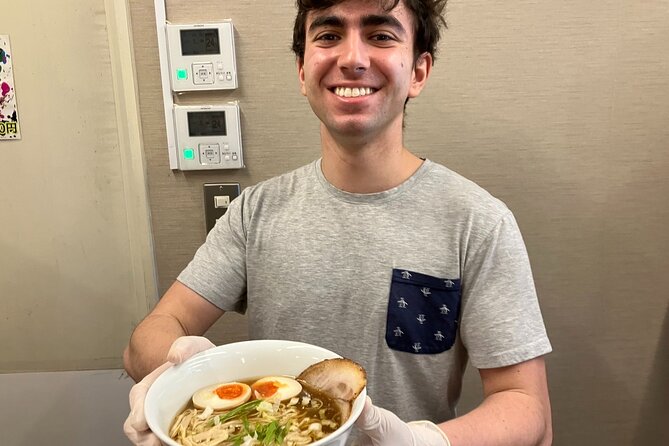
Your ramen choice is one of the most useful parts of the experience. You are not locked into a single house bowl, and the options cover several important branches of Japanese ramen.
Chicken white soup ramen is the straightforward creamy chicken option. Its pale appearance suggests a fuller broth, and it is a sensible choice if you want to try the shop’s chicken base without added seafood.
Seafood chicken white soup ramen adds clam broth to the chicken soup. Choose this if you enjoy a more layered bowl with a clear seafood note. It also gives you a useful comparison with the plain chicken white soup version.
Chinese soba means the soy sauce ramen option here. It is a good pick if you prefer a darker, more familiar savory profile instead of a pale chicken broth.
Sea bream dashi salt ramen offers a lighter salt-seasoned style with sea bream stock. I would choose this if you want something less heavy or if you are curious about how fish-based dashi changes the bowl.
The menu gives you room to match the meal to your taste, but topping choices are not fully listed in the supplied information. The experience does promise a chance to choose your favorite toppings, so you can ask Shu what is available when you arrive. Do not assume every possible topping is offered at every session.
A few more options to weigh up in Japan
- Universal Studios Japan Studio Pass
★ 4.8 · 89,883 reviews - Universal Studios Japan Express Pass
★ 4.7 · 53,138 reviews - Osaka Amazing Pass
★ 4.7 · 21,697 reviews
Behind the Counter at Menya SHU
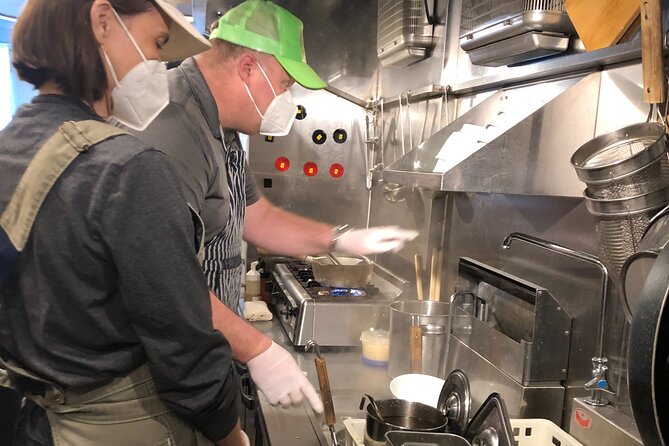
The setting is part of the appeal. You are not in a hotel kitchen or a large cooking studio. You work in the kitchen of the ramen shop Shu runs, with the counter and professional equipment close at hand.
That small space can feel personal and lively. It also means you should not expect a roomy classroom where everyone has a large workbench. One participant described the kitchen as small but ideal for the session, which is a fair way to frame it. The compact setup puts you close to the action, though you may need to take turns while another person works.
The maximum is four participants. A group of four should expect an alternating system, with each person getting a turn rather than all four standing at the stove at once. That arrangement can work well because you can watch the technique before trying it yourself. It also keeps the chef close enough to correct a step and explain why it matters.
The shop is family-run, with Shu, his wife, and sometimes his son involved in the warm welcome. The personal contact is a major reason this feels different from simply ordering ramen at a restaurant. Shu is described as friendly, funny, and comfortable explaining the process in English, making the class easier for international visitors who do not speak Japanese.
Why the Broth Explanation Matters
Ramen can look simple when it arrives: noodles, soup, meat, egg, and toppings in one bowl. The workshop shows you how much work sits behind that apparently quick meal.
Shu explains that the soup base takes many hours or several days to prepare. You do not make that entire base yourself, but you learn why professional ramen cannot be reduced to boiling noodles and pouring in a packet. The discussion of different broth types gives useful context to the four choices.
This is where the experience offers more than lunch. You learn that chicken broth, clam broth, soy sauce seasoning, salt seasoning, and sea bream dashi each create a different result. Even a short explanation can change how you taste the final bowl. You begin to notice the difference between the soup’s main base and the seasoning added to it.
The class also gives you a look at the final restaurant workflow. One fair criticism is that the class teaches the last steps more than the full craft of ramen making. You handle ingredients that are already prepared, then complete the order under Shu’s direction. That limitation is not hidden, but it is important to understand before booking.
The Most Fun Part: Boiling, Topping, and Presentation
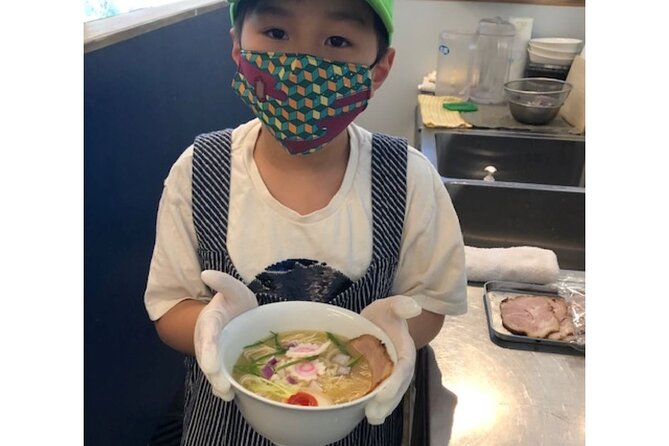
For many people, boiling the noodles will be the highlight. It is a simple task in theory, but timing and handling affect the final texture. Shu demonstrates the process and then lets you take part, with the group rotating through the cooking steps.
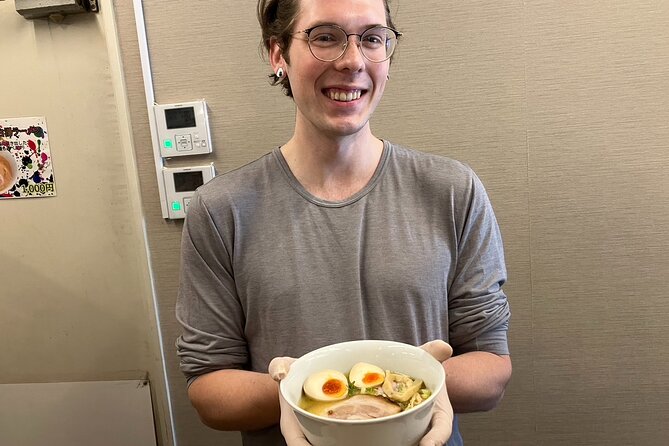
You may also help prepare the soup and place the toppings. Presentation gets attention because the finished bowl should look like ramen from the shop, not a pile of ingredients dropped into a dish. Cutting the egg cleanly, arranging the meat, and adding the toppings give the meal a sense of completion.
The class welcomes photographs and video during the process. That is useful if you want a record of the techniques or simply want to remember your first turn behind a ramen counter. Still, keep your phone out of the way when the stove is in use. This is a working kitchen, and the gas burner requires attention.
The experience is suitable for children from about seven years old, according to the supplied details, but infants cannot participate. The issue is the gas stove, not the food. Families should also remember that the space is small, so a child who cannot follow close kitchen instructions may not enjoy the format.
A completely different kind of day out:
- Tokyo Disney Resort – Tokyo Disneyland & Tokyo DisneySea Park Tickets
★ 4.8 · 99,488 reviews - SHIBUYA SKY Ticket
★ 4.7 · 46,509 reviews - Mt. Fuji Instagram-Worthy Spots Day Tour: Ladder Town, Oshino Hakkai, Lake Kawaguchi, Lawson Convenience Store (Departing from Tokyo Station or Shinjuku Station)
★ 4.8 · 35,467 reviews - JR Whole Japan Rail Pass
★ 4.8 · 29,150 reviews
Eating the Bowl You Helped Finish
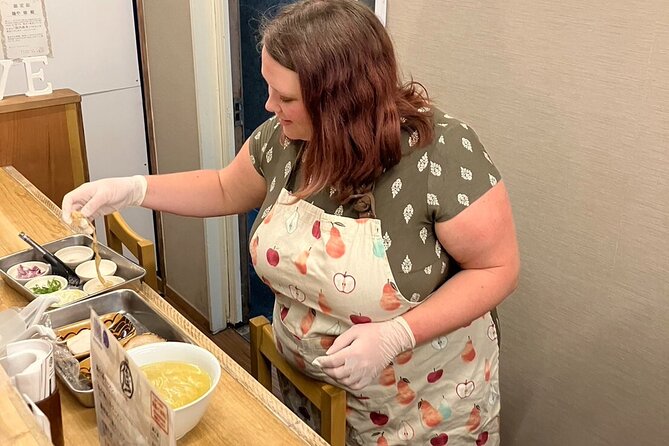
The included lunch is not an afterthought. You eat the ramen you prepare, and the food is the strongest reason to choose this class instead of a standard cooking demonstration.
The bowls are repeatedly described as delicious, with several people calling the ramen unusually tasty or the best they had during their time in Japan. That praise fits the format: you are eating food from a specialist ramen shop, with the soup already prepared by the person who runs it. Your contribution is the final cooking and assembly, while Shu supplies the professional base.
The meal also gives you a chance to compare styles if your group chooses different broths. A family or group of friends could order separate options, then discuss the differences over lunch. That makes the experience especially useful for people who enjoy food details rather than simply wanting a quick bowl.
The portions, exact toppings, and dietary substitutions are not specified. If you have allergies or avoid seafood, ask about the ingredients before choosing. The clam broth and sea bream ramen clearly contain seafood elements, while the chicken white soup and soy sauce options may still include ingredients you will want to confirm.
The Hosts Make the Difference
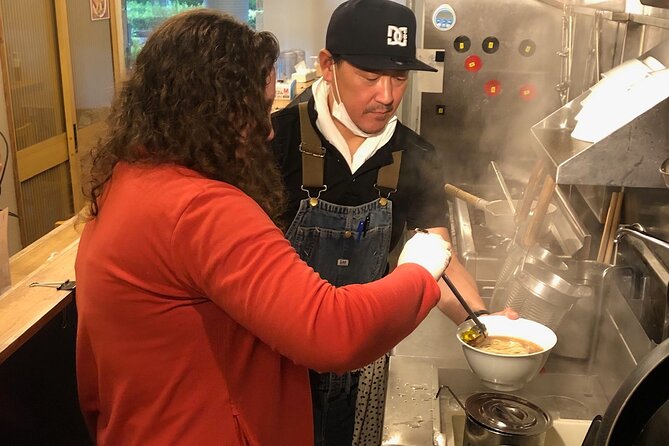
Shu is the central personality of the class. The strongest praise focuses on his friendly manner, clear English, humor, and willingness to explain the food. His wife and family also help create a relaxed atmosphere.
That personal approach can matter more than the cooking technique. A short class needs an instructor who keeps the pace moving while making sure every person gets involved. Shu’s alternating system helps with that. You are not left watching the whole time, and the group does not need to fight over the only cooking station.
The family feel also adds a local touch. You are visiting a small Osaka ramen business, not attending a polished stage show designed only for tourists. You may hear about the shop’s story, see a map marked with places people have come from, and chat with the hosts after the meal. Those small exchanges give the hour more character.
English ability is described positively, but this is still a hands-on cooking session rather than a formal culinary lecture. The value comes from seeing, listening, and doing. If you want a printed recipe with exact quantities and a detailed method for recreating the broth at home, this may not be the right class.
Is $42.94 a Fair Price?
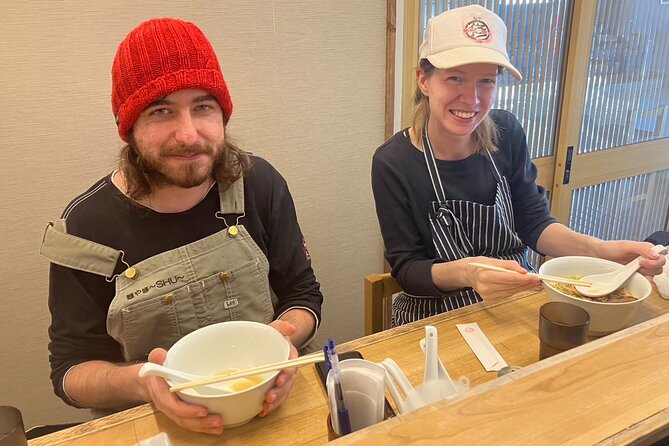
At $42.94, the price covers more than the food. You receive roughly one hour of instruction, a private or chartered kitchen experience for up to four people, lunch, and use of the cooking equipment and protective items.
A normal ramen meal would cost less than the activity price. The difference pays for the chef’s time, the demonstration, the small group, and the chance to work behind the counter. I consider that good value if you want a personal food experience and would otherwise spend money on several ordinary meals or a larger cooking class.
The price is less attractive if your only goal is to eat ramen. Osaka has plenty of places where you can order a bowl without paying for instruction. This experience earns its cost through access and conversation, not through quantity.
It is also a good value for a group of friends or a family of four because the class limit matches the size of a small private party. You share the hour with only a few people and can compare different ramen choices at the table.
Getting There and Avoiding a Missed Start
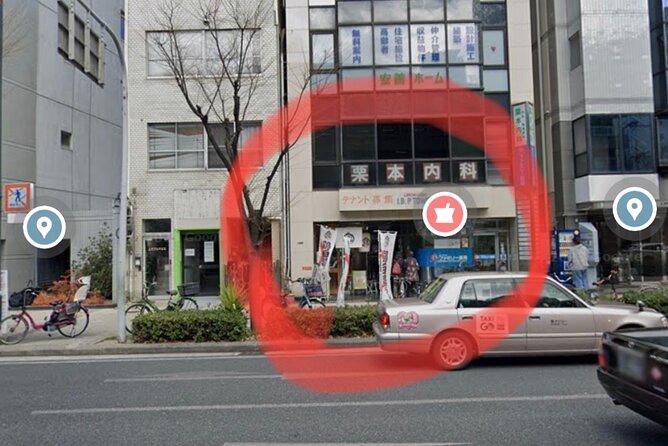
The meeting point is Menya SHU, at 11-7 Higashikōzu-chō, Tennoji Ward, Osaka, 543-0021, Japan. The location is near public transportation, and the activity ends back at the same shop. Private transportation is not included, so you must make your own way there.
Plan to arrive early. The operator asks you to give notice if you will be late, and the booking is cancelled if you have not arrived within 15 minutes of the scheduled start. This is stricter than a casual restaurant reservation because the class affects later shop bookings.
A mobile ticket is provided, and confirmation arrives when you book. The activity is commonly booked about 10 days ahead, so do not leave it until the last day if your Osaka schedule is tight. Free cancellation is available up to 24 hours before the start time. Within 24 hours, you should expect no refund and no accepted changes.
Who Should Book This Ramen Class?
I would recommend it most strongly to:
- Ramen fans who want to understand broth and noodle preparation
- Families with children around seven and older who can follow kitchen instructions
- Couples or small groups who value personal contact with a local cook
- People seeking a food activity away from Osaka’s major shopping streets
- First-time visitors who want lunch with a cultural explanation attached
You may want to skip it if you need a fully accessible cooking space, dislike small kitchens, or expect to make broth entirely from raw ingredients. The gas stove also rules out infants, and the short time means the class focuses on finishing and assembling rather than a complete multi-day ramen recipe.
Should You Book the Ramen Craftsman Experience?
Book it if you want a personal Osaka food experience, not just another restaurant meal. The combination of four ramen styles, a maximum of four participants, hands-on noodle cooking, and lunch prepared in Shu’s own shop gives the hour real substance.
I especially like the way the experience explains the work behind the broth before letting you handle the final steps. You get enough instruction to appreciate the craft, while the cooking remains approachable and fun. The high 4.9 rating from 81 reviews and 98 percent recommendation rate match the experience’s strongest features: tasty ramen, kind hosts, clear guidance, and a genuinely small group.
Just set your expectations correctly. You will not spend days making soup from scratch. You will learn how a professional bowl is finished, take part in the key cooking steps, and eat the result in the same family-run shop where the ramen is made. For about $43, that is a satisfying choice for anyone who thinks lunch should come with a story.
FAQ
How long does the Ramen Craftsman Experience last?
The experience lasts approximately one hour.
Where does the ramen class take place?
It takes place at Menya SHU, located at 11-7 Higashikōzu-chō, Tennoji Ward, Osaka, 543-0021, Japan. The activity ends at the same meeting point.
How many people can join the class?
The maximum group size is four participants.
Which types of ramen can I choose?
You can choose chicken white soup ramen, seafood chicken white soup ramen with clam broth, Chinese soba with soy sauce, or sea bream dashi salt ramen.
Is the experience suitable for infants or small children?
Infants cannot participate because the noodles are boiled on a gas stove. Children from about seven years old can take part.
What is included in the price?
The price includes lunch, cooking utensils, an apron, and gloves. Private transportation is not included.
Just added in Japan
- A One-of-a-Kind Sushi Experience in a Special Place of Japan★ 5.0 · 15 reviews
- Tokyo Cute Bento Cooking Class – Make a Kawaii Character Lunchbox★ 5.0 · 126 reviews
- Japanese Home Cooking Class & Walk in Todoroki Temple Tokyo★ 5.0 · 88 reviews
- Japan Tokyo Tower Observatory Deck E-Ticket★ 4.0 · 34 reviews
- Catch a Baseball Game in Tokyo with a Local – Tickets Included★ 5.0 · 24 reviews
- JDM Experience with Fast&Furious RX-7 (English speaking Driver)★ 5.0 · 57 reviews
- Tokyo Private Day Tour by Car with English speaking Driver Guide★ 4.0 · 29 reviews
- Japan Classic 10 Day – One Life Adventures★ 5.0 · 129 reviews
Osaka Tours, compared.






Umeda Sky Building & Kuchu Teien Observatory Ticket in Osaka
Read our review →