
Reviewed · WALKING TOURS
Walking Tour of Osaka’s 5 Must-See Sights, with Ramen for Lunch
Osaka reveals itself on foot. This seven-hour tour links the city’s big sights with local food, history, and practical metro guidance, making it a useful first-day introduction. I especially like the small group of no more than eight people and the included ramen lunch. You also get help with photos and local food suggestions, including what to try at Kuromon Market.
The main drawback is the distance. You may walk 11,000 steps at a minimum, and some people report 15,000 to 25,000 steps once metro connections and wandering are counted. The tour also requires extra payment for public transport and admission to Osaka Castle and Shitennoji Temple, so check the costs before you book.
In This Review
- Key points at a glance
- Why this tour works well on your first Osaka day
- Osaka Castle and the Sengoku period
- Shitennoji, one of Japan’s oldest Buddhist temples
- Shinsekai and the old Osaka atmosphere
- Ramen lunch, simple and welcome
- Kuromon Market and Osaka’s food identity
- Dotonbori and the famous Glico sign
- The walking and metro effort
- Taka and the value of a small group
- Is $58.14 a fair price?
- Who should book this Osaka walking tour?
- My verdict
- FAQ
- How long does the walking tour last?
- Where does the tour start?
- Where does the tour finish?
- What sights are included?
- Is lunch included?
- Are Osaka Castle and Shitennoji admission fees included?
- Is public transportation included?
- How many people can join the tour?
Key points at a glance
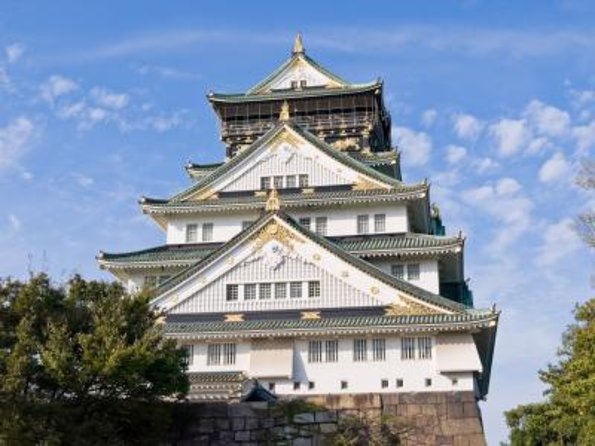
- Osaka’s major sights in one day: Visit Osaka Castle, Shitennoji, Shinsekai, Kuromon Market, and Dotonbori in one carefully timed route.
- A genuinely small group: The maximum of eight people allows for questions, family photos, and occasional route changes.
- Ramen is included: Lunch gives you a simple local meal without the trouble of choosing a restaurant in an unfamiliar city.
- A long walking day: Comfortable shoes, rain gear, and a reasonable level of fitness are essential.
- Extra costs are clear but easy to miss: Budget ¥820 for public transportation, ¥1,080 for Osaka Castle, and ¥400 for Shitennoji if you choose to enter.
- Taka is a major part of the experience: His English, patience, Osaka knowledge, and skill with photos receive repeated praise.
Why this tour works well on your first Osaka day
Osaka can feel confusing at first. The city spreads across several districts, and its metro system has enough lines, stations, and exits to make a simple trip feel like a small puzzle. This tour takes that pressure off for a day.
You meet at 9:00 a.m. outside the FamilyMart near Tanimachi-sanchome. From there, the route moves between historic Osaka and its food-focused downtown. You see the city’s grand castle, one of Japan’s oldest Buddhist temples, the retro streets of Shinsekai, the food stalls of Kuromon Market, and the neon signs of Dotonbori.
That variety is the tour’s strongest feature. You are not spending seven hours inside museums or walking through one district. Instead, you get a broad sense of how Osaka fits together: castle and warlord history, Buddhist tradition, old entertainment streets, public markets, and modern nightlife.
I would choose this tour early in a trip, especially if you have only a short stay. The guide can point out places to return to later, and several people appreciated getting recommendations for food, metro passes, and photo locations.
The tradeoff is time. You see many places, but you do not have unlimited time at each one. At the larger stops, you may have about 30 to 40 minutes of independent time, while Osaka Castle receives the longest visit. If you prefer to study every exhibit or wander at your own pace, a self-guided day may suit you better.
More Walking Tours in Osaka
- Osaka: Hotspots & Hidden Gems Walking Tour Private or Group
★ 4.9 · 1,300 reviews - Osaka Local Foodie Walking Tour in Dotonbori and Shinsekai
★ 5.0 · 985 reviews - Osaka Bar Hopping Night Walking Tour in Namba (3 bars, 6 tastes)
★ 5.0 · 958 reviews
Osaka Castle and the Sengoku period
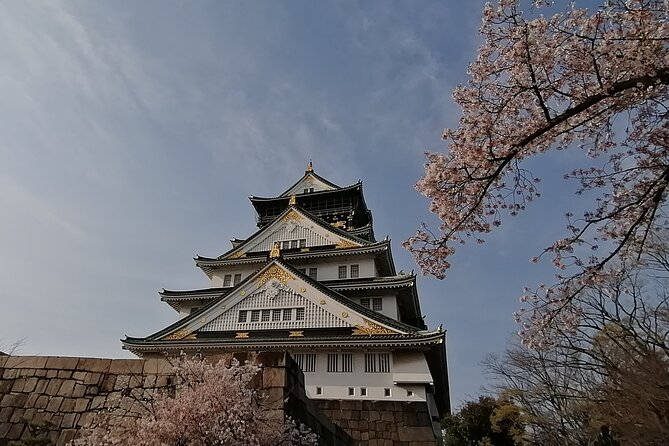
The tour begins with its longest stop, about two hours and 45 minutes at Osaka Castle. This gives you time for the grounds, views, photographs, and the optional interior exhibition.
The castle is tied to the Sengoku period, the era of competing warlords and military campaigns that shaped much of Japanese history. The guide explains the story of Osaka Castle and its founder, giving the building more meaning than a quick photo stop can provide.
The exterior is the main visual reward. You can take photographs with the castle behind you and look out across Osaka from its elevated position. For many people, this is the clearest introduction to the city’s scale.
Admission is not included. The listed entrance fee is ¥1,080 per person. You can also enjoy the gardens and exterior views without paying to enter, which is useful if you are watching your budget or would rather spend your time elsewhere.
The stop is long enough to feel substantial, but do not assume every minute is a formal guided visit. There is some time to explore independently. That flexibility helps, since not everyone wants to linger over the same displays.
I would pay for the interior if Japanese castle history interests you. If you mainly want photographs and city views, the outside may be enough. Either way, the castle is an effective opening stop because it gives the rest of the day historical context.
Shitennoji, one of Japan’s oldest Buddhist temples
Next comes Shitennoji, with about one hour and 10 minutes set aside. It is described as one of Japan’s oldest Buddhist temples, so this part of the route shifts from military history to religious tradition.
The temple provides a calmer contrast to Osaka Castle and the downtown stops later in the day. Your guide can explain the site’s role and point out details that may be easy to miss if you simply walk through with a camera.
Admission costs ¥400 per person and is not included. You do not have to pay if you prefer to enjoy the surrounding area and continue with the group. This is a useful choice for people who are trying to keep the day affordable.
The temple stop also adds variety to the walking. Osaka is often sold through food and bright signs, but Shitennoji shows an older and quieter side of the city. I like that the itinerary does not treat Osaka as only a shopping and restaurant destination.
You should still expect some walking and possibly steps or inclines during the day. The guide has helped groups use lifts and shortcuts when available, but you should be comfortable walking for long periods.
Shinsekai and the old Osaka atmosphere

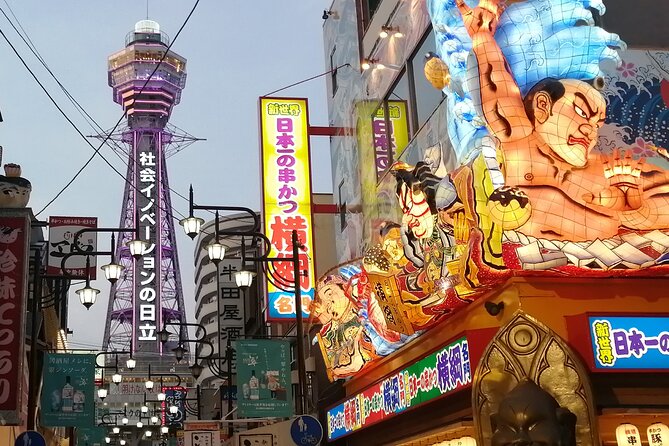
Shinsekai receives another hour and 10 minutes. This district is known for its retro mood, colorful streets, and Tsutenkaku Tower. It feels quite different from the formal spaces of the castle and temple.
This is one of the best sections for understanding Osaka’s food culture and sense of humor. The streets have an old-school character, and the district is closely associated with casual eating and entertainment. You may find this the most relaxed part of the route, with plenty to look at as you move through the area.
Tsutenkaku Tower gives Shinsekai its familiar visual marker, but the district itself is the attraction. The guide helps connect the streets, signs, and local food traditions to Osaka’s wider identity.
The itinerary lists admission here as free, though any optional purchases or food beyond the included meal are your responsibility. The stop is long enough to explore, but it is not designed as a full afternoon in Shinsekai.
I would make a mental note of anything that catches your eye. Since the tour ends in Namba, you can return to Shinsekai later if you want a slower look at its restaurants and shops.
A completely different kind of day out:
- Osaka Go Karting Tour with Funny Costume
★ 5.0 · 2,658 reviews - Osaka Castle: Museum and Tower Entry Ticket
★ 4.5 · 2,380 reviews - Osaka: Shinsekai Food Tour with 13-15 Dishes at 5 Eateries
★ 4.8 · 2,204 reviews - Osaka Food Tour: 13 Dishes at 5 Local Eateries
★ 5.0 · 2,149 reviews
Ramen lunch, simple and welcome
Ramen lunch is included, and this small detail adds real value to a long walking day. You do not need to stop and search for a restaurant while trying to keep up with a fixed schedule.
The meal is described as local and delicious, and it has been a repeated highlight. One group also received accommodation for a gluten-free diet, though you should communicate dietary needs clearly when booking or before the tour.
Ramen is a practical choice here. It is filling, familiar enough for first-time visitors, and closely tied to Japan’s everyday food culture. The experience is not presented as a formal cooking class or a tasting menu. It is lunch, but good lunch matters when you are covering this much ground.
The tour also gives you chances to sample street food at Kuromon Market. That combination works nicely: a proper bowl of ramen, followed by the option to buy small bites and local specialties. Bring some extra yen if you want to taste items beyond the included meal.
Kuromon Market and Osaka’s food identity
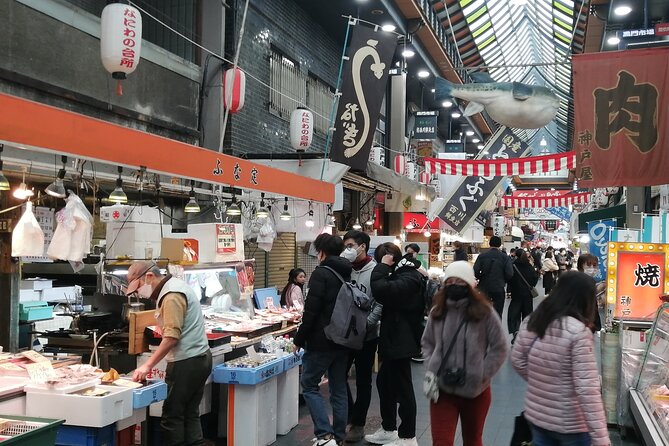
Kuromon Market is scheduled for about one hour and 10 minutes. The market has continued since the Edo period and is one of the most useful stops for seeing Osaka’s food culture in action.
Here, the guide can suggest stalls and explain what is worth trying. Specific foods mentioned in the tour experience include mochi, sushi, and classic Japanese dishes. Food recommendations are one of the most useful parts of a guided market visit because the choices can feel endless when you are alone.
You should treat the market as an opportunity to sample rather than a second full lunch. Portions and prices vary, and extra food is not included in the tour price. Ask the guide for advice before buying if you are unsure what something is or how it is served.
The market can also be crowded, so stay aware of the group and keep the meeting time in mind. The small group helps, but this is still a public market, not a private food tour.
I like this stop because it connects the city’s reputation as Japan’s food capital to ordinary eating habits. You are not just looking at signs in Dotonbori. You are seeing ingredients, prepared food, and the way a public market fits into daily life.
Dotonbori and the famous Glico sign
The final major stop is Dotonbori, with about 45 minutes planned. This is Osaka’s loudest and most recognizable downtown area, packed with giant signs, restaurants, canalside views, and the city’s famous food slogans.
The Glico running man sign is the essential photo stop. The tour ends at Hozen-ji Temple in Namba, which puts you in a useful central area for continuing your evening.
Dotonbori is a sharp change from Shitennoji and Osaka Castle. After a full day of temples and historical explanations, you finish among bright advertisements and restaurant displays. That contrast is part of Osaka’s character.
Forty-five minutes is enough for an introduction and photographs, but not enough for a full evening here. I would stay in Namba afterward if you want to eat, shop, or see Dotonbori after dark. Since the tour ends in the area, you do not need to retrace your steps.
The final stop also makes practical sense. You end near Hozen-ji Temple rather than being dropped back at the morning meeting point, so the tour functions as a one-way introduction to central Osaka.
The walking and metro effort
Do not book this tour expecting a gentle stroll. It is a full day on foot, with metro rides between some districts. The transportation pass costs ¥820 per person and is not included.
The distance varies by pace and route, but reports place the day anywhere from about 11,000 steps to 15,000 or even 20,000 to 25,000 steps. The tour does not appear to move at a frantic pace, yet the total adds up because Osaka’s sights are spread out.
Wear comfortable shoes. Bring rain gear, since the experience requires good weather but conditions can still change. You should also carry water and keep your schedule clear after the tour if you know a long day on your feet leaves you tired.
People with trouble on inclines or steps may find parts of the route hard. The guide has used lifts and shortcuts when possible, and the small group allows some flexibility. Still, the stated requirement is a moderate level of fitness and good walking ability.
The metro element is a benefit, not a flaw. Osaka’s transport system can be intimidating, and learning a few connections with a guide may help you manage the rest of your trip. Just remember that the transport fare is an additional cost.
Taka and the value of a small group
The guide most often praised is Taka, also referred to as Takanobu. His good English, patience, humor, local tips, and ability to explain Osaka’s history add much of the tour’s value.
He has also helped people who arrived late or became confused at the meeting point. That does not mean you should arrive late, since the instructions ask you to be there by 9:00 a.m., but it is reassuring to know he has made an effort to locate missing participants.
Photo help comes with the tour. Taka has been especially useful for family and group photographs, and he knows good places for the classic Osaka shots.
A maximum of eight people matters here. You can ask questions without raising your voice, and the guide can adjust small parts of the route to suit the group. One group skipped a long line and used the time more effectively elsewhere, which shows the advantage of having a human guide rather than following a rigid audio route.
This is not a private tour and there is no hotel pickup. You must make your own way to the FamilyMart at Tanimachi-sanchome. The meeting point has caused some confusion, so save the address and allow extra time to find the correct building.
Is $58.14 a fair price?
At $58.14 per person, the tour is reasonably priced for a seven-hour guided day, particularly because ramen lunch is included and the group is capped at eight. The guide, route planning, history commentary, food advice, photo help, and metro assistance all contribute to the price.
Still, the headline price is not the total cost. Add ¥820 for transportation, plus ¥1,080 for Osaka Castle and ¥400 for Shitennoji if you enter both. Street food at Kuromon Market is extra as well.
That means the tour is best value for someone who wants structure and orientation. If you already know Osaka, speak Japanese comfortably, and are happy to plan metro routes and food stops yourself, you may prefer to explore independently.
The price is less attractive if you want long visits at each sight. You are paying for coverage and guidance, not for a slow, specialist tour of one castle, temple, or market.
Who should book this Osaka walking tour?
I would recommend it for a first visit, a short Osaka stay, or the opening day of a longer Japan trip. It gives you enough history to understand the city and enough food and nightlife to make the experience feel distinctly Osaka.
It suits people who enjoy walking, want a small group, and prefer a guide to handle the day’s route. Families with participants aged 12 and older may appreciate the photo help and varied stops, provided everyone can manage the distance.
I would hesitate if you dislike fixed schedules, tire easily, or want to spend several hours inside Osaka Castle. You should also skip it if you assumed all admission fees and metro fares were included.
Free cancellation is available up to 24 hours before the 9:00 a.m. start time. If poor weather cancels the experience, you are offered another date or a full refund.
My verdict
Book this tour if you want to see Osaka’s main sights in one long day without wrestling with the city’s transport system alone. The best parts are the compact group, the useful food advice, the included ramen, and Taka’s patient guidance.
Just come prepared for a serious walking day and a few extra costs. For a first-time visitor who wants history, street food, city views, and Dotonbori in one sweep, this is a strong introduction. For slow explorers, Osaka is better taken one district at a time.
FAQ
How long does the walking tour last?
The tour lasts approximately seven hours, beginning at 9:00 a.m.
Where does the tour start?
The meeting point is the FamilyMart at Tanimachi-sanchome, in Osaka’s Chuo Ward.
Where does the tour finish?
The tour ends at Hozen-ji Temple in Namba.
What sights are included?
The route includes Osaka Castle, Shitennoji, Shinsekai, Kuromon Market, and Dotonbori.
Is lunch included?
Yes. Ramen lunch is included in the tour price.
Are Osaka Castle and Shitennoji admission fees included?
No. Osaka Castle admission is listed as ¥1,080 per person, and Shitennoji admission is ¥400 per person.
Is public transportation included?
No. A public transportation pass costs ¥820 per person and is paid separately.
How many people can join the tour?
The tour has a maximum of eight travelers and is not a private tour.
More Lunch Experiences in Osaka
- Osaka: Five Must-See Highlights Walking Tour & Ramen Lunch
★ 4.7 · 411 reviews - Osaka/Kyoto: Amanohashidate & Miyama Tour with Boat & Lunch
★ 4.6 · 207 reviews - 5-Hour Osaka Highlights Bike Tour with Lunch
★ 4.8 · 146 reviews - Play with Snow Crab Buffet Lunch and Strawberry Picking Bus Tour
★ 5.0 · 88 reviews
Just added in Osaka
- Osaka: PICCADILLY PREMIUM DINNER SHOW&NIGHTCLUB with Tasting★ 5.0 · 26 reviews
- Play with Snow Crab Buffet Lunch and Strawberry Picking Bus Tour★ 5.0 · 88 reviews
- Osaka 4-Hour Walking Tour: Hotspots and Hidden Gems★ 4.5 · 14 reviews
- Osaka Highlights: 4-Hour Walking Tour with Castle★ 5.0 · 152 reviews
- Osaka Soul : IZAKAYA Shinsekai to Dotonbori Food Paradise!★ 5.0 · 15 reviews
- Osaka Food Adventure Tour: Walking with a Local Guide★ 5.0 · 119 reviews
- Osaka’s Secret Adventures: Daruma Magic and Minoh Falls★ 5.0 · 12 reviews
- Osaka’s Best and Brightest: Private Full-Day Tour by Vehicle★ 5.0 · 147 reviews
Walking Tours, compared.
Kyoto Geisha Walking Tour: Gion District & Hidden Gems
Read our review →
Tokyo Tsukiji Fish Market Food and Culture Walking Tour
Read our review →
Gion Magical Night Walking Tour with Geisha Trivia
Read our review →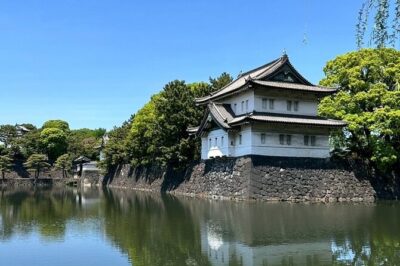
Imperial Palace and Shogun Historical Walking Tour
Read our review →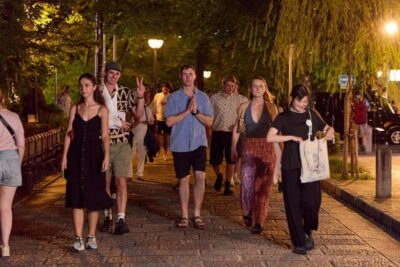
Gion Geisha District Walking Tour – Stories of Geisha
Read our review →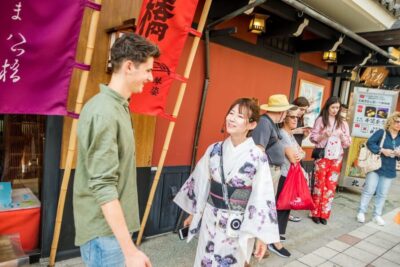
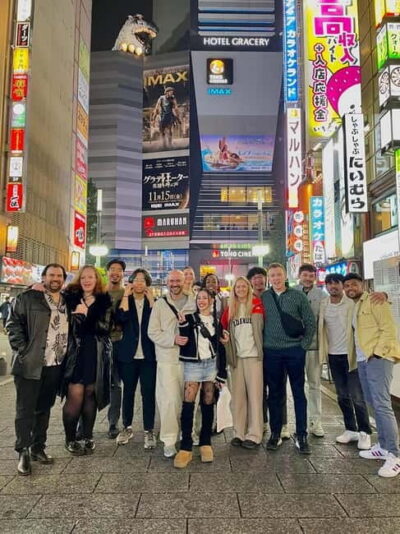
Shinjuku Local Bar and Izakaya Guided Walking Tour
Read our review →
Browse the lists this tour appears in