
Reviewed · FOOD TOURS
Retro Shibuya Food Tour
Shibuya has a quieter side after dark. I like the way this three-hour walk leaves the main tourist circuit for standing bars, old noodle shops, and tucked-away izakayas, while still touching famous sights such as Hachiko and Shibuya Crossing. The mix of local dishes, dessert, and three included drinks gives you more than a quick snack stop.
I also like the strong local focus and the chance to hear Shibuya’s Showa-era story from an English-speaking guide. Guides such as Sharon, Josh, and Jacob have earned praise for making the history clear and the food stops enjoyable. The main consideration is price: at $221 per person, this is not a cheap way to eat in Tokyo, and the route may change if restaurants, weather, or holidays affect the plan.
In This Review
- Key things to know before you book
- Starting near Shibuya Station at 4 p.m.
- Hachiko and Shibuya Crossing, with context
- Center-gai, Don Quijote, and the changing face of Shibuya
- Back alleys, standing bars, and local eating habits
- The food stops: several small tastes instead of one big meal
- Ramen and the value of a local guide
- Nonbeiyokocho and the izakaya stop
- How the $221 price works out
- Timing, walking, and possible changes
- Who will enjoy this Shibuya food walk?
- Should you book the Retro Shibuya Food Tour?
- FAQ
- Where does the Retro Shibuya Food Tour begin?
- What time does the tour start?
- How long does the experience last?
- Where does the tour end?
- How many people can join the tour?
- Are drinks included?
- Is food included?
- Is the tour suitable for vegetarians or people avoiding gluten?
- Can I cancel for a full refund?
Key things to know before you book
- Three hours in backstreet Shibuya: The route moves beyond Center-gai and into smaller streets where you may not think to eat on your own.
- Food, dessert, and three drinks included: Tastings can include beer, local sake, other drinks, seasonal dishes, ramen, and sweets.
- A small group of no more than 10: This should make it easier to hear the guide and ask questions inside compact Japanese bars.
- A Showa-era view of Shibuya: The tour links today’s neon district with the neighborhood’s older character and local customs.
- Adults age 20 and older only: Alcohol is part of the experience, and the tour is not designed for children.
- Vegetarian and gluten-free friendly: Pescetarian diets can also be accommodated, but the experience is not recommended for vegans.
Starting near Shibuya Station at 4 p.m.
The meeting point is near Shibuya Station at 2 Chome-24, Shibuya. A 4 p.m. start is well chosen for this type of outing. You begin with enough daylight to get your bearings, then move into the evening when bars and izakayas become part of the neighborhood scene.
You should arrive with comfortable shoes and a little patience for station exits. Shibuya is easy to reach by public transportation, but the station area can feel confusing, especially if you are new to Tokyo. The tour does not include hotel pickup, drop-off, or transportation costs.
The experience is mobile-ticketed and lasts about three hours. It is best for someone who enjoys walking, standing, tasting several small portions, and moving between different places instead of sitting down for one long dinner.
The group limit is 10 people. That matters in Shibuya, where some food shops and bars have tight interiors. A small party gives you a better chance to hear the guide and follow the group without losing time on busy sidewalks.
More Food Tours in Tokyo
- Tokyo: Shinjuku Food Tour (13 Dishes at 4 Local Eateries)
★ 5.0 · 6,603 reviews - Tokyo: Shinjuku Food Tour (15 Dishes and 4 Eateries)
★ 4.9 · 2,033 reviews - Best of Shinjuku: Izakaya Food Tour (4 Stops, 14+ Tastings)
★ 5.0 · 1,863 reviews
Hachiko and Shibuya Crossing, with context
The opening stops include the Hachiko Statue and Shibuya Crossing. Neither is treated as a long sightseeing visit. The listed time at each is only about two minutes, so think of these stops as quick orientation points rather than major attractions.
Hachiko is one of Tokyo’s best-known meeting places, and your guide uses it to explain local life and Japanese culture. The value here is not simply taking another photograph. A local guide can help you understand why this spot matters to people meeting friends, navigating the station, and moving through Shibuya every day.
At Shibuya Crossing, the tour turns toward the neighborhood’s past. The guide connects the modern district with its Showa-era development, giving you a useful frame for the streets you are about to walk. This is a good contrast: first you see the Shibuya recognized around the world, then you follow the guide toward places that are less obvious.
The short stops also keep the food portion moving. If you want a long look at Hachiko or a dedicated crossing photograph, arrive early or return another time. The tour’s purpose is eating and local context, not an extended landmark tour.
Center-gai, Don Quijote, and the changing face of Shibuya
The route passes through Shibuya Center-gai, then continues by major landmarks including MEGA Don Quijote, Shibuya Mark City, and Shibuya 109. These places help you see the commercial side of the district before the group turns into smaller streets.
Center-gai is a useful reference point because it is easy to recognize, but it is not the heart of the experience. You may see crowds, large signs, shops, and the familiar energy of central Shibuya. The guide’s job is to show you how to move beyond that first impression.
MEGA Don Quijote is included as a quick look at one of the area’s most useful shopping stops. It can be a good place to browse Japanese snacks and souvenirs, although the tour does not promise shopping time. You are passing through on the way to food stops, so do not count on a relaxed shopping session.
Shibuya Mark City and Shibuya 109 help place the route within the wider district. They are practical landmarks, not long stops with admission or special access. The tour uses them as signposts while guiding you toward local eating spots that are harder to locate without help.
Back alleys, standing bars, and local eating habits
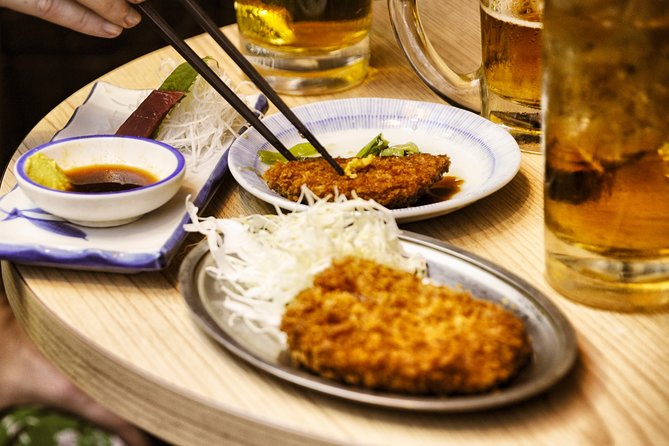
This is where the tour earns its keep. Shibuya has plenty of restaurants that are simple to find, but the more interesting challenge is knowing which small places suit a first-time visitor and how to order once you get there.
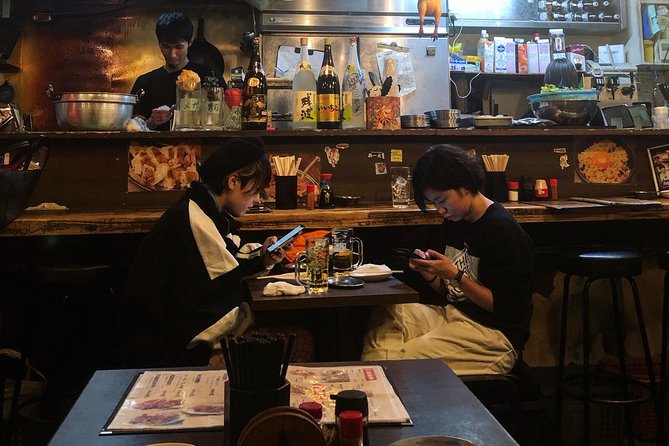
The route may include standing-only bars, older noodle shops, and back alleys. These settings offer a different feel from a large restaurant aimed at international visitors. Standing bars can be compact and informal. A decades-old noodle shop can be focused on one familiar dish rather than a long menu. An izakaya gives you the chance to try small plates with a drink, which is a central part of casual Japanese dining.
Your guide handles the practical side. You do not need to identify the right doorway, work out every menu item alone, or guess how the stops fit together. That guidance is especially useful in places where English information may be limited.
The tradeoff is comfort. A standing bar is not ideal if you need to sit during every stop. Small shops may also have limited space. You should expect a social food walk, not a quiet private dinner with a fixed table.
A completely different kind of day out:
- Tokyo Disney Resort – Tokyo Disneyland & Tokyo DisneySea Park Tickets
★ 4.8 · 99,488 reviews - SHIBUYA SKY Ticket
★ 4.7 · 46,509 reviews - JR Whole Japan Rail Pass
★ 4.8 · 29,150 reviews - Mt Fuji and Hakone 1-Day Bus Tour Return by Bullet Train
★ 5.0 · 26,383 reviews
The food stops: several small tastes instead of one big meal
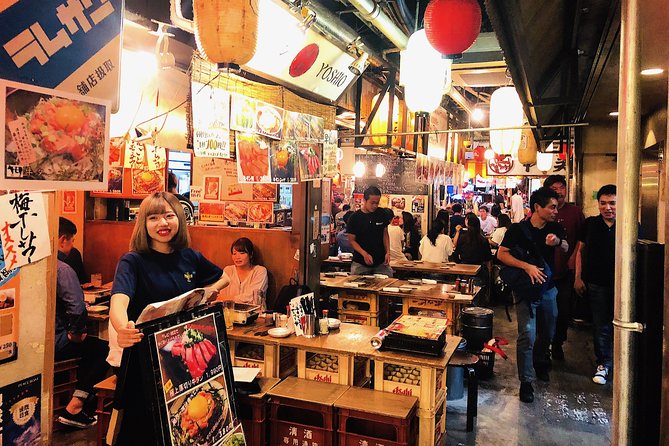
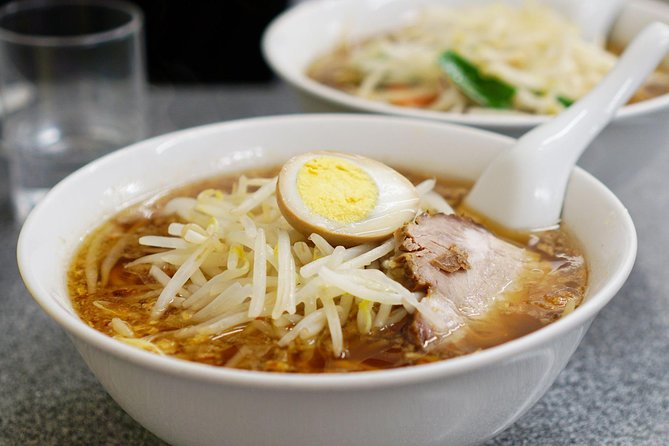
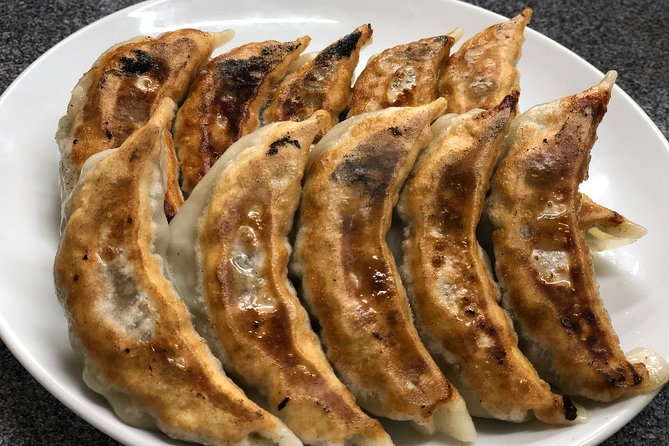
The tour includes local food tastings, dessert, and three complimentary drinks. The exact dishes can change, but the plan includes a variety of local and seasonal food, with an iconic ramen shop included among the possible stops.
That format lets you sample more than one part of Japanese eating culture. You might move from a quick savory bite to noodles, then to izakaya-style dishes and a sweet finish. Since the food is spread across several locations, you get a sense of how different types of neighborhood businesses operate.
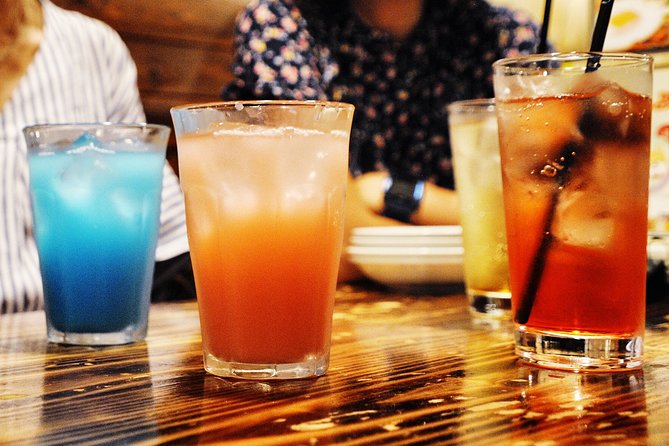
The three drinks are a meaningful part of the price. Options may include beer, local sake, and other beverages. The experience is for adults age 20 and older, so alcohol is part of the design rather than an optional detail added at the end.
Still, you should not assume the tour replaces a large dinner for every appetite. Food tours vary in how generous the portions are, and the information here describes tastings rather than a full multi-course meal. If you normally eat a substantial dinner, you may want to plan another meal later.
Vegetarians, pescetarians, and people avoiding gluten can take part, but you should communicate your needs clearly. The tour is not recommended for vegans, so a fully plant-based diet may be difficult across several traditional food stops.
Ramen and the value of a local guide
An iconic ramen stop is one of the most appealing parts of the route. Ramen shops often look simple from the outside, but a guide can make the visit easier by explaining the style of stop and helping the group move through it efficiently.
The point is not only the bowl of noodles. Ramen fits the broader story of everyday Shibuya, where quick, focused meals sit alongside bars, shopping streets, and older businesses. After seeing giant signs and department stores, a noodle shop offers a more grounded picture of how people eat during an ordinary evening.
The guide also adds value between bites. Josh and Jacob received particularly strong praise for combining food with historical facts, while Sharon was noted for being accommodating and sharing useful information about Shibuya. Those comments point to the most important feature of the experience: the quality of the person leading it can shape the whole evening.
Because the group is capped at 10, you can likely ask questions about ingredients, customs, and the neighborhood without turning the walk into a lecture. The tour is a good match for curious eaters who want an explanation of what they are seeing, not just a list of dishes.
Nonbeiyokocho and the izakaya stop
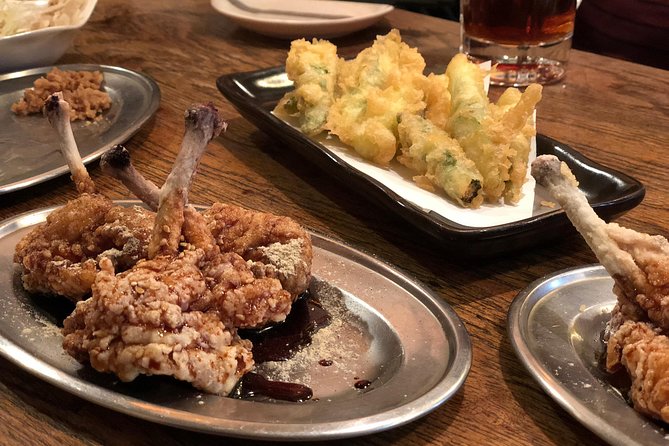
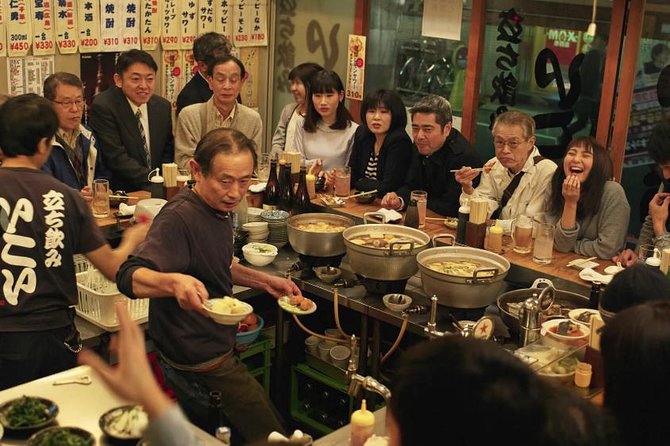
Nonbeiyokocho is one of the route’s more atmospheric areas. The name is associated with a narrow drinking quarter, and its inclusion fits the tour’s aim of showing you a side of Shibuya that is easy to miss when you stay near the major crossing.
The route then heads toward an izakaya, or Japanese pub, described as a tucked-away place where your guide helps you enter the local food-and-drink rhythm. You can expect small dishes, conversation, and drinks rather than a formal restaurant setting.
This stop may be the strongest reason to choose the tour over a standard Shibuya sightseeing walk. You are not simply told that Japan has izakayas. You get to spend part of the evening in one, with food on the table and a guide helping you understand the setting.
The experience may not suit someone who dislikes alcohol, crowded interiors, or shared social settings. You can select other beverages from the available options, but the tour’s structure is clearly built around drinking as well as eating.
How the $221 price works out
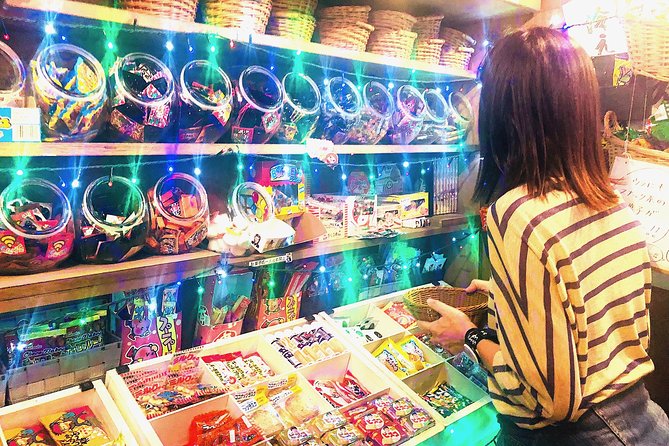
At $221 per person, this is a premium food walk. You are paying for more than the raw cost of snacks and drinks. The price also covers a local English-speaking guide, access to places you might struggle to find alone, coordination among several eateries, dessert, and three drinks.
The small maximum group of 10 improves the value. A larger party could make compact bars awkward and reduce your chance to speak with the guide. Here, the group size supports the personal explanations that make the route useful.
The cost is harder to justify if you only want ramen or a few inexpensive Japanese dishes. You can eat cheaply in Tokyo, and the tour does not include transportation, hotel pickup, or extra food and drinks. You are choosing convenience, interpretation, and a guided route through lesser-known places.
I would see the price as reasonable for a special first evening in Shibuya, particularly if you are staying nearby and want a planned introduction to local food culture. It is less attractive for repeat Tokyo visitors who already know the neighborhood and feel comfortable ordering in small Japanese establishments.
The published rating is 4.9 out of 5 from 33 ratings, with 97 percent recommending the experience. That is a strong signal, though the sample is still modest. The most praised elements are clear: guides who explain Shibuya well, food that feels enjoyable, and personal attention from people such as Sharon, Josh, and Jacob.
Timing, walking, and possible changes
The tour requires moderate physical fitness. You will walk through Shibuya for roughly three hours, stop at several eateries, and may spend time standing. Wear shoes that can handle pavement and keep your belongings secure in crowded areas.
The route can change because of restaurant schedules, public holidays, weather, or other unexpected problems. Substitutions may be made when needed. That flexibility is normal for a food tour built around small local businesses, but it means you should not treat every stop as guaranteed.
The experience also requires good weather and a minimum number of participants. If the operator cancels because of poor weather or too few bookings, you can choose another date or experience, or receive a full refund.
For your own plans, leave some space after the tour. The stated end point is Tokyu Department Store Honten, at the basement level under the station, with the address 2-24-1 Dogenzaka. The tour ends in central Shibuya, so you can continue elsewhere, but added food or drinks are your responsibility.
Free cancellation is available if you cancel at least 24 hours before the 4 p.m. start time. Cancellations or changes inside that window are not refunded or accepted, and the cut-off follows Tokyo local time.
Who will enjoy this Shibuya food walk?
I would recommend it most to first-time Tokyo visitors who want help with the practical side of eating locally. You get a broad look at Shibuya, three drinks, several food tastings, and a guide who can explain the neighborhood while you walk.
It also suits solo visitors, though solo participants are asked to email the operator. Couples and small groups will benefit from the 10-person maximum, especially if they enjoy trying different dishes rather than choosing one restaurant and staying there.
The tour is a good fit for:
- Adults age 20 and older who enjoy beer, sake, or other drinks
- People who want local food without spending time researching small shops
- Visitors interested in Shibuya’s Showa-era past as well as its modern image
- Vegetarians, pescetarians, and people following a gluten-free diet who confirm their needs
- Anyone comfortable with moderate walking and some standing
I would hesitate to recommend it to vegans, families with children under 20, or anyone seeking a private and relaxed sit-down meal. It is also not the best choice if your main goal is shopping at Don Quijote or taking extended photos at the major landmarks.
Should you book the Retro Shibuya Food Tour?
Book it if you want Shibuya explained through food, drinks, and small local businesses rather than only through famous sights. The strongest reasons are the compact group, three included drinks, access to standing bars and older noodle shops, and guides who have been praised for both warmth and useful local information.
Skip it if $221 feels too high for tastings, or if you need a vegan menu, child-friendly outing, or guaranteed restaurant lineup. For the right person, this is a well-planned way to get past the obvious Shibuya circuit and into the neighborhood’s everyday food culture.
FAQ
Where does the Retro Shibuya Food Tour begin?
It begins near Shibuya Station at 2 Chome-24, Shibuya, Tokyo 150-0002, Japan.
What time does the tour start?
The tour starts at 4 p.m.
How long does the experience last?
It lasts approximately three hours.
Where does the tour end?
It ends at Tokyu Department Store Honten, 2-chome-24-1 Dogenzaka, Shibuya, at the basement level under the station.
How many people can join the tour?
The maximum group size is 10 people.
Are drinks included?
Yes. The experience includes three complimentary drinks, which can include beer, local sake, and other beverages.
Is food included?
Yes. Local food tastings and dessert are included. Additional food or drinks are not included.
Is the tour suitable for vegetarians or people avoiding gluten?
Yes. The experience is vegetarian, pescetarian, and gluten-free friendly. It is not recommended for vegans.
Can I cancel for a full refund?
Yes, if you cancel at least 24 hours before the experience start time. Cancellations made less than 24 hours before the start are not refunded.
Just added in Tokyo
- Very popular in Harajuku♡Animal petting zoo★ 4.6 · 39 reviews
- Yokohama Port: Private Customizable Tour with Transfer★ 5.0 · 19 reviews
- Wagyu & Sake 8 Course Tasting Dinner in Shinjuku★ 4.9 · 20 reviews
- Warner Bros. Studio Tour Tokyo – The Making of Harry Potter★ 4.8 · 181 reviews
- Yanaka District: Historical Walking Tour in Tokyo’s Old Town★ 4.8 · 117 reviews
- Tokyo: Classic Tsukiji Food Tour★ 4.9 · 78 reviews
- Tokyo: Tsukiji Fish Market Tour with 6 Stops & Seafood Lunch★ 4.5 · 165 reviews
- Tokyo Wagyu & Sake Pairing Tasting Experience with Local Flavors★ 5.0 · 108 reviews
Food Tours, compared.
Shinjuku Food Tour (13 Dishes at 4 Local Eateries)
Read our review →
Shinsekai Food Tour with 13-15 Dishes at 5 Eateries
Read our review →
Osaka Food Tour: 13 Dishes at 5 Local Eateries
Read our review →
Shinjuku Food Tour (15 Dishes and 4 Eateries)
Read our review →
Best of Shinjuku: Izakaya Food Tour (4 Stops, 14+ Tastings)
Read our review →
Kyoto Night Foodie Tour in Gion (9+ dishes + 6 Sake tastings)
Read our review →
Hungry Osaka Street Food Tour:15 Tastings & 3 Drinks with a Local
Read our review →
Tokyo Night Foodie Tour in Shinjuku – Seasonal Sushi, Wagyu Beef
Read our review →Browse the lists this tour appears in