Reviewed · TOKYO TOURS
Tokyo Ikebana, Japanese Traditional Flower Arrangement Experience
Flowers can teach you to slow down. This Tokyo ikebana class gives you a clear introduction to the Japanese art of flower arranging, then lets you make your own piece at the Ichiyō-style Ikebana headquarters. I especially like that all flowers and equipment are supplied, and that you leave with practical ideas you can use at home. The one drawback is the firm no-refund policy, so you will want to be certain of your plans before booking.
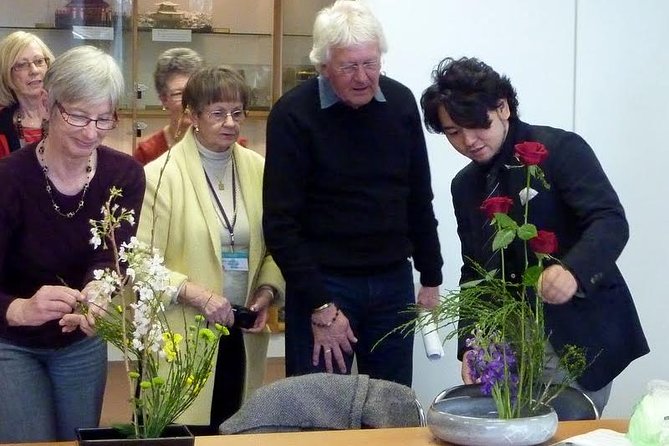
I also like the small group limit of 10, which leaves room for personal help rather than a quick demonstration from across the room. Instructors work with beginners and explain form, angles, plant combinations, and the character of the vase. Naohiro Kasuya and Mrs. Shimakawa are praised for patient, warm teaching, though the exact instructor may vary.
In This Review
- Key points to know before you book
- What this Tokyo ikebana class is really about
- Arriving at the Ichiyō-style Ikebana headquarters in Nakano
- The first lesson: form, angle, and the space around flowers
- Making your own arrangement with seasonal flowers
- Why the small group size makes a difference
- The photo moment and taking the lesson home
- How the $67.28 price measures up
- Who will enjoy this class most
- Practical details that can affect your decision
- How this compares with a regular flower workshop
- Should you book the Tokyo ikebana experience?
- FAQ
- Where does the ikebana class take place?
- Does the activity end at the same place where it starts?
- How long does the experience last?
- How much does the experience cost?
- Are flowers and equipment provided?
- Is this experience suitable for beginners?
- What age group can participate?
- How many people can join the class?
- Can the instructor come to my Tokyo hotel?
- Can I cancel or change my booking?
Key points to know before you book
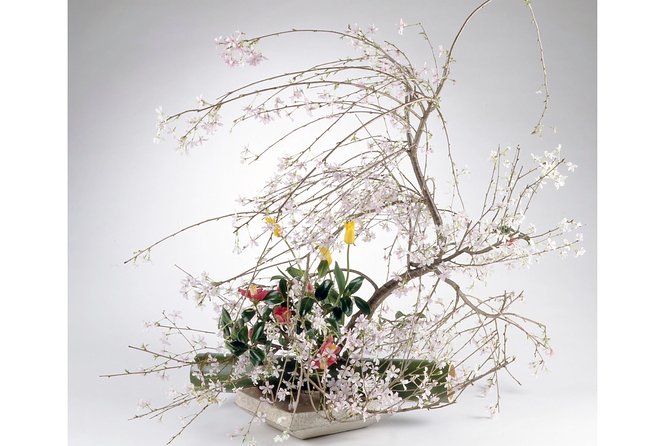
- Your own seasonal arrangement: You create a flower piece using local flowers that are in season.
- A real lesson, not just a craft session: The class covers ikebana principles, including form, shape, movement, angle, and visual balance.
- About 70 minutes in total: The class fits neatly into a Tokyo sightseeing day without taking half your afternoon.
- Small-group setting: The maximum is 10 people, and some sessions may be intimate or even one-on-one.
- Good for beginners age 6 and up: Children 12 and younger must attend with a parent.
- Easy meeting point: The class begins and ends at 4-chōme-20-5 Nakano, near public transportation.
What this Tokyo ikebana class is really about
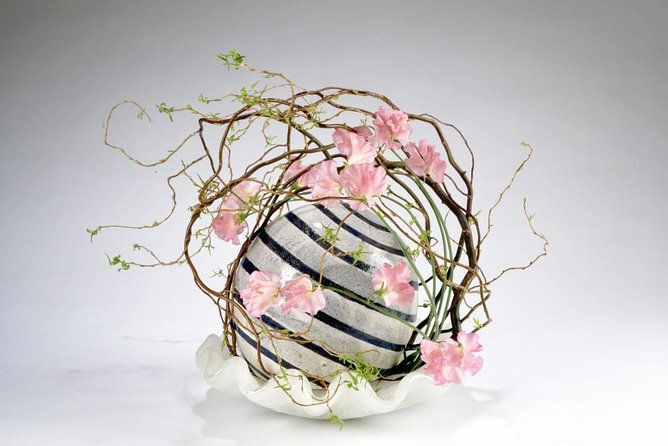
Ikebana is not simply putting flowers in a vase. The aim is to reveal the character of each material, including the stems, leaves, branches, vase, and open space around them.
That difference matters. A standard bouquet often tries to look full and generous. Ikebana may use fewer elements, but each one has a job. A branch can create height. A curved stem can suggest movement. A gap can be as important as a flower.
This class introduces those ideas without expecting you to arrive with artistic training. The instructor explains which angles look attractive, how different materials work together, and how a small change in placement can alter the whole arrangement.
I like this approach because it gives you something more useful than a finished souvenir. You learn how to look at flowers. Once you understand shape, proportion, and direction, you can apply the same ideas with flowers from your own country.
The class also connects you with a tradition that has long been part of Japanese culture. The experience explains that samurai took part in ikebana, a detail that gives the art more depth than its quiet appearance might suggest. You are not studying military history, but you do get a sense that flower arranging has never been viewed as a minor pastime.
A few more options to weigh up in Tokyo
- Tokyo Disney Resort – Tokyo Disneyland & Tokyo DisneySea Park Tickets
★ 4.8 · 99,488 reviews - SHIBUYA SKY Ticket
★ 4.7 · 46,509 reviews - JR Whole Japan Rail Pass
★ 4.8 · 29,150 reviews
Arriving at the Ichiyō-style Ikebana headquarters in Nakano
The meeting point is at 4-chōme-20-5 Nakano, Nakano City, Tokyo 164-0001. The venue is near public transportation, and the class finishes at the same place.
That fixed start and finish is helpful in Tokyo. You do not need to work out a second meeting point or wonder where you will end up after the lesson. You can plan a nearby meal or another Nakano activity afterward.
The location is a school rather than a sightseeing attraction designed for crowds. That gives the class a more focused feel. You are there to learn the art, not simply to take a quick photo of a decorated room.
The venue was easy to find for one participant, but you should still allow enough time to reach Nakano. Tokyo addresses can be precise without being instantly obvious, and a calm arrival is better than rushing in with your phone in one hand and a map in the other.
Your mobile ticket is useful for entry. Confirmation is sent within 48 hours of booking, subject to availability, so do not assume that a last-minute reservation is final until you receive that confirmation.
The first lesson: form, angle, and the space around flowers
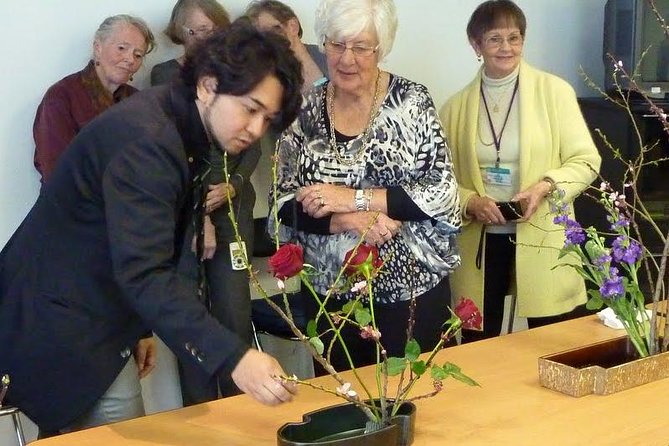
The opening part of the class explains the basic principles of ikebana. The instructor looks at the materials, the vase, and the relationship between the parts before you make anything yourself.
You learn to consider:
- The shape and direction of each branch or stem
- Which angle presents a flower most attractively
- How different plants combine
- How the vase affects the finished piece
- How open space helps define the arrangement
- How a change in placement can alter the whole appearance
This is where the class becomes more than a casual flower workshop. The teacher is not only telling you where to put a flower. You are shown how to notice what the material is already doing.
The explanations include geometric and philosophical ideas behind ikebana. That may sound lofty, but the lesson remains practical. You see the ideas applied to an actual arrangement, then try them yourself.
A major strength is the level of instruction. The class is designed for beginners, and the teacher adjusts the guidance to your level. If you have never handled ikebana tools or thought about asymmetrical design, you are not expected to know the language beforehand.
At the same time, the instruction has enough substance for someone who already knows a little about flower arranging. The class can introduce you to a Japanese school of ikebana rather than repeating a generic bouquet lesson.
Making your own arrangement with seasonal flowers
After the introduction, you create your own piece. Flowers used in the class are local and seasonal, so the materials change with the time of year.
That seasonal element adds real value. You are working with what is available in Japan at that moment, rather than with an identical kit prepared months in advance. The arrangement becomes a record of your visit and the season you experienced.
Do not expect to copy a finished model without changes. The goal is to develop an individual arrangement using the principles from the lesson. The instructor lets you work, then examines the result and offers suggestions for improvement.
This guidance is one of the best parts of the class. You get to try your own idea, but you are not left wondering why the flowers look awkward. A patient correction can show you how to shift a stem, change an angle, or make better use of empty space.
The instructors are repeatedly praised for their patience and encouragement. Naohiro Kasuya is described as friendly and full of insight into form, shape, and movement. Mrs. Shimakawa is also praised for taking time to explain the process clearly and for teaching with real enthusiasm.
Language concerns appear manageable based on the available feedback. One participant noted that an instructor apologized for her English, but found the explanations easy to understand. Still, you should remember that teaching arrangements rely partly on demonstration, so you will be watching as well as listening.
A completely different kind of day out:
- Mt Fuji and Hakone 1-Day Bus Tour Return by Bullet Train
★ 5.0 · 26,383 reviews - TOKYO SKYTREE® Ticket
★ 4.7 · 25,136 reviews - teamLab Borderless Tickets: MORI Building DIGITAL ART MUSEUM
★ 4.7 · 24,126 reviews - teamLab Planets TOKYO Ticket
★ 4.7 · 21,663 reviews
Why the small group size makes a difference
The maximum group size is 10 people. That is small enough for the instructor to look closely at each arrangement and give individual advice.
Some sessions may have only one student. That can be a wonderful chance to ask questions and work at your own pace, though you should not book assuming you will receive a private class. The group size depends on the schedule.
A small class also suits ikebana itself. This is a quiet activity that depends on concentration and careful observation. Ten people is a far better fit than a large room where you can barely hear the explanation or see the demonstration.
Families can take part because the minimum age is 6. Children aged 12 and younger must be accompanied by a parent. The activity requires care with flowers and equipment, so an adult should expect to stay involved rather than simply drop off a child.
Most people can participate, and the experience is located near public transportation. No special artistic background is required. The main requirement is a willingness to work slowly and accept that the arrangement may change several times before it looks right.
The photo moment and taking the lesson home
When your arrangement is finished, you have time to photograph it. This is a small but useful part of the session. Flowers can change quickly once they are placed, and a photo helps you remember the form you created.
The instructor’s advice also gives you a way to continue after returning home. Ikebana does not depend on Japanese flowers alone. The principles can be used with flowers and branches found in other countries.
That makes this a stronger souvenir than many purchased objects. You do not simply carry home something made by someone else. You take home a method you can practice with ordinary materials.
You should not assume the class includes a permanent vase or a full ikebana tool kit to take away. The supplied information confirms that flowers and equipment are provided for the activity, but it does not promise that these materials become yours afterward.
The seasonal flowers are part of the appeal, but they also mean your exact arrangement cannot be predicted in advance. If you want a particular flower or color, this may not be the right activity. If you like working with what the season offers, it is a plus.
How the $67.28 price measures up
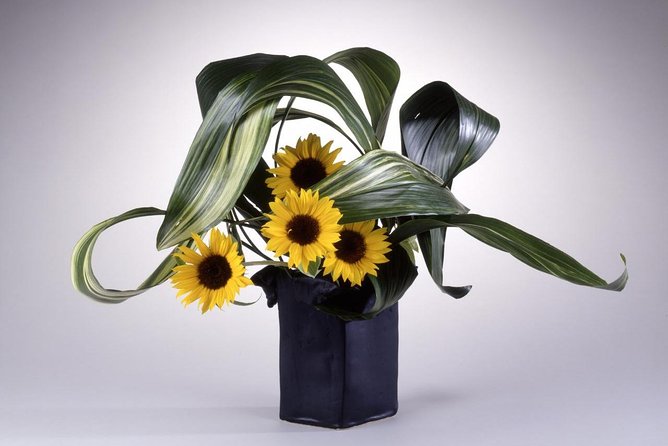
At $67.28 per person, this is not the cheapest short activity in Tokyo. The session lasts about 1 hour and 10 minutes, so the price works out to a substantial hourly cost.
Still, you are paying for more than flowers. The fee covers instruction, the materials used in the class, access to an established ikebana school, and personal feedback on your own arrangement. The small group limit also matters. A cheaper large-group demonstration would not offer the same level of individual correction.
I see the price as fair for someone who wants a focused cultural lesson rather than a quick photo opportunity. It is particularly good value if you have a genuine interest in Japanese arts or plan to continue arranging flowers at home.
For a family of four, the cost adds up quickly. In that case, compare the price with your interest in the subject. If the children are simply looking for a fast craft activity, this may feel expensive. If they enjoy making things carefully and you want a calm shared experience, the class has more to offer.
The activity is booked an average of 16 days ahead. That is useful planning information. I would reserve early if the class fits a fixed Tokyo itinerary, especially because confirmation depends on availability and the maximum group size is limited.
Who will enjoy this class most
I would recommend the experience to:
- First-time visitors who want a hands-on cultural activity
- People already interested in flowers, design, or Japanese traditions
- Solo visitors who appreciate patient instruction
- Couples looking for a quiet activity together
- Families with children age 6 or older
- Anyone who wants a skill they can continue at home
It is less suitable if you want a lively, fast-moving activity or a long sightseeing tour. The class centers on observation, precision, and adjustment. You will spend time looking at a stem before deciding where it belongs.
It may also disappoint you if you expect to make a large bouquet. Ikebana often uses restraint and space. The beauty comes from the relationship between the materials, not from filling every part of the vase.
Practical details that can affect your decision
The class begins and ends at the Nakano meeting point. There is no separate drop-off at a major station or hotel built into the standard plan.
The standard duration is about 70 minutes. That includes the introduction, your own arrangement, instructor feedback, and time for photographs. You can fit it into a day of sightseeing, but you should not schedule another activity at the exact end time. Allow extra time for Tokyo transport and finding the address.
The experience is available for people age 6 and above. Children 12 and younger need a parent with them. Most people can participate, and the activity is near public transportation.
All materials are supplied, so you do not need to bring flowers or equipment. You should keep your own valuables with you, since the school does not accept responsibility for lost belongings. You are also responsible for accidents or injuries during the activity.
The instructor can be sent to any hotel in Tokyo, but the supplied information does not explain the separate cost or exact arrangements for that option. If you want hotel instruction, confirm the details before relying on it.
The cancellation rule is strict. The experience is non-refundable and cannot be changed for any reason. I would avoid booking until your Tokyo schedule is firm.
How this compares with a regular flower workshop
A regular flower workshop may focus on producing a pleasing arrangement quickly. This class gives more attention to the principles behind the finished work.
You learn why a certain angle works and why another makes the arrangement feel heavy. You consider the vase as part of the composition, rather than treating it as a container. You also receive direct advice after making your own piece.
That teaching style is why I would choose this over a standard bouquet class for a first ikebana experience. The lesson gives you a way to think, not just a set of steps to copy.
The tradeoff is that the class may feel more formal and less free-form. You are learning within the traditions of an ikebana school. That structure is helpful for beginners, but people who want to create without instruction may prefer an informal craft session.
Should you book the Tokyo ikebana experience?
I would book this class if you want a small, thoughtful introduction to Japanese culture and like the idea of making something with your own hands. The strongest reasons are the seasonal flowers, personal feedback, patient teachers, and the chance to continue practicing after you return home.
The $67.28 price is easiest to justify when you value instruction and a small group. It is harder to justify if you only want a low-cost souvenir or a brief activity between major sights.
Check your schedule carefully because the booking cannot be cancelled or changed for a refund. If the timing works and you are open to a quiet lesson in form and balance, this is one of the more personal ways to spend an hour in Tokyo.
FAQ
Where does the ikebana class take place?
The class takes place at the Ichiyō-style Ikebana headquarters at 4-chōme-20-5 Nakano, Nakano City, Tokyo 164-0001, Japan.
Does the activity end at the same place where it starts?
Yes. The activity begins and ends at the Nakano meeting point.
How long does the experience last?
The experience lasts approximately 1 hour and 10 minutes.
How much does the experience cost?
The listed price is $67.28 per person.
Are flowers and equipment provided?
Yes. The flowers and equipment needed for the class are provided.
Is this experience suitable for beginners?
Yes. The program teaches the basics of ikebana and is designed for first-time participants as well as people with some prior experience.
What age group can participate?
The program is designed for people age 6 and older. Children age 12 and younger must be accompanied by a parent.
How many people can join the class?
The activity has a maximum of 10 participants.
Can the instructor come to my Tokyo hotel?
The instructor can be sent to any hotel in Tokyo. The supplied information does not state whether an additional fee applies or provide the exact hotel arrangement process.
Can I cancel or change my booking?
No. The experience is non-refundable and cannot be changed for any reason.
Just added in Tokyo
- A One-of-a-Kind Sushi Experience in a Special Place of Japan★ 5.0 · 15 reviews
- Tokyo Cute Bento Cooking Class – Make a Kawaii Character Lunchbox★ 5.0 · 126 reviews
- Japanese Home Cooking Class & Walk in Todoroki Temple Tokyo★ 5.0 · 88 reviews
- Japan Tokyo Tower Observatory Deck E-Ticket★ 4.0 · 34 reviews
- Catch a Baseball Game in Tokyo with a Local – Tickets Included★ 5.0 · 24 reviews
- Japan Classic 10 Day – One Life Adventures★ 5.0 · 129 reviews
- JDM Experience with Fast&Furious RX-7 (English speaking Driver)★ 5.0 · 57 reviews
- Tokyo Private Day Tour by Car with English speaking Driver Guide★ 4.0 · 29 reviews
Tokyo Tours, compared.

Tokyo Disney Resort – Tokyo Disneyland & Tokyo DisneySea Park Tickets
Read our review →
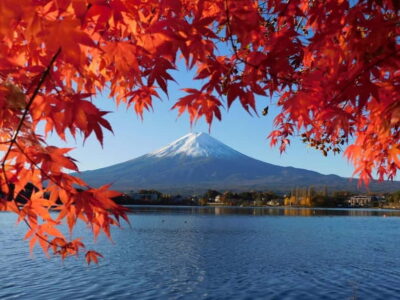
Mt Fuji and Hakone 1-Day Bus Tour Return by Bullet Train
Read our review →

teamLab Borderless Tickets: MORI Building DIGITAL ART MUSEUM
Read our review →