Reviewed · TOKYO TOURS
IKEBANA experience
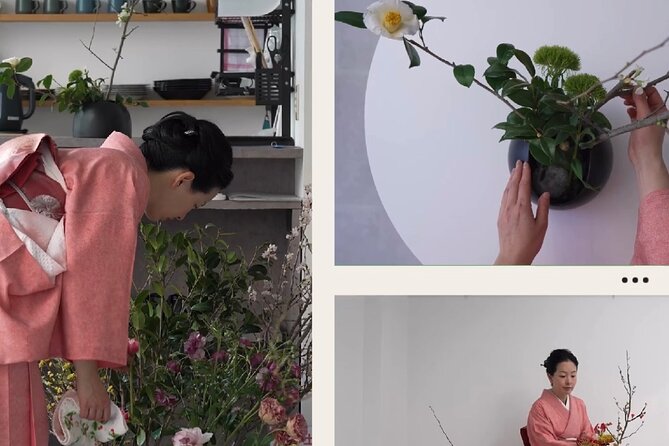
Flowers tell a quieter story in Tokyo. This 90-minute ikebana class with Hiromi brings you into a Japanese home, where you learn the basic ideas behind flower arrangement and then create one yourself. I like the setting, a traditional Japanese room near Toritsu-daigaku Station, and I like the personal teaching style, with clear English, patient guidance, and room for your own ideas.
The matcha and Japanese sweets at the end are a fine touch, especially when served in a tatami room. The main point to consider is the price, $115.31 per person, which is more than a quick craft workshop. You are paying for private instruction, flowers, a home setting, and cultural time rather than just a finished souvenir.
In This Review
- Key Points at a Glance
- What Makes This Ikebana Class Different
- Learning the Ideas Behind Ikebana
- Creating Your Own Arrangement
- A Traditional Room, Matcha, and Japanese Sweets
- Why Hiromi’s Teaching Style Works for Beginners
- The 90-Minute Schedule
- Price and What You Receive for $115.31
- Who Should Book This Experience
- Practical Details Before You Go
- Should You Book Hiromi’s Ikebana Class?
- FAQ
- Where does the ikebana experience begin?
- How long does the class last?
- Is the class taught in English?
- Is this a private activity?
- Are matcha and Japanese sweets included?
- Can beginners join?
- What is the cancellation policy?
Key Points at a Glance
- Learn in a real Tokyo home: The lesson takes place in Hiromi’s home studio, with Japanese-style rooms, tatami, and a garden.
- English instruction: Hiromi teaches carefully in English and explains the foundations before you begin your own arrangement.
- Private experience: Only your group takes part, making this a good choice for couples, families, and small groups.
- A gentle creative lesson: Hiromi demonstrates first, then lets you work independently before offering comments and revisions.
- Matcha and wagashi included when time allows: The class may finish with Japanese sweets and tea, plus basic tea ceremony instruction if you are interested.
- Easy to continue at home: Supplies may be available to purchase, giving you a way to practice after returning home.
What Makes This Ikebana Class Different
Many Tokyo activities take place in formal halls or busy commercial venues. This one leads you into a private home near Toritsu-daigaku Station, in Meguro City. That change of setting matters. You get a glimpse of how a Japanese-style room feels as part of daily life, not just as a museum display.
Hiromi’s home studio has been praised for its welcoming atmosphere, Japanese room, and colorful garden. You may meet at Toritsu-daigaku Station and continue from there to the class location. The experience ends back at the meeting point, so you do not need to arrange a second destination.
The class is private. That gives you more space to ask questions and work at your own pace. A couple can make arrangements together without being placed with strangers, while a family can take part across several age groups. The lesson has even suited a three-generation family, including a three-year-old who enjoyed a freestyle approach.
A few more options to weigh up in Tokyo
- Tokyo Disney Resort – Tokyo Disneyland & Tokyo DisneySea Park Tickets
★ 4.8 · 99,488 reviews - SHIBUYA SKY Ticket
★ 4.7 · 46,509 reviews - JR Whole Japan Rail Pass
★ 4.8 · 29,150 reviews
Learning the Ideas Behind Ikebana
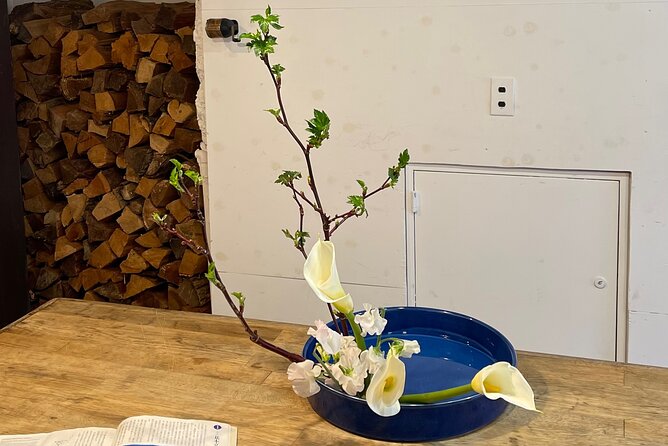
Ikebana is not simply putting flowers in a vase. The lesson introduces the way Japanese flower arrangement pays attention to line, shape, space, and the character of each stem. One detailed account of the class notes that you use relatively few flowers because the arrangement focuses on the beauty of the flowers’ lines and the water.
That makes this a good first lesson. You are not faced with a huge pile of materials or a complicated project that takes all afternoon. Instead, you learn how to cut the stems properly and think about how each piece sits in relation to the others.
Hiromi first makes a sample while referring to a textbook. This gives you a clear model before you touch the flowers. She can also adapt the lesson to your interests. You can learn from the basics or work in a freer style using the textbook as a guide.
The teaching style is careful rather than rushed. Hiromi explains the process, lets you create your own arrangement, and then comments on it or makes small revisions. That order is important. You get the satisfaction of making something yourself, but you also receive practical help before the final photograph.
Creating Your Own Arrangement
The hands-on part is the heart of the experience. After watching the demonstration, you make your own ikebana arrangement. Hiromi remains available, but the aim is not to copy her work exactly. She leaves room for your personal choices.
That balance has real value. A strict demonstration can make a beginner feel that every stem must go in one exact place. Here, you get a starting point and then some freedom. You can try an idea, see how the arrangement changes, and ask for help when you need it.
The class also includes a photo opportunity after the arrangement is finished. You leave with a record of your work, which is useful because the flowers themselves are not a practical souvenir to carry through the rest of a Japan trip.
The experience may be especially rewarding if you enjoy making things with your hands. It also suits anyone who wants a quieter break from temples, department stores, and crowded sightseeing districts. You do not need previous ikebana experience. The structure begins with basic information and a demonstration.
A Traditional Room, Matcha, and Japanese Sweets
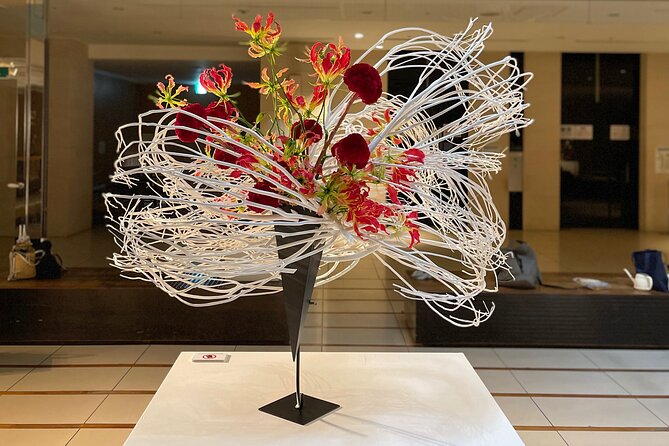
If time allows after the flower lesson, Hiromi serves matcha and Japanese sweets. Several parts of the experience come together here: the tatami room, the tea, the wagashi, and the chance to sit quietly with the arrangement you have just made.
The tea is not presented as a full formal ceremony, but Hiromi can teach you the basics of tea ceremony if you are interested. That makes the final part flexible. You can simply enjoy the matcha and sweet, or use the time to ask more questions about Japanese customs.
The Japanese sweet is a small serving, not a meal. Plan to eat before the class if you need lunch or a substantial snack. Still, this closing ritual gives the lesson a pleasing shape. You begin by learning about flowers, then finish by sitting in a Japanese room with tea.
I also like that the cultural conversation does not need to stop at ikebana. You can ask Hiromi about Tokyo or Japan. Her English is described as fluent and easy to understand, which is useful when discussing ideas that do not always translate neatly into a short demonstration.
A completely different kind of day out:
- Mt Fuji and Hakone 1-Day Bus Tour Return by Bullet Train
★ 5.0 · 26,383 reviews - TOKYO SKYTREE® Ticket
★ 4.7 · 25,136 reviews - teamLab Borderless Tickets: MORI Building DIGITAL ART MUSEUM
★ 4.7 · 24,126 reviews - teamLab Planets TOKYO Ticket
★ 4.7 · 21,663 reviews
Why Hiromi’s Teaching Style Works for Beginners
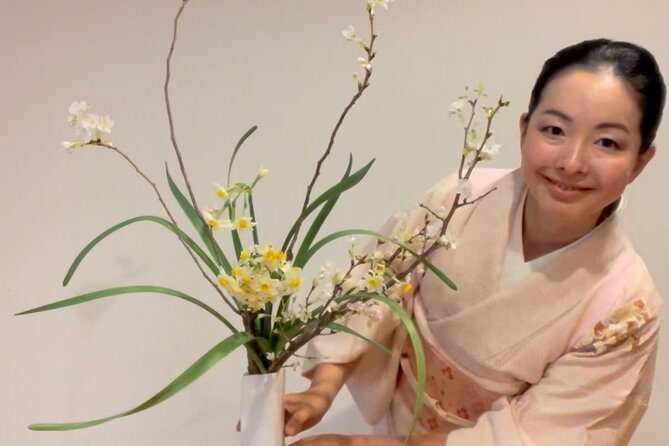
A good introductory class needs more than technical skill. It needs a teacher who can explain, wait, adjust, and encourage. Hiromi’s strongest quality appears to be her patience. Families, couples, children, and solo participants have all found room to take part in their own way.
She also understands that students arrive with different goals. You might want to learn the basic form, make something creative, understand the tradition, or simply have a calm cultural hour in Tokyo. The class can accommodate those aims rather than forcing everyone through the same rigid exercise.
Her English is another practical advantage. The instructions involve cutting flowers and arranging stems, so clear language matters. You can ask what a particular shape means, check how to position a stem, or discuss the difference between copying a sample and creating your own design.
Hiromi’s manner also seems warm without becoming overbearing. One participant appreciated having help while still being allowed to express personal creativity. That is the right balance for an art lesson: enough direction to prevent frustration, but enough freedom to make the result feel like yours.
The 90-Minute Schedule
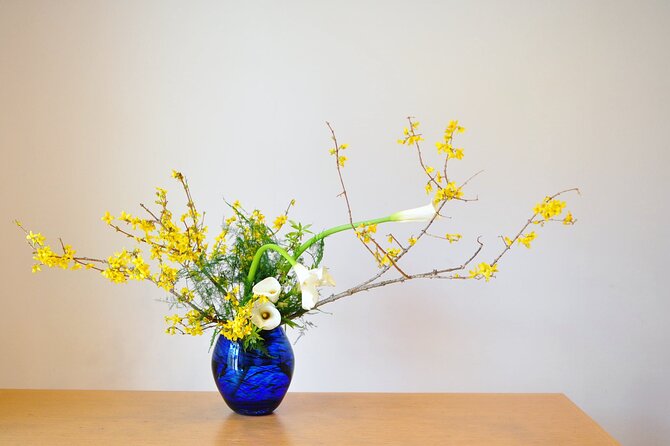
The experience lasts about one hour and 30 minutes. The exact balance may change depending on your questions, the pace of your arrangement, and the time available for matcha.
A typical flow should look like this:
- Meet at Toritsu-daigaku Station and proceed to the class location.
- Receive an introduction to ikebana and its basic ideas.
- Watch Hiromi create a sample with help from the textbook.
- Cut and arrange your own flowers.
- Receive comments, adjustments, and guidance.
- Take a photo of the finished arrangement.
- Enjoy matcha and Japanese sweets if time allows.
- Learn basic tea ceremony steps if you request it and time permits.
- Finish back at the meeting point.
The 90-minute length is well judged for a first attempt. A shorter session might feel like a quick demonstration, while a much longer class could become tiring for children or anyone new to flower arrangement. You get enough time to learn, work, ask questions, and pause for tea.
Keep your schedule reasonably open around the start time. The meeting point is specific: Toritsu-daigaku Station, at 1-chōme-5-1 Nakane, Meguro City, Tokyo 152-0031. A mobile ticket makes entry simple, but you still need to arrive at the correct station meeting point.
Price and What You Receive for $115.31
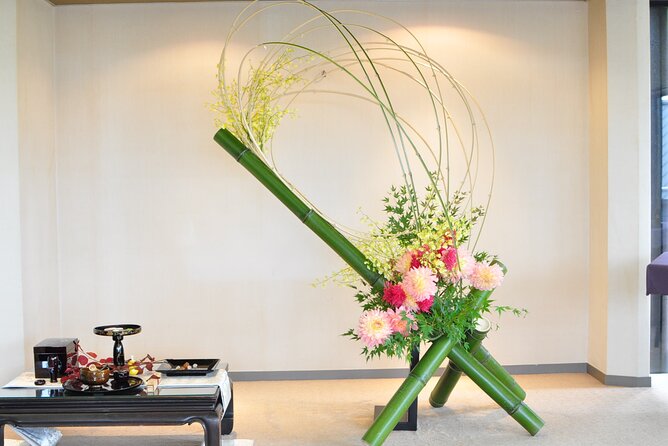
At $115.31 per person, this is not the cheapest cultural activity in Tokyo. The price makes more sense when you consider what is included: a private class, English instruction, flowers and materials for your arrangement, access to a Japanese home studio, personal corrections, a photo, and matcha with a sweet when time permits.
You are also paying for a small-group format. A larger class might offer a lower rate, but you would likely receive less individual attention. Here, Hiromi can look closely at your arrangement and adjust her advice to your skill and interest.
The value is strongest for people who want a personal cultural encounter rather than a quick activity checked off a list. It is also better value if you plan to keep practicing. Supplies may be available to purchase, so you can continue making ikebana at home.
The price may feel high if you are mainly searching for a low-cost souvenir or a short photo opportunity. It may also be less suitable if your schedule is packed with major Tokyo sights and you do not want to spend time traveling to a residential area. For the right visitor, though, the private setting and thoughtful instruction make the cost easier to justify.
Who Should Book This Experience
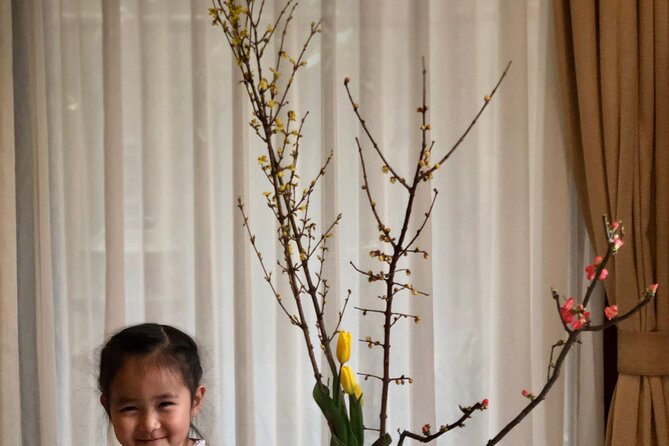
I would choose this class for couples looking for a shared activity, parents and children, and anyone curious about Japanese arts but unsure where to begin. The private format also works well for families with different ages and confidence levels.
It is a good fit if you:
- Want to learn in English.
- Prefer a quiet home setting to a large public workshop.
- Like creative activities with a clear demonstration.
- Want a cultural experience connected to everyday Japanese spaces.
- Enjoy tea, sweets, and time for conversation.
- Hope to continue ikebana after returning home.
Children can take part, but the class includes cutting flowers and arranging stems, so adults should use their judgment about supervision. The experience has worked for young children, including freestyle arrangements, but not every child will want to sit through the full lesson.
You might skip it if you want a formal, advanced ikebana certification class. The description supports a beginner-friendly lesson, not a multi-day professional course. You might also skip it if you dislike activities that require concentration and quiet creative work.
Practical Details Before You Go
Confirmation arrives at booking, and the experience is near public transportation. The activity is private, and most people can participate. It is not a tour of several Tokyo sights, so think of it as a focused cultural visit with one clear purpose.
The experience is usually booked about 28 days ahead. That does not guarantee that every date fills early, but it is sensible to reserve in advance if you want a particular day or plan to include it in a tight Tokyo schedule.
Free cancellation is available up to 24 hours before the start time for a full refund. Changes or cancellations inside that 24-hour window are not accepted for a refund. The local Tokyo time determines the cut-off.
The activity requires good weather. If poor weather causes cancellation, you can choose another date or receive a full refund. A minimum number of participants is also required, and if that condition is not met, you will be offered another date or experience, or receive a full refund.
Should You Book Hiromi’s Ikebana Class?
Book it if you want a calm, personal look at Japanese culture and like the idea of making something with your own hands. The strongest reasons are the home setting, Hiromi’s clear English, her patient corrections, and the chance to finish with matcha in a tatami room.
The experience is especially appealing during a longer Tokyo visit, when you can spare 90 minutes for something slower and more personal. It is also a thoughtful choice for a couple, a parent and child, or a small family group.
Skip it if you want a cheap drop-in workshop, a full tea ceremony, or an advanced professional lesson. But if $115.31 fits your budget, this offers more than flower arranging. You get a gentle introduction to ikebana, a personal meeting with an English-speaking teacher, and a small window into life inside a Japanese home.
FAQ
Where does the ikebana experience begin?
The meeting point is Toritsu-daigaku Station at 1-chōme-5-1 Nakane, Meguro City, Tokyo 152-0031, Japan.
How long does the class last?
The experience lasts approximately one hour and 30 minutes.
Is the class taught in English?
Yes. Hiromi teaches carefully and gently in English. Her English has been described as fluent and easy to understand.
Is this a private activity?
Yes. Only your group participates in the activity.
Are matcha and Japanese sweets included?
If time allows after the ikebana lesson, Japanese sweets and matcha are prepared. Basic tea ceremony instruction may also be available if you are interested.
Can beginners join?
Yes. The class covers the basics, includes a demonstration, and then lets you make your own arrangement with guidance.
What is the cancellation policy?
You can cancel at least 24 hours before the start time for a full refund. Cancellations or changes made less than 24 hours before the experience are not accepted for a refund. If poor weather or insufficient participants causes cancellation, you will be offered another date or experience, or a full refund.
Just added in Tokyo
- Japanese Home Cooking Class & Walk in Todoroki Temple Tokyo★ 5.0 · 88 reviews
- A One-of-a-Kind Sushi Experience in a Special Place of Japan★ 5.0 · 15 reviews
- Tokyo Cute Bento Cooking Class – Make a Kawaii Character Lunchbox★ 5.0 · 126 reviews
- Japan Tokyo Tower Observatory Deck E-Ticket★ 4.0 · 34 reviews
- Catch a Baseball Game in Tokyo with a Local – Tickets Included★ 5.0 · 24 reviews
- JDM Experience with Fast&Furious RX-7 (English speaking Driver)★ 5.0 · 57 reviews
- Tokyo Private Day Tour by Car with English speaking Driver Guide★ 4.0 · 29 reviews
- Japan Classic 10 Day – One Life Adventures★ 5.0 · 129 reviews
Tokyo Tours, compared.

Tokyo Disney Resort – Tokyo Disneyland & Tokyo DisneySea Park Tickets
Read our review →
Mt Fuji and Hakone 1-Day Bus Tour Return by Bullet Train
Read our review →

teamLab Borderless Tickets: MORI Building DIGITAL ART MUSEUM
Read our review →