
Reviewed · HIROSHIMA TOURS
Walking Through History: Hiroshima’s Path to Peace
Memory begins here. This two-hour Hiroshima walking tour links the Atomic Bomb Dome, Peace Park memorials, and the Peace Memorial Museum with help from an expert guide, often a PhD scholar with a strong command of the subject. I like the small maximum of eight people, which gives you room to ask questions and keeps the walk personal. I also like that the museum ticket is arranged ahead of time, saving you from waiting in the entry line.
The main consideration is the subject itself. Hiroshima’s memorials are quiet, serious places, and the tour moves at a steady pace through emotionally difficult material. One further point deserves attention: the guide explains the bombing and its aftermath in detail, but you should also make space to consider Japan’s role as a wartime aggressor.
In This Review
- Key points at a glance
- Why this Hiroshima walk works
- Starting at the Atomic Bomb Dome
- Listening at the Peace Bell
- Remembering Korean victims and survivors
- The Children’s Peace Monument and Sadako’s cranes
- The Peace Flame and a promise without nuclear weapons
- Quiet reflection at the National Peace Memorial Hall
- The cenotaph and the words Hiroshima asks you to remember
- Entering the Peace Memorial Museum
- Finishing at the Gates of Peace
- What the $31.63 price gets you
- Practical details before you book
- Who should choose this experience?
- Should you book Hiroshima’s Path to Peace?
- FAQ
- How long does the tour last?
- What is the tour price?
- How large is the tour group?
- Is the Peace Memorial Museum ticket included?
- Can the guide accompany me inside the museum?
- Where does the tour start?
- Where does the tour end?
- Is the route accessible by public transportation?
- Are service animals allowed?
- Can I cancel for a full refund?
Key points at a glance
- A compact two-hour route: Nine stops cover the central Peace Memorial Park area without taking up your entire day.
- Small groups of up to eight: You get better access to the guide and more freedom to ask questions.
- The museum ticket is included: The guide buys your Peace Memorial Museum admission in advance.
- A flat, manageable walk: The route is generally easy on foot, though comfortable shoes matter.
- Human stories guide the history: Sadako Sasaki, Korean victims, children, and individual survivors all receive attention.
- Several guides have earned strong praise: Ghani, Sheraz, Shiraz, Cva, and Sharain are among the names associated with warm, thoughtful tours.
Why this Hiroshima walk works
Hiroshima’s Peace Memorial Park is easy to visit on your own, but its monuments do not always explain themselves. A bell, flame, cenotaph, or group of glass gates can seem simple until you learn why it was placed there and what it asks you to remember.
This tour gives the park a clear order. You begin with the Atomic Bomb Dome, move through memorials connected to children and Korean victims, pause at the Peace Flame and cenotaph, then finish at the Gates of Peace. The route helps you understand how Hiroshima turned one destroyed area into a place of mourning, education, and international appeal.
I especially like the balance between large public symbols and personal stories. The Atomic Bomb Dome gives you the broad picture. The Children’s Peace Monument brings the subject down to one young life and the paper cranes associated with Sadako Sasaki. The National Peace Memorial Hall adds survivor testimony and photographs.
The guide-led format also makes the experience more than a list of photo stops. Guides such as Ghani and Sheraz have been praised for answering questions, adjusting the pace, and adding local stories. Sheraz has also used questions to involve the group, asking people to think through answers rather than simply listening to a lecture.
A few more options to weigh up in Hiroshima
- Peaceful Hiroshima & Miyajima UNESCO 1 Day Bus Tour
★ 5.0 · 5,309 reviews - Hiroshima Peace Memorial Museum Ticket
★ 4.8 · 2,727 reviews - Hiroshima: Hiroshima and Miyajima UNESCO Sites 1-Day Tour
★ 4.9 · 2,330 reviews
Starting at the Atomic Bomb Dome
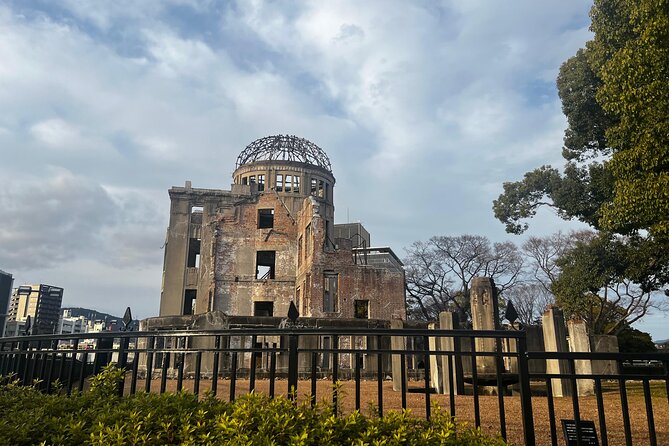
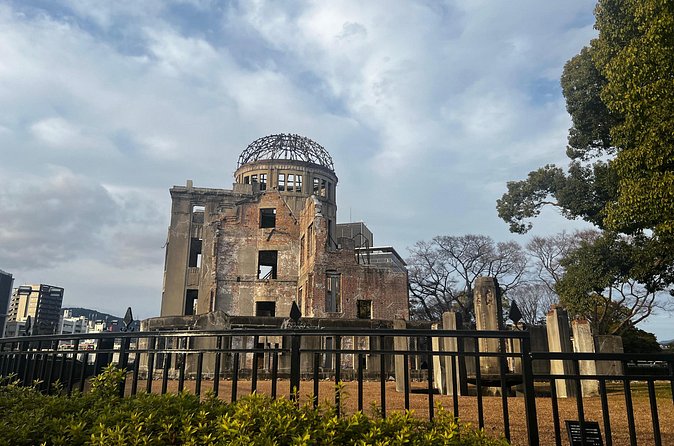
The tour begins at 1-chōme-10-1 Ōtemachi in Hiroshima’s Naka Ward, then heads toward the Atomic Bomb Dome. Allow about 20 minutes here.
The building’s damaged frame is difficult to take in. It is not a restored monument, and that is the point. Its exposed structure preserves a direct link to the morning of August 6, 1945, when the atomic bomb destroyed much of central Hiroshima.
Your guide will explain the Dome’s place in the city’s story and its later role as a symbol of peace. The stop is free, but the value comes from the explanation. Without context, you may spend a few minutes looking at the ruins and move on. With a guide, you can better understand why this particular building was preserved.
This is also a good moment to settle into the pace. The route is on foot, and the walk remains on relatively flat ground. A recent knee injury should not automatically rule it out, but you should tell the guide early. Ghani has been praised for slowing down and making room for people who have trouble with stairs or need a gentler pace.
Listening at the Peace Bell
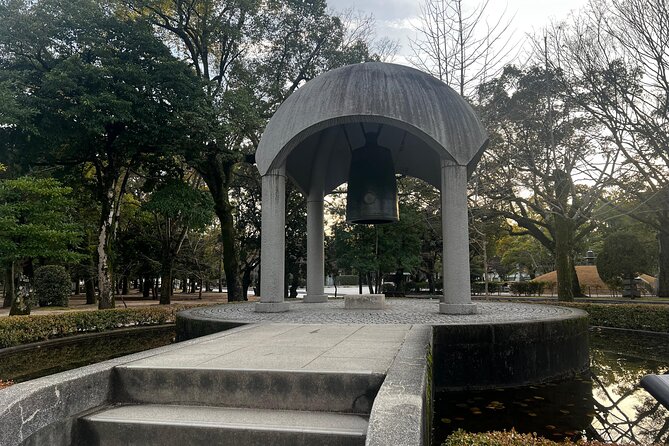
The Peace Bell receives about 10 minutes. Its large bronze form and deep tone represent harmony and a world without nuclear weapons.
This stop is brief, yet it adds a sensory element to the route. You are not only looking at a monument. You are considering the sound it makes and the hope attached to that sound.
I would not expect a long visit here. The guide’s role is to explain the symbol, then give you time to reflect. That pattern repeats through the tour: useful facts first, followed by a chance to look and think.
Remembering Korean victims and survivors
The Monument to Korean Victims and Survivors is one of the most important stops because it broadens the story beyond Hiroshima’s Japanese population. The monument honors Koreans who were killed or survived the bombing, while also recognizing their place in Hiroshima’s wartime history.
The 10-minute visit is valuable for anyone who wants a fuller account of the bombing’s human cost. It also brings questions of colonial rule, forced movement, and remembrance into the tour.
This is an area where the guide’s tone matters. The strongest version of the tour should help you understand both the suffering caused by the atomic bombing and the wider history that led Japan into war. One clear criticism of the experience is that the country’s wartime aggression may not receive enough emphasis, so I recommend treating the walk as one part of your historical study rather than the entire picture.
A completely different kind of day out:
- Hiroshima Peace Memorial Museum Admission
★ 4.6 · 1,308 reviews - Hiroshima / Miyajima Full-day Private Tour with Government Licensed Guide
★ 5.0 · 1,298 reviews - Hiroshima Historical Walking Tour – Why A-Bomb was Dropped
★ 4.8 · 893 reviews - Hiroshima Peace (Heiwa) Walking Tour at World Heritage Sites
★ 5.0 · 872 reviews
The Children’s Peace Monument and Sadako’s cranes
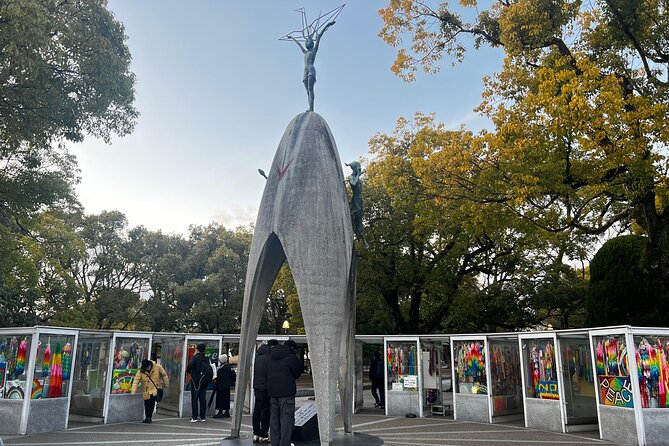
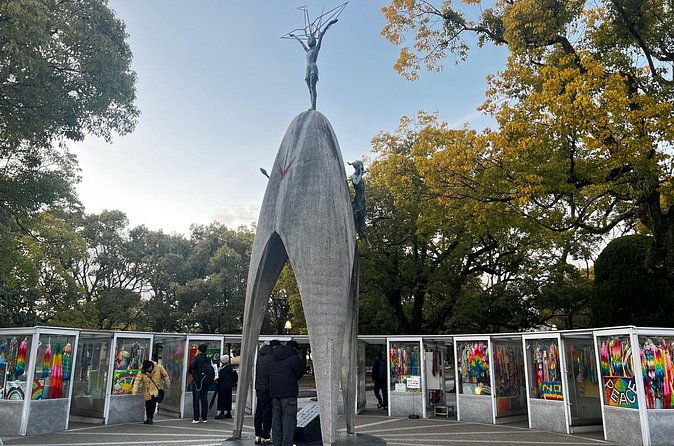
The Children’s Peace Monument takes about 10 minutes. It honors children who died because of the bombing and is closely tied to Sadako Sasaki, the young girl whose paper cranes became a lasting image of hope.
The monument is surrounded by colorful paper cranes, which give this part of the park a different feeling from the stark remains of the Dome. The cranes do not make the subject less painful. Instead, they show how children, families, schools, and communities have continued to remember the victims.
I find this stop especially useful for families and younger visitors because it offers a personal entry point into a vast historical event. The guide can explain Sadako’s story and the meaning of the cranes, while you have time to look closely at the displays and offerings around the statue.
The Peace Flame and a promise without nuclear weapons
The Peace Flame has burned continuously since 1964. It represents Hiroshima’s wish for the abolition of nuclear weapons and is intended to remain lit until that goal is reached.
You spend about 10 minutes here. The flame connects the individual stories at the Children’s Peace Monument with Hiroshima’s larger political message. This is not only a memorial to the dead. It is also a public statement about the future.
The stop is short, but its position in the route makes sense. You have just considered children and personal loss. The flame then turns your attention to the city’s ongoing appeal for peace.
Quiet reflection at the National Peace Memorial Hall
The Hiroshima National Peace Memorial Hall for the Atomic Bomb Victims offers about 20 minutes of guided attention. It honors victims through personal stories, photographs, and survivor testimony.
This is one of the more reflective portions of the walk. The Hall is designed for quiet thought rather than lively discussion, so expect the guide to lower the pace and allow the material to speak for itself.
Personal testimony matters here. Numbers can describe the scale of the bombing, but names, photographs, and recorded memories help you understand what those numbers represent. If you prefer to process difficult history slowly, this stop may feel short. The two-hour schedule requires the group to keep moving, and the museum still lies ahead.
The cenotaph and the words Hiroshima asks you to remember
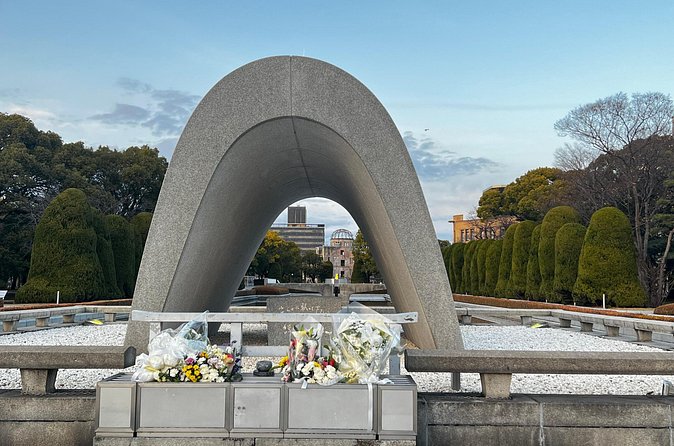
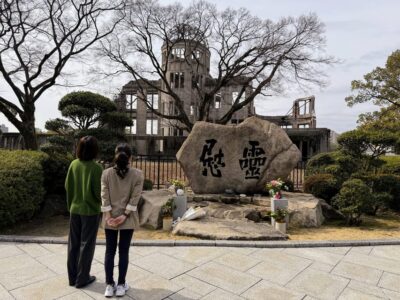
The Hiroshima Peace City Monument, also called the Cenotaph for the Atomic Bomb Victims, receives about 10 minutes.
Its arched form shelters a stone chest containing the names of known victims. The inscription expresses the hope that the souls here rest in peace and that the evil will not be repeated. The cenotaph also aligns with the Peace Flame and the Atomic Bomb Dome, giving the central park area a strong visual and symbolic line.
Your guide can help you notice this relationship, which is easy to miss when you are focused on individual monuments. This is also a good place to pause before entering the museum. The outdoor memorials have prepared you for the more direct evidence inside.
Entering the Peace Memorial Museum
The Peace Memorial Museum is the tour’s key indoor stop. Admission is included, and the guide purchases the ticket ahead of time so you can avoid the long entry line.
There is an important limit: guides are not allowed to speak inside the museum, so you visit it independently. The tour’s 10-minute itinerary slot should be understood as the point at which you enter, not necessarily the amount of time you must spend inside. The provided schedule lists roughly 10 minutes, but the museum experience itself calls for quiet, personal attention.
Before you go in, use the guide to clarify anything you want to understand. Ask about the park’s monuments, the bombing, survivor accounts, or the historical timeline. Once inside, you can move at your own pace and respond privately to the exhibits.
I consider the advance ticket a real benefit, but I would not book this tour solely for the museum. The guide cannot interpret the exhibits inside, and the main value of the walk is the connected explanation before and around your museum visit. If you want extensive museum time, plan to return separately or allow extra time beyond the scheduled tour.
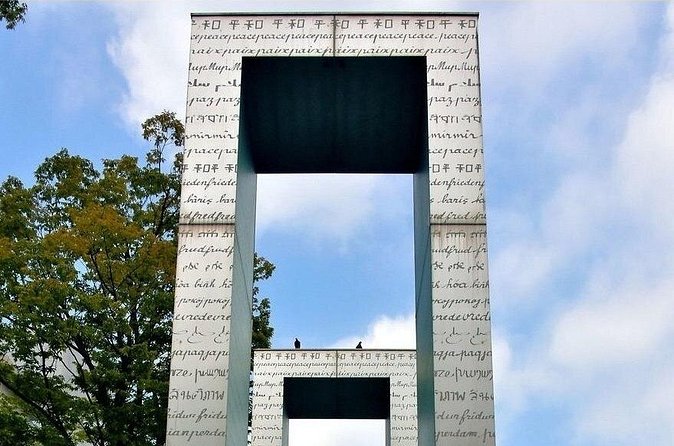
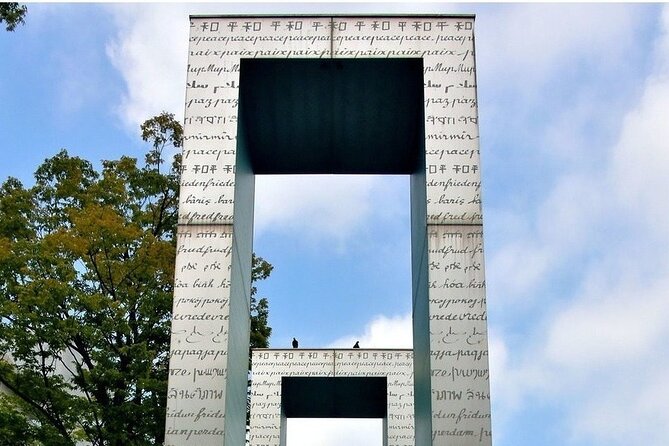
Finishing at the Gates of Peace
The route ends at the Gates of Peace on 4-15 Nakajimachō, after about 20 minutes at the final stop.
Ten glass gates carry the word peace in different languages. Their openness and transparency offer a clear contrast to the damaged concrete and stone monuments earlier in the route. The message is meant for an international audience, not only for people from Hiroshima or Japan.
Ending here gives the tour a forward-looking finish. You have seen ruins, memorials, names, photographs, and testimony. The gates turn that memory into a shared responsibility.
The end point is also practical. You are not returned to the starting address, so check the route before booking your next activity. The tour begins in Ōtemachi and ends in Nakajimachō, both in central Hiroshima, with public transportation nearby.
What the $31.63 price gets you
At $31.63 per person, this is a fair price for a small-group history walk with museum admission included. You are paying for about two hours of guiding, a planned route through nine important locations, and a prepaid museum ticket.
The value is strongest if you are visiting Hiroshima for a short time. Some people make the trip from Kyoto for the day, and a structured walk can help you use those limited hours well. You will not need to work out the order of the memorials or spend time deciding what deserves attention first.
The price is less compelling if you are happy reading signs and exploring alone. Every outdoor stop is free, and you can visit the Peace Park without a guide. The difference is interpretation, pacing, and the chance to ask questions.
The group limit of eight helps justify the cost. A guide can adjust the pace, respond to individual questions, and wait while you take photographs. On a hot day, one guide has thoughtfully used shade for short talks and allowed the group space at each memorial.
Practical details before you book
The walk takes about two hours and requires comfortable shoes. The route is generally flat, but there is still plenty of walking, and hot weather can make the distance feel longer.
Your mobile ticket is confirmed when you book. Service animals are allowed, and the activity is near public transportation. Most people can participate, but tell the guide about physical limits at the beginning so the pace can be adjusted.
The assigned guide may vary. Ghani has been praised for patience, local stories, and an even-handed approach. Sheraz and Shiraz have received strong praise for clear explanations, energy, and answers to questions. Cva has been noted for giving an event of enormous scale a human face, while Sharain has been described as pleasant, prepared, and enthusiastic.
You can cancel for a full refund up to 24 hours before the local start time. Cancellations or changes made less than 24 hours before the start are not accepted for a refund.
Who should choose this experience?
I would recommend this tour to first-time Hiroshima visitors who want a clear introduction without spending half a day in a large group. It also suits people arriving from Kyoto for a day, families who want help explaining difficult history, and anyone who prefers conversation to reading every plaque alone.
It is a good fit if you value personal stories, ask questions, and want the memorials placed in context. The small group and flexible pace are especially useful for anyone who needs occasional rests or photo stops.
You may prefer a self-guided visit if you want to spend long periods inside the museum, move at your own speed, or focus mainly on Japan’s wartime decisions. The tour gives strong attention to Hiroshima’s suffering and peace message, but you should add another source for a wider account of the war.
Should you book Hiroshima’s Path to Peace?
Book it if you want a focused introduction to Hiroshima’s Peace Park and appreciate a guide who can connect monuments, names, and personal stories. The $31.63 price is reasonable for the small group, included museum ticket, and well-planned route.
Skip it if you dislike walking, need a long museum visit built into the schedule, or prefer to study the history entirely on your own. For most first visits, though, this is a thoughtful way to begin. The tour gives you the framework. You can then return to the museum or park with sharper questions and a better sense of what you are seeing.
FAQ
How long does the tour last?
The tour lasts approximately two hours.
What is the tour price?
The price is $31.63 per person.
How large is the tour group?
The tour has a maximum of eight participants.
Is the Peace Memorial Museum ticket included?
Yes. The guide purchases your entrance ticket in advance.
Can the guide accompany me inside the museum?
No. Guides are not allowed to speak inside the Peace Memorial Museum, so you visit the museum on your own.
Where does the tour start?
The tour starts at 1-chōme-10-1 Ōtemachi, Naka Ward, Hiroshima, 730-0051, Japan.
Where does the tour end?
The tour ends at the Gates of Peace, 4-15 Nakajimachō, Naka Ward, Hiroshima, 730-0811, Japan.
Is the route accessible by public transportation?
Yes. The tour is near public transportation.
Are service animals allowed?
Yes. Service animals are allowed.
Can I cancel for a full refund?
Yes, if you cancel at least 24 hours before the experience start time. Cancellations or changes made less than 24 hours before the start are not eligible for a refund.
Just added in Hiroshima
- Hiroshima Peace Memorial Museum Ticket★ 4.8 · 2,727 reviews
- Hiroshima Peace Memorial Museum Admission★ 4.6 · 1,308 reviews
- Private Full Day Hiroshima Tour★ 4.5 · 29 reviews
- The Peace Memorial to Miyajima : Icons of Peace and Beauty★ 4.5 · 31 reviews
- Shore Excursion from Hiroshima Port : Private Tour in Hiroshima★ 5.0 · 17 reviews
- Hiroshima & Miyajima All-Inclusive Tour w/Licensed guide Pancho★ 5.0 · 54 reviews
- Hiroshima Country Cycling: Explore Rural Life 1 HR from City★ 5.0 · 22 reviews
- Hiroshima Saijo Sake Tasting Tour with visit to 7 Breweries★ 5.0 · 104 reviews
Hiroshima Tours, compared.
Peaceful Hiroshima & Miyajima UNESCO 1 Day Bus Tour
Read our review →
Hiroshima and Miyajima UNESCO Sites 1-Day Tour
Read our review →

Hiroshima / Miyajima Full-day Private Tour with Government Licensed Guide
Read our review →
Hiroshima Historical Walking Tour – Why A-Bomb was Dropped
Read our review →
Hiroshima Peace (Heiwa) Walking Tour at World Heritage Sites
Read our review →
Hiroshima in a Nutshell: Morning Bike Adventure
Read our review →Browse the lists this tour appears in