
Reviewed · MUSEUMS AND GALLERIES
Yokohama: Guided Cup Noodles Museum Tour & Make Your Own Cup
Small cups, big food history. Yokohama’s Cup Noodles Museum turns a familiar convenience food into a surprisingly engaging story, with interactive exhibits, an English-speaking guide, and a hands-on chance to design your own cup of noodles. I especially like the way the tour connects Momofuku Ando’s invention with food culture around the world, and I like having a guide to explain the displays rather than wandering through them alone.
The best part is the My Cup Noodles Factory, where you create a package and choose your soup base and toppings. The main drawback is important: all soups contain pork, so this activity is not suitable for vegetarians or vegans. At $70 per person for 90 minutes, the price makes the most sense if you value the guide’s help and want the custom cup as a memorable Yokohama souvenir.
In This Review
- Key points at a glance
- Why instant ramen makes a good museum subject
- Meeting your guide at the museum entrance
- Inside the exhibits: Ando’s invention and the production process
- The My Cup Noodles Factory is the hands-on highlight
- What the 90-minute schedule feels like
- Is $70 a fair price?
- Who will enjoy this Yokohama activity?
- Practical advice before you book
- Should you book the Cup Noodles Museum tour?
- FAQ
- Where does the Cup Noodles Museum tour begin?
- Should I go to the museum front desk when I arrive?
- How long does the experience last?
- What language is the tour conducted in?
- How large is the group?
- Is the museum entry fee included?
- Is a full ramen-making class included?
- Can vegetarians or vegans take part?
Key points at a glance
- See Momofuku Ando’s work shed: A replica shows where the instant ramen inventor developed his idea.
- Learn how instant ramen is made: The tour explains the production process and how a simple noodle product spread worldwide.
- Talk food with an English-speaking guide: The conversation includes noodle dishes from many countries, not just Japan.
- Make a custom cup: Design your own package, then select from available soup bases and toppings.
- Keep the group small: Tours are limited to four participants, making it easier to ask questions and get help.
- Plan around the pork-based soup: Every soup contains pork, which is the key dietary limitation.
Why instant ramen makes a good museum subject
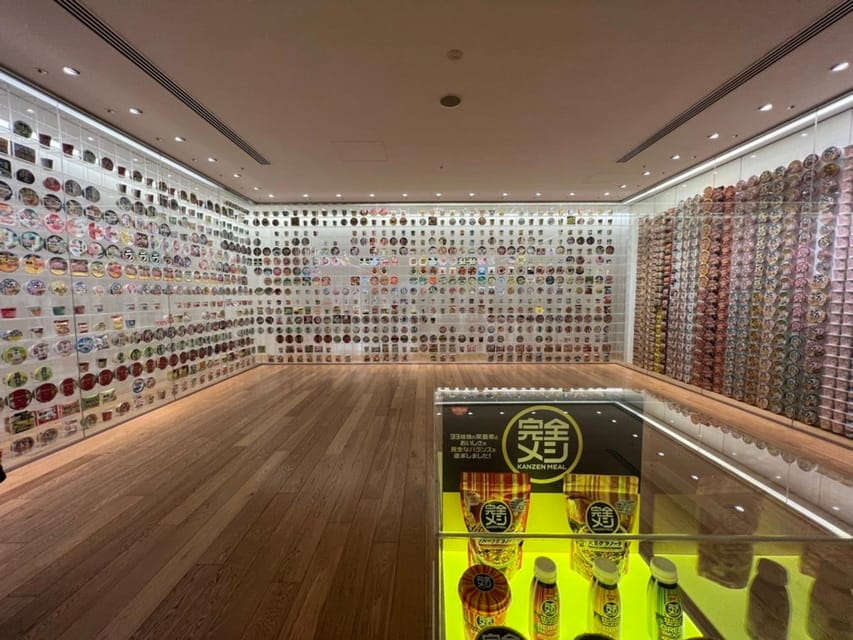
The Cup Noodles Museum is not simply a display about packaged food. It tells the story of an idea that changed how people eat, particularly when they need something quick, inexpensive, and easy to store.
Your guide introduces Momofuku Ando, founder of Nissin Foods and the person credited with inventing instant ramen. His work matters here because the museum presents instant noodles as more than a snack. They became a food product with international reach, shaped by practical needs and adapted to different food cultures.
I like this approach because it gives the museum a clear human story. Instead of beginning with a technical explanation, the tour ties the product to one inventor’s work, persistence, and creative problem solving. You also see a replica of Ando’s work shed, which gives the story a physical setting. It is a small but useful detail: you can picture the invention as something developed through hands-on effort, not simply designed in a corporate office.
The museum also gives you a chance to discuss noodle dishes from around the world. That makes the tour more conversational than a standard museum visit. If you enjoy comparing Japanese ramen with noodle dishes from other countries, the guide can help turn the displays into a wider food conversation.
More Museums and Galleries in Yokohama:
- teamLab Borderless Tickets: MORI Building DIGITAL ART MUSEUM
★ 4.7 · 24,126 reviews - teamLab Planets TOKYO Ticket
★ 4.7 · 21,663 reviews - Tokyo: teamLab Planets TOKYO Digital Art Museum Entry Ticket
★ 4.6 · 9,779 reviews
Meeting your guide at the museum entrance
The meeting point is the main entrance of the Cup Noodles Museum Yokohama. Do not go to the museum front desk. Your English-speaking guide waits in the entrance area holding a sign with gotcha on it.
That instruction matters in a busy attraction. Going to the wrong counter can cost you time, especially during a short 90-minute visit. I would arrive with enough time to identify the main entrance and look for the sign rather than assuming museum staff will direct you to the tour.
The group is limited to four people. This is one of the strongest practical features of the experience. A small group gives you more room to ask questions about the exhibits, and it makes the custom noodle activity easier to manage. You are not trying to hear an explanation across a large crowd or waiting for a long line of people to finish each step.
The English guides have included Nori, Tomoko, Tomo, and Andy. Their role goes beyond pointing out exhibits. They help explain the museum, answer questions, assist with the custom cup, and take photographs during the visit. Nori, Tomoko, and Andy have received particular praise for making the experience clearer and more personal. Tomo has also given guests small handmade origami pieces, a thoughtful touch if you enjoy small local keepsakes.
Inside the exhibits: Ando’s invention and the production process
The guided portion begins inside the Cup Noodles Museum, where you learn about the development of instant ramen and the steps involved in making it. The museum uses interactive exhibits to make the subject easier to follow.
You can expect to hear about the production process rather than simply seeing finished packages. That helps answer basic questions: how do noodles become shelf-stable, how are they prepared for packaging, and how did the product move from a Japanese invention to a food known around the world?
The guide’s explanations add value here. Museum exhibits often give you short captions and visual displays, but a guide can connect separate sections into one story. You can ask about unfamiliar terms, compare noodle dishes, and spend more time on parts that interest you.
I would especially value the guide if you are visiting with children or with someone who does not usually enjoy museums. Instant ramen is familiar to many people, so the topic provides an easy way into the exhibits. The interactive format also gives the visit a clear purpose: you are not only looking at the product, you are learning how it was created and then making your own version.
The museum’s central message is easy to understand. A modest food product can change daily life when it solves a practical problem. Instant ramen offered a quick meal with a long shelf life, and the museum shows how that idea became a worldwide food phenomenon.
The My Cup Noodles Factory is the hands-on highlight
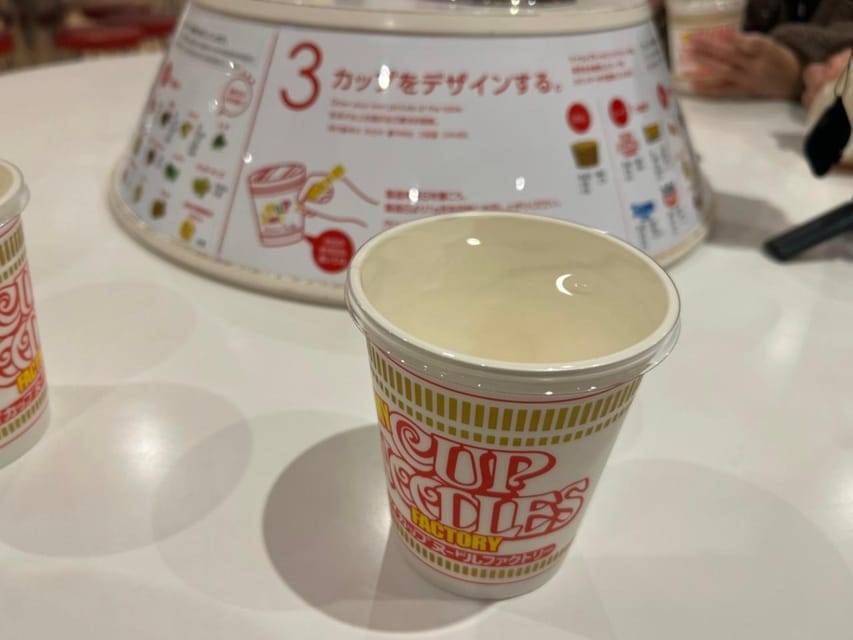
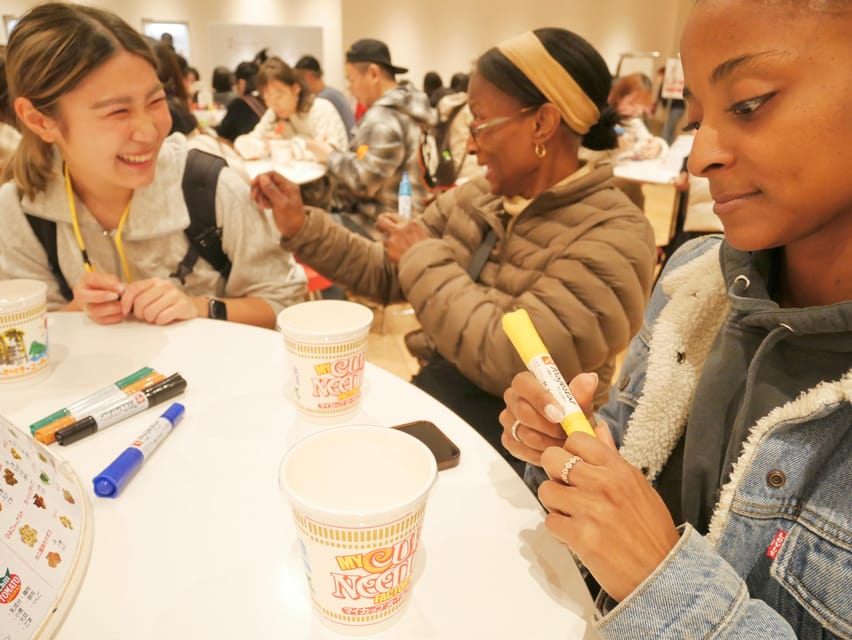
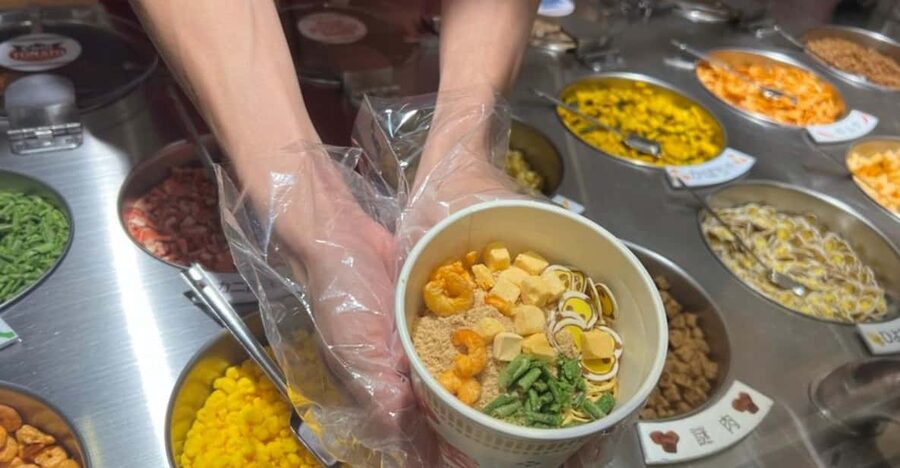
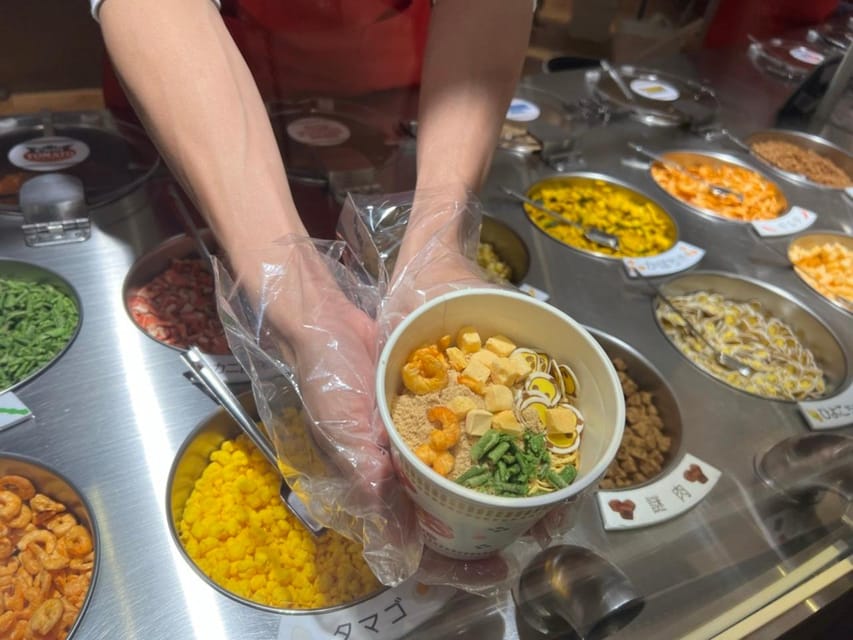
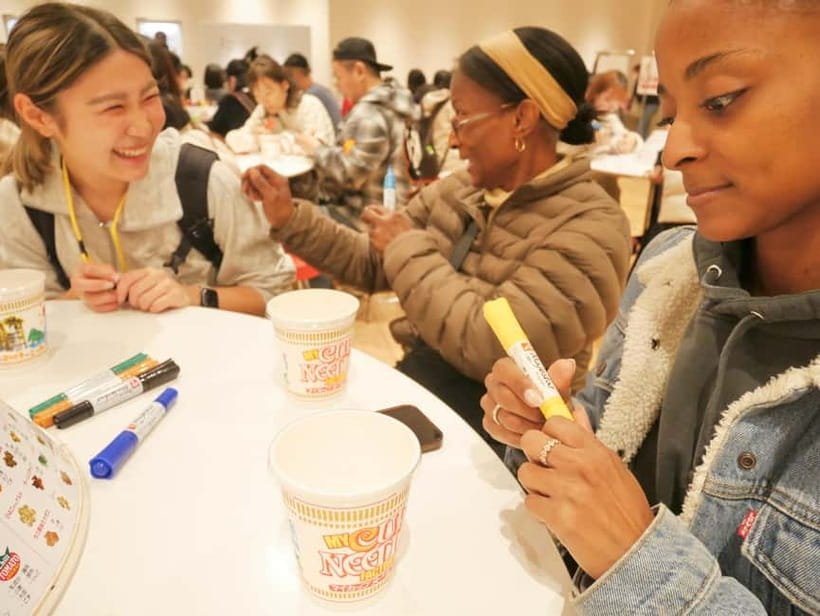
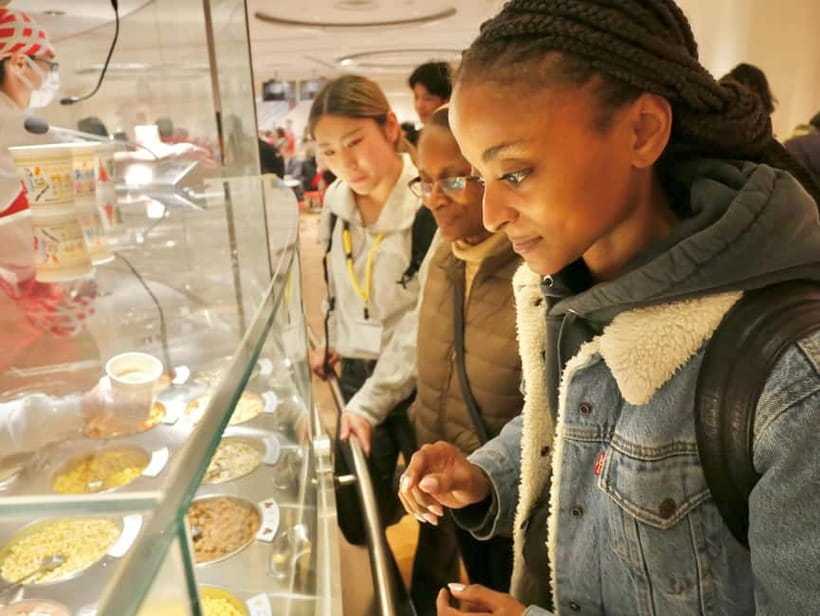
The most personal part of the visit takes place at the My Cup Noodles Factory. Here, you design your own ramen package and choose from available soup bases and toppings.
The package design is what makes this more than a tasting stop. You create something with your own visual mark, then fill it with your selected ingredients. The result is a souvenir linked directly to your visit, rather than a standard item bought in a museum shop.
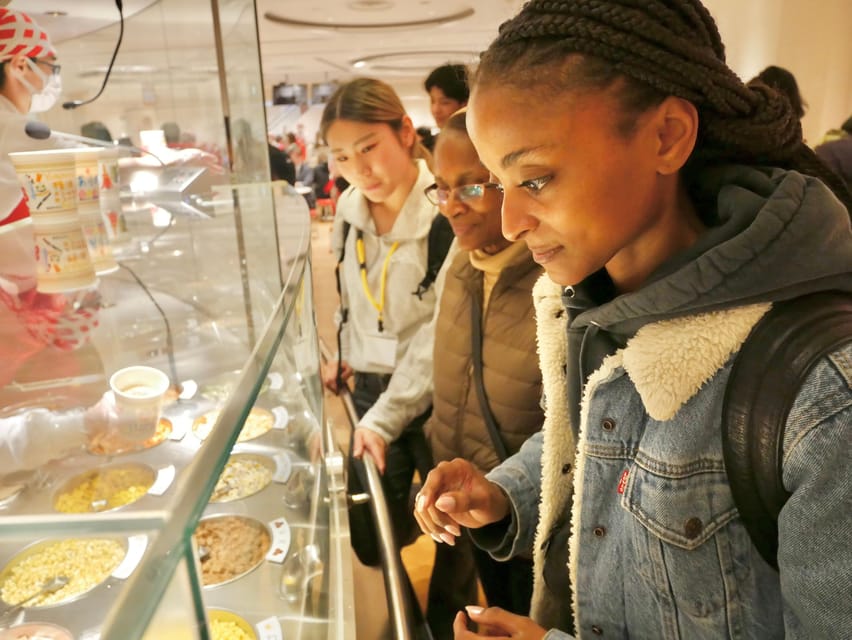
Your guide can help you through the process. This is useful because the activity comes after the museum explanations, and you may want help making choices or understanding how the station works. The guide also helps take photographs, which is useful if you want a record of the design process without asking another visitor to handle your camera.
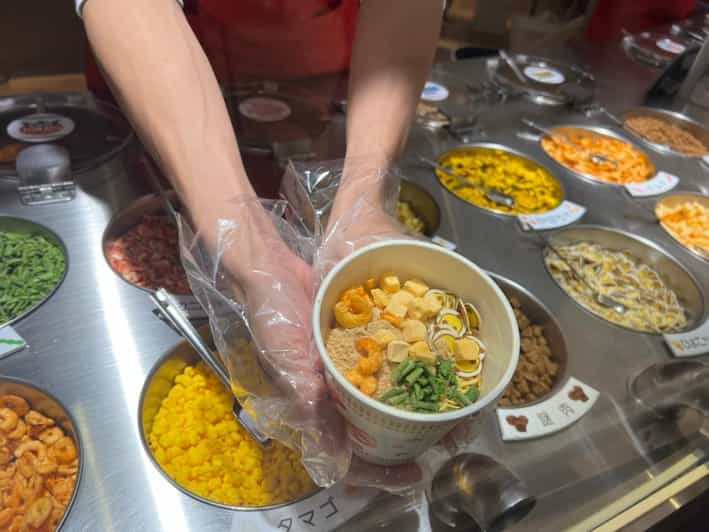
The available selection includes different soup bases and toppings, though the supplied information does not specify the exact choices. You should think of the activity as a chance to build a personalized cup from the options offered that day, not as a fully open-ended cooking class.
This distinction is important. You are designing and assembling your own cup, but you are not making ramen from raw ingredients. A separate ramen-making experience at the Cup Noodles Museum or a ramen museum is not included. If you are expecting a full cooking lesson, this tour will feel more like a creative food workshop than a kitchen class.
A few more options to weigh up in Yokohama
- EVO, WRX, Skyline – JDM Night Run to Daikoku Car Meet
★ 4.9 · 478 reviews - Tokyo: Best Price Daikoku Parking Area JDM Car Meet
★ 4.9 · 192 reviews - Daikoku & Tokyo Private JDM Tour by 700HP R34 GT-R
★ 4.9 · 101 reviews - Tokyo 8hr Private Tour with Licensed Guide from Yokohama
★ 5.0 · 94 reviews
What the 90-minute schedule feels like
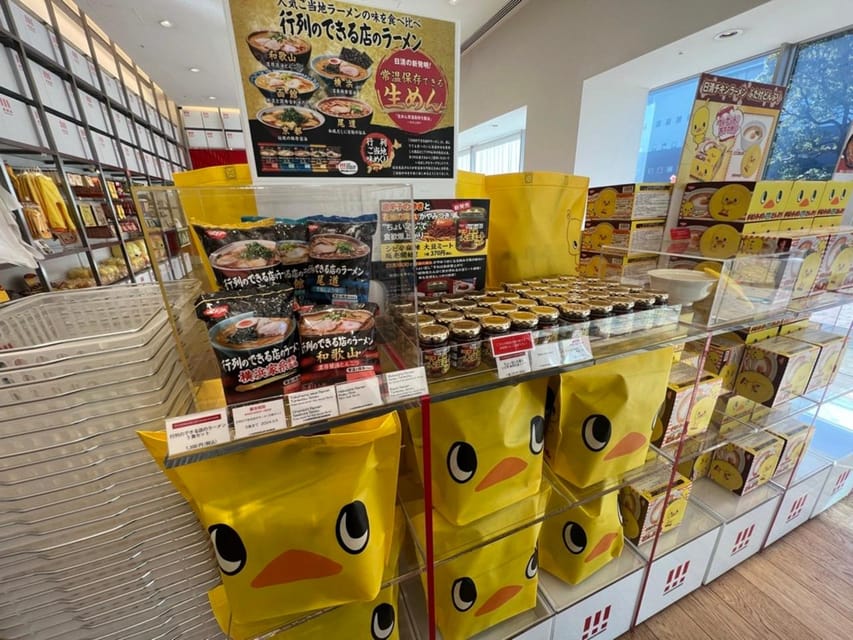
The entire activity lasts 90 minutes and begins and ends at the Cup Noodles Museum Yokohama. The time is compact, so the guided format helps keep the visit moving.
The first portion is devoted to the museum exhibits, Momofuku Ando’s life and work, and the production process. The second portion includes the My Cup Noodles Factory. The exact amount of time spent at each point can vary, but the itinerary is built to combine explanation with participation rather than treating the workshop as an optional extra.
I like this length for a Yokohama day plan. You can fit the museum into a morning or afternoon without giving up half a day. At the same time, 90 minutes is not long enough for aimless browsing, so arrive ready to follow the guide’s route.
The short duration has one limitation. If you want to read every display or explore each exhibit at your own pace, you may find the guided schedule brisk. The tour is better for getting the main story, asking questions, and completing the custom cup than for a slow, detailed museum study.
Is $70 a fair price?
At $70 per person, this is not the cheapest way to enter a museum in Japan. The value depends on what you want from the visit.
You are paying for the museum entry fee, an English-speaking guide, and the My Cup Noodles making experience. You are also paying for a small group limited to four participants. That last point matters because private or semi-private attention can make a short workshop feel much easier and more enjoyable.
I think the price is reasonable for visitors who want help understanding the exhibits and who prefer a planned activity. The guide adds context about Ando, the production process, and noodle dishes from around the world. The custom cup gives you an activity to remember, not just information to absorb.
The value is weaker if you only want to enter the museum, look around quickly, and make a cup without assistance. In that case, the guided fee may feel high. You should also avoid booking it if the pork-based soup is a problem, since the central workshop depends on choosing and preparing one of those soup options.
The tour allows you to reserve now and pay later, and you can cancel up to 24 hours in advance for a full refund. Those terms are useful when your Yokohama plans may change, though you should still check the available starting times before booking.
Who will enjoy this Yokohama activity?
I would recommend this tour to several types of visitors:
- Families: The subject is familiar, the exhibits are interactive, and the custom package gives children a clear activity to complete.
- Food and culture enthusiasts: You get a look at how one product influenced eating habits across borders.
- First-time visitors to Yokohama: The museum offers a focused indoor activity with a strong local connection.
- Small groups and couples: A four-person limit allows for more direct help and conversation.
- Visitors who prefer guided museums: The English guide explains the displays and handles much of the practical flow.
It may not suit you if you want a full ramen cooking lesson. It is also a poor choice for vegetarians and vegans because all soups contain pork. Anyone seeking a long, quiet museum visit may prefer to explore independently rather than follow a 90-minute schedule.
Practical advice before you book
Meet at the main entrance, not at the front desk. Look for the guide holding the sign with gotcha on it.
Check your dietary needs before reserving. The soup bases all contain pork, so do not assume you can simply select a vegetarian option at the workshop.
Keep the separate activity distinction in mind. The package-making experience is included, but a ramen-making experience at the Cup Noodles Museum or Ramen Museum is not included.
An English-speaking guide leads the tour, and the small group size is limited to four participants. If you want a particular starting time, check availability before building the rest of your Yokohama plans around it.
Finally, allow yourself to enjoy the odd charm of the subject. Instant ramen is everyday food, and that is exactly why the museum works. It takes a product you may barely think about and shows the invention, design, manufacturing, and cultural exchange behind it.
Should you book the Cup Noodles Museum tour?
Book it if you want a short, guided food-culture experience with a hands-on finish. The strongest reasons are the small group, the English explanations, the story of Momofuku Ando, and the chance to create a custom cup while receiving practical help from guides such as Nori, Tomoko, Tomo, or Andy.
Skip it if you are vegetarian or vegan, if you want to cook ramen from scratch, or if $70 feels too high for a 90-minute museum visit. For everyone else, it is a cheerful and focused way to spend part of a Yokohama day, especially when you want an activity that works for both adults and children.
FAQ
Where does the Cup Noodles Museum tour begin?
Meet your guide at the main entrance of the Cup Noodles Museum Yokohama.
Should I go to the museum front desk when I arrive?
No. Do not go to the front desk. Your guide waits in the entrance area holding a sign with gotcha on it.
How long does the experience last?
The experience lasts 90 minutes, including the guided museum visit and the My Cup Noodles Factory activity.
What language is the tour conducted in?
The live tour guide speaks English.
How large is the group?
The group is limited to four participants.
Is the museum entry fee included?
Yes. The museum entry fee is included, along with the guide’s fee and the My Cup Noodles making experience.
Is a full ramen-making class included?
No. A separate ramen-making experience at the Cup Noodles Museum or Ramen Museum is not included.
Can vegetarians or vegans take part?
All soups contain pork, so the activity is not suitable for vegetarians or vegans.
Just added in Yokohama
- Tokyo/Yokohama: Private JDM Daikoku/大黒 Car Meet With Driver★ 4.7 · 20 reviews
- 【R34 GTR Over 400 hp】Tokyo: Private Daikoku Tour in R34 GTR★ 5.0 · 25 reviews
- Tokyo: Fast & Furious Authentic Drift and JDM Experience★ 4.9 · 21 reviews
- Tokyo: Best Price Daikoku Parking Area JDM Car Meet★ 4.9 · 192 reviews
- R34Skyline Daikoku PA Fast & Furious Private Experience★ 5.0 · 63 reviews
- Daikoku & Tokyo Private JDM Tour by 700HP R34 GT-R★ 4.9 · 101 reviews
- Daikoku & Tokyo JDM Night Tour in R34 or TopSecret R35 GT-R★ 4.8 · 27 reviews
- Kamakura 6hr Private Walking Tour with Government-Licensed Guide★ 5.0 · 42 reviews
Museums and Galleries, compared.

teamLab Borderless Tickets: MORI Building DIGITAL ART MUSEUM
Read our review →

teamLab Planets TOKYO Digital Art Museum Entry Ticket
Read our review →

Browse the lists this tour appears in