
Reviewed · SUMO EXPERIENCES
【SUMO FESTIVAL】Tokyo Ginza: Sumo Show & Photo Experience
Sumo gets personal in Ginza. This two-hour show brings you close to the ring, explains basic techniques in clear English and Japanese, and lets you try sumo activities for about $63.41 per person. I especially like the close-up seating and the chance to take part in shiko stomping, salt throwing, and body-collision practice rather than simply watching from a distance.
I also like the friendly, interactive tone. The MC keeps the program easy to follow, and families can join in without needing prior knowledge of sumo. The main concern is simple: this is a staged cultural show, not a full professional tournament, and the host’s long explanations can sometimes crowd out the wrestling itself.
In This Review
- Key points to know before booking
- What kind of sumo experience is this?
- Finding the Tokyo Sumo Festival in Ginza
- The opening: training, customs, and basic sumo moves
- Close seats and live sumo demonstrations
- Trying shiko, salt throwing, and body collision
- The retired-wrestler challenge and the lottery
- The mikoshi finale adds a second Japanese tradition
- Food, drinks, and the real cost of the outing
- How clear is the English commentary?
- Who will enjoy this two-hour Ginza activity?
- Booking, cancellation, and practical timing
- Should you book the Tokyo Ginza Sumo Show?
- FAQ
- How long does the Tokyo Ginza sumo experience last?
- Where is the Tokyo Sumo Festival located?
- Is the venue near public transportation?
- Is English available during the show?
- Can I wrestle a retired sumo wrestler?
- Is food included in the ticket?
- Can I cancel for a full refund?
Key points to know before booking
- Every seat faces the ring closely, with a front-row upgrade available for an even nearer view.
- English and Japanese commentary explains sumo moves, customs, and the action as it happens.
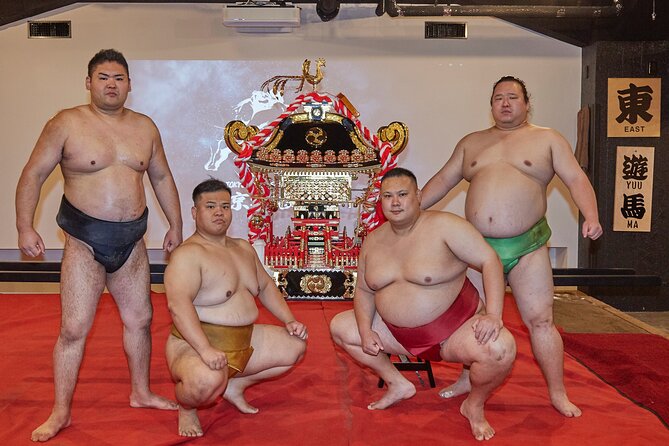
- Audience participation is central, including shiko stomping, salt throwing, body-collision practice, and a possible bout with a retired sumo wrestler.
- The retired-wrestler challenge is limited, and participants may be chosen by lottery when many people want to join.
- A traditional mikoshi appears after the show, giving you a taste of Japanese festival culture beyond sumo.
- Food costs extra, while a welcome drink is included.
What kind of sumo experience is this?
You are not buying a ticket to a professional tournament. You are booking a compact, theatrical introduction to sumo in central Tokyo.
The program combines explanation, demonstrations, audience participation, and a few rounds of live sumo action. It is designed for people who want to understand the sport and get physically involved, even if they do not know the difference between a belt grip and a foot sweep.
That makes it useful when a major sumo tournament is not taking place in Tokyo. It also works well for families, first-time visitors, and people who want a cultural activity that does not require a full day at a stadium.
The tone is deliberately accessible. The MC speaks in English and Japanese, and the explanations focus on the basic moves and winning techniques. You will not need to study sumo before arriving. The event aims to teach as it entertains, with the wrestlers supplying the physical comedy and energy.
The tradeoff is that the show can feel more like an interactive stage performance than a sporting event. If you are hoping to watch round after round of serious wrestling, you may find the talking too long and the actual bouts too brief.
More Sumo Experiences in Tokyo
- Tokyo: Sumo Show Experience with Chicken Hot Pot and a Photo
★ 4.8 · 6,678 reviews - Tokyo: Sumo Live Show with Photo in Shinjuku
★ 5.0 · 3,438 reviews - Tokyo: Sumo Show and Dining Experience
★ 4.8 · 2,742 reviews
Finding the Tokyo Sumo Festival in Ginza
The venue is listed at 1-3-1 Ginza, Chuo City, Tokyo, in the basement of Ginza INZ 1. Search Google Maps for TokyoSumoFestival, rather than relying only on the street address.
This is important. The address can point you to the wrong place or fail to make the entrance clear. One of the practical complaints about the experience is that the venue can be hard to find, especially when you are using a map without mobile data. Some people even had trouble getting local help because the attraction is not widely known by nearby residents.
Give yourself extra time in Ginza. Look for Ginza INZ 1 and then head to the B1 level. The event is near public transportation, but the final indoor route may still take a little patience. I would save the location before leaving your hotel and keep the booking confirmation available on your phone.
The mobile ticket is convenient once you arrive. Confirmation is sent within 48 hours of booking, subject to availability, so do not assume the reservation is instant.
The opening: training, customs, and basic sumo moves
The program begins with an introduction to sumo and a presentation of morning training. You will see how the wrestlers prepare and learn why balance, stance, timing, and force matter inside the ring.
The MC explains the techniques used to win, with English and Japanese commentary throughout. This helps you follow the action even if you have never watched a sumo match. The explanations are aimed at a general audience, not at specialists, so they are easy to understand but can feel simplified if you already know the sport.
A useful part of the opening is the attention to physical technique. Sumo is not only about size. Foot placement, posture, grip, and the ability to push an opponent off balance all shape the result. The show gives you enough background to see those details when the wrestlers begin their demonstrations.
Still, pacing matters. Some people find the MC talks too much, and that criticism is fair to keep in mind. The experience works best when you treat the commentary as part of the show rather than as a short introduction before a long series of matches.
The wrestlers themselves bring much of the charm. Their humor and exaggerated reactions make the demonstrations approachable, especially for children. Adults who want a more serious sporting presentation may find parts of the performance a little silly.
Close seats and live sumo demonstrations
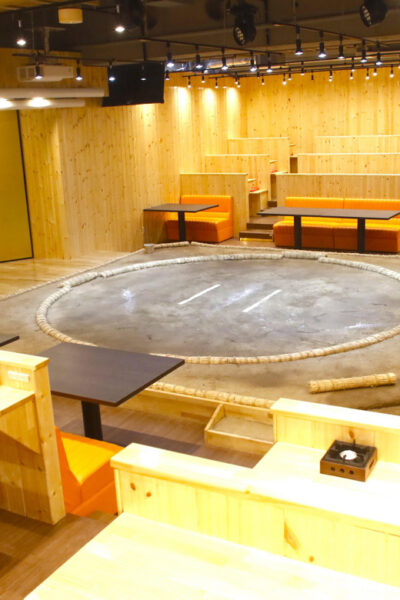
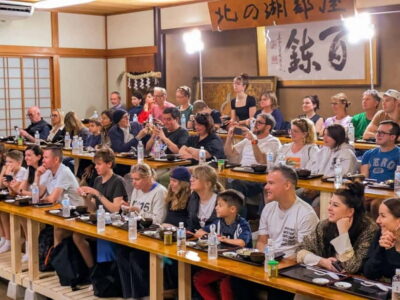
All seats provide a close view of the ring, which is one of the strongest reasons to book this instead of simply watching sumo on television. The compact setting lets you see the wrestlers’ movements and expressions without the distant stadium feel of a major tournament.
A front-row upgrade is available if you want the closest possible view. That may be worthwhile for photography and for families who want the action directly in front of them, but standard seating is already designed to keep the ring nearby.
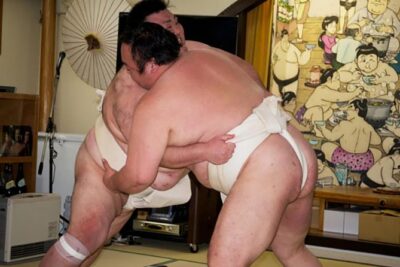
The live demonstrations are the heart of the program. You will see wrestlers show basic techniques and take part in a limited number of rounds. The exact number of bouts can vary, and the show may feature only two wrestlers. If you are expecting a full competition card, this format will feel short.
That limitation is also part of the design. The event has to make room for explanations, audience participation, and the mikoshi activity. You are paying for a guided cultural performance with wrestling, not for two hours of uninterrupted matches.
I would describe the sumo action as lively and entertaining rather than intense in a professional tournament sense. The show gives you a close look at the sport’s movements and presentation, while the crowd interaction keeps the mood relaxed.
A completely different kind of day out:
- Tokyo Disney Resort – Tokyo Disneyland & Tokyo DisneySea Park Tickets
★ 4.8 · 99,488 reviews - SHIBUYA SKY Ticket
★ 4.7 · 46,509 reviews - JR Whole Japan Rail Pass
★ 4.8 · 29,150 reviews - Mt Fuji and Hakone 1-Day Bus Tour Return by Bullet Train
★ 5.0 · 26,383 reviews
Trying shiko, salt throwing, and body collision
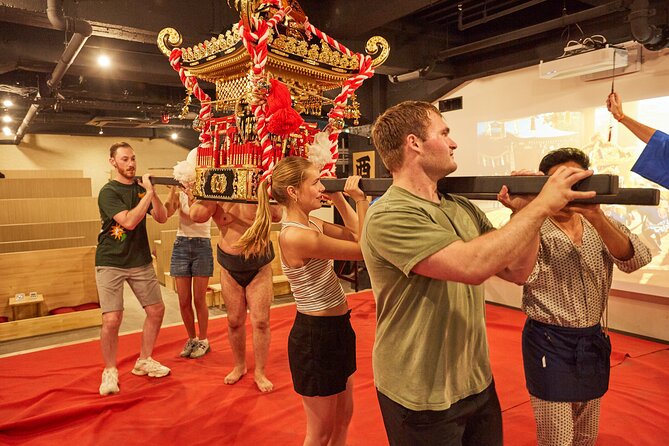
The most memorable part for many people is getting out of your seat.
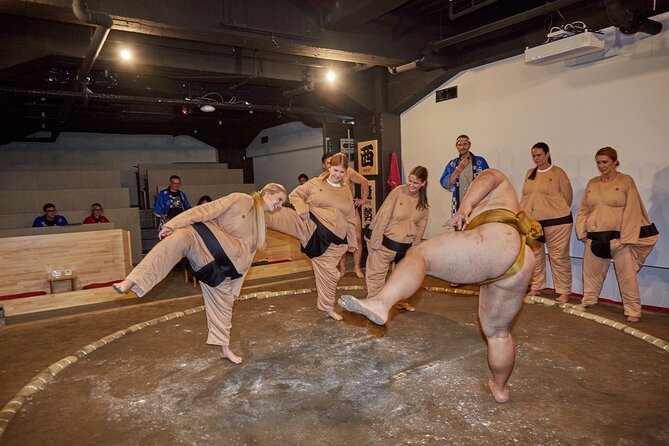
You can try the shiko, the traditional sumo leg-stamping movement. It looks simple until you attempt it. The action requires control, balance, and a surprisingly large amount of effort. It is a good example of how the show turns a formal sumo custom into something you can understand through your own body.
You also get to experience salt throwing. Salt is associated with purification before a sumo bout, and tossing it gives you a small connection to the rituals that surround the sport. It is a playful activity in this setting, but it still points to the ceremonial side of sumo.
The body-collision practice is more physical. You will see how a sumo wrestler uses controlled contact and forward drive. The activity is presented for public participation, but the event is not described as a full-contact contest for every attendee. Follow the staff’s instructions and join only if you feel comfortable.
These activities make the ticket more than a seat at a performance. Even if you do not wrestle, you are not left on the sidelines. The show encourages the audience to take part, and that works particularly well for families and groups of friends.
The retired-wrestler challenge and the lottery
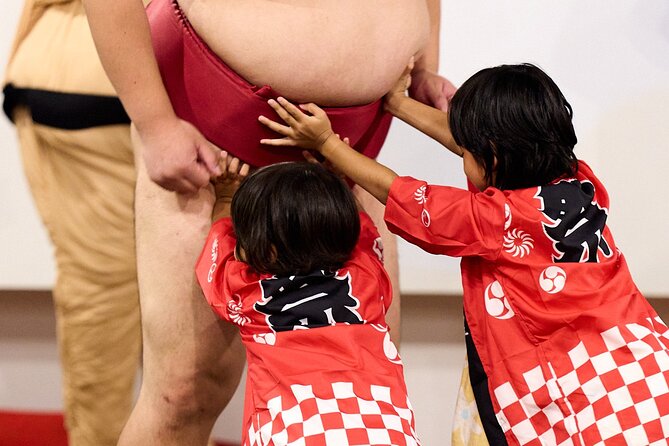
The headline activity is the chance to step into the ring and challenge a retired sumo wrestler.
This is a rare opportunity for a visitor. You can feel the difference between watching a powerful athlete and trying to move one. The experience is intended as friendly entertainment, not as a serious test of strength, so the focus is on the fun of taking part.
There is an important catch. Participation is limited, and if many people want to join, names may be selected by lottery. Do not buy the ticket assuming you are guaranteed a bout. The shiko, salt, and collision activities give you other ways to participate, but the individual wrestling challenge is not assured.
If you are traveling with children, explain this before the show. That avoids disappointment if only a few people are selected. You can still have a good time watching the chosen participants and joining the other activities.
The lottery also means the size and mood of the crowd affect your experience. A smaller audience may offer a more personal feel, but it can also mean fewer rounds and less momentum. A full room should bring more energy, though it may make the challenge harder to win.
The mikoshi finale adds a second Japanese tradition
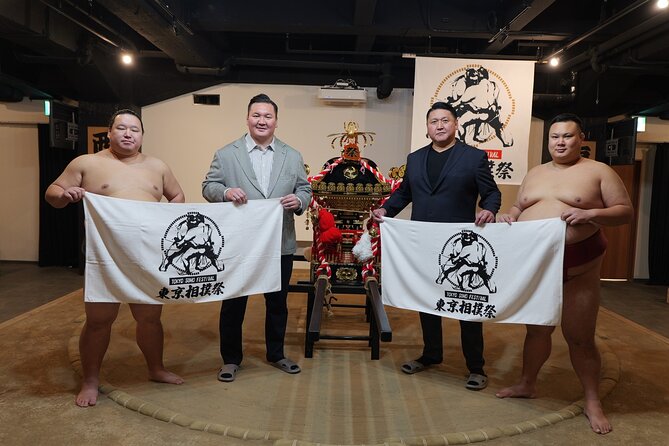
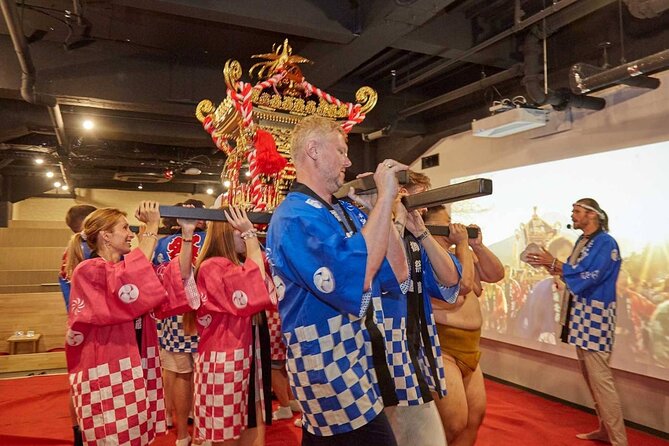
After the sumo portion, you get to handle a mikoshi, a portable shrine carried during Japanese festivals.
This is a welcome change of pace. The program is not limited to wrestling technique. It shows you another communal tradition, one tied to festival movement, shared effort, and public celebration. Carrying the shrine gives you a simple physical connection to the custom instead of treating it as something to view from behind a barrier.
Some people may see the mikoshi segment as unnecessary if their only goal is sumo. I understand that reaction, especially when the wrestling portion already feels short. For me, it makes more sense when you book this as a broader Japanese cultural show.
The mikoshi is also useful for families. It gives children a second activity and helps keep the event moving after the ring demonstrations. If you want a strict sports presentation, it may seem like padding. If you want several hands-on cultural moments in one stop, it adds value.
Food, drinks, and the real cost of the outing
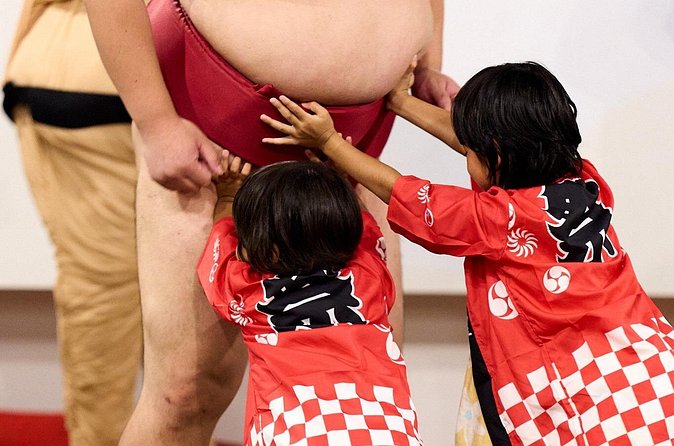
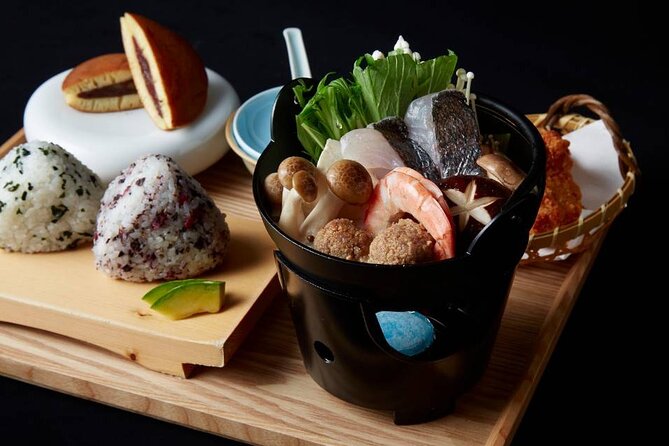
The listed price is about $63.41 per person. A welcome drink is included, but meals are not. Food and additional dishes can be purchased at the venue.
This matters when you compare the ticket with a professional sumo tournament. A tournament ticket gives you hours of actual competition and the atmosphere of a major sporting event. This show gives you a close seat, bilingual instruction, audience activities, a retired-wrestler challenge lottery, and the mikoshi segment.
I see the price as reasonable for a visitor who values participation and convenience. It is less attractive if you only want to watch wrestling. In that case, the amount of live sumo may not feel large enough for the cost.
Food feedback is mixed. Some diners find the meal filling and tasty, and appetizers have been described as reasonably priced. Other opinions call the food mediocre. I would treat the meal as optional rather than a main reason to book. Eat there if you want to keep the whole experience under one roof, but do not assume the food is included in the admission price.
A smaller group can change the feel of the event. With only a few people present, you may receive a more relaxed experience, but there may also be fewer rounds and less crowd energy. With more participants, the show should feel livelier, though the lottery becomes more competitive.
How clear is the English commentary?
The English delivery is one of the strongest parts of the event. The MC explains the activity in clear English, making it easy for an international audience to follow the moves and instructions.
That does not mean every minute will suit every listener. The commentary can be long and overly simple, especially if you already understand sumo. The show depends heavily on the host to connect one activity to the next, so your enjoyment will be tied to how much you like that presentation style.
For a first encounter with sumo, the plain explanations are helpful. You can learn the basic principles without reading a guidebook first, and you can understand what the wrestlers are demonstrating as it happens.
The Japanese commentary also helps retain the local setting. You are not watching a translated performance stripped of its original sound. Instead, the MC addresses both audiences, which gives the event a wider cultural feel.
Who will enjoy this two-hour Ginza activity?
I would recommend it most strongly to:
- Families with children who enjoy taking part
- First-time sumo spectators
- Visitors in Tokyo outside tournament dates
- Small groups looking for a shared activity
- People who want English explanations
- Anyone curious about Japanese festival customs
You may want to skip it if your main goal is serious, extended wrestling. The show has limited bouts, and the host’s explanations occupy a large part of the two hours.
It is also not ideal if you dislike audience participation. The attraction is built around inviting people into the action. You do not have to accept every challenge, but the program is more enjoyable when you are open to trying something new.
The experience is suitable for most people, according to the available information. Still, sumo participation is physical, so use your judgment before joining the body-collision activity or attempting the movements.
Booking, cancellation, and practical timing
The attraction offers free cancellation if you cancel at least 24 hours before the local start time. Changes or cancellations inside that 24-hour window are not accepted for a refund.
Because confirmation can take up to 48 hours and is subject to availability, I would book before building the rest of your Ginza schedule around it. Keep the mobile ticket ready and check the venue location carefully before setting out.
You should also arrive with enough time to find Ginza INZ 1 and the basement entrance. The address alone may not guide you perfectly, so searching for TokyoSumoFestival on Google Maps is the safer choice.
Should you book the Tokyo Ginza Sumo Show?
Book it if you want an approachable, hands-on introduction to sumo rather than a formal tournament. The close seating, clear English commentary, wrestler demonstrations, shiko practice, salt throwing, and mikoshi activity give you several ways to take part. The retired-wrestler challenge can be a terrific bonus if the lottery goes your way.
Think twice if you want non-stop bouts or a serious sports atmosphere. The show may include only a few rounds, and the MC’s explanations can feel too long. Food is extra and not a guaranteed highlight.
For most first-time visitors, families, and people visiting Tokyo outside tournament season, I think the program offers a fair cultural experience for the price. Go in expecting a lively stage show with real sumo wrestlers, not a professional match, and you will have a much better time.
FAQ
How long does the Tokyo Ginza sumo experience last?
The experience lasts approximately two hours.
Where is the Tokyo Sumo Festival located?
It is at 1-3-1 Ginza, Chuo City, Tokyo, Japan, in Ginza INZ 1 B1. Search for TokyoSumoFestival on Google Maps to help locate the venue.
Is the venue near public transportation?
Yes. The venue is described as being near public transportation.
Is English available during the show?
Yes. The MC provides commentary in both English and Japanese.
Can I wrestle a retired sumo wrestler?
You may have the chance to challenge a retired sumo wrestler, but participation is limited. If many people want to join, participants may be selected by lottery.
Is food included in the ticket?
No. Meals are available for an additional charge. A welcome drink is included.
Can I cancel for a full refund?
Yes, if you cancel at least 24 hours before the experience’s start time. Cancellations or changes made less than 24 hours before the start time are not accepted for a refund.
More Show in Tokyo
- Mt Fuji & Hakone Cruise, Drum Show Bullet Train 1 Day from Tokyo
★ 4.0 · 7,413 reviews - the SUMO show
★ 5.0 · 1,960 reviews - Tokyo Shinjuku Sumo Show & Experience with Photo
★ 5.0 · 1,750 reviews - Asakusa Sumo Club Sumo Show Admission with Chankonabe in Tokyo
★ 4.8 · 1,669 reviews
Just added in Tokyo
- Tokyo Sunset Boat Party with Music Drinks and Vibes★ 5.0 · 15 reviews
- Tokyo Sumo Experience with Live Show & Audience Challenge★ 5.0 · 38 reviews
- Premium 14-Piece Sushi & Cultural Discovery with Chef Interaction★ 5.0 · 57 reviews
- Tokyo Street Food Tour – 7 Japanese Foods★ 5.0 · 16 reviews
- Tokyo Sumo Morning Training/ Sumo Practice with Wrestlers★ 5.0 · 135 reviews
- Tokyo Morning Tour : Meiji Shrine, Asakusa and Fish Market★ 5.0 · 102 reviews
- Tokyo: Visit Sumo Morning Practice with English Guide★ 4.5 · 22 reviews
- Asakusa: TOKYO SKYTREE Exploration after History Tour★ 5.0 · 21 reviews
Sumo Experiences, compared.
Sumo Show Experience with Chicken Hot Pot and a Photo
Read our review →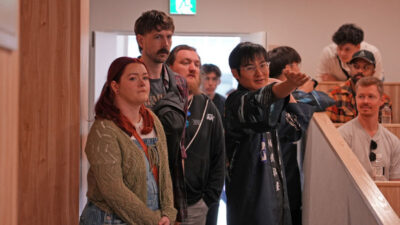
Tokyo Shinjuku Sumo Show & Experience with Photo
Read our review →
Asakusa Sumo Club Sumo Show Admission with Chankonabe in Tokyo
Read our review →
Tokyo Ginza Sumo Experience: Performance vs Pure Practice
Read our review →Browse the lists this tour appears in