
Reviewed · SUMO EXPERIENCES
1.5 Hour VIP Sumo Event in Tokyo
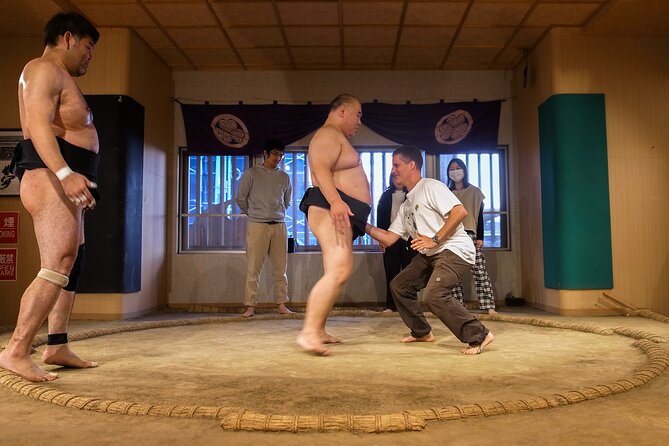
Sumo makes more sense from inside the ring. This 90-minute Tokyo activity turns a spectator sport into a hands-on lesson, with two former sumo wrestlers demonstrating exercises, techniques, and a short bout with participants. I like the small-group format, which gives people a real chance to ask questions and step onto the dohyo. I also like how the event connects sumo rules and training with Japanese customs, instead of treating the sport as a simple photo stop.
The main drawback is that the word VIP may set expectations too high. This is an interactive introduction to sumo, not a professional tournament or a private wrestling session. You should also check the child-age requirement before booking, since the information gives both age five and age eight as minimums.
In This Review
- Key Points Before You Book
- What This Tokyo Sumo Experience Really Is
- Starting Near Ryogoku at 9:30 a.m.
- Learning the Rules Before You Touch the Ring
- Watching Two Former Sumo Wrestlers Demonstrate Training
- Practicing Sumo Exercises Without Prior Experience
- Entering the Ring for a Short Bout
- Asking Questions and Taking Photos
- Pairing It With a Sumo Tournament
- Is the $114.78 Price Good Value?
- Who Will Enjoy This Most?
- Practical Tips for a Better Morning
- Should You Book the VIP Sumo Event?
- FAQ
- Where does the 1.5 Hour VIP Sumo Event take place?
- What time does the event start?
- How long does the activity last?
- Does the event end at the meeting point?
- Is the event conducted in English?
- Do I need sumo or wrestling experience?
- Can children join the activity?
- Does the price include a sumo tournament ticket?
- How many people can join the event?
- What is the cancellation policy?
Key Points Before You Book
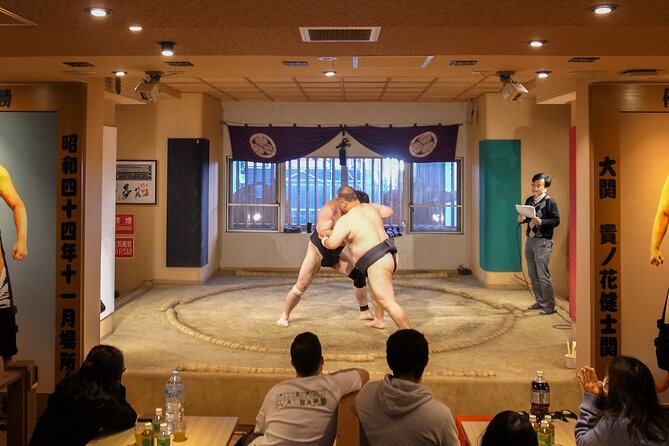
- You get into the ring: Participants can practice sumo movements and challenge a former professional wrestler in a short bout.
- Two former rikishi demonstrate the sport: The demonstrations help you understand how training, balance, and technique work.
- The lesson is in English: You receive explanations of sumo’s rules, customs, techniques, and cultural role.
- The group can include up to 20 people: This is small enough for participation, but not a private class.
- It works well before a tournament: The rules and etiquette tips can make an afternoon of watching sumo far easier to follow.
- It does not include tournament admission: You must buy a separate ticket if you want to attend a professional match.
What This Tokyo Sumo Experience Really Is
This event is best understood as a live introduction to sumo with a physical component. You do not simply sit and watch two wrestlers perform. You learn what they are doing, copy some of the exercises, and may enter the ring yourself.
The session lasts about 1 hour and 30 minutes. It begins at 9:30 a.m. at 1-chōme-1-2 Kamezawa in Sumida City, close to Ryogoku, Tokyo’s main sumo district. The activity ends at the same meeting point, which keeps the morning simple.
The event is conducted in English. That matters because sumo has many rules and gestures that can look mysterious if you only see them from the stands. A clear explanation of the ring, the opening rituals, legal techniques, and wrestler behavior gives you a better way to watch the sport later.
You should not expect a full tournament atmosphere. There is no professional bout card here, and the price does not include admission to a sumo tournament. Think of it as a lesson, demonstration, and playful physical challenge rather than a substitute for seeing the real competition.
More Sumo Experiences in Tokyo
- Tokyo: Sumo Show Experience with Chicken Hot Pot and a Photo
★ 4.8 · 6,678 reviews - Tokyo: Sumo Live Show with Photo in Shinjuku
★ 5.0 · 3,438 reviews - Tokyo: Sumo Show and Dining Experience
★ 4.8 · 2,742 reviews
Starting Near Ryogoku at 9:30 a.m.
The meeting point is in Kamezawa, Sumida City, near public transportation and Ryogoku Station. Ryogoku is a sensible area for this activity because sumo is part of the neighborhood’s identity, and the location makes it easy to combine the event with other plans in eastern Tokyo.
The directions are intended to be used with a mobile map pin. That is worth taking seriously. One person had trouble finding the venue and spent about 15 minutes walking around, while other participants found the instructions clear and easy to follow. I would open the map link before leaving your hotel, confirm the exact pin, and arrive early enough to deal with any confusion.
The 9:30 a.m. start is useful if you want to spend the rest of the day in Ryogoku or attend an afternoon tournament. It is also early enough to avoid sacrificing a full sightseeing day. Since the event is only 90 minutes and returns to the starting point, you can plan lunch or another activity afterward without a long transfer.
Learning the Rules Before You Touch the Ring
The first part explains the basics of sumo. You learn about its history, cultural meaning, rules, and techniques. This foundation is more valuable than it may sound. Sumo bouts can last only a few seconds, so without some preparation, you may miss the reason one wrestler wins.
The lesson helps you notice how wrestlers use balance, footwork, force, and timing. You also get a clearer sense of why a match begins with so much ritual before the actual push or throw. The presenters explain the sport in a way designed for people with no prior sumo experience.
That beginner-friendly approach is one of the event’s strongest features. You do not need wrestling experience, athletic training, or previous knowledge of Japanese sport. The format is built for first-time learners, and the explanations are paired with demonstrations rather than left as a lecture.
If you already follow professional sumo closely, the introductory material may feel basic. The value for an experienced fan comes more from meeting former professionals, seeing techniques at close range, and asking questions directly.
Watching Two Former Sumo Wrestlers Demonstrate Training
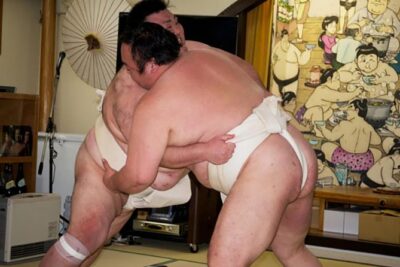
Two former sumo wrestlers, or rikishi, take part in the session. They demonstrate sumo exercises and movements while the host explains what you are seeing. Their presence gives the event weight that a standard cultural talk would not have.
The demonstrations are also where the physical scale and effort of sumo become clear. Video clips and televised bouts can make the sport look like a quick collision. Seeing former professionals perform the movements in front of you helps show the work behind that brief contest.
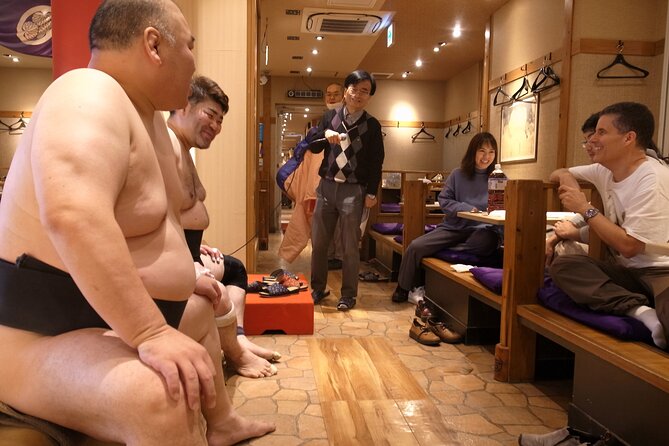
The tone is not solemn. The former wrestlers are described as friendly, humorous, and willing to answer questions. That light mood is useful for families and groups of friends, since it makes the activity less intimidating for people who would never normally volunteer for a martial arts demonstration.
You should still remember that this is entertainment as well as instruction. One critical response felt the format reduced an ancient sport to a novelty built around large wrestlers and comic participation. That criticism is fair to consider. If you want a formal, serious presentation of sumo tradition, this may feel too playful. If you want an accessible way to understand the sport and have a laugh, the relaxed style is part of the appeal.
A completely different kind of day out:
- Tokyo Disney Resort – Tokyo Disneyland & Tokyo DisneySea Park Tickets
★ 4.8 · 99,488 reviews - SHIBUYA SKY Ticket
★ 4.7 · 46,509 reviews - JR Whole Japan Rail Pass
★ 4.8 · 29,150 reviews - Mt Fuji and Hakone 1-Day Bus Tour Return by Bullet Train
★ 5.0 · 26,383 reviews
Practicing Sumo Exercises Without Prior Experience
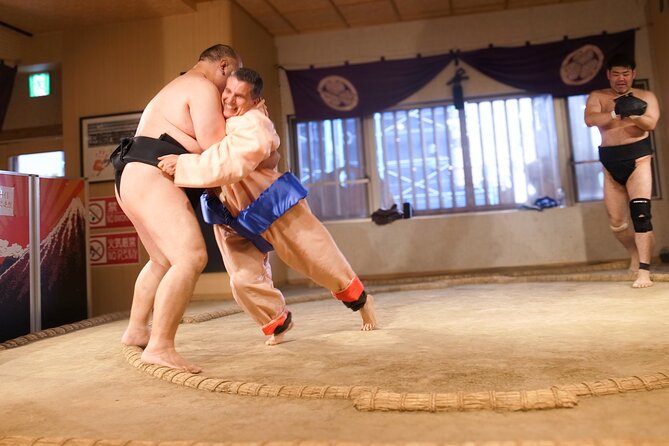
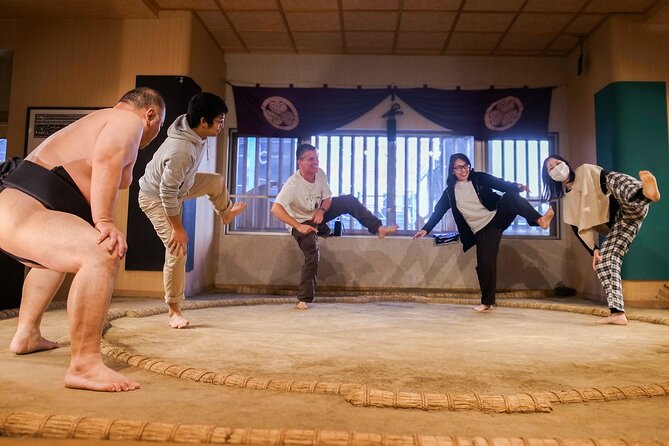
After the demonstrations, you have the chance to practice basic sumo exercises and movements. This is where the event becomes more memorable than a normal talk. Instead of only hearing about training, you try a small part of it yourself.
The activity does not require you to be a wrestler. You can take part at a level that feels comfortable, and the information specifically describes participation as suitable for most people. Still, sumo involves physical movement, balance, and contact, so you should be honest about your own comfort and fitness.
Children can take part, which makes this a useful family option. The published information conflicts on the minimum age, listing children aged eight and above in one place and a minimum age of five elsewhere. Children must be registered and paid for, so confirm the current rule before you reserve.
The group size can reach 20 people. That is small enough that participation is possible for many people, but you should not assume every person will receive a long private lesson. The event works best when you are comfortable sharing the experience, cheering for others, and taking your turn when invited.
Entering the Ring for a Short Bout
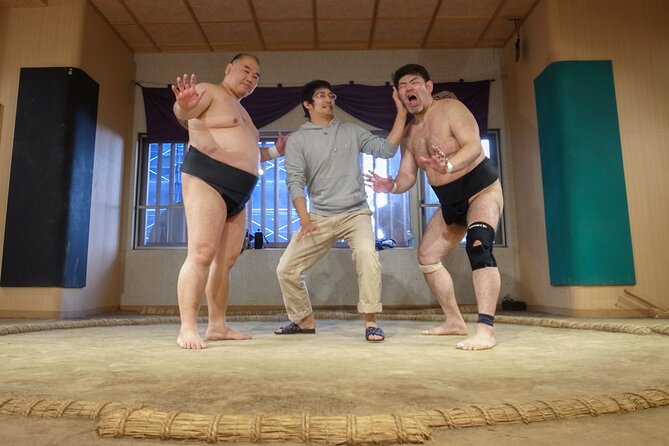
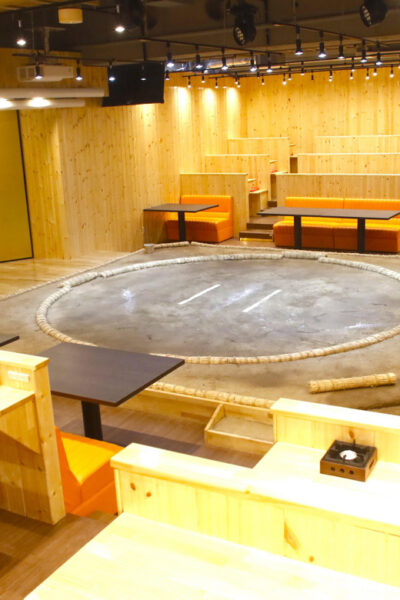
The highlight is the chance to enter the ring and challenge a former sumo wrestler. This is not a competitive match in the professional sense. It is a brief, supervised demonstration that lets you feel how difficult it is to move someone with a low center of gravity and strong balance.
You may be surprised by how quickly the physical lesson becomes clear. Sumo is not simply about being bigger or pushing harder. Position, leverage, foot placement, and timing matter. Even a short bout can make the rules easier to remember because you have felt the problem yourself.
Participation appears to be encouraged, but not everyone has to wrestle. The event description says you can join in if desired, and that is important for mixed groups. One person can step into the ring while another watches, takes photos, or asks questions.
The activity also creates some of the best photographs of the morning. Several accounts describe videos of family members wrestling with a former sumo wrestler becoming lasting souvenirs. Bring a phone that is ready to record, and decide in advance who will handle photos so you are not fumbling with a camera during your turn.
Asking Questions and Taking Photos
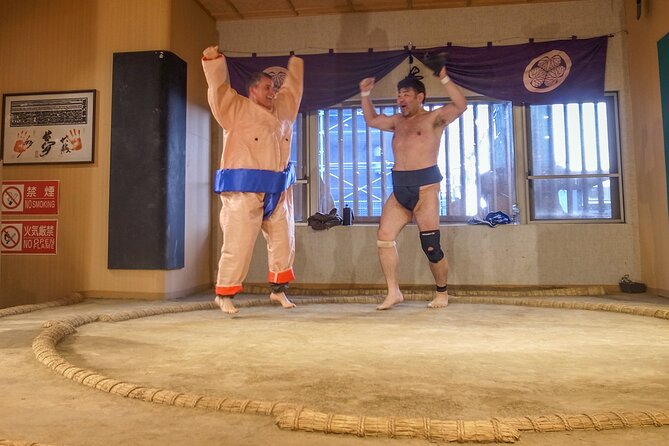
The session ends with a question-and-answer period. This is a useful feature because sumo raises practical questions that a standard guided talk may not cover. You can ask about rules, training, techniques, customs, or the daily realities of the sport.
The presenters are described as generous with their time and willing to answer questions. That personal access is a major reason to choose this event over watching a short demonstration in a larger group.
Photo opportunities appear throughout the activity, not only at the end. You can take pictures of the demonstrations, the exercises, and the ring experience. Be respectful during the explanations and follow the staff’s instructions about when photography is appropriate.
The event is in English, which makes the question period especially useful for international visitors. You do not need to depend on a translation app to understand the answers or the rules.
Pairing It With a Sumo Tournament
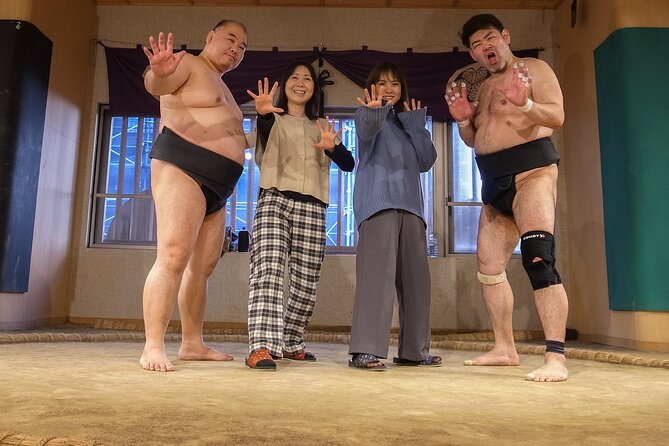
This experience is particularly helpful if you already have tickets to a professional tournament later the same day. The morning session explains the rules, tactics, and etiquette before you sit down to watch the real bouts. You can then recognize more of what happens between matches and understand why the wrestlers perform certain rituals.
The activity does not provide a tournament ticket. That point deserves clear emphasis because the word VIP and some promotional language could cause confusion. You must arrange tournament admission separately.
If you do not have tournament tickets, the event can still fill a morning. It gives you a closer look at sumo than a regular sightseeing stop and does not require you to plan around a full day in an arena. You simply should not book it expecting access to a championship match.
The best pairing is to schedule the event early, leave time for lunch and transport, and then attend the tournament if you have a valid ticket. Keep your tournament plans separate from this booking so there is no misunderstanding about admission.
Is the $114.78 Price Good Value?
At $114.78 per person, this is not a cheap cultural activity. You are paying for a small-group presentation, English instruction, access to two former professionals, active participation, and a question period. The price makes more sense if you intend to wrestle, ask questions, and use the explanations to improve your understanding of sumo.
It is less attractive if you only want to watch. A large public demonstration or a regular sightseeing visit to the Ryogoku area may cost less, though those alternatives will not put you in the ring or let you interact with former rikishi.
The maximum group size of 20 helps support the price. You are not one face in a huge crowd, and the format gives people an opportunity to participate. Still, 20 is not intimate in the way a private lesson would be. The strongest value comes from the combination of instruction and access, not from exclusivity alone.
The event is booked an average of 35 days in advance. That suggests you should not leave it until the last moment, particularly if your Tokyo dates are fixed. Free cancellation is available up to 24 hours before the start time, with the cutoff based on local Tokyo time. Changes or cancellations inside that window are not accepted for a refund.
Who Will Enjoy This Most?
I would recommend this event to first-time sumo spectators, families with children who meet the age rule, and groups of friends looking for an activity that is both cultural and physical. It is also a smart choice before a tournament because the rules and etiquette will have more meaning afterward.
You do not need to be athletic or already interested in wrestling. The educational structure gives nonfans a way into the sport, and the humor keeps the morning from feeling like a classroom.
You may want to skip it if you dislike audience participation, do not want physical contact, or expect a serious traditional performance. It also may not satisfy dedicated sumo followers who want advanced technical discussion or extended demonstrations.
The event is conducted in English, so it suits visitors who want direct explanations rather than a silent observation. Most people can participate, but anyone with concerns about movement should decide how actively to join before booking.
Practical Tips for a Better Morning
- Confirm the child-age rule: The supplied details list both five and eight as the minimum age. Ask the provider which rule applies to your date.
- Use the exact map pin: Do not rely only on the street address. Open the location link and check it before setting out.
- Arrive before 9:30 a.m.: A small delay can be stressful when the venue is in a residential-looking part of Sumida City.
- Wear comfortable clothing: You may practice exercises and enter the ring, so restrictive clothes are a poor choice.
- Charge your phone: Photos and short videos are a major part of the fun.
- Book early: The activity is often reserved about 35 days ahead.
- Keep tournament tickets separate: This experience does not include admission to a professional sumo tournament.
- Take part at your own level: You can join the physical activity, watch, photograph, or focus on questions.
Should You Book the VIP Sumo Event?
Book it if you want to understand sumo from the inside, enjoy light physical participation, and value direct contact with former professionals. The combination of demonstrations, simple training exercises, a short ring challenge, photos, and questions gives beginners a useful introduction in a compact morning.
I would be more cautious if you are paying mainly for the VIP label. The experience is interactive, but it is not a private class and does not include tournament admission. The critical response also shows that the playful format will not suit every idea of respectful cultural presentation.
For most first-time visitors, the event offers a lively and practical way to prepare for sumo in Tokyo. Book it early, confirm the child-age rule, follow the map carefully, and treat the tournament as a separate purchase.
FAQ
Where does the 1.5 Hour VIP Sumo Event take place?
The meeting point is 1-chōme-1-2 Kamezawa, Sumida City, Tokyo 130-0014, Japan.
What time does the event start?
The event starts at 9:30 a.m.
How long does the activity last?
The activity lasts approximately 1 hour and 30 minutes.
Does the event end at the meeting point?
Yes. The activity ends back at the original meeting point.
Is the event conducted in English?
Yes. The event is conducted in English.
Do I need sumo or wrestling experience?
No. No previous sumo or wrestling experience is necessary.
Can children join the activity?
Children can join, but the supplied information gives two different minimum ages, five and eight. Confirm the current requirement before booking. Children must be registered and paid for.
Does the price include a sumo tournament ticket?
No. The activity price does not include admission to a sumo tournament.
How many people can join the event?
The maximum group size is 20 people.
What is the cancellation policy?
You can cancel up to 24 hours before the local start time for a full refund. Cancellations or changes made less than 24 hours before the start are not accepted for a refund.
Just added in Tokyo
- Very popular in Harajuku♡Animal petting zoo★ 4.6 · 39 reviews
- Yokohama Port: Private Customizable Tour with Transfer★ 5.0 · 19 reviews
- Wagyu & Sake 8 Course Tasting Dinner in Shinjuku★ 4.9 · 20 reviews
- Warner Bros. Studio Tour Tokyo – The Making of Harry Potter★ 4.8 · 181 reviews
- Yanaka District: Historical Walking Tour in Tokyo’s Old Town★ 4.8 · 117 reviews
- Tokyo: Classic Tsukiji Food Tour★ 4.9 · 78 reviews
- Tokyo: Tsukiji Fish Market Tour with 6 Stops & Seafood Lunch★ 4.5 · 165 reviews
- Tokyo Wagyu & Sake Pairing Tasting Experience with Local Flavors★ 5.0 · 108 reviews
Sumo Experiences, compared.
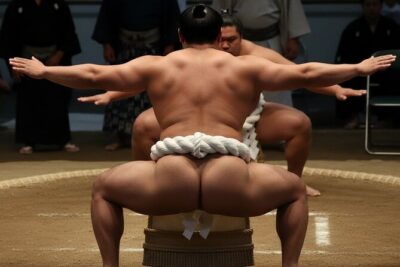
Sumo Show Experience with Chicken Hot Pot and a Photo
Read our review →
Tokyo Shinjuku Sumo Show & Experience with Photo
Read our review →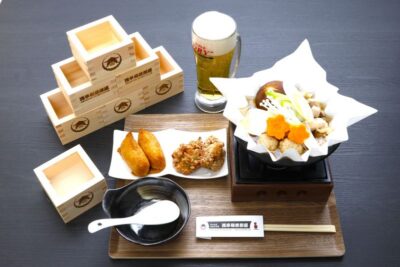
Asakusa Sumo Club Sumo Show Admission with Chankonabe in Tokyo
Read our review →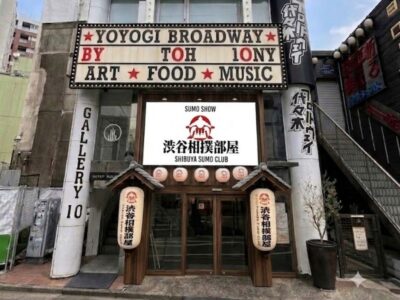
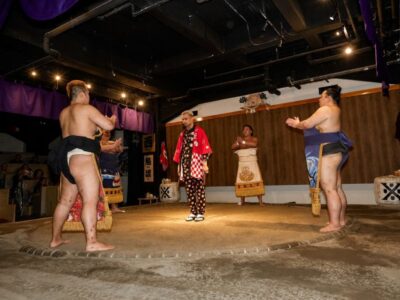
Tokyo Ginza Sumo Experience: Performance vs Pure Practice
Read our review →Browse the lists this tour appears in