
Reviewed · MULTI-DAY TOURS THAT VISIT FUSHIMI INARI
10 Day Southern Japan Cherry Blossom Festival by UME Travel Review
Japan’s appeal on this route is the contrast: one day you’re in Tokyo’s big-city rhythm, the next you’re looking toward Mount Fuji, then walking beneath Kyoto’s shrine gates or standing in Hiroshima’s Peace Memorial Park. I like that the tour handles the long-distance transport and hotel stays, and I like the mix of guided visits and free days that gives you room to explore on your own.
One point to weigh: this is a fast-moving trip with only one night in the Fuji area and one in Hiroshima, and the cherry blossoms are never guaranteed. The tour runs year-round, while bloom dates shift by region and season, so you’ll need to choose dates carefully if blossoms are a main reason for going.
In This Review
- At a glance
- A first trip built around the big contrasts
- Tokyo: a soft landing, then a day to choose your own pace
- Lake Kawaguchi and Oshino Hakkai: the Mount Fuji day
- Hakone to Kyoto: boats, steam vents, and a bullet train
- Kyoto: one open day and one guided visit to Arashiyama
- Fushimi and Nara: torii gates, sake, and deer
- Hiroshima: a necessary pause at the Peace Memorial
- Miyajima: the shrine island before Osaka
- What the price includes, and what it does not
- Is this the right Japan tour for you?
- FAQ
- Does the tour include international flights?
- Where does the tour start and end?
- Are cherry blossoms guaranteed?
- Is the tour fully guided?
- What meals are included?
- What kind of accommodation is provided?
- Are the bullet train tickets included?
- Can the tour accommodate vegan or other strict dietary needs?
At a glance
- Mount Fuji gets a full day of attention: Visit Lake Kawaguchi, ride the panoramic ropeway, and see the spring-fed ponds at Oshino Hakkai.
- Hakone adds variety to the transfer day: Cross Lake Ashi by pirate ship, ride the ropeway to volcanic Owakudani, and walk Mishima Skywalk before the bullet train to Kyoto.
- Kyoto is more than a quick photo stop: You have a free day for temples, plus a guided Arashiyama visit and a Fushimi Inari stop.
- Hiroshima and Miyajima bring different perspectives: One day is devoted to the Peace Memorial Park and museum, followed by the island shrine and its famous torii gate.
- The tour is private but only partly guided: You travel with your own party, with English-speaking local guides on selected visits and free time to manage independently.
- The starting price is $4,663: It includes hotels, breakfast, listed internal transport, and selected activities, but not international flights or optional extras.
A first trip built around the big contrasts
This route is a strong introduction if you want to see several sides of Japan without planning every train ticket and hotel yourself. It begins in Tokyo and ends in Osaka, with stops in the Fuji area, Hakone, Kyoto, Nara, Hiroshima, and Miyajima. That is a lot of ground in ten days, but the included bullet trains and transfers remove much of the practical guesswork.
The tour is partially guided, not a continuous escorted group trip. You have some guided excursions, including Arashiyama, Fushimi and Nara, Hiroshima, and Miyajima, while Tokyo and central Kyoto include open days. That arrangement suits independent travelers who appreciate help with key logistics but still want time to choose their own meals and sightseeing.
The route’s biggest strength is its variety. It pairs major city sights with shrine trails, a sake museum, a scenic railway, volcanic activity, and a serious visit to the history of the atomic bombing. Its main compromise is pace: a new hotel or destination comes often, and most stays last only one to three nights.
A few more options to weigh up in Tokyo
- Tokyo Disney Resort – Tokyo Disneyland & Tokyo DisneySea Park Tickets
★ 4.8 · 99,488 reviews - SHIBUYA SKY Ticket
★ 4.7 · 46,509 reviews - JR Whole Japan Rail Pass
★ 4.8 · 29,150 reviews
Tokyo: a soft landing, then a day to choose your own pace
On arrival, a private car takes you from the airport to Dormy Inn Akihabara Hot Spring, where you stay for two nights. That transfer is a welcome touch after a long flight, especially if this is your first time in Japan and you would rather not figure out airport connections with luggage.
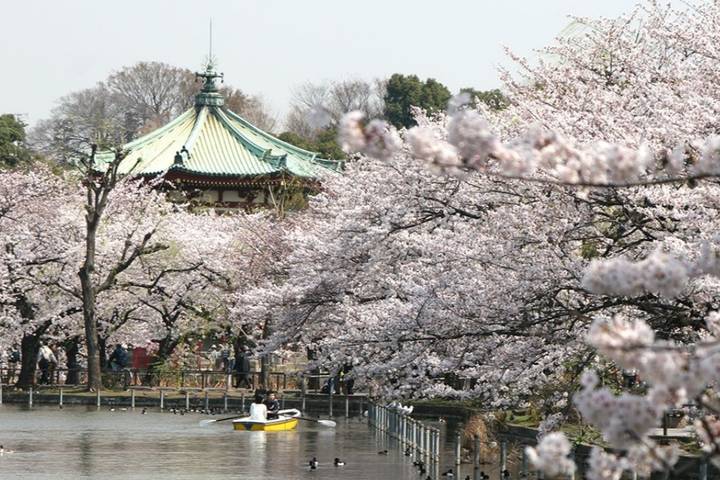
Your first full day in Tokyo is free. Meiji Jingu Shrine offers a quieter, wooded setting and a look at a major Shinto shrine dedicated to Emperor Meiji and Empress Shoken. Shinjuku Gyoen and Ueno Park are both good candidates if cherry blossoms are in season. Ueno also has a zoo and several museums, so it can fill more than a short park visit.
I like the freedom here, but it also means you need to make a plan. Tokyo is large, and the itinerary does not include a guided city tour on this day. Pick one or two areas rather than trying to cross the city repeatedly. Breakfast is included, but other meals are on your own, giving you flexibility over both schedule and budget.
Lake Kawaguchi and Oshino Hakkai: the Mount Fuji day
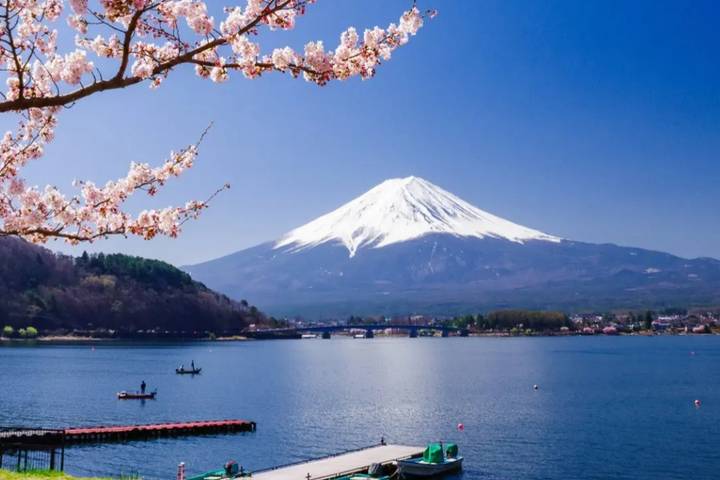
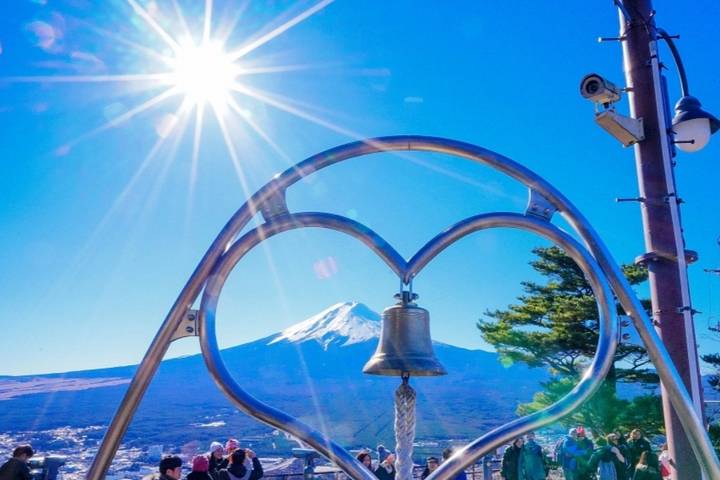
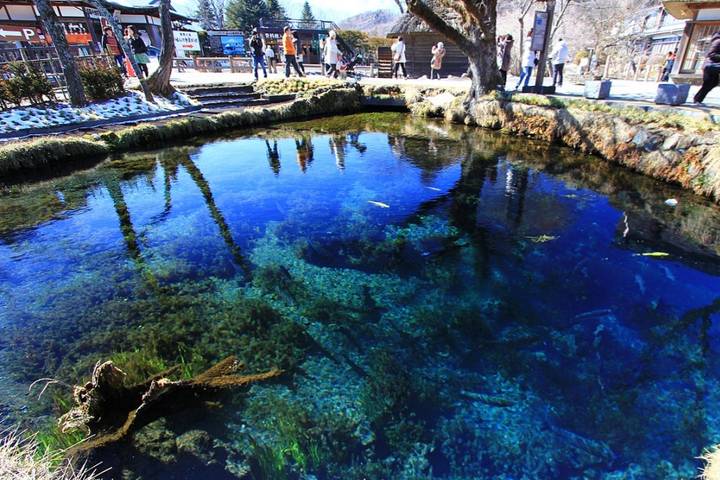
On day three, you travel to Fujikawaguchiko and stay at HOTEL MYSTAYS Fuji Onsen Resort. The day includes Lake Kawaguchi, the Mount Fuji Panoramic Ropeway to Tenjozan Park, and Oshino Hakkai, a village known for eight clear springs fed by water filtering through old lava.
The ropeway is the headline for many people. From the observation area, you can see the lake and, when conditions cooperate, Mount Fuji. That last phrase matters: mountain views depend on the weather, so don’t treat a clear Fuji view as a promise. This is the main part of the trip designed around the mountain, and the overnight stay means you are not trying to squeeze it into a quick stop between cities.
Oshino Hakkai adds a different texture to the day. Rather than another city landmark, you get a village setting and spring water associated with the region’s volcanic past. A sightseeing boat on the lake, hot springs, and museums are listed as optional activities, so check the final schedule and cost before counting on them.
Hakone to Kyoto: boats, steam vents, and a bullet train
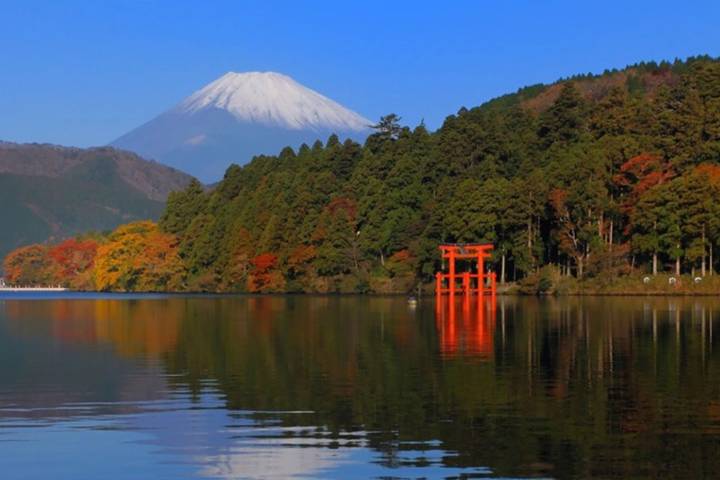
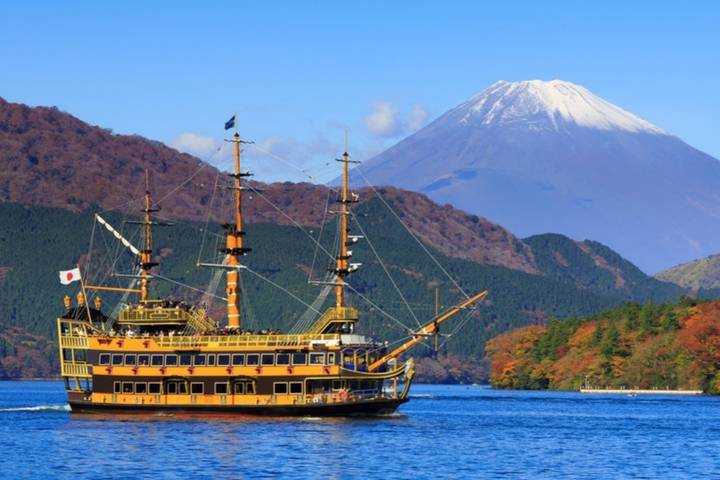
The next day is packed. You take the Hakone Pirate Ship across Lake Ashi, ride the Hakone Ropeway to Owakudani, and visit the volcanic area, where steam and a sulfur smell are part of the experience. Black eggs are sold there, with a local legend that eating one adds seven years to your life. Treat the extra years as folklore, not a health plan.
The route also includes Mishima Skywalk, a 400-meter pedestrian suspension bridge with views toward Mount Fuji and Suruga Bay when visibility allows. Then you board the Shinkansen from Odawara to Kyoto. The bullet train ticket is included, but once you reach Kyoto, you make your own way from the station to the hotel.
This is an appealing day because it combines natural sights with one of Japan’s signature rail journeys. It is also a long, multi-stop day, so keep your day bag manageable and follow the guide’s timing. You stay at Hotel Elcient Kyoto Hachijoguchi for three nights, giving you a base for the next several visits.
A completely different kind of day out:
- Mt Fuji and Hakone 1-Day Bus Tour Return by Bullet Train
★ 5.0 · 26,383 reviews - TOKYO SKYTREE® Ticket
★ 4.7 · 25,136 reviews - teamLab Borderless Tickets: MORI Building DIGITAL ART MUSEUM
★ 4.7 · 24,126 reviews - teamLab Planets TOKYO Ticket
★ 4.7 · 21,663 reviews
Kyoto: one open day and one guided visit to Arashiyama
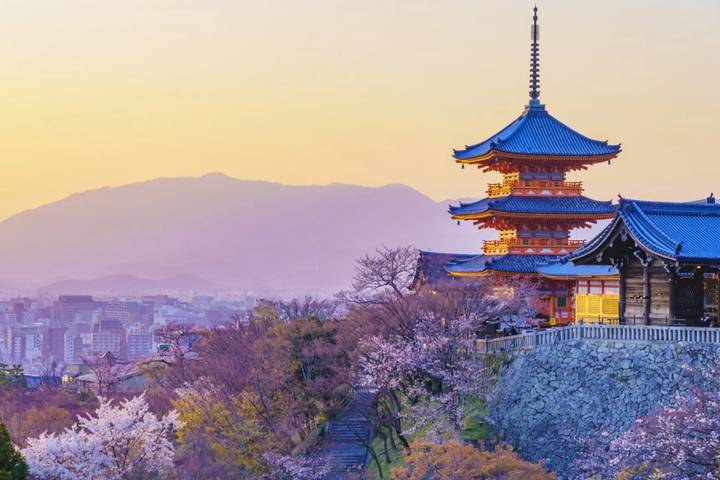
Day five is free for Kyoto. Kiyomizu-dera is a major temple with an elevated view over the city, while Yasaka Shrine and Hanamikoji Dori are nearby options. The city served as Japan’s capital for more than a thousand years, and that long span is visible in the concentration of temples, shrines, and traditional streets.
The practical upside of an open day is choice. You can focus on the sights that interest you most, or keep the schedule light after the busy Hakone transfer. The downside is that transport and timing are yours to manage. Taxis and public transit are suggested, but no city guide is included for this day.
Day six brings a half-day walking tour in Arashiyama. You visit Tenryuji Temple and its gardens, ride the Sagano Scenic Railway beside the Hozugawa River, walk through the Sagano Bamboo Forest, cross Togetsukyo Bridge, and visit Okochi-Sanso, a traditional villa with a teahouse. These stops work well together: temple gardens, river scenery, bamboo, and domestic architecture give you more than one version of Kyoto’s appeal.
The bamboo grove is famous, which means it can be busy. The walk and railway still make a worthwhile combination, but allow yourself to enjoy the whole district rather than treating the grove as the only point of interest. Okochi-Sanso adds a calmer final stop after the public paths.
Fushimi and Nara: torii gates, sake, and deer
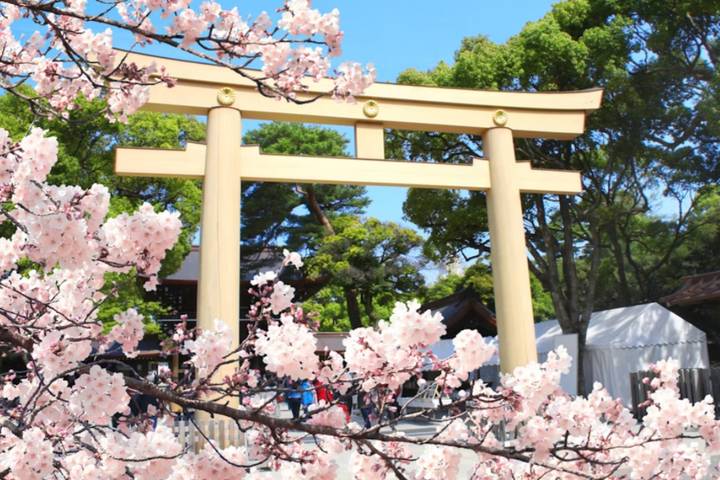
Day seven starts at Fushimi Inari Shrine, where thousands of red-orange torii gates line paths into the forest on Mount Inari. You can walk as far up the trails as time and energy allow. Even a shorter visit gives you a sense of how the gates form a route through the wooded shrine grounds.
Next comes the Gekkeikan Okura Sake Museum, with exhibits on sake brewing and a tasting of different varieties. This is a useful cultural stop because it connects a familiar drink to the production methods and local water supply of Fushimi. The tour then continues to Nara Park and Todaiji Temple. Nara’s freely roaming deer are a memorable part of the visit, but they can become pushy if they expect food. Deer crackers are available, so keep food tucked away unless you mean to feed them.
Todaiji dates to 752 and is one of the country’s major Buddhist temples. Pairing it with the park makes the day more than a deer encounter, though there is a lot to fit into one outing. After this visit, you move to Osaka and stay at Best Western Plus Hotel Fino Osaka Kitahama.
Hiroshima: a necessary pause at the Peace Memorial
On day eight, you take the bullet train from Kyoto to Hiroshima with a guide, then use public transport to visit the Atomic Bomb Dome, Peace Memorial Park, and Peace Memorial Museum. The park covers a large area, with paths, lawns, and trees set against the city around it. The Dome and museum give the visit its focus.
The museum presents photographs, models, recovered items, and explanations of the bombing’s impact. It also addresses Japan’s wartime actions in Asia. This is a substantial and often difficult visit, so give yourself time to read and reflect rather than trying to rush through every display.
You spend the night at Hotel Intergate Hiroshima. Having an overnight stay here means the day is not simply a rapid stop on the way elsewhere, though the following day still requires more travel.
Miyajima: the shrine island before Osaka
The next day takes you by train and public transport to Miyajima, then onward to Osaka by bullet train. Itsukushima Shrine is known for its torii gate, which appears to float when the tide and viewing conditions create that effect. The island’s name, commonly translated as shrine island, reflects the role of the shrine in its identity.
Wild deer also roam around Miyajima. Unlike in Nara, you should not feed them. The visit is focused on the shrine and gate, with time shaped by the day’s transport plan. You return to Osaka for a second night at the Best Western Plus Hotel Fino Osaka Kitahama before a private transfer to Kansai International Airport on day ten.
This is a compact end to the trip. If you want time for more of Osaka’s food and city sights, remember that the itinerary gives you only the final evening there, not a full sightseeing day.
What the price includes, and what it does not
The tour starts at $4,663, with pricing based on the cheapest room option. Accommodation is in three-star hotels, generally shared by two people; a single supplement applies if you do not share. The named hotels include two nights in Tokyo, one near Mount Fuji, three in Kyoto, one in Hiroshima, and two in Osaka.
The package includes nine breakfasts, listed internal trains and cruises, a private arrival transfer in Tokyo, a private departure transfer from Osaka to Kansai International Airport, selected activities, and an English-speaking local guide. International flights are not included. Optional activities may cost extra, and the itinerary does not include lunch or dinner.
That price can make sense if you value having hotels and major transport arranged across a busy route. It is less compelling if you prefer to book simple hotels and train tickets yourself, or want every day guided. Remember to budget separately for flights, most meals, optional activities, and any single-room supplement.
Dietary needs deserve advance attention. The operator notes that options can be limited in Japan, particularly for vegan meals, and that strict requirements may mean arranging some meals yourself. If that applies to you, ask for specifics before booking rather than assuming every meal can be adapted.
Is this the right Japan tour for you?
I’d consider this tour if you’re visiting Japan for the first time, want a broad route from Tokyo to Osaka, and would rather have the key transport and hotels arranged. The combination of free time and guided excursions is useful if you like independence but don’t want to handle every transfer alone. It is also listed as low intensity and open to all ages, though you should expect walking and busy sightseeing days.
Look elsewhere if cherry blossoms are your only priority, you want a slow stay in each city, or you prefer a guide with you throughout the trip. Blossom timing varies by region: the stated range is late March to mid-April for Honshu, with Kansai generally late March to early April and Kanto late March to early April. Those are broad seasonal windows, not guarantees.
The tour’s strongest case is its well-organized first look at Japan: Tokyo, Fuji, Kyoto, Nara, Hiroshima, and Miyajima, with the long-distance travel taken care of. Book it for the range and convenience, not for a promise of peak blossoms or unlimited free time.
FAQ
Does the tour include international flights?
No. International flights are not included.
Where does the tour start and end?
It starts in Tokyo and ends in Osaka. A private transfer is included from the Osaka hotel area to Kansai International Airport.
Are cherry blossoms guaranteed?
No. The tour runs year-round, and bloom dates vary by region and season. The stated general window for Honshu is late March to mid-April.
Is the tour fully guided?
No. It is partly guided, with selected visits led by English-speaking local guides. Some days, including the Tokyo and Kyoto free days, are independent.
What meals are included?
Nine breakfasts are included. Lunches and dinners are not listed as included.
What kind of accommodation is provided?
The tour uses three-star hotels. Accommodation is based on two people sharing, with a single supplement for a traveler who does not share a room.
Are the bullet train tickets included?
Yes. The listed internal trains are included, including the Shinkansen journey from Odawara to Kyoto and the train journeys associated with Hiroshima and Osaka.
Can the tour accommodate vegan or other strict dietary needs?
Dietary options can be limited in Japan, especially for vegans. The operator advises that people with strict requirements may need to arrange some meals themselves.
Just added in Tokyo
- Mt. Fuji & Hakone Cherry Blossom private One Day Tour★ 4.5 · 35 reviews
- Fish Market & Tokyo Skyline Private Walking Tour★ 5.0 · 14 reviews
- 25-Min Downtown Helicopter Tour : Tokyo Skytree and Tokyo Tower★ 5.0 · 19 reviews
- Private Tour with a Local Guide – Learn about daily life in Japan★ 5.0 · 22 reviews
- Tokyo: 3-Hour Bike/E-Bike Tour of the City’s Highlights★ 5.0 · 209 reviews
- Official Japan Go-Kart Through Tokyo Bay / Ginza (IDP Required)★ 4.5 · 71 reviews
- 30-Min Tokyo Central Private Heli Tour– Asakusa, Skytree, Shibuya★ 5.0 · 13 reviews
- Tokyo 2-Hour Genuine Samurai Experience: Kendo in Japan★ 5.0 · 112 reviews
Multi-Day Tours That Visit Fushimi Inari, compared.


Essential Japan GO by Europamundo – 7-Day Tokyo to Osaka Tour
Read our review →
Wonders of Japan End Osaka (including Fukuyama) 12-Day Tour by Europamundo
Read our review →
Wonders of Japan End Osaka by Europamundo – 12-Day Tour
Read our review →
Discover Japan by G Adventures – 14-Day Tour from Tokyo
Read our review →
Contrasts of Japan GO by Europamundo – 9-Day Tokyo to Hiroshima Tour
Read our review →
Contrasts of Japan (including Shizuoka) 9-Day Tour by Europamundo
Read our review →
Contrasts of Japan by Europamundo – 9-Day Tokyo to Hiroshima Tour
Read our review →Browse the lists this tour appears in