
Reviewed · CITY TOURS AND SIGHTSEEING
3 Day Japan Highlights Tour: Tokyo, Mt.Fuji, Nara, Kyoto, Osaka
Japan in three days? Choose your stops wisely. This small-group tour packs Kamakura, Hakone, Mt. Fuji, Nara, Kyoto, and Osaka into one carefully planned route, with an English-speaking guide and comfortable transport between cities. I like the mix of famous sights and smaller cultural stops, especially the Hakone ropeway, Oshino Hakkai, Nara Park, and Kyoto’s temples.
I also like the flexibility promised by guide Matt, who has adjusted the day for individual interests according to past feedback. The main drawback is simple: this is a very fast trip. You will see a remarkable amount of Japan, but long drives, short visits, and several optional admission fees mean you must accept a quick look rather than a leisurely stay.
In This Review
- Key Things to Know Before Booking
- Why This Route Works for a Short Japan Visit
- Day One: Kamakura’s Buddha, Enoshima, and Hakone’s Volcanic Valley
- Day Two: Fuji Villages, Lava Caves, and Nagoya After Dark
- Day Three: Deer, Giant Buddha, and Kyoto’s Famous Gates
- Group Size, Comfort, and the Pace You Should Expect
- Who Will Get the Most From This Japan Tour?
- Should You Book the 3 Day Japan Highlights Tour?
- FAQ
- Where does the tour start?
- Where does the tour finish?
- How long is the experience?
- How many people can join the group?
- Is an English-speaking guide included?
- Are meals included?
- Is accommodation included?
- How much do the optional admissions cost?
- Can the tour be canceled for a refund?
Key Things to Know Before Booking
- You travel from Narita toward Osaka: The route links Japan’s major sights without asking you to plan several separate transfers.
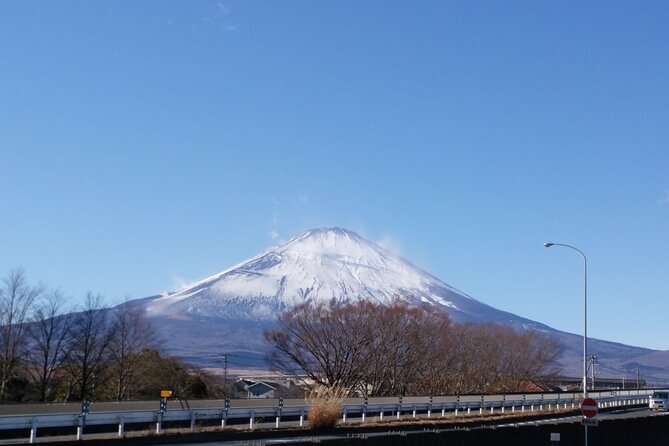
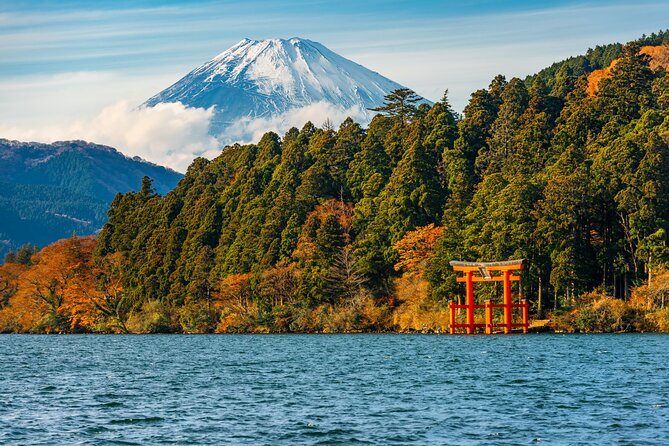
- Mt. Fuji depends on the weather: Oshino Hakkai, Oishi Park, Lake Ashi, and the Hakone Sky Line offer excellent viewing points, but clear views are never guaranteed.
- Hakone has several extra costs: The ropeway costs 2,000 yen and the pirate ship costs 1,700 yen, while some temples and museums also charge admission.
- The group is capped at 23 people: That is small enough for guide interaction, though the vehicle may still feel full on a busy three-day schedule.
- You sleep in three-star accommodation: Two breakfasts are included, but lunch and dinner are on your own.
- The final evening ends in Osaka: Dotonbori gives you a lively finish, with the possibility of adding extra time in Tokyo or continuing toward Hiroshima.
Why This Route Works for a Short Japan Visit
This tour is best understood as a moving introduction to Japan, not a relaxed city break. You begin near Narita and travel west, taking in coastal scenery, mountain areas, historic towns, sacred sites, and major urban districts before finishing in Osaka.
That route solves a common problem for first-time visitors. Japan’s best-known places are spread across a wide area, and arranging Kamakura, Hakone, Mt. Fuji, Nara, Kyoto, and Osaka independently can take considerable planning. Here, the vehicle, road tolls, parking, WiFi, guide, and accommodation are bundled into one trip.
The tradeoff is time. You might spend only 15 minutes at Owakudani or 20 minutes at Oishi Park. That is enough to see the place, take photographs, and hear the basic story, but not enough to explore every path or museum. I would choose this trip if you value coverage and context over slow mornings.
The tour costs $1,310.55 per person. That is a serious price, but it includes three days of guided transport, two nights of three-star accommodation, two breakfasts, parking, tolls, and a route that crosses much of central Japan. You still pay for several major admissions and all lunches and dinners, so budget extra cash for those items.
More Sightseeing Tours in Narita:
- Mount Fuji & Hakone – Lake Ashi Torii Gate, Hakone Shrine, Hakone Pirate Ship, Hakone Ropeway, Owakudani, Lake Yamanaka & Oshino Hakkai Day Trip: Sea, Land, and Air Panoramic Tour from Tokyo
★ 4.8 · 7,989 reviews - Tokyo: Private City Highlights Tour with Local Guide
★ 4.8 · 1,433 reviews - Tokyo Private Sightseeing Tour by Car- English speaking chauffeur
★ 5.0 · 1,004 reviews
Day One: Kamakura’s Buddha, Enoshima, and Hakone’s Volcanic Valley
The first day starts at Narita Airport Terminal 2 or 3 Station, with pickup also offered from a hotel or port of entry in Tokyo or Narita. The route follows the coast through Yokohama toward Kamakura, once the political center of Japan.
At Kotoku-in, you get a quick look at the Great Buddha of Kamakura. The bronze statue is about 11 meters tall and dates from 1252. The 30-minute stop is short, but it gives you one of the area’s essential sights without turning the morning into a long temple visit. Admission is not included.
Hasedera Temple provides a different mood. Its main religious image is a large wooden statue of the goddess of mercy, and the grounds include gardens and ocean views. You can also go underground in part of the temple complex. Allow about 40 minutes, which is enough for a taste of the grounds, though not for a slow garden visit.
Next comes Enoshima Island, where you have about an hour. The island combines a shrine complex, sea caves, seaside views, a public bath, and seafood restaurants. This is one of the more flexible stops because you can watch surfers, look around the shrine area, or use the time for lunch.
Lunch is not included, so Enoshima is a practical place to buy food. You can taste regional specialties instead of relying on a standard group meal. The short schedule means you should decide quickly rather than spend half the hour choosing a restaurant.
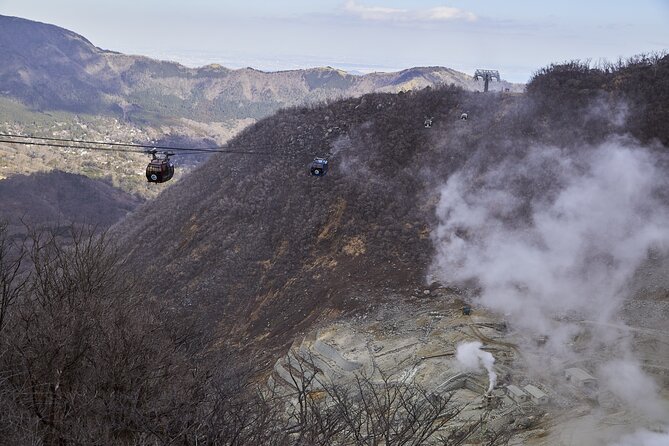
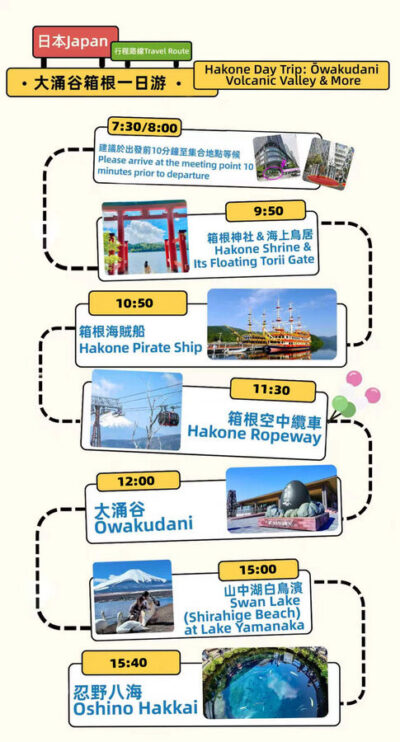
The afternoon moves into Hakone, a mountain area known for Lake Ashi and views toward Mt. Fuji. The Hakone Ropeway is one of the tour’s more memorable rides. You take a gondola down the mountain after a stop that includes a foot bath and mountain views. The ride costs 2,000 yen and is not included.
The ropeway leads toward Owakudani, also called Hell Valley. Sulphur steam rises from the crater area, creating a stark volcanic scene. The stop lasts only 15 minutes, but it gives you time to see the vents and try a kuro-tamago, a black egg cooked in the sulphur springs.
The pirate ship from Tōgendai Port crosses Lake Ashi, an old volcanic crater lake. The cruise lasts about an hour and costs 1,700 yen. On a clear day, you may see Mt. Fuji from the water. On a cloudy day, the lake and surrounding mountains still make the ride worthwhile, but you should not pay the extra fee expecting a guaranteed Fuji view.
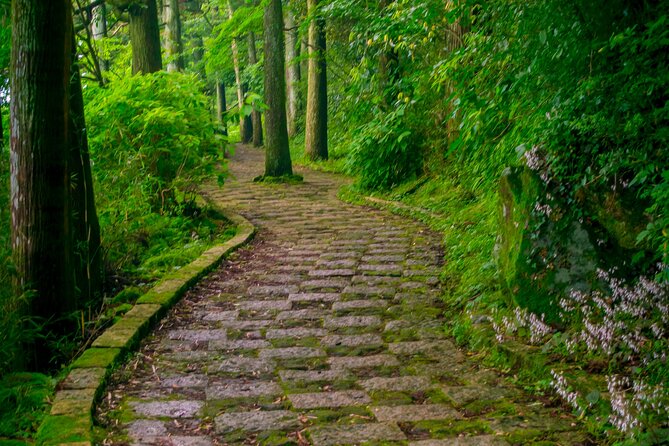
Hakone Shrine follows the cruise. The shrine dates to 757 and sits among tall cedar trees, with a well-known torii gate by the lake. You have about 30 minutes, so focus on the forest approach or the lakeside gate rather than trying to cover every corner.
The day ends with a drive along the Lake Ashi Sky Line toward the Mt. Fuji area. The route offers views of the Pacific, Lake Ashi, and Fuji when weather allows. Wildlife such as deer and raccoon dogs may appear along the way, though sightings are not promised.
Day Two: Fuji Villages, Lava Caves, and Nagoya After Dark
Day two begins with local specialties and views of tea plantations in the Fuji area. The stop lasts about 20 minutes, so think of it as a brief taste of the region rather than a full food tour.
Oshino Hakkai is more photogenic and relaxed. Its eight clear ponds are linked with a traditional village setting and shops selling local products. You have an hour here, enough to walk around, take photographs, and sample something from the stalls.
Kitaguchi Hongu Fuji Sengen Jinja is a quiet contrast. The shrine sits in a cedar forest at the foot of Mt. Fuji and is traditionally linked with the start of the climb. Its setting gives you a better sense of how mountain worship and Shinto practice connect in Japan.
Oishi Park, beside Lake Kawaguchi, is one of the tour’s best Fuji viewing spots. The planned visit lasts only 20 minutes, and the key factor is weather. Clear morning conditions can produce the classic view across the lake. If clouds cover the mountain, the stop becomes much less rewarding.
At Saiko Iyashi no Sato Nemba, you visit a reconstructed traditional village with thatched-roof houses. You can dress in a kimono or samurai armor, look through the old-style buildings, and enjoy views of Mt. Fuji and the surrounding countryside. Admission is 500 yen.
This is one of the stops that gives the trip more character than a simple Fuji photo run. Still, an hour goes quickly, especially if you want to change clothes, explore the houses, and take photographs.
Fugaku Wind Cave offers a short look at the volcanic geology beneath Mt. Fuji. The cave is made from lava tubes and contains natural ice for much of the year. Admission is 300 yen. The visit lasts about 30 minutes, and the footing may be uneven, so wear shoes you can walk in comfortably.
The Aokigahara Forest stop is only about 10 minutes. You take a short walk through a forest known for its dense growth and dark reputation. Do not expect a long forest hike. This is a quick introduction to the area, placed between the cave and the waterfall.
Shiraito Falls gives you about 40 minutes to walk to two striking waterfalls and buy local snacks. The falls provide a refreshing change after the enclosed cave and forest stops. As with many parts of this tour, the value comes from variety.
The day finishes in Nagoya’s Sakae district, with about an hour to look around its shops and restaurants. Dinner is not included, so this is your chance to find your own meal. One hour is enough for a quick meal and a short walk, but not enough to properly explore Nagoya’s nightlife.
Day Three: Deer, Giant Buddha, and Kyoto’s Famous Gates
Day three starts at Nara Park, where you take a guided walk among the free-roaming deer. The two-hour visit gives you more breathing room than most of the earlier stops. The deer are famous for approaching people, so keep food and belongings under control and follow local guidance.
Todai-ji Temple is the main cultural stop in Nara. Founded in 738, it houses a huge bronze Buddha inside one of Japan’s most impressive wooden buildings. You have about an hour, and admission is 800 yen.
The scale of Todai-ji makes the short visit worthwhile, but do not expect to study every sculpture or art display. Pairing the temple with Nara Park works well because you get both the open park setting and a major religious monument.
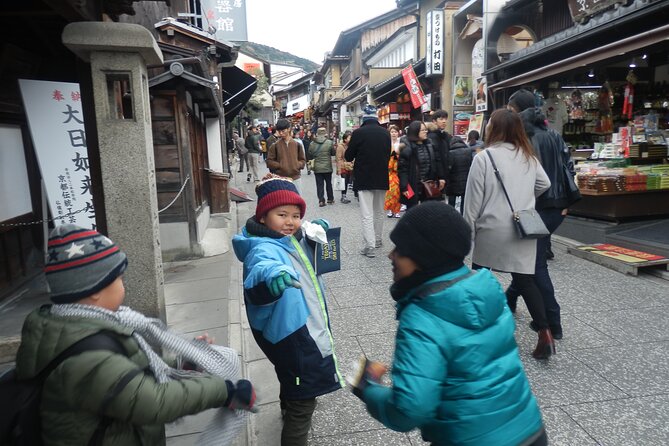
Kyoto begins at Kiyomizu-dera, a World Heritage temple with traditional shops nearby. The route is planned to avoid some of the worst crowds, which matters here. The temple is popular, and narrow lanes can become slow and crowded.
You have about an hour at Kiyomizu-dera, with admission costing 500 yen. I would use the time for the temple terrace, views, and a quick look at the nearby shops rather than trying to browse every lane.
Entoku-in offers a quieter temple experience. It was the family home and garden of Nene, the wife of Toyotomi Hideyoshi, and the site was built in 1605. A short tea ceremony is available for an extra 1,300 yen.
The tea ceremony is a good choice if you want a cultural activity instead of another quick photograph. It does add cost and uses part of your limited Kyoto time, so decide based on your interests.
Arashiyama Bamboo Forest is scheduled for about an hour. The bamboo path is famous, but its popularity means the experience can feel hurried and crowded. If the schedule is tight, a less crowded bamboo grove at Kotoku-in may be substituted.
That flexibility is useful. You still get the visual appeal of bamboo without treating one famous path as the only worthwhile option. Keep your expectations realistic: this is a short stroll, not a long walk through the hills.
Fushimi Inari-taisha finishes your Kyoto sightseeing. More than 10,000 orange torii gates form a path up the mountain, beginning near the shrine’s main buildings. The full route is far too long for a 40-minute stop, so you will see the lower section and perhaps walk partway uphill.
The final stop is Dotonbori in Osaka. You have about an hour to explore the entertainment district’s back streets and find dinner. Since the tour ends in a different location from its Narita starting point, Dotonbori is a useful finish for anyone continuing in Osaka.
A few more options to weigh up in Narita
- Narita Airport (NRT) Private Transfer to Central Tokyo
★ 4.5 · 300 reviews - Private arrival Transfer from Narita Airport(NRT) to central Tokyo city
★ 4.5 · 128 reviews - 14 Days Japan Panoramic (Private 3 Star Hotels) by Stunning Tours
★ 4.7 · 64 reviews - Narita Airport(NRT): Private Transfer to Tokyo/Yokohama 1-9pax
★ 5.0 · 47 reviews
Group Size, Comfort, and the Pace You Should Expect
The maximum group size is 23 people. That is more manageable than a large coach tour, and an English-speaking guide can offer some personal help. Past feedback gives guide Matt particular credit for explaining Japanese culture and adjusting the itinerary around personal interests.
The air-conditioned vehicle includes WiFi, parking, and road tolls. Those details matter on a route with long road sections between coastal Kanagawa, Hakone, Mt. Fuji, Nagoya, Nara, Kyoto, and Osaka.
The tour is described as suitable for all ages and fitness levels, and most people can participate. Even so, you will walk through temple grounds, village paths, shrine approaches, and a cave. The pace is active, and you should be ready to get in and out of the vehicle often.
Two breakfasts are included. Lunch and dinner are not, which gives you freedom to choose local food but also means the total price is higher than the listed tour rate. A mobile ticket, pickup option, and group discounts add convenience.
The cancellation terms are worth noting before you commit. You receive a full refund when canceling at least six full days before the start time, a 50 percent refund two to six days before, and no refund within two days.
Who Will Get the Most From This Japan Tour?
I would recommend this tour to a first-time visitor who wants to connect several major areas without handling Japan’s transport system alone. It also suits anyone arriving in Tokyo and finishing in Osaka, since the route moves in one direction instead of forcing you back to the starting point.
It is a good fit for families and mixed-age groups because the schedule combines short walks, scenic rides, temples, food stops, and cultural activities. The guide can also tailor the plan to particular interests, at least when timing allows.
I would not choose it for someone who wants extended time in Kyoto, a full day at Mt. Fuji, or slow temple mornings. You will not fully explore Tokyo, Kyoto, Osaka, or Nagoya in this format. The tour gives you a broad first look, then lets you return later to the places that deserve more time.
Should You Book the 3 Day Japan Highlights Tour?
Book it if your Japan trip is short and you want maximum geographic coverage with a guide, vehicle, and accommodation already arranged. The strongest parts are the range of scenery, the route from Narita to Osaka, the Fuji area, Nara Park, and the cultural explanation provided by guides such as Matt.
Skip it if the $1,310.55 price feels high once you add admissions, meals, and optional activities, or if you dislike early starts and frequent changes of scenery. This is a fast, practical sampler. It is not a slow discovery of Japan.
For the right person, that is exactly its value. You see Kamakura’s Buddha, Hakone’s volcanic sights, Mt. Fuji’s villages and lakes, Nara’s deer and Todai-ji, Kyoto’s major shrines, and Osaka’s Dotonbori in one westbound journey. Add extra days in Tokyo, or continue to Hiroshima, and the trip becomes a useful first chapter rather than the whole book.
FAQ
Where does the tour start?
The tour starts at Narita Airport Terminal 2 or 3 Station. Pickup is also offered from a hotel or port of entry in Tokyo or Narita.
Where does the tour finish?
The activity ends in a different location from the Narita starting point. The final scheduled stop is Dotonbori in Osaka.
How long is the experience?
The tour lasts approximately three days.
How many people can join the group?
The maximum group size is 23 travelers.
Is an English-speaking guide included?
Yes. The tour includes an English-speaking guide. Past feedback specifically praises guide Matt for explaining Japanese culture and allowing some flexibility based on personal interests.
Are meals included?
Two breakfasts are included. Lunch and dinner are not included.
Is accommodation included?
Yes. The price includes three-star accommodation.
How much do the optional admissions cost?
The Hakone Ropeway costs 2,000 yen, the Hakone pirate ship costs 1,700 yen, Saiko Iyashi no Sato Nemba costs 500 yen, Fugaku Wind Cave costs 300 yen, Todai-ji costs 800 yen, and Kiyomizu-dera costs 500 yen. The tea ceremony at Entoku-in costs an additional 1,300 yen.
Can the tour be canceled for a refund?
You can receive a full refund if you cancel at least six full days before the start time. Cancellation two to six days before receives a 50 percent refund, while cancellation within two days is nonrefundable.
Just added in Narita
- Tokyo to Takayama – 13 days by On The Go Tours★ 4.4 · 5 reviews
- Splendours of Japan (Takayama, Takayama Festival) 9-Day Tour by Trafalgar★ 4.1 · 14 reviews
- 9 Days Japan Golden Tour Package WITH OISHI PARK by Delightful Travel★ 4.7 · 3 reviews
- Discover Japan on a Budget: 8-Day Ultimate Starter by Vio Travel★ 2.5 · 2 reviews
- Classic Japan 11-Day Tour by Trafalgar★ 4.0 · 1 review
- Best of Japan – 8 days by On The Go Tours★ 3.8 · 3 reviews
- 14 Days Japan Panoramic (Private 3 Star Hotels) by Stunning Tours★ 4.7 · 64 reviews
- 12 Days Summer Tokyo and Hokkaido Tour by UME Travel★ 5.0 · 2 reviews
City Tours and Sightseeing, compared.
Private City Highlights Tour with Local Guide
Read our review →
Tokyo Private Sightseeing Tour by Car- English speaking chauffeur
Read our review →
Naha: North Okinawa Sightseeing Tour & Churaumi Aquarium
Read our review →
Private Highlights Tour with Guide and Luxury Vehicle
Read our review →
Custom Hidden Gems & Highlights Tour with Local Guide
Read our review →
Mount Fuji Full Day Sightseeing Tour from Tokyo
Read our review →Browse the lists this tour appears in