Reviewed · MULTI-DAY TOURS THAT VISIT NAGOYA
8D Splendid Japan-Private 3 Star Hotels-Osaka to Tokyo by Stunning Tours – Reviews & Prices
Japan’s old temples, mountain scenery and big-city streets all fit into this eight-day Osaka-to-Tokyo trip. You’ll visit Nara’s deer park, Kyoto’s best-known sights, Lake Yamanaka and Mt. Fuji, with a guided Tokyo day at the end.
I like the mix of included coach transport and guided sightseeing, which saves you from organizing several complicated transfers, and the route’s contrast between cities and quieter old towns. One caution: the schedule is ambitious, so expect long bus days and limited time at some stops. Hiroshima is an optional, separately priced excursion.
In This Review
- At a glance: what this Japan tour offers
- A fast-moving route from Osaka to Tokyo
- Day 1: arrive at Kansai Airport and find your own way in
- Day 2: Nara’s Buddha hall, deer and shrine
- Day 3: free Osaka time or a long Hiroshima add-on
- Day 4: Kyoto’s torii gates, Golden Pavilion and bamboo
- Day 5: Toyota’s industrial story and an old post town
- Day 6: Lake Yamanaka and Mt. Fuji’s 5th Station
- Day 7: Tokyo shrines, shopping streets and a night in Shinjuku
- Day 8: breakfast, then onward to the airport
- Hotels, meals and what the price really covers
- What the trip does well, and what to weigh
- Who should book this Osaka-to-Tokyo tour?
- FAQ
- Is this a private tour?
- How many days and nights does the trip include?
- Where does the tour start and end?
- Are airport transfers included?
- Which meals are included?
- Is the Hiroshima trip included in the tour price?
- Is the Mt. Fuji 5th Station visit guaranteed?
- What kind of hotels are used?
- Are flights included?
- Is a single-room supplement required for solo travelers?
At a glance: what this Japan tour offers
- Nara’s deer and Todaiji Temple: See the giant Buddha hall and Kasuga Taisha, with time to feed the park’s free-roaming deer.
- Kyoto in a half-day: Visit Fushimi Inari, Kinkaku-ji, Arashiyama Bamboo Grove and Togetsu Bridge.
- A countryside interlude: Stop at the Toyota Commemorative Museum, Naraijuku and Tsumagoi Village between the major cities.
- Mt. Fuji, weather permitting: Take a boat ride on Lake Yamanaka, then travel to the mountain’s 5th Station.
- Tokyo with a guide: Meiji Shrine, Omote Sando, Takeshita Street, a traditional rock garden and Tokyo Tower are on the schedule.
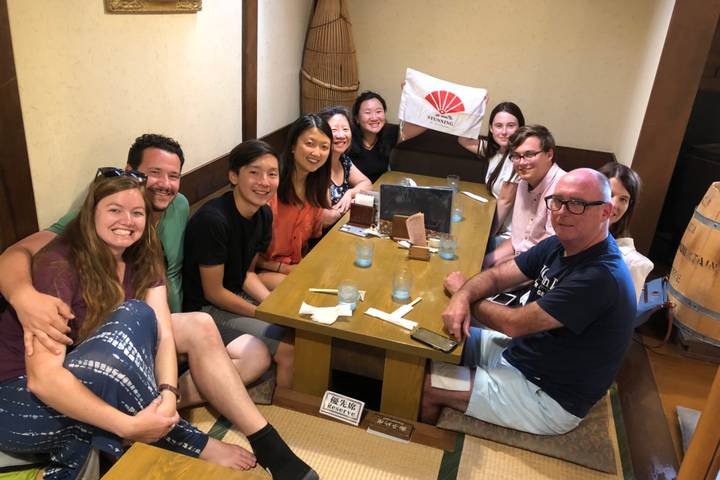
- A group tour, not a private trip: The usual group size is 10 to 30. The word private in the tour name should not be taken to mean you’ll have a vehicle and guide just for your party.
A fast-moving route from Osaka to Tokyo
This is a guided introduction to Japan, not a slow stay in any one place. Seven nights are split between Osaka, Nagoya, the Nagano or Yamanashi area, and Tokyo. Nara and Kyoto are visited along the way, rather than serving as overnight bases.
The advertised starting price is from $1,799. That includes the seven hotel nights, daily breakfast, an English-speaking guide, coach transportation between cities and listed attractions, and admission to included sights. It does not include international flights or airport transfers. Check the price for your dates and room type before booking, since the displayed starting price is not necessarily the price for every departure.
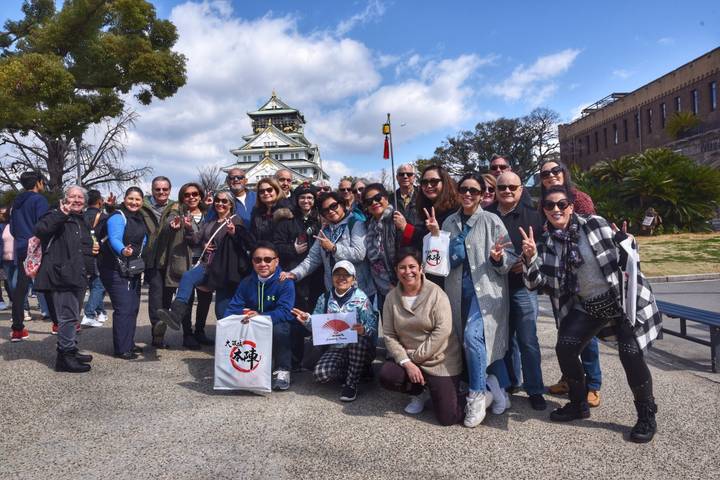
The group size matters. With up to 30 people, a guide can make the route easier to follow, but it also takes time to gather everyone and move between stops. Past trips have been led by guides named Steve, Kentaro, Trend, Grace, Cindy and others. Names are not guaranteed, and the experience can depend heavily on how clearly your particular guide communicates and manages the group.
A few more options to weigh up in Japan
- Universal Studios Japan Studio Pass
★ 4.8 · 89,883 reviews - Universal Studios Japan Express Pass
★ 4.7 · 53,138 reviews - Osaka Amazing Pass
★ 4.7 · 21,697 reviews
Day 1: arrive at Kansai Airport and find your own way in
The tour begins at Kansai International Airport, and the first night is usually at Star Gate Hotel Kansai Airport or a similar hotel. The hotel is described as one train stop from the airport, near Rinku-Town Station. You’re responsible for getting there: airport transportation is not included.
That’s a practical first-night arrangement if you’re arriving tired or late, though it is not the same as a meet-and-greet transfer. You receive directions before departure, and the guide can be contacted through WhatsApp for arrival-day emergencies. Japanese hotel check-in is after 3 pm, so plan for a wait if you arrive earlier.
Book flights as an open-jaw journey if possible: into KIX in Osaka and out of Tokyo, either Haneda or Narita. The final hotel and airport route should be checked against your flight. The information provided names Haneda as the tour endpoint but also says the guide will advise on either airport.
Day 2: Nara’s Buddha hall, deer and shrine
The first major outing is a half-day visit to Nara. At Todaiji Temple, the enormous wooden hall houses a Buddha statue about 15 metres tall. The temple was built more than 1,200 years ago and is one of the most memorable ways to encounter Japan’s early Buddhist architecture.
Nara Park adds a lighter, distinctly local note. Deer roam freely, and you can buy deer senbei, or crackers, for about 150 yen a pack. The deer may bow when offered food, but keep a firm hold of the crackers: a hungry animal can be more focused on lunch than manners.
You’ll also visit Kasuga Taisha, a major shrine associated with the protection of the old capital and the powerful Fujiwara family. Lunch is on your own, then the coach returns to Osaka. This is a good day for first-time visitors because it combines a major temple, a shrine and an easy-to-understand encounter with the deer. The trade-off is that you have only part of the day in Nara.
Day 3: free Osaka time or a long Hiroshima add-on
The standard tour leaves this day open in Osaka. That gives you a welcome chance to choose your own pace after the first two sightseeing days. Breakfast is included, but lunch and dinner are not. You’ll need to decide how to spend the day and arrange any local transport yourself.
The alternative is a full-day Hiroshima excursion by Shinkansen, priced at 54,000 yen per person, paid separately. It includes hotel pickup and transport to Shin-Osaka Station, the bullet train to Hiroshima, a visit to Miyajima Island and Itsukushima Shrine, the Atomic Bomb Dome, Peace Memorial Park, and the return train. The scheduled sightseeing window is tight, with the day running from an 8:30 am pickup to an evening return.
This is a substantial extra, not a small add-on. If Hiroshima is a priority, the convenience of having the train and transfers arranged may justify the cost. If you prefer a slower trip, keep the free Osaka day. The optional excursion is not included in the base price, despite Hiroshima appearing among the tour highlights.
A completely different kind of day out:
- Tokyo Disney Resort – Tokyo Disneyland & Tokyo DisneySea Park Tickets
★ 4.8 · 99,488 reviews - SHIBUYA SKY Ticket
★ 4.7 · 46,509 reviews - Mt. Fuji Instagram-Worthy Spots Day Tour: Ladder Town, Oshino Hakkai, Lake Kawaguchi, Lawson Convenience Store (Departing from Tokyo Station or Shinjuku Station)
★ 4.8 · 35,467 reviews - JR Whole Japan Rail Pass
★ 4.8 · 29,150 reviews
Day 4: Kyoto’s torii gates, Golden Pavilion and bamboo
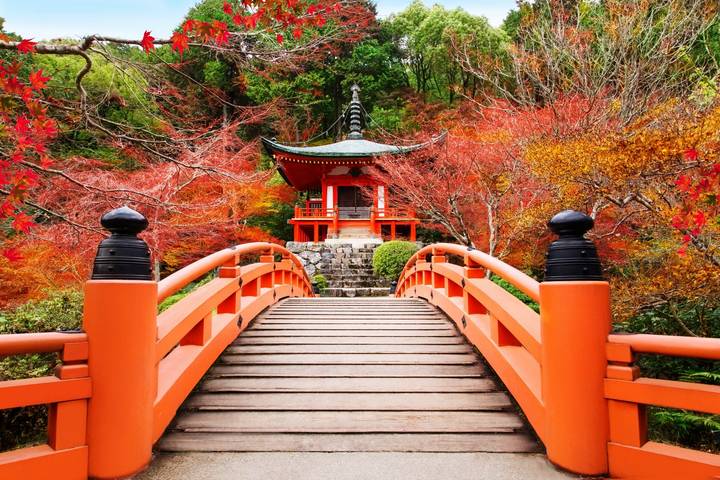
The route heads to Kyoto for Fushimi Inari Shrine, where thousands of vermilion torii gates line paths behind the main shrine buildings. The gates are the signature sight, but the walking route continues uphill, so your time and energy determine how far you explore.
A half-day tour then covers Kinkaku-ji, the Golden Pavilion, followed by Arashiyama Bamboo Grove and Togetsu Bridge. Kinkaku-ji’s gold-leaf-covered upper floors make a striking contrast with the forested setting. Arashiyama is among Kyoto’s best-known sights, and it can feel crowded, especially when the tour has to keep to a fixed timetable.
After the Kyoto visits, you return to Kyoto Station and continue to Nagoya for the night. The day packs several major attractions into a short span. You’ll see a lot, but don’t expect an unhurried Kyoto visit or a full evening in the city.
Day 5: Toyota’s industrial story and an old post town
The next day shifts from temples to technology at the Toyota Commemorative Museum of Industry and Technology. It traces the Toyota family’s development from a small village enterprise to a major global company. This stop gives the tour a useful modern counterpoint: Japan’s story is not only shrines and historic streets.
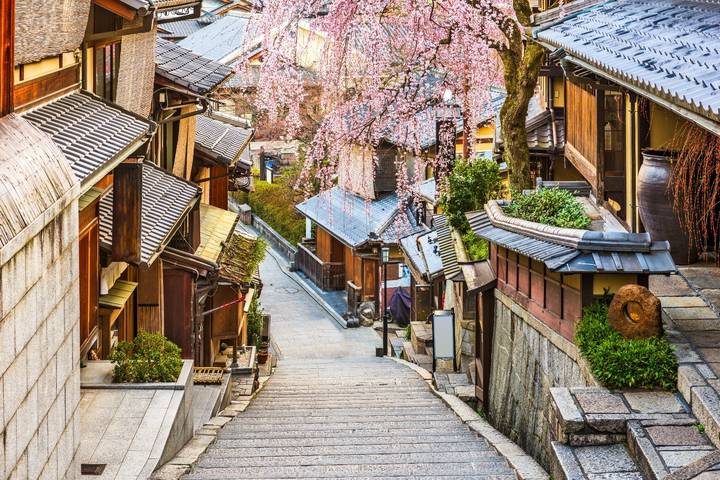
After lunch, you visit Naraijuku, a former post town with streets that evoke the Edo period, then Tsumagoi Village. These smaller stops offer a change of scale after Kyoto and Osaka. The tour continues to a hotel in the Nagano or Yamanashi area.
The daily distances can add up. The exact overnight location may vary, and the itinerary may involve more coach time than the map suggests. If you value lingering over shopfronts, taking photographs or stopping for a relaxed meal, you may find the visit times short.
Day 6: Lake Yamanaka and Mt. Fuji’s 5th Station
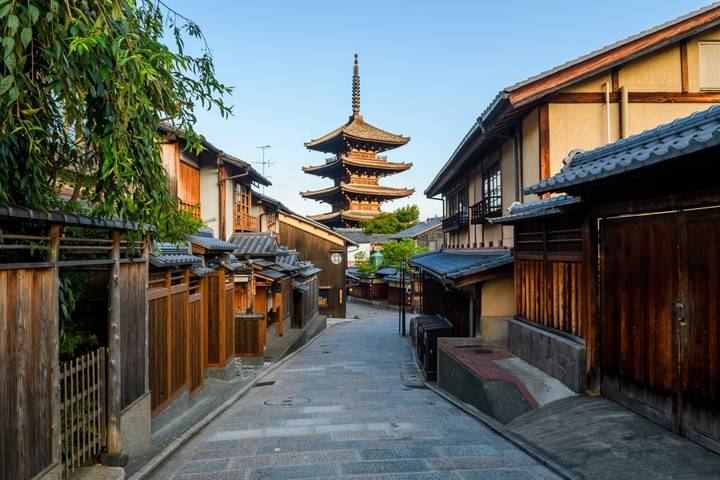
Lake Yamanaka is the largest of the Fuji Five Lakes and is known for views of Mt. Fuji and its swans. The included boat ride gives you a different vantage point from the roadside stops, though the mountain itself is weather dependent.
If conditions allow, the coach continues to Mt. Fuji’s 5th Station, about 2,300 metres above sea level. There are wide views from this high point, and Komitake Shrine is behind the shops. The station is not guaranteed: the visit depends on weather and access conditions, so keep your expectations flexible.
This is likely to be a highlight if you want a taste of mountain scenery without a climb. You travel by coach rather than hiking up Fuji. Afterward, the tour continues to its Tokyo-area hotel.
Day 7: Tokyo shrines, shopping streets and a night in Shinjuku
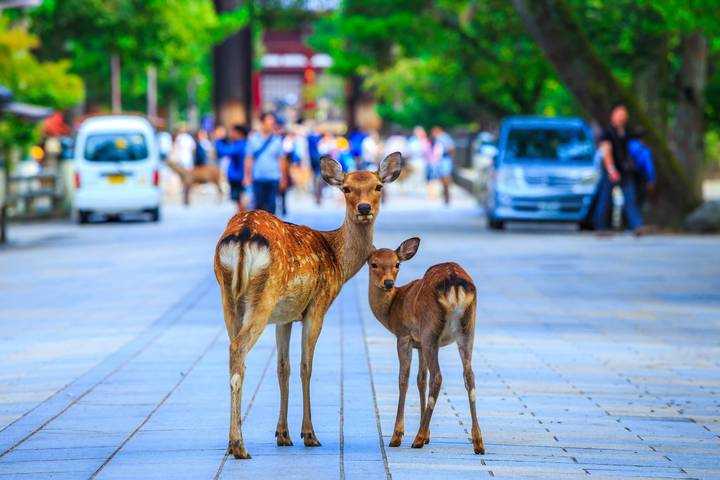
The guided Tokyo day begins at Meiji Shrine, set apart from the city’s busy streets. You then visit Omote Sando and Takeshita Street, two very different shopping areas, followed by a traditional Japanese rock garden. Tokyo Tower is included, with admission covered.
The schedule sets aside time in Shinjuku Kabukicho in the early evening, where you can explore the area’s nightlife before returning to the hotel. The day moves quickly across several neighborhoods, so it’s a sampler rather than a deep exploration of Tokyo. If you want more time for museums, shopping or a particular district, consider adding nights after the tour.
The Tokyo hotel is listed as Far East Village Hotel Ariake or a similar property. Rooms in Japanese city hotels can be compact, and one-person bookings require a single room selection. If you travel with large suitcases, check the room details and luggage arrangements in advance.
Day 8: breakfast, then onward to the airport
After breakfast, the guide gives you information on the best route to Haneda or Narita. Your flight and airport transfer are not included, so allow enough time for the journey and airport formalities.
If you plan to stay in Tokyo after the tour, extra hotel nights need to be arranged separately. The operator says its individual hotel rates may not be the best value, so compare direct hotel rates and booking sites.
Hotels, meals and what the price really covers
The accommodation is classed as three-star, with examples including Star Gate Hotel Kansai, Dotonbori Crystal Exe Hotel, Kuretake Inn Premium Nagoya Nayabashi, Iloha Grand Hotel Matsumoto Ekimae and Far East Village Hotel Ariake. The final properties can differ, and the remaining hotel names are usually confirmed about a month before departure. That delay is worth noting if you hope to book extra nights near the same hotel.
Breakfast is included each day. Reviews of the food category average 4.1 out of 5, and experiences with breakfast vary by hotel. Lunches and dinners are generally not included, giving you freedom to choose but adding both cost and daily decision-making. Vegetarian, vegan, halal and kosher options can be requested from the operator.
At the starting price, the main value is having the long intercity transfers, guide and several major admissions arranged together. You avoid building a complex route from scratch, especially across Nara, Kyoto, the mountain region and Tokyo. But you are paying for a busy coach itinerary, not extended stays or a private guide. A single-room supplement is listed at $468 in one price inquiry; confirm the current amount for your dates.
What the trip does well, and what to weigh
The strongest parts are the broad route, the included transportation and the guide’s potential to add context. Many tour experiences are praised for guides who explain Japanese history and culture, help with practical questions and keep the group moving. Names such as Steve, Kentaro and Trend have been singled out, but a particular guide cannot be promised.
There is also a real spread of experiences: Nara’s temple and deer, Kyoto’s famous sights, a historic post town, a technology museum, Fuji-area scenery and Tokyo’s city life. For a first visit, that variety is useful. You get a first impression of several sides of Japan without having to coordinate every train and hotel yourself.
The main concern is the pace. Some days involve long drives followed by short visits, and the schedule may change to manage traffic. Reports on bus comfort and hotel quality vary, too. Most accommodation feedback is positive, but a few people have found rooms small or properties below expectations. Treat the listed hotels as examples, not a promise of exact room size or location.
Tips are described as optional. The information gives differing suggested amounts, including $150 per person total in one place and $7 to $10 per person per day elsewhere. Since the figures do not match, ask the operator for current guidance before departure. You should not feel that a suggested gratuity is compulsory.
Who should book this Osaka-to-Tokyo tour?
I’d consider this trip if you’re visiting Japan for the first time, have about a week, and want transport and sightseeing handled for you. It can work well for families and solo travelers who are comfortable joining a group. The tour is rated low intensity, but that does not mean every day is leisurely: there is walking at temples and shrines, early starts and substantial time on the coach.
I’d look elsewhere if you want several nights in Kyoto, long free afternoons, or a genuinely private trip. The group format and tight schedule are central to the value. Book it for the range of places and reduced planning, not for deep exploration at every stop. If that trade-off sounds right, the route offers a practical first look at Japan from Osaka to Tokyo.
FAQ
Is this a private tour?
No. It is a group tour, usually with 10 to 30 people. The tour name includes the word private, but the activity details describe a group departure.
How many days and nights does the trip include?
The tour lasts eight days and includes seven hotel nights.
Where does the tour start and end?
It starts at Kansai International Airport, or KIX, in Osaka, and ends in Tokyo. The departure information mentions Haneda and says the guide can advise on travel to Haneda or Narita.
Are airport transfers included?
No. Airport transportation is not included. The first hotel is usually one train stop from Kansai Airport, and directions are sent before the trip.
Which meals are included?
Daily breakfast is included. Lunch and dinner are not generally included. Vegetarian, vegan, halal and kosher food options can be requested from the operator.
Is the Hiroshima trip included in the tour price?
No. The Hiroshima excursion by Shinkansen is optional and listed at 54,000 yen per person. It includes visits to Miyajima and Itsukushima Shrine, the Atomic Bomb Dome and Peace Memorial Park.
Is the Mt. Fuji 5th Station visit guaranteed?
No. The visit is weather permitting. The itinerary also includes a boat ride on Lake Yamanaka.
What kind of hotels are used?
The tour uses three-star hotels or similar properties. Exact hotels can vary, and the remaining confirmed hotel details are usually shared about a month before departure.
Are flights included?
No. The package does not include flights. The suggested flight plan is to arrive at KIX in Osaka and depart from an airport in Tokyo.
Is a single-room supplement required for solo travelers?
A solo traveler should select a single room. One inquiry listed a single supplement of $468, but you should confirm the current amount for your departure.
Just added in Japan
- Mt. Fuji & Hakone Cherry Blossom private One Day Tour★ 4.5 · 35 reviews
- Fish Market & Tokyo Skyline Private Walking Tour★ 5.0 · 14 reviews
- 25-Min Downtown Helicopter Tour : Tokyo Skytree and Tokyo Tower★ 5.0 · 19 reviews
- Private Tour with a Local Guide – Learn about daily life in Japan★ 5.0 · 22 reviews
- Tokyo: 3-Hour Bike/E-Bike Tour of the City’s Highlights★ 5.0 · 209 reviews
- Official Japan Go-Kart Through Tokyo Bay / Ginza (IDP Required)★ 4.5 · 71 reviews
- 30-Min Tokyo Central Private Heli Tour– Asakusa, Skytree, Shibuya★ 5.0 · 13 reviews
- Tokyo 2-Hour Genuine Samurai Experience: Kendo in Japan★ 5.0 · 112 reviews
Multi-Day Tours That Visit Nagoya, compared.
9D Splendid Japan-Private 3 Star Hotels-Osaka to Tokyo by Stunning Tours
Read our review →

Essential Japan GO by Europamundo – 7-Day Tokyo to Osaka Tour
Read our review →
Wonders of Japan End Osaka GO by Europamundo – 12-Day Tour
Read our review →
Wonders of Japan End Osaka (including Fukuyama) 12-Day Tour by Europamundo
Read our review →
Wonders of Japan End Osaka by Europamundo – 12-Day Tour
Read our review →
9D Splendid Japan Deluxe-Private 4 Star Hotels by Stunning Tours
Read our review →