Reviewed · MULTI-DAY TOURS THAT VISIT KAWAGUCHIKO
9 Day Best of Japan Cherry Blossom Tour 2027 by UME Travel – Tokyo to Osaka: Itinerary & Reviews
Cherry blossoms set the pace on this nine-day trip from Tokyo to Osaka. You get city parks, temple gardens and a lakeside view of Mount Fuji, plus a Shinkansen ride and time to explore on your own. I like that the route links Japan’s big-name sights with smaller moments, such as tea in Kyoto and a lakeshore walk at Kawaguchi.
I also like the small-group limit of 16, which can make busy stops and coach travel easier to manage. A March 2025 departure had eight people, and guide Anusha arranged sushi and rice balls for a park picnic. One consideration: sakura timing is never guaranteed, and the busiest sights can be crowded even when the blossoms are right on schedule.
In This Review
- Key points
- A spring route from Tokyo to Osaka
- Tokyo parks, temples and crossing lights
- Fuji views, with weather in charge
- The Shinkansen and an open afternoon in Kyoto
- Kyoto’s old streets, tea and evening Gion
- Golden Pavilion, castle floors and Arashiyama
- Fushimi Inari, Nara’s Buddha and free-roaming deer
- Osaka Castle, prints and street food
- What the $4,708 price includes, and what it does not
- Guide quality and the small-group experience
- Is this Japan cherry blossom tour right for you?
- FAQ
- Does the tour include airport transfers?
- Which cities and destinations are included?
- How many nights are included?
- Are meals included?
- How large is the group?
- Is the Mount Fuji view guaranteed?
- What extra costs should I plan for?
Key points
- Eight hotel nights are split between Tokyo, Kyoto and Osaka, with breakfast each morning.
- The route covers six destinations: Tokyo, Mount Fuji, Lake Kawaguchi, Kyoto, Nara and Osaka.
- Cherry blossom viewing is the theme, not a guarantee: weather and bloom dates vary by region and year.
- A guide and transport are included for the scheduled tours, along with the Tokyo-to-Kyoto Shinkansen.
- Most lunches and dinners are your choice, giving you freedom to sample local food but requiring some planning.
- The listed starting price is $4,708, with international flights, airport transfers and a single-room supplement extra.
A spring route from Tokyo to Osaka
The itinerary gives you a fast, well-organized introduction to Japan’s central sights. You begin in Tokyo, spend three nights in Kyoto, then finish with two nights in Osaka. Nara and the Fuji area are visited along the way, without adding hotel changes.
That structure is useful if you want to see several regions without arranging trains, entrance tickets and daily transport yourself. It also means full days and a steady pace. The tour is described as low intensity, but expect regular walking, stairs at some temples, and time on and off a coach.
The tour is fully guided in English during scheduled activities. Group size ranges from one to 16, though a very small group is not guaranteed. A past group of eight suggests the format can feel personal, but you should book for the route and support rather than assume a particular group size.
A few more options to weigh up in Tokyo
- Tokyo Disney Resort – Tokyo Disneyland & Tokyo DisneySea Park Tickets
★ 4.8 · 99,488 reviews - SHIBUYA SKY Ticket
★ 4.7 · 46,509 reviews - JR Whole Japan Rail Pass
★ 4.8 · 29,150 reviews
Tokyo parks, temples and crossing lights
Day one is for arrival and recovery. You make your own way to the hotel, with optional paid airport pickup available if arranged in advance. The group activities start the next morning, so plan to arrive on the first day rather than count on joining midway.
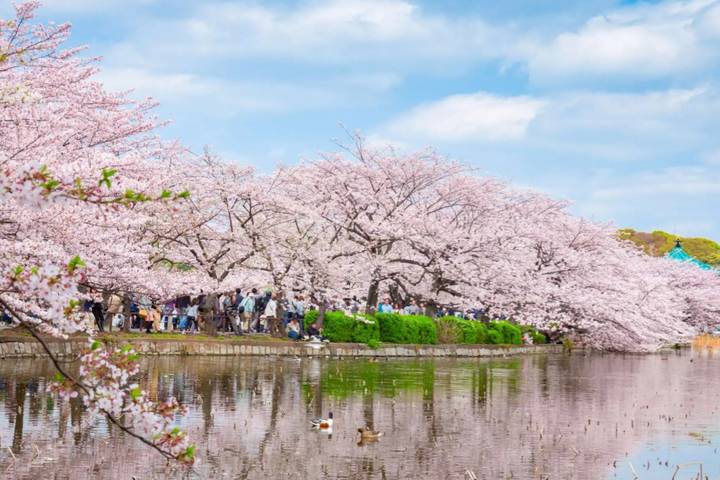
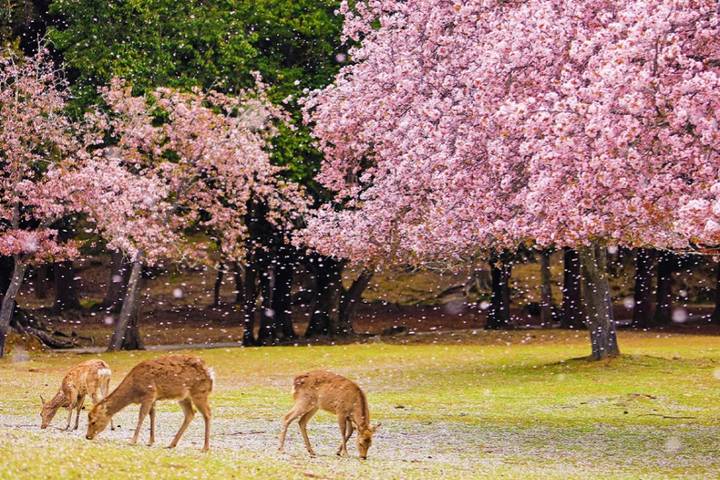
Day two puts Tokyo’s contrasts in quick succession. Ueno Park is the first stop, with more than 1,300 cherry trees and museums you can visit on your own time and budget. During bloom, it is a classic place for hanami, the Japanese custom of enjoying blossoms in the park. It can also be crowded, so keep expectations practical: this is a popular city park, not a quiet countryside stroll.
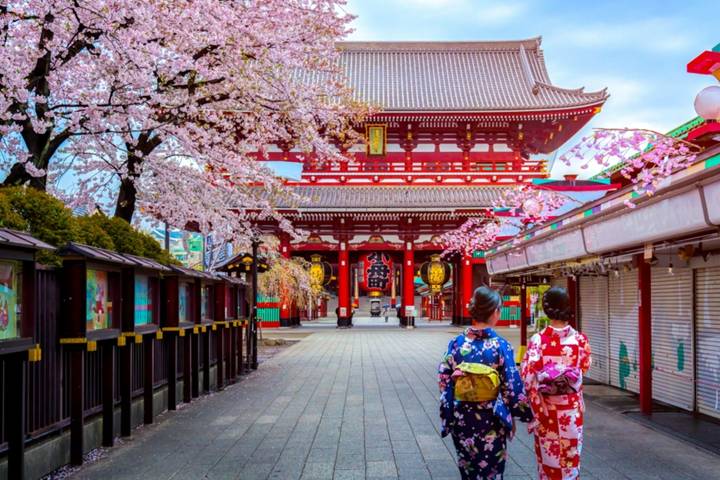
At Senso-ji, the Thunder Gate and its giant red lantern lead to Nakamise shopping street and the temple’s main hall. The nearby shops make this a good place to try a snack or browse souvenirs, though the flow of people can be dense. The guide adds context, while the route gives you a straightforward introduction to a major Buddhist site.
Meiji Jingu offers a different mood, with a broad wooded approach and a large wooden torii gate. The shrine grounds provide a welcome pause from city traffic. The day ends at Shibuya Crossing, where the sheer number of people moving through the intersection is part of the spectacle. If you want a quieter look, the Hachiko statue is just outside Shibuya Station.
Fuji views, with weather in charge
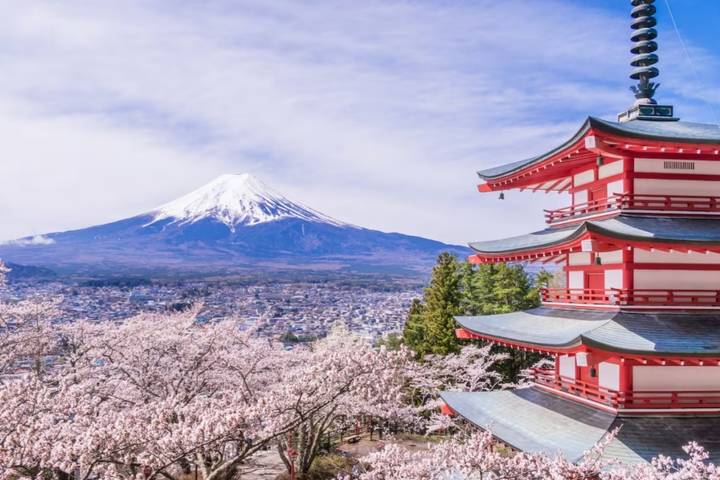
Day three is a long excursion from Tokyo to Arakurayama Sengen Park and Lake Kawaguchi. The famous view from the observation area places Mount Fuji behind a five-story pagoda. Reaching the shrine and lookout takes a walk of about 20 minutes, followed by stairs to the viewpoint. Take your time, especially if you are not used to uphill walking.
The second stop is Lake Kawaguchi, where a boat cruise is included. On a clear day, the water can reflect Fuji; on a cloudy or rainy day, the mountain may disappear entirely. That uncertainty is worth accepting before you book. The excursion is still a chance to see the Fuji region, but no tour can promise a clear view.
You return to Tokyo after the lake visit, making this a long day of coach travel and sightseeing. The optional lakeshore stroll or nearby galleries and museums may depend on the day’s timing. If you value open time, ask how much is typically available on your departure.
The Shinkansen and an open afternoon in Kyoto
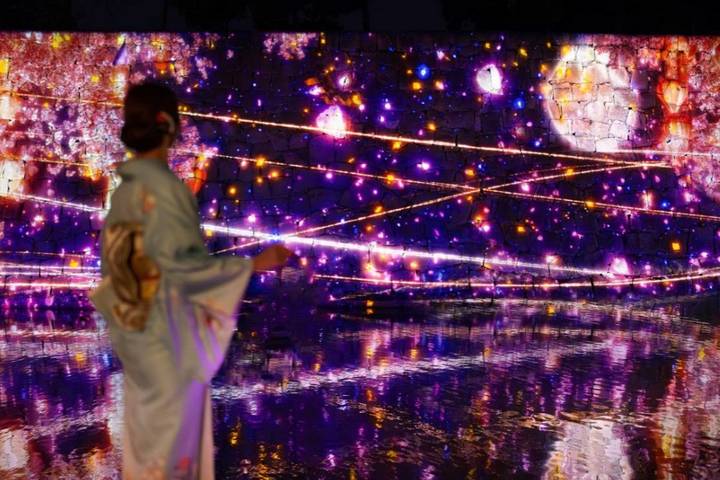
On day four, you travel from Tokyo to Kyoto by Shinkansen. The bullet train is a highlight in its own right, and using it for the intercity leg saves you from arranging tickets and navigating the station alone. Breakfast is included, but the day’s other meals are not.
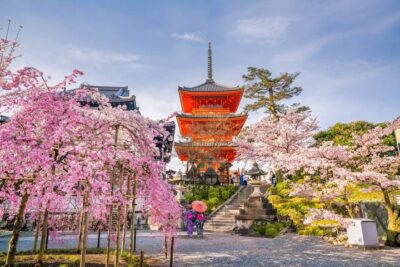
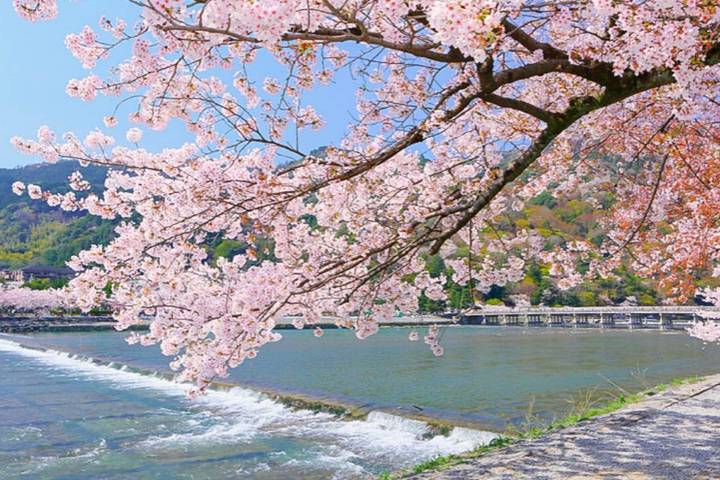
The schedule leaves time to explore Kyoto independently. The Philosopher’s Path is an approximately two-kilometer walk beside a stream, lined with cherry trees. It is a natural choice in blossom season, though you should check how much free time remains after arrival and hotel check-in. The Kamo River is another easy option, with cafes and restaurants along its banks.
This unstructured afternoon is valuable after several guided days. You can stroll, eat, or simply rest instead of treating every hour as another scheduled stop.
A completely different kind of day out:
- Mt Fuji and Hakone 1-Day Bus Tour Return by Bullet Train
★ 5.0 · 26,383 reviews - TOKYO SKYTREE® Ticket
★ 4.7 · 25,136 reviews - teamLab Borderless Tickets: MORI Building DIGITAL ART MUSEUM
★ 4.7 · 24,126 reviews - teamLab Planets TOKYO Ticket
★ 4.7 · 21,663 reviews
Kyoto’s old streets, tea and evening Gion
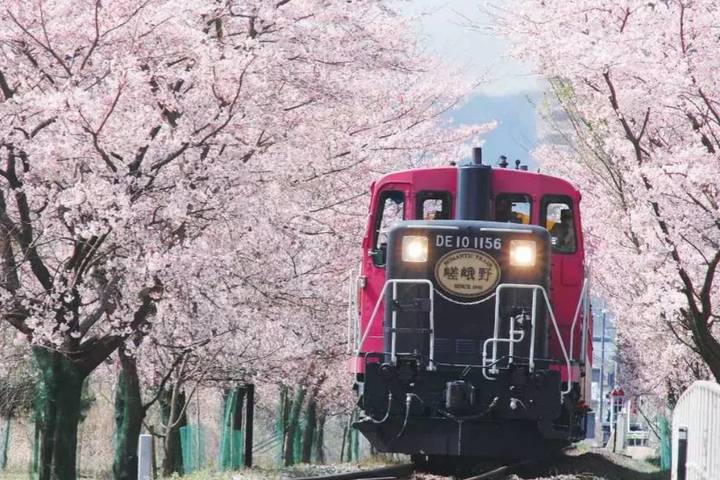
Day five brings Kiyomizudera, founded in 778 and known for its broad wooden stage. The temple’s hillside setting and spring water are part of its appeal, and the tour includes admission. A complimentary sakura-flavored ice cream adds a seasonal treat, though it is a small extra rather than a reason to choose the trip.
From there, you walk through Ninenzaka and Sannenzaka, sloping lanes with traditional shopfronts, tea houses and snack stops. These streets are atmospheric, but also popular and busy. You will have more fun if you leave room to browse rather than try to hurry through them.
Maruyama Park is one of Kyoto’s best-known blossom spots, with a celebrated weeping cherry tree. The tour then visits Gion, where wooden townhouses and lantern-lit streets give a sense of older Kyoto. A traditional tea ceremony closes the day. Keep in mind that seeing a geisha or maiko in Gion is possible, not guaranteed, and the district is a living neighborhood rather than a performance space.
Golden Pavilion, castle floors and Arashiyama
Day six starts at Kinkakuji, the Golden Pavilion. Its gold-covered upper floors reflect in the pond, creating one of Kyoto’s most recognizable views. The temple grounds follow a set route, so this is more a focused visit than a long, leisurely wander.
Nijo Castle adds a different kind of history. You see Edo-period rooms and defensive features, including moats and the famous nightingale floors, which creak underfoot. The Ninomaru Garden is worth attention too, if the schedule allows. As with other major sights, crowds can shape how long you linger.
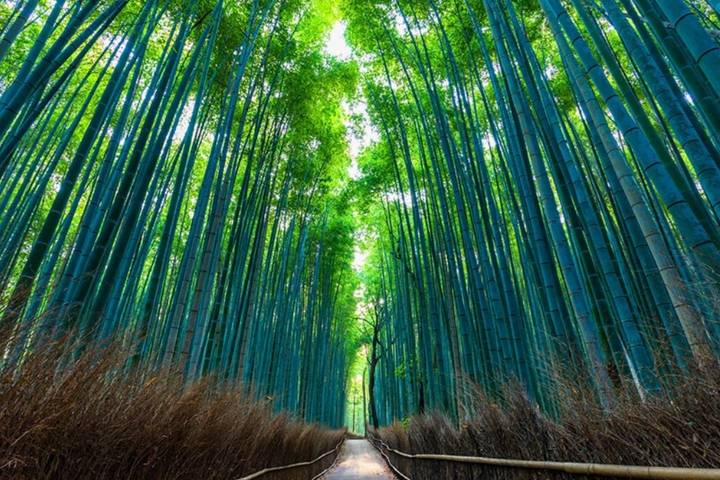
In Arashiyama, the Sagano Scenic Railway follows the Hozugawa Canyon, with forest and mountain views that are especially appealing in spring. The day also includes Tenryuji Temple, the nearby bamboo grove and Togetsukyo Bridge. This is a lot for one day, so enjoy the main sights without expecting a long private pause at each one. The combination of train, temple garden, bamboo and river scenery gives Kyoto’s western edge a different feel from the older streets around Gion.
Fushimi Inari, Nara’s Buddha and free-roaming deer
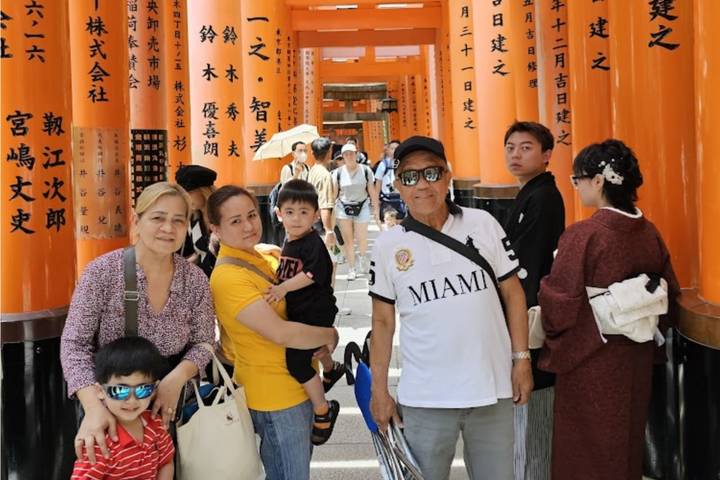
Day seven begins at Fushimi Inari Taisha, where vermilion torii gates line the path up Mount Inari. You can walk a short section or continue farther. Reaching the Yotsutsuji intersection takes about 30 to 40 minutes uphill, while a round trip to the summit takes about two to three hours. The group schedule is unlikely to allow the full hike, so ask your guide how much walking time is planned.
A bus ride of about 90 minutes brings you to Nara. Todaiji Temple’s Great Buddha Hall houses a 16-meter bronze Buddha and is an impressive stop even if you have seen many Japanese temples. Nearby Nara Park is known for deer that roam freely. Deer crackers are available, but follow the guide’s advice and handle the animals calmly; they are accustomed to people, not tame pets.
Kasuga Taisha sits amid greenery and is known for its vermilion structures and rows of lanterns. Afterward, the group continues about an hour by bus to Osaka. This is a full day, but it efficiently connects two major historic sites with a change of scenery.
Osaka Castle, prints and street food
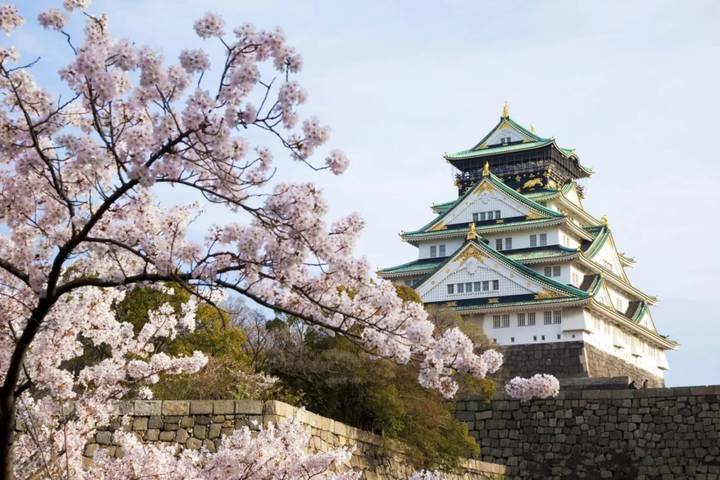
Day eight opens at Osaka Castle Park. The keep is the visual centerpiece, while moats, gates and stone walls help explain its defensive design. Nishinomaru Garden has more than 600 cherry trees, making it one of the tour’s strongest blossom stops if the timing is right. The schedule includes the park and castle visit, but check whether access to every interior area is included in your departure arrangements.
At the Kamigata Ukiyoe Museum, you see woodblock prints associated with Osaka and Kyoto, often depicting kabuki actors. It is a compact cultural stop between the castle grounds and the city’s shopping and food districts.
Shinsaibashi-suji and Dotonbori give you time to shop and eat. Osaka is known for takoyaki and okonomiyaki, among other local dishes, but meals beyond breakfast are not included. That is a plus if you like choosing your own food, and a budgeting point if you prefer a tour with most meals covered. Namba Yasaka Shrine, with its enormous lion-head structure, rounds out the day. Shinsekai and Tsutenkaku Tower are suggested options for free time, not guaranteed scheduled visits.
What the $4,708 price includes, and what it does not
The listed price starts at $4,708, based on the cheapest room option. In return, you get eight nights of hotel accommodation, eight breakfasts, an English-speaking guide for scheduled touring, admission to listed attractions, the Shinkansen from Tokyo to Kyoto, and the planned coach and other transport. Hotels are described as centrally located, with convenient transport and nearby restaurants.
The named hotels are Shibuya Excel Hotel Tokyu in Tokyo, Kyoto Tokyu Hotel in Kyoto, and Osaka Excel Hotel Tokyu in Osaka. The tour describes its usual accommodation as four-star, while Kyoto Tokyu Hotel is listed as five-star. Hotel substitutions of the same standard may be made if a named property is unavailable.
The price does not include international flights, airport transfers, travel insurance, most lunches and dinners, or optional activities. Solo travelers should also account for the stated single supplement of $2,166, which may vary by departure date. The practical value is strongest if you would otherwise pay separately for centrally located hotels, guided visits, admissions and intercity travel. It is less compelling if you prefer to travel slowly, choose every hotel yourself or spend several days in one city.
One useful caution concerns meals: dietary needs can be difficult to meet in Japan, especially vegan diets. The operator asks people with strict requirements to contact them in advance and be prepared to arrange some meals themselves.
Guide quality and the small-group experience
A March 2025 departure had eight people, and guide Anusha made the group feel social by organizing sushi and rice balls for a park meal. That is the sort of small practical touch that can make a cherry blossom outing feel less like a checklist. Phoebe is also named as a trip contact who helped with blossom planning.
There is a useful counterpoint: one participant on a later March departure wanted more explanation from local guides, particularly as a first-time visitor to Japan. If cultural detail matters a lot to you, ask the operator how much commentary comes from the lead guide at each site and whether local specialists are used. The tour’s top category scores for itinerary, transport, guide, accommodation and food are encouraging, but the trip itself has only two published ratings, so treat those numbers as a small sample. UME Travel’s operator rating is 4.8 out of 5 across 224 reviews.
Is this Japan cherry blossom tour right for you?
Book this tour if you want a guided first visit that connects Tokyo, Fuji, Kyoto, Nara and Osaka without making you handle the transport details. The route’s strongest points are its range, the included Shinkansen, the central hotel plan and the chance to see sakura in several settings. A group capped at 16 can also suit solo visitors and people who enjoy company without joining a large coach party.
Think twice if you need guaranteed peak bloom, extensive free time, all meals included or a very slow pace. March and April are the tour’s departure months, but flowering shifts with weather and region. For a better chance of blossoms, choose dates with that uncertainty in mind and avoid treating any single park as a sure bet. If you are comfortable with busy sights and full days, this is a practical way to sample springtime Japan.
FAQ
Does the tour include airport transfers?
No. You make your own way to the Tokyo hotel and from the Osaka hotel to the airport. Private pickup and drop-off can be arranged for an additional cost.
Which cities and destinations are included?
The route starts in Tokyo and ends in Osaka, with visits to Mount Fuji and Lake Kawaguchi, Kyoto and Nara along the way.
How many nights are included?
The tour includes three nights in Tokyo, three in Kyoto and two in Osaka, for eight nights total.
Are meals included?
Eight breakfasts are included. Lunches and dinners are generally not included, and strict dietary needs may require you to arrange some meals yourself.
How large is the group?
The group size is listed as one to 16 people. A specific departure may be smaller, but the minimum published group size does not guarantee a private tour.
Is the Mount Fuji view guaranteed?
No. Cloudy or rainy weather can hide Mount Fuji. The tour visits Arakurayama Sengen Park and Lake Kawaguchi, both known for views of the mountain, but visibility depends on conditions.
What extra costs should I plan for?
International flights, airport transfers, travel insurance, most lunches and dinners, optional activities and any single-room supplement are extra. The listed starting price is from $4,708, and the single supplement provided is $2,166, subject to departure-date pricing.
Just added in Tokyo
- Mt. Fuji & Hakone Cherry Blossom private One Day Tour★ 4.5 · 35 reviews
- Fish Market & Tokyo Skyline Private Walking Tour★ 5.0 · 14 reviews
- 25-Min Downtown Helicopter Tour : Tokyo Skytree and Tokyo Tower★ 5.0 · 19 reviews
- Private Tour with a Local Guide – Learn about daily life in Japan★ 5.0 · 22 reviews
- Tokyo: 3-Hour Bike/E-Bike Tour of the City’s Highlights★ 5.0 · 209 reviews
- 30-Min Tokyo Central Private Heli Tour– Asakusa, Skytree, Shibuya★ 5.0 · 13 reviews
- Tokyo 2-Hour Genuine Samurai Experience: Kendo in Japan★ 5.0 · 112 reviews
- Official Japan Go-Kart Through Tokyo Bay / Ginza (IDP Required)★ 4.5 · 71 reviews
Multi-Day Tours That Visit Kawaguchiko, compared.



Essential Japan GO by Europamundo – 7-Day Tokyo to Osaka Tour
Read our review →
Visions of Japan with Hiroshima & Osaka 15-Day Tour by Globus
Read our review →
14 Days Japan Panoramic (Private 3 Star Hotels) by Stunning Tours
Read our review →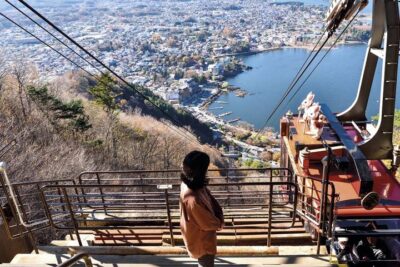
Wonders of Japan End Osaka GO by Europamundo – 12-Day Tour
Read our review →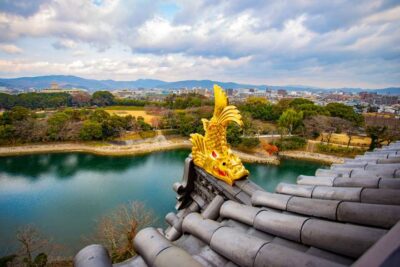
Wonders of Japan End Osaka (including Fukuyama) 12-Day Tour by Europamundo
Read our review →