Reviewed · TOKYO TOURS
Cook Favorite Japanese Dishes with a Tokyo Mom
A Tokyo kitchen can teach more than sushi. This private cooking class brings you into the working world of Japanese home meals, where you make dashi from scratch, prepare seasonal vegetables, and cook dishes a Japanese family might actually eat. I like the personal setting and the choice of a main dish, especially since you can make teriyaki chicken, miso-marinated fish, or gyoza.
I also like that host Aki teaches with pictures, short food stories, and clear steps for both beginners and experienced cooks. The main consideration is the price: at $120 per person for two and a half hours, this costs more than a casual restaurant meal, and you must make your own way to the Shinjuku meeting point.
In This Review
- Key details before you book
- Why this Tokyo cooking class feels personal
- Arriving at the Shinjuku meeting point
- Starting with dashi, the foundation of the meal
- Rolling norimaki or shaping an onigiri
- Choosing teriyaki chicken, Saikyo yaki, or gyoza
- Seasonal vegetables and miso soup
- What Aki’s teaching style adds
- Ingredients, tools, and what the $120 price covers
- Who will enjoy this class most
- Practical booking advice for Shinjuku
- Should you book Tokyo Mom’s Kitchen?
- FAQ
- Where does the cooking class take place?
- How long does the experience last?
- What dishes will I prepare?
- What main dish options are available?
- Is a vegetarian option available?
- Is transportation included?
- What is included in the price?
Key details before you book
- Make dashi from scratch: You learn the basic soup stock behind much of Japanese home cooking, without additives.
- Choose your main dish: Pick teriyaki chicken, Saikyo yaki fish, or pan-fried gyoza.
- Sushi is not your only option: The norimaki roll can be replaced with an onigiri rice ball.
- Cook in a real home setting: This is a private activity for your group, not a large demonstration class.
- Take the lesson home: Ingredients, kitchen tools, an apron, and a digital recipe sheet are included.
- Plan ahead: The class is often reserved about 37 days before the date, and vegetarian cooking is available by request.
Why this Tokyo cooking class feels personal
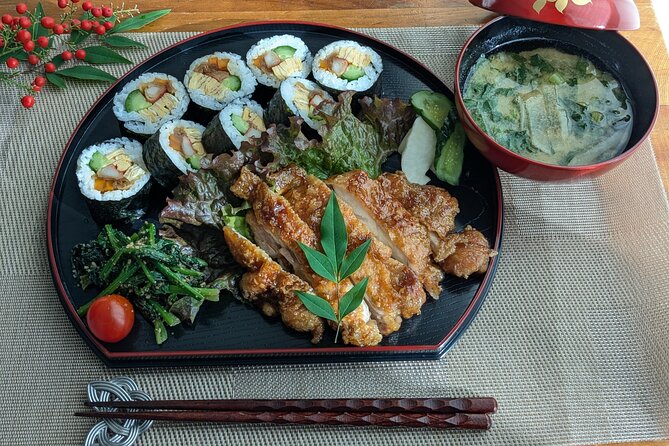
Many Japanese food classes focus on a single famous item, usually sushi. This one gives you a fuller picture of a family meal. You prepare a norimaki roll or onigiri, one main side dish, a seasonal vegetable dish, and miso soup. That combination matters because Japanese home cooking is built around balance, not one grand centerpiece.
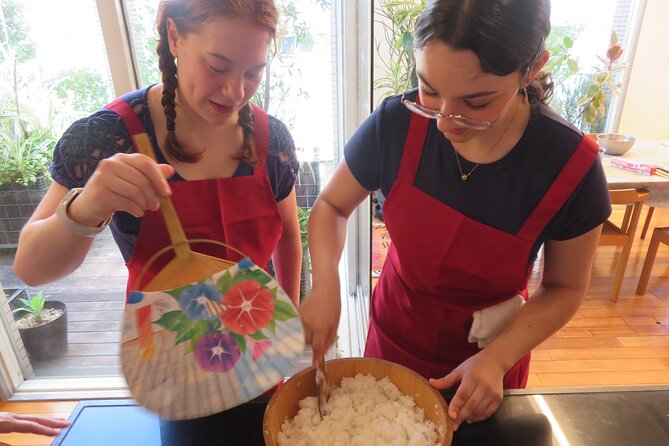
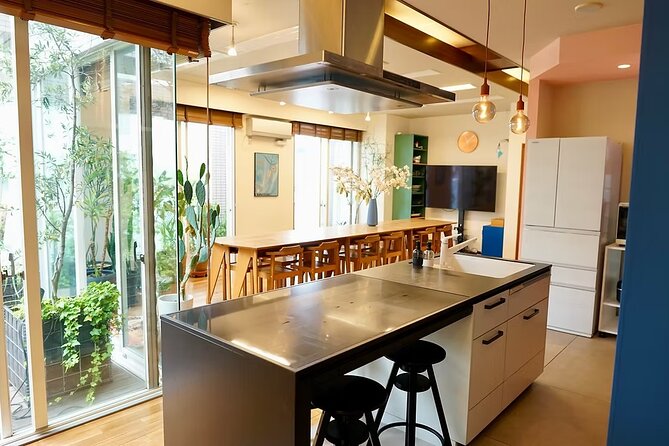
The class takes place with an English-speaking Japanese host in a cozy kitchen. The setting gives you a chance to ask questions as you cook, rather than simply watch a chef work at a distance. Since the activity is private, your group receives the host’s attention instead of sharing the lesson with a room full of strangers.
Aki’s teaching style earns special credit here. She uses pictures and brief background about the food, which helps when a technique or ingredient is unfamiliar. She has also worked comfortably with novices and more practiced home cooks. If one person in your group cooks often and another mainly watches water boil, that range should be manageable.
The personal touch does not mean the class is loose or vague. The dishes are made from scratch, and the lesson follows useful kitchen skills. You learn how dashi creates flavor, how a roll holds together, and how sauces, marinades, and vegetables fit into a Japanese meal.
A few more options to weigh up in Tokyo
- Tokyo Disney Resort – Tokyo Disneyland & Tokyo DisneySea Park Tickets
★ 4.8 · 99,488 reviews - SHIBUYA SKY Ticket
★ 4.7 · 46,509 reviews - JR Whole Japan Rail Pass
★ 4.8 · 29,150 reviews
Arriving at the Shinjuku meeting point
You meet at アイ・ディール株式会社, at 1-chōme-24-7 Shinjuku, Shinjuku City, Tokyo 160-0022. The activity is near public transportation, but private transportation is not included. You are responsible for reaching the venue directly, so allow time to find the address and arrive without rushing.
The class lasts about two hours and 30 minutes. That is long enough to cook several items, receive instruction, and eat what you prepare, but it is not an all-day food program. You should avoid scheduling a major attraction at the exact finish time, especially if you need to cross Tokyo afterward.
The class ends back at the meeting point. This simple arrangement helps with planning, since you do not need to figure out a second pickup location. Still, Tokyo addresses can be confusing, so use the full address rather than relying only on the broad Shinjuku label.
Starting with dashi, the foundation of the meal
The first major lesson is dashi, a Japanese soup stock made completely from scratch. This may sound less exciting than rolling sushi, but it is one of the most useful parts of the class.
Dashi gives miso soup and many Japanese dishes their gentle savory depth. Learning to make it without additives shows you how flavor is built before the more visible cooking begins. You are not simply following a recipe for one dish. You are learning a base that can support many meals at home.
This step also gives the class a cultural focus. Japanese cooking often depends on subtle balance: salty miso, sweet sauces, fresh vegetables, and a clean stock. Dashi helps explain why a simple bowl of soup can taste complete without heavy seasoning.
You should pay close attention here and keep notes in the digital recipe sheet. The stock is easy to overlook once the sushi and gyoza appear, but it may be the lesson you use most often after returning home.
Rolling norimaki or shaping an onigiri
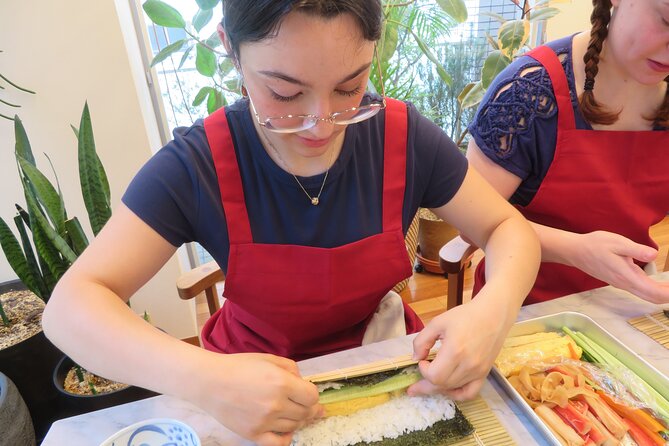
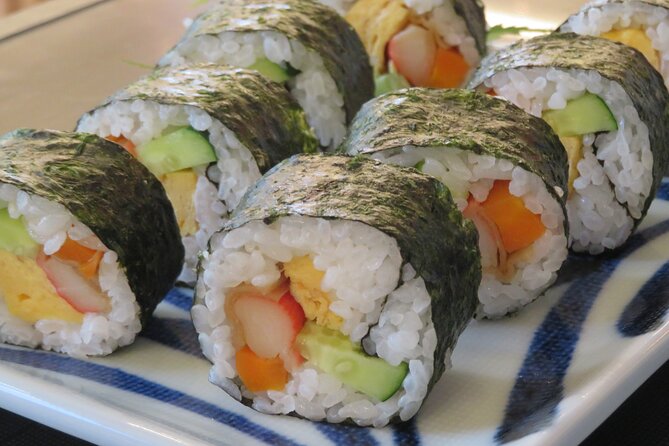
The standard menu includes norimaki, a traditional Japanese sushi roll. You prepare the components and work on the practical challenge of rolling everything neatly. The class is not presented as a theatrical sushi show, so the focus is on learning a method you can repeat.
You can choose an onigiri rice ball instead of norimaki. This is a useful option if you prefer a simpler rice dish, want a different home-style staple, or have someone in your group who is less interested in sushi. The choice also reinforces the class’s home-cooking theme. Onigiri is practical, familiar, and closely tied to everyday Japanese food.
Do not expect a restaurant-level sushi performance or a large sushi menu. The value lies in making one dish carefully, understanding the process, and eating it as part of a larger meal. If your main goal is to make many elaborate rolls, another type of class may suit you better.
A completely different kind of day out:
- Mt Fuji and Hakone 1-Day Bus Tour Return by Bullet Train
★ 5.0 · 26,383 reviews - TOKYO SKYTREE® Ticket
★ 4.7 · 25,136 reviews - teamLab Borderless Tickets: MORI Building DIGITAL ART MUSEUM
★ 4.7 · 24,126 reviews - teamLab Planets TOKYO Ticket
★ 4.7 · 21,663 reviews
Choosing teriyaki chicken, Saikyo yaki, or gyoza
Your main side dish is selected from three options. Each offers a different lesson and a different flavor profile.
Teriyaki chicken is the most familiar choice for many people. You prepare tender chicken with a sweet and savory soy-based glaze. It is a good pick if you want a recipe that uses accessible flavors and can become part of a regular dinner at home.
Saikyo yaki uses fish marinated in Saikyo-style miso before grilling. The result is rich and delicate, with the miso adding depth without overpowering the fish. This is the most distinctive option of the three, and a good choice if you want to learn a preparation that may be harder to recognize on your own.
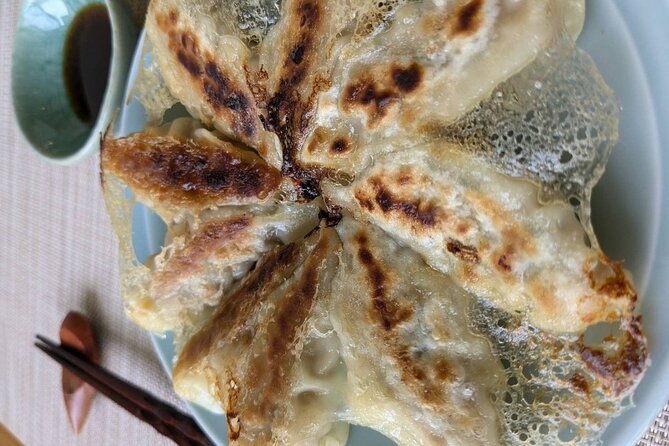
Gyoza gives you a hands-on dumpling lesson. You fill the wrappers with ground pork and vegetables, then pan-fry them. This option involves shaping and cooking, so it may appeal most if you like working with your hands. Aki’s instruction is particularly helpful here, since neat dumpling folding takes a little practice.
One useful detail is that the menu can be adapted to your tastes. Aki adjusted the cooking plan for one group, and the hosts describe vegetarian cooking as available on request. Make that request before the class rather than waiting until you arrive.
Seasonal vegetables and miso soup
The seasonal vegetable dish rounds out the meal. The exact vegetable is not specified in advance, which is part of the point. Japanese home cooking changes with the season, and this course gives you a taste of that flexible approach.
You learn to treat vegetables as an important part of the meal, not just decoration beside the main dish. Along with the soup, rice-based item, and chosen main, the vegetable course creates the balanced pattern that defines washoku.
The miso soup returns you to the dashi lesson. You can see how the stock becomes a finished dish once miso and other ingredients are added. It is a modest bowl, but it ties the whole class together.
The meal structure may be more valuable than any single recipe. You leave with an idea of how Japanese home dishes work together, rather than a random collection of cooking tricks.
What Aki’s teaching style adds
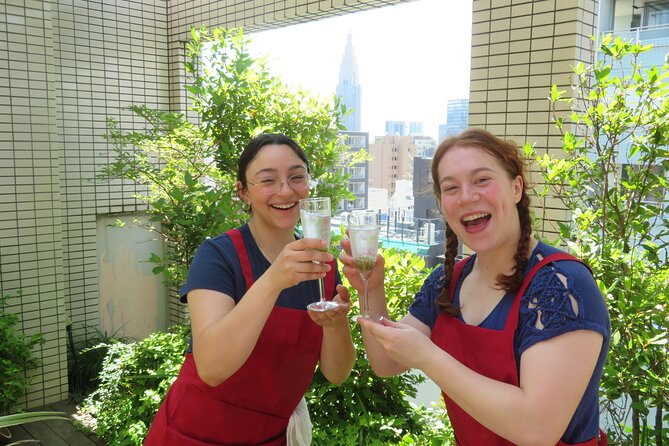
Aki receives strong praise for keeping the class engaging and clear. She explains each stage with pictures and brief background on the food. That is useful when you are working with unfamiliar ingredients or trying to remember the order of several small steps.
She also handles different skill levels well. A beginner can follow the process without feeling lost, while an experienced cook can focus on technique, seasoning, and presentation. The class is not limited to silent instruction. The host’s responses indicate a willingness to adjust the menu to personal tastes.
One group cooked sushi, gyoza, and miso soup and found the dishes successful. Another group enjoyed the way the class continued despite monsoon weather, with the menu adapted to suit them. These details suggest a host who pays attention to the people in front of her, not just the printed plan.
The phrase Tokyo mom is not just a marketing label here. The appeal is the host’s connection to everyday family cooking. You are learning dishes she has prepared in ordinary life, rather than watching a staged performance designed only for photographs.
Ingredients, tools, and what the $120 price covers
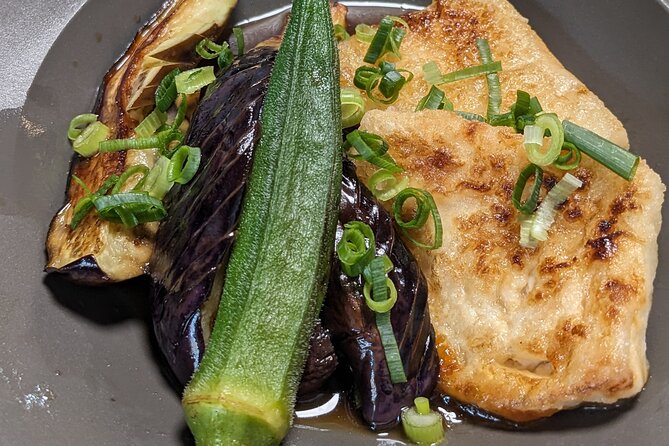
The $120 per person fee includes all cooking ingredients, use of the kitchen tools, an apron, and a digital recipe sheet in PDF form. You are not asked to buy specialty ingredients during the class or bring your own equipment.
The recipe sheet adds value after the visit. Cooking lessons can fade quickly once you leave Japan, especially when several dishes are covered in one sitting. Having the instructions digitally gives you a better chance of making the dashi, soup, roll, vegetables, or selected main dish again.
The price is easiest to justify if you value personal instruction and cultural context. You are paying for a private, English-language lesson, not just food. The host explains the dishes, helps you through the techniques, and provides the setting and equipment.
If your only goal is to eat inexpensive Japanese food, $120 is high. You could have a satisfying meal for much less. If you want to understand how several home dishes are made and prefer a private class over a crowded group session, the cost is more reasonable.
The rating is 5 out of 5 from 16 ratings, with 100 percent recommending the activity. That is a small sample, so I would not treat it as a guarantee. It does support the idea that the personal teaching and warm setting are the main strengths.
Who will enjoy this class most
I would recommend this class to couples, families, and small groups who want a relaxed food activity with a strong local focus. It also suits people who enjoy cooking at home and want recipes they can repeat, rather than a one-time tasting.
Beginners should feel comfortable because the teaching is step by step. More practiced cooks may appreciate the chance to compare methods and learn the logic behind dashi, miso marinades, and Japanese meal balance.
The class is also a good choice for anyone who wants a break from Tokyo’s crowded sightseeing routes. You spend two and a half hours focused on food, conversation, and practical skills. It is a calmer experience than rushing between major sights.
You may want to skip it if you dislike seafood, pork, or hands-on preparation, although the vegetarian option helps some dietary needs. You should also think twice if you expect a large menu, professional culinary training, or a formal restaurant kitchen.
Practical booking advice for Shinjuku
This activity is commonly booked about 37 days ahead, so reserve early if your Tokyo dates are fixed. Confirmation normally arrives at booking, but reservations made within two days of the date may take up to 48 hours to confirm and depend on availability.
The mobile ticket is convenient, but it does not include transportation. Check the route to 1-chōme-24-7 Shinjuku before the day of the class. You should also allow extra time for Tokyo’s large stations and for locating the exact building.
Cancellation is free if you cancel at least 24 hours before the start time. Cancellations or changes made inside that window are not refunded or accepted. The cut-off uses local Tokyo time, so keep that in mind if you are booking from another time zone.
Should you book Tokyo Mom’s Kitchen?
Book this class if you want more than a sushi photo. You will make several dishes, learn the role of dashi, choose a main course, and cook with an English-speaking Japanese host in a private setting.
The best reason to book is the combination of warmth and usefulness. Aki’s pictures, short food background, and patient instruction make the lesson approachable, while the recipes give you something to practice later. The $120 cost is not a bargain meal, but it is fair for a private cooking lesson with ingredients, tools, an apron, and recipes included.
Skip it if your schedule is tight, your budget is strict, or you want a broad tasting tour instead of hands-on cooking. For everyone else, this offers a thoughtful look at the food Japanese families actually prepare, with enough practical detail to bring a little of Tokyo home.
FAQ
Where does the cooking class take place?
The class begins and ends at アイ・ディール株式会社, 1-chōme-24-7 Shinjuku, Shinjuku City, Tokyo 160-0022, Japan.
How long does the experience last?
The cooking class lasts approximately two hours and 30 minutes.
What dishes will I prepare?
All menus include norimaki or an onigiri rice ball, one selected main side dish, a seasonal vegetable dish, and miso soup. You also learn to make dashi from scratch.
What main dish options are available?
You can choose teriyaki chicken, Saikyo yaki fish, or gyoza filled with ground pork and vegetables.
Is a vegetarian option available?
Yes. A vegetarian option is available upon request.
Is transportation included?
No. You must travel directly to the meeting point. Private transportation is not included.
What is included in the price?
The price includes all cooking ingredients, kitchen tools, apron rental, a digital recipe sheet in PDF format, and an English-speaking Japanese host.
Just added in Tokyo
- Japanese Home Cooking Class & Walk in Todoroki Temple Tokyo★ 5.0 · 88 reviews
- A One-of-a-Kind Sushi Experience in a Special Place of Japan★ 5.0 · 15 reviews
- Tokyo Cute Bento Cooking Class – Make a Kawaii Character Lunchbox★ 5.0 · 126 reviews
- Japan Tokyo Tower Observatory Deck E-Ticket★ 4.0 · 34 reviews
- Catch a Baseball Game in Tokyo with a Local – Tickets Included★ 5.0 · 24 reviews
- JDM Experience with Fast&Furious RX-7 (English speaking Driver)★ 5.0 · 57 reviews
- Tokyo Private Day Tour by Car with English speaking Driver Guide★ 4.0 · 29 reviews
- Japan Classic 10 Day – One Life Adventures★ 5.0 · 129 reviews
Tokyo Tours, compared.

Tokyo Disney Resort – Tokyo Disneyland & Tokyo DisneySea Park Tickets
Read our review →

Mt Fuji and Hakone 1-Day Bus Tour Return by Bullet Train
Read our review →

teamLab Borderless Tickets: MORI Building DIGITAL ART MUSEUM
Read our review →