Reviewed · MULTI-DAY TOURS THAT VISIT KAMAKURA
Discovering Kamakura and Mount Fuji by Europamundo – 2-Day Tour: Itinerary & Reviews
Kamakura’s giant bronze Buddha and Mount Fuji’s high-altitude Fifth Station are a striking pair for a two-day trip from Tokyo. Between them, you’ll walk through a bamboo grove, visit a castle, cross to Enoshima and take a boat onto Lake Kawaguchiko.
I like two things in particular: the route joins very different places without asking you to plan several rail connections, and it includes small touches such as green tea at Hokoku-ji and a lake cruise. You also get a night away from Tokyo, rather than racing through every stop in one long day.
The trade-off is the pace. You cover a lot of ground by coach, and the group can reach 72 people, so there may be limited time at popular stops and it can be hard to hear the guide outdoors. Weather, volcanic conditions and seasonal road closures can also change the Mount Fuji portion.
- Hokoku-ji’s bamboo grove gives you a quiet start, with a cup of green tea included.
- The Great Buddha of Kamakura is a memorable stop, with admission included.
- Enoshima and Odawara Castle add a coastal break and a look at a restored Edo-period fortress.
- Owakudani and Oshino Hakkai show you two very different sides of the Fuji region, from volcanic steam to spring-fed ponds.
- Lake Kawaguchiko’s boat ride offers a relaxed change of pace before the climb to Fuji’s Fifth Station.
- The overall format suits you if you value guided transport and a broad sampling of sights more than long, unhurried visits.
In This Review
- From Tokyo to Kamakura’s temple paths
- Enoshima brings a seaside pause
- Odawara Castle and an overnight away
- Owakudani’s volcanic steam, subject to conditions
- Oshino Hakkai and eight ponds
- A boat ride on Lake Kawaguchiko
- Mount Fuji’s Fifth Station, not the summit
- Guides, group size and the coach experience
- Is $476 good value for two days?
- Who will enjoy this route most?
- Should you book this two-day tour?
- FAQ
- Where does the tour start and end?
- How long is the tour?
- Is an English-speaking guide included?
- What is included in the price?
- Are flights and airport transfers included?
- Does the tour climb to Mount Fuji’s summit?
- What happens if Owakudani is closed?
- Can the tour reach the Fifth Station in winter?
- Is lunch included?
From Tokyo to Kamakura’s temple paths
Day one starts with an early departure from Tokyo. You travel by coach to Kamakura, once Japan’s capital for two centuries and now a destination of temples, shrines and gardens. The bus makes this spread-out collection of stops easier to link than arranging each transfer yourself, though the drive time means the day is not all sightseeing.
Hokoku-ji is the first major stop. Its bamboo grove is a pleasing contrast to Tokyo’s city streets: a pocket of green, with tall stalks crowding the path and a temple setting that encourages you to slow down. Admission is included, as is green tea. It is a short experience, not a long meditation retreat, but it gives the morning a calmer opening.
The Great Buddha, or Daibutsu, is a different kind of encounter. The large bronze figure has the scale to hold your attention even if you have seen photographs beforehand. Admission is included, and you’ll want to leave time to take in the statue itself rather than treating it as a quick photo stop. Still, the visit is part of a full day, so don’t expect an extended stay.
The tour’s included admissions also list Sugimoto-dera Temple. It is not described as a separate stop in the day-by-day schedule, so check the precise visit plan before departure if seeing it is important to you. That small uncertainty is worth sorting out rather than assuming every listed ticket means a long visit.
Enoshima brings a seaside pause
After Kamakura, the coach follows the Pacific coast toward Enoshima, a small island linked to the mainland by a bridge. You have free time here, which is useful after guided temple visits: choose a walk, find lunch, or simply enjoy a change from the coach.
Lunch is not listed as included, so budget for it separately. The open-ended break also means you control the pace for a while, but it is not a guided island tour with a fixed set of stops. If you want to explore beyond a simple stroll, keep an eye on the time and the group’s meeting instructions.
This coastal stretch adds welcome variety to a trip otherwise built around temples, mountain views and coach travel. But the schedule is intensive, and the stops are not equally long. If Enoshima is high on your wish list, ask how much free time is planned before you book.
A few more options to weigh up in Tokyo
- Tokyo Disney Resort – Tokyo Disneyland & Tokyo DisneySea Park Tickets
★ 4.8 · 99,488 reviews - SHIBUYA SKY Ticket
★ 4.7 · 46,509 reviews - JR Whole Japan Rail Pass
★ 4.8 · 29,150 reviews
Odawara Castle and an overnight away
Later, you continue to Odawara and visit its castle, with admission included. The fortress is a modern restoration of a medieval structure associated with the Edo period, and it offers a useful change of subject after Kamakura’s religious sites. Expect a historic landmark visit, not a full day of castle exploration.
You stay overnight in Odawara. The hotel is selected with price, quality and location in mind, rather than luxury. Rooms have a private bathroom and TV; other features, such as a mini-bar, safe or hair dryer, may vary. Hotels are often outside the center, but are described as having public transport nearby.
That overnight stop is one of the tour’s practical advantages. Instead of returning to Tokyo after Kamakura and then starting another long excursion before dawn, you break the journey. The accommodation is functional rather than a special attraction in itself, so consider the hotel a comfortable base, not a highlight to plan your evening around.
Breakfast buffet is included, and breakfast is listed on both days. Flights are not part of the price, and there is no airport transfer at the end. You return to Tokyo, so check your flight time and allow for an extra night if you need a safer margin.
Owakudani’s volcanic steam, subject to conditions
Day two heads through the Hakone region toward Mount Fuji. Owakudani, known as the Valley of Hell, is a volcanic area with steam vents, bubbling mud and sulfur gases. It gives you a close look at the region’s active geology, a striking contrast with the temples and castle from the previous day.
Access is not guaranteed. High volcanic activity or toxic gases can close the area, in which case the tour visits Kitaguchi Hongu Fuji Sengen Shrine instead. That is a sensible safety substitution, though it changes the character of the stop from volcanic scenery to a shrine visit. The shrine’s admission is included among the listed tickets.
The operator can also change the order of visits or sites because of weather, traffic, strikes, events or other difficult conditions. That flexibility helps keep a group moving, but it means you should treat the sequence as a plan rather than a promise.
Oshino Hakkai and eight ponds
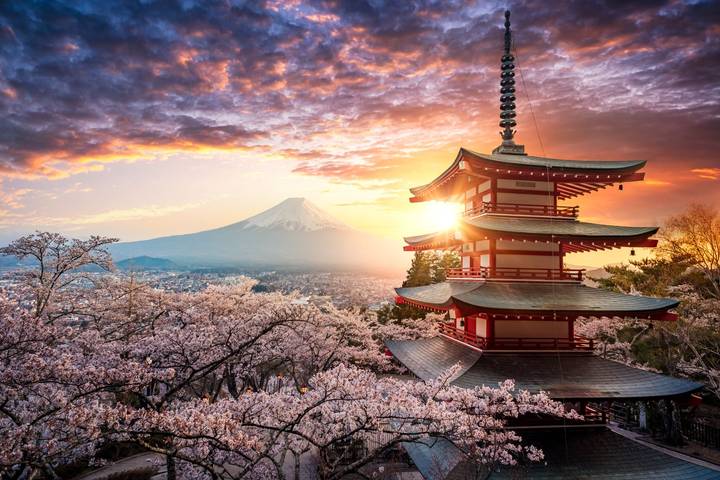
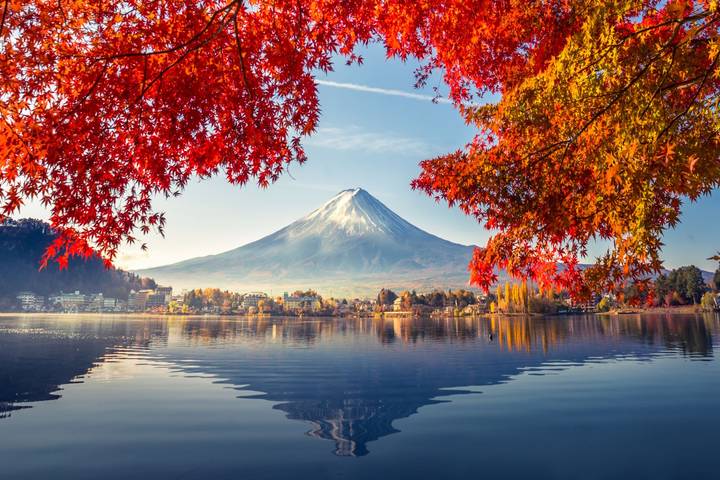
Next comes Oshino Hakkai, a small village known for eight ponds and views of Mount Fuji. After the steam and sulfur of Owakudani, the village offers a gentler stop, with water and mountain scenery at the center of the visit.
The value here is the change in perspective. You are not simply driving to one famous Fuji viewpoint; the route makes several stops around the mountain, each with a different feel. The trade-off is that views depend on conditions. Clouds can hide Fuji, and a busy schedule may leave less time than you’d like to linger or take photographs.
A completely different kind of day out:
- Mt Fuji and Hakone 1-Day Bus Tour Return by Bullet Train
★ 5.0 · 26,383 reviews - TOKYO SKYTREE® Ticket
★ 4.7 · 25,136 reviews - teamLab Borderless Tickets: MORI Building DIGITAL ART MUSEUM
★ 4.7 · 24,126 reviews - teamLab Planets TOKYO Ticket
★ 4.7 · 21,663 reviews
A boat ride on Lake Kawaguchiko
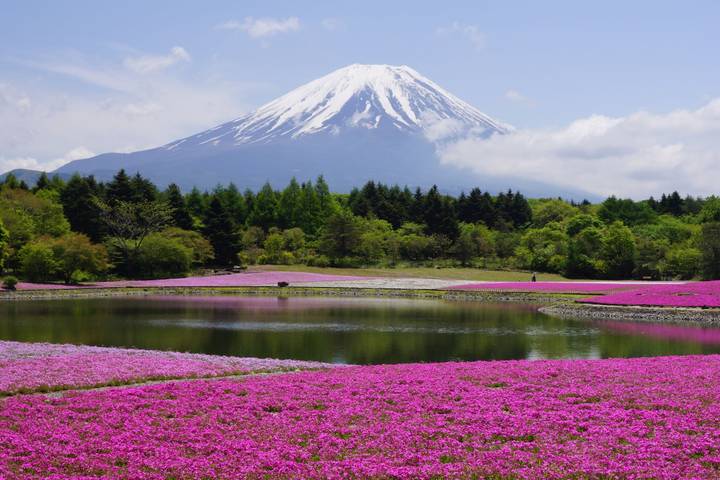
At Kawaguchiko, you take a scenic boat ride on the lake. It is included in the tour and provides a welcome seated break after the coach and village visits. From the water, the lake and surrounding mountains become the focus, and on a clear day Mount Fuji can be part of the view.
The cruise is not a substitute for time exploring the lakeside town. The tour description gives you a boat ride, but not an extended block of free time in Kawaguchiko. If you want to browse shops or walk the shore at leisure, this two-day format may feel too compressed.
Mount Fuji’s Fifth Station, not the summit
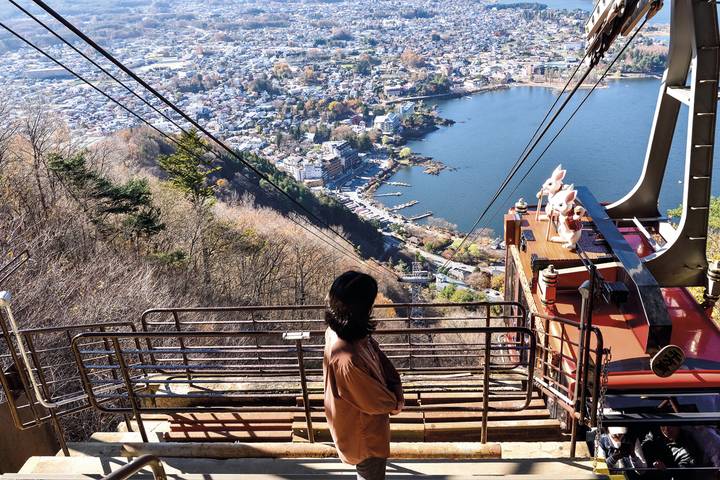
The final major stop is the Fifth Station, reached by a scenic road to 2,305 meters, or about 7,560 feet. Be clear about what that means: this is a high mountain access point, not a climb to Mount Fuji’s summit. You get the chance to look out from the mountain and experience the altitude without turning the outing into a strenuous trek.
The ascent depends on the season and weather. In winter, snow or road conditions often close the route, and the coach goes as far as permitted. That can still make for a worthwhile day, but don’t book on the assumption that the Fifth Station is guaranteed. The same goes for Fuji views: mountain weather can change the scene quickly.
The tour is rated low intensity, which fits a coach-based trip with short visits rather than a hiking holiday. You should still be ready for a long day, time on and off the bus, and walking around sites. The climb to the summit is not part of the program.
Guides, group size and the coach experience
The tour is fully guided in English, but the guide may change during the trip. On some departures, explanations may be bilingual, usually in English and Spanish, either with two tour leaders or one guide speaking both languages. That arrangement can affect how much time you spend listening at each stop.
Group size ranges from 2 to 72. A large group helps make a coach tour possible at the advertised starting price, but it has consequences on the ground. When everyone gathers around a guide outdoors, it can be difficult to hear, particularly at busy sites. Some past departures have called for smaller groups or radio guides, so this is a real consideration if you value detailed explanations.
Guide names associated with the tour include Ken, Erika and Jose. Their individual availability is not guaranteed, and the guide may change, but the strongest feedback has focused on warm, attentive explanations and a sense of care for the group. In practical terms, arrive on time at each meeting point and stay close enough to hear instructions.
Is $476 good value for two days?
The starting price is $476, based on the cheapest room option. For that, the package includes guided coach transport, one hotel night, buffet breakfasts, several admission tickets, green tea at Hokoku-ji, the Lake Kawaguchiko boat ride and basic travel insurance. You are paying for the convenience of linking distant stops without arranging transport and tickets yourself.
The price does not include flights, lunch on Enoshima or an airport transfer. The hotel is not positioned as a luxury stay, and room sizes, bed sizes and amenities can vary. The tour’s value depends on how much you prize an efficient guided route: if you would otherwise book trains, local transport, entry tickets and lodging separately, the bundled format may be worthwhile.
There is a $125 deposit, with the remaining balance due 50 days before departure. Interest-free installments every two weeks are available, and no booking fee is listed. Check the final price and room details for your chosen date, since $476 is the starting price rather than a guarantee for every departure.
Who will enjoy this route most?
I’d recommend this tour if you have limited time in Tokyo and want to see Kamakura and the Fuji region without managing several separate trips. Families and first-time visitors may appreciate the guided transport, included admissions and broad range of sights. The stated age range is all ages, and the activity level is low.
It is less suited to you if you want long stretches at each site, a small group, or a summit climb. The schedule is full, and several scenic stops compete for time across two days. Independent visitors who enjoy setting their own pace could instead plan fewer stops and spend longer in Kamakura or around the lakes.
Should you book this two-day tour?
Book it if you want a practical sampler of Kamakura, the coast, Odawara and Mount Fuji, and you are comfortable with coach travel and a brisk pace. Its best features are the variety, the temple and Buddha visits, and the chance to reach Fuji’s Fifth Station without planning the route yourself.
Think twice if your priority is unhurried exploration, guaranteed access to Owakudani or a clear view of Mount Fuji. Weather and volcanic conditions can alter the day, and large groups can make guide explanations harder to catch. If those limits fit your expectations, this is a useful way to make two busy days count.
FAQ
Where does the tour start and end?
The tour starts in Tokyo, travels through Kamakura, Enoshima, Odawara and the Mount Fuji area, and returns to Tokyo at the end of day two.
How long is the tour?
It lasts two days, with one overnight stay in Odawara.
Is an English-speaking guide included?
Yes. The tour is fully guided in English. Some departures may use bilingual English and Spanish explanations, with one or two tour leaders.
What is included in the price?
The package includes accommodation, breakfast buffets, basic travel insurance, listed admissions, green tea at Hokoku-ji, coach transfers and the Lake Kawaguchiko boat ride.
Are flights and airport transfers included?
No. Flights before and after the tour are not included, and a departure transfer to the airport is not provided.
Does the tour climb to Mount Fuji’s summit?
No. It travels to the Fifth Station at 2,305 meters when the road is open. It is not a summit climb.
What happens if Owakudani is closed?
The tour visits Kitaguchi Hongu Fuji Sengen Shrine instead if volcanic activity or toxic gases prevent access to Owakudani.
Can the tour reach the Fifth Station in winter?
The road is often closed in winter because of snow or weather. The tour goes as far as conditions permit.
Is lunch included?
Lunch is not listed as included. You have free time for lunch during the Enoshima stop.
Just added in Tokyo
- Mt. Fuji & Hakone Cherry Blossom private One Day Tour★ 4.5 · 35 reviews
- Fish Market & Tokyo Skyline Private Walking Tour★ 5.0 · 14 reviews
- 25-Min Downtown Helicopter Tour : Tokyo Skytree and Tokyo Tower★ 5.0 · 19 reviews
- Private Tour with a Local Guide – Learn about daily life in Japan★ 5.0 · 22 reviews
- Tokyo: 3-Hour Bike/E-Bike Tour of the City’s Highlights★ 5.0 · 209 reviews
- Official Japan Go-Kart Through Tokyo Bay / Ginza (IDP Required)★ 4.5 · 71 reviews
- 30-Min Tokyo Central Private Heli Tour– Asakusa, Skytree, Shibuya★ 5.0 · 13 reviews
- Tokyo 2-Hour Genuine Samurai Experience: Kendo in Japan★ 5.0 · 112 reviews
Multi-Day Tours That Visit Kamakura, compared.


Tokyo to Osaka by Rail – Private Tour (14 Days) with Explore!
Read our review →
Highlights of Japan 13-Day Tour by Travel Chasers
Read our review →
Japanese Scenes and Mount Fuji 19-Day Tour by Europamundo
Read our review →
Japanime: 7-Day Tour of Tokyo’s Anime Scene by The Dragon Trip
Read our review →
Essential Japan and Hakone 8-Day Tour by Europamundo
Read our review →