
Reviewed · CASTLES AND HISTORIC SITES
Experience Samurai and traditional Culture to the fullest
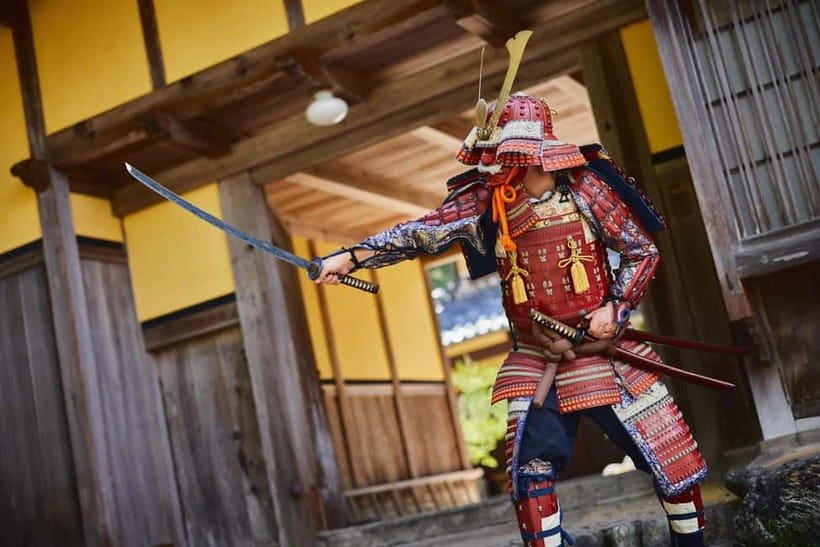
Step into Japan’s warrior world. This three-hour private experience near Osaka Castle combines kimono, calligraphy, tea ceremony, and samurai sword practice in one carefully staged cultural session. You also wear armor for photographs connected to the 1615 Osaka Summer Battle.
I like the personal attention and the unusual mix of quiet arts with hands-on sword work. I also like that a photographer records the experience and sends the images to your email. The main drawback is the price, $168 per person, and the need to arrive 30 minutes early for changing and instructions.
The tone is respectful rather than a quick costume photo stop. You learn brush technique, tea etiquette, and the responsibility associated with handling a deadly weapon. The optional seppuku segment is serious and historical, so it will not suit everyone.
In This Review
- Key points to know before booking
- A three-hour route through samurai culture
- Kimono first, then a lesson in Japanese manners
- Calligraphy turns a souvenir into a personal choice
- Samurai calligraphy and the meaning of final words
- Tea ceremony brings the quiet center
- Learning to hold a real samurai sword
- Armor, Osaka Castle, and the 1615 battle
- The photographer adds real value
- What $168 includes, and where the value sits
- Language, group size, and who will enjoy it
- Practical planning before you go
- Should you book this samurai experience?
- FAQ
- How long does the samurai experience last?
- What is included in the $168 price?
- Is transportation included?
- What language is used during the activity?
- Can children take part?
- Is the seppuku activity required?
Key points to know before booking
- You wear both a kimono and samurai armor, with changing time built into the visit.
- Calligraphy is more than a souvenir craft, covering brush preparation, stroke order, and selected kanji.
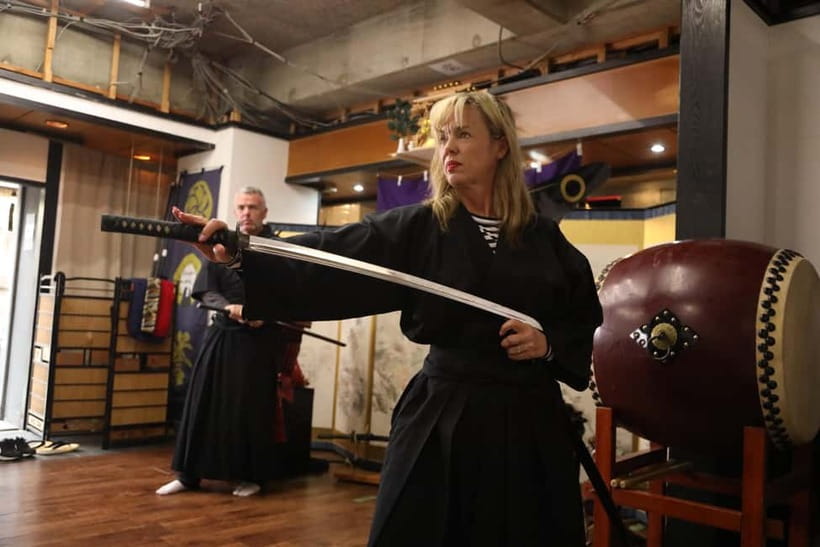
- The sword session includes trial cutting, not just posing with a katana.
- A photographer covers the experience, including armor photographs near Osaka Castle.
- This is a private-group activity, which gives you room to ask questions and work at a comfortable pace.
- English is the default language, while Spanish, Italian, French, Chinese, Thai, and Indonesian interpreters require advance checking.
A three-hour route through samurai culture
This experience is designed as a connected lesson rather than a single photo opportunity. You begin with traditional clothing, move through calligraphy and tea, then finish with sword work and armor photographs.
That order makes sense. The early activities ask you to slow down and control your hands. Later, the sword and armor sessions add movement, drama, and physical focus. You leave with both a keepsake character and a better sense of how Japanese etiquette and Bushido values are presented through performance.
The activity is held at Excellence Takayama 1F, 2-3-19 Shiginonishi, Joto-ku, Osaka. Look for the wooden sign reading Honor of the Samurai. Pamphlets sit in front of the store, and hanging kimonos and hakama can also help you identify the entrance.
You are asked to arrive 30 minutes before your reserved start time. That extra half hour is not part of the three-hour program, so allow enough time in your Osaka schedule for changing and orientation.
More Castles and Historic Sites in Osaka
- Osaka Castle Ticket
★ 4.7 · 12,450 reviews - Osaka Castle: Museum and Tower Entry Ticket
★ 4.5 · 2,380 reviews - Ultimate Osaka Walking Tour: Castle, Dotonbori & Hidden Gems
★ 5.0 · 862 reviews
Kimono first, then a lesson in Japanese manners
The opening activity introduces the kimono as a symbol of Japan. You change before beginning the traditional arts, so the clothing becomes part of the experience rather than a quick layer added for a photograph.
The cultural point here is courtesy. The session presents calligraphy and tea ceremony as ways to practice graceful movement, manners, hospitality, and self-control. Those ideas connect with Zen and with the presentation of Bushido, the samurai code centered on conduct and honor.
I appreciate this beginning because it gives the later sword practice some context. Without it, the session could feel like costume play. With it, you first learn the quiet side of the samurai image: posture, care, restraint, and attention.
Bring a T-shirt underneath your clothing. That is the only item specifically requested, but it is a useful tip because you will change outfits and may spend much of the session in traditional clothing and armor.
Calligraphy turns a souvenir into a personal choice
The calligraphy lesson takes about 20 minutes. You learn how to prepare yourself, hold the brush, use the tools, and make the basic strokes called tome, hane, and harai.
You then choose a kanji character and practice it in the correct stroke order. This matters because the activity is not simply about copying a decorative symbol. You make a choice, learn its structure, and put it on paper with guidance.
For many people, this may be the calmest part of the experience. Brushwork rewards patience, and the instructor can correct your hand position and technique before you attempt the final samurai calligraphy. If you want a meaningful keepsake, think about your kanji choice before arriving, although the program does not specify a fixed selection.
The activity description connects samurai entertainment with the risk of life, a dramatic phrase that reflects the presentation style. In practice, the calligraphy portion is the controlled and reflective section of the day. It gives you a chance to focus before the physical activities begin.
Samurai calligraphy and the meaning of final words
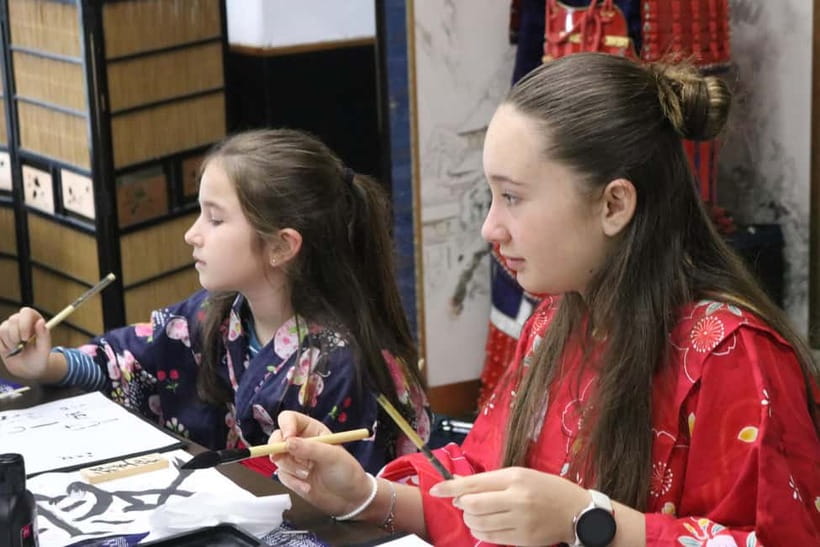
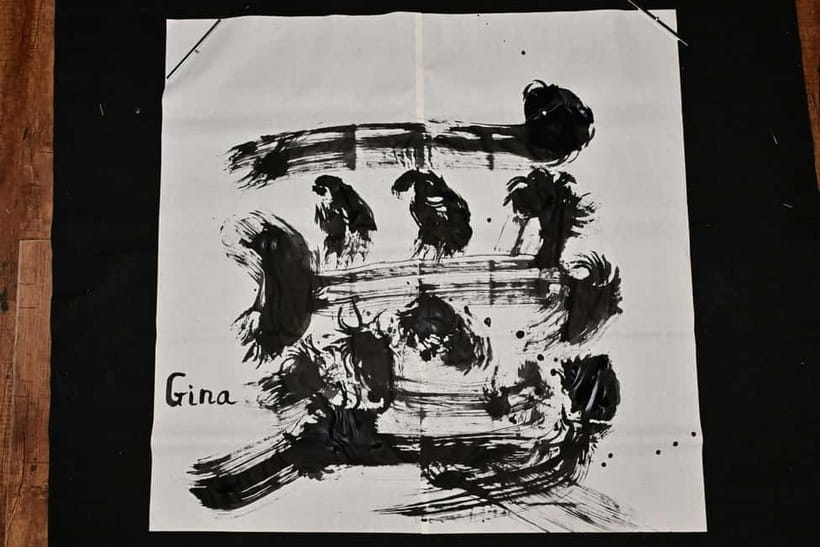
The next calligraphy stage lasts about 10 minutes. You write the kanji you have chosen while paying closer attention to technique.
This part is framed as samurai calligraphy, including the idea of words written before death. Historically, such final words are associated with resignation from the world and preparation for dying. That theme can feel heavy, especially for families or anyone looking for a lighthearted cultural activity.
The value is in the contrast. You are not only practicing a beautiful script. You are being asked to think about how a single character can carry resolve, identity, and personal meaning. If you prefer a gentler experience, you can treat this as a lesson in traditional writing and leave the more solemn interpretation in the background.
The instructor’s role is important here. One verified participant praised the staff for answering questions patiently and for taking time with both calligraphy and katana technique. That is useful to know because the program covers several subjects in only three hours. Patient instruction helps keep the pace from feeling rushed.
More Castles and Historic Sites in Japan:
- Tokyo: Imperial Palace and Shogun Historical Walking Tour
★ 5.0 · 2,251 reviews - Tokyo: Samurai Restaurant Show Ticket with 2 Drinks
★ 4.5 · 1,307 reviews - Kyoto Samurai Experience
★ 5.0 · 1,294 reviews - Tokyo Castle & Imperial PalaceーShogun Walking Tour
★ 4.7 · 1,068 reviews
Tea ceremony brings the quiet center
The tea ceremony takes about 30 minutes. A tea master prepares and serves powdered green tea, while you learn the etiquette, manners, gestures, and hospitality associated with the ceremony.
This is not presented as a full historical course in tea. It is a practical introduction to the discipline of the ritual. You will likely spend more time observing and following instructions than drinking tea casually.
I like this part because it balances the later sword work. The ceremony places emphasis on honor, respect, and the duty to treat another person well. Those values are linked here to Bushido, giving the samurai theme a wider meaning than armor and weapons.
The tea segment may be less exciting for children or visitors who want constant action. The minimum age is 10, and the program is best for older children and adults who can listen, follow instructions, and appreciate slow movements.
Learning to hold a real samurai sword
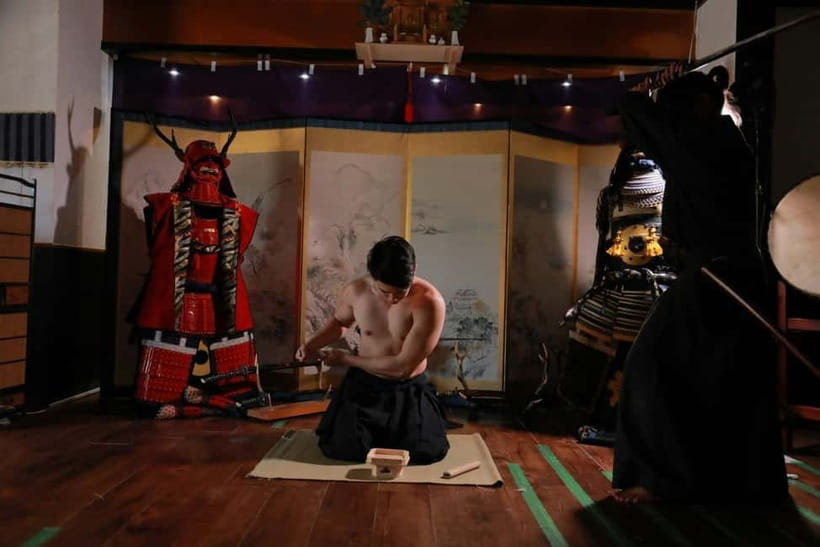
The sword lesson lasts about 30 minutes. You learn how to use a sword, handle the weapon responsibly, and think about the self-respect required when carrying something capable of causing serious harm.
The wording emphasizes that you are allowed to wear a serious sword and try sword cutting. That makes this the part to take most seriously. It is not just a plastic prop session or a theatrical pose. You will need to listen closely to the certified professional instructor and follow every safety instruction.
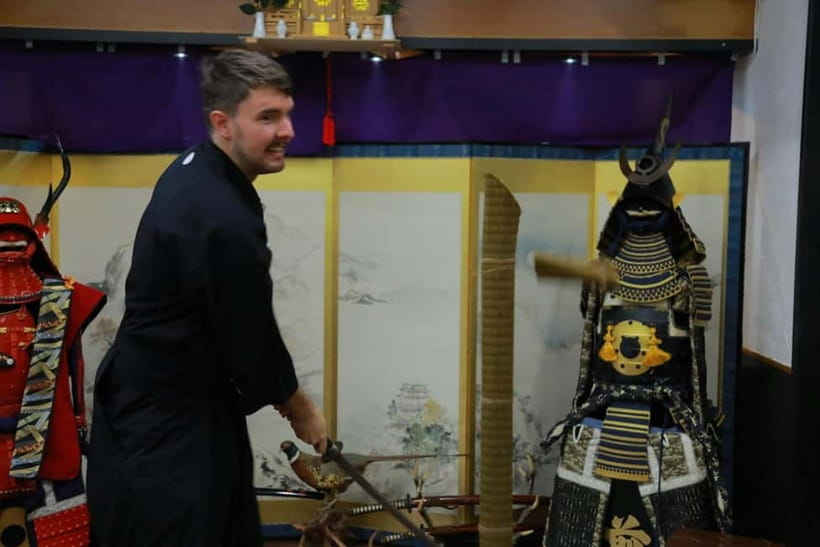
You also practice trial cutting with a samurai sword. The program describes this as a chance to experience the sharp cutting edge associated with Japanese blades. The precise cutting material and setup are not specified, so you should not assume a particular target or level of difficulty.
One participant specifically praised the katana experience and said the staff were friendly and wonderful to talk with. Another highlighted the instructor’s patience while learning the technique. That combination matters: the activity offers a strong visual memory, but the teaching is what makes it worthwhile.
You should also consider your comfort with physical activity. The program does not provide a detailed fitness requirement, but sword handling and armor work involve standing, movement, and concentration. Anyone with concerns should ask the provider before booking.
Armor, Osaka Castle, and the 1615 battle
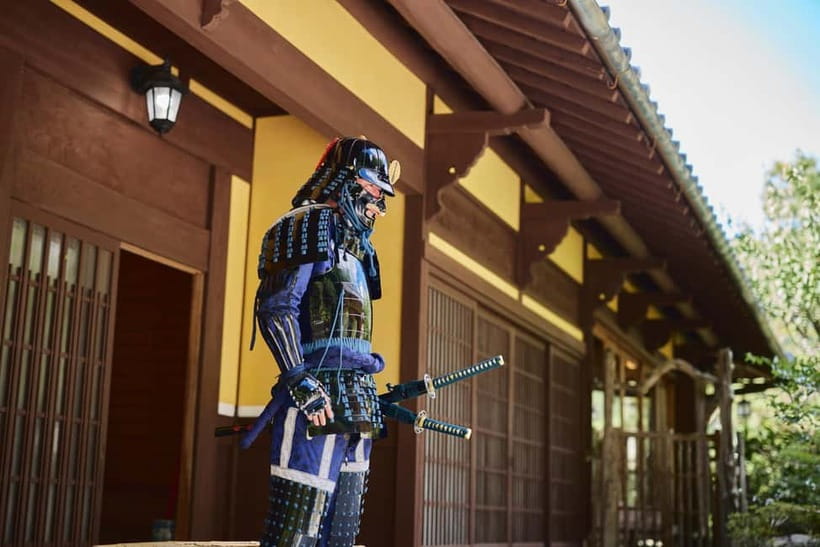
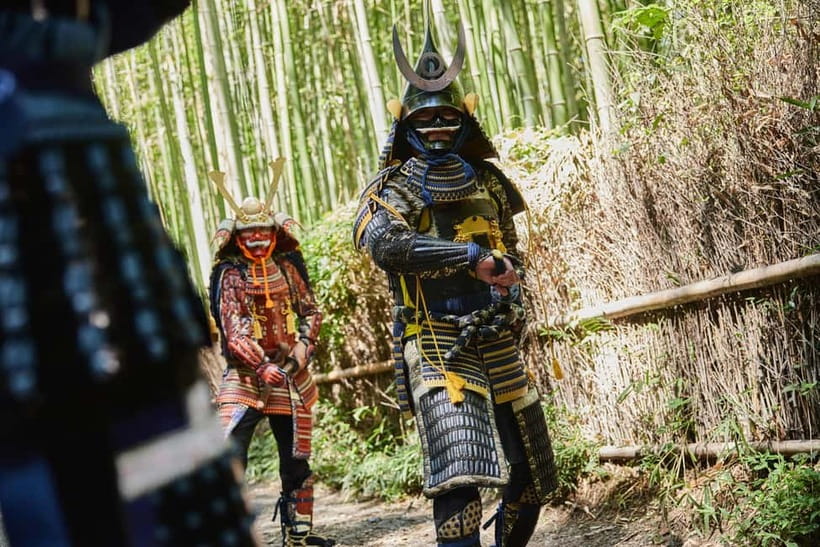
The armor portion takes about 30 minutes. You put on samurai armor indoors and take part in a staged battle scenario connected to the Battle of Osaka.
The story places you in April 1615, during the Osaka Summer Battle, as a soldier on Toyotomi’s side. You are photographed as a strong warrior heading into battle. This gives the costume images a specific historical frame rather than leaving you with generic warrior portraits.
The photos are taken on the grounds of Osaka Castle, with the castle in the background. That is the central visual payoff. You do not simply leave with a studio portrait. You get an image tying your armor to one of Osaka’s most recognizable landmarks.
The description also calls this the only place near Osaka Castle where you can experience being a samurai. That claim is part of the experience’s appeal, but the important practical point is simpler: the program combines armor, a castle backdrop, and hands-on cultural instruction in one booking.
Armor can be warm and restrictive. The program does not give weight or size details, so contact the provider if you need specific fitting information. You should also expect the photograph session to involve posing and perhaps repeated positioning while the photographer captures a good angle.
The photographer adds real value
Photography runs through the experience, with images sent to a designated email address. This is included, not an extra photo package.
That is a strong feature at this price. Dressing yourself in layers of traditional clothing, learning calligraphy, handling a sword, and wearing armor creates a lot of moments worth remembering. Having a photographer cover the activities means you can concentrate on instructions instead of asking a companion to manage a phone.
One participant described the photographer as covering all the events, which suggests the camera work is not limited to one final portrait. The exact number of images and delivery time are not provided, so ask if those details matter to you.
There is also a paid movie-shooting option. The standard booking includes photo shooting only, so do not expect a professionally edited video unless you arrange and pay for that separately.
What $168 includes, and where the value sits
At $168 per person, this is not a budget activity. The price makes more sense if you plan to use the full program rather than treating it as a quick armor photo.
Included are the kimono and samurai clothing, indoor armor use, calligraphy practice, samurai calligraphy, tea ceremony, sword trial cutting, a certified professional instructor, English-speaking staff, tax, tips, and photography. That is a large package for three hours, especially for a private group.
The strongest value comes from the variety. You get quiet cultural instruction, a tea ritual, a physical sword lesson, an armor session, and photographs. Booking each element separately would be difficult, and a short costume rental would not offer the same teaching.
The price is harder to justify if you mainly want a single photograph or have little interest in calligraphy and tea. You also pay your own transportation, and there is no pickup from a station or hotel. Check the meeting address carefully before setting your Osaka schedule.
The experience currently carries a 5 out of 5 rating from 26 ratings. Three detailed accounts praise the friendly staff, patient teaching, katana handling, armor, and photographer. Those are exactly the areas where a program like this can succeed or fail, so the consistent praise is encouraging.
Language, group size, and who will enjoy it
English is the default language for interpretation. Spanish, Italian, French, Chinese, Thai, and Indonesian support may be available, but you must ask about staff schedules before booking. Availability for languages other than English is limited, so do not assume your preferred language can be provided on the day.
The group type is private. That is helpful for a hands-on activity because you can ask questions and avoid being lost in a large crowd. It also makes the $168 price easier to understand if you are booking with family or friends who will share the session.
I would choose this for adults, couples, families with children aged 10 or older, and anyone interested in Japanese arts as much as samurai imagery. It suits people who enjoy guided instruction, photographs, and historical role-play.
I would skip it if you dislike changing clothes, slow ceremonial activities, or staged battle themes. The seppuku option in particular is not required, and its subject matter may feel uncomfortable. It presents a serious samurai idea of dying beautifully for one’s lord, not a casual comic routine.
Pets, baby strollers, alcohol, and drugs are not allowed. Babies under one year, children under 10, and people over 95 are listed as unsuitable for the activity.
Practical planning before you go
The meeting point is Excellence Takayama 1F at 2-3-19 Shiginonishi, Joto-ku, Osaka-shi, Osaka 536-0014. The wooden Honor of the Samurai sign is the main landmark, with pamphlets and traditional clothing near the storefront.
You need to arrange your own transportation. Pickup and drop-off are not included, so build travel time into your plan and arrive 30 minutes early.
The experience lasts three hours, with the listed sections taking roughly 20 minutes for basic calligraphy, 10 minutes for samurai calligraphy, and 30 minutes each for tea, sword practice, armor, and photography. Changing and instructions account for additional time around the scheduled session.
You can cancel up to 24 hours in advance for a full refund, and reserve now while paying later. Those options help if your Osaka plans are still moving, though you should confirm language needs before securing the booking.
Should you book this samurai experience?
Book it if you want more than a costume photograph. The strongest reason to go is the combination of patient instruction, real cultural activities, sword practice, and Osaka Castle photographs. The staff’s friendly manner and willingness to answer questions add value to a tightly scheduled program.
At $168, I would reserve this for a special Osaka day rather than an impulse activity. Arrive early, wear a simple T-shirt underneath, choose a kanji character you can connect with, and tell the provider about any language needs before paying.
Skip the optional seppuku segment if its theme is not for you. You can still enjoy the calligraphy, tea, katana lesson, armor, and photography without it. For visitors who want a respectful, hands-on introduction to samurai culture, this is a well-rounded choice near Osaka Castle.
FAQ
How long does the samurai experience last?
The scheduled experience lasts three hours. You should arrive 30 minutes before your reserved time for instructions and changing clothes.
What is included in the $168 price?
The price includes samurai clothing, kimono-related changing, indoor samurai armor, calligraphy practice, samurai calligraphy, tea ceremony, sword trial cutting, a certified professional instructor, English-speaking staff, tax, tips, and photo shooting with images sent to a designated email address.
Is transportation included?
No. Transportation, hotel pickup, and train station pickup are not included.
What language is used during the activity?
English is the default interpreter language. Spanish, Italian, French, Chinese, Thai, and Indonesian may be available, but you must ask about staff schedules before booking.
Can children take part?
Children under 10 are not suitable for this activity. Babies under one year are also not suitable, and baby strollers or carriages are not allowed.
Is the seppuku activity required?
No. Seppuku, also called harakiri in the activity information, is an optional 30-minute segment. It presents the samurai idea of death, honor, and Bushido, so you can decide if that serious subject is appropriate for your group.
Just added in Japan
- A One-of-a-Kind Sushi Experience in a Special Place of Japan★ 5.0 · 15 reviews
- Tokyo Cute Bento Cooking Class – Make a Kawaii Character Lunchbox★ 5.0 · 126 reviews
- Japanese Home Cooking Class & Walk in Todoroki Temple Tokyo★ 5.0 · 88 reviews
- Japan Tokyo Tower Observatory Deck E-Ticket★ 4.0 · 34 reviews
- Catch a Baseball Game in Tokyo with a Local – Tickets Included★ 5.0 · 24 reviews
- JDM Experience with Fast&Furious RX-7 (English speaking Driver)★ 5.0 · 57 reviews
- Tokyo Private Day Tour by Car with English speaking Driver Guide★ 4.0 · 29 reviews
- Japan Classic 10 Day – One Life Adventures★ 5.0 · 129 reviews
Castles and Historic Sites, compared.

Imperial Palace and Shogun Historical Walking Tour
Read our review →
Tokyo Castle & Imperial PalaceーShogun Walking Tour
Read our review →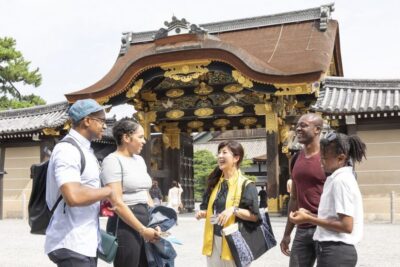
Nijo-jo Castle and Ninomaru Palace Guided Tour
Read our review →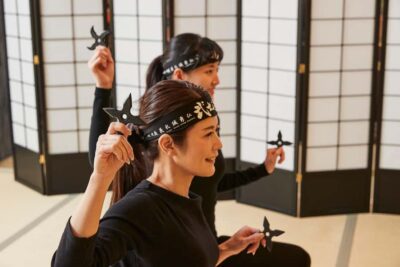
Samurai Ninja Museum Guided tour and Experience
Read our review →Browse the lists this tour appears in