
Reviewed · MULTI-DAY TOURS THAT VISIT ARASHIYAMA
Japan Essentials 13 Day – One Life Adventures: Tokyo to Miyajima Island – Reviews & Prices
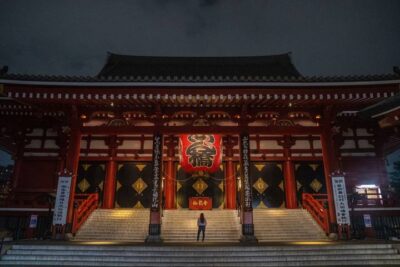
Tokyo’s late-night Senso-ji sets the tone for this 13-day route across Japan: you get famous sights, local transport, and a guide to help with the details, without surrendering every hour to a group schedule. I like the balance of planned visits and independent time, and the route’s shift from Tokyo’s city streets to Hakone’s mountain scenery and Miyajima’s island calm.
I also like that rail travel is part of the package, including the Romance Car and bullet train. The main trade-off is shared accommodation: most nights are in mixed dorms, and the pace means some stops get only a short visit.
In This Review
- At a glance
- A first trip that covers several sides of Japan
- Tokyo: temples, pop culture, and a useful orientation
- Hakone and Mount Fuji: a change of pace
- Kyoto: shrine gates, old streets, and a very early start
- Osaka and Nara: food, nightlife, and deer
- Hiroshima and Miyajima: a thoughtful finish
- What the price includes, and what to budget for
- The group, pace, and packing realities
- Should you book Japan Essentials?
- FAQ
- Are flights included in the tour price?
- What accommodation should I expect?
- How many meals are included?
- Is transport included?
- Does the tour return to Tokyo at the end?
- Can I join if I am over 39?
At a glance
- See Japan’s big sights by rail: The route links Tokyo, Hakone, Kyoto, Osaka, Nara, Hiroshima, and Miyajima, with public transport and intercity trains included.
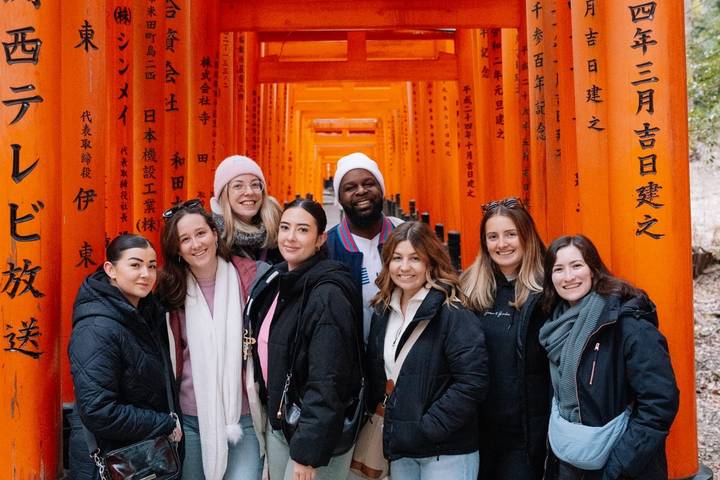
- Start temple visits early: Fushimi-Inari is scheduled before dawn, a practical way to see its red gates before the biggest crowds arrive.
- Make room for your own plans: Free time in Tokyo, Kyoto, and Osaka lets you add activities or simply slow down.
- Sleep in shared rooms: Hostel and guesthouse dorms keep the trip budget-minded, but they are not private rooms.
- Expect a social, active group: It is an English-language tour for ages 18 to 39, with a group size of 3 to 22 and a medium-intensity rating.
- Plan for the final transfer: The tour ends on Miyajima, while the Hiroshima guesthouse is your base. A return train to Tokyo is available for an additional $330 AUD.
A first trip that covers several sides of Japan
At a starting price of $2,645, Japan Essentials aims to make a first visit easier without packaging every moment. You get a guide, accommodation, transport during the tour, and a set of key activities. Flights, travel insurance, airport transfers, and optional activities are extra, so the base fare is not your full trip budget.
The route has a useful contrast built into it. Tokyo brings shrines, shopping districts, and neon-lit nightlife. Hakone offers a mountain break, Kyoto gives you temple and shrine visits, and Osaka turns the focus toward food and evenings out. Nara, Hiroshima, and Miyajima add a different scale and mood to the final days.
The tour’s value is less about luxury than about reducing the work of getting around. Japan’s train system is efficient, but major stations can be confusing when you are new to the country. Having a guide arrange group movements and explain customs can take pressure off, while free hours let you follow your own interests.
A few more options to weigh up in Tokyo
- Tokyo Disney Resort – Tokyo Disneyland & Tokyo DisneySea Park Tickets
★ 4.8 · 99,488 reviews - SHIBUYA SKY Ticket
★ 4.7 · 46,509 reviews - JR Whole Japan Rail Pass
★ 4.8 · 29,150 reviews
Tokyo: temples, pop culture, and a useful orientation
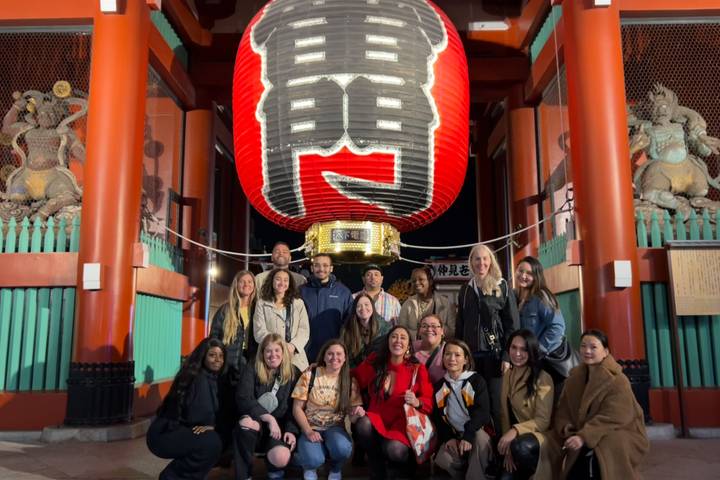
You meet in Asakusa, a historic Tokyo neighborhood, and start with a Japanese meal and an evening visit to Senso-ji. Seeing the temple after the daytime crowds have thinned gives you a calmer first look at one of the city’s best-known sites. It is also an easy way to get oriented with your group after travel.
Day two moves from Harajuku’s youth culture to Yoyogi Park and Meiji Shrine, then on to Akihabara. The shift is the point: in a single day, you see quiet shrine grounds and a district known for arcades, anime-related shops, and Maid Cafes. The guide also gives a short briefing on customs and useful phrases, a practical start for navigating the country.
The next morning is free. You could book the optional sushi-making class, visit the Imperial Palace, or make your own plan with your guide’s suggestions. In the evening, the group heads to Shinjuku for Omoide Yokocho, a narrow alley known for small eateries, and then to Shibuya’s famous pedestrian crossing.
Three nights in Tokyo gives you more breathing space than a quick stopover, but the city is enormous. You will see a selection of districts rather than cover the whole place. If you have a particular museum, shop, or neighborhood in mind, use the free morning to make it happen.
Hakone and Mount Fuji: a change of pace
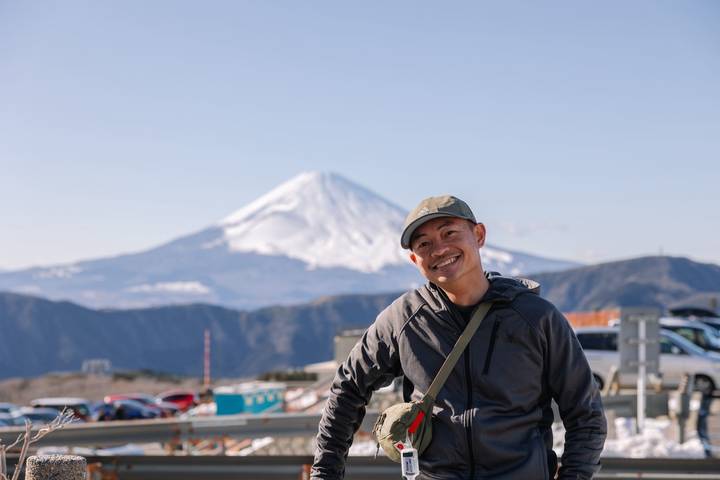
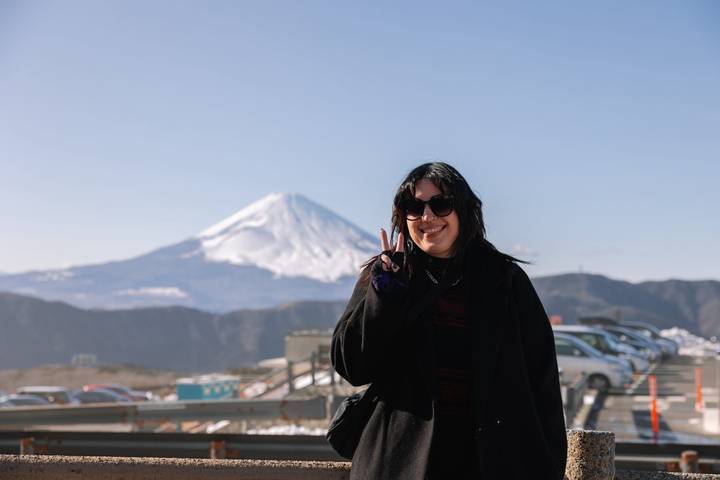
On day four, you leave Tokyo on the Romance Car for Hakone, then take local trains farther into the mountains. The area is known for its scenery and possible views of Mount Fuji, but visibility depends on the weather. Treat the mountain as a welcome possibility, not a guaranteed photo.
Owakudani is an optional stop. The tour notes advise people with asthma or other respiratory conditions to avoid the brief visit and speak with the guide about another arrangement. That is worth considering before the day, rather than deciding only once you arrive.
The overnight stay is at a guesthouse, with twin or triple tatami-mat sleeping arrangements and a family-style dinner. This is one of the trip’s few nights outside a dorm-style hostel and a welcome pause between large cities. One traveler would have liked an extra day in Hakone; if mountains and slower rural stops matter most to you, this is the place where the schedule may feel brief.
Kyoto: shrine gates, old streets, and a very early start
The bullet train takes you from Hakone to Kyoto, where the group stays near the traditional part of town. An evening walk through Gion introduces the district’s historic streets and geisha traditions, followed by an included yakitori dinner. A glimpse of a geisha is possible, but the walk is valuable even without one: it helps you notice the character of the neighborhood.
Day six begins before dawn at Fushimi-Inari. Its long paths run through rows of red torii gates, and an early start helps you see them with fewer people around. You then visit Kiyomizu-dera, set above the city on a wooden platform. The combination gives you two distinct ways to experience Kyoto’s religious sites, though the early alarm is real.
The afternoon is free, with a tea ceremony and kimono rental among the optional choices. These need to be booked in advance and depend on availability. If either matters to you, plan ahead rather than assuming you can arrange it on the day.
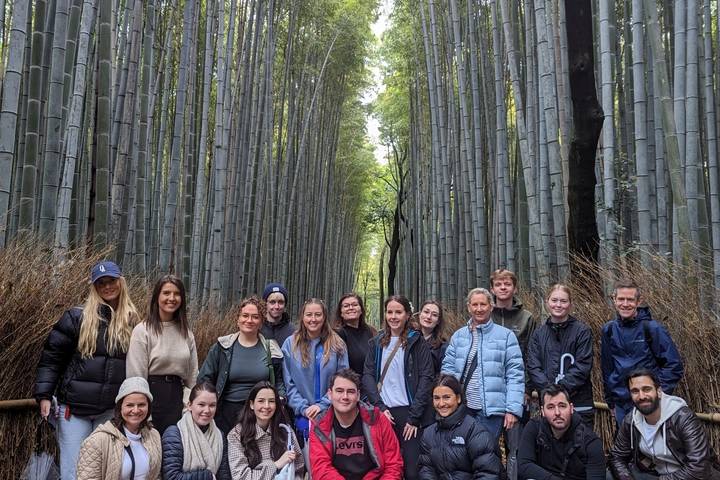
Arashiyama fills the next day with a bamboo grove, a river setting, and a climb up Iwatayama, also called Monkey Mountain. The walk to the top adds effort, but it gives the day more variety than a temple-only outing. An optional traditional boat ride is another way to spend the afternoon; the Samurai and Ninja Museum is an alternative activity that must also be booked ahead.
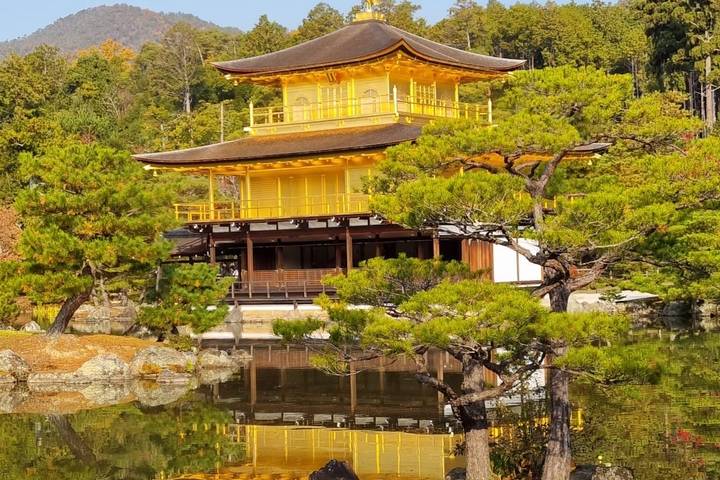
On day eight, the Golden Pavilion and Daitoku-ji temple complex bring the Kyoto portion to a close. The Golden Pavilion is the more immediately striking visit, while Daitoku-ji offers a quieter setting. Then you travel to Osaka, so this is a full day rather than a leisurely finish to Kyoto.
A completely different kind of day out:
- Mt Fuji and Hakone 1-Day Bus Tour Return by Bullet Train
★ 5.0 · 26,383 reviews - TOKYO SKYTREE® Ticket
★ 4.7 · 25,136 reviews - teamLab Borderless Tickets: MORI Building DIGITAL ART MUSEUM
★ 4.7 · 24,126 reviews - teamLab Planets TOKYO Ticket
★ 4.7 · 21,663 reviews
Osaka and Nara: food, nightlife, and deer
Osaka’s Dotonbori district is the setting for a guided food walk. Your guide points out places to try local street food, then the evening carries on with karaoke and drinks. These are social activities, and the group format suits them well; if nightlife is not your thing, you can take the food recommendations and call it an early night.
The next morning is free for AmericaTown, Spa World, the Ramen Museum, or your own plans. In the evening, the group meets at Osaka Castle’s gardens and moats, then heads to Shinsekai for dinner and more local food. You pay for optional meals and activities yourself, so leave room in your budget for Osaka’s tempting snack stops.
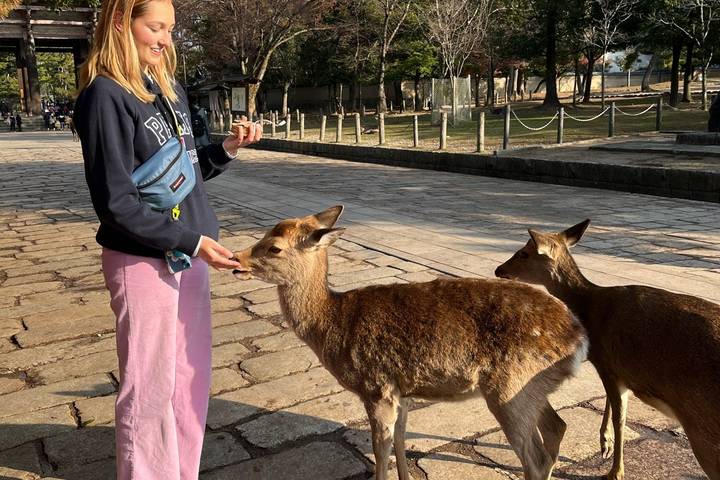
Nara is a 45-minute train ride away. You walk through Nara Park, where deer roam near temples and visitor paths, and spend time around the area’s historic sites before returning to Osaka. The deer are a memorable part of the day, but they are not the whole story: Nara’s former-capital status and temple grounds make this more than a wildlife stop.
An optional Osaka backstreets tour offers a different look at the city. If you have already explored Dotonbori and Shinsekai, that local walk may be a better use of spare time than another round of shopping.
Hiroshima and Miyajima: a thoughtful finish
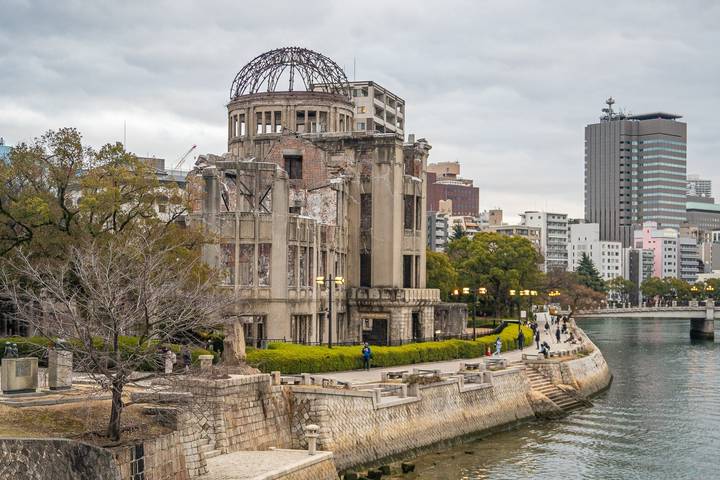
After a relaxed morning, you take the train to Hiroshima. A local guide leads a walk through Peace Memorial Park, including the Atomic Dome, Peace Bell, eternal flame, and museum. This is a serious and affecting part of the trip. Give yourself time to take in the exhibits rather than treating the museum as another item to tick off.
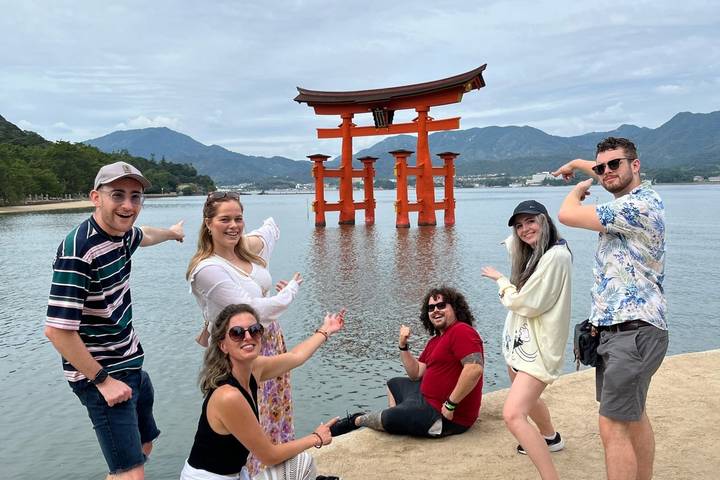
The following day, you travel from Hiroshima toward Miyajima and take a short ferry to the island. The Great Torii gate at Itsukushima Shrine is the main sight, standing offshore and appearing partly surrounded by water at high tide. The island also has forest paths and temples, with free time in the afternoon to explore at your own speed.
There is an important practical detail here: accommodation on days 11 and 12 is listed at a guesthouse in Hiroshima, even though day 12 is spent on Miyajima. The tour ends at Miyajima Island, and the supplied information offers a return train to Tokyo from Hiroshima for $330 AUD. Check your departure arrangements before booking onward flights, and allow time to get from the island back to the rail network.
What the price includes, and what to budget for
The tour starts at $2,645 and includes 12 nights of accommodation, an English-speaking tour guide, transport during the tour, 5 breakfasts, and 4 dinners. Included activities cover many of the main sights, from Senso-ji and Fushimi-Inari to the Osaka food walk and Hiroshima Peace Memorial Park. Vegetarian food is available on request.
Do not read the starting price as an all-in holiday cost. International flights, insurance, airport transfers, optional activities, and most meals are not included. Optional extras include the sushi-making class, tea ceremony, kimono rental, boat ride, Samurai and Ninja Museum, and Osaka backstreets tour. You will also want money for food during free time and the return train to Tokyo if needed.
For a 13-day trip across several cities, included rail transport and planned group visits can make the fare good value, especially if you are a solo traveler who wants help with logistics. The compromise is comfort: rooms are shared, and the accommodation category is budget-oriented. The stated room basis is the cheapest room, not a private room for couples or friends.
The group, pace, and packing realities
The group size is listed as 3 to 22, and the tour is aimed at ages 18 to 39. The format is particularly appealing if you are traveling alone and want company for meals and sightseeing. If you are traveling as a couple or with a friend, expect to share dorm rooms with other people rather than have a private room.
The medium-intensity rating reflects a fair amount of walking, early starts, train changes, and full sightseeing days. Fushimi-Inari starts before dawn, Arashiyama includes a climb, and several city days involve moving between neighborhoods. Comfortable walking shoes and a willingness to keep up with the group will help.
Pack light. The operator recommends no more than 15 kilograms and suggests bringing a backpack if possible. The Shinkansen has a strict luggage limit: bags over 160 centimeters cannot be accommodated. You will also be changing accommodation several times, so a compact bag makes station transfers less of a wrestling match.
The guide’s role is a major part of the value. You get help with transport, local customs, and recommendations during free time, but you are not escorted through every hour. That is a good arrangement if you enjoy some independence. If you want fixed timings and guided commentary at every stop, the Essentials format may feel too open.
Should you book Japan Essentials?
Book this tour if you want a practical first look at Japan, are comfortable in mixed dorms, and like having a guide for key visits while keeping some time to yourself. The route offers a rewarding spread of city life, temples, food, mountain scenery, and reflective history.
Think twice if private rooms, long stays in each city, or a fully scheduled day are priorities. You may prefer a more comfortable, more tightly programmed tour, or a self-planned trip with extra nights in places that catch your interest. For an active, budget-conscious traveler who wants help navigating Japan without giving up every free hour, this is a strong option.
FAQ
Are flights included in the tour price?
No. International flights before and after the tour are not included, and the operator does not book them.
What accommodation should I expect?
You stay 12 nights in hostels and guesthouses, mainly in mixed-gender shared dorms. The Hakone night uses twin or triple tatami-mat arrangements.
How many meals are included?
The included services list 5 breakfasts and 4 dinners. Vegetarian food is available on request.
Is transport included?
Transport during the tour is included, including the bullet train, subways, Romance Car, and other train travel. Airport transfers, transport during free time, and optional activities are excluded.
Does the tour return to Tokyo at the end?
The tour ends on Miyajima Island. A return train to Tokyo from Hiroshima is offered for $330 AUD; the journey takes about four hours.
Can I join if I am over 39?
The tour information lists an age range of 18 to 39, but the operator has also confirmed bookings for people over 39 in individual cases. Ask the operator about your departure before booking.
Just added in Tokyo
- Mt. Fuji & Hakone Cherry Blossom private One Day Tour★ 4.5 · 35 reviews
- Fish Market & Tokyo Skyline Private Walking Tour★ 5.0 · 14 reviews
- 25-Min Downtown Helicopter Tour : Tokyo Skytree and Tokyo Tower★ 5.0 · 19 reviews
- Private Tour with a Local Guide – Learn about daily life in Japan★ 5.0 · 22 reviews
- Tokyo: 3-Hour Bike/E-Bike Tour of the City’s Highlights★ 5.0 · 209 reviews
- Official Japan Go-Kart Through Tokyo Bay / Ginza (IDP Required)★ 4.5 · 71 reviews
- 30-Min Tokyo Central Private Heli Tour– Asakusa, Skytree, Shibuya★ 5.0 · 13 reviews
- Tokyo 2-Hour Genuine Samurai Experience: Kendo in Japan★ 5.0 · 112 reviews
Multi-Day Tours That Visit Arashiyama, compared.

Japan Essentials 9 Day – One Life Adventures: Tokyo to Osaka
Read our review →

Tokyo to Osaka by Rail – Private Tour (14 Days) with Explore!
Read our review →

Essential Japan GO by Europamundo – 7-Day Tokyo to Osaka Tour
Read our review →
Wonders of Japan End Osaka GO by Europamundo – 12-Day Tour
Read our review →
Wonders of Japan End Osaka (including Fukuyama) 12-Day Tour by Europamundo
Read our review →Browse the lists this tour appears in