
Reviewed · MULTI-DAY TOURS THAT VISIT NIKKO
Japan Highlights 11-Day Tour by SKR Reisen Review
Japan’s big appeal is how quickly this trip changes key: in a few days, you move from Tokyo’s rail stations and crowded crossings to quiet lakes below Mount Fuji, then to Hiroshima’s Peace Park and Kyoto’s temple gardens. The small group, capped at 12, makes it easier to keep a guide close by while navigating trains and busy sights.
I like two things in particular: the Shinkansen ride comes with a prepared bento, and the route gives Hiroshima and Miyajima enough time to feel more than a quick photo stop. The German-speaking guide also adds context to places that can otherwise blur together. The trade-off is a brisk schedule, plus a price that may feel high if your final flight or hotel standard is more basic than you expect.
In This Review
- At a glance
- What this Japan route gets right
- Tokyo, from the observation deck to Asakusa
- Mount Fuji, seen from the lakes
- Himeji Castle and the Shinkansen
- Miyajima and Hiroshima’s memorial sites
- Nara’s Great Buddha and lantern path
- Kyoto’s gardens, castle and food stalls
- Fushimi Inari before the flight home
- Price, hotels and what to check before booking
- Who should book this tour?
- FAQ
- Are international flights included?
- How large is the group?
- What language is the tour guided in?
- Is the Nikko day trip included?
- How many hotel nights are included?
- Is the Fushimi Inari summit hike required?
At a glance
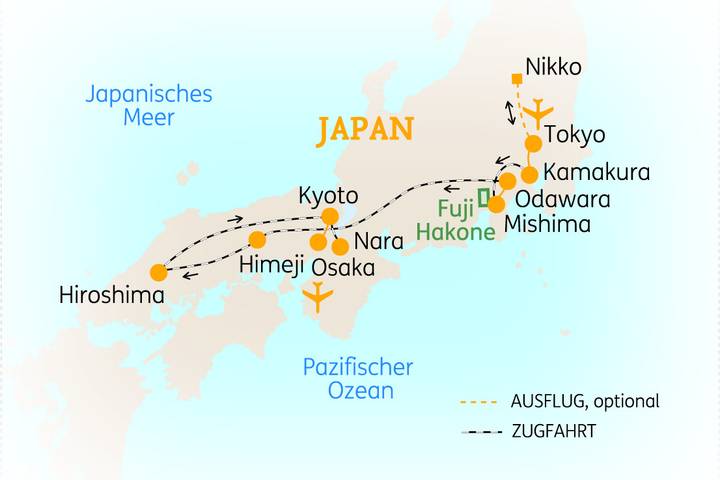
- Tokyo to Kyoto in 11 days: The route covers Tokyo, Nikko as an optional trip, the Fuji area, Himeji, Hiroshima, Miyajima, Nara and Kyoto.
- A German-speaking local guide: The tour is fully guided, with a maximum group size of 12.
- Two high-speed rail days: Travel by Shinkansen to Himeji and onward through the route, with a bento included on the Himeji train day.
- Meaningful variety: Expect city neighborhoods, UNESCO-listed sites, nature, food markets and Hiroshima’s memorial sites.
- Some extras cost more: Nikko is optional, and the international flights may carry a surcharge or vary by availability.
- A busy finish: Fushimi Inari is on the last sightseeing day, followed by your own transfer to Osaka’s Kansai Airport.
What this Japan route gets right
Japan rewards a trip that links places rather than lingering in just one city. This route makes a strong first visit: it introduces Tokyo’s scale, gives you a chance to see Mount Fuji, and then connects famous cultural sites with the hard history of Hiroshima. The sequence is satisfying, and the train journeys make moving between regions part of the experience.
The small-group format matters here. With no more than 12 people, a guide can help the group move through stations and keep the day’s sights in context. The tour is described as low intensity, but that does not mean effortless: you will walk at temples, use public transport and spend several days moving between cities.
The guide is German-speaking, and the tour is designed for adults aged 18 and up. No individual guide’s name is provided, so you cannot request a particular person based on the information available. The praise for the guide’s cultural knowledge and practical support is strong, but the tour’s main value still depends on whether you want a guided overview or more time to explore on your own.
A few more options to weigh up in Tokyo
- Tokyo Disney Resort – Tokyo Disneyland & Tokyo DisneySea Park Tickets
★ 4.8 · 99,488 reviews - SHIBUYA SKY Ticket
★ 4.7 · 46,509 reviews - JR Whole Japan Rail Pass
★ 4.8 · 29,150 reviews
Tokyo, from the observation deck to Asakusa
You arrive in Tokyo on day two, after an international flight that may depart the previous evening. An airport assistant meets you at Narita and can help arrange onward travel, but you make your own way to the hotel by train or taxi. That first day is free, which is useful for resting and getting oriented. If you land at Haneda, confirm what arrival support applies, since the detailed arrival instructions specifically name Narita.
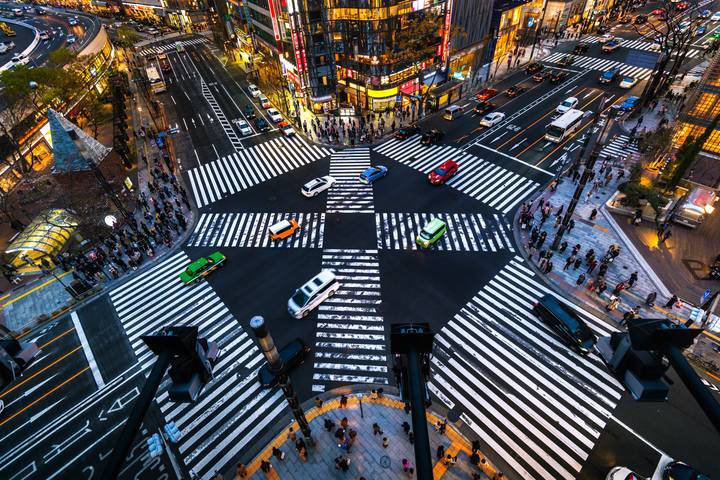
The first guided sightseeing day brings together several sides of Tokyo. From the Metropolitan Government Building’s observation deck, you get a useful overview of the city’s vast scale. Meiji Shrine then offers a quieter pause in a large park, before the group heads to Shibuya for the Hachiko statue and the famous crossing.
After lunch, the route shifts to Asakusa and Senso-ji, where stalls line the approach to the temple. It is a good introduction to traditional shopfronts and temple-going, though the area can be crowded. A stop near Azumabashi Bridge rounds out the day with a view of Tokyo Skytree across the river.
You have a free day after that, or can book the optional rail trip to Nikko. Its shrine and temple complex includes Toshogu, the ornate 17th-century mausoleum of the first Tokugawa shogun, and Taiyuin Temple. The extra excursion is listed at €170 per person, with a minimum of two participants, and needs to be booked in advance. If you prefer a slower pace, staying in Tokyo gives you time to follow your own interests instead.
Mount Fuji, seen from the lakes
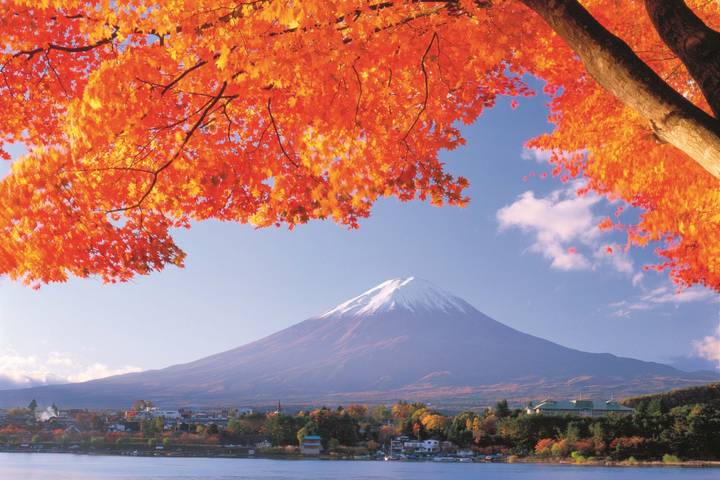
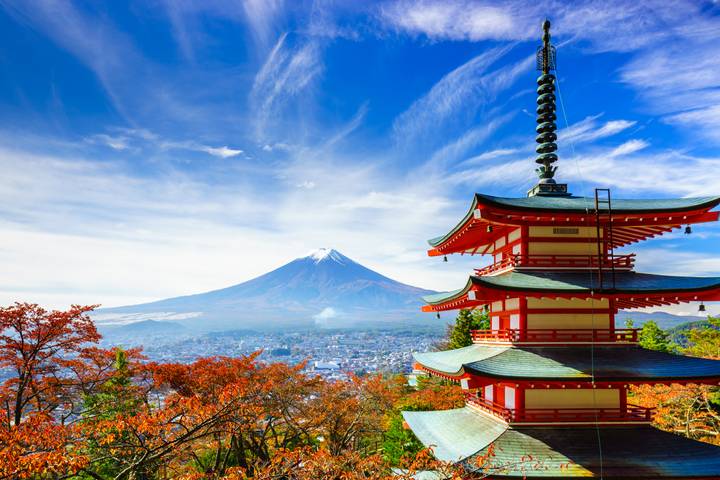
On day five, the urban pace gives way to the Fuji region. Stops include Lake Kawaguchiko, Oishi Park and Lake Motosuko, with the order and timing adjusted for weather and visibility. That flexibility is sensible: Mount Fuji can be hidden by cloud, and no schedule can promise a clear view.
The lakeside stops offer a different kind of Japan from the cities, with room to take in the mountain and the surrounding scenery. You continue to Mishima in the late afternoon and spend one night there. Keep expectations realistic: this is a scenic day built around opportunities to see Fuji, not a climb of the mountain.
Himeji Castle and the Shinkansen
The next morning begins with a short walk to Mishima Station and a ride on the Shinkansen. A prepared bento is included for the journey to Himeji, a practical touch that turns lunch into part of the rail experience rather than a search for food during a tight connection.
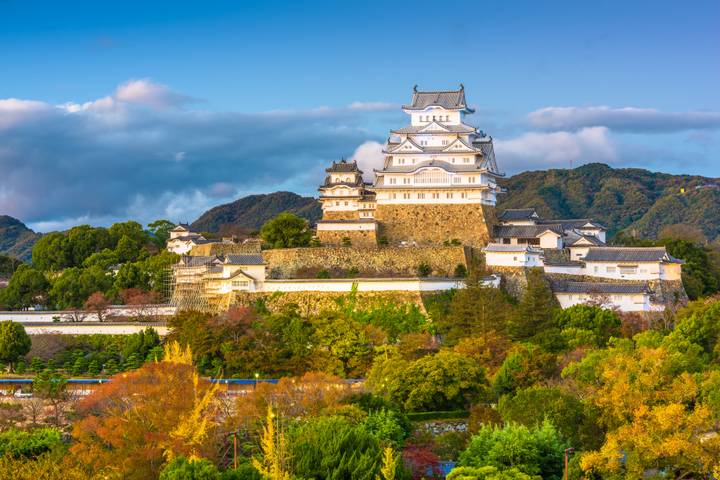
In Himeji, you visit the White Heron Castle, a UNESCO World Heritage Site, and Koko-en Garden. The castle is the star: its white exterior and layered defensive design make it one of the trip’s most striking historic stops. The garden offers a quieter counterpoint before the train ride continues to Hiroshima.
This is a long transfer day, even with the excitement of high-speed rail. Separate baggage transport is provided on days six to eight, which means you do not need to manage your main luggage at every station during this section. Pack a small day bag with what you need until the next hotel.
A completely different kind of day out:
- Mt Fuji and Hakone 1-Day Bus Tour Return by Bullet Train
★ 5.0 · 26,383 reviews - TOKYO SKYTREE® Ticket
★ 4.7 · 25,136 reviews - teamLab Borderless Tickets: MORI Building DIGITAL ART MUSEUM
★ 4.7 · 24,126 reviews - teamLab Planets TOKYO Ticket
★ 4.7 · 21,663 reviews
Miyajima and Hiroshima’s memorial sites
Miyajima is about an hour from Hiroshima by train and ferry. Itsukushima Shrine is best known for the red torii gate that appears to rise from the water at high tide. Tide conditions change the view, so the scene may differ from the familiar photographs, but the island remains a worthwhile stop in its own right.
In the afternoon, the focus turns to Hiroshima’s wartime history. You visit the Peace Memorial Museum and memorial sites, then walk through Peace Park. Give these places your attention; the museum and park are not simply another set of sightseeing stops. Their place in the itinerary gives the trip a sobering contrast to the temples, gardens and city views elsewhere.
Dinner is not included that evening. Your guide can recommend an okonomiyaki restaurant, a useful way to try Hiroshima’s well-known savory pancake without having to choose a place from scratch. You spend two nights in Hiroshima, which allows a little more breathing room than a one-night stop.
Nara’s Great Buddha and lantern path
On day eight, the route goes from Hiroshima through Kyoto to Nara, then back to Kyoto for the night. It is another substantial travel day, but the destination is one of Japan’s most memorable temple towns. At Todaiji, the Great Buddha sits inside an immense wooden temple building. The scale of both the statue and the structure is hard to grasp until you are standing inside.
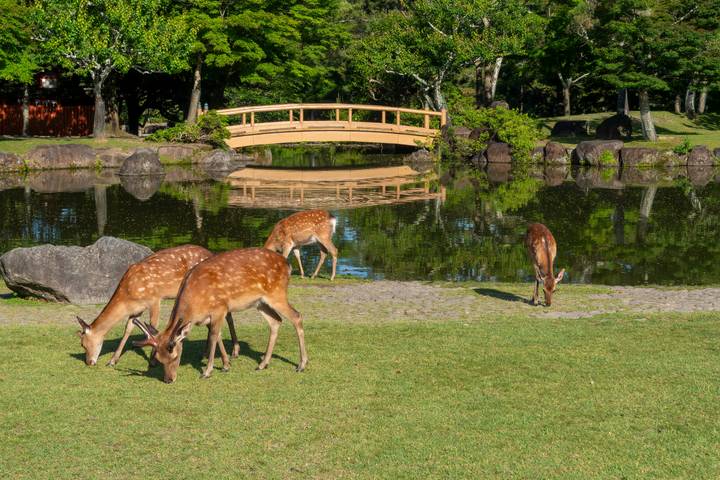
The walk toward Kasuga Shrine passes stone and bronze lanterns, then continues through Nara Park, where deer roam. Take care with food around them, and follow your guide’s directions. A café stop for tea and local sweets gives the day a welcome pause before the train ride to Kyoto.
Nara’s mix of sacred architecture, lantern-lined paths and open parkland makes it a useful bridge between Hiroshima and Kyoto. Still, with transfers and several major sights, you should expect a full day rather than a leisurely wander.
Kyoto’s gardens, castle and food stalls
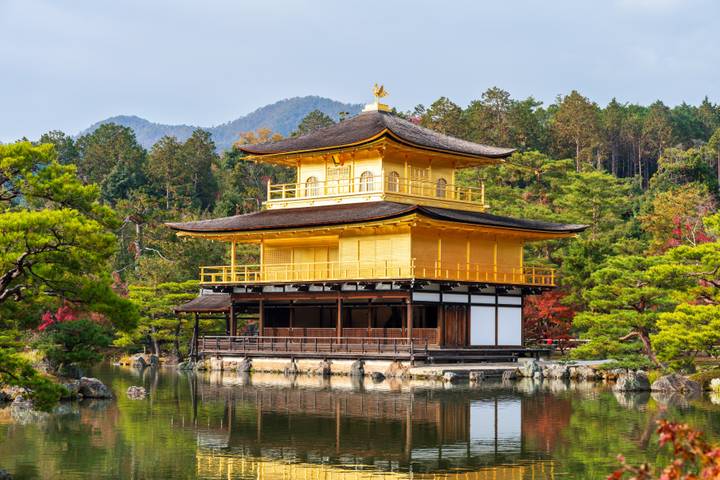
Kyoto gets two nights and two sightseeing days, a compact introduction to a city that could easily fill much longer. The first full day includes Ryoanji’s famous Zen garden, Kinkakuji, the Golden Pavilion, and Nijo Castle, once home to the Tokugawa shogunate. Each offers a different angle on Japanese religious and political history.
Teramachi-dori and Nishiki Market bring the focus back to everyday life and food. You can browse ingredients and local specialties, then find lunch along the shopping street. A traditional tea ceremony is also included, offering a quieter, more structured cultural experience amid a day of major sights.
There is a lot packed into this Kyoto day. The temples and castle are spread across the city, and the schedule relies on public transport, so follow the guide’s timing rather than assuming you can linger at every stop. The tour includes entrance fees and national park fees, but personal purchases and most meals remain your responsibility.
Fushimi Inari before the flight home
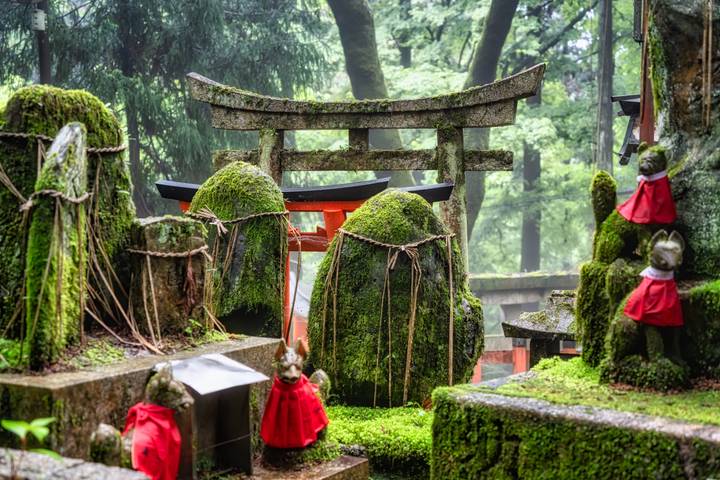
The final sightseeing day is built around Fushimi Inari Shrine and its thousands of red-orange torii gates. You can keep to a short walk through the lower paths or take on the longer climb to the summit, which takes about three hours. The route gets steep in places, so choose according to your energy and available time rather than treating the summit as a must-do.
Afterward, you make your own way to Kansai International Airport in Osaka for the return flight. The tour is described as ending in Kyoto, but the flight departs from KIX, so allow time for the train or bus journey and confirm the recommended departure time with the tour operator.
The trip is listed as 11 days, though the sightseeing runs from day two through day ten, with international travel likely overnight at the start and end. In practice, you should think of it as a short, full itinerary with limited free time, not 11 complete days on the ground.
Price, hotels and what to check before booking
The advertised starting price is $4,816, with economy flights listed from Frankfurt to Tokyo and back from Osaka, subject to availability and possible surcharges. The final price can shift with airfare, dates, room choice and flight routing. One reported total exceeded 5,400 per person, and included an Economy Light ticket with a Hong Kong layover. That is a reminder to check the actual flight itinerary and baggage terms before you pay.
Accommodation is included for eight nights in a double room with a bath or shower and toilet. The route uses three nights in Tokyo, one in Mishima, two in Hiroshima and two in Kyoto. One account of the trip described the hotels as basic standard three-star properties and found some breakfasts disappointing. If hotel comfort is central to your decision, ask for the specific properties and meal details for your departure before booking.
Breakfast is included daily. The Shinkansen day includes a bento, and a traditional tea ceremony is part of the Kyoto program. A typical Japanese onsen visit is also listed among the included services, though its exact timing is not specified. Personal spending, tips and travel insurance are not included.
The operator’s overall TourRadar rating is 4.4 out of 5, while this particular tour has a 4.2 rating based on two published ratings. The category scores are strongest for the guide and itinerary, at 5.0 and 4.5, and lower for transport and accommodation, at 3.5 each. That pattern fits the practical choice: this route’s guided sightseeing is its clearest strength, while comfort and transport details merit careful checking.
Who should book this tour?
Book it if you want a guided first visit that links Japan’s best-known sights without having to plan every train, transfer and temple day yourself. The German-speaking guide, small group and broad mix of cities, nature and history are especially useful if you prefer context and company to independent logistics.
Think twice if you want luxury hotels, flexible days or long stays in each city. The schedule is efficient but busy, and the final value depends on the flights and hotel standard offered for your dates. Before booking, ask for the confirmed airfare, hotel list, exact Nikko price and the timing of the onsen visit. If those details suit your budget, this is a well-shaped introduction to Japan, with Hiroshima and Miyajima providing more substance than a route focused only on temples and photo stops.
FAQ
Are international flights included?
The tour details list economy flights from Frankfurt to Tokyo and a return from Kansai International Airport in Osaka. Flights are subject to availability, and a surcharge may apply. Confirm the final offer, route, layovers and fare conditions before booking.
How large is the group?
The maximum group size is 12. The tour is listed as guaranteed from six participants, while the general group range is given as two to 12.
What language is the tour guided in?
The tour is fully guided by a local, German-speaking guide.
Is the Nikko day trip included?
No. The Nikko train excursion is optional and is listed at €170 per person, with a minimum of two participants. It should be booked in advance. Confirm the current price when arranging your departure.
How many hotel nights are included?
Eight nights in a double room with a bath or shower and toilet are included: three in Tokyo, one in Mishima, two in Hiroshima and two in Kyoto.
Is the Fushimi Inari summit hike required?
No. You can take a short walk through the lower torii gate paths or choose the longer hike to the summit, which takes about three hours. The route is steep in places.
Just added in Tokyo
- Mt. Fuji & Hakone Cherry Blossom private One Day Tour★ 4.5 · 35 reviews
- Fish Market & Tokyo Skyline Private Walking Tour★ 5.0 · 14 reviews
- 25-Min Downtown Helicopter Tour : Tokyo Skytree and Tokyo Tower★ 5.0 · 19 reviews
- Private Tour with a Local Guide – Learn about daily life in Japan★ 5.0 · 22 reviews
- Tokyo: 3-Hour Bike/E-Bike Tour of the City’s Highlights★ 5.0 · 209 reviews
- 30-Min Tokyo Central Private Heli Tour– Asakusa, Skytree, Shibuya★ 5.0 · 13 reviews
- Tokyo 2-Hour Genuine Samurai Experience: Kendo in Japan★ 5.0 · 112 reviews
- Official Japan Go-Kart Through Tokyo Bay / Ginza (IDP Required)★ 4.5 · 71 reviews
Multi-Day Tours That Visit Nikko, compared.


Tokyo to Osaka by Rail – Private Tour (14 Days) with Explore!
Read our review →
14 Days Japan Panoramic (Private 3 Star Hotels) by Stunning Tours
Read our review →
Magical and Dreamy Japan 14-Day Tour by Europamundo
Read our review →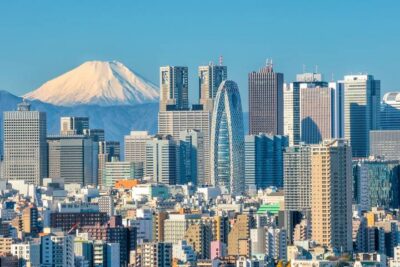
Central Japan by Europamundo – 9-Day Tour from Tokyo
Read our review →
Japanese Scenes and Mount Fuji 19-Day Tour by Europamundo
Read our review →
Tokyo, Kyoto and Alps by Europamundo – 6-Day Tour
Read our review →Browse the lists this tour appears in