
Reviewed · MULTI-DAY TOURS THAT VISIT OSHINO
Japan In-Depth 16-Day Tour by SKR Reisen – Reviews & Prices
Japan In-Depth links Tokyo’s city streets, Mount Fuji viewpoints, Hiroshima’s Peace Park and Kyoto’s temples in one 16-day trip. I like the small group of up to 12 and the mix of Shinkansen, local trains, buses and ferries, which puts daily travel into the experience rather than keeping you behind a coach window.
I also like the overnight at Koya-san, a rare chance to stay in traditional temple accommodation. The trade-off is pace: there are many stops and hotel changes, and some long transfers may take four to six hours by coach. This is a guided sampler, not a slow stay in any one place.
In This Review
- At a glance
- A route built around contrasts
- Tokyo: big-city sights, with one day to yourself
- Mount Fuji: a scenic day with a road transfer
- Hiroshima and Miyajima: history, then a sacred island
- Himeji and Kyoto: castles, gardens and tea
- Nara and the special night at Koya-san
- Nachi and Osaka: a waterfall, local food and a final city
- Transport, meals and what the price covers
- Who should book Japan In-Depth?
- FAQ
- Is the tour guided in English?
- How many people are in the group?
- Are there free days during the tour?
- Is the airport transfer in Tokyo included?
- Are international flights included?
- What meals are included?
- What is the Koya-san accommodation like?
- Is travel insurance included?
- What is the minimum age?
At a glance
- Tokyo in three nights: A guided city tour covers Meiji Shrine, Sensoji Temple, the city hall viewpoint and Ginza, with another day free.
- Fuji country by road: Stop at Lake Motosuko and Oishi Park, with a bento lunch near Lake Kawaguchiko.
- A meaningful Hiroshima visit: Allow time for the Peace Park and museum before crossing by train and ferry to Miyajima.
- Kyoto as a base: Four nights allow for temples, a tea ceremony, a day trip to Nara and a free day.
- One night at Koya-san: Traditional tatami and futons give this stay a different feel from the standard hotel nights.
- The language is German: The local guide leads the group in German, and the tour is intended for adults aged 18 and over.
A route built around contrasts
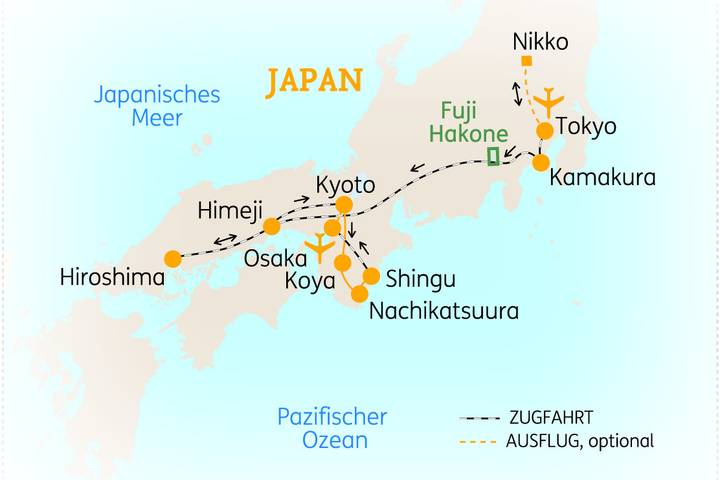
This tour’s strength is its range. You move from Tokyo’s scale and speed to a lakeside view of Mount Fuji, then to Hiroshima, Kyoto, Nara, Koya-san and Osaka. Along the way, you ride the Shinkansen, use local public transport, take a ferry and sample a few regional meals.
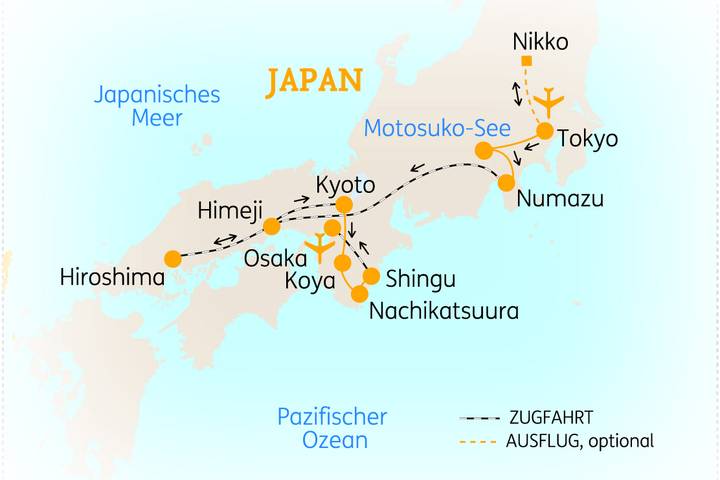
That variety comes with a brisk schedule. You spend three nights in Tokyo, two in Hiroshima, four in Kyoto, then one night each in Mishima, Koya-san, Shingu and Osaka. The plan gives you a broad view of Japan, but it leaves little room to linger outside the two free days in Tokyo and Kyoto.
The group is listed as two to 12 people, with the departure guaranteed from six. A group this size can be easier to move through stations and busy temple grounds than a large coach party. Still, the tour is German-guided, so it suits you best if you are comfortable following explanations and group instructions in German.
A few more options to weigh up in Tokyo
- Tokyo Disney Resort – Tokyo Disneyland & Tokyo DisneySea Park Tickets
★ 4.8 · 99,488 reviews - SHIBUYA SKY Ticket
★ 4.7 · 46,509 reviews - JR Whole Japan Rail Pass
★ 4.8 · 29,150 reviews
Tokyo: big-city sights, with one day to yourself
Your first day is spent flying to Japan. After landing in Tokyo on Day 2, you make your own way to the hotel by public transport or taxi. That is a useful detail to plan for: the trip does not begin with a guided airport pickup, and you will need to manage your luggage and arrival transfer yourself.
The guided city tour on Day 3 brings together very different corners of Tokyo. Meiji Shrine offers a wooded Shinto setting dedicated to Emperor Meiji. At Sensoji, in the older Asakusa district, you can see a major Buddhist temple in an active place of worship. The view from the Tokyo Metropolitan Government Building gives you a sense of the city’s vast scale, while Ginza provides a sharper contrast with its modern shops and restaurants.
Day 4 is free, or you can book the optional Nikko excursion. Nikko’s shrine and temple complex includes Toshogu, known for its elaborate woodcarving, and Taiyuin Temple. This is a full day away from Tokyo, so it is worth choosing based on your priorities: more time to explore the capital at your own pace, or a guided look at another important religious site.
Mount Fuji: a scenic day with a road transfer
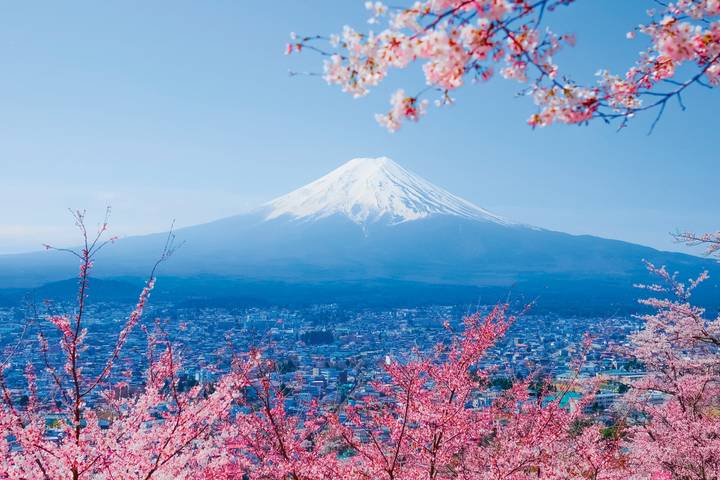
On Day 5, you leave Tokyo for the Fuji area, stopping at Lake Motosuko for views of the mountain. You also visit Oishi Park beside Lake Fujikawaguchiko, where gardens frame the lakeside setting. A traditional bento lunch is included at the Kawaguchiko Natural Living Center.
The day depends on the weather. Mount Fuji can be obscured, so treat the views as a possibility rather than a promise. There is also an optional visit to Oshino, an old village, before continuing to Mishima for the night. The next morning you head south by Shinkansen.
Hakone appears among the tour’s destinations, but the daily schedule does not describe a specific Hakone visit or activity. If that region is a particular reason for booking, confirm exactly what is included on your departure before you pay.
Hiroshima and Miyajima: history, then a sacred island
Day 6 is a long-distance rail day. You travel from Mishima to Hiroshima by second-class Shinkansen, a practical way to cover ground and a highlight for anyone interested in Japan’s famously punctual rail network. Dinner is an okonomiyaki experience, with the local savoury pancake cooked on a hot iron plate.
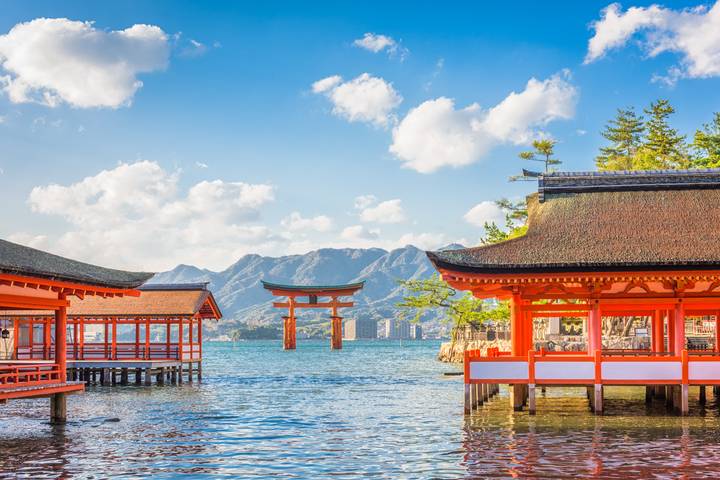
The following morning is devoted to Hiroshima Peace Memorial Park and its museum. This is an emotionally weighty visit, and the museum asks for time and attention. The schedule then takes you by train and ferry to Miyajima, where Itsukushima Shrine’s red gate is the famous sight. Its reflection is most striking at high tide, so the exact view depends on the tide and timing.
You return to Hiroshima for the night. The combination makes sense: first consider the human cost of war, then visit a major religious site in a very different setting. Two nights in Hiroshima give you time for both, though the day is full.
A completely different kind of day out:
- Mt Fuji and Hakone 1-Day Bus Tour Return by Bullet Train
★ 5.0 · 26,383 reviews - TOKYO SKYTREE® Ticket
★ 4.7 · 25,136 reviews - teamLab Borderless Tickets: MORI Building DIGITAL ART MUSEUM
★ 4.7 · 24,126 reviews - teamLab Planets TOKYO Ticket
★ 4.7 · 21,663 reviews
Himeji and Kyoto: castles, gardens and tea
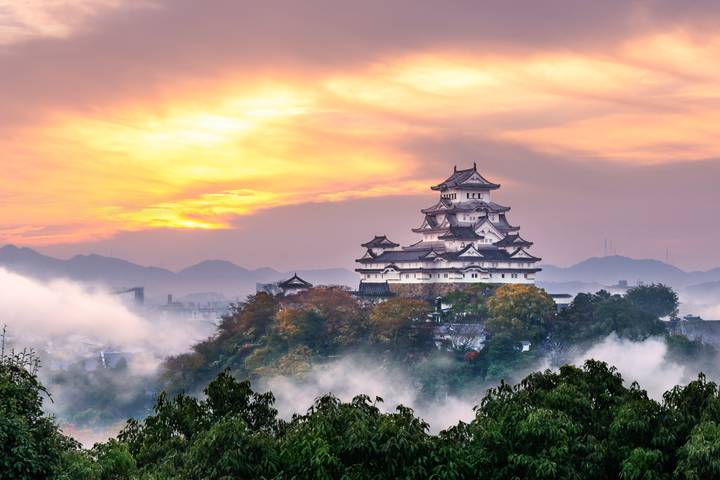
On Day 8, you travel from Hiroshima to Kyoto with a stop at Himeji Castle. Known as the White Heron Castle, it is a major cultural site and one of the trip’s clearest architectural highlights. The stop breaks up the train journey, but it also means you arrive in Kyoto after a sightseeing day rather than with a free afternoon.
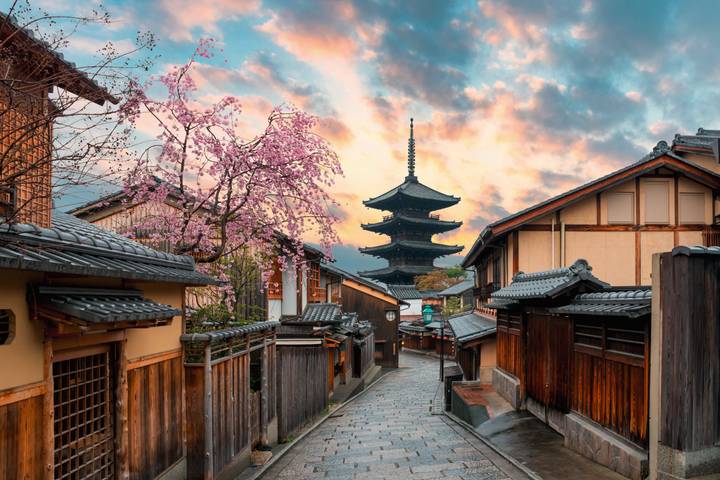
Kyoto gets four nights, more than any other stop. The guided tour includes Ryoanji’s Zen garden, Kinkaku Temple’s gold-leaf-covered upper floors and Sanjusangendo, known for its Buddhist tradition. A tea ceremony is scheduled for the afternoon. These visits offer a useful introduction to Kyoto’s religious and artistic life, though famous sites can be busy and group visits rarely allow for unlimited time.
Day 10 is free, or you can add an excursion to Fushimi Inari Shrine and Nijo Castle. Fushimi Inari is known for its long galleries of shrine gates, while Nijo Castle gives you a window into the world of the Tokugawa shogunate. Check the optional excursion price when booking: the supplied figures vary, so confirm the current amount and minimum group size.
Nara and the special night at Koya-san
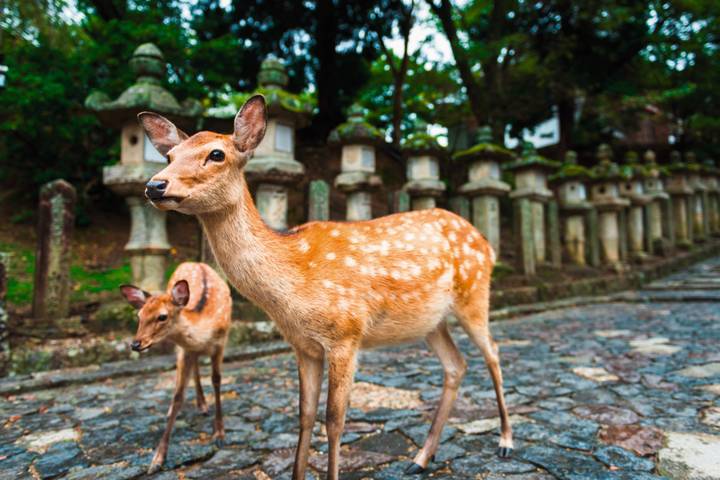
The Day 11 outing to Nara includes Todaiji Temple and its monumental bronze Buddha, called the Daibutsu, followed by Kasuga Shrine. Back in Kyoto, the group visits Nishiki Market and walks through Gion, with its traditional wooden machiya houses. This is a busy day, combining a separate city with two central Kyoto stops, so expect a fair amount of movement.
On Day 12, you leave Kyoto for Koya-san, a sacred mountain area with historic religious buildings. The night is in traditional temple accommodation, with tatami mats and futons, a private toilet and a shared bathroom. It is not a standard hotel night, and that is the point: you get a taste of a different style of lodging and a quieter setting.
The practical compromise is the shared bathroom and sleeping on futons. If those are a problem for you, ask about the exact room arrangements before booking. The tour describes the stay as a temple hostel, so go in expecting simplicity rather than hotel comforts.
Nachi and Osaka: a waterfall, local food and a final city
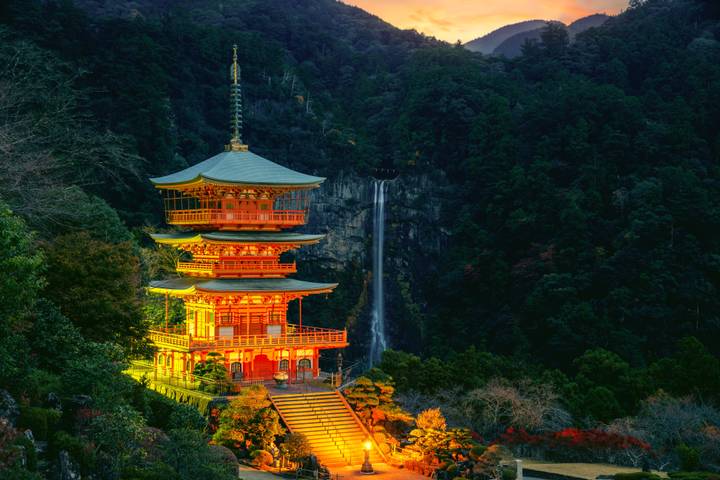
Day 13 takes you south to Kumano Nachi Taisha Shrine, set on a mountainside near Nachi Waterfall. At 133 metres, the waterfall is a major sight in its own right and has long been treated as an object of worship. You then continue by coach to Shingu, where dinner at a local izakaya features regional fish dishes.
This is one of the route’s longer overland stretches. A lower-rated assessment raised concern about coach journeys of four to six hours on long transfer days, as well as the guide’s ability to adjust plans spontaneously. Keep that in mind if you value flexible pacing. The group has a set route, and the schedule may not leave much room for last-minute changes.
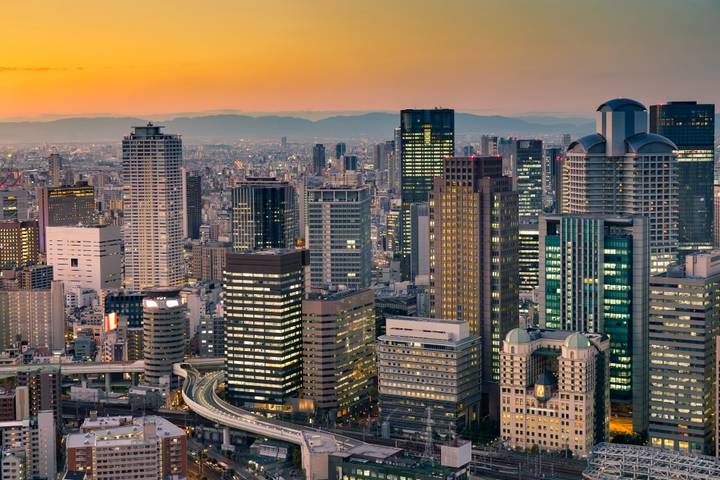
Day 14 brings you to Osaka by public transport, followed by a city tour. The description promises a mix of skyscrapers, historic temples and shrines, and lively shopping streets, but gives few specific stops. You have one night in Osaka before travelling to the airport the next morning, so this is an introduction rather than a deep visit.
Transport, meals and what the price covers
The tour starts in Tokyo and ends in Osaka, avoiding the need to return to your starting city. Economy flights between Frankfurt and Japan are listed as included, with arrival at Narita and departure from Kansai shown in the route details. Flight availability, airport and any surcharge can vary, so the starting price of $6,721 should not be treated as a guaranteed final total.
The fare includes 12 nights in double rooms with private bathroom facilities and one night in temple accommodation. Daily breakfast is included, along with a bento lunch and two dinners. The okonomiyaki meal and the regional fish dinner give you a taste of local food without requiring you to organize every meal yourself.
Also included are entrance fees and national park fees, a German-speaking local guide, public transport and second-class Shinkansen travel on the listed rail days. Separate baggage transport is arranged on Days 6 to 8 and 12 to 14, which can make those travel stretches easier. Personal expenses, gratuities, insurance and some optional excursions are extra.
For a 16-day trip with international flights, a guide, transport, accommodation and several meals, the price can represent reasonable value if you want the logistics handled. It is less attractive if you prefer to travel independently or expect private coach transfers throughout. The published category scores are strongest for the itinerary, transport, guide, accommodation and food, each marked 5 out of 5. The overall score is 4 out of 5 based on only two ratings, so treat those numbers as a limited signal, not a guarantee.
Who should book Japan In-Depth?
I would consider this tour if you want a broad introduction to Japan without planning every train, hotel and temple visit yourself. The route is especially appealing if you value Kyoto, Hiroshima, Mount Fuji and a night in temple accommodation, and if travelling in a small German-speaking group suits you.
Think twice if you want a slow itinerary, substantial free time, English-language guiding or complete flexibility over daily plans. Before booking, confirm the current flight details, optional excursion prices, group size, and the long transfer arrangements. If those fit your expectations, this is a well-rounded way to see several very different sides of Japan in just over two weeks.
FAQ
Is the tour guided in English?
No. The tour is guided in German by a local guide.
How many people are in the group?
The tour is listed for two to 12 people and is guaranteed from six participants.
Are there free days during the tour?
Yes. Day 4 in Tokyo and Day 10 in Kyoto are free for individual exploration, with optional excursions available.
Is the airport transfer in Tokyo included?
No airport pickup is specified for arrival. You make your own way to your first accommodation by public transport or taxi.
Are international flights included?
Economy flights to Tokyo and back from Osaka are listed as included, subject to availability. Flight surcharges may apply, and the final offer can vary.
What meals are included?
Daily breakfast is included, along with a bento lunch and two dinners. The listed dinners include okonomiyaki in Hiroshima and regional fish dishes at an izakaya in Shingu.
What is the Koya-san accommodation like?
You spend one night in traditional temple accommodation with tatami mats, futons, a private toilet and a shared bathroom.
Is travel insurance included?
No. Insurance is not included, and the tour information recommends purchasing travel cancellation insurance.
What is the minimum age?
The stated age range begins at 18. Exceptions may apply for minors travelling with adults.
Just added in Tokyo
- Mt. Fuji & Hakone Cherry Blossom private One Day Tour★ 4.5 · 35 reviews
- Fish Market & Tokyo Skyline Private Walking Tour★ 5.0 · 14 reviews
- 25-Min Downtown Helicopter Tour : Tokyo Skytree and Tokyo Tower★ 5.0 · 19 reviews
- Private Tour with a Local Guide – Learn about daily life in Japan★ 5.0 · 22 reviews
- Tokyo: 3-Hour Bike/E-Bike Tour of the City’s Highlights★ 5.0 · 209 reviews
- 30-Min Tokyo Central Private Heli Tour– Asakusa, Skytree, Shibuya★ 5.0 · 13 reviews
- Tokyo 2-Hour Genuine Samurai Experience: Kendo in Japan★ 5.0 · 112 reviews
- Official Japan Go-Kart Through Tokyo Bay / Ginza (IDP Required)★ 4.5 · 71 reviews
Multi-Day Tours That Visit Oshino, compared.
13-Day Japan Tour: Tokyo, Mount Fuji, Kyoto, Nara, Osaka & Beyond by The Dragon Trip
Read our review →
Best of Japan: Tokyo to Osaka by Odynovo – 9-Day Tour
Read our review →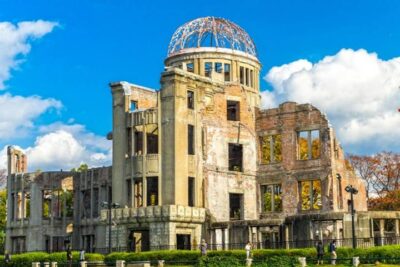
10 Days Japan Delight with Hiroshima (Private Guide No Group) by UME Travel
Read our review →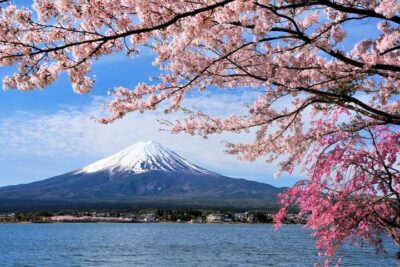
Splendours of Japan (Hiroshima, Takayama Festival) by Trafalgar – 13-Day Tour
Read our review →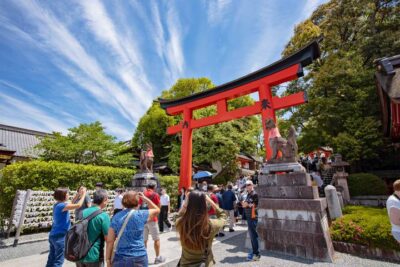
Splendours of Japan by Trafalgar – 9-Day Tokyo to Kyoto Tour
Read our review →
10-Day Private Japan Family Tour with Kids by UME Travel – Tokyo to Osaka
Read our review →
9 Days All Inclusive Japan Classics (Private Guide and Driver) by UME Travel
Read our review →Browse the lists this tour appears in