
Reviewed · MULTI-DAY TOURS THAT VISIT TAKAYAMA
Splendours of Japan by Trafalgar – 9-Day Tokyo to Kyoto Tour Review
Kyoto’s Fushimi Inari Shrine is the sort of place that earns its reputation: a long path of orange torii gates climbs into the woods, and you can walk as far as your legs and schedule allow. This nine-day tour links that memorable Kyoto visit with Tokyo, Mount Fuji, mountain towns and Kanazawa.
I like two things in particular: the route mixes headline sights with hands-on stops, from sushi preparation to making washi paper, and the hotels and transport are arranged for you. The main trade-off is time. This is a fast-moving trip with long drives, early starts and walking that can reach several miles a day.
In This Review
- Key points to know before you book
- From Tokyo streets to Kyoto shrines
- Tokyo: temples, towers and a sushi lesson
- Mount Fuji and the mountain road to Takayama
- Gokayama and Kanazawa’s craft traditions
- Kyoto: gold pavilion, local lunch and torii gates
- What the price covers, and where value lies
- Pace, walking and practical details
- Who should book this Japan tour?
- FAQ
- What is included in the tour price?
- How many people are in the group?
- How much walking should I expect?
- Are flights included?
- Can the tour accommodate dietary requirements?
- Which hotels are used?
- Does the tour visit Matsumoto Castle?
Key points to know before you book
- Fushimi Inari offers a choose-your-own-distance walk: Follow the torii-lined path uphill, but expect an active visit with stairs and uneven ground.
- Gokayama brings you into a working craft tradition: See steep-roofed Gassho-zukuri homes, meet a local family and try making washi paper.
- Mount Fuji access depends on conditions: The tour plans a coach ride to the 5th Station at 2,300 metres, with views over Lake Kawaguchiko when weather allows.
- The route trades depth for range: You see Tokyo, Fuji, Takayama, Gokayama, Kanazawa and Kyoto in nine days, with several substantial coach journeys.
- Guide and hotel quality are strong points: Past tour directors named Yama and Mike received particular praise, while guide and accommodation scores are among the highest categories.
- Plan for active days, not a gentle coach holiday: The activity description calls the tour dynamic, while another rating labels it low intensity. Daily walking may reach 3 to 6 miles, with hills, stairs and standing time.
From Tokyo streets to Kyoto shrines
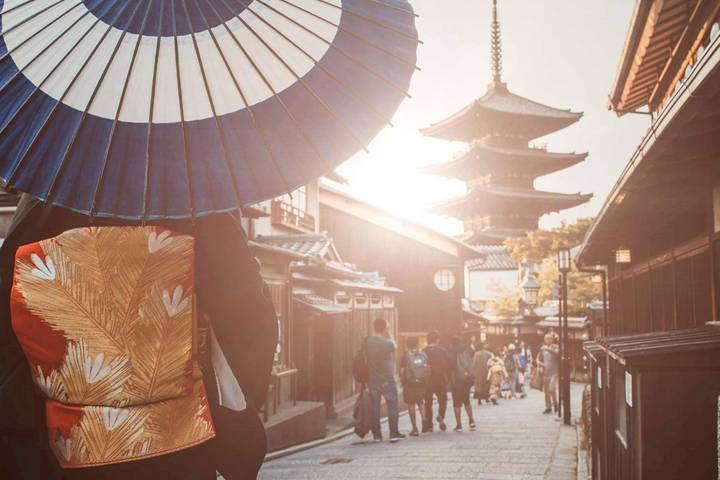
This is a guided introduction to Japan’s contrasts: the scale of Tokyo, the rural Fuji Five Lakes region, the old streets of Takayama, Kanazawa’s gardens and samurai quarter, then Kyoto’s temples and lanes. You get a broad sweep, but not much unscheduled time to linger.
The group size is listed as 20 to 32, with an English-speaking Travel Director and a separate driver. That structure is useful in a country where train connections, coach transfers and busy temple approaches can eat into a day if you are arranging everything yourself. It also means you follow a fixed schedule and share much of your sightseeing.
The route uses a luxury air-conditioned coach for the overland sections and an express train from Kanazawa to Kyoto. Wi-Fi is listed as available on the coach in most countries, but do not count on it as a substitute for your own connection. Airport shuttle transfers are included on the first and last days, and flights are not.
A few more options to weigh up in Tokyo
- Tokyo Disney Resort – Tokyo Disneyland & Tokyo DisneySea Park Tickets
★ 4.8 · 99,488 reviews - SHIBUYA SKY Ticket
★ 4.7 · 46,509 reviews - JR Whole Japan Rail Pass
★ 4.8 · 29,150 reviews
Tokyo: temples, towers and a sushi lesson
Your first day is for arrival and settling in at the New Otani Garden Tower. In the evening, meet the Travel Director and the group over a drink and local appetizers. That welcome is a practical chance to learn how the next few days will run and meet the people you will be travelling with.
Day two starts in Asakusa at Sensoji, Tokyo’s oldest temple site, founded in 628 and rebuilt over the centuries. Nakamise Street leads toward the temple with stalls selling traditional sweets, paper goods and crafts. It is a popular stop, so expect company; the appeal is as much the lively approach and local ritual as the temple building itself.
Tokyo Skytree gives you a useful sense of the city’s scale from above. On a clear day, views can stretch toward Mount Fuji and Tokyo Bay. Later, the plan includes Ginza, a polished shopping district. An optional evening outing to Shinjuku offers a different side of Tokyo, but it costs extra and follows a full sightseeing day.
On day three, you visit the Imperial Palace Plaza and walk through the East Gardens, once part of Edo Castle. The Tokyo National Museum adds a look at Japanese art and archaeological objects. These are worthwhile cultural stops, though the schedule gives you a broad introduction rather than time to study every gallery.
The sushi lesson is a welcome change of pace. A professional chef shows you how to prepare sushi, then you eat the lunch you have made. Afterward, the coach heads for the Fuji Five Lakes area and Oshino Hakkai, a village known for eight clear, spring-fed ponds. The water comes from Mount Fuji’s snowmelt, a simple detail that helps connect the famous peak to everyday life in the region.
Mount Fuji and the mountain road to Takayama
The Fuji Marriott Yamanakako is your base for the night before the trip continues through the Japanese Alps. On day four, the coach climbs to Mount Fuji’s 5th Station, at 2,300 metres. From there, the views take in Lake Kawaguchiko and surrounding peaks, but weather matters: cloud can obscure the mountain, and access may be affected by conditions.
This is a scenic day with a long transfer to Takayama. The road journey is part of the experience, passing through mountain country, but it leaves less room for independent exploring once you arrive. You stay at Associa Takayama Resort and have dinner with the group.
Takayama is known for its Edo-style Old Town, where wooden buildings and narrow streets offer a change from Tokyo’s scale. On day five, you walk through the historic district and sample local sake. Lunch features Hida-gyu beef, a prized regional variety. If you do not eat beef, tell the operator about dietary needs before departure; special meals can be requested, but some restrictions cannot be guaranteed.
Gokayama and Kanazawa’s craft traditions
Gokayama is one of the tour’s most distinctive stops. Its Gassho-zukuri houses have steep thatched roofs designed for heavy snow, and the structures were built without nails. You meet a local family in a traditional house, then see artisans making washi paper and try the process yourself.
That hands-on workshop gives you more than a photo stop: it introduces a local craft and supports a small business. The day also includes the drive onward to Kanazawa, so the timing may feel tight. An older departure had the village visit and paper demonstration separated by a return journey; schedules can change, so confirm the current day’s sequence before you book if this workshop is a priority.
Kanazawa earns two nights, which is a welcome pause after the road miles. A Local Specialist introduces gold leaf painting, a delicate craft practiced in Japan since the 16th century. At Kenroku-en, one of Japan’s celebrated gardens, ponds, bridges and carefully shaped plantings reward a slow walk. An optional kimono experience is available for a garden photo.
The day continues at Omicho Market, where seafood reflects Kanazawa’s coastal setting, and in Nagamachi, a former samurai district. At Nomura House, you see traditional architecture, a garden and objects linked to samurai life. These stops give the city texture beyond its best-known garden, though free time for an unplanned market lunch or extra museum visit is limited.
A completely different kind of day out:
- Mt Fuji and Hakone 1-Day Bus Tour Return by Bullet Train
★ 5.0 · 26,383 reviews - TOKYO SKYTREE® Ticket
★ 4.7 · 25,136 reviews - teamLab Borderless Tickets: MORI Building DIGITAL ART MUSEUM
★ 4.7 · 24,126 reviews - teamLab Planets TOKYO Ticket
★ 4.7 · 21,663 reviews
Kyoto: gold pavilion, local lunch and torii gates
On day seven, you travel by express train to Kyoto. The included visit to Kinkakuji, the Golden Pavilion, is one of the trip’s signature sights. The gold-covered building reflects in the pond and gardens, but the grounds are popular and the visit follows a set route. Take a moment to look beyond the pavilion itself at the garden’s composition.
Lunch is a Be My Guest meal at a traditional restaurant with the Nakamura family. The kaiseki meal is paired with conversation about Japanese customs and regional traditions. This is a valuable counterpoint to temple visits: you sit down with local hosts and learn through food and everyday details, rather than another audio guide.
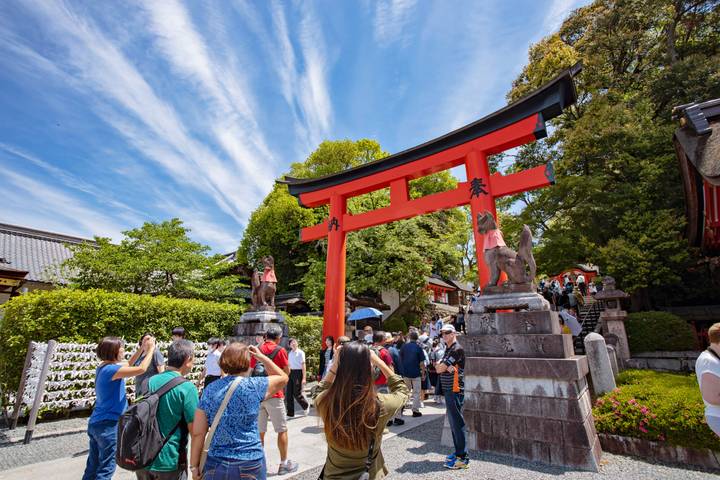
Day eight starts at Fushimi Inari Shrine. Its thousands of orange torii gates form a forest path that climbs toward the mountain shrine. You do not need to walk the entire route to appreciate it, but even a shorter walk involves steps and an uphill grade. Go at a comfortable pace and keep water handy, especially in warm months.
Sanjusangen-do Hall brings a different kind of visual impact, with 1,001 statues of the thousand-handed goddesses of mercy arranged inside. The tour then walks through Gion, known for its wooden machiya houses and geisha culture. Please be respectful around residents and anyone working in the district; this is a neighbourhood, not a stage set.
The final group dinner gives you a chance to share the trip’s highlights before the airport transfer the next morning. You end in Kyoto, with service to either Kansai International Airport or Osaka Itami Airport.
What the price covers, and where value lies
The listed starting price is from $4,455 per person, based on the cheapest room category. Your actual price may vary by departure and room arrangement. Flights and insurance are not included, and a single supplement applies if you want your own room.
For that price, the package includes eight breakfasts, three lunches and three dinners, five hotel stays, a Travel Director, a separate driver, coach and train transport, porterage, restaurant gratuities, hotel tips, taxes, audio headsets and the scheduled sightseeing. Vegetarian, vegan, Jain, Halal and Kosher meals can be requested. Other dietary needs, including gluten-free or dairy-free, can also be requested, but are not guaranteed.
The value is strongest if you want logistics handled and a lot of ground covered in a short time. The hotels are four-star properties, including two nights each in Tokyo, Kanazawa and Kyoto, and the accommodation category scored well alongside transport and guiding. You also get several meals and activities that could take time to arrange independently.
It is less compelling if you prefer to travel slowly, choose your own restaurants each night or spend several days in one city. Optional experiences, such as the Shinjuku evening outing and kimono try-on, are extra. Leave room in your budget for those choices, personal meals and any pre- or post-tour nights.
Pace, walking and practical details
The physical rating needs a careful read. The trip is described in one place as dynamic, with 4 or more miles of walking on some days and possible steep hills. Elsewhere it is marked low intensity, but the detailed activity guidance says walking can reach 3 to 6 miles a day, with 1 to 5 hours of cumulative standing and uneven paths, cobbles, stairs and inclines.
I would plan around the more demanding description. You should be able to board and leave the coach without assistance and manage your own luggage at times, including during train travel. A fit older adult may be able to manage the route, but age alone is not the test: stamina, balance, comfort with stairs and the ability to keep a group pace matter more. Ask Trafalgar about the specific departure if you have mobility concerns.
The weather can change the character of the Fuji visit, while summer heat can make temple walks harder. Comfortable walking shoes, layers and a small day bag are sensible. Since the itinerary is tightly scheduled, use free time thoughtfully: Tokyo and Kyoto both deserve extra days if you want time beyond the planned visits.
There is a small itinerary detail worth checking before booking: Matsumoto Castle appears among the listed highlights, but it is not included in the day-by-day route described here. Ask whether it is part of your selected departure rather than assuming you will see it.
Who should book this Japan tour?
Book it if you want a well-organized first visit that connects major cities with mountain scenery, regional food and traditional crafts. The best parts are the variety, the local encounters in Gokayama and Kyoto, and the chance to reach places such as Takayama and Kanazawa without piecing together transport yourself.
Skip it, or add independent days, if you want slow mornings, long museum visits or control over each day’s pace. The broad route is its strength and its limitation. At this price, the included transport, hotels, guide and meals can offer good value, provided you are comfortable with the walking and bus time.
FAQ
What is included in the tour price?
The tour includes hotel accommodation, an English-speaking Travel Director, a separate driver, scheduled coach and train transport, airport shuttle transfers on the first and last days, listed sightseeing, porterage, tips, local taxes, eight breakfasts, three lunches and three dinners. Flights and insurance are not included.
How many people are in the group?
The stated group size is 20 to 32 people. The tour is fully guided in English.
How much walking should I expect?
The detailed activity guidance gives a range of about 3 to 6 miles per day, with 1 to 5 hours of standing. Expect hills, stairs, uneven surfaces and some longer walking days. The activity rating is described differently in the provided details, so check the demands for your departure with Trafalgar.
Are flights included?
No. Flights are not included. Airport shuttle transfers are listed for arrival at Narita or Haneda and departure from Kansai International Airport or Osaka Itami Airport.
Can the tour accommodate dietary requirements?
Jain, vegetarian, vegan, Halal and Kosher meals can be requested. Other needs, including gluten-free or dairy-free meals, can also be requested, but they are not guaranteed.
Which hotels are used?
The listed hotels are New Otani Garden Tower in Tokyo, Fuji Marriott Yamanakako, Associa Takayama Resort, Kanazawa Tokyu and Kyoto Tokyu. Hotels of similar standard and location may sometimes be used instead.
Does the tour visit Matsumoto Castle?
Matsumoto Castle appears among the stated highlights, but it is not shown in the day-by-day route provided here. Confirm with Trafalgar whether it is included on your chosen departure.
Just added in Tokyo
- Wonders Of Japan 10-Day Tour by Travel Talk★ 4.5 · 14 reviews
- Wonders of Japan end Tokyo GO 15-Day Tour by Europamundo★ 4.2 · 10 reviews
- Wonders of Japan end Tokyo 15-Day Tour by Europamundo★ 4.2 · 10 reviews
- Wonders of Japan End Osaka by Europamundo – 12-Day Tour★ 4.2 · 58 reviews
- Wonders of Japan End Osaka (including Fukuyama) 12-Day Tour by Europamundo★ 4.2 · 58 reviews
- Wonders of Japan End Osaka GO by Europamundo – 12-Day Tour★ 4.2 · 58 reviews
- Walk Japan – Kumano Kodo Trail 12-Day Tour by Explore!★ 4.7 · 20 reviews
- Visions of Japan with Hiroshima & Osaka 15-Day Tour by Globus★ 5.0 · 75 reviews
Multi-Day Tours That Visit Takayama, compared.



Tokyo to Osaka by Rail – Private Tour (14 Days) with Explore!
Read our review →
Japan: Land of the Rising Sun 12-Day Tour by Intrepid Travel
Read our review →
Stunning Japan with Shirakawa-go by Stunning Tours – 8-Day Osaka to Tokyo Tour
Read our review →
Visions of Japan with Hiroshima & Osaka 15-Day Tour by Globus
Read our review →
Best of Japan by Contiki – 13-Day Tokyo to Osaka Tour
Read our review →
14 Days Japan Panoramic (Private 3 Star Hotels) by Stunning Tours
Read our review →Browse the lists this tour appears in