
Reviewed · MULTI-DAY TOURS THAT VISIT HAKONE
Japan In Depth – Footsteps of the Shogun by Explore! – 12-Day Tour Review
Tokyo’s oldest temple, a boat ride past city towers, a night in a Japanese inn and the quiet coast of Hirado all fit into this 12-day trip from Tokyo to Fukuoka. The route gives you Japan’s headline sights, but it also makes room for places that are harder to reach on a first visit, especially the tea-growing country and island communities of Kyushu.
I like two things in particular: the mix of fast trains and local transport, which puts you close to everyday life, and the stay on Hirado, where tea with farmers and a local guide replace another round of city sightseeing. Hiroshima and Nagasaki also receive time for thoughtful visits, not just a hurried photo stop.
The trade-off is pace. You change cities often, sometimes travel early, and have only one full day in Tokyo. There are also three nights in simple Japanese-style accommodation, where futons and shared bathing arrangements may not suit everyone.
In This Review
- At a glance: the details that shape this trip
- Tokyo’s temples, river and neon streets
- Hakone: volcanic steam, lake views and a first ryokan
- Kyoto: geisha arts, gardens and shogun power
- Hiroshima: a necessary pause in the journey
- Nagasaki: Japan’s historic gateway to the outside world
- Hirado: tea country, island roads and local life
- Sasebo and Fukuoka: a gentle finish
- What the price includes, and what it doesn’t
- Who will get the most from this route?
- Should you book Japan In Depth?
- FAQ
- Where does the tour start and end?
- How long is the tour?
- What is the group size?
- Is the tour guided in English?
- Are flights included?
- Which meals are included?
- Are airport transfers included?
- Do I need to carry my main luggage every day?
- Are the traditional Japanese baths private?
- Is a single room available throughout the tour?
At a glance: the details that shape this trip
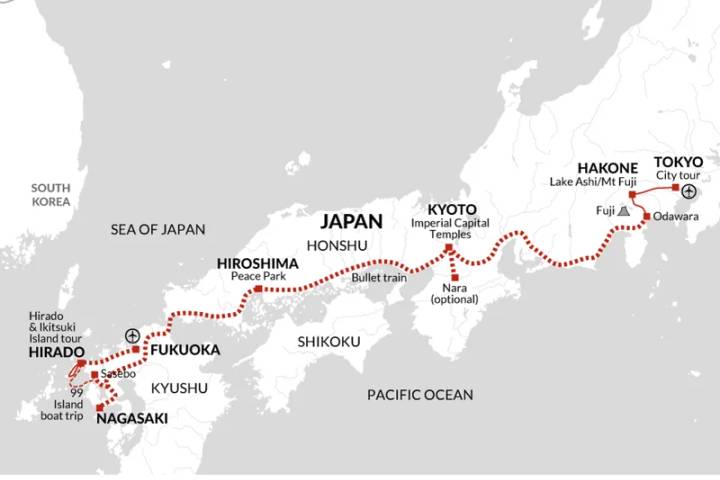
- Tokyo to Fukuoka in 12 days: The route crosses Honshu and Kyushu, with overnight stays in Tokyo, Hakone, Kyoto, Nagasaki, Hirado and Fukuoka.
- A small group: Expect 7 to 16 people, with an English-speaking tour leader accompanying the trip.
- Three ryokan nights: Futon bedding and Japanese bath customs are part of the stay, alongside standard hotels.
- Major rail journeys: Shinkansen trips connect Odawara with Kyoto and Kyoto with Hiroshima; local trains and buses fill in the rest.
- Some meals are included, not all: The price covers 11 breakfasts, two lunches and three dinners, leaving room to choose local restaurants.
- A moderate, busy pace: You’ll walk around temples, gardens and city districts, with free time on several days but regular moves between destinations.
Tokyo’s temples, river and neon streets
The trip opens with a free-arrival day in Tokyo. A welcome meeting is planned for 6:30 p.m., though anyone arriving later can catch up with the group the next morning. Airport transfers from Haneda or Narita are included if you provide your flight details, which takes one arrival chore off your list.
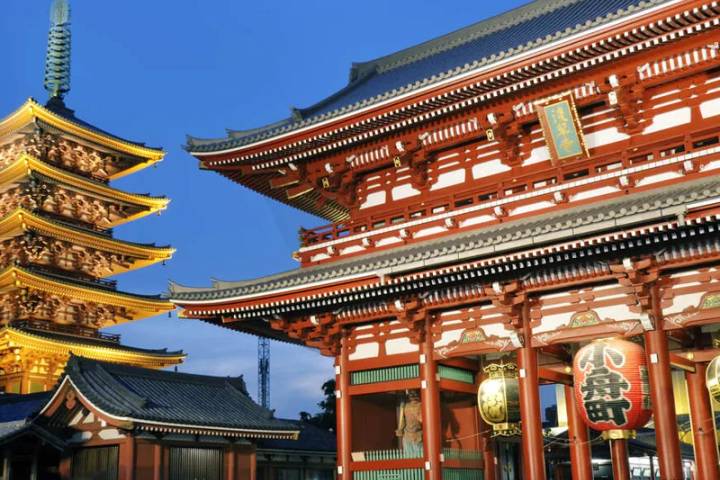
Day two starts at Senso-ji in Asakusa, Tokyo’s oldest temple. A river boat ride along the Sumida offers a useful change of pace and a different view of the city, passing apartments, gardens and warehouses. Hamarikyu Gardens then provides a pocket of calm amid the capital’s scale.
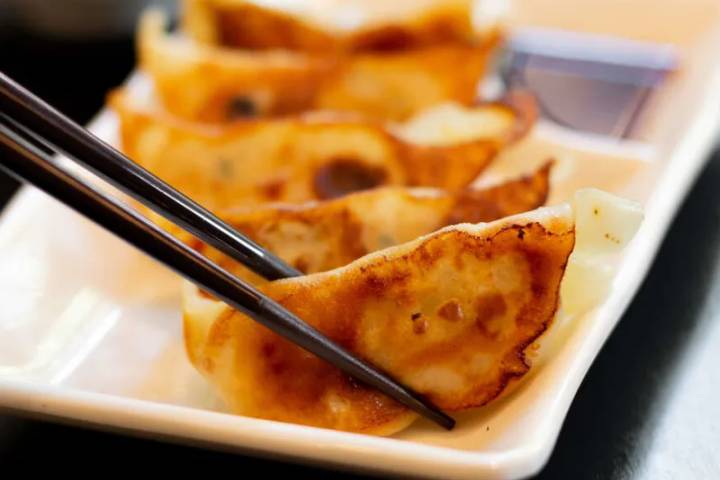
After lunch on your own, the group visits Meiji Shrine. The afternoon is free, so you can choose a district that matches your interests: Harajuku’s back streets, the famous crossing in Shibuya, or Shinjuku’s high-rise shopping and electronics district. Dinner at an izakaya is included, with a chance to try a range of Japanese small dishes.
One day is a sampler, not a full Tokyo visit. If you want time for more neighborhoods or a particular museum or attraction, add a night or two before the tour. This is one of the most practical improvements you can make to the trip.
A few more options to weigh up in Tokyo
- Tokyo Disney Resort – Tokyo Disneyland & Tokyo DisneySea Park Tickets
★ 4.8 · 99,488 reviews - SHIBUYA SKY Ticket
★ 4.7 · 46,509 reviews - JR Whole Japan Rail Pass
★ 4.8 · 29,150 reviews
Hakone: volcanic steam, lake views and a first ryokan
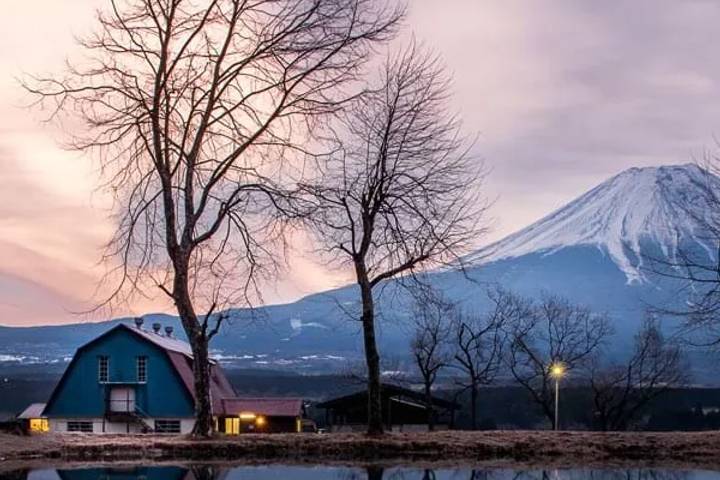
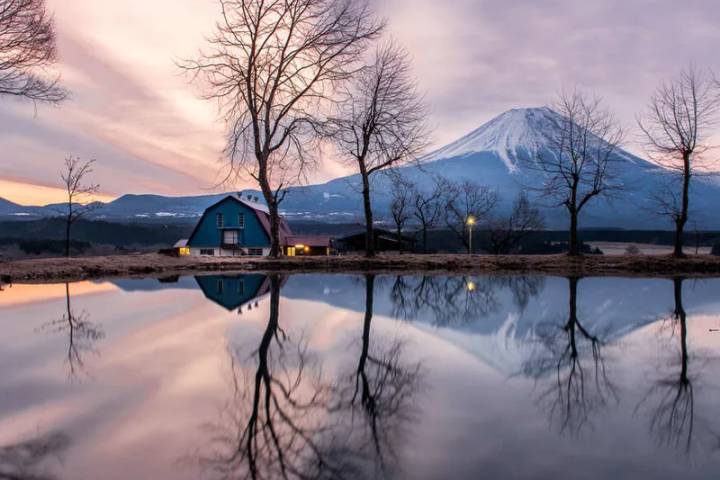
A private bus takes the group to Hakone National Park, about two and a half hours from Tokyo. At Owakudani, steaming sulfur springs and volcanic ground give you a glimpse of the region’s active geology. Mount Fuji may appear on a clear day, but the view depends on weather; don’t treat it as guaranteed. The local sulfur-boiled egg is an optional taste test, with a local legend claiming it adds seven years to your life.
The route continues to Lake Ashi, formed after a volcanic eruption more than 3,000 years ago, then by boat to Moto Hakone. You’ll have time to relax by the lake before checking into a traditional inn. Here, futons replace Western beds, shoes come off indoors, and the Japanese bath is part of the experience.
This is one of three nights in traditional accommodation. The Hakone guesthouse has ensuite facilities, but bathing may be communal and arranged by a timetable. Main bags are sent ahead to Kyoto, so pack an overnight bag. A small backpack is easier to manage than a wheeled case when moving with only what you need.
Kyoto: geisha arts, gardens and shogun power
A local bus gets you to Odawara, where the Shinkansen carries you to Kyoto. The train itself is a highlight for many people, but it is also practical: you cover a long distance quickly and arrive in time for an afternoon visit with a geisha, or maiko, a trainee geisha. You’ll see a dance performance and have a chance to ask questions and take photos. Your tour leader helps translate and set the encounter in context.
Later, you visit Gion, Kyoto’s well-known geisha district. It’s a working neighborhood, not a stage set, so any glimpse of performers heading to appointments is a matter of timing and chance. Keep your camera manners respectful and follow your leader’s advice.
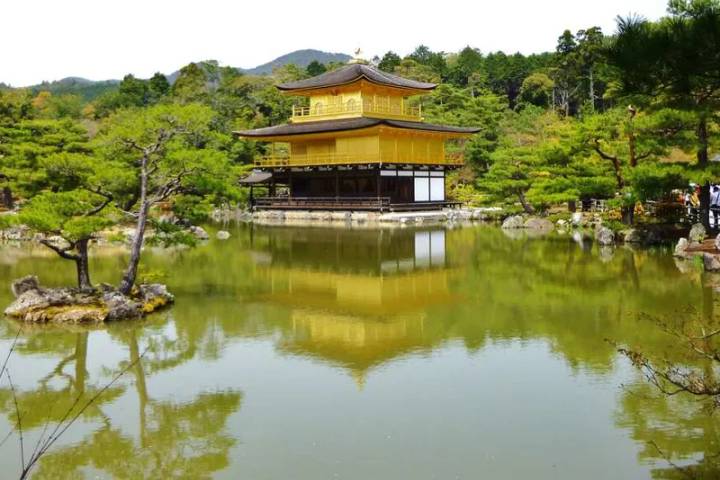
The next day brings three significant sites. Ryoan-ji’s rock garden is spare and contemplative; part of the fun is shifting your viewpoint to test the idea that one rock is always hidden. Kinkaku-ji, the Golden Pavilion, is more showy, with gold-covered upper stories reflected in its pond. Nijo Castle, built in 1603 as a shogun’s palace, adds political history, grand gates, gardens and its famous nightingale floors, which chirp underfoot.
These are major attractions, and visiting several in one day can feel like a temple marathon. One traveler wished there had been fewer temples, a fair caution if you prefer a slower pace. The guide also takes the group to favored streets and canals, helping the day feel less like a checklist.
Day six is open for your own plans. Nara is a straightforward option, about 45 minutes by train. You can walk between many of its sights and visit Todai-ji, home to a huge bronze Buddha. Or stay in Kyoto and use the free day to seek out a garden, market or neighborhood that caught your attention.
Hiroshima: a necessary pause in the journey
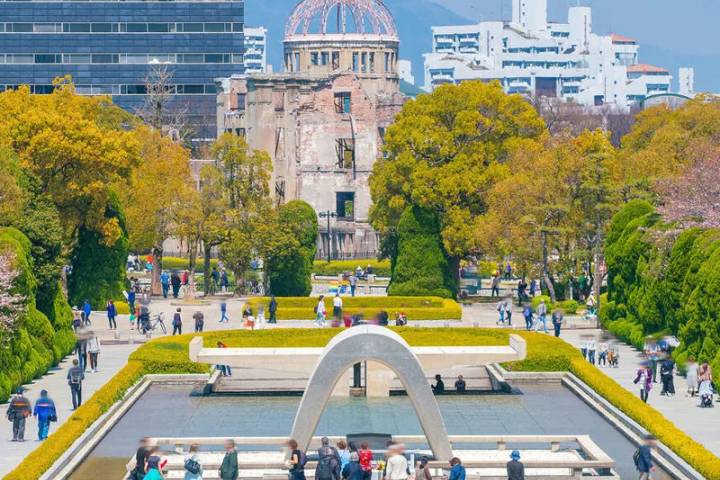
An early Shinkansen takes you to Hiroshima for a morning at Peace Memorial Park and the museum near the 1945 atomic bomb hypocentre. The visit is emotionally demanding, but it gives essential context to the city and to the war’s human cost. The memorials’ message is not only remembrance, but also a hope that nuclear horror will not happen again.
The city has rebuilt, and its streetcars make getting around simple. Still, the visit is brief: later that day, you continue by train toward Nagasaki. Pack an overnight bag because your main luggage is sent ahead and arrives the following day. This is a long travel day with a serious visit at its center, so allow yourself some quiet afterward rather than planning too much for the evening.
A completely different kind of day out:
- Mt Fuji and Hakone 1-Day Bus Tour Return by Bullet Train
★ 5.0 · 26,383 reviews - TOKYO SKYTREE® Ticket
★ 4.7 · 25,136 reviews - teamLab Borderless Tickets: MORI Building DIGITAL ART MUSEUM
★ 4.7 · 24,126 reviews - teamLab Planets TOKYO Ticket
★ 4.7 · 21,663 reviews
Nagasaki: Japan’s historic gateway to the outside world
Nagasaki gets a fuller day. The morning orientation introduces Dejima, the artificial island where Dutch traders were confined during Japan’s period of restricted foreign contact. Reconstructed and original features help explain how tightly controlled this exchange was. At Glover Gardens, foreign residences from the Meiji period look over Nagasaki Harbour.
The afternoon is free, giving you a choice of further history or a change of scene. Options include Nagasaki Peace Park and Museum, the Gunkanjima museum, Spectacles Bridge, Chinatown or Mount Inasa. The mountain is known for its nighttime view, but a visit requires planning your transport and timing; the tour offers a sunset excursion at extra cost.
Nagasaki’s story is not only about trade. The city was also the site of the second atomic bombing, after cloud obscured the preferred target of Kokura. Hiroshima and Nagasaki together make the trip’s most sobering section, and the schedule gives each city a different way into its past.
Hirado: tea country, island roads and local life
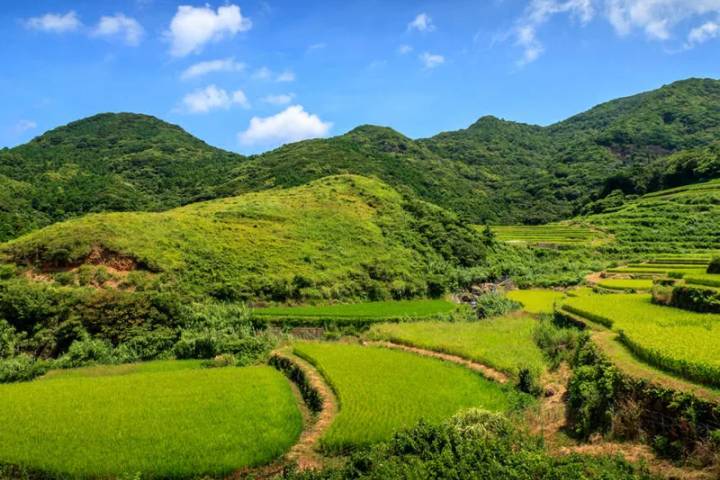
The journey north from Nagasaki changes the mood. In the Higashi-Sonogi tea-growing region, you walk through terraced fields, visit a tea farmer’s home, taste green Sencha and roasted Hojicha, and share a traditional lunch with local farmers. It is a direct encounter with a working rural industry, not just a view from a coach window.
On Hirado, the group visits Kameoka Shrine and Hirado Castle before settling into a simple ryokan for two nights. Hirado’s port once connected Japan with Chinese, Dutch and Portuguese traders. Dinner is a multi-course Kaiseki meal, and hot-spring bathing is available. Rooms have ensuite facilities, but communal bathing may still be part of the arrangement. Check the exact setup for your departure, as accommodation can vary.
Day ten explores Hirado and nearby Ikitsuki with a local guide and charter minibus. The islands are joined by a 400-metre bridge, and the day takes in remote countryside, fishing communities, traditional industries, coastal cliffs and the Matsura Museum, in the former home of the family that ruled the area. The focus on Hidden Christian communities adds another layer to Japan’s complicated religious past.
Lunch is a locally made bento. This stretch is a strong reason to choose the tour over a city-only route: you see how geography, work and faith shape life beyond the main tourist centers. Main luggage goes ahead to Fukuoka, so again, carry a day bag with what you need for the island stay.
Sasebo and Fukuoka: a gentle finish
On day eleven, a minibus takes you to Sasebo for a cruise through the so-called Ninety-Nine Islands. There are actually 208 islands along this jagged coast, most uninhabited. The boat ride offers a calm contrast to the rail days, then a local train takes you to Fukuoka in about two hours.
The final afternoon is free for sightseeing or shopping. The tour ends after breakfast the next morning, with no scheduled activities. A metro transfer to Fukuoka Airport is included for those who provide flight details; the journey takes about 20 minutes. If you have a later flight, the hotel can store your luggage.
What the price includes, and what it doesn’t
The starting price is $5,600, with the exact fare depending on departure date and availability. The trip includes 11 breakfasts, two lunches, three dinners, accommodation, listed activities, transport during the tour and an experienced tour leader. International flights, travel insurance, visas, tips and most lunches and dinners are extra.
That makes the price easier to judge against the actual route. You’re paying for long-distance rail and road travel, a small-group leader, several guided visits and hard-to-arrange rural experiences, especially the tea-farmer lunch and island tour. You still have room to choose restaurants and use free time as you like. In Japan, accommodation and transport can be costly, so the included logistics have real value, though this is not an all-meals-included holiday.
There are eight nights in standard hotels and three in simple ryokan or guesthouse accommodation. The accommodation score is lower than the guide and transport scores, which fits the nature of the trip: city hotels are practical, while traditional stays bring less predictable comforts. A single supplement is listed at £775, but single rooms are not possible on the three traditional-accommodation nights.
Who will get the most from this route?
Choose this trip if you want a broad first look at Japan without handling every train connection, hotel change and rural transfer yourself. It suits curious travelers who enjoy temples and history but also want an izakaya meal, a tea-farm visit and a night in an inn. The group is limited to 16, with an average around 11, so it is small enough for a personal feel without requiring you to travel alone.
The tour is described as low intensity in the general trip details, while the practical guidance also calls it moderate and notes a fast pace. Take that second description seriously. There is regular walking, some stairs and frequent changes of place; you can use a hiking stick, but futon beds may be difficult to rise from, and some properties may not have a chair to help. Ask Explore about the specific departure’s accommodation if this is a concern.
Season matters, too. Departures run in March, April, September, October and November. Spring may bring cherry blossoms and a chance of clear Fuji views, but neither can be promised. Prices can also differ sharply between dates, so compare departures rather than assuming two weeks in the same month will cost about the same.
Should you book Japan In Depth?
I’d book this tour for its contrast: Tokyo’s scale, Kyoto’s temples, the weight of Hiroshima and Nagasaki, then the slower days in Hirado. The local train rides and shared meals help connect the famous sights to daily life, while the guide keeps a demanding route manageable. Guides such as Giulia Greco and Irene have been singled out for warmth, cultural insight and help with translation, though the leader will vary by departure.
Think twice if you want long stays in each city, Western-style beds every night or a very relaxed schedule. Add extra Tokyo nights if you can, pack a small overnight backpack, and check the bathing arrangements before booking. If those details suit you, this is a thoughtful, well-rounded introduction to Japan, with more substance than a tour that simply races between postcard views.
FAQ
Where does the tour start and end?
It starts in Tokyo and ends in Fukuoka. The first day has no planned activities, and the tour ends after breakfast on day twelve.
How long is the tour?
The tour lasts 12 days, with 11 nights of accommodation: eight nights in standard hotels and three nights in simple ryokan or guesthouse accommodation.
What is the group size?
The group size is 7 to 16 people. The stated average is about 11.
Is the tour guided in English?
Yes. An English-speaking tour leader accompanies the group throughout the trip.
Are flights included?
No. International flights are not included in the tour price.
Which meals are included?
The tour includes 11 breakfasts, two lunches and three dinners. Vegetarian and vegan options can be requested.
Are airport transfers included?
A complimentary transfer is available from Haneda or Narita on the first day and to Fukuoka Airport on the last day, if you provide your international flight information. The Fukuoka transfer is by metro, with a ticket and instructions from the tour leader.
Do I need to carry my main luggage every day?
No. Main luggage is forwarded ahead on several sections, including the journeys to Kyoto, Nagasaki, Hirado and Fukuoka. You’ll need an overnight bag for the nights when your main case is sent separately.
Are the traditional Japanese baths private?
Bathing arrangements vary by accommodation. A timetable may be used so people can take turns, but communal bathing is available at some ryokan stays. Confirm the details for your departure if privacy is important to you.
Is a single room available throughout the tour?
A single supplement is listed at £775 per person, but single accommodation is not possible during the three nights in traditional Japanese accommodation.
Just added in Tokyo
- Mt. Fuji & Hakone Cherry Blossom private One Day Tour★ 4.5 · 35 reviews
- Fish Market & Tokyo Skyline Private Walking Tour★ 5.0 · 14 reviews
- 25-Min Downtown Helicopter Tour : Tokyo Skytree and Tokyo Tower★ 5.0 · 19 reviews
- Private Tour with a Local Guide – Learn about daily life in Japan★ 5.0 · 22 reviews
- Tokyo: 3-Hour Bike/E-Bike Tour of the City’s Highlights★ 5.0 · 209 reviews
- Official Japan Go-Kart Through Tokyo Bay / Ginza (IDP Required)★ 4.5 · 71 reviews
- 30-Min Tokyo Central Private Heli Tour– Asakusa, Skytree, Shibuya★ 5.0 · 13 reviews
- Tokyo 2-Hour Genuine Samurai Experience: Kendo in Japan★ 5.0 · 112 reviews
Multi-Day Tours That Visit Hakone, compared.

Japan Essentials 9 Day – One Life Adventures: Tokyo to Osaka
Read our review →

Tokyo to Osaka by Rail – Private Tour (14 Days) with Explore!
Read our review →

Japan: Land of the Rising Sun 12-Day Tour by Intrepid Travel
Read our review →
Japan Express – Osaka to Tokyo 9-Day Tour by G Adventures
Read our review →Browse the lists this tour appears in