
Reviewed · TEMPLES AND SHRINES
Kyoto: Ninnaji Temple Entry Ticket
Quiet beauty rewards a slow visit. Ninnaji Temple gives you grand gates, a five-story pagoda, and the famous late-blooming Omuro sakura for about $5, while its gardens offer a calmer side of Kyoto. I especially like the chance to walk the Omuro Pilgrimage course and to see the temple change with the seasons. The main thing to watch is that the best-known sights, including the cherry trees and museum, may require extra admission.
I like Ninnaji because it feels like more than a quick photo stop. Founded in 888 AD and serving as the head temple of the Omuro school of Shingon Buddhism, it combines major Buddhist buildings with quiet paths, gardens, and cultural treasures. A special guide inside Kannon-do can also add useful context, if that option is available during your visit.
The ticket is valid for one day, so you can take your time instead of racing from gate to gate. Still, the temple closes at 5 PM from March through November and at 4:30 PM from December through February, with ticket booths closing 30 minutes earlier.
In This Review
- Key points to know before entering Ninnaji
- Why Ninnaji makes a good Kyoto temple stop
- Entering the Goten Palace and gardens
- Finding the five-story pagoda and Omuro sakura
- Walking the two-hour Omuro Pilgrimage course
- Reihokan Museum and Ninnaji’s cultural objects
- Seasonal timing from spring to winter
- Timing your one-day ticket wisely
- Accessibility, cancellation, and practical value
- Who should choose Ninnaji Temple?
- Should you book the Ninnaji ticket?
- FAQ
- Where is Ninnaji Temple located?
- How much does the basic Ninnaji Temple ticket cost?
- How long is the ticket valid?
- What are Ninnaji Temple’s opening hours?
- When do the ticket booths close?
- Is the Omuro Pilgrimage course included?
- Is Reihokan Museum included in the basic ticket?
- Is Ninnaji Temple wheelchair accessible?
Key points to know before entering Ninnaji
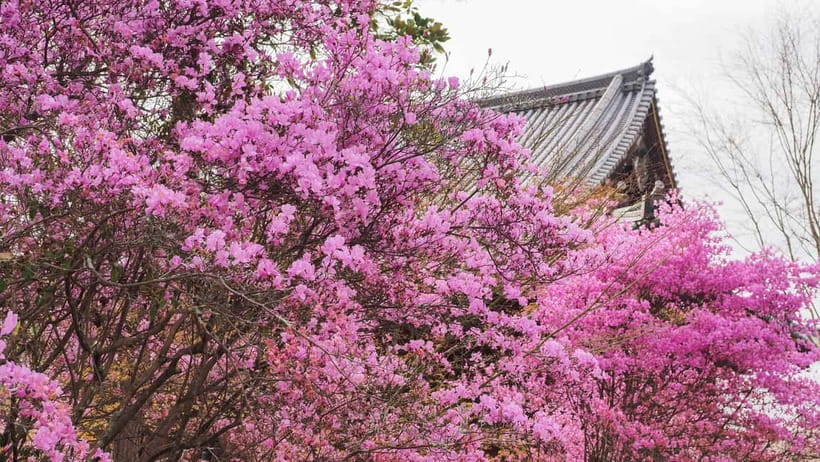
- Omuro sakura bloom late: The short, low-growing cherry trees often flower after many of Kyoto’s better-known sakura sites, though the paid viewing period changes with the bloom.
- The five-story pagoda anchors the grounds: It is one of the temple’s clearest visual highlights and makes a fine companion to the spring blossoms.
- The Omuro Pilgrimage takes about two hours: This shorter version of the Shikoku Pilgrimage lets you follow a more reflective route surrounded by seasonal sounds and scenery.
- The Goten Palace and gardens are central to the visit: The standard ticket includes these areas, except when a special admission charge applies.
- Reihokan Museum access may be optional: Select the museum inclusion if you want to see important cultural items connected with Ninnaji.
- Kannon-do may offer a special guided visit: A recent five-star note praised the guide inside Kannon-do as wonderful and informative.
Why Ninnaji makes a good Kyoto temple stop
Ninnaji is not simply an old temple with a famous tree line. It is the head temple of the Omuro school of the Shingon sect of Buddhism, with roots reaching back to 888 AD. That gives the site religious importance, but you do not need specialist knowledge to enjoy it.
The appeal is the range of experiences packed into one visit. You can look up at the five-story pagoda, move through the Goten Palace and gardens, seek out cultural objects in Reihokan Museum, or spend two hours on the Omuro Pilgrimage course. Each part has a different pace.
I would plan at least two hours if you want to see the main grounds without rushing. The pilgrimage route alone is described as a two-hour course, so you may want longer if you also plan to visit the museum or stop often in the gardens.
The $5 starting price is excellent value for access to a major Kyoto temple and the Goten Palace gardens. The final cost can be higher if you add Reihokan Museum, the flower festival, a special viewing period, or another special entrance ticket. Think of the base price as a useful starting point, not necessarily the complete cost of every possible experience.
More Temples and Shrines in Japan:
- [Kyoto & Nara Day Tour] Sagano Scenic Railway & Nara Park & Fushimi Inari Taisha Thousand Torii Gates & Togetsukyo Bridge & Bamboo Grove & Kimono Forest (Departing from Osaka)
★ 4.9 · 10,942 reviews - Mount Fuji & Hakone – Lake Ashi Torii Gate, Hakone Shrine, Hakone Pirate Ship, Hakone Ropeway, Owakudani, Lake Yamanaka & Oshino Hakkai Day Trip: Sea, Land, and Air Panoramic Tour from Tokyo
★ 4.8 · 7,989 reviews - Kyushu One-Day Tour: Yufuin no Mori Train & Yufuin Town & Nyoirin-ji Temple & Dazaifu & Hell Hot Springs (Departing from Fukuoka)
★ 4.9 · 4,474 reviews
Entering the Goten Palace and gardens
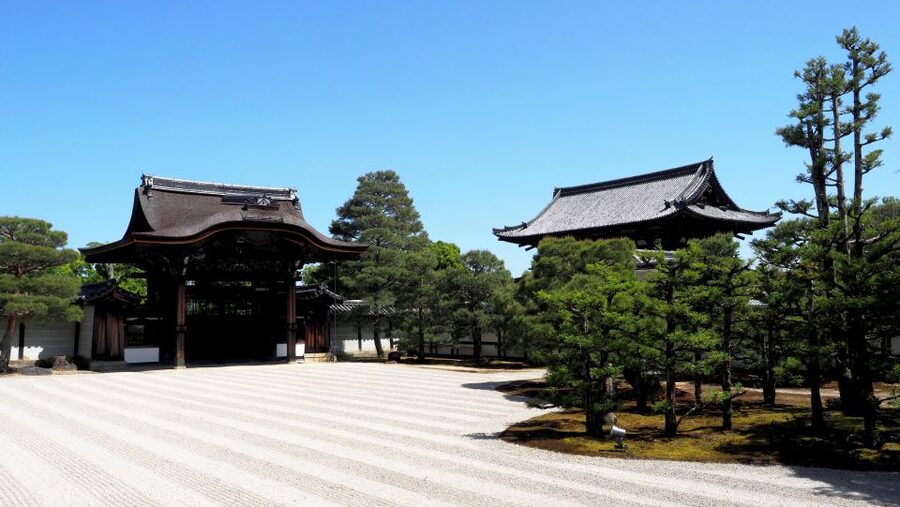
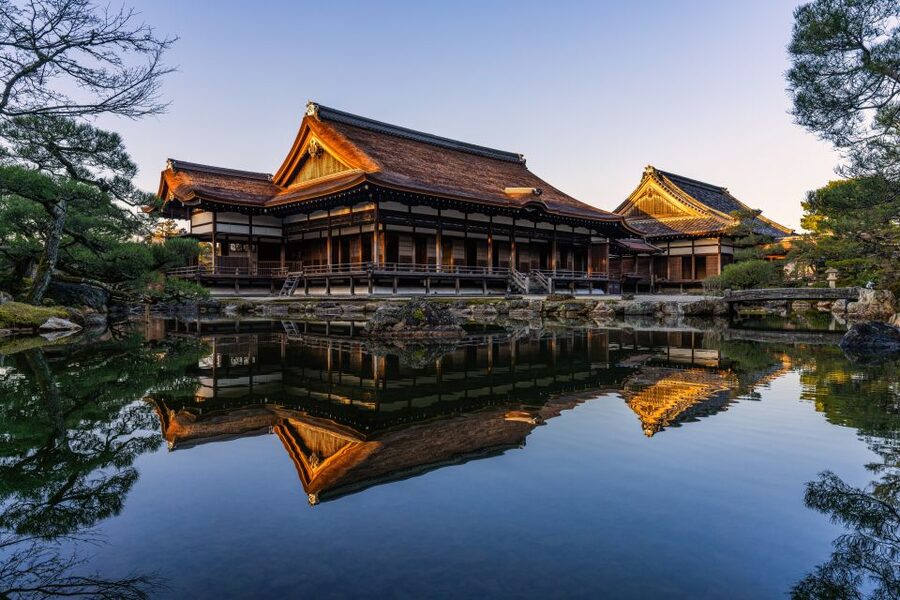
The Goten Palace and gardens form the main included visit. This is where you can slow down and appreciate Ninnaji’s connection between architecture and nature. The appeal is not a single dramatic monument, but the way the historic buildings frame garden views that change with the weather and season.
In spring, the gardens gain the greatest public attention because of the late-blooming Omuro sakura nearby. In summer, the grounds take on a more ceremonial mood, with many priests present for Buddhist ceremonies. Autumn brings red and yellow foliage around the old buildings, while winter can leave the gardens and palace scenery hushed under snow.
That seasonal range is a real strength. If your Kyoto schedule does not line up with cherry blossom season, Ninnaji still offers a reason to visit. A snowy garden may be less predictable, of course, but the possibility gives winter visits a special reward.
The ticket includes the Goten Palace and gardens unless a special entrance ticket is required. Check the exact admission conditions on the day, especially during seasonal events. The supplied information specifically notes that some special entrance tickets are excluded from the regular garden admission.
Finding the five-story pagoda and Omuro sakura
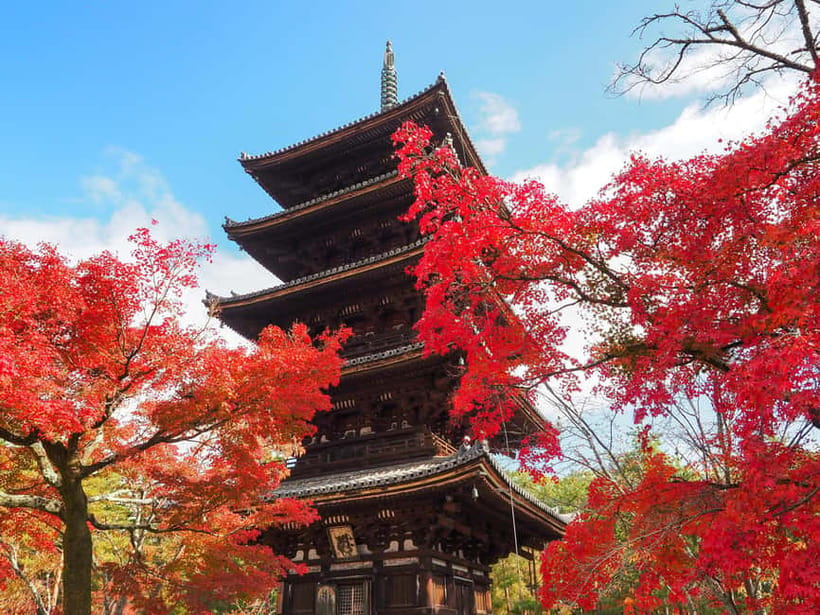
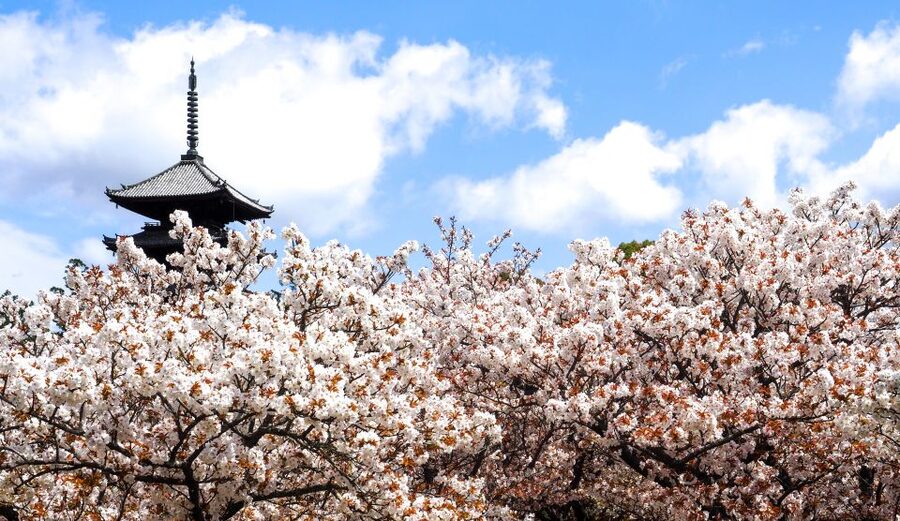
The five-story pagoda is one of Ninnaji’s most recognizable sights. Its height gives the temple grounds a strong focal point, and it pairs naturally with the Omuro sakura in spring. Even if you visit outside blossom season, the pagoda helps you understand the scale and balance of the temple complex.
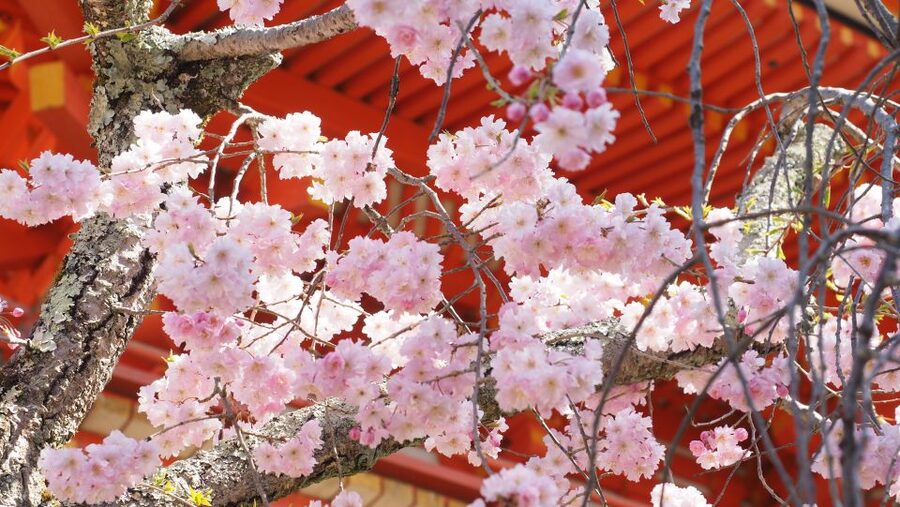
The Omuro sakura are famous for blooming later than many other cherry trees in Kyoto. That timing can be useful if you arrive after the city’s main sakura period has passed. It is not a guarantee, though. Flowering depends on the year, and the dates when the blossom area requires paid admission can change according to the stage of the bloom.
During cherry blossom season, you need an additional admission fee to enter the area beyond the Chumon inner gate for the Omuro sakura. The fee supports preservation of the trees, which is a practical reason to see it as more than a seasonal surcharge. Still, you should budget for it if the blossoms are your main reason for coming.
The temple does not promise a fixed blossom window in the information provided. If you are arranging your entire Kyoto trip around the trees, keep your schedule flexible. Ninnaji is best treated as a strong late-season possibility rather than a guaranteed bloom-day visit.
Walking the two-hour Omuro Pilgrimage course
The Omuro Pilgrimage course is one of the most distinctive parts of this experience. It is a shorter version of the Shikoku Pilgrimage, giving you a way to sample the idea of a long Buddhist pilgrimage without leaving Kyoto.
You should allow about two hours for the route. The course is described as being surrounded by the sounds of nature and seasonal change, so it offers a different mood from the palace and pagoda areas. Instead of simply moving from one famous building to the next, you have time to walk and pay attention.
I would choose this route if you enjoy quiet exercise, reflective sightseeing, and places where the setting matters as much as the monument. It may be less appealing if you want a fast temple visit focused only on photographs. The two-hour estimate also matters for planning, since it can use much of your available time if you arrive late in the afternoon.
The course gives Ninnaji added value at no extra effort beyond setting aside time. You are not just viewing a historic site; you are following a route designed around pilgrimage, nature, and repetition. That makes it one of the better reasons to stay longer than a standard temple stop.
More Entry Tickets in Japan:
- Tokyo Disney Resort – Tokyo Disneyland & Tokyo DisneySea Park Tickets
★ 4.8 · 99,488 reviews - Universal Studios Japan Studio Pass
★ 4.8 · 89,883 reviews - Universal Studios Japan Express Pass
★ 4.7 · 53,138 reviews - SHIBUYA SKY Ticket
★ 4.7 · 46,509 reviews
Reihokan Museum and Ninnaji’s cultural objects
Reihokan Museum holds important cultural items belonging to Ninnaji. For you, this is the place to add historical and religious depth to what you see outdoors. The gardens and pagoda show the temple’s public face, while the museum can help connect the site to its Buddhist practice and artistic traditions.
Museum entry is included only if you select the appropriate option. Do not assume the basic $5 ticket covers every indoor collection or special display. If the museum is high on your list, check that it is part of your chosen admission before you pay.
A museum visit also gives you a useful break from outdoor sightseeing. Kyoto’s temple grounds can be beautiful but tiring, especially when you are walking for several hours. Reihokan lets you shift your attention from trees and buildings to objects preserved by the temple.
The information provided does not specify a permanent exhibition schedule or the exact objects on display. That means you should view the museum as an optional cultural addition rather than plan around a particular artifact unless you confirm what is open.
Seasonal timing from spring to winter
Ninnaji works particularly well for repeat visits because each season changes the mood of the grounds.
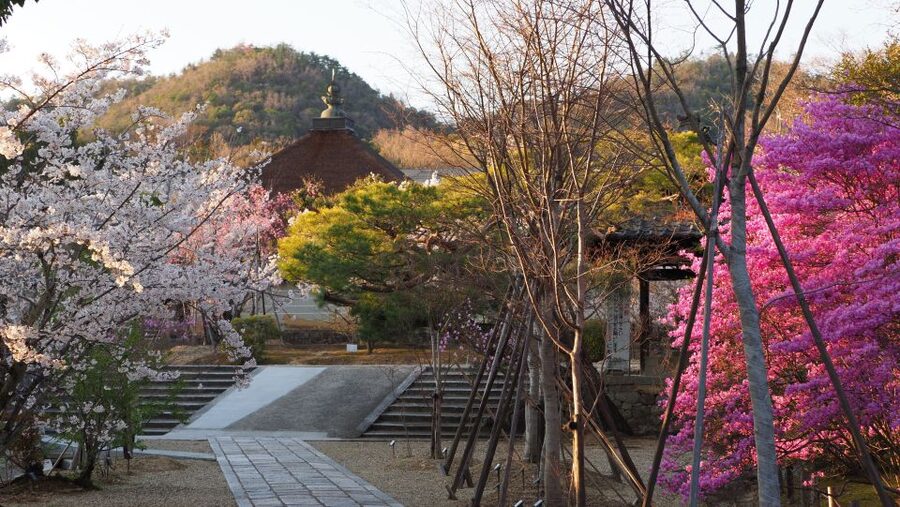
Spring: The late-blooming Omuro sakura are the major draw. If other Kyoto cherry trees have already finished, Ninnaji may still offer a chance to see blossoms. The viewing area beyond Chumon requires an additional fee during the relevant period, and the timing depends on the bloom.
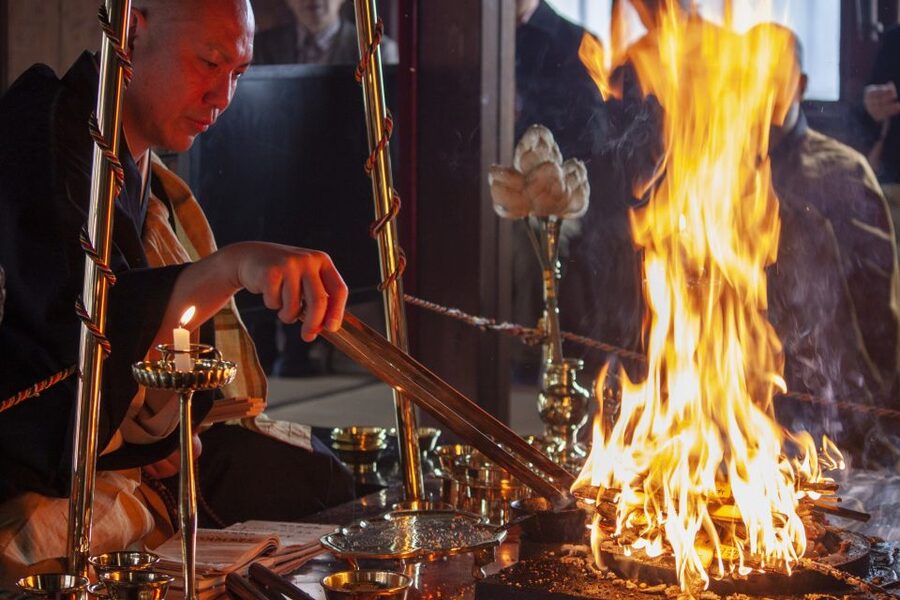
Summer: Many priests are present for Buddhist ceremonies. The experience may feel more connected to active religious life than a quiet garden visit. You should also remember that summer sightseeing can be tiring, so the two-hour pilgrimage route may require a slower pace.
Autumn: Historic buildings are surrounded by red and yellow leaves. This is a strong season for visitors who want temple architecture paired with fall color, though the ticket hours remain 9 AM to 5 PM from March through November.
Winter: Snow can transform the Japanese garden and Goten Palace into a very quiet scene. Snowfall is never guaranteed, but if it arrives, Ninnaji offers the kind of peaceful view that rewards an unhurried visit. From December through February, the grounds close earlier, at 4:30 PM.
The changing seasons are not just decoration. They give you different reasons to return and help explain why Ninnaji remains valuable outside the peak cherry blossom weeks.
Timing your one-day ticket wisely
The ticket is valid for one day, but that does not mean you have unlimited time. The temple opens at 9 AM year-round. From March through November, it closes at 5 PM. From December through February, closing time is 4:30 PM. Ticket booths shut 30 minutes before closing.
I would arrive earlier rather than later if you want the Goten Palace, gardens, museum, and pilgrimage course. A late arrival may still work for a short garden visit, but it gives you little room for the two-hour route or a separate museum stop.
A sensible visit could look like this:
- Begin with the Goten Palace and gardens while you have plenty of time.
- Continue toward the pagoda and the Omuro sakura area if it is open for seasonal viewing.
- Add Reihokan Museum if your ticket includes it.
- Finish with the Omuro Pilgrimage course if you have two hours available and want a quieter walk.
You do not have to follow that order. If the pilgrimage course is your priority, start there and use the remaining time for the palace and gardens. The important point is to check the closing time before you enter.
Accessibility, cancellation, and practical value
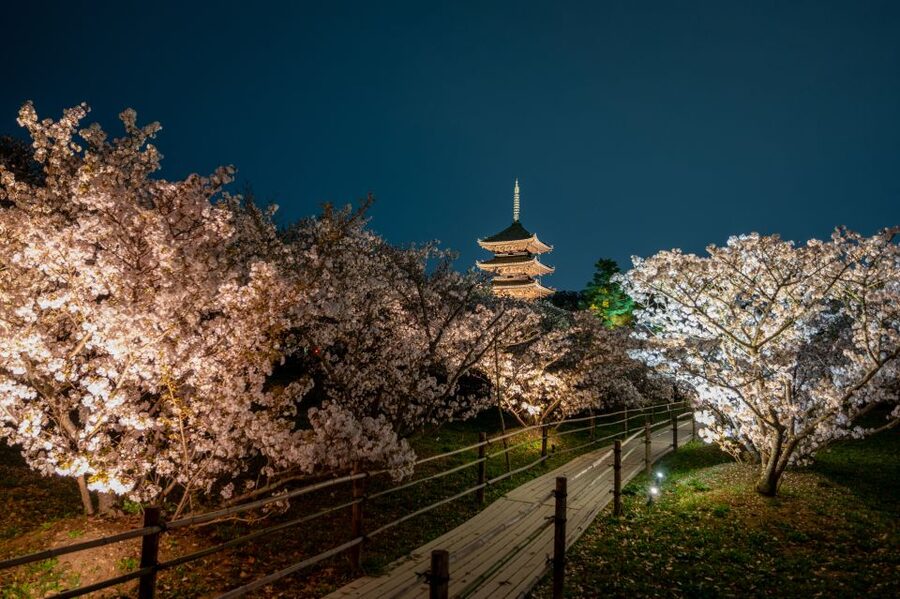
Ninnaji is listed as wheelchair accessible, which makes the site more practical for visitors who need step-free access. The information does not give detailed route notes for every part of the grounds, so you may want to confirm conditions at the ticket counter if you need specific assistance.
A person with a physical disability certificate can enter free of charge, but the exemption applies only to the person holding the certificate. Ask at the ticket counter rather than assuming the discount will be handled automatically.
The booking terms are flexible. You can cancel up to 24 hours in advance for a full refund, and the reserve-now, pay-later option lets you keep plans open without paying immediately. Those terms are helpful in Kyoto, where weather can change the appeal of a garden visit, particularly in winter or during uncertain blossom periods.
At $5, the basic ticket is easy to justify for most temple fans. The value becomes especially strong if you use the full day, visit the gardens, see the pagoda, and walk part of or all of the pilgrimage course. It is less compelling if you only have time for a quick entrance and photograph.
Who should choose Ninnaji Temple?
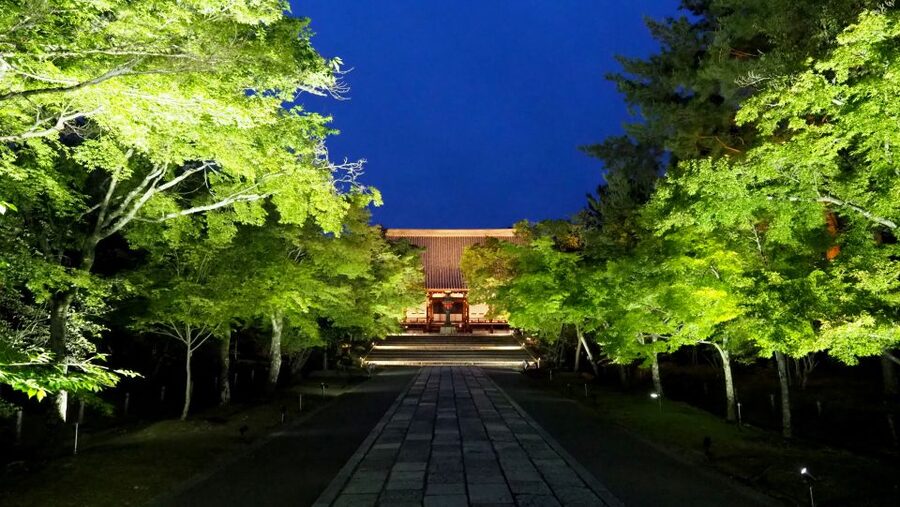
I would recommend Ninnaji to you if you want a Kyoto temple with several layers: architecture, gardens, Buddhist practice, seasonal scenery, and a walking route. It suits visitors who prefer a slower visit and people who want a late-blooming cherry blossom option.
It is also a good choice for repeat visitors to Kyoto. You may have already seen the city’s most famous central temples, yet Ninnaji offers a different pace through its pilgrimage course and changing seasonal scenes.
Families and mixed-interest groups can also find something here. One person can focus on the pagoda and blossoms, another can spend time in the museum, and someone else can enjoy the longer walk. The wheelchair-accessible status is another practical benefit.
I would be more cautious if you have less than an hour, especially during a busy blossom period. Extra admission areas, closing times, and the size of the grounds can make the visit feel rushed. If your only goal is a guaranteed cherry blossom display, the variable bloom period is also a consideration.
Should you book the Ninnaji ticket?
Book it if you want more than a quick temple photograph. The low base price, one-day validity, Goten Palace gardens, five-story pagoda, seasonal scenery, and optional Omuro Pilgrimage make Ninnaji a strong-value stop in Kyoto.
Choose the museum or special entrance option if those cultural displays matter to you, and budget separately for Omuro sakura admission when the seasonal fee is in effect. Give yourself at least two hours for a satisfying visit, and arrive well before the ticket booth closes.
For a short, tightly packed itinerary, this may be too much ground to cover. For you, a traveler who likes quiet paths, historic buildings, and a temple that changes with the calendar, Ninnaji is an easy recommendation.
FAQ
Where is Ninnaji Temple located?
Ninnaji Temple is in Kyoto on Japan’s main island of Honshu.
How much does the basic Ninnaji Temple ticket cost?
The listed price is $5 per person.
How long is the ticket valid?
The ticket is valid for one day.
What are Ninnaji Temple’s opening hours?
From March through November, the temple is open from 9 AM to 5 PM. From December through February, it is open from 9 AM to 4:30 PM.
When do the ticket booths close?
The ticket booths close 30 minutes before the temple closes.
Is the Omuro Pilgrimage course included?
The experience includes access to Ninnaji, and the Omuro Pilgrimage course is one of the highlighted activities. The course takes about two hours.
Is Reihokan Museum included in the basic ticket?
Reihokan Museum entry is included if you select the option that includes it. It is not automatically included with every ticket.
Is Ninnaji Temple wheelchair accessible?
Yes. Ninnaji Temple is listed as wheelchair accessible. A person with a physical disability certificate can enter free of charge, and the exemption applies only to the certificate holder.
Just added in Japan
- Ramen and Gyoza Cooking Class in Tokyo★ 5.0 · 21 reviews
- Ramen Tasting – Mini Bowl Ramen Tour★ 5.0 · 127 reviews
- REAL, All-Inclusive Tokyo Food and Drink Adventure (leave the tourists behind)★ 5.0 · 25 reviews
- Ramen Making from Scratch with Tokyo Mom(Vegan Option Available)★ 5.0 · 39 reviews
- Japanese Katsu Curry Cooking Class–near YANAKA, Tokyo!★ 5.0 · 18 reviews
- Professional Cosplay Photography Experience with English Guide★ 5.0 · 16 reviews
- Get Unique Insights into Tokyo – Private Tour with local Guide★ 5.0 · 195 reviews
- Haneda Airport: One Way Private Transfer to Tokyo|Yokohama Hotels★ 4.0 · 28 reviews
Temples and Shrines, compared.
![[Kyoto & Nara Day Tour] Sagano Scenic Railway & Nara Park & Fushimi Inari Taisha Thousand Torii Gates & Togetsukyo Bridge & Bamboo Grove & Kimono Forest (Departing from Osaka)](https://media.japanvisits.com/wp-content/uploads/kyoto-nara-day-tour-sagano-scenic-railway-nara-park-fushimi-inari-taisha-thousand-torii-gates-togetsukyo-bridge-bamboo-grove-kimono-forest-departing-from-osaka-k110001-400x257.jpg)
Kyushu One-Day Tour: Yufuin no Mori Train & Yufuin Town & Nyoirin-ji Temple & Dazaifu & Hell Hot Springs (Departing from Fukuoka)
Read our review →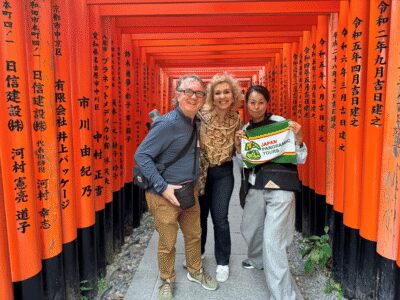
Fushimi Inari, Kinkakuji, Bamboo Grove 1 Day Bus Tour
Read our review →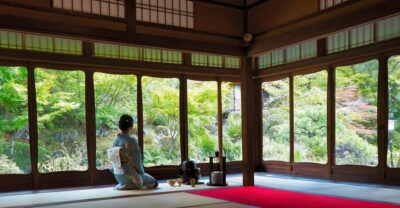
Tea Ceremony in a Traditional Tea House in Kiyomizu
Read our review →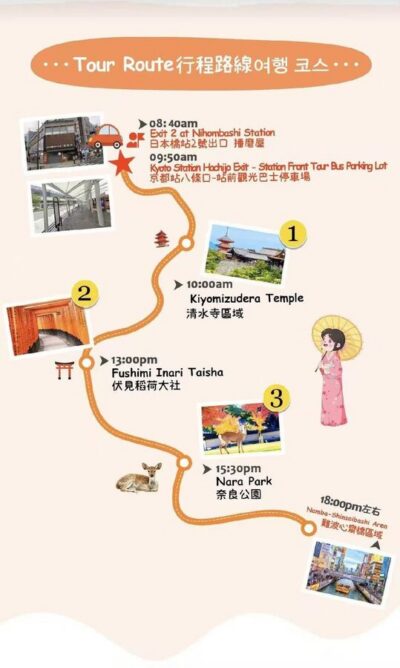
Kyoto Nara Day Trip │ Kiyomizu-dera Temple + Fushimi Inari-taisha Shrine + Nara Park (Departing from Osaka/Kyoto)
Read our review →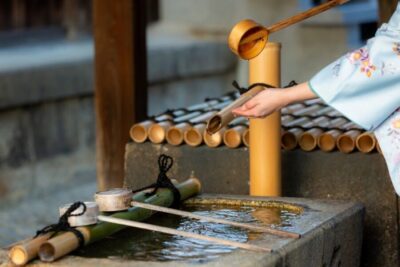
Browse the lists this tour appears in