
Reviewed · COOKING CLASSES
Japanese Katsu Curry Cooking Class–near YANAKA, Tokyo!
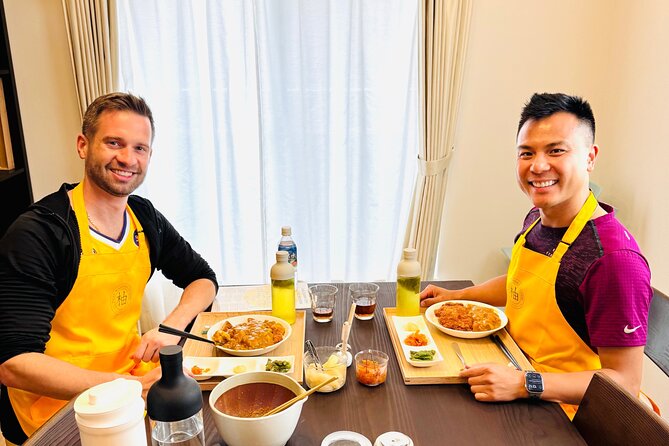
Curry tastes better when you make the roux. This small cooking class near Yanaka gives you two things I especially like: you learn Japanese curry from scratch instead of opening a box of premade cubes, and you fry tonkatsu yourself until it turns crisp and golden. Home chef Yuki also shares practical tips for swapping ingredients when you cook the meal back home.
The class takes place in a quiet residential part of Tokyo’s old downtown, which gives you a glimpse of ordinary neighborhood life beyond the major sights. My one caution is the price: at $111.67 per person, this is not a bargain lunch, though the small group, instruction, meal, apron, and hands-on cooking make it easier to justify.
In This Review
- Key points to know before booking
- Why scratch-made curry changes the class
- Meeting Yuki in old downtown Tokyo
- The 10:00 a.m. arrival and short introduction
- Making Japanese curry roux from scratch
- Frying tonkatsu without losing the crunch
- A seasonal vegetable side dish
- Lunch at the home-style kitchen
- What the small group means for your morning
- Who should book this cooking class
- Final verdict: a useful lesson for curry lovers
- FAQ
- Where does the Japanese katsu curry cooking class meet?
- What time does the class start?
- How long does the experience last?
- What food will I prepare?
- What food and drinks are included?
- Is tonkatsu always made with pork?
- Can I request dietary accommodations?
- Is hotel pickup included?
Key points to know before booking
- Scratch-made curry roux: You build the flavor yourself and can adjust it to your taste.
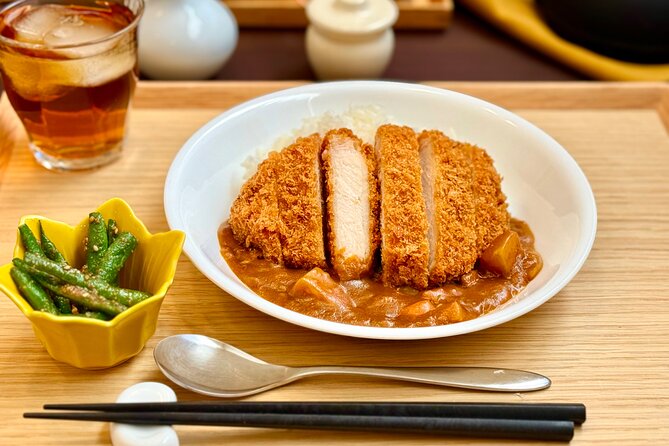
- Tonkatsu technique included: Learn how to fry a crisp pork cutlet, with chicken or tofu available by advance request.
- Small group of six or fewer: The format should allow more direct help at the stove and counter.
- A home-style setting near Yanaka: The class meets in a quiet residential neighborhood rather than a restaurant or formal cooking school.
- A complete Japanese lunch: Curry rice, tonkatsu, a seasonal vegetable dish, green tea, and water are included.
- Useful after the holiday: Simple recipes and ingredient substitution advice help you repeat the dishes at home.
Why scratch-made curry changes the class
Japanese curry is often associated with convenient boxed roux. Those cubes are popular for good reason: they are fast, dependable, and easy to find in Japan. This class takes the longer route. You prepare the roux yourself, which lets you adjust the flavor rather than accept a fixed blend.
That difference matters if you enjoy cooking or want to understand what is in your food. You can learn how the curry base comes together and how small changes affect the finished bowl. The class is not just about copying a recipe. It gives you a method you can adapt in your own kitchen.
Yuki provides simple recipes and advice on ingredient substitutions. That is a useful touch for anyone heading home to a country where Japanese brands or particular pantry items may be hard to find. You are more likely to repeat a dish when the instructions account for the ingredients you can actually buy.
The meal is also substantial. Your finished lunch includes Japanese curry rice, tonkatsu, a seasonal vegetable side dish, green tea, and water. You are not paying for a demonstration followed by a small sample. You cook and then eat a full meal.
More Cooking Classes in Tokyo
- Sushi Making Tokyo Roll and Authentic Japanese Sushi Class
★ 5.0 · 3,971 reviews - Tokyo: Roll and Authentic Sushi Making Class in Asakusa
★ 4.9 · 1,957 reviews - Tokyo Shinjuku Chopsticks Making Class
★ 5.0 · 1,763 reviews
Meeting Yuki in old downtown Tokyo
The class meets at YUZU WASHOKU STUDIO at 10:00 a.m. The address is 1-chōme-58-4 Nishinippori, Arakawa City, Tokyo 116-0013. It is near public transportation, but hotel pickup is not provided, so you need to make your own way there.
The setting is part of the appeal. The studio sits in a quiet residential neighborhood near Yanaka, an area known for its older downtown character and slower pace. You will not be in a big commercial kitchen designed for large classes. Instead, the experience takes place in a warm, home-style Japanese kitchen.
That setting can make the class feel more personal. You get a look at the small details of an everyday Japanese kitchen while preparing a familiar comfort food. It is a useful contrast to restaurant meals and sightseeing around Tokyo. You are not simply observing Japanese food culture from a dining table. You are handling ingredients, following steps, and sharing the meal in the same place where it was prepared.
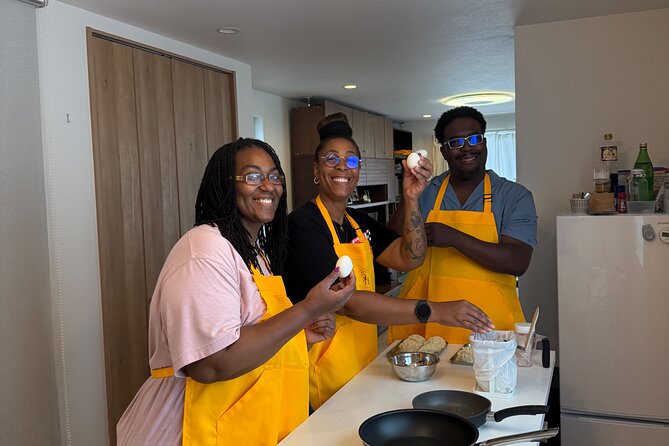
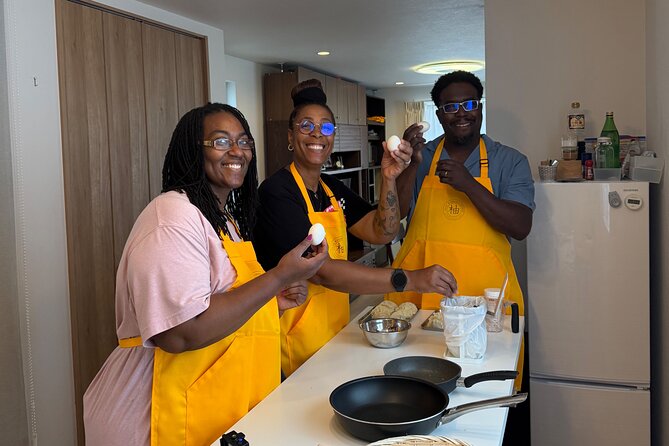
The group is limited to a maximum of six people. That is an important detail for a cooking class. With fewer people at the counter, you have a better chance of seeing each step clearly and getting help with frying, seasoning, or preparation. It also keeps the mood more like a private kitchen lesson than a large demonstration.
The 10:00 a.m. arrival and short introduction
The schedule starts with arrival at 10:00 a.m. From 10:15 to 10:30, Yuki gives a short lecture on Japanese home cooking and offers Tokyo guidance.
This introduction helps place the meal in context. Japanese curry is widely loved across Japan, but it is also a home-style dish, the kind of food that fits an ordinary family meal as much as a restaurant menu. The talk gives you a little background before you begin cooking, without taking up most of the morning.
The Tokyo guidance may also be useful if you are exploring Yanaka or nearby parts of the city. The supplied details do not promise a walking tour, so you should think of this as a brief guide rather than a separate sightseeing activity.
The timing is sensible. You have a few minutes to arrive and settle in, then the explanation leads directly into the cooking. Since the full experience lasts about two and a half hours, the introductory section leaves most of your time for preparing and eating the food.
Making Japanese curry roux from scratch
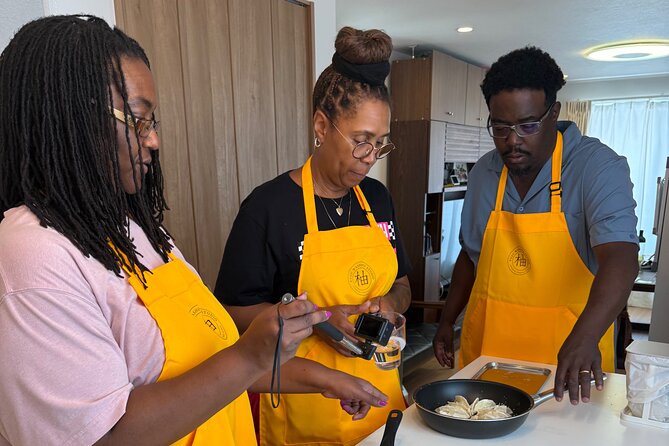
The main cooking session runs from about 10:30 a.m. to 12:30 p.m. The central lesson is the curry roux.
You will not use the familiar premade curry blocks. Instead, you learn how to make a curry base from scratch and adjust it to your preferred flavor. That is the most distinctive part of this class, and it is the reason I would choose it over a general Japanese food lesson if curry is high on your list.
The practical value is clear. You can learn how to make the dish milder, stronger, or otherwise suited to your taste. The exact options and ingredients are not specified, so you should not expect a fixed menu of spice levels. Still, the basic idea is simple: homemade roux gives you more control.
Yuki’s recipe guidance also helps bridge the gap between a Tokyo kitchen and your home kitchen. Japanese cooking classes can sometimes rely on products that are easy to find in Japan but difficult to replace elsewhere. Here, you receive advice about substitutions, which makes the lesson more useful after your trip.
The class is a good fit for cooks at different levels. One person with a lot of kitchen experience said the class still provided pointers for improving home cooking. That is worth noting. You do not need to be a beginner to get something from the session, but you should enjoy hands-on instruction rather than expect a purely social lunch.
A completely different kind of day out:
- Tokyo Disney Resort – Tokyo Disneyland & Tokyo DisneySea Park Tickets
★ 4.8 · 99,488 reviews - SHIBUYA SKY Ticket
★ 4.7 · 46,509 reviews - JR Whole Japan Rail Pass
★ 4.8 · 29,150 reviews - Mt Fuji and Hakone 1-Day Bus Tour Return by Bullet Train
★ 5.0 · 26,383 reviews
Frying tonkatsu without losing the crunch
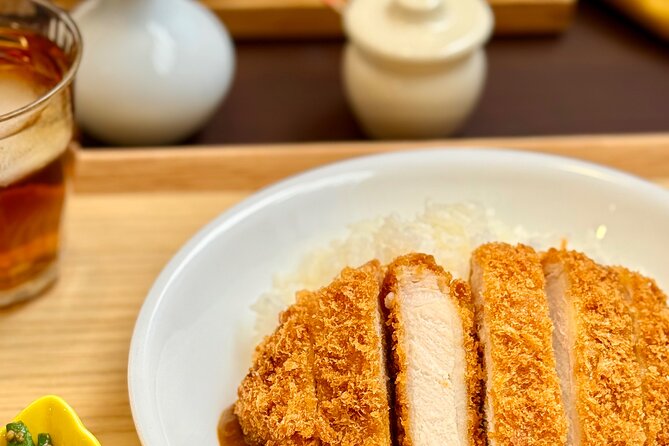
The second major lesson is tonkatsu, the Japanese breaded pork cutlet. You learn how to fry it until the outside is golden brown and crisp.
Frying is where a cooking class can offer more value than a recipe card. A recipe can tell you what to add, but it is less useful when you are judging texture, color, and doneness at the pan. Watching the process and receiving pointers from Yuki can help you understand what to look for when you repeat the dish at home.
Tonkatsu is normally made with pork. If you prefer chicken or tofu, the studio can substitute those ingredients if you request it in advance. This flexibility is useful for people who do not eat pork, but it is not a last-minute option. Include the request when you reserve.
The dish also explains why this class is more than a curry lesson. Curry rice alone is easy to find throughout Tokyo. Learning to pair it with a freshly fried cutlet gives you a fuller Japanese comfort-food meal and a technique you can use in other dishes.
You should be prepared for a class that includes frying. The experience requires active participation, not just watching Yuki work. That is a plus for hands-on learners, but people who prefer a quiet demonstration may find the format more demanding.
A seasonal vegetable side dish
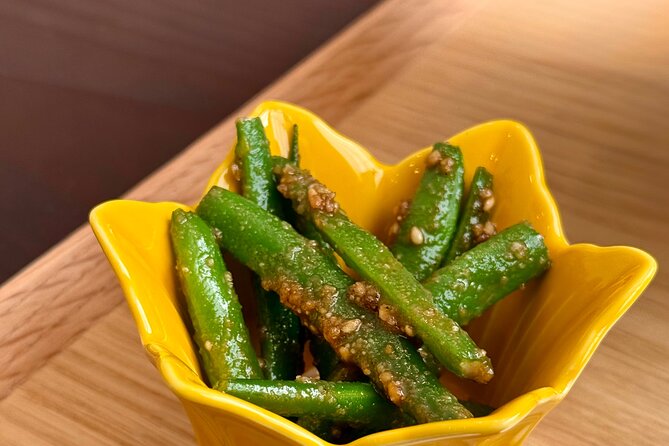
Alongside the curry and tonkatsu, you prepare a seasonal vegetable side dish. The vegetables vary depending on the season, so the exact plate is not fixed.
That changing side dish adds balance to the meal. Curry and fried cutlet are hearty, and a vegetable accompaniment brings a fresh element to the table. It also gives you another small lesson in Japanese home cooking, where a meal often includes several simple dishes rather than one oversized main course.
Since the exact vegetables are not provided in advance, anyone with allergies or strict dietary needs should contact the studio before booking. The class can discuss special needs, including vegetarian, gluten-free, and halal requirements, but you should not assume every request can be handled without notice.
The seasonal approach also means your experience may differ from someone attending at another time of year. That is a benefit if you like food tied to the calendar, though it makes the class less predictable for anyone seeking a particular vegetable dish.
Lunch at the home-style kitchen
After the cooking, you sit down to eat the meal you prepared. The included lunch consists of katsu curry rice, the seasonal vegetable side dish, green tea, and water.
Eating the food immediately matters. You can see how the homemade roux tastes with rice and how the crisp tonkatsu works with the curry. You also get a chance to ask final questions while the techniques are still fresh.
An apron and hand towel are provided, which keeps the packing list short. You do not need to bring cooking equipment. The experience ends back at the meeting point, so the morning has a clear start and finish.
The meal may be especially satisfying after the work involved in preparing it. Still, keep the value question in mind. At $111.67, the price covers instruction, ingredients, the meal, equipment basics, and a small-group format. It does not include hotel pickup or a separate neighborhood tour. I see the strongest value for people who will use the cooking skills later, not for someone seeking the cheapest lunch in Tokyo.
What the small group means for your morning
A maximum of six participants is one of the best practical features. Cooking lessons become frustrating when too many people crowd around one work surface or wait for a turn. This class avoids that large-group feel.
The small size should also make it easier to ask questions about substitutions and technique. If you are unsure about frying the cutlet or balancing the curry, you have a better chance of getting direct guidance.
The published feedback is very positive, with a five out of five rating from 18 reviews and a 100 percent recommendation figure. That is a small sample, so I would not treat it as proof that every person will have the same experience. Still, the praise is specific. People highlight the delicious meal, the scratch-made curry, the friendly teaching, and the practical cooking pointers.
One especially telling detail is a participant’s regret at not photographing Yuki’s rice cooker because it seemed so appealing. You may not share that exact interest, but it captures the domestic feel of the class. The appeal is not polished restaurant theater. It is the chance to notice how a Japanese home cook handles familiar equipment and everyday food.
Another participant made the dishes again after returning home. That is the real test of a cooking class. If you leave with recipes you can repeat, the experience continues after your Tokyo visit.
Who should book this cooking class
I would recommend this experience to you if you meet one or more of these descriptions:
- You specifically want Japanese curry made with homemade roux.
- You like participating in the cooking rather than watching a chef demonstrate.
- You want a small class with no more than six people.
- You enjoy home-style food and a residential neighborhood setting.
- You want recipes and substitution advice for cooking after your trip.
- You are comfortable requesting dietary changes in advance.
It is also a strong choice for a couple or small group looking for a shared activity. A honeymoon couple described the class as a 10 out of 10 experience, and Yuki’s warm response suggests she takes an interest in the people who book with her.
I would be more cautious if your main goal is a low-cost meal, a formal tour of Yanaka, or a broad survey of Japanese cuisine. The class focuses tightly on curry, tonkatsu, and one seasonal side dish. That focus is its strength, but it is not a general washoku course.
Book ahead if your schedule is fixed. The experience is booked an average of 44 days in advance, which suggests that popular dates can fill well before your arrival. Free cancellation is available if you cancel at least 24 hours before the start time. Late cancellations and late changes are not accepted for a refund.
The activity can also be canceled if poor weather affects the session or if the minimum number of participants is not reached. In those cases, you are offered another date or experience, or a full refund.
Final verdict: a useful lesson for curry lovers
I would book this class if you want to take home more than a food photo. The homemade curry roux, tonkatsu frying lesson, seasonal vegetable dish, and ingredient substitution advice give you several practical skills in one morning.
The $111.67 price is high for lunch, but fairer when you count the small group, instruction, ingredients, full meal, apron, and chance to cook in a residential Tokyo setting. You should choose it for the lesson and the personal atmosphere, not simply for the food.
If curry is one of your favorite Japanese comfort foods, this is a focused and worthwhile choice near Yanaka. If you want the best value, make the dishes again at home. That is where this class earns its keep.
FAQ
Where does the Japanese katsu curry cooking class meet?
It meets at YUZU WASHOKU STUDIO, located at 1-chōme-58-4 Nishinippori, Arakawa City, Tokyo 116-0013, Japan.
What time does the class start?
The class starts at 10:00 a.m. The introduction runs from about 10:15 to 10:30 a.m., followed by cooking and tasting until about 12:30 p.m.
How long does the experience last?
The experience lasts approximately two hours and 30 minutes.
What food will I prepare?
You will prepare Japanese curry with homemade roux, tonkatsu, and a seasonal vegetable side dish.
What food and drinks are included?
Lunch includes katsu curry rice, the seasonal vegetable side dish, green tea, and water.
Is tonkatsu always made with pork?
Tonkatsu is normally made with pork, but chicken or tofu can be substituted if you request it in advance.
Can I request dietary accommodations?
Yes. You should notify the studio when booking if you have food allergies or special dietary needs, including vegetarian, gluten-free, or halal requirements.
Is hotel pickup included?
No. Hotel pickup is not included. The activity begins and ends at YUZU WASHOKU STUDIO, which is near public transportation.
Just added in Tokyo
- Ramen and Gyoza Cooking Class in Tokyo★ 5.0 · 21 reviews
- Ramen Tasting – Mini Bowl Ramen Tour★ 5.0 · 127 reviews
- REAL, All-Inclusive Tokyo Food and Drink Adventure (leave the tourists behind)★ 5.0 · 25 reviews
- Ramen Making from Scratch with Tokyo Mom(Vegan Option Available)★ 5.0 · 39 reviews
- Professional Cosplay Photography Experience with English Guide★ 5.0 · 16 reviews
- Get Unique Insights into Tokyo – Private Tour with local Guide★ 5.0 · 195 reviews
- Haneda Airport: One Way Private Transfer to Tokyo|Yokohama Hotels★ 4.0 · 28 reviews
- Private departure transfer from Tokyo city to Tokyo Haneda Airport(HND)★ 4.5 · 123 reviews
Cooking Classes, compared.
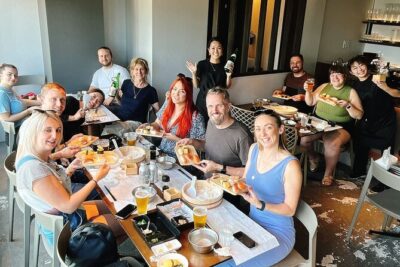
Sushi Making Tokyo Roll and Authentic Japanese Sushi Class
Read our review →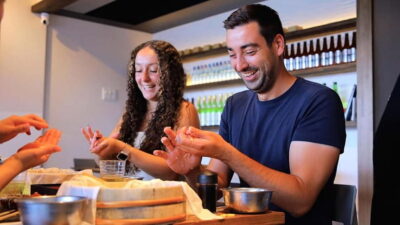
Roll and Authentic Sushi Making Class in Asakusa
Read our review →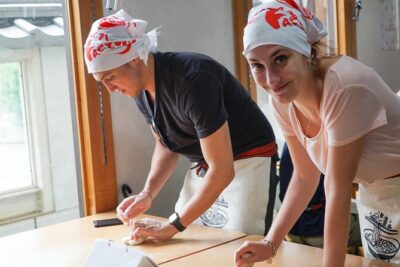
Ramen Cooking Class at Ramen Factory in Kyoto
Read our review →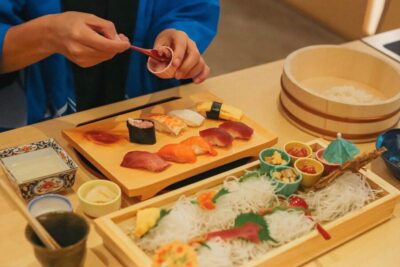
Sushi Making Class in a Happi Coat near a Famous Spot
Read our review →
Sushi Making Osaka Roll and Authentic Japanese Sushi Class
Read our review →
Tokyo Sushi Making Class in Tsukiji with Professional Chef
Read our review →
Ramen & Gyoza Cooking Class in Tokyo with Local Supermarket Visit
Read our review →Browse the lists this tour appears in