
Reviewed · COOKING CLASSES
Ramen Making from Scratch with Tokyo Mom(Vegan Option Available)
Fresh noodles change everything. This small cooking class in Shinjuku gives you more than a meal. You knead ramen dough, cut the noodles, build broth, and fold gyoza with Aki, a Japanese mother and former backpacker who teaches in warm, clear English. I like the hands-on work and the chance to learn Japanese cooking with natural ingredients instead of MSG or artificial flavorings. I also like that the recipes come with you in a digital PDF.
The main consideration is dietary flexibility. A vegan option may be possible, but you must mention allergies, vegan needs, or halal preferences when booking. The standard broth uses chicken and pork, and not every request can be guaranteed. At $120 per person for about two and a half hours, this is not a cheap lunch, but the small group, instruction, meal, kitchen use, apron, and take-home recipes make it a fair choice for people who want more than restaurant ramen.
In This Review
- What makes this class worth your time
- Meeting Aki near Shinjuku Gyoenmae Station
- Kneading noodles from flour to bowl
- Building broth with kombu, katsuobushi, and shiitake
- Folding and cooking homemade gyoza
- A relaxed two-and-a-half-hour pace
- The Tokyo setting adds useful time before and after
- Is $120 a good value?
- Who should book this cooking experience?
- Booking, timing, and cancellation details
- Should you book Tokyo Mom’s Kitchen?
- FAQ
- How long does the ramen and gyoza class last?
- Where does the cooking class take place?
- How far is the kitchen from Shinjuku Gyoenmae Station?
- What dishes will I make?
- Is a vegan option available?
- Does the standard ramen contain meat?
- Is the class taught in English?
- What is included in the price?
- Can I cancel for a full refund?
What makes this class worth your time
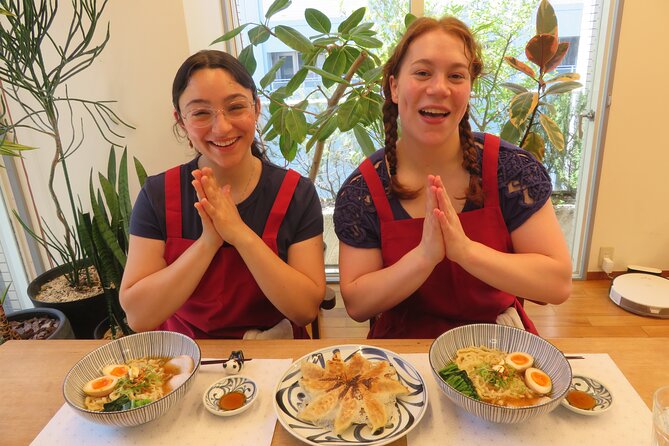
- Cut your own ramen noodles: You work with the dough and slice the noodles by hand, including the fine knife work that helps control texture.
- Build broth with Japanese umami: Katsuobushi, kombu, and shiitake mushrooms show you how depth comes from simple ingredients.
- Make gyoza from scratch: The class includes dumpling preparation, filling, folding, and cooking.
- Learn in a six-person maximum group: The small setting gives Aki room to help families, beginners, and cooks who need extra guidance.
- Cook in a bright top-floor kitchen: The space is about five minutes from Shinjuku Gyoenmae Station, near Shinjuku Gyoen Park and central Shinjuku.
- Take the lesson home: You receive a digital recipe sheet, so the class can become a useful souvenir rather than a meal you remember only in photographs.
Meeting Aki near Shinjuku Gyoenmae Station
The class begins at Bridal Unison, 1-chōme-24-7 Shinjuku, Shinjuku City, Tokyo 160-0022. From Shinjuku Gyoenmae Station, the kitchen is about a five-minute walk. You need to make your own way there, since private transportation is not included.
That location works well for a cooking class. You are close enough to Shinjuku for easy access, but the kitchen sits near one of Tokyo’s most pleasant green spaces. If your schedule allows, pair the class with a walk through Shinjuku Gyoen Park before or after cooking. You can also continue into the shopping and entertainment districts of Shinjuku.
Aki introduces herself as a Japanese mom who enjoys meeting people from around the world. Her background as a former backpacker helps explain the relaxed, welcoming tone. This is not presented as a formal culinary school lesson. It is closer to being invited into a home kitchen, with enough structure to keep the food moving and enough patience for first-time cooks.
The kitchen is on the top floor, with natural light, a gentle breeze, and a roomy feel. Those details matter during a hands-on class. You will be standing, mixing, shaping, and working with flour, so a cramped room would quickly become tiring. The open setting also suits families and small groups who want to talk while they cook.
More Cooking Classes in Tokyo
- Sushi Making Tokyo Roll and Authentic Japanese Sushi Class
★ 5.0 · 3,971 reviews - Tokyo: Roll and Authentic Sushi Making Class in Asakusa
★ 4.9 · 1,957 reviews - Tokyo Shinjuku Chopsticks Making Class
★ 5.0 · 1,763 reviews
Kneading noodles from flour to bowl
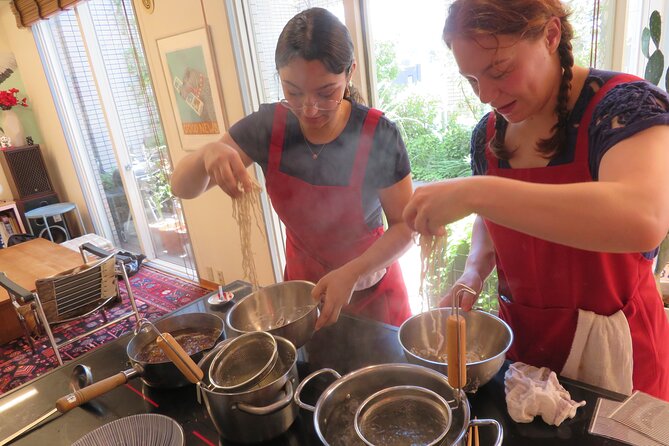
The first major task is making the ramen noodles. This is where the class earns its keep. Restaurant ramen arrives in a finished bowl, but the noodle is one of the dish’s defining parts. Here, you can see how the dough changes as you work it and how thickness affects the final bite.
You knead the dough, prepare it for cutting, and use a knife to create the noodles. This is practical work, not just a demonstration. One participant, Brian, was especially praised for producing impressively thin noodles. That detail tells you something useful: the cutting stage can be surprisingly exacting, but it is also one of the most satisfying parts of the session.
Do not expect perfect restaurant noodles on your first attempt. That is not a weakness of the class. It is the point. You get to understand why ramen texture varies and why noodle thickness changes how broth clings to each strand.
Aki’s patient instruction is especially valuable here. Families with children have found that she helps younger cooks feel comfortable, even when the pace needs to slow down. If you are bringing children, this class gives them real jobs rather than asking them to watch from the side.
The class also explains how the noodles connect to the finished dish. You are not simply making dough, then waiting for lunch. You learn how texture and taste work together, which makes the recipe easier to repeat at home.
Building broth with kombu, katsuobushi, and shiitake
The broth brings Japanese flavor into focus. Aki uses familiar umami-rich ingredients such as kombu, katsuobushi, and shiitake mushrooms. You learn how these ingredients contribute savory depth without relying on MSG or artificial flavorings.
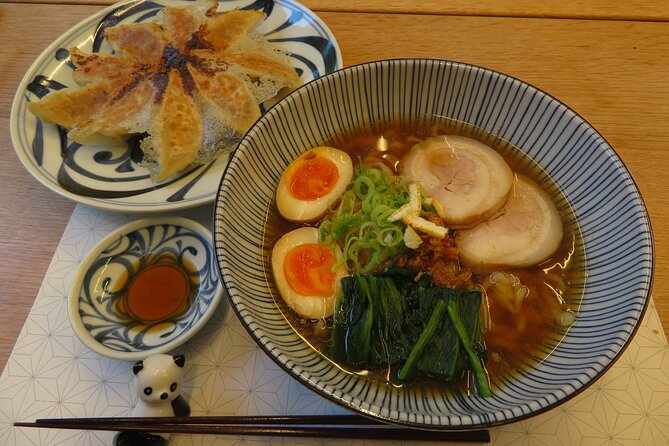
The standard preparation also uses chicken and pork to create a satisfying broth. That makes the class a good fit for people who want to understand a fuller, meat-based ramen style. It also means you should not assume the regular broth is vegetarian or vegan.
The lesson’s value is in learning balance. Kombu contributes a gentle sea flavor. Katsuobushi, made from dried bonito, adds a smoky, savory note. Shiitake mushrooms bring another layer of earthiness. Aki shows you how these ingredients work together instead of treating broth as a mysterious restaurant secret.
The class uses fresh, natural ingredients, but that does not mean every dietary request can be handled. If you need a vegan or halal version, tell the host at the time of booking. A vegan option is available in some cases, and one family received a vegetarian ramen alongside a meat version. Still, ingredient adjustments are not guaranteed for every allergy or preference.
That is an important distinction. If your diet is strict, contact the provider before you commit. If you simply prefer vegetarian food and give advance notice, the class may be able to adapt. You should not arrive expecting the standard chicken and pork broth to be changed at the last minute.
Folding and cooking homemade gyoza
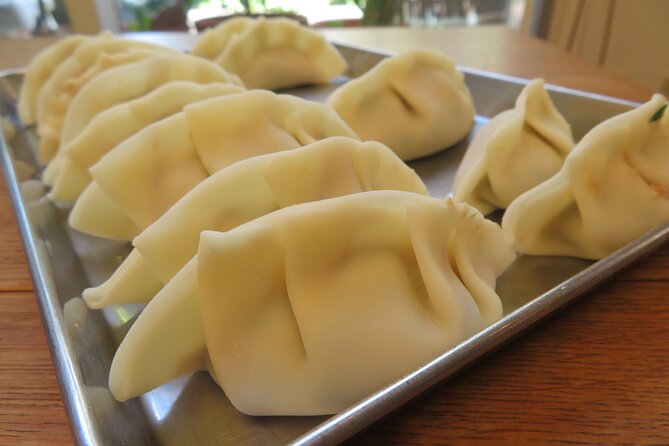
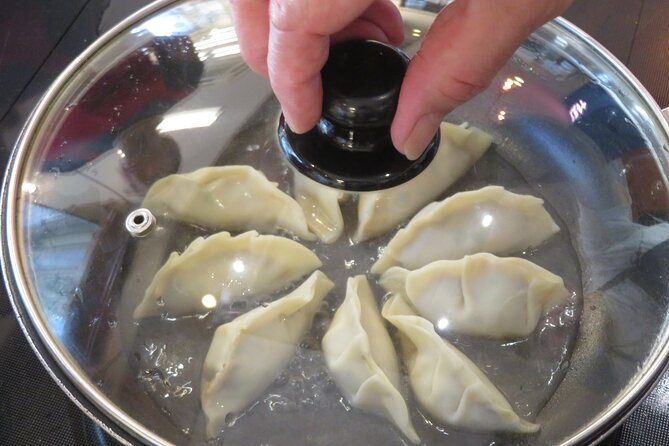
Ramen is the star, but gyoza gives the class a second skill set. You prepare the filling, place it in the wrappers, and fold the dumplings before cooking them. The work is approachable, and it gives you another Japanese dish you can make at home.
Gyoza also adds variety to the two-and-a-half-hour schedule. Ramen involves dough, broth, and timing. Dumplings involve portioning, shaping, and careful folding. Together, the dishes make the session feel like a full meal rather than a single recipe lesson.
Do not worry if your first dumpling looks a little lopsided. Homemade gyoza are often more personal than polished. The useful lesson is learning how much filling to use and how to close the wrapper properly. Aki guides you through the process, then helps keep the meal on track.
The family feedback is particularly encouraging for this part of the class. Children were made to feel at ease, and adults appreciated that the steps were explained patiently. That combination makes the activity suitable for a mixed-age group, especially if your family wants one shared activity in Tokyo.
The finished gyoza also help make the price easier to assess. You are not only paying for a bowl of ramen. You are preparing a second dish, eating what you make, and receiving instructions you can use later.
A completely different kind of day out:
- Tokyo Disney Resort – Tokyo Disneyland & Tokyo DisneySea Park Tickets
★ 4.8 · 99,488 reviews - SHIBUYA SKY Ticket
★ 4.7 · 46,509 reviews - JR Whole Japan Rail Pass
★ 4.8 · 29,150 reviews - Mt Fuji and Hakone 1-Day Bus Tour Return by Bullet Train
★ 5.0 · 26,383 reviews
A relaxed two-and-a-half-hour pace
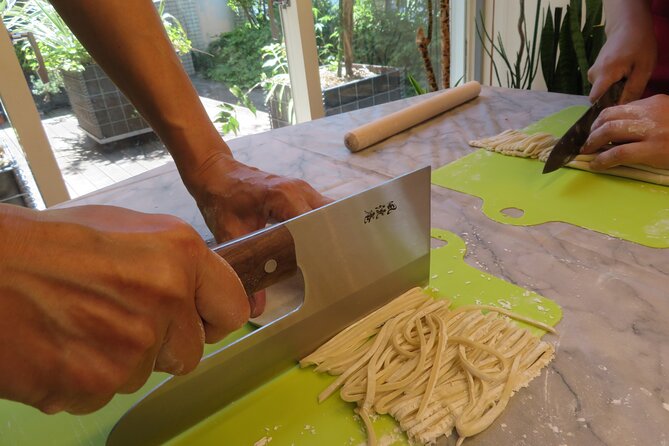
The total session lasts about two to two and a half hours. That is long enough to cover the dough, broth, gyoza, cooking, and meal without turning the class into an all-day commitment.
You should allow extra time for reaching the meeting point and finding the kitchen. Since the class ends back at the same location, it is simple to plan around. The activity is also a good option on a rainy day. One couple found it a delightful way to spend a wet Saturday, and cooking indoors makes sense when Tokyo’s weather is not cooperating.
The class has a maximum of six participants. This is a major advantage over large group cooking demonstrations. Aki can watch your knife work, help with noodle cutting, answer questions, and give families individual attention.
The small size does not guarantee a private class. You may cook with other people, depending on the booking. Still, six is small enough to keep the lesson personal and conversational. If you prefer quiet, highly formal instruction, the friendly family kitchen style may feel less polished than a professional culinary studio. For most people, that informality is part of the appeal.
The host speaks English, and the instruction is designed to be easy to follow. You do not need to arrive with Japanese cooking experience. The recipes are meant to be practical and repeatable, which makes the class accessible to beginners.
The Tokyo setting adds useful time before and after
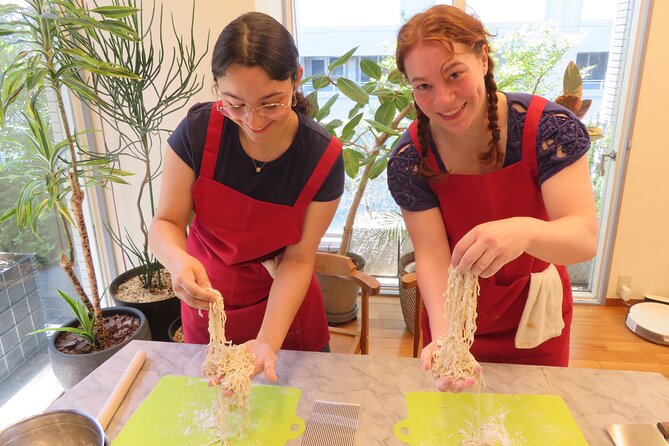
A cooking class near Shinjuku Gyoenmae Station gives you flexibility. You can visit Shinjuku Gyoen Park before class, take a quiet walk after eating, or head toward Shinjuku’s shops and entertainment areas when the session ends.
This is a better setting for a food activity than a remote destination that takes half a day to reach. You can fit it into a Tokyo itinerary without giving up a full morning or afternoon. The central location also helps if your group is staying in or around Shinjuku.
One family even scheduled the class just before going to the airport on its final day in Japan. I would be cautious about copying that plan too closely. The activity lasts roughly two and a half hours, and you must still allow time to collect luggage and reach the airport. But the example shows that the class can work well near the end of a trip if your timing is generous.
For a calmer schedule, book it earlier in your stay. You will have more time to buy ingredients later and try the recipes again at home. You may also enjoy the class more when you are not watching the clock for a flight.
Is $120 a good value?
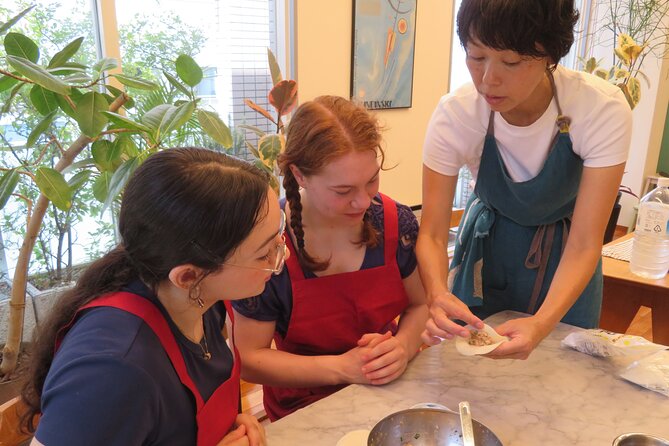
At $120 per person, this class costs more than ordering ramen and gyoza at a casual restaurant. If your only goal is to eat lunch, this is not the economical choice.
The value comes from the combination of instruction and participation. You receive all ingredients, kitchen tools, an apron, an English-speaking host, the meal you prepare, and a digital recipe sheet. You also get direct coaching in two dishes that require more technique than they first appear to.
The group limit matters here. A six-person maximum means your fee supports a small lesson rather than a large demonstration. Families may find the price easier to justify because children can take part, and the activity creates a shared memory instead of simply filling an hour between sightseeing stops.
I would also count the recipes as part of the value. Japanese cooking classes often appeal because they send you home with a method, not just a photograph. The digital sheet gives you a chance to repeat the ramen and gyoza after your trip, although the final result will depend on finding suitable ingredients and practicing the noodle cutting.
The strongest reason to pay the price is personal attention from Aki. Her patient style has helped both adults and children enjoy the class. If you value conversation, guidance, and a welcoming kitchen, $120 is defensible. If you prefer inexpensive food stops or already cook ramen and gyoza confidently, spend your money elsewhere.
Who should book this cooking experience?
This class suits several types of visitors:
- Families who want a hands-on activity that works for children and adults.
- Couples looking for a meal with a personal, local feel.
- First-time cooks who want clear instructions in English.
- Food lovers interested in Japanese umami and natural ingredients.
- Anyone who wants a rainy-day plan near Shinjuku.
- Visitors who like bringing home a skill instead of another souvenir.
It may be less suitable if you need a fully guaranteed vegan, halal, or allergy-safe menu. Aki will try to adjust ingredients, but the class cannot promise every request. It may also disappoint people who want a professional restaurant kitchen, advanced culinary training, or a completely private lesson.
The experience is at its best when you approach it as a shared home-style cooking session. You will make mistakes, learn the basic methods, and eat what you prepare. That is more rewarding than watching a chef do everything perfectly.
Booking, timing, and cancellation details
The activity is offered with a mobile ticket, and confirmation is normally received at booking. If you book within two days of the class, confirmation may take up to 48 hours and remains subject to availability.
Free cancellation is available up to 24 hours before the start time for a full refund. Changes or cancellations made less than 24 hours before the class are not accepted for a refund. The cut-off follows Tokyo local time, so check the clock carefully if you are arranging plans from another time zone.
You meet directly at the Shinjuku address and return there when the class ends. Transportation is not included. The activity is near public transportation, but you should still allow time to locate the exact building.
Should you book Tokyo Mom’s Kitchen?
Book this class if you want to understand ramen as a dish made from separate, important parts: noodle texture, broth balance, and careful preparation. Aki’s warm teaching style, small group size, and willingness to work with families are the biggest strengths.
I would book it for a couple, family, or small group that values conversation and practical cooking skills. Give yourself plenty of time before a flight, and state all dietary needs when booking. If you want the cheapest ramen in Tokyo, eat at a restaurant. If you want to learn how to make the bowl yourself and leave with recipes, this is a thoughtful use of an afternoon in Shinjuku.
FAQ
How long does the ramen and gyoza class last?
The class lasts approximately two to two and a half hours.
Where does the cooking class take place?
It takes place at Bridal Unison, 1-chōme-24-7 Shinjuku, Shinjuku City, Tokyo 160-0022, Japan.
How far is the kitchen from Shinjuku Gyoenmae Station?
The kitchen is about a five-minute walk from Shinjuku Gyoenmae Station.
What dishes will I make?
You will make ramen and gyoza from scratch, including the noodles, broth, and dumplings.
Is a vegan option available?
A vegan option may be available, but you must mention vegan needs when booking. The host may not be able to accommodate every request.
Does the standard ramen contain meat?
The standard broth uses chicken and pork. It also uses Japanese umami ingredients such as katsuobushi, kombu, and shiitake mushrooms.
Is the class taught in English?
Yes. The experience includes an English-speaking Japanese host, Aki.
What is included in the price?
The price includes all ramen and gyoza ingredients, kitchen tools, apron rental, the cooking lesson, and a digital recipe sheet in PDF format.
Can I cancel for a full refund?
Yes. You can cancel at least 24 hours before the start time for a full refund. Cancellations or changes made less than 24 hours before the start time are not accepted for a refund.
Just added in Tokyo
- Ramen and Gyoza Cooking Class in Tokyo★ 5.0 · 21 reviews
- Ramen Tasting – Mini Bowl Ramen Tour★ 5.0 · 127 reviews
- REAL, All-Inclusive Tokyo Food and Drink Adventure (leave the tourists behind)★ 5.0 · 25 reviews
- Japanese Katsu Curry Cooking Class–near YANAKA, Tokyo!★ 5.0 · 18 reviews
- Professional Cosplay Photography Experience with English Guide★ 5.0 · 16 reviews
- Get Unique Insights into Tokyo – Private Tour with local Guide★ 5.0 · 195 reviews
- Haneda Airport: One Way Private Transfer to Tokyo|Yokohama Hotels★ 4.0 · 28 reviews
- Private departure transfer from Tokyo city to Tokyo Haneda Airport(HND)★ 4.5 · 123 reviews
Cooking Classes, compared.
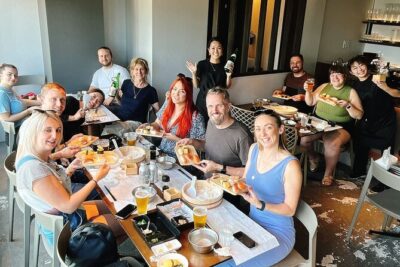
Sushi Making Tokyo Roll and Authentic Japanese Sushi Class
Read our review →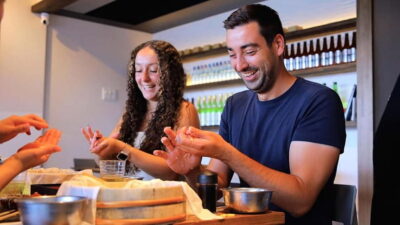
Roll and Authentic Sushi Making Class in Asakusa
Read our review →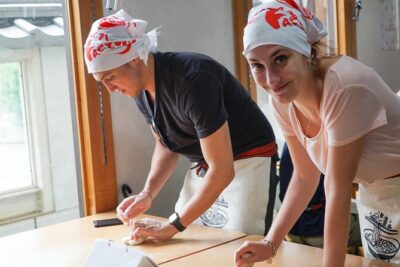
Ramen Cooking Class at Ramen Factory in Kyoto
Read our review →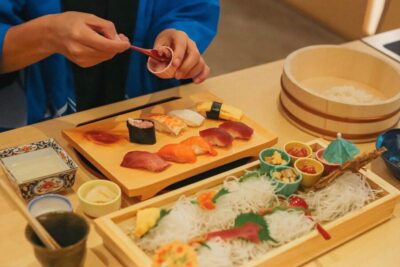
Sushi Making Class in a Happi Coat near a Famous Spot
Read our review →
Sushi Making Osaka Roll and Authentic Japanese Sushi Class
Read our review →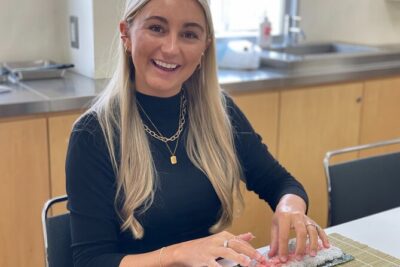
Tokyo Sushi Making Class in Tsukiji with Professional Chef
Read our review →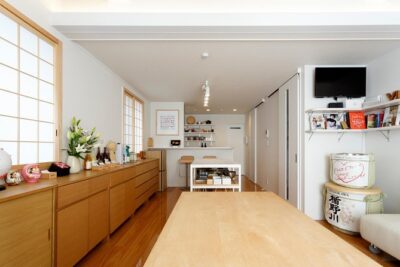
Ramen & Gyoza Cooking Class in Tokyo with Local Supermarket Visit
Read our review →Browse the lists this tour appears in