
Reviewed · COOKING CLASSES
Ramen and Sushi Cooking Class with Sake Pairing Set in Tokyo
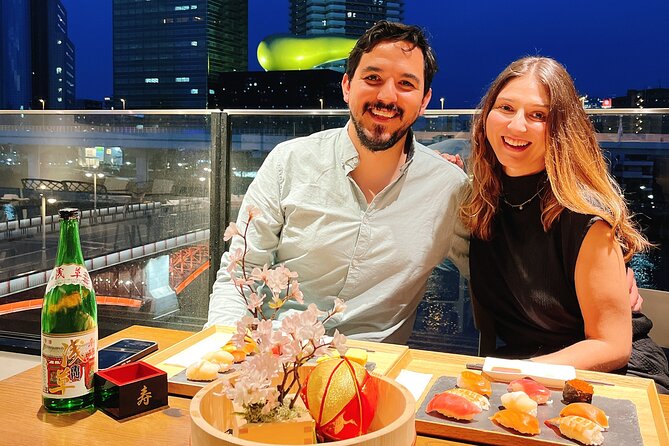
Sushi is easier when someone shows your hands. This three-hour Tokyo class combines sushi making, ramen broth, and sake in a friendly setting where the group never exceeds eight. I like the hands-on sushi practice and the way instructors such as Sato, Ryushi, Alex, Taka, and Kaori keep the mood relaxed. The main thing to consider is that ramen is somewhat less hands-on than sushi, with more room for customization than from-scratch cooking.
I also like the personal scale of the class. You are not lost in a large demonstration, and the food you prepare becomes your meal. The $79.59 price includes ingredients, the English-speaking instructor, and all drinks, though hotel transportation is not included.
In This Review
- Key things to know before booking
- A small Tokyo class with plenty of personal attention
- The sushi portion is the most hands-on
- Ramen brings broth, pork belly, and choice
- Sake pairing turns lunch into a proper tasting experience
- What the three-hour schedule feels like
- The river setting adds a welcome pause
- How the price compares with the experience
- Who will enjoy this class most
- Useful booking details before you go
- Should you book the ramen and sushi class?
- FAQ
- How long does the cooking class last?
- Where does the class meet?
- Where does the activity end?
- What is included in the price?
- Is hotel pickup and drop-off included?
- How large is the class?
- Can I cancel for a full refund?
Key things to know before booking
- Sushi gets the most practical attention: You receive close guidance on shaping and preparing it, which is useful if home attempts have gone poorly.
- Ramen includes broth and pork belly: The savory soup is prepared as part of the meal, with pork belly singled out as a favorite component.
- Sake is part of the experience: Several sake choices are served with the food, not added as a separate extra.
- Groups are capped at eight: Smaller sessions can mean more direct help and easier conversation.
- The setting may include river views: The class takes place at HAUS Tsukishima in Tsukuda, Chuo City.
- It is a good value for a three-hour food activity: Ingredients, the meal, instruction, and drinks are included in the listed price.
A small Tokyo class with plenty of personal attention
The class meets at HAUS Tsukishima, Japan, 104-0051 Tokyo, Chuo City, Tsukuda, 2-chōme 13-5. It is near public transportation, but you should still check the map carefully before setting out. Tokyo addresses can be confusing, and arriving at the right building matters more than simply reaching the neighborhood.
The maximum group size is eight. That number matters here because sushi depends on small corrections: how firmly you press the rice, how you position the filling, and how neatly you roll or shape each piece. In a larger class, those details can disappear. Here, you have a better chance of getting a quick adjustment from the instructor.
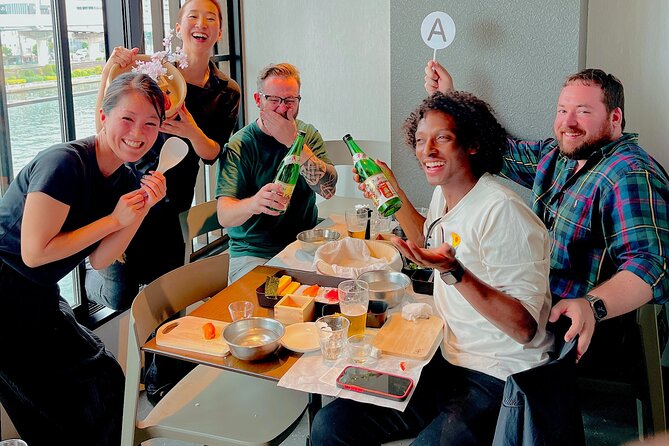
The mood is one of the strongest parts of the experience. Sato and Ryushi have been praised for making the room feel warm and easygoing, while Alex, Taka, and Kaori have also been singled out for their humor and welcoming manner. The exact teaching team may vary, but the pattern is clear: this is meant to feel like a friendly kitchen lesson, not a formal culinary exam.
That relaxed tone helps if you are new to Japanese cooking. You can ask questions without feeling behind, and the class includes stories and cultural background alongside the practical work. A short quiz about sushi and ramen history has also been part of the fun, adding a little energy without turning the session into a lecture.
More Cooking Classes in Tokyo
- Sushi Making Tokyo Roll and Authentic Japanese Sushi Class
★ 5.0 · 3,971 reviews - Tokyo: Roll and Authentic Sushi Making Class in Asakusa
★ 4.9 · 1,957 reviews - Tokyo Shinjuku Chopsticks Making Class
★ 5.0 · 1,763 reviews
The sushi portion is the most hands-on
Sushi is where I see the clearest value for a home cook. Several class participants found sushi difficult to learn from videos alone, especially when they could not tell why their rice, rolls, or shapes were going wrong. An instructor standing nearby can show the difference far faster than a screen can.
You should expect direct guidance as you prepare the sushi. The class is designed to let you make the food yourself, then eat what you have made. That creates a useful rhythm: demonstration, practice, correction, and lunch or dinner at the same table.
The small group also keeps this section from feeling like a quick photo opportunity. You are not only watching a professional assemble attractive pieces. You are working through the steps and learning the feel of the ingredients.
The sushi is paired with sake, which adds another layer to the meal. One session included five people, allowing close instruction, and the sake was described as smooth and high quality. You should not expect a separate winery-style tasting lecture, but you can expect drinks selected to go with the dishes.
For families, couples, and friends, sushi offers the most satisfying shared activity. Everyone has a task, and the results are visible right away. The imperfect pieces are part of the fun. They also make the lesson more memorable than simply sitting down to a prepared meal.
Ramen brings broth, pork belly, and choice
The ramen portion works differently. You learn about preparing savory broth from scratch, but the activity is not as hands-on as the sushi work. That is not necessarily a flaw. Ramen broth often involves preparation that takes time, and a three-hour class has to balance cooking with eating, instruction, and sake.
You can expect the ramen to be more customizable. One class participant described the sushi as the main practical lesson, while the ramen allowed more personal choices. That makes this section useful if you like adjusting a bowl to your taste, but less useful if your main goal is to learn every stage of a long ramen recipe from raw ingredients.
The pork belly is a memorable part of the bowl. It has been praised as especially delicious, and it gives the ramen a satisfying finish. The meal is substantial enough that you should not plan on needing another lunch immediately afterward.
The class also explains the stories behind the dishes. That context helps you understand that ramen and sushi are not just interchangeable Japanese menu items. Their ingredients, preparation, and place in everyday food culture differ. The instruction stays practical, but the cultural notes give the meal more meaning.
If you are choosing the class mainly to master ramen at home, keep your expectations measured. You will gain useful ideas about broth and customization, but the sushi section appears to offer more direct technique practice. If you want a balanced food activity that includes ramen rather than a specialist ramen workshop, the mix works well.
Sake pairing turns lunch into a proper tasting experience
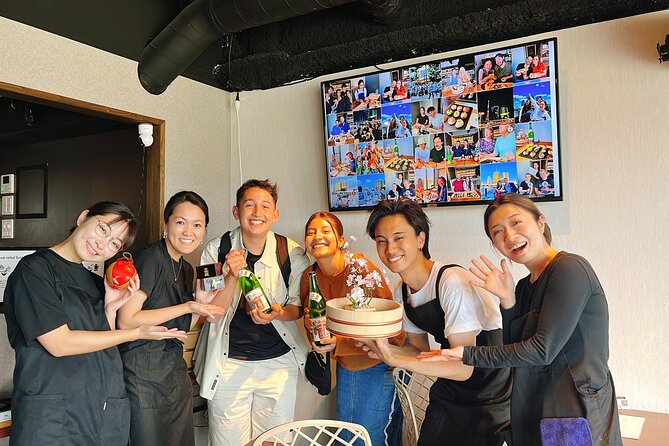
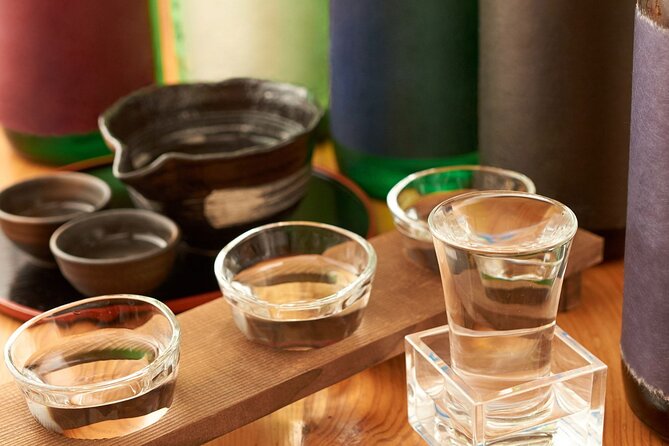
All drinks are included, and sake is not treated as an afterthought. The class offers a selection intended to complement the sushi and ramen, giving you a chance to notice how the drink works with different flavors.
This is a pleasant advantage at the listed price of $79.59. A separate drink bill can make cooking classes feel less affordable, but here the meal and drinks are covered. You also avoid paying for a class that ends with a few tiny samples and leaves you hungry. The portions appear generous enough to make this a full food experience.
The sake component suits curious beginners. You do not need to arrive with detailed knowledge of sake styles. The class leaders guide the atmosphere, and the focus remains social and approachable.
You should still be mindful of your own alcohol needs. The supplied information confirms that all drinks are included, but it does not specify nonalcoholic alternatives or the exact sake lineup. If you do not drink alcohol, contact the provider before booking to confirm what can be served instead.
A completely different kind of day out:
- Tokyo Disney Resort – Tokyo Disneyland & Tokyo DisneySea Park Tickets
★ 4.8 · 99,488 reviews - SHIBUYA SKY Ticket
★ 4.7 · 46,509 reviews - JR Whole Japan Rail Pass
★ 4.8 · 29,150 reviews - Mt Fuji and Hakone 1-Day Bus Tour Return by Bullet Train
★ 5.0 · 26,383 reviews
What the three-hour schedule feels like
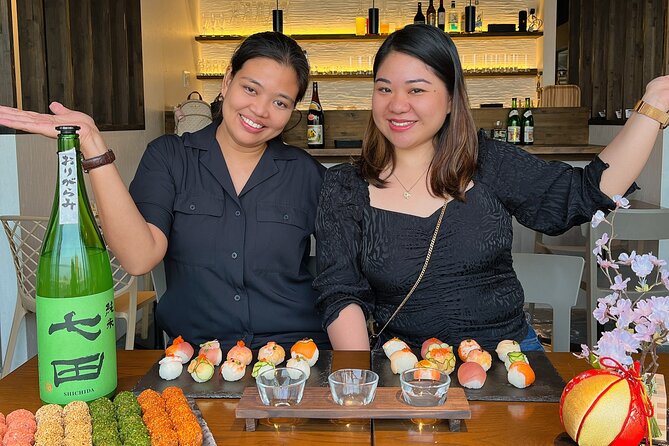
The full activity lasts about three hours, which gives enough time for instruction without taking an entire day away from Tokyo sightseeing. I would place it on a day when you want a break from temples, shopping, or museums and would rather sit down for a shared meal.
The session appears to move through three connected parts:
- Introduction to Japanese food traditions and the class process
- Hands-on sushi preparation with close instructor help
- Ramen preparation, customization, eating, and sake pairing
The exact order may differ, so you should treat this as the shape of the experience rather than a minute-by-minute plan. The activity ends back at the meeting point, with no hotel pickup or drop-off.
A three-hour class is long enough to feel worthwhile but short enough to fit into a Tokyo itinerary. You will not spend the whole time cooking. Some parts involve demonstrations, explanation, waiting, and eating. That balance suits people who want a relaxed cultural activity rather than a demanding professional kitchen session.
The river setting adds a welcome pause
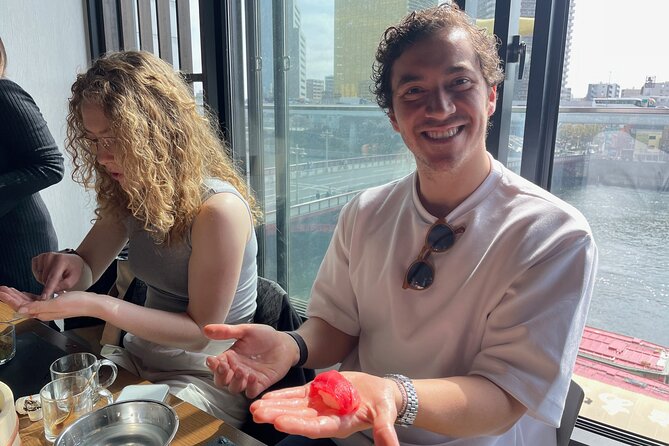
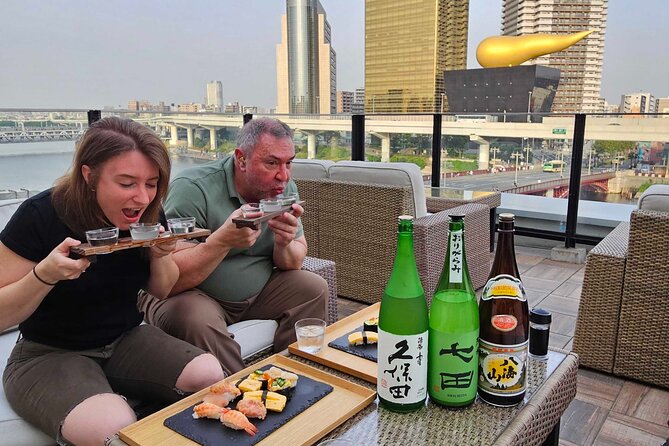
The class takes place at HAUS Tsukishima, and a river view has been highlighted as part of the setting. That can make a real difference in Tokyo, where a quiet view and a seated meal offer a welcome change from crowded streets and packed train platforms.
The view is an extra, not the main reason to book. Conditions, seating position, and the day’s group could affect how much of it you see. Still, it helps explain why this experience feels more personal than a quick lesson in a generic commercial kitchen.
Tsukishima also gives you a different side of Tokyo from the standard first-time route. The address is in Chuo City, near public transportation, and the class ends where it begins. You can plan your onward route from there, but the experience does not include organized sightseeing in the neighborhood.
How the price compares with the experience
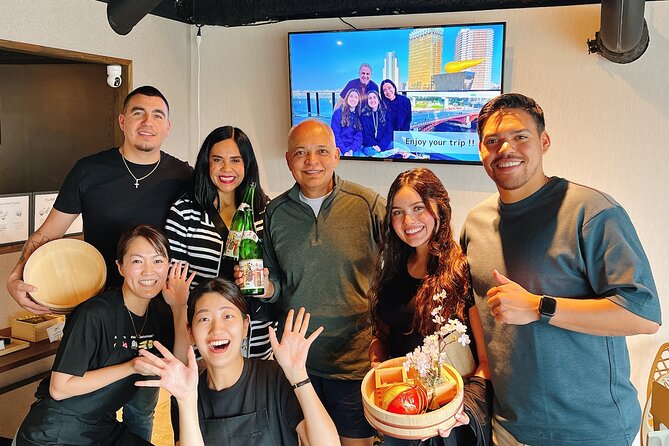
At $79.59 per person, this class is priced above a simple meal but below many full-day food activities. The important question is what you receive for the extra cost.
You get roughly three hours of instruction, ingredients, the meal you prepare, an English-speaking teacher, and all drinks. You also receive direct access to a small group format, which is often the part that makes a cooking class worth paying for. The value is strongest if you want to learn a technique and enjoy dinner at the same time.
I would not book it solely to save money on food. A restaurant meal will be cheaper and easier. I would book it for the combination of cooking, cultural explanation, sake, and conversation. The price makes particular sense for couples, families, and food-focused visitors who want an activity rather than another meal at a counter.
The high satisfaction level, with a five-star rating from 291 reviews and 100 percent recommendation, supports the price. Still, ratings cannot promise that every session will have the same instructor or group chemistry. Your best value comes when you take part, ask questions, and treat the class as a learning experience.
Who will enjoy this class most
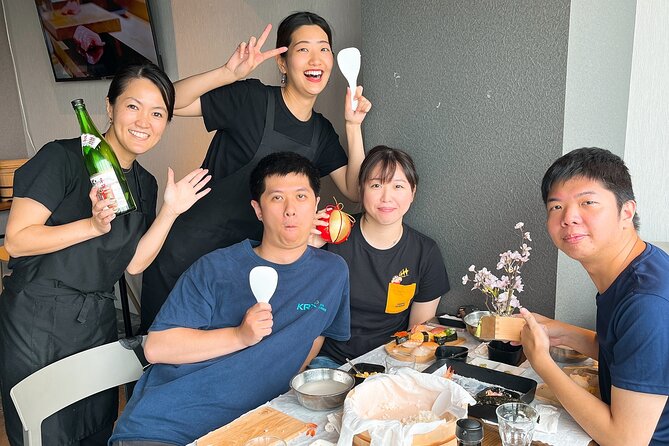
I would recommend it first to people who enjoy Japanese food but have never tried making it. The instructors appear especially good at helping beginners relax, and the class does not demand prior kitchen experience.
It also suits home cooks who have tried sushi from online videos and ended up frustrated. The close, physical guidance can answer questions that recipes cannot. You can leave with practical habits rather than only a collection of photographs.
Couples and families should find the format easy to enjoy. Everyone has something to do, and the shared meal gives you a natural reward at the end. Solo visitors can also fit in well because the group is small and the teaching style is social.
I would be more cautious if you want an advanced chef-level workshop. The class is friendly and instructional, but its purpose is enjoyment, basic technique, and cultural connection. Ramen also receives less direct cooking time than sushi, so serious ramen specialists may want a more focused course.
Useful booking details before you go
Your booking confirmation arrives at the time of reservation, and a mobile ticket is accepted. Bring the ticket on your phone and allow time to locate HAUS Tsukishima. The provided address is specific, but Tokyo’s building layout can still take a moment to sort out.
Service animals are allowed, and the location is near public transportation. Hotel pickup and drop-off are not part of the experience, so you are responsible for reaching Tsukuda and returning to your hotel or next stop.
Free cancellation applies if you cancel at least 24 hours before the local start time. Cancellations or changes made within 24 hours are not accepted for a refund. That policy is fairly standard, but it matters if your Tokyo schedule is still shifting.
Should you book the ramen and sushi class?
Yes, if you want a warm, social food lesson with a proper meal at the end. The small group, patient instruction, sushi practice, pork belly ramen, river setting, and included sake make the $79.59 price reasonable.
Book it with the right expectations. Sushi is the strongest hands-on lesson, while ramen is more about broth, toppings, and choice. If that balance sounds good, this is one of the better ways to spend three hours in Tokyo without simply ordering another meal.
FAQ
How long does the cooking class last?
The experience lasts approximately three hours.
Where does the class meet?
It meets at HAUS Tsukishima, Japan, 104-0051 Tokyo, Chuo City, Tsukuda, 2-chōme 13-5.
Where does the activity end?
The activity ends back at the meeting point.
What is included in the price?
The price includes an English-speaking instructor, cooking class ingredients, the meal, and all drinks.
Is hotel pickup and drop-off included?
No. Hotel pickup and drop-off are not included.
How large is the class?
The class has a maximum of eight travelers.
Can I cancel for a full refund?
Yes. You can receive a full refund if you cancel at least 24 hours before the experience start time. Cancellations or changes made less than 24 hours before the start time are not refunded.
Just added in Tokyo
- A One-of-a-Kind Sushi Experience in a Special Place of Japan★ 5.0 · 15 reviews
- Tokyo Cute Bento Cooking Class – Make a Kawaii Character Lunchbox★ 5.0 · 126 reviews
- Japanese Home Cooking Class & Walk in Todoroki Temple Tokyo★ 5.0 · 88 reviews
- Japan Tokyo Tower Observatory Deck E-Ticket★ 4.0 · 34 reviews
- Catch a Baseball Game in Tokyo with a Local – Tickets Included★ 5.0 · 24 reviews
- JDM Experience with Fast&Furious RX-7 (English speaking Driver)★ 5.0 · 57 reviews
- Tokyo Private Day Tour by Car with English speaking Driver Guide★ 4.0 · 29 reviews
- Japan Classic 10 Day – One Life Adventures★ 5.0 · 129 reviews
Cooking Classes, compared.
Sushi Making Tokyo Roll and Authentic Japanese Sushi Class
Read our review →
Roll and Authentic Sushi Making Class in Asakusa
Read our review →
Ramen Cooking Class at Ramen Factory in Kyoto
Read our review →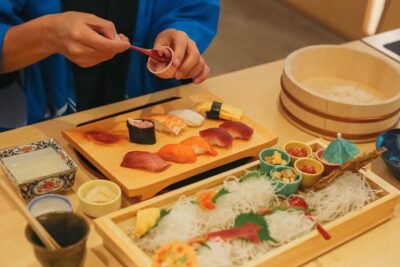
Sushi Making Class in a Happi Coat near a Famous Spot
Read our review →
Sushi Making Osaka Roll and Authentic Japanese Sushi Class
Read our review →
Tokyo Sushi Making Class in Tsukiji with Professional Chef
Read our review →
Ramen & Gyoza Cooking Class in Tokyo with Local Supermarket Visit
Read our review →Browse the lists this tour appears in