
Reviewed · JAPAN
Vegan/Vegetarian Ramen and Gyoza by Bentoya cooking
Tokyo’s best food lesson may begin at a train station. This small-group class pairs a local supermarket visit with hands-on vegan or vegetarian ramen and gyoza making. I like the from-scratch soup and the chance to learn why Japanese food can be tricky without fish-based dashi. I also like the warm, personal teaching style reported from hosts such as Kaori, Miwa, and Rina. The main consideration is simple: this is a morning cooking class, not a broad Tokyo sightseeing tour, and the meal may be your main lunch.
For $75 per person, you get about two and a half hours of instruction, ingredients, a meal, and a useful look at everyday Japanese shopping. The group is limited to six people, which should give you time at the counter instead of leaving you to watch from the back. You will meet at Komae Station, outside central Tokyo, so allow time for the trip.
In This Review
- Key points at a glance
- Why this class matters for vegetarian food in Japan
- Meeting at Komae Station
- The supermarket stop puts ingredients in context
- Building ramen soup from the beginning
- Folding gyoza without the usual guesswork
- A personal lesson in the host’s kitchen
- What the two-and-a-half hours are worth
- Who will enjoy this class most
- Practical details before you book
- Is BentoYa Cooking worth booking?
- FAQ
- Where does the cooking class meet?
- Where does the activity end?
- How long does the experience last?
- What time does the class operate?
- How many people can join?
- Is this class vegan or vegetarian?
- What dishes will I make?
- Does the class include a supermarket visit?
- Can I cancel for a refund?
Key points at a glance
- Start at Komae Station: The meeting point is at 1 Chome-7 Motoizumi in Komae, Tokyo, with the class returning to the same place.
- Shop before you cook: A local supermarket visit introduces basic Japanese ingredients and helps you recognize products you may later use at home.
- Make both dishes from scratch: The class covers vegan or vegetarian ramen, including the soup, plus gyoza with a minced filling.
- Small group size: A maximum of six people keeps the lesson personal and practical.
- Useful for strict vegetarians: Japanese dashi often contains bonito flakes, so learning how to identify safe ingredients is a real benefit.
- Take-home value: Detailed instruction files are provided, and the recipes are designed to be made again in your own kitchen.
Why this class matters for vegetarian food in Japan
Japan is easy to love through its food, but vegetarian eating can require care. A soup may look vegetable-based and still contain dashi made from bonito flakes, a fish product. That small detail catches many people off guard.
This class addresses the problem directly. You learn how to build ramen soup without relying on fish stock, and you get an introduction to the ingredients used in Japanese home cooking. For a vegan or vegetarian visitor, that is more useful than simply being shown a finished bowl.
I especially like the supermarket stop because it connects the lesson to real life. You can see Japanese labels and ingredients in their normal setting, then use some of that information at home later. It turns a cooking class into a practical food lesson.
The class is led by a local certified instructor. Several sessions have been hosted by Kaori, with Miwa and Rina also involved in some classes. English communication is described as very good, which matters when the lesson includes knife work, seasoning, ingredient names, and food restrictions.
Other trips worth a look in Japan:
- Tokyo Disney Resort – Tokyo Disneyland & Tokyo DisneySea Park Tickets
★ 4.8 · 99,488 reviews - Universal Studios Japan Studio Pass
★ 4.8 · 89,883 reviews - Universal Studios Japan Express Pass
★ 4.7 · 53,138 reviews
Meeting at Komae Station
The class begins at Komae Station in Komae, Tokyo. The exact meeting address is 1 Chome-7 Motoizumi, Komae, Tokyo 201-0013, Japan. The activity ends back at the same meeting point.
Komae is not one of the headline sightseeing districts, and that is part of the appeal. You are stepping away from the usual central Tokyo route and seeing a quieter part of the Tokyo Prefecture. Still, do not treat the meeting point as if it were next to Shibuya or Asakusa. Check your route before class and leave enough time to arrive calmly.
The scheduled operating window is Monday through Sunday from 10:00 a.m. to 1:00 p.m. The activity itself lasts about two hours and thirty minutes. That gives you a little breathing room around the three-hour morning window, but you should still arrive promptly.
The station meeting also makes the beginning easy to understand. You do not need to find an obscure restaurant or cooking studio on your own. After meeting the instructor, the group proceeds to the food-shopping and cooking portions of the morning.
The supermarket stop puts ingredients in context
Before cooking, you may visit a local supermarket with the instructor. This is not just a quick grocery run. It is a chance to see the everyday building blocks of Japanese cooking and ask questions while the products are in front of you.
For someone who eats vegan or vegetarian food, this part may be as valuable as the actual meal. Ingredient labels can be difficult to interpret, and fish stock is not always obvious to someone unfamiliar with Japanese food products. The instructor can point out basic ingredients and explain how they fit into Japanese cooking.
The supermarket visit also gives the class a local feel. You are not only cooking a dish selected for tourists. You are learning how ingredients appear in a Japanese shopping environment. That can make future meals and grocery trips less confusing.
The information provided does not promise that every ingredient used in the meal is purchased during the visit, so you should think of the stop as an introduction rather than a full shopping workshop. Its real value is orientation: you see products, hear explanations, and then move into the kitchen with a better idea of what you are handling.
Building ramen soup from the beginning
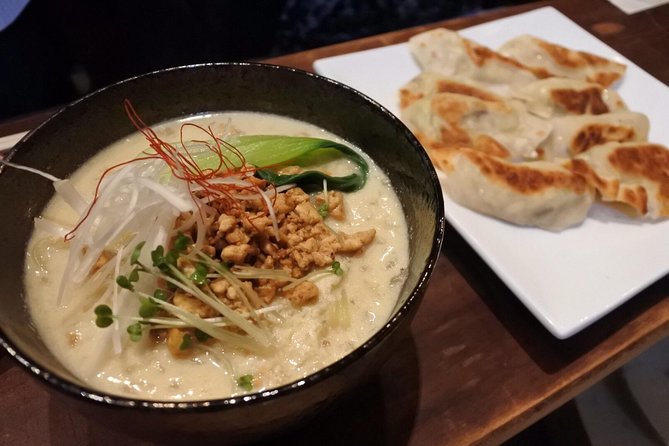
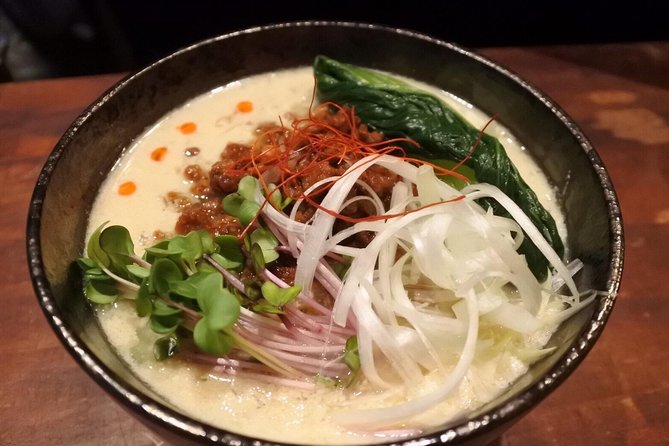
Ramen is often judged by its toppings and noodles, but the soup is the heart of the bowl. Here, you learn to make the soup from scratch in a vegan or vegetarian style.
That makes this class different from a demonstration where a prepared broth is waiting on the stove. You get to understand what creates the flavor and how the ingredients work together. The result is intended to be a proper meal, not a token substitute for conventional ramen.
The lesson may include tantanmen-style ramen, according to the cooking instructions described by participants. That gives the dish a savory, satisfying character without requiring fish stock. The exact recipe can vary by session, so it is best to follow the instructor’s version on the day.
You also learn seasoning and presentation, not just boiling noodles. Those details matter at home. A bowl can contain all the right ingredients and still feel flat if the seasoning is unbalanced or the toppings are placed without care. The class helps you see how the final bowl comes together.
One practical point: the meal is substantial enough that you may not need a separate lunch immediately afterward. If you have a large breakfast or strict dietary needs beyond vegan or vegetarian eating, plan accordingly and ask about them before booking.
A completely different kind of day out:
- SHIBUYA SKY Ticket
★ 4.7 · 46,509 reviews - Mt. Fuji Instagram-Worthy Spots Day Tour: Ladder Town, Oshino Hakkai, Lake Kawaguchi, Lawson Convenience Store (Departing from Tokyo Station or Shinjuku Station)
★ 4.8 · 35,467 reviews - JR Whole Japan Rail Pass
★ 4.8 · 29,150 reviews - Mt Fuji and Hakone 1-Day Bus Tour Return by Bullet Train
★ 5.0 · 26,383 reviews
Folding gyoza without the usual guesswork
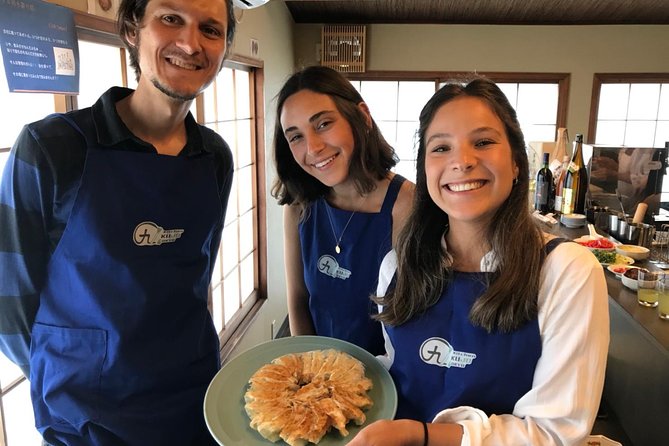
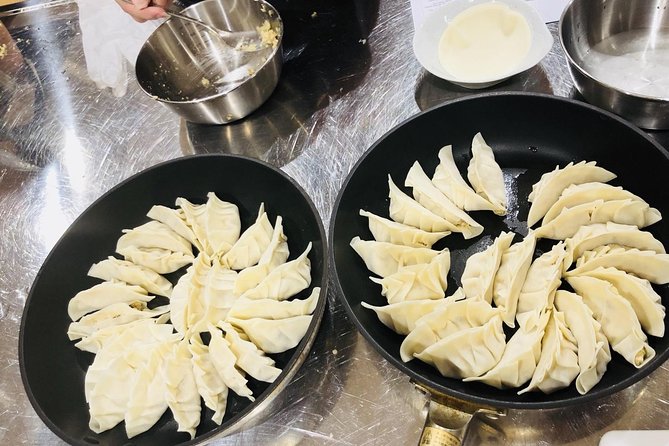
The second dish is gyoza, the Japanese dumpling filled with minced ingredients and wrapped in a thin skin. Folding can look easy when someone else does it. It is less obvious when the wrapper dries out, the filling escapes, or the pleats refuse to cooperate.
This is where hands-on instruction earns its place. You learn cutting, preparation, filling, folding, and cooking techniques in sequence. The process is simple enough to repeat, but there are small skills that make the finished dumpling hold together and cook properly.
The vegetarian or vegan filling also shows how a familiar Japanese dish can be adapted without losing its appeal. You are not simply removing meat and accepting a weaker version. The lesson focuses on building a satisfying filling that works with the ramen.
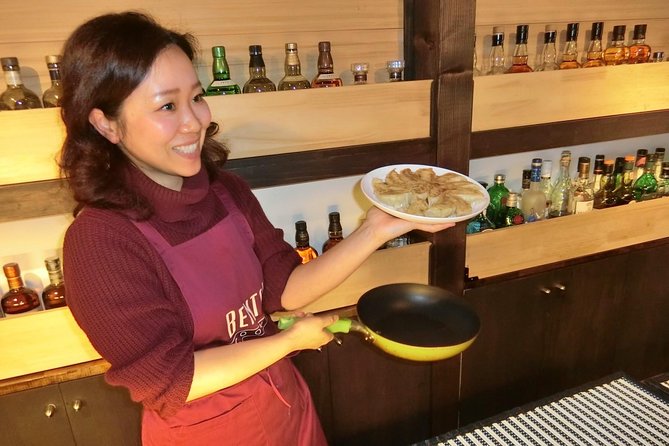
Presentation is part of the class too. That may sound minor, but it is useful if you want to recreate the meal for friends or family. A plate of neatly cooked gyoza and a well-arranged ramen bowl feels like a complete meal, not just a cooking experiment.
The class is especially good for people who want recipes they can actually repeat. The instruction files supplied afterward add value here. You are not forced to rely on memory once you return home.
A personal lesson in the host’s kitchen
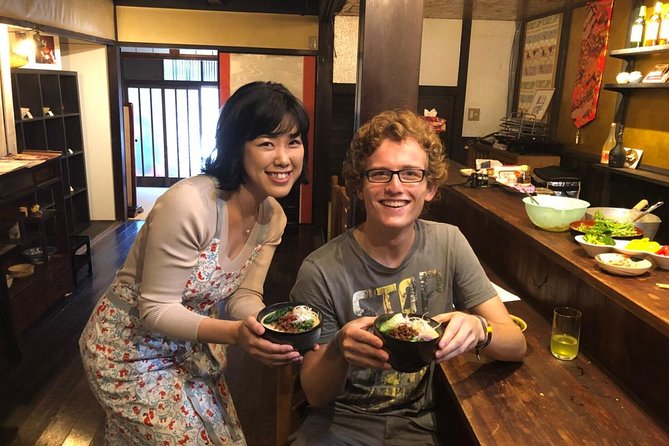
The teaching style is one of the strongest reasons to choose this class. The setting is personal, and the host welcomes you into a home kitchen rather than placing you in a large commercial classroom.
That format has advantages. You can ask about Japanese food, daily life, cooking habits, and ingredients without feeling rushed through a fixed public demonstration. The tone is friendly and informal, while the instruction remains organized.
Kaori is frequently named as the host, and her English is described as strong. She is also praised for giving useful details before the class, which can reduce uncertainty about meeting up and the morning schedule. Miwa has joined some sessions, and Rina has also led a supermarket and cooking lesson.
Because the group is capped at six, you should get more direct time with the instructor than in a class designed for dozens of people. That is important for gyoza folding and knife techniques, where a quick correction can save a lot of frustration.
There is one tradeoff. A home-based class is not a polished stage show. If you want a formal culinary school setting, a professional kitchen with multiple workstations, or advanced chef training, this may feel modest. If you want conversation and practical instruction, the informal setting is a strength.
What the two-and-a-half hours are worth
At $75 per person, this is not the cheapest way to eat ramen in Tokyo. You could buy a bowl for much less. But the price covers more than lunch.
You are paying for a guided supermarket visit, instruction from a certified local teacher, ingredients, preparation of two dishes, a meal, and recipe materials for later use. For someone who already wants to cook Japanese food at home, the value is much better than the cost of a single restaurant meal.
The small group also changes the calculation. Six people or fewer allows for questions and individual help. If the group were much larger, the price would feel harder to justify because you would receive less direct attention.
I would judge the value by your interest in cooking. If you only want to eat vegan ramen, spend the money at a restaurant. If you want to understand the broth, learn gyoza technique, and leave with recipes you can use again, the class makes more sense.
The experience also saves you from buying a long list of unfamiliar ingredients without knowing what to do with them. The supermarket introduction gives you a starting point, which can prevent waste after you return home.
Who will enjoy this class most
This class suits vegan and vegetarian visitors who want more confidence with Japanese food. It is particularly useful if you are concerned about bonito-based dashi or hidden fish ingredients.
It also fits people who enjoy cooking with a local host rather than following a large tour group. Families and mixed-age groups can benefit from the hands-on format, and one account describes a 13-year-old taking part successfully.
The lesson is a good match for cooks of modest experience. You do not need to be an expert to make ramen or gyoza, and the recipes are described as easy enough to repeat at home. At the same time, the class offers enough technique to teach experienced home cooks something new about Japanese seasoning and presentation.
It may not suit you if your priority is central Tokyo sightseeing. The meeting point is in Komae, and the class occupies most of a morning. You should also think twice if you dislike eating a meal you have prepared yourself or prefer a fast, highly structured activity with no shopping stop.
Practical details before you book
The experience accepts mobile tickets, and confirmation is sent within 48 hours of booking, subject to availability. It operates near public transportation and returns to the starting point.
The maximum group size is six. That is a useful detail for solo visitors, couples, and families who want a quieter class. It also means availability may be limited, so booking around 27 days ahead is sensible if your Tokyo dates are fixed.
Free cancellation is available until 24 hours before the scheduled start time. Cancellations or changes inside that window are not refunded or accepted. The activity also requires good weather. If poor weather causes a cancellation, you are offered another date or a full refund.
The provided schedule lists the class from 10:00 a.m. to 1:00 p.m. Monday through Sunday, while the activity duration is about two hours and thirty minutes. Confirm the start time on your booking confirmation, then plan to reach Komae Station early.
Is BentoYa Cooking worth booking?
I would book this class if vegan or vegetarian food is important to your Tokyo trip and you want skills, not just a meal. The combination of supermarket guidance, from-scratch ramen soup, gyoza practice, and a small group gives the morning real substance.
The strongest reason to choose it is its practical focus. You learn how to handle the dashi problem, recognize Japanese ingredients, season a bowl, fold dumplings, and repeat the recipes at home. The friendly hosts, especially Kaori, add a personal connection that a standard restaurant cannot provide.
Skip it if your schedule is packed with central Tokyo sights or if you are looking only for a cheap lunch. But if you can spare a morning in Komae, this is a thoughtful, useful introduction to Japanese cooking with a clear benefit for plant-based eaters.
FAQ
Where does the cooking class meet?
The class meets at Komae Station, at 1 Chome-7 Motoizumi, Komae, Tokyo 201-0013, Japan.
Where does the activity end?
The activity ends back at the meeting point at Komae Station.
How long does the experience last?
The cooking experience lasts approximately two hours and thirty minutes.
What time does the class operate?
The listed operating hours are Monday through Sunday from 10:00 a.m. to 1:00 p.m.
How many people can join?
The activity has a maximum of six participants.
Is this class vegan or vegetarian?
The class teaches vegan or vegetarian Japanese food, including ramen and gyoza. You should share any specific dietary needs when booking.
What dishes will I make?
You will learn to make ramen, including the soup from scratch, and gyoza with a minced filling.
Does the class include a supermarket visit?
Yes. The instructor can show you a local supermarket and introduce basic Japanese ingredients.
Can I cancel for a refund?
Yes. You can cancel at least 24 hours before the start time for a full refund. Cancellations made less than 24 hours before the start time are not refunded.
Just added in Japan
- A One-of-a-Kind Sushi Experience in a Special Place of Japan★ 5.0 · 15 reviews
- Tokyo Cute Bento Cooking Class – Make a Kawaii Character Lunchbox★ 5.0 · 126 reviews
- Japanese Home Cooking Class & Walk in Todoroki Temple Tokyo★ 5.0 · 88 reviews
- Japan Tokyo Tower Observatory Deck E-Ticket★ 4.0 · 34 reviews
- Catch a Baseball Game in Tokyo with a Local – Tickets Included★ 5.0 · 24 reviews
- JDM Experience with Fast&Furious RX-7 (English speaking Driver)★ 5.0 · 57 reviews
- Tokyo Private Day Tour by Car with English speaking Driver Guide★ 4.0 · 29 reviews
- Japan Classic 10 Day – One Life Adventures★ 5.0 · 129 reviews